Book Review: Animal Farm by George Orwell


There has been a lot of talk of Animal Farm on the internet lately, so I thought, what better time to post a review of the 1945 George Orwell classic than now?

For those of you not familiar with the story of Animal Farm, here is a quick low-down (spoiler-alert):

After an uprising from the animals of Manor Farm, it is renamed Animal Farm as it’s “four legged” residents run its human owners out, representing the events prior to World War II in Stalin-led Russia.

During this revolt, Old Major (who is said to channel Karl Marx or perhaps Vladimir Leninalthough Christopher Hitchens notes that “there is a Stalin pig and a Trotsky pig, but no Lenin pig… Nobody appears to have pointed this out at the time [sic] and if I may say so, nobody but myself has done so since; it took me years to notice what was staring me in the face”) the farm’s boar leader, comes up with the Seven Commandments of Animalism (mirroring Communism), which young pigs Snowball and Napoleon put into practice after Old Major’s death. These Commandments are:

  • Whatever goes upon two legs is an enemy.
  • Whatever goes upon four legs, or has wings, is a friend.
  • No animal shall wear clothes.
  • No animal shall sleep in a bed.
  • No animal shall drink alcohol.
  • No animal shall kill any other animal.
  • All animals are equal.

At first the residents of Animal Farm are happy and embrace the Seven Commandments, but turmoil quickly ensues. Snowball and Napoleon (meant to represent Leon Trotsky and Joseph Stalin, respectively) become drunk with power, challenging the other residents of the farm and each other.

Snowball suggests building a windmill, but Napoleon opposes it and has Snowball run out of the Farm. Napoleon takes over leadership, and he and his army of pigs, including right-hand man Squealer, declare that Snowball stole the idea for the windmill from Napoleon, and that they will go ahead with the erection of it.

After a violent storm, the windmill is found destroyed and Napoleon accuses Snowball of sneaking in and demolishing it. Anyone believed to be consorting with Snowball is killed off, and Napoleon brainwashes the poor residents into believing that Animal Farm is better than the human-run Manor Farm. Meanwhile, the pigs adopt human characteristics and begin to walk upright.

As the novella comes to a close, the Seven Commandments have been changed to accommodate Napoleon and his pigs; “no animal shall sleep in a bed” becomes “no animal shall sleep in a bed with sheets”, and “but some animals are more equal than others” is added to the final commandment. After the sacrifice of many of the Farm’s residents, the final scene describes a dinner party held by Napoleon for the residents of the area, both human and porcine, between which the other animals cannot tell the difference.

That’s the premise of Animal Farm crammed into as small a nutshell as I could find!

I loved that the book was simply written, yet the themes and messages were still easily deciphered. I highly recommend acquiring the book, as most editions come with several Orwell-written Appendices which highlight the political undertones of the story.

I also recently watched the 1999 film version, starring Kelsey Grammar as the voice of Snowball and Julia Louis-Dreyfus voicing horse Mollie. While Andrew O’Hagan writes that “art involving talking animals is often deeply political”, I chose to bypass the 1954 animation as the newer adaptation was more readily available for hire and more closely resembles the book.

One major difference, though, is that the role of border collie Jessie is heightened in the movie, and she plays narrator and the maternal voice of reason. Snaps to the dog’s trainer, as Jessie is very lovableas all dogs areand believable. It’s those puppy dog eyes, I tell ya.

Speaking of animal authenticity, the pigs chosen to play Napoleon and Squealer were appropriately repugnant, whereas Snowball’s onscreen incarnation garnered much more sympathy from me than he did in print.

The film version moved along much quicker, and I thought the use of propaganda films starring Napoleon and Squealer to address the animals of the farm was very smart. These films showed the pubic hangings of rats and hens, à la Stalin, and amendments to the commandments.

All in all, the movie was likeable, and served as a motion picture compliment to better illustrate the ideas and goings on in the book.

But book over movie every time, baby!

Elsewhere: [The Guardian] Andrew O’Hagan on Fiction’s Talking Animals.

Lady Most Likely: Time Magazine’s 100 Most Influential People

Every time I turn on the readio, it seems like there’s a Will.I.Am collaboration (“3 Words” with Cheryl Cole; Usher’s “OMG”; “Imma Be” with Black Eyed Peas) or Will.I.Am sounding collaboration (“Nothin’ on You” by B.o.B.; “If We Ever Meet Again” by former über-producer Timbaland and Katy Perry) getting airtime. The BEP front man may indeed be the new Timabland, so I was surprised he didn’t make it onto the list. There’s always next year, I suppose…

Someone who did make it on, though, is Lady Gaga.

Cyndi Lauper, Gaga’s partner-in-crime for the MAC AIDS Fund, profiles her for possibly the most talked about ranking this year. I have no doubt Gaga is the most influential person in entertainment today, as she’s collaborating with and inspiring the fashion, beauty, art, advertising, music and film worlds with her own performance artas Lauper writes, “she is inspiring other artists to go further in their own work”and striking up water cooler conversation with her boundary pushing antics, both onstage and off.

Time is spot on in naming Marc Jacobs the only influential fashion figure. Jacobs, who is profiled by fellow fashionista and friend, Victoria Beckham, glamorised grunge, began the bag lady chic movement, and is now championing voluptuousness in his new season looks for Louis Vuitton and his titular line. Perhaps Karl Lagerfeld and Anna Wintour would have made welcome additions, but Jacobs certainly has the respect of all facets of the fashion world his peers, his models, his muses and his loyal subjects.

I am utterly dumbfounded to not see George Clooney on the list. Not only did he single-handedly organise the Hope for Haiti Now telethon but, like a fine wine, he only gets better with age.

In other “Artists” notes, shoe in Oprah is profiled by Phil Donahue, while her partner, “Mr Oprah” Stedman Graham makes the Least Influential list (more on that below); Robert Pattinson is bafflingly included (for influencing legions of teens and, worryingly, tweens ready and willing to let Pattinson bite them? Perhaps Brad and Angelina would have been better choices, as they actually contribute something to societyas well as being really, really ridiculously good looking. Or even Stephenie Meyer, without whom Pattinson wouldn’t have an Edward Cullen to broodingly portray); and “new media mogul” Ashton Kutcher, whom I was pleasantly surprised to see on the list.

Of course, President Obama makes an appearance as one of, if not the most influential leaders. While he certainly is the most well-known leader on the list, whether he’s been as influential as he could have during his first year in the presidency is a point of contention for a lot of politicos and American citizens.

My second favourite President (after Obama, George W. Bush is the only other President whose reign I was [un]lucky enough to grow up during, so Clinton wins via default), I find Bill Clinton funny, charming and smartalthough, hey may not have been utilising the latter during Lewinskygate. Nonetheless, he’s making positive change, and that’s all that matters here.

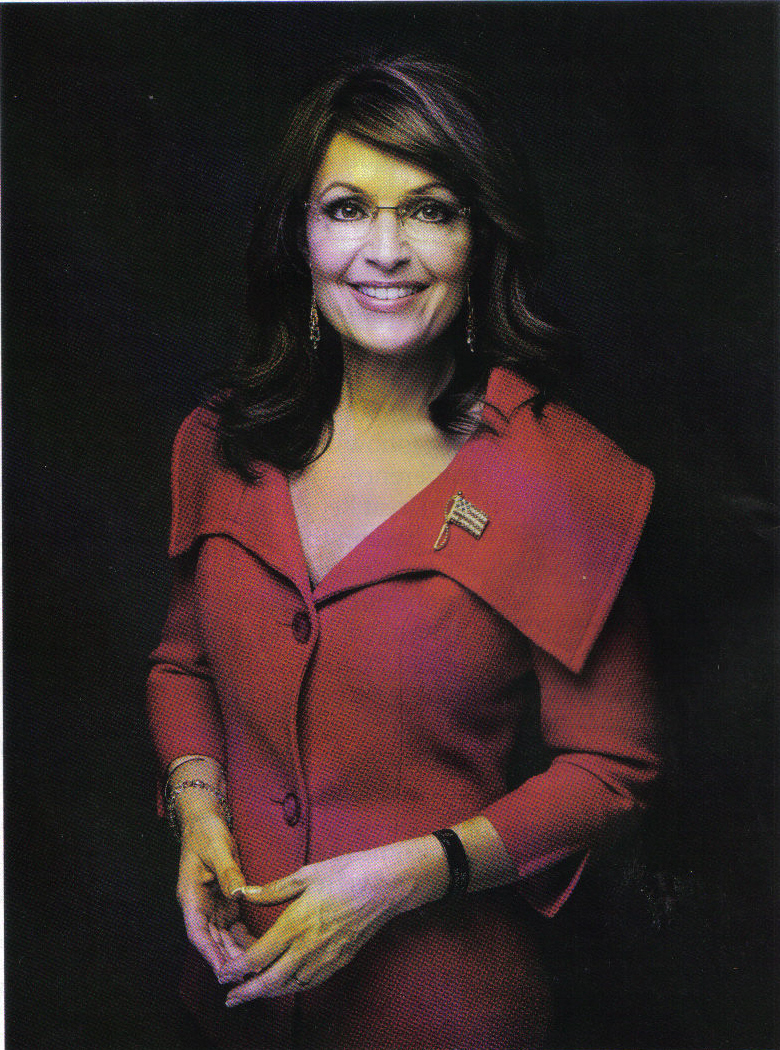
On the other hand, former vice-presidential candidate Sarah Palin makes the list. She is certainly fascinating and controversial, but I wouldn’t call her influential. Perhaps she would be more at home on Barbara Walters’ annual most fascinating people list?

Speaking of other lists, on page 96 you will find Joel Stein’s “The Time Bum Hundred”, relaying how he chronicled the 100 least influential people of 2010, split into “four categories… Losers, Flameouts, Morons and Slimy Bastards”. The complete list is not available in the mag, but it is on Time’s website.

Here is a sneak peak of “the Least Influential People Who Used to or Ought to Have Influence”, not including babies (who really are the least influential people in the world!), “the tattooed chick who messed up Sandra Bullocks’ marriage” (negative influence), and Tiger Woods, who just had a “bad year”, but is “still immensely influential, only now his influence lies in preventing men from texting their mistresses”: the Tom Tom GPS navigation system; “We Are the World 25 for Haiti”; Paula Adbul; Michael Jackson’s doctor, Dr. Conrad Murray who, unfortunately, was influential enough last year to play a key role in the death of Michael Jackson; Joaquin Phoenix; gay-disapprover, sex tape “without any sex” star and Former Miss California Carrie Prejean; “first dog” Bo Obama; George Clooney’s ex, Sarah Larson; former MTV TRL host Carson Daly; questionably, The Doors, who “actually sucked and just had a handsome lead singer”; Grover; Carrot Top; news anchor Katie Couric; John Edwards; the quintessential douche bag reality show dropout, Jon Gosselin; keeping it in the familyLindsay and Michael Lohan; Jersey Shore outcast Angelina Pivarnick; Bernie Madoff; Levi Johnston; Tila Tequila; Nicollette Sheridan; witches (“Charmed was like, ten years ago. It’s all about vampires, werewolves and zombies now”); anddrum roll pleaseSpencer Pratt and Heidi Montag, collectively known as Speidi. Let’s hope Heidi truly is uninfluential, especially for The Hills‘ primarily teen audience’ssake, or we could have an army of over-inflated, frozen-foreheaded Barbie clones on our hands.

Taking a Leaf Out of Amazon’s Book: GOOD Customer Reviews

After last week’s soul crushing compilation of the worst Amazon reviews on my favourite books, I feel it’s time for a more uplifting account of each book, from some not-so-biased sources.

So here, primarily to build up my wounded book-reviewing pride, are the best reviews of my favourite books.

To Kill a Mockingbird by Harper Lee.

The majority of reviews on this classic were positive, so it’s just a matter of picking the best. Put simply, by Mrliteral, To Kill a Mockingbird is “a true classic”. But Bett Norris articulates her feelings beautifully: “I have always liked books better than people. Some books are better friends than many people I know… To Kill a Mockingbird will remain a treasured, dear old friend.”

The Catcher in the Rye by J.D. Salinger.

1,703 people gave this book top marks, including A Customer, who calls it “a brilliant coming-of-age novel.”

James Tyler says he “can remember enjoying this book the first time I read it. But I had no idea that with each subsequent reading I would find more and more to enjoy…”

Finally, B. Michini says Catcher is “a timeless, honest, controversial, superbly written tale” because protagonist Holden Caulfield “made me feel like there were others in this predicament that we call adolescence.”

Valley of the Dolls by Jacqueline Susann.

It seems most reviewers enjoyed this book, too, if only for it’s so-bad-it’s-good qualities. Childof80s—naturally—says it’s “more addictive than the pills its heroines take. Sure, it’s trashy, but trash is by far the most entertaining form of literature.” Thankyou for proving my point.

DevJohn01 goes as far as to say that “this cult classic is just what the doctor ordered,” while Timothy R. Wilkins says it’s “a classic and necessary primer for all lovers of pure camp!”

The Historian by Elizabeth Kostova.

Feelings about this vampire tale were split fairly evenly across the board. Nancy B. Miller summarises it nicely, saying “Kostova has crafted a slow-building story that blends scholarship and the supernatural in a unique and fascinating way.”

When this book was released in 2006, it was compared to The Da Vinci Code, as so many works with an historical mystery plotline are. I probably enjoyed The Da Vinci Code more than The Historian, but just by a hair. 340bookfan is having none of this, calling The Historian “a real writer’s answer to The Da Vinci Code.” I will agree that The Historian is written in a more complex manner, and the author spent ten years bringing the pieces of Dracula’s puzzle together, so Kostova’s practically an historian herself!

Tietam Brown by Mick Foley.

Much like The Catcher in the Rye, Tietam Brown is a coming-of-age tale that deals with controversial subject matter. R. A. Ward has “a hard time quantifying it for this review,” and I had a similar reaction to it, too.

Big-noter Aaron J. Palmer, with a multitude of MAs, and BAs and PhDs, who has “read a lot of [novels]” calls Tietam Brown “without a doubt, one of the best novels I’ve ever read.” Finally, Charles E. Henry commends Foley for “some great character development” and the way the book “manages to be funny, disturbing, sad and hopeful all at the same time.”

I will agree that its appeal is very hard to put into words, but I think it is a novel that almost anyone would enjoy.

Watership Down by Richard Adams.

Richard Adams’ tale of talking bunnies gets an “A+ rating” from B. Merritt, who thanks the publishers for taking a chance on a novel that “really wasn’t a children’s tale, nor adult literature”, because “if they hadn’t, we surely would have been denied a true literary classic.

A common theme here is Watership Down’s nostalgic presence in the reviewers’ lives. David Huber and Lawrance M. Bernabo both recall coming of an intense J.R.R. Tolkien ride, thinking nothing they would ever read could live up to the standard set by Lord of the Rings. They both admit how wrong they were, with Huber marvelling at “how one person can actually produce such lovable characters… that actually make [sic] you feel various emotions for each of them.” Now I want to revisit this classic (bunny) tale!

I’ll add you to my list, Watership

A Lion’s Tale by Chris Jericho.

If I can refer back to last week’s post regarding this title, it is not hard to find positive reviews on this one. Ranging from being “the best wrestling book I’ve ever read” (C. Sawin) to a “book wrestling fans can honestly recommend to non-wrestling fans about wrestling” (S. Albert) to, plain and simple, “the best wrestling [auto]biography ever!” (Pwa Y. Soo), I pretty much agree with all of them.

Another City, Not My Own by Dominick Dunne.

This is my Achilles heel; it just so happens that my favourite book ever is universally panned by critics—which is not uncommon for a Dominick Dunne book—and the general public alike!

But there are a few good ones, which is not as disheartening as going through all the negative ones! Cecilia Sheppard shares my sentiments in saying she “devour[s] this man’s books like fine chocolates.”

A Customer pinpoints the strange feeling I had after completing this “novel in the form of a memoir”, calling it “unnerving”, while jtj3 says he “was an O.J. trial junkie”, just as I became after reading this book. He “literally could not put the book down” and believes it is “Dunne’s fictionalised autobiography”, as so much of his career centred around O.J. Simpson.

Related: Taking a Leaf Out of Amazon’s Book: Bad Customer Reviews.

Extreme Makeover: Jersey Girls

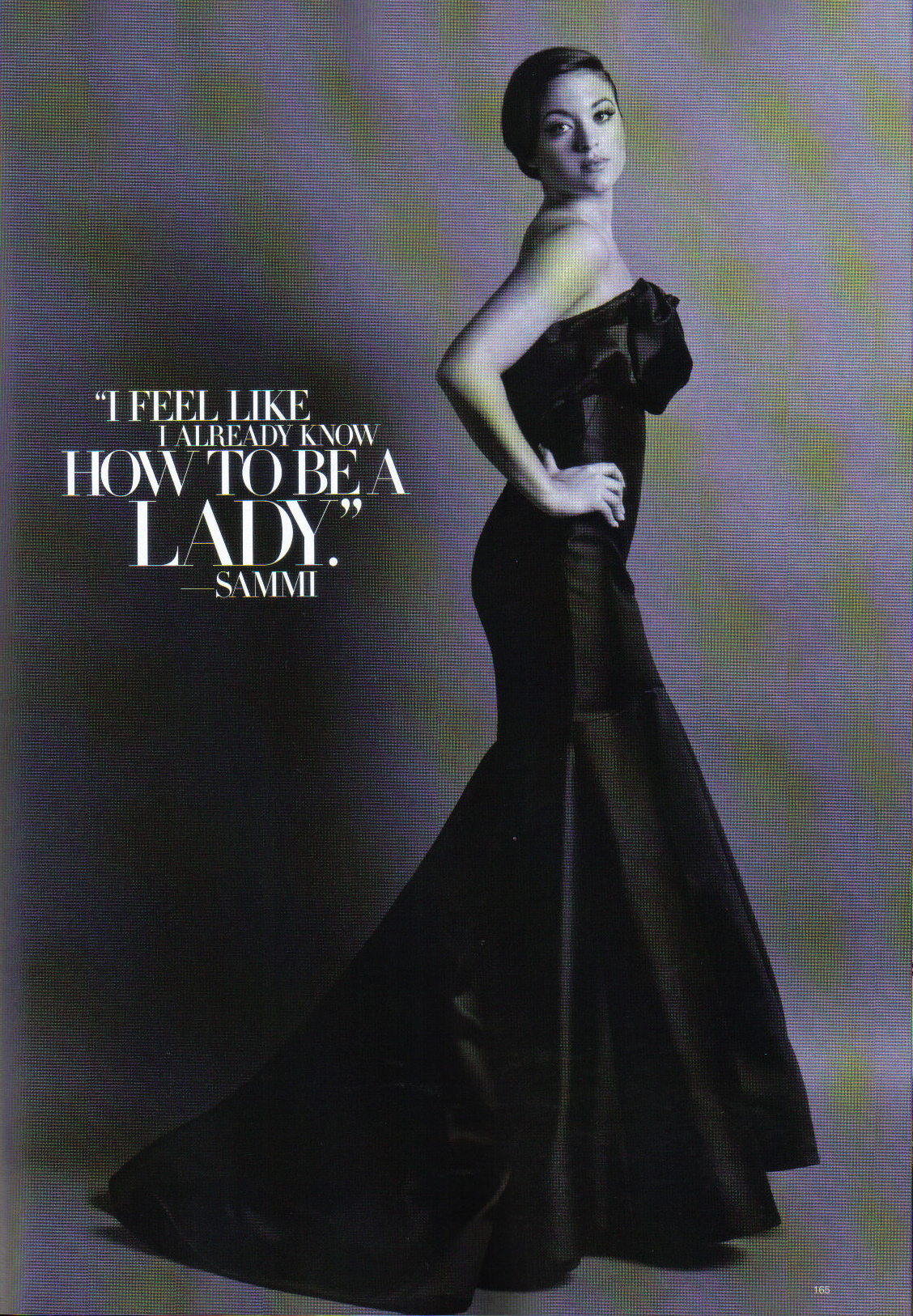
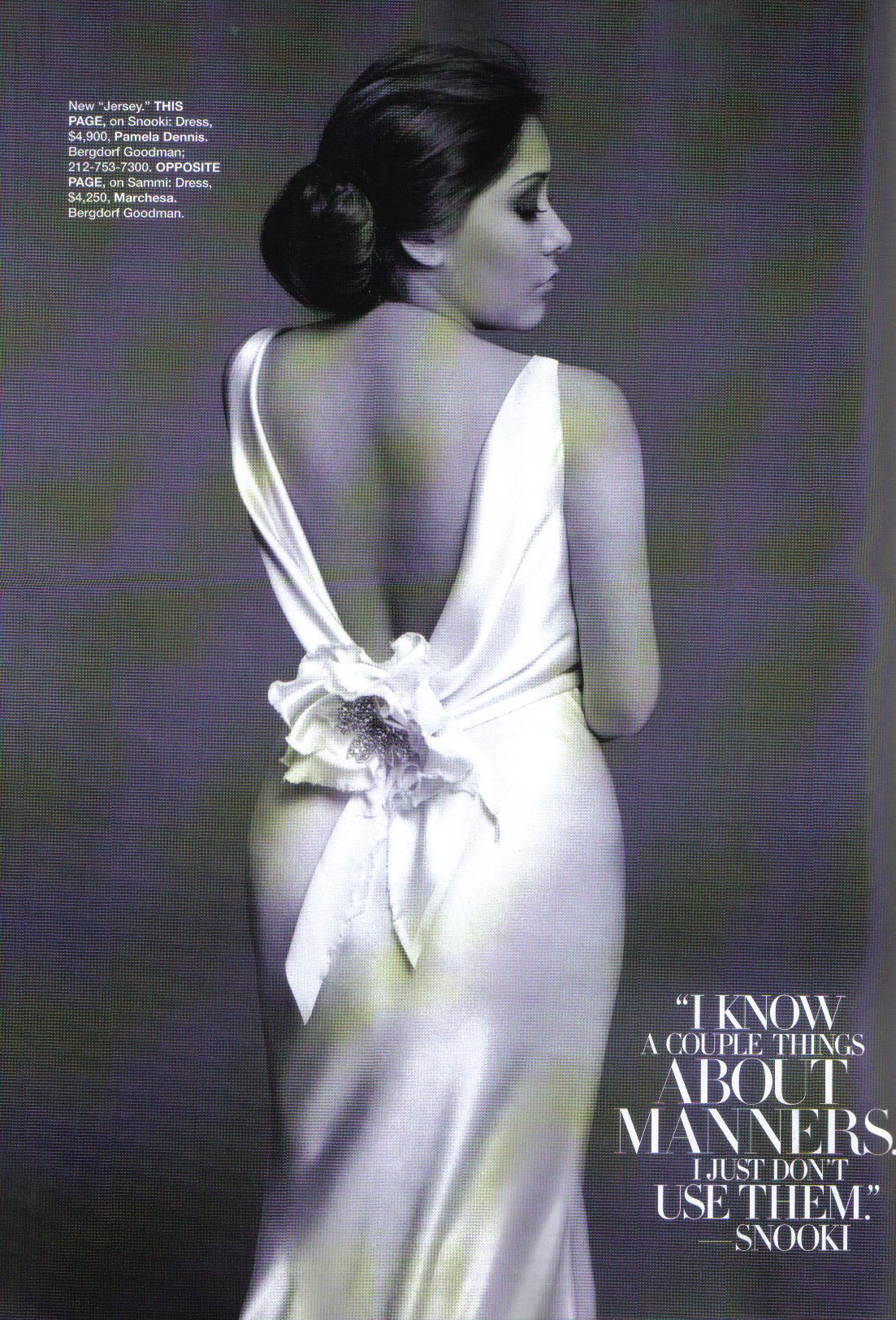
I bought the May issue of Harper’s Bazaar US for the sole purpose of seeing the Jersey Shore girlsSnooki, Sammi & JWowwout of their usual uniforms of too-short short shorts, “pleather leggings” and acrylic nails and into something a little more classy.

My first instinct while watching the show was to cover my eyes but, like a car crash, it’s just too fascinating not to watch. Jersey Shore is nearing the end of season one on Australian screens, but never fear Snooki, the Situation and co. are currently filming season two.

On the whole, Bazaar was disappointing, but the beautiful shots of the girlsin particular those of Sammiin formal wear was worth it alone.

I found the accompanying article patronising and it pigeonholed the girls, who I do think have good hearts and minds underneath it allyou just have to chisel through the mountains of silicone and hair extensions to get to them. It has nothing, though, on Interview’s spread on the Jersey boys, Mike “the Situation”, Pauly D, Ronnie and Vinnie, which was quite revealing and made me see most of the guidos in a different light.

Mike, you’re still a douche.

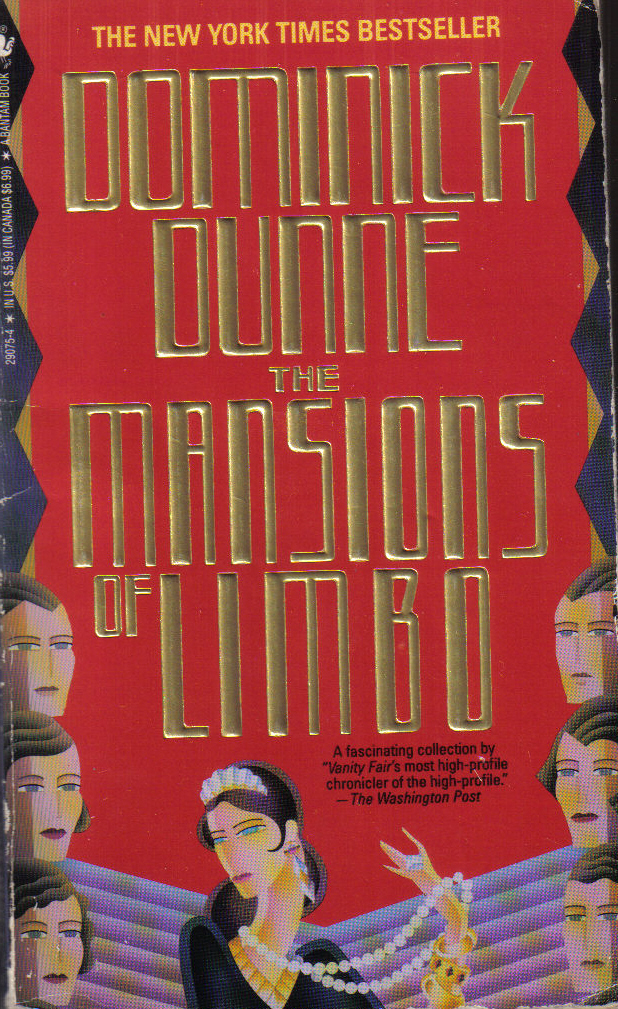
Book Review: The Mansions of Limbo by Dominick Dunne


The author states in the introduction that the phrase “the mansions of limbo” came to him “years ago, reading a book whose title I no longer remember.”

If you are familiar with Dominick Dunne (if you’re familiar with this blog, you’re familiar with Dunne; he is my favourite author and I will jump at any chance to drop his name. Funnily enough, the subtitle of his memoir is Recollections of a Well-Known Name Dropper), you will know that he profiled the lifestyles of the rich and famous for twenty five years in Vanity Fair. But more interestingly, he focussed on the justice, or rather injustice, system in relation to celebrities, such as the Menendez brothers, O.J. Simpson and the murder of his daughter, Poltergeist star Dominique Dunne, in 1982.

His award-winning account of the murder of Jose and Kitty Menendez by their sons, Lyle and Erik Menendez, “Nightmare on Elm Drive” opens the tome, while Dunne’s majestic profile of Queen Noor al Hussein of Jordan wraps it up. In all honesty, as blasphemous as it is to say, those are probably the only two articles worth reading in this out-of-print collection. There is also a humorous write-up on the Collins sisters, Joan and Jackie, but the majority were written before I was born or in my early years of life, about subjects who have gone down in little-known infamy.

However, I do recommend Dunne’s work to anyone who will listen.

I first became familiar with him after reading the O.J. Simpson confessional If I Did It, which is well worth your money/library card. I then stumbled across his fictional account of the double murder, Another City, Not My Own which I can confidently say changed my life and immediately became my favourite book. (I will be posting a review here in the not-too-distant future; but don’t let last week’s negative Amazon reviews turn you off!)

Elsewhere: [Marie Claire] Dominick Dunne: Hollywood’s Diarist.

[Vanity Fair] Nightmare on Elm Drive.

Is There Really a Beauty Myth?

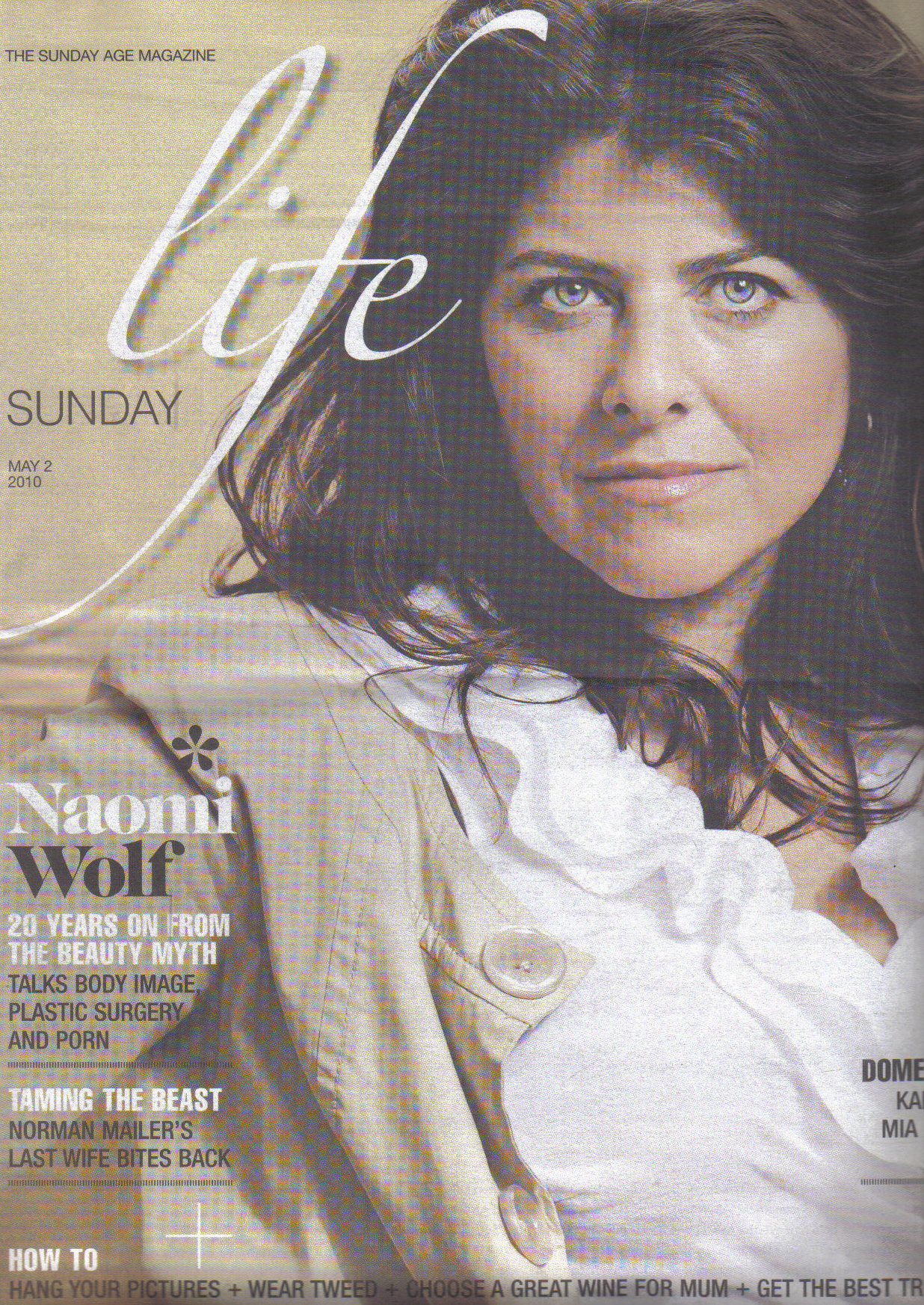
sunday-life-naomi-wolf

Following on from Tuesday’s earth-moving post about beautiful women and heart health, last night I went to see prolific feminist author Naomi Wolf speak on her book, The Beauty Myth, and how images of beauty in the media are used against women at the Wheeler Centre for Books, Writing & Ideas in Melbourne.

The common perception about “feminists” is that they’re allto borrow a quote from Bring It On“big, dikey losers” who burn their bras and don’t shave under their arms. But at the risk of sounding cliché, I don’t believe you can be female and not be a feminist.

There was an overwhelming amount of people packed into the Capitol Theatre, off Swanston Street, and the majority were your average woman on the street, most coming from work or uni, with the odd flanny-wearing, mullet-rocking stereotype. And a few men, too, one of whom posed the question as to whether women’s magazines facilitate the media’s ideal of what a woman should look like. (More on that later.)

I also don’t like the notion, and nor does Wolf, that to be a “feminist”, or to even be interested in the topic without adopting the extremist views that some “second-wave feminists” espouseCatharine MacKinnon, I’m talking to youis to be a Germaine Greer tome-thumping man-hater. She touched on this when she mentioned that whenever there’s a move forward for women (ie. the right to vote, the availability of the birth control pill meaning women could have “sex without the punishment of pregnancy”, Jennifer Hawkins posing nude and unairbrushed on the cover of Marie Claire), there is the inevitable backlash.

It was interesting to note the fact that that the three most important pieces of literature on feminismThe Second Sex by Simone de Beauvoir, Greer’s The Female Eunuch, and The Beauty Mytheach have twenty-one years between their publication dates, a “coming of age” of sorts in understanding the “lexicon of feminism”, the MC said.

Another point of interest was the beauty and vivacity of the author herself, not to mention her fab shoes!

Wolf said she loved Australia because we’re so candid and unselfconscious in our responses to the issues she raises, and that nowhere else do “visiting feminists get treated like rock stars.”

Speaking of rock stars, an certain icon in history has been not only a rock star, but a gymnast, teacher, astronaut and mother, amongst many other occupations. This icon is Barbie, and she was a hot topic on the night.

Barbie represents the “universal ideal” of “transcendental beauty”, in the Western world in particular and, according to Wolf, she is a valuable media tool in the cosmetics, dieting and plastic surgery industries.

Wolf asked why we never see women who are not under 40, thin, tanned, blonde, blue-eyed and Caucasian (ie. Barbie) in the media (which I personally disagree with; Penelope Cruz, Salma Hayek, Ellen DeGeneres, Christina Hendricks, Kim Kardashian, Meryl Streep, Oprah Winfrey and the Grey’s Anatomy women are a few examples that counter this theory). Here is the one word answer: advertisers. They are the reason the Barbie-stereotype is on the cover of magazines every month.

Sure, magazines get most of their revenue from the advertisers, and if they think their brand ideal will be jeopardised by running an ad in Glamour magazine, which has been running a lot of plus-sized photo shoots recently and garnering a lot of attention for it, for example, they will not give their ad money to that magazine. So therefore, Glamour has a lower budget to promote itself to readers every month. Then its loyal readers receive less of the content they keep coming back for, ie. women who look like them, and will stop buying that magazine.

On the other hand, as Mia Freedman talks about in her memoir, Mama Mia: A Memoir of Mistakes, Magazines & Motherhood, and editor of Shop Til You Drop magazine Justine Cullen writes in this month’s issue, women don’t buy the Ellens, Meryls and Kims, they buy the Jennifers and Kates. So, Wolf said last night, “it’s something you’re doing” as media consumers.

So it’s a double-edged sword. We complain that we want to see more “real women” in magazines, however we’re not willing to shell out for them, therefore sales go down, advertisers move elsewhere, and “we don’t know what we’re missing” because “women doing interesting things are omitted” from the mainstream media, and instead we get another story on Jennifer Aniston’s desperation over Brad and Angelina’s marriage, or some crap. I think Wolf is right in saying that we need to consciously refuse to buy into those kinds of stories and look towards other instances of women in the media.

However, I don’t agreeand this seems to be the consensus, especially amongst those who don’t actually consume women’s magazines on a regular basiswith the belief that all women’s magazines try to sell us are diets, $350 beauty products that don’t actually work, and low self-esteem. To people with this view, I say, try picking up a copy of Cosmopolitan, Frankie or Girlfriend magazines. These are all publications that are geared towards different demographics of femalessexually active and assertive women in their late teens to mid-to-late twenties; alternative, crafty women, most likely studying design or politics; and the teenage set, respectivelythat DO NOT run diets, do recommend fashion and beauty products at the affordable end of the spectrum, and present women of all shapes and sizes in a positive light. Not all women’s magazines are at the crux of this “beauty myth”.

Another major point in Wolf’s theory is the abundance of pornography in today’s society, which she also talks a lot about in this past weekend’s Sunday Life supplement in Melbourne’s The Age and The Sydney Morning Herald. She argues that this lowers the sexual confidence of both men and women, but young women, in particular, feel they have to offer an array of sexual activities they’re not necessarily comfortable with in order to “feel competitive in the sexual marketplace”. Because men, in particular, have such “strong, Pavlovian responses” to porn, excessive consumption can lead to desensitisation to the real thing, which is why there is such a surge in impotence in young men.

Where once it were supermodels who determined the sexual ideal of women, it is now female porn stars, with their svelte, childlike torsos, fake breasts and meticulously trimmed pubic region, society uses as the benchmark. Bodies that share similarities with who else?! Barbie.

One could argue that Brazilian and XXX waxing is a way for the male-geared porn industry to beat women into submission, so that they become childlike and are able to be dominated. Another intriguing point Wolf puts forward can be traced back to the dieting industry, in that striving to look the way of the porn star, with a super-slim body and low body mass index actually diminishes the libido. Is this really what society wants whilst pushing such a sexual culture? Or is it in tune with the subservient nature of females in porn?

Wolf also addressed the perception that women with eating disorders and negative body image are “crazy”. As an anorexic in her teens, Wolf debunked this, saying that “physiologically, low calorie count causes mental impairment,” and is a “form of control” by the dieting industry, the media, and society to control and suppress women’s ambitions. Because when you’re thinking about food and exercising and the way you look, you’re not thinking about education and work and your future.

She added that a way to counteract this is to form “active critical thought” about images of beauty, which apparently 33% of women do. Another 18% become obsessed by these images, which in turn leads to eating disorders and body dysmorphia. The rest of us hover somewhere in between.

During question time, one audience member asked why shewho comes from an educated, loving and supportive background; is surrounded by encouraging and non-judgemental friends and family; who does form critical opinions about the media’s portrayal of womenfeels ugly, fat, not good enough and constantly compares herself to other women, in the media or no, and how “active critical thought” can really alter this.

I thought this was a very brave and fascinating question put to Wolf, however her response was more disheartening. In a nutshell, she basically said that at the end of the day, if being open to different images of beauty, both from the mainstream and non-mainstream media worlds, and being able to confidently and objectively realise that not everyone looks like that and that is not the real-life ideal, still makes you feel like crap, there may be some underlying issues that only a therapist can fix.

Which poses another question: how far have we really come? From the 1920s “flapper body style” that emerged when women first won the vote and somehow felt they had to look more masculine to adapt to this, to an auditorium full of beautiful, successful, smart and “critically thinking” independent women in 2010, does this notion of the “beauty myth” really exist? Is there a beauty myth that we have to expose?

Taking a Leaf Out of Amazon’s Book: Bad Customer Reviews

Jeanette Demain recently wrote for Salon.com an article on “amateur critics” bemoaning the plotlines of her favourite books, most of them canonical.

At the end of her Amazon search-related compilation of readers’ negative comments on classics from “The Grapes of Wrath to 1984”, she urges readers to peruse Amazon’s customer reviews of their favourite books.

So, I thought I might take a stab at this, and compiled my very own list of attacks on the books that “changed my life forever”.

To Kill a Mockingbird by Harper Lee.

One of the finest pieces of modern American literature, I was hard pressed to find bad reviews on this one. The harshest was from three-star-rater Jane A. Marshall, who said To Kill a Mockingbird was “a good book but not as good as the movie. The exact ending as to how the attacker was killed left too much doubt as to who actually was the killer—I don’t think this was a good way to end the book.” Mmm, good, good, good. And more good.

Seriously, though, for my money Harper Lee crafted one of the best endings of all time. So much so that I defaced my copy by highlighting the passage for easy retrieval when I want to marvel at the beauty and power a good writer can wield.

The Catcher in the Rye by J.D. Salinger.

One Amazon discussion thread was titled “Catcher in the Rye should be banned”, and continued with “not because it’s obscene or perverse”—ever read Bret Easton Ellis, my friend?—“but…because it’s a lousy book.” Eloquently put.

The general consensus in response to that thread was a) who are you to judge whether a book should be banned based on it’s lousy-ness, and b) we are not in favour of censorship. My sentiments exactly.

Valley of the Dolls by Jacqueline Susann.

While I will agree that this book is somewhat fluffy compared to the others on this list, I wouldn’t say that it was “a huge disappointment,” according to A Customer. They go on to say that, “I have loved the movie version of Valley of the Dolls for a long time. Admittedly, it is a BAD movie, but its camp sensibility and generally over-the-top style make it a classic of the ‘bad movie’ genre.”

Put a different way, Wayne M. Malin calls it a “silly soap opera that follows three women… [through] death, suicide, lesbianism, cancer, marriages, tons of drug abuse, institutionalisation, etc…” Yes, but isn’t that the appeal of the thing?!

I will agree on one of the most common allegations, that protagonist Anne Welles “ is perhaps the dullest character ever created,” said QueensGirl.

The Historian by Elizabeth Kostova.

The author of this book, whose “plot unfolds through three points of view—a 16-year-old girl in search of her father who disappeared into vampire land in 1972 and reveals himself through letters to her, the father who was searching sixteen years earlier for his abducted thesis advisor who secondarily reveals himself through a trail of letters, and the thesis advisor who was searching for Dracula through historical research,” has apparently “committed an act of such brutality that it rivals any atrocity that Vlad Tepes [aka Dracula] ever committed,” reviewer Carlos asserts. (Thanks for the plot summation, William J. Meggs!)

Meggs goes on to say that “if you would enjoy the tedium of being an historian digging through old libraries, you might enjoy the tedium of reading this book.” I would, and I did, thankyou very much!

Tietam Brown by Mick Foley.

It was difficult to find a bad review for this novel, “because only wrestling fans read it.” Which is probably 90% true, but even non-wrestling fan reviewers found it a struggle to comment negatively on it.

But lo and behold, I found the diamond in the rough in A Customer’s (again—take credit for your opinions, people!) response: “The dialogue is painfully bad, I’d rather be stuck in the ring with Mick for ten minutes than be subjected to reading another ten minutes of this book.” With Foley’s trademark barbed wire-encased baseball bat and thumbtacks? That is a fate worse than death.

Harsh.

Watership Down by Richard Adams.

Mostly light-hearted fun-poking to be found in the Customer Reviews section for this book. Caraculiambro says, “I suppose my threshold for silliness for books with talking animals (particularly bunnies) is The Wind in the Willows. Anything more sophisticated than that is preposterous, I think… on the whole, it’s hard to take it seriously unless you’re a pre-teen girl. But if you are, good luck with the language.” Touché.

Much in the same vein, Lucy the Bargain Hunter says, “this book is really boring, but since there was no bad language or sex, I didn’t have any excuse for not trying to get through it.” She then goes on to ask, as I have many a time after ploughing through a Jane Austen or Stephenie Meyer, “everyone else loves this book. Maybe there is something wrong with me[?].” To borrow a phrase from the late Brittany Murphey’s Tai in Clueless, “everyone’s entitled to their own opinion, a’ight?”

A Lion’s Tale by Chris Jericho.

Again, another WWE alumnus’ tome, so it is geared towards a very niche audience with mostly glowing reviews. The most damning assessment comes from Sean M. Hurley, who says the autobiography doesn’t live up to that of Mick Foley’s debut, Have a Nice Day, or even “The Heartbreak Kid” Shawn Michaels’ ghost-written memoir. “My main gripe with the book is that Chris doesn’t get as personal with the reader as one would have enjoyed. Mick really exposes himself and allows himself to be vulnerable, while Chris still seemed to be holding back…” he says. Funny, as I found A Lion’s Tale to be on par, if not better, than Have a Nice Day

Another City, Not My Own by Dominick Dunne.

Dredging through page after page after page of one star reviews hurt, as this is my absolute favourite of all the books on this list.

To dig the knife in even further, A Customer says “I had to rate the book at least one star for the review to be kept. Actually, it’s worth zero.” Show your face, nameless hater!

Next week, the positive reviews! Yay!

Elsewhere: [Salon] Amazon Reviewers Think This Masterpiece Sucks.

Books: All Eyes on Marilyn.

Following on from yesterday’s Marilyn Monroe anecdote, news broke last week that Farrar, Straus and Giroux publishing house will be releasing Monroe’s writings in the northern autumn, called Fragments.

Turns out Monroe wasn’t just tragically beautiful and beautifully tragic, but also a pretty smart cookie, according to editor Courtney Hodell. “She was a great reader and someone with real writing flair.”

Perhaps being married to playwright Arthur Miller rubbed off on her. Although, I think Monroe had to have had her head screwed on straight to orchestrate a career that has endured the sands of time, making her one of pop culture’s most relevant icons.

Many people can relate to being trapped in your own skin and never being seen as good enough by the people around you. Lindsay Lohan, please stand up. (Not ironically, Lindsay has posed numerous times as her idol, and has the Monroe quote “Everyone’s a star and deserves the right to twinkle” tattooed on her wrist.) Just how much Monroe felt “trapped in her famous body”, is partly revealed in The Genius & the Goddess: Arthur Miller & Marilyn Monroe by Jeffrey Meyer, which houses an appendix detailing the illnesses and operations of Monroe. She had thirteen abortions, eight alleged suicide attempts and hated her body. Everyone around her wanted to “take pieces of her, like she was less than a person”, until the day she died. After death, it is much the same.

Even if we see her as a beautiful woman who lead a tragic life at the very least, I think Fragments will prove that she was so much more than that.

Elsewhere: [Los Angeles Times] Marilyn Monroe, In Her Own Words.

[Book Slut] Genius, Goddess: Reading Theatre.

Beautiful Women Cause Earthquakes AND Heart Attacks, Apparently.

I’ve heard of the odd Eva Herzigova Wonderbra billboard-related car crash, but earthquakes? Seriously?!

Last night I was reading the current issue of Grazia, which publishes a quote from an Iranian cleric, who claims that “women who do not dress modestly lead young men astray, corrupt their chastity and spread adultery in society, which”get this!“(consequently) increases earthquakes” (p. 74)! If that’s not a Sheikh al-Hilaly uncovered meat-esque comment, I don’t know what is!

For my money, there is not always a direct correlation between being beautiful and dressing provocatively. Audrey Hepburn is considered one of Hollywood’s most classically beautiful stars, yet she favoured classy, covered up clothing. Paris Hilton, on the other hand, is often scantily clad, however a lot of people don’t think of her as beautiful. At the other end of the spectrum, you have Marilyn Monroe, who was both sexy and physically stunningif anyone could prove this theory correct, it would be Marilyn!

Then this morning, I was reading a study by a Spanish university, which asserts that courting a beautiful woman is “equivalent to jumping from a plane” stress-wise! Not only does the study show “trying to woo a beautiful woman could be bad for a man’s heart and even increase the risk of heart attacks and strokes,” but actually getting the girl proves to be even worse! The study goes on to claim that the stress of being in a long-term relationship with said stunner “could cause ‘chronic’ levels of cortisol, leading to impotence”.

Where is all this hating on the females coming from? If a woman is not perceived as conventionally beautiful, or pretty at the very least, by society, she is chastised. If she does happen to satisfy social norms in terms of the way she looks, she apparently causes natural disasters and ill heart health.

It seems like the ladies just can’t win!

Stay tuned later this week for more beauty debate, as I will be reporting on The Beauty Myth author Naomi Wolf’s talk in Melbourne on Thursday night. Get your tickets here.

The Plastic Backlash.

famous plastic surgery

This week’s Famous runs a promising story on the decline of plastic surgery in Hollywood or, at least, the fact that “casting directors and producers are increasingly refusing to hire actresses who display signs of obvious surgery”.

The article on page 6, making it one of the magazines top stories this week, offers a pictorial display of the stars who may be facing unemployment due to the new movement, including Heidi Montag, Audrina Patridge, Ashlee Simpson and Megan Fox, along with the contention that casting directors are moving towards “Oz and the UK” because we have “more natural-looking actresses”, such as Teresa Palmer, Isabel Lucas and Rachel Taylor.

It’s a welcome and comforting change to read this kind of article, hot on the heels of Pirates of the Caribbean producers sending out a casting call with the express condition that actresses with “natural breasts only” need apply.

However, the article signs off with a quote from Pirates casting agent Sande Alessi:

“I don’t really mind if these stars do a tiny bit of something, but it just can’t be obvious”.

Maybe we still have a ways to go?

On a side note, the very next page features a spread on the numerous (alleged) surgeries of the Kardashian family. Last week’s cover girl and guest editor is this week’s before-and-after exemplar.