Overestimation Proclamation.


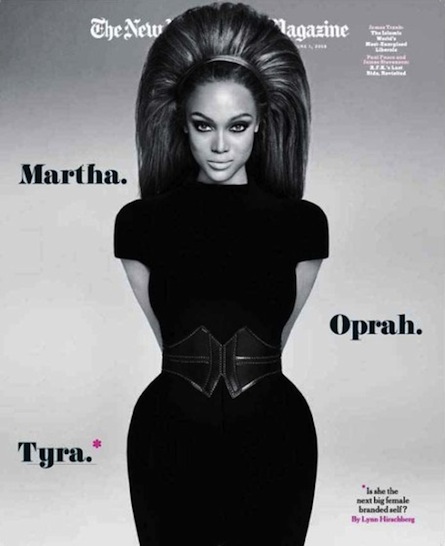
From “Banksable” by Lynn Hirschberg in The New York Times Magazine, circa 2008:

“‘I love being underestimated,’ [Tyra says]… ‘I love when they think, Oh, she’s just a model, she’s going to sit there and do nothing… When I went into producing, my biggest obstacle was that I was a model. But, as I say to the girls on Top Model, anybody who is at the top of anything has taken risks and withstood criticism and hardship. I say: “You think I’m just a model? Well, then, let me show you”’.

“‘It never made me bitter, but it did make me hungrier to prove them wrong.’”

Elsewhere: [The New York Times] Banksable.

Image via Superficial Diva.

Magazines: Nit Wit.


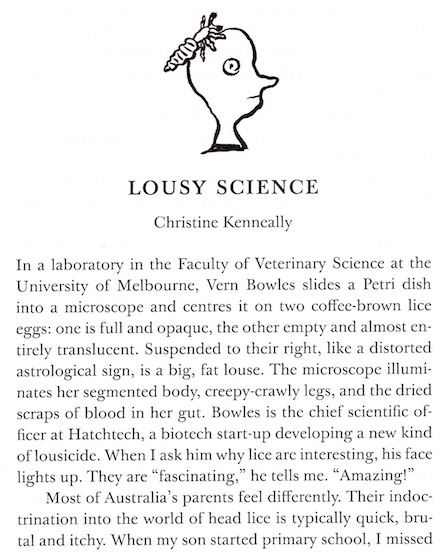
So I found out some interesting facts about head lice from The Monthly’s February 2011 edition.

For example, lice have been around since the dawn of time. In fact,

“lice combs feature in Renaissance paintings of the baby Jesus. They were buried in the tombs of 3000-year-old Egyptian mummies (for the lice in the afterlife). Scientists even found a 10,000-year-old nit clinging tenaciously to a human hair in north-east Brazil.”

Head lice, the other white meat cockroach.

And, considering “they now infest up to 35% of 4–11 year old Australian school children once per year,” nits shouldn’t have such a stigma attached to them.

But they do. I remember when my little sister was invited for a “play date” at—you could say—the school lice-spreader’s house. I warned her not to go and my mother not to let her, but to no avail. And lo and behold, within a week, the whole family was dousing ourselves in Nads.

The author of The Monthly piece, Christine Kenneally, laments her son’s recurring bouts with lice, and let me tell you: I don’t think our household was nit-free for close to a year! I managed to steer clear of them (thank God; I was in year 10 at the time, and I can only imagine the ostracism that I would have faced at my high school.), but with hair down to your bottom and a hippie mother who only believes in natural treatments, my sister had a very hard time of it.

However, there is good news:

“Most treatments are neurotoxins. They damage the nervous system of the louse but they generally don’t hurt the egg… Even if a neurotoxin can get inside the egg, it won’t do much until the third or fourth day when the nervous system has developed. Hatchtech… has created a louciside and ovicide. When it’s time for treated eggs to hatch, enzymes involved in hatching are blocked, and the louse dies inside the egg.”

High fives all round!

Magazines: The Secret Life of Bees.


In last fortnight’s Big Issue, there was a fascinating article about Colony Collapse Disorder of beehives.

Since 2004, “bees across the US and parts of Europe began abandoning their hives,” a phenomenon “which has bypassed Australia (so far).”

The article discusses how Colony Collapse Disorder (CCD) is diagnosed:

“The [abandoned frames] all had honey in them, indicating that there had been plenty of food. They were filled with young larvae, meaning the bees, usually fiercely maternal, had abandoned their young. There were no signs of moths or pests that normally invade sick colonies. And… [keepers] couldn’t find any dead bees.”

what it means for us, as consumers:

“Roughly one in every three mouthfuls of food we eat depends on the humble honeybee. But honey production is a relatively minor aspect of bees’ contribution, It’s their pollination of plants, in their unending quest for nectar, that most deserves our gratitude. About 90 fruit and vegetable varieties… are much more productive with the assistance of bees.”

how we can rectify this situation:

“… The international citizens’ watchdog group, Avaaz, has circulated a petition… [that] calls upon the US and EU to join the ban on neonicotinoid pesticides, which some independent researchers now cite as the cause of CCD.”

and what’s already being done by people such as Melbournian Lyndon Fenlon, “bees’ champion extraordinaire”:

“He is ingenious at locating suitable sites to build new hives, whether in scrapyards, disused factories, backyards… There are now hives on the roof of a railway station in Belgium and even atop the Paris Opera House.”

Sounds similar to the the plot of Bee Movie!

Related: The Big Issue Review: March 1-14, 2011.

Images via YouTube.

The Mystery of Migraines.


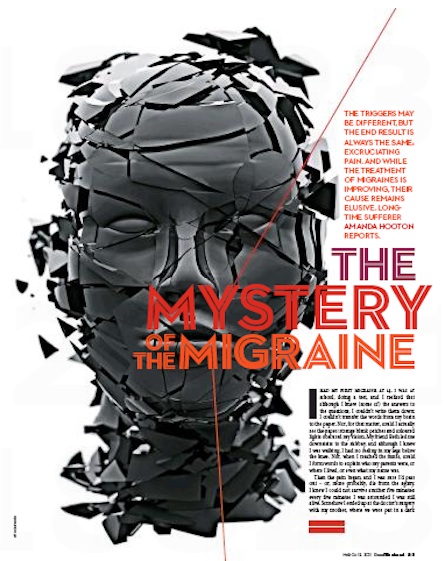
Last weekend’s Good Weekend had a fascinating article on migraines. Here are some highlights:

“… the World Health Organisation (WHO) rates it [the migraine] as a leading cause of disability worldwide, involving ‘substantial personal suffering, impaired quality of life and financial cost’… A host of ferociously intelligent and creative people have suffered similarly—Tchaikovsky, George Bernard Shaw, Nietzsche, van Gogh.” Scarlett Harris.

Seriously, though, “there are… many migraines… There are migraines with pain in the temples; around the eyes; between the brows; at the back of the head; on one side or the other.” I’ve had them all.

“Some migraines make you sensitive to light, some to noise; some have nausea and vomiting at cheerful additions to the unbelievable pain.” Yep, those were happy times indeed.

From the age of about 8 til the end of high school, I suffered from migraines, on average, once a week. Sometimes more; if I was lucky, sometimes less. The pain lessened as I got older, but I often missed school and, later, work as a result. I barely ever get migraines now; my last one conveniently took place on a four-day trip to Philip Island, and didn’t let up til my return home.

So this article resonated with me as no other Good Weekend feature has.

But how did I know they were migraines and not just headaches?

“… if your headache lasts between four and 72 hours (untreated), and if it includes two of the following—one-sided pain, throbbing pain, pain that’s increased by physical activity, or pain that’s strong enough to stop you living your normal life—you are probably suffering from a migraine.”

My headaches usually took the form of throbbing in the temple, nausea, the inability to sit up, read, watch television or use the computer, and left me incapacitated for two to three days on average. Definitely migraines.

Amanda Hooton profiles the history of migraines, from the Neolithic people who “were willing to have their skulls opened with stone axes in order to release the evil spirits inside”, to Lewis Carroll, to LSD as migraine cure, which was “just what someone already seeing small pink creatures on the carpet really needs”!

No one I knew suffered migraines the way I did, so I was all alone in my quest to dull the pain. I now have a system for diagnosing the cause of my migraines, and the remedy. If I haven’t eaten all day and start to get pain in both temples, it’s a hunger headache and I just need food. If I’ve been sitting in bed all day, or on an unsupportive couch, or on a La-Z-Boy/car seat with a headrest that pushes my head forward, it’s a posture headache, and water and drugs will help. Sometimes I wake up in the middle of the night with mind-numbing pain on the top of my skull. The prescription? Drugs, drugs, and more drugs.

But,

“Neuroscientists currently believe that migraines might be caused by what doctors call a ‘spreading depression’—a wave that slowly spreads across the cortex, or outer layers, of the brain. This wave is caused by brain neurons, which carry an electrical charge. In order to send signals to each other during normal brain activity, they ‘transiently depolarise’, or discharge some of their electrical charge via negative ions…

“Researchers have also postulated that the ‘pebble’ [effect caused by the discharging neurons] is really a bubble or tiny blood clot that lodges in a cortical blood vessel… and others have suggested that migraineurs express genes that make their neurons ‘trigger happy’ and more likely than normal to depolarise.”

That’s all well and good, but what does this mean for migraine sufferers?:

“A little-known fact of migraines is that about 90 per cent of migraineurs have a close relative who also suffers from them.”

My mum had a couple here and there over her lifetime, but nothing like the severity or frequency I suffered. As far as I know my dad never had them, and neither did my sister. So, like Hooton, any medical breakthroughs that can somehow impede the TRESK gene that genetic migraine sufferers possess won’t really help us.

The good news is that “for most migraineurs, migraines become rarer, shorter and less painful with age.”

For me, they certainly have.

Image via The Age.
Magazine Review: The Big Issue, 1–14 March, 2011.

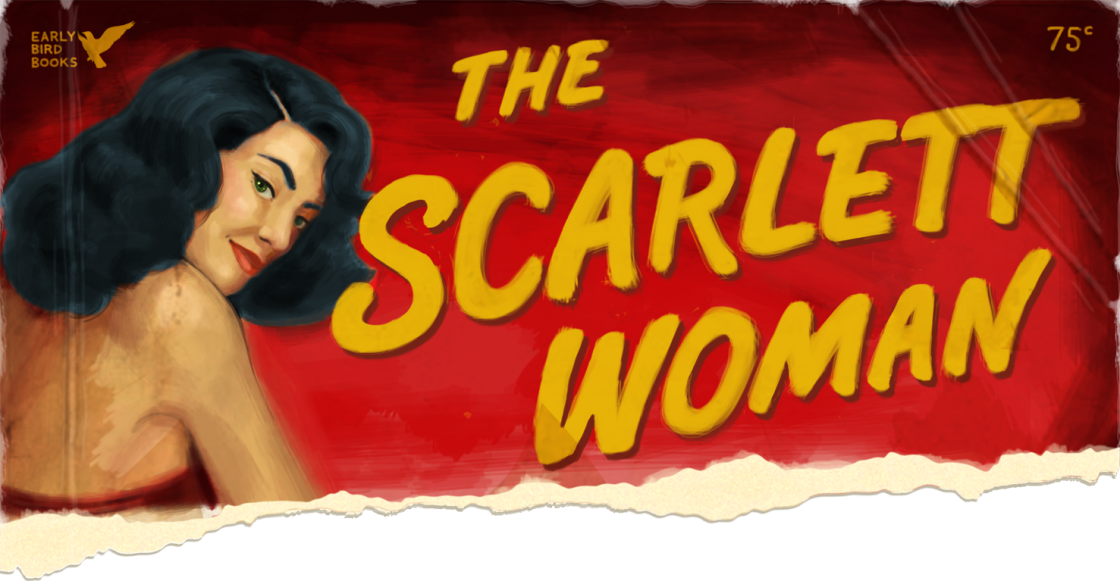
Did you know that there are approximately 7.5 readers for every copy of The Big Issue sold? Which is great for circulating The Big Issue’s content to different kinds of readers, it sucks for the people selling copies out the front of The Body Shop (where I was first exposed to the magazine in my hometown of Bendigo in country Victoria) or at Parliament train station, where I picked up this week’s copy.

But when I read those stats on Girl with a Satchel a couple of weeks ago, I wasn’t surprised. A colleague of mine usually brings in his copy to the staff lunchroom, which makes the rounds at work. He’s gone overseas for a few weeks, so I decided to be the one to provide the communal Big Issue during that time. I do hope that more people will fork out the fortnightly five bucks it costs to be exposed to some great Australian writing (“compared with $4.70 for your weekly copy of Who) but until then, I can take solace in the fact that I did my bit.

There’s still a week left to get your paws on a copy, and I suggest you do, as there are some great articles in there, a lot of them dealing with the social revolution tool that is Twitter, which features on the cover. And for you us pop-culture junkies, there’s Liz and Shane and their Twitter antics, too:

“Celebrities, meanwhile, have embraced Twitter as an opportunity to prove their Everyman concerns without having to directly engage with, well, every man or woman. Kourtney Kardashian, for example, recently tweeted her two-million followers: ‘Does anyone else get scared that being on their phones too much or sleeping with your phone near u is so bad? Or am I paranoid?’ I wonder how many fruitlessly replied, ‘Omg, I totes have a brain tumour! We should be BFFs!’ (Note to tweenie Tweeters: she couldn’t care less.)” (p. 15).

You’re such a visionary, Kourtney!

On a more serious note, editor Alan Attwood writes of the similarly prophetic Steven Johnson from Time magazine, who wrote ‘How Twitter Will Change the Way We Live’:

“He argued that all those tiny tweets add up ‘to something truly substantive, like a suspension bridge made of pebbles’. He concluded: ‘The weather reports keep announcing that the sky is falling, but here we are—millions of us—sitting around trying to invent new ways to talk to one another.’ And that, surely, can’t be a bad thing” (p. 4).

We’ve read all the articles about Twitter being a valuable tool for social change, particularly in Egypt, and there’s no shortage of that in the feature article, from which the above Kardashian quote is garnered. Worth the $5 cover price for this article alone.

Another article I loved this fortnight was Patrick Witton’s on “Sharing the Load” of the hellish daily commute.

I wrote last week about two friends of mine who spend at least two hours in their car getting to and from work each day, which sounds like my worst nightmare. Sure, I used to travel upwards of four hours to work from my aforementioned hometown, but that was on the train, where I could get valuable reading, sleeping and daydreaming done. Driving to work allows the driver to indulge in (hopefully) only one of those activities. Then again, I don’t have a license, so I have no idea how much daydreaming gridlock allows…

Witton profiles the car-pooling phenomenon in America, where there are designated pick-up and drop-off points, between which complete strangers ride in silence, and drivers take advantage of the express car-pool lanes. Like a bus, but without the mentally disturbed drunk espousing the apocalypse.

There’s also the teenagers in Jakarta, who make a living from hitchhiking along the highways, getting paid to be picked up so solitary drivers can hightail it to work in the express lane.

Fascinating stuff.

Elsewhere: [Girl with a Satchel] The Big Issue Blitzes Readership Survey (But are Aussies Being Tight?)

He’s Just Not That Into You… He’s Into Porn.

From “He’s Just Not That Into Anyone” by Davy Rothbart in New York Magazine’s porn issue:

“There is no glory in trying to make love to men who only know how to fuck—man after man after man after man raised on porn.”

Related: The Internet is For Porn.

Elsewhere: [New York Magazine] He’s Just Not That Into Anyone.

Lea Michele Just Can’t Win.


From “Righteous Moms Just Can’t Let Lea Michele Be Sexy” by Margaret Hartmann on Jezebel:

“Yes, some children will probably see the cover while walking past a newsstand, but it’s doubtful that this issue alone will lead to the crushing realization that sex sells. The GQ cover was tasteless and the Cosmo cover may appear a bit desperate, but it isn’t as if Lea’s doing Playboy. Ten years ago, parents were losing it because Britney Spears delivered sexed-up performances, seemingly with no regard for the little girls who idolized her. Britney summed it up well (and ridiculously) with her song ‘Not A Girl, Not Yet A Woman.’ In American pop culture, this dichotomy is nothing new, Lea Michele is just our current scapegoat.”

Related: Disturbing Behaviour: Terry Richardson Does Glee.

Elsewhere: [Jezebel] Righteous Moms Just Can’t Let Lea Michele Be Sexy.

Images via Reality by Rach, Twenty2.OnSugar.

Magazines: Independent Zine Zinm Preview.


Last week I was lucky enough to be featured in a friend of a friend’s Melbourne-based zine, Zinm by Marc Bonnici.

Our mutual friend Anthony had been urging me to check out his self-titled blog for the better part of a year, until I happened upon last month’s copy of Zinm that he’d brought to a get-together.

I was instantly drawn in as I briefly flicked through the pages, a picture from Mean Girls staying most clearly in my mind. (“Burn Book” is a regular feature of Zinm.)

Try as I might, I was never able to get my mitts on a copy of last month’s edition, but better still, I was able to be featured in this month.

As Australia Day rolls around again, guest contributors Anita Calavetta, Marc Bergmann, Dodie Smith, and Muriel Barbery, as well as Marc himself, muse about what Australia means to us. Yours truly continues on her plight to get the safety net for footballers behaving badly removed, as I feel that is a strong part of Aussie culture.

Unfortunately there are not any copies of the latest edition available, as there is a limited print run. But the title has doubled in demand since its inception three issues ago. If you are interested in bagging a copy, I suggest you check out Marc’s blog and drop him a line.

Us independent writers have got to stick together.

Related: Beauty & the Bestiality.

Why Are Famous Men Forgiven for Their Wrongdoings, While Women Are Vilified for Much Less?

Bad Boys, Whatcha Gonna Do? Host a Seven Family Show.

Elsewhere: [Marc Bonnici] Homepage.

Magazine Review: frankie—January/February 2011.


frankie’s last couple of issues have been fairly lackluster, however the January/February edition marks a return to form for the mag.

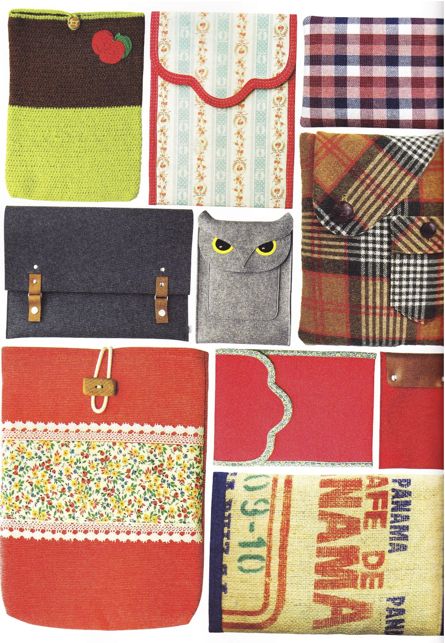
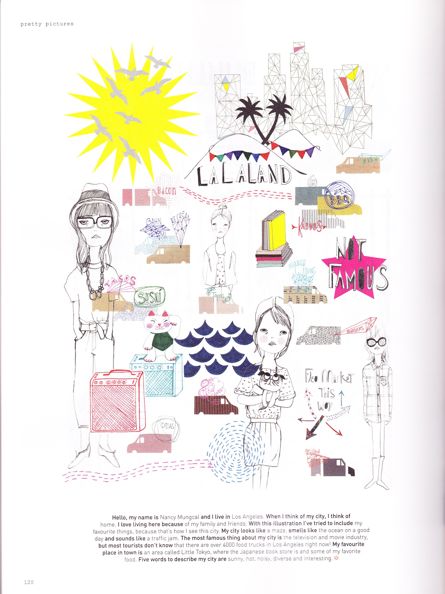
In terms of the pictorials, frankie’s got the hipster-esque “Magnificent Specimens”, where “photographer Dave Mead shares his favourite beardy portraits (p.45), laptop-sleeve porn on page 58, which made me yearn just that little bit more for the brand-new MacBook I am currently typing this on (!!), and Emily Chalmers shows off her “old renovated” London warehouse, where “she works as a stylist, author and shop owner of [boutique] Caravan (p. 87). At the back of the book, four artists draw their cities, with Nancy Mungcal from Los Angeles taking the take (in my book) on page 120.

It is also a quality feature-heavy edition this time around, with Heathers, Muriel’s Wedding and Gone with the Wind making an appearance in “Movies to Swear By” (p. 50), Jo Walker writing that catching a contagious yawn makes you an empathetic person (p. 110), and the world’s strangest holidays, like Punctuation Day and National Wear a Plunger on Your Head Day, on page 114.

Benjamin Law is always a joy to read (I should have included his latest, Family Law, in my “The Ten Books I Wanted to Read This Year But Didn’t”), and his articles this (bi-)month are no exception.

On page 57, Law laments life in the ’burbs, writing:

“Sing to me of Merril Bainbridge cassingles and of pas that play Tina Arena’s “Sorrento Moon” on repeat. Sing to me of Muffin Break and Mathers, of Lowes and Bi-Lo. Sing to me, oh acne-ravaged Asian teenager working at Big W named Benjamin Law, even though you’re going through puberty and really shouldn’t sing at all. Sing it sweet, and sing it loud!”

Whilst over in “An Open Letter To… The Straight Men of Australia” (p. 74), he asserts that they:

“… cop a raw deal, and that’s a culture that tells you to be a dumb, macho, insensitive piece of shit…

“But hey, the rest of us can only speculate what you’re feeling. Because god knows you can’t talk about flowery poofter stuff like feelings. Want to talk about your feelings? Clearly, you must be gay! Want to tell someone you’re sad? Go buy some tissues, gaylord! Want to ask someone whether that cardigan looks good on you? Whether you should call that girl? Whether it’s OK to drink white wine instead of a beer? Gay, gay, gay. Clearly, you’re so gay you poo rainbows…

“If you want to know what is or isn’t gay, ask me. I’m gay. I should know. Feel free to write this down somewhere so you don’t forget. Telling another dude he looks good? That’s not gay. (Women do that all the time, and you don’t see them going all weak-kneed for snatch afterwards…

“… ‘gay’ means feeling an uncontrollable urge to place yourself inside another man. Do you feel that urge? … if the answer is ‘yes’ or ‘sometimes’, well, you should come around to my place and talk. You know, about your ‘feelings’.”

Hil-al-arious!

And what I was originally going to make the first-ever “Magazine Clipping of the Week” before I’d ventured into the rest of frankie and realised it was worthy of a full review, is Rowena Grant-Frost’s essay on the dilemmas of sexiness=grown-upness (p. 40): sassy writing on a real-life issue.

Related: The Top Ten Books I Wanted to Read This Year But Didn’t.

Fragments of Marilyn Monroe’s Literary Life.


From “Marilyn & Her Monsters” by Sam Kashner, in the November 2010 issue of Vanity Fair:

“Several photographs taken of Marilyn earlier in her lifethe ones she especially likedshow her reading. Eve Arnold photographed her for Esquire magazine in a playground in Amagansett reading James Joyce’s Ulysses [above]. Alfred Eisenstaedt photographed her, for Life, at home, dressed in white slacks and a black top, curled up on her sofa, reading in front of a shelf of books [which forms the cover for Fragments]her personal library, which would grow to 400 volumes. In another photograph, she’s on a pulled-out sofa bed reading the poetry of Heinrich Heine.

“If some photographers thought it was funny to pose the world’s most famously voluptuous ‘dumb blonde’ with a bookJames Joyce! Heinrich Heine!it wasn’t a joke to her. In these newly discovered diary entries and poems [which make up the bulk of Fragments], Marilyn reveals a young woman for whom writing and poetry were lifelines, the ways and means to discover who she was and to sort through her often tumultuous emotional life. And books were a refuge and a companion for Marilyn during her bouts of insomnia.”

Related: All Eyes on Marilyn.

Marilyn Misfit.

Lindsay Lohan: Marilyn, Eat Your Heart Out.

The Ten Books I Wanted to Read This Year But Didn’t.