TV: The Underlying Message in Glee’s “Asian F” Episode.


Despite the racism of the title (is it racist if the two token Asian characters and their tiger parents say it?), last night’s episode of Glee was all about girl power, with some political undertones.

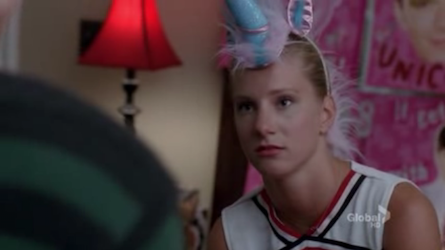
Brittany is continuing her race for class president, performing “Run the World (Girls)” by Beyonce to a standing ovation in the gym. It’s not the first time Brittany’s done a Beyonce song (remember “Single Ladies [Put a Ring On It]” when Kurt was trying to pass her and Tina off as his girlfriends?), and the episode was pretty Bey-heavy, with lots of Dreamgirls songs to boot.

If you haven’t seen this video from NineteenPercent, I wholeheartedly recommend you watch it. “Run the World” “lulls girls into a false sense of achievement and distracts them from doing the work it takes to actually run the world.” Hence Brittany performing in the halls of William McKinley in a leather miniskirt and suspenders, when she should really be working on her campaign promises. But she does look damn fine!

The whole Brittany versus Kurt (versus Rachel) thing evokes feelings of the Barack Obama/Hillary Clinton democratic primary race of 2008, not to mention the Sarah Palin-as-feminist debate.

Santana, Brittany’s right-hand campaign woman, tells Rachel that if she votes for “Jimmy Fallon’s butch daughter”, Kurt, “it would only empower another Frankenbeans,” whatever that means. (A Google search for both “Frankenbeans” and “Frank & Beans” yielded no relevant results.)

Brittany follows this up with all the shit male leaders have gotten America into lately: “double digit inflation, economic freefall, oil spills, the war in Afghanistan.”

But to make women feel like they have to vote for their political counterpart just because they’re a woman isn’t the way it should go. Palin is a perfect example of this: the only reason John McCain chose her as his running mate was because of the close upset of Clinton by Obama in the primaries. Upon further inspection, it was revealed that Palin didn’t know jack about most things. Perhaps Brittany’s run for senior class president is intended to reflect Palin’s vice-presidency bid, or her possible 2012 presidential candidacy, as Brittany isn’t the sharpest tool in the shed.

When Rachel realises Mercedes might beat her for the role of Maria in McKinley’s production of West Side Story, she decides to run for president, too, so she’ll have a stellar extra-curricular on her application for NYADA. Kurt is understandably upset, as he knows that Rachel’s running for personal gain, and perhaps Brittany’s been brainwashed by Beyonce, but he can actually make a difference at the school for fellow outcasts like them.

So it looks like the thinking students of McKinley will be faced with a similar dilemma that Democrats were in 2008: to vote for the marginalised  candidate (coloured Obama/gay Kurt), or the female candidate, who also belongs to a marginalised group…

Related: The Underlying Message in Glee’s “I Am Unicorn” Episode.

Glee Back in Full Force.

Image via VideoBB.

In Response to Questions About “Erotic Capital”.

A few weeks ago, Rachel Hills blogged at Musings of an Inappropriate Woman about “beauty positivity” and “erotic capital”. At the end of the post, she asked these questions of the blogosphere:

“Am I on the right track with the idea that it’s not valuing beauty that’s the problem, but the fact that we’re socialised to believe that we’re never beautiful enough? Is this experience of ‘lack’ just a ‘neurotic Rachel’ thing, or an ‘other people’ thing as well?

“Moreover, is it just a female thing, or do men experience it as well?

“Have you managed to develop a positive approach to the way you look? What did it look like and how did you get there?

“How do we stop beauty positivity from turning into beauty privilege?”

So, here I will attempt to give my opinions on “erotic capital.”

Firstly, I have to start by saying that, miraculously, I feel I have come away from my media-influenced adolescence relatively unscathed. I love my body and the way I look, and enjoy dressing to reflect this. Sure, every now and then I have my “fat”, “ugly” and “bad hair” days, but on the whole, I am happy with how I look.

But, I have to agree with Hills’ summation that liking beautiful things and people isn’t the problem, as everyone has their own unique perception of beauty (the way the media tries to influence this to make it a “one-size-fits-all” lens is another problem—and blog post—entirely), but that, as women especially, we’re never good enough.

Again, I have high self-esteem and I will never let anyone or anything make me think I’m not “good enough” or deserving of the things I want. But often I will go out of my way to “prove” these things. When I go out dancing or to parties, I make an effort to wear the tightest, sluttiest thing I own. If I’ve been a bit lax on the work out regimen, I’ll double up on the control underwear, or wear something a bit more flowing.

My most insecure point is probably when I’m seeing someone new. I’ll have thoughts of, “I can’t get naked with this person until I’ve eradicated all my love handles and cellulite,” which is something that I’ve never been able to do nor am interested in doing since they appeared when I was about 13 or 14. I enjoy having a curvier figure, but I guess that’s the influence of “pornification of culture”, and all the pretty young things we see getting their kit off on TV manifesting.

But, in my experience, this isn’t exclusively a “female thing”. Two of the most in-touch men I’ve ever met are two of my closest friends, and the fact that they aren’t afraid to voice their body image concerns or the pressure put on men to look and be a certain way is a refreshing change to the stereotype of either “ripped football bogan” or “beer-bellied goofy bogan”. While it can certainly be an either/or representation of ripped men (NRL players and the True Blood stars come to mind) versus the incompetent, pudgy father seen most commonly in advertisements for nappies and spray and wipe, at the end of the day that’s nothing compared to what women have to deal with in the media. As Mia Freedman put it in her book, Mia Cupla:

“Pretend the world was full of pictures of naked men. On billboards and the sides of buses, in magazines and ads for beer, cars and deodorant. Imagine there were penises everywhere you turned and you couldn’t escape seeing them every day.

“And all the images of nude men were fake. Every male model and celebrity had had penile enlargement surgery, and afterwards, his penis had been extensively photoshopped to make it look even bigger. So now, all the penises you saw in the media every day were knee-length and as thick as an arm.

“One day, next to a magazine article about a celebrity with a foot-long penis, you read the headline: ‘This is what a 43-year-old penis looks like’. The caption underneath read: ‘Asked for the secret to his long schlong, former male model Markus Schenkenberg insists he was just born that way. “I wear cotton boxer shorts and I exfoliate in the shower,” he shrugs. “That’s all I do.”’

“After reading a hundred stories like that and being bombarded by 10,000 images of men with surgically altered and digitally enhanced penises, do you think you might look down at your natural, un-photoshopped trouser snake and feel a little… deflated? Inadequate? Insecure? Angry?”

As I said before, it is amazing that I managed to emerge from adolescence without a lingering negative thought about my body. Sure, I don’t like my legs or my stomach, but I dress to reflect this, and try not to get too paranoid about it. I prefer not to lounge by the pool in a bikini all day, and won’t wear a miniskirt without stockings or pantyhose to hold everything in place, but I won’t let these insecurities stop me from having fun.

My mum was very insecure about the way she looked, and this was projected onto my sister who, I believe, suffered the beginnings of an eating disorder a few years ago. Considering I was the one who was very into movies, TV, magazines and pop culture in general, it would be more likely—at least in the eyes of body image scaremongers—that I would be the one with the eating disorder.

One thing I did inherit from my mum, though, was her bad skin. She’s had skin conditions like dermatitis, allergies and surface veins all her life, and I was (un)lucky enough to get these, too. However, while she’s had relatively clear skin, pimple-wise, I suffered for several years with huge, painful zits which left scars, some of which I still have today. After years of trying to find products to prevent and get rid of these pimples, I finally realised that simple is best when it comes to skincare. I still get a large pimple every now and then (unfortunately, it’s large or it’s not there at all), but I’ve learned how to manage them. But the scars on my face are my biggest insecurity, and the humiliation was exacerbated by both the media, where the aforementioned pretty young things would frolic “make-up free” at the beach or when they woke up, and by people I encountered in my everyday life, who wouldn’t look me in the eye, but rather in the eye of my pimple.

Sometimes I look back on my younger years and I want to kick myself for being so typically self-conscious. I would apply a mask of makeup every day when I didn’t need it at all. I think age and wisdom are the only ways to really appreciate what you’ve currently got.

Finally, I have no idea “how to stop beauty positivity from turning into beauty privilege”. Personally, I don’t think the media plays the most important part in this. I think it starts at home: if parents, teachers and close family and friends can encourage “critical thought” about representations of not just beauty, but stereotypes of women and men, in the media, then young people have a better chance of understanding that what we see on TV, in magazines and advertisements isn’t real. This can be found elsewhere, in books, on blogs and using resources such as the Body Image Advisory Group, chaired by Freedman.

Of course “beauty privilege” is something we see more of in the media than in real life, as beauty campaigns and the lead role in movies like She’s Out of My League depend on the calibre of physical beauty a person woman possesses, whereas friendships, romantic relationships, business partnerships etc. involve other aspects.

So, I will now pass on Hills’ original questions to you, reader: what are your thoughts on “erotic capital” and beauty privilege?

Related: Mia Culpa: Confessions from the Watercooler of Life by Mia Freedman Review.

Is There Really a Beauty Myth?

Will Boys Be Boys When it Comes to Objectifying Women?

Elsewhere: [Musings of an Inappropriate Woman] Some Questions I Have About “Erotic Capital” & Beauty Positivity.

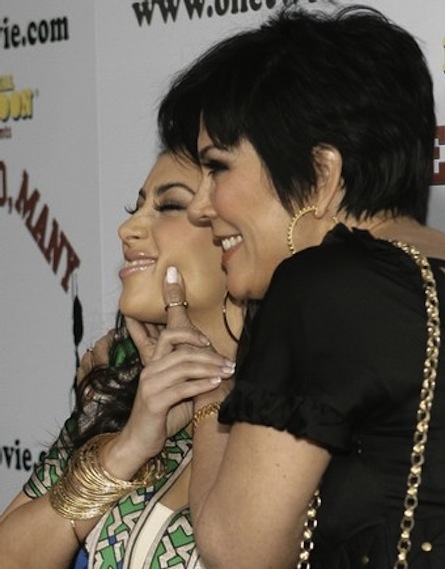
TV: Is Kris Jenner a Bad Mother?


She’s constantly on Khloe for her weight, Kim to prioritise her money-making appearances with family and love, and Kourtney to get married before she has another child. Not to mention that she neglects, according to them, Kendall and Kylie in favour of her older daughters.

But is Kris Jenner a bad mother because of this?

One could argue that she spent her former days of motherhood raising her six kids (not to mention Bruce’s four other children from previous marriages), and is rewarded by earning 10% from their business endeavours.

But some of the things Kris says and does arguably aren’t in the best interests of the wellbeing of her children. Or is that just how they choose to portray her on the show?

In the first season of Khloe & Lamar, Kris berates Khloe for her size (in the same episode that Lamar calls her “not small” in Playboy magazine), saying it’s not cohesive with her other sisters’ frames, nor with QuickTrim, the diet supplement the Kardashian sisters promote. In other episodes of the Keeping Up with the Kardashians franchise, Kris is on Khloe’s back to have a baby. After all, she has been married for two years (who would have thought that would last?!) and is relatively young, so it shouldn’t be that hard, right?

Kris also doesn’t approve of Kourtney’s boyfriend and baby daddy Scott Disick, and in earlier seasons of the show, who could blame her? But even after Scott made a 180° turnaround in his behaviour after son Mason was born, Kris still can’t accept him.

Kim, the head moneymaker of the Kardashian cklan, can usually never put a foot wrong in her mother’s eyes, but every now and then Kris will get upset with her for being so uptight. So do her sisters, for that matter.

But, in the latest season of Keeping up with the Kardashians, Bruce surprises Kris and the family with a trip to Bora Bora to celebrate the couple’s twentieth anniversary. The tables are turned from Khloe’s weight woes to Kris’, as she worries about her body and even contemplates surgery before they go away.

Kris asks how she’s supposed to strut around poolside in a bikini, when all of her young, hot daughters are, too? When I heard this, I wanted to throw up in my mouth a little bit. If anyone had any doubts about Kris being a “stage mum” of sorts, I think the proof is in the pudding (pardon the pun) here, as she’s jealous of her children.

I’m not a mother, so I don’t know if this is a common occurrence, but mothers should be proud of their daughters, not envious. And it’s not healthy for mothers to talk down about their own weight and appearance at the risk of passing that attitude on to their children. At the end of the day, she helped make them the way they are, and she should be proud they’re so successful.

It’s a peek into the insecurities she perhaps projects onto Khloe. I know my mum and I have clashed because of our similar traits.

If you’ve ever watched an episode of the show, you’ll see each 20-minute installment is wrapped up nicely by the time it comes to an end. Like Beverly Hills, 90210, each episode has a message, and everyone learns their lesson and it’s all hunky-dory at its culmination. Khloe realises she has nothing wrong with her body, and she’ll become pregnant sooner or later. Kim realises she needs to loosen up and, incidentally, her new husband, Kris Humphries, helps her do that.

But does the neat little package the Kardashians’ antics are tied up into mean that Kris’s overbearing and insensitive nature is just for show, or edited from an even more tyrannical version of herself?

Elsewhere: [Jezebel] Is Kris Kardashian Just a Glorified Pimp?

[Jezebel] Kris Jenner, Momager Extraordinaire, Has Body Issues Too.

Image via Celebuzz.

On the (Rest of the) Net.


Do these sex trafficking awareness ads do more harm than good? [Copyranter]

On Zooey Deschanel and “girlishness”. [HuffPo]

And from a link featured in the above article, Julia Klausner laments said girlishness:

“I’m begging age-appropriate females: Read something written before you were born. Stand up straight. Make sure you own one piece of jewelry that you did not purchase on Etsy. Use capital letters in an email to the guy you want to date. Let him take you out on a date, maybe not on a walk or an Xbox session, even if you are, God help you, addicted to LA Noire. Meet your friend for wine instead of fro-yo one night. Watch a movie with no early-’90s nostalgic appeal. Bitch, you already know Clueless by heart.” [Jezebel]

2 Broke Girls is not as bad as Jezebel thought. Nor is New Girl, for that matter.

Who is the Falling Man? [Esquire]

Mia Freedman on the dangers of teen sexting. [MamaMia]

In a similar vein, Erica Bartle tackles the online activity of teens. [Girl with a Satchel]

Dating while beautiful. [The Beheld]

The “power and politics” of being a tall girl:

“It’s funny—height, like physical strength, is one of those things we don’t really care much for in women because we say it upsets the ‘natural order of things,’ which is that men are the Protectors and women the Protected.  It’s all well and good to be the Protected, as long as you don’t consider the fact that the only way to perform your role well is to be physically vulnerable.  After all, if you are not vulnerable, what’s the point of having a Protector?…

“Yet it’s difficult not to notice that my height has given me very real advantages… like not having to deal with cowardly men harassing me as I walk down the street, or being able to push my way past predatory fraternity boys who tried to corner me in college, or standing my ground in large crowds, or taking up space in public, or a whole mess of other things that I take for granted that other women don’t get to experience.

“This is why I will always encourage women to develop their physical and mental strength.  There is no reason why physical power should be meted out simply by luck of birth.  A woman who is 5’2″ has just as much right to be here in this world as I do.  She has as much right to take up space and to walk down streets as I do.  It’s a damn shame that we live in a world that demands we fight for such basic human experiences, and I hope that someday in the future it’s no longer necessary, but until then, let’s not make it easy for those who want to take these rights away from us.” [Fit & Feminist]

The Detestable Self: what are your worst qualities? Mine are that I’m selfish, stubborn, unforgiving and self-righteous. But these are what make me, me, and at the end of the day, I like the way I am and I do enjoy being a bit selfish, set in my ways, grudge-holding and judgmental every now and then. [Girl with a Satchel]

The apocalypse is nigh: Mississippi wants to pass a bill that gives unimplanted, fertilised eggs personhood rights. [Ms. Magazine]

What’s a feminist voter to do?:

“Maybe, as with any other long-term relationship, feminism and liberalism simply grew to take each other for granted. Maybe we feminists got lulled into a false sense of security that liberals are our natural, stalwart and obvious allies, and wouldn’t display misogyny or old boys’ tendencies. It’s understandable, but a gravely simplifying loyalty and trust, if so, because misogyny is something that all of us can struggle with or exhibit—whether male or female (women engage in women-hating, self-loathing, and sexuality-hating behaviors, too), and whether liberal or conservative.” [HuffPo]

The conservative Gardasil debate between Republican presidential hopefuls Rick Perry and (God save us all) Michele Bachman. [The New Yorker]

Why I Love & Hate Pretty Woman. [Tits & Sass]

The problem with porn from a male point of view. [Good Men Project]

Why the advent of smart phones, Facebook and Twitter wouldn’t have been productive for 9/11 families. [Good]

“Weddings as Work.” Very interesting. Caitlin Moran touches on this in How to Be a Woman, which I will be reviewing in the coming weeks. [Kay Steiger]

How the banning of the burqa is “making things worse” in France. [Jezebel]

The dangers of seeking out an abortion at a “crisis pregnancy centre”. [Jezebel]

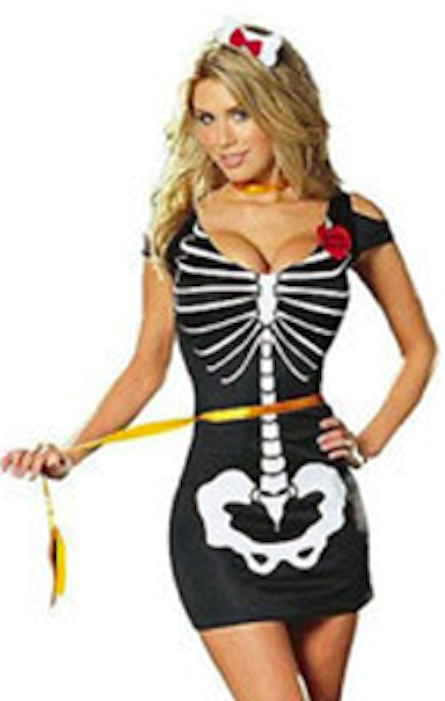
This takes the cake when it comes to tasteless and totally offensive Halloween costumes: sexy “Anna Rexia”. [Jezebel]

“How to Talk About Religion Without Starting a Fight.” Handy. [Jezebel]

How to tone down the sexy in the workplace. [MamaMia]

“The Seven Types of Book Lover.” I’m definitely—much to my fellow book lovers’ dismay—“the dog-earer” and “the underliner”. However, my weapon of choice is the highlighter. Which type are you? [MamaMia]

Ahh, yet more mansplaining. [Feminaust]

Camilla Peffer gives some advice on how to get work experience/internships. [Girls Are Made From Pepsi]

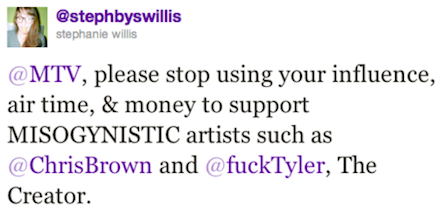
MTV, please stop supporting misogynistic artists such as Chris Brown and Tyler, the Creator. [Be Closer]

The last taboo: female masturbation? [The New Republican]

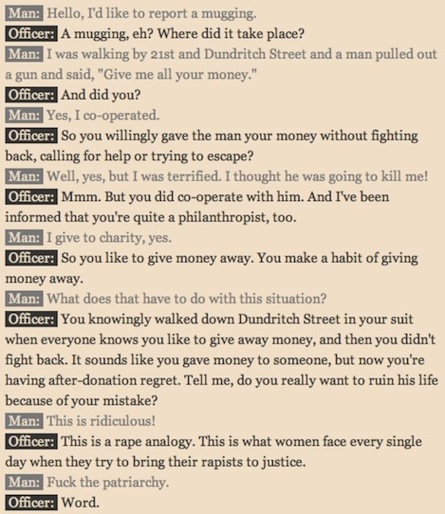
Rape analogy. Funny ’cause it’s true. [Downlo]

The “vegetarian line”. [MamaMia]

“The Cult of Muscularity.” [Bitch Magazine]

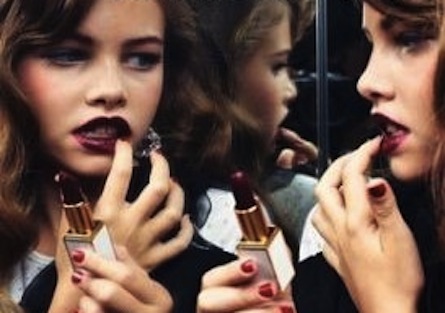
On Thylane Blondeau and the sexualisation of girls:

“Yes, that’s right. She’s wearing lipstick and heels. She’s wearing things that adult women wear and adult women are sexy. What else are those poor, poor men supposed to do? Here’s a thought: nothing. I’ve said it before and I’ll say it again. There was never a man in history who dressed his son up like him and was accused of pimping him out. If this girl’s mother dressed this way, she’d be considered classy, fashionable, and beautiful. So what’s the difference? They’re clothes, not sex, so why is it okay for an adult woman to wear these things in public, but not a child? Because clothes like this are considered to be no less than full consent to sexual advances. That’s what the problem is. It’s not the clothes, it’s not that she looks good, it’s not even that she looks sexy, it’s that people consider skirts, lipstick, and earrings consent to sex.” [Blogging When the Baby Isn’t Looking]

Images via Copyranter, Jezebel, Be Closer, Downlo, Style Bungalow.

TV: The Underlying Message in Glee’s “I Am Unicorn” Episode.


“When a pony does a good deed be becomes a unicorn, and he poops out cotton candy until he forgets he’s magical, and his horn falls off… then he becomes a zebra,” according to Brittany. Or rather, “A unicorn without a horn is just a horse,” as Burt Hummell puts it.

Take away all the Brittany-craziness and metaphors, and I am starting to relate to Glee like never before.

What Brittany is trying to tell Kurt—whose campaign for class president she wants to run—is that he’s unique, and he should never forget that.

As I wrote in relation to Glee’s season three debut last week, I’m struggling at the moment with not only believing in my uniqueness (or just in myself, period), but also having it recognised by others. But when you keep getting similar responses—“Everyone else has to get by with the daily nine-to-five grind, why shouldn’t you?” is a paraphrase that springs to mind—in the quest to realise your dreams, it’s hard not to become disheartened.

Kurt’s struggling with this, too, as he auditions for the lead male role in McKinley High’s production of West Side Story, which the co-directors, Coach Beiste, Miss Pillsbury and Artie, think he might not be masculine enough for.

Really incorporating a key element in the gender blogosphere this past year, Burt tells Kurt to stop sulking about being too flamboyantly gay to play a straight guy from the streets and to write his own realistic portrayal of gay characters.

Sing it, daddy! (I intended that to be less creepy than it came out!)

Brittany also makes a poignant point when she informs Kurt she’s decided to run for class president, too:

“You know, the last six senior class presidents have all been guys, and look where that’s got us: teetering in a double-dip recession.”

Finally, Glee’s starting to acknowledge some pertinent issues, minus the offensiveness. Maybe Santana’s right in saying that Brittany’s a genius, and a unicorn. We all are.

Related: Glee Back in Full Force.

Images via VideoBB.

TV: At Home With Julia—Funny or Disrespectful?


After watching last Wednesday night’s third episode with my hard-to-please comedy-wise housemate who hadn’t seen the previous installments, it certainly wasn’t funny.

I did enjoy the first two episodes though and, as Mia Freedman mentioned on MamaMia TV a couple of weeks ago, it did make the Prime Minister seem more “human” and relatable, if that’s even possible coming from a scripted, comedic version of Julia Gillard.

But why is a comedy show that mocks her living arrangements with her de facto partner Tim Mathieson, amongst other things, being made about a prime minister in office? Would this shit fly if John Howard—or even Kevin Rudd—had a show made about them whilst in office?

Sure, there were comics of Howard with his bushy eyebrows and his morning walk, and Rove had a weekly segment about K.Rudd and Wayne Swan’s prime ministerial faux pas, which came to be my favourite part of the show. But they dealt with their public lives, not their personal ones, which seems to be all the public can focus on since Gillard ousted Rudd.

Gillard has been disrespected in the past because of her gender. She is constantly referred to as “Julia” instead of the courteous “Prime Minister”, was berated by Alan Jones for being a few minutes late on his talkback radio program (which, incidentally, was the same day she was also called “Ju-liar” by the shock jock), and cops it in the press for the way her hair is styled and how she dresses.

On that, there is a heavy influence on At Home with Julia about Tim’s “house-husband” status and how he’s a sad hairdresser who just wants to marry the independent Julia. While I’m not sure the show seeks to contribute to the status quo, but rather critique it, I do have a problem with the fact that in this society, an unmarried couple is an unhappy one.

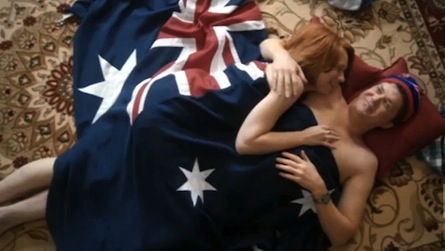
Despite my problem with the fact that there is a comedy show about a sitting prime minister, it is an accurate and (mostly) funny satire of Gillard’s time in office. I voted for her, and regret doing so because of the way she’s blundered the carbon tax and the asylum seeker issue. I hope At Home with Julia seeks to delve more into these issues, instead of portraying sex—an act the show asserted it would never do—under the Australian flag in the Prime Minister’s office. As Anthony Sharwood wrote on The Punch:

“Yet somehow, it was deemed OK to make sexual jokes about an incumbent prime minister in her late 40s, whose love life has never had the tabloid quality of, say, Bob Hawke’s. Even if you dislike Labor and Gillard, the nookie scenes were cringeworthy and savagely inappropriate.”

What do you think? Much ado about nothing, or wildly inappropriate and disrespectful?

Related: Not Quite Out of the Woods: The State of Australian Politics.

Elsewhere: [The Punch] Why is the ABC Screening This Crap?

[MamaMia] At Home with Julia: Love or Loathe?

Image via News.com.au.

Magazines: Is Lea Michele Too Sexy?


Earlier in the year, Glee star Lea Michele, who plays the uptight perfectionist lead singer in knee-high socks of William McKinley High School’s glee club, posed for a sexy cover shoot for US Cosmopolitan.

On the cover of the March issue, Michele looks sultry in a low cut black top, but it’s nothing compared to her racy, and downright inappropriate, pictorial with fellow Glee clubbers, Diana Agron and Cory Monteith, for GQ last year. Sure, it was shot by the notorious Terry Richardson, so expectations weren’t that high to begin with. But the vacant, open-mouthed stare of Michele as she sits, legs akimbo, on a locker-room bench, or suggestively sucks on a lollypop, are confronting to say the least.

I have briefly blogged about this “disturbing” photo shoot, to which I can understand the public outcry.

However, Michele’s Cosmo shoot is tamely vanilla in comparison, but drew an almost equal uproar from parental groups:

“I think Lea Michele is sending the wrong message. She plays such a ‘good girl’ on Glee, and a lot of kids look up to her persona. Then she poses very provocatively on two magazine covers… I find it frustrating as a parent who is trying to teach right from wrong to their kids and then you have things like this happen which is showing middle schoolers things like sex sells and all that goes along with that.”

To my mind, Michele is 24 years old; an adult who seemingly has her head screwed on right and is in control of her own life. Her idea of the perfect night is a bath, Skype and a glass of wine, which is a far cry from the extracurricular activities of other starlets her age. Lindsay Lohan, anyone?

But, on the other hand, we have to ask the question: why does Michele feel the need to sex-up her image when, by her own admission, that is not the way she sees herself.

Dr. Karen Brooks explains, in relation to the GQ pictorial:

“I think they’re attempting to draw the line between their young characters and the fact they’re sexual adults and they feel that the way to this, rightly or wrongly, is by being hypersexual. It’s a graphic announcement to the public not to confuse or conflate the fiction of their onscreen persona with their real life; [they’re saying] ‘I may play a child’, but, in what’s almost an unintentional parody of the Helen Reddy feminist anthem, ‘I am woman, hear me roar’, they’re saying, ‘I am woman, see my score!’ It’s extreme, it gets attention (for the show, the character and the actor) and therefore, sadly, works.”

Ultimately it is her choice to get a bit sexy but, when I asked Erica Bartle of Girl with a Satchel for her thoughts on this topic, she wondered if maybe Michele’s just “conforming to the status quo?”:

“How much say does a star really have in how she’s portrayed?”

As Jezebel notes, “it isn’t as if Lea’s doing Playboy.” Cosmo is a magazine for women, and the cover isn’t as threatening as, say, the GQ one, or Rihanna’s Rolling Stone cover, in which her butt cheeks hung out of mesh shorts. There are a lot of magazines for women out there, like Yen, The Gentlewoman, and Brigitte, which cater to needs other than “how to please your boyfriend in bed”, and don’t require their cover star to, as Coco Chanel once said, take something off. In most cases, it’s their bra. (One argument for Michele’s down-to-there black top might be that *cue sarcasm* she really bares her heart and soul.)

But at the end of the day, it’s just a magazine cover. For mature adults like ourselves, we can make the decision to buy or not to buy into the sexy image of Michele on the cover of Cosmo, Rihanna in chain mail shorts for Rolling Stone, or the flesh-baring on the blue carpet at the Brownlows on Monday night. As educated, critical thinkers, we also realise that because Michele is dressed provocatively, it doesn’t make her any less of a singer, actor or seemingly normal 24-year-old when the makeup comes off and the spotlight goes down.

Related: Lea Michele Just Can’t Win.

Disturbing Behaviour: Terry Richardson Does Glee.

In Defence of Rachel Berry.

Rachel Berry as Feminist.

VCE Top Designs: frankie Editor Jo Walker Talks to Media Students.

Is There Really a Beauty Myth?

Elsewhere: [Jezebel] Righteous Moms Just Can’t Let Lea Michele Be Sexy.

Images via Reality by Rach, Twenty2.OnSugar.

Book Review: Never, Ever, Again… Why Australian Abortion Law Needs Reform by Caroline de Costa.


Abortion activist Caroline de Costa gets the name for her book from the Queensland trial of young couple Tegan Leach and Sergie Brennan, who were charged with procuring an illegal abortion by using the “controversial abortion drug”, RU486, which is a situation that should happen “never, ever, again” (p. 24).

This unique case garnered so much media attention because it was the first time since 1959 that a woman was charged, under section 225 of the Queensland Criminal Code, with procuring her own abortion. This section of the criminal code hasn’t been changed since it was written… in 1899.

The couple were declared innocent after the trail came to a close on the 14th October last year, but it brought to a head the debate surrounding the aforementioned “controversial abortion drug” RU486.

de Costa has also written another book on RU486, and a lot of that material is rehashed in this publication. Before this case, I only ever thought there were surgical abortions, performed in a hospital using suction. I supported them nonetheless. Now that I’m aware there is an “abortion drug”, which not only assists in the safe termination of pregnancy, but “could help treat, among many other things, certain inoperable brain tumours, breast cancers, burns and, ironically enough, the fertility-inhibiting condition of endometriosis” (p. 151), I’m even more in favour of allowing access to abortion to women who don’t want to be pregnant.

de Costa continues:

“Mifepristone/misoprostol [RU486] is also an effective way of starting labour in women when it is found that the fetus has died in the uterus at any time up to mid-pregnancy, and this is now recommended practice in many countries overseas.

“Mifepristone has also been shown in trials to be useful for Emergency Contraception (EC)” (p. 152).

de Costa is quick to point out that RU486 is not the same as EC, as one assists in abortion while the other prevents an egg being fertilised in the aftermath of unprotected sex.

The drug has also been seen to be effective in small doses as a contraceptive pill, assist in the treatment of Cushing’s syndrome (the “over-production of glucocorticoids”), depression, dementia and Alzheimer’s, arthritis, “certain types of hypertension”, glaucoma, and even HIV and AIDS (p. 152, 154).

But RU486 is only available from a few medical practitioners in a few locations in Australia, hence why Leach and Brennan decided to purchase theirs from overseas. It is also a fairly recent development.

Before medical abortion was available, women tried all sorts of treatments and home remedies to abort their foetuses, a cacophony of which are detailed in Never, Ever, Again. Most of these cases resulted in the desired death of the unborn child, but also in the death of the mother.

Whilst Victoria, New South Wales, Western Australia and the Territories have abolished abortion as a crime, Queensland still considers it an illegal and punishable offence. So do, to a lesser extent, Tasmania and South Australia. Seriously, people: when some third world countries have no problem with mifepristone, why should a progressive country such as Australia?

The book talks about the majority of Australians who think abortion should be legal, and how Queensland residents and the media came out in support of Leach and Brennan during their trial. For example, “as journalist Emma Tom wrote in 2009:

“Like many people who believe women should have the right to safe, affordable and legal terminations, I don’t like being described as pro-abortion because it sounds like I think terminations are fabbo things that women should hop into as often as possible. The truth is I’d like to see a whole lot less of them, but via sex education and contraception rather than by robbing women of their right to decide whether they’re up to seeing through a pregnancy” (p. 24).

Now that’s something everyone can agree on, no?

In the final chapter of the book, a recent addition to this second edition, de Costa writes in a much more relatable and personable tone than the rest of the book. Perhaps that’s because the final chapter is an account of the trial of Leach and Brennan, which de Costa attended.

de Costa also repeatedly writes the assertion that abortion should be a matter that exists between a woman, her partner and her doctor, and not the government, the police and the legal system. In the final sentence, de Costa writes:

“It [the second chapter of abortion law reform in Australia] will be written when finally State Premiers and Attorneys-General have the wisdom and courage to remove abortion from the too-hard basket and agree on uniform decriminalization of abortion law across the country. Then, and only then, can abortion truly be a matter for a woman, her partner and her doctor.”

Amen to that!

Related: Melbourne Writers’ Festival: Never, Ever, Again: Why Australian Abortion Law Needs Reform by Caroline de Costa Book Launch.

Feminism Respects Women More Than Anything, Including the Catholic Church!

Image via Fishpond.

Guest Post: Feminism Respects Women More Than Anything, Including the Catholic Church!

Just over a week ago I was reading this here blog when I came across an article that shocked me. It was a response to a feminist blog that stated that the Catholic Church disrespects women. The response was supposed to demonstrate that “[the Catholic Church is] one of the few places in the modern world where women can find true acceptance and respect.” I almost choked when I read those words. Surely a Solidarity Salon or feminist society would be a more accepting place.

The Catholic Church has systematically stripped away women’s rights from the outset. Before people go asking for evidence, permit me to quote the Bible:

“That they may teach the young women to be sober, to love their husbands, to love their children, to be discrete, chaste, keepers at home, good, obedient to their husbands, that the word of God be not blasphemed.” Titus 2:4, 5 (emphasis mine).

According to this, women are subservient to men, must marry, have children and behave in a particular way—chaste, pure, with loving eyes only for him. The most important point here, however, is that wives must be obedient to their husbands. This indicates that women are viewed as being unequal to men. I cannot see how we can possibly feel respected if we do not feel equal.

Women in the Bible, and therefore in the eyes of the Catholic Church, are always presented in one of two ways: the Madonna or the whore. The Virgin Mary (mother of Christ and most famous of all biblical “vessels”), Priscilla (devoted wife of Aquila who extended her hospitality to St. Paul when he was in need), Ruth (loyally took care of her sick mother-in-law) and Elizabeth (who bore a son, John the Baptist, despite being well past child-bearing age) are all examples of the Madonna; the virtuous woman in the Bible.

So some of the examples are a little stretched for goodness—I’ll gladly look after my mother-in-law but I doubt that alone makes me a good person. That is because women are painted as sinners and whores far more frequently in the good old pages of the Bible. A small list of examples include: Eve (duh, she started it all by defying God and eating some fruit), Jezebel (worshipped false gods and murdered her husband and sons), Delilah (betrayed Samson, lured him with her sexuality and maimed him by cutting off his hair in which his strength lay, effectively leading to his death), Salome (flirted and danced seductively for her step-father to persuade him to execute John the Baptist—at the age of thirteen! [Scarlett Woman note: so the sexualisation of children isn’t just a raunch culture, Internet-age thing!]), Mary Magdalene (one of Jesus’ most reliable disciples, however she was painted as a prostitute until 1969 when the Pope recognised her as a true disciple). I could go on. Is it just me, or are the stories about the “evil” women just so much more fun? Now that we’ve had a who’s who of female biblical figures, I’d like to address some of the points that were made in the article.

The first point, predictably, is abortion. Apparently, because a high percentage of women having abortions reported using contraception and it failing “there is a huge problem with contraception—something the Church has said all along.” The Catholic Church is against contraception because they believe that every union between sperm and egg is a life and that only God has the right to give or take away life. Jennifer Fulwiler’s argument seems to be more centred on the science of contraception, an aspect of the argument that the Catholic Church has never really looked into being clouded with the morality angle. There were a few comments written in response asserting that if feminists want to be environmentalists as well, they shouldn’t pump their bodies and waterways with chemicals that inhibit pregnancy. Aaah, psedo-science!  As both a feminist and an environmentalist, I endorse the use of the Pill. All medication carries a risk, even aspirin. I received a very competent education on the menstrual cycle and how the pill works to inhibit the release of an egg by adding more oestrogen and progesterone, hormones that are naturally produced in the body, at a particular time in the cycle. If you are educated on how it works, you won’t be afraid of it. I would like to ask a question about sperm, though. If the church posits that the union between egg and sperm is a human being, do they believe that individual sperm and unfertilised eggs are also people? If this is the case, how can they condone the reproduction process, considering how many poor innocent sperm die in the hostile environment of the womb? [Scarlett Woman note: Or in “masturbatory emissions”, as Elle Woods would say?! Oh, that’s right: masturbation is evil.]

The article goes on to say that—shock, horror!—women are having sex for pleasure, not procreation. Really? In 2011? I had no idea! This is blamed on being “bombarded with about a zillion messages a day that portray sex as… pleasure and fun” and that you only have to “turn on the E! Network or flip through an issue of Cosmo” to see this message being touted and lauded as positive. I must admit, I always go to Cosmo for the best sex tips! The hyper-sexualisation of society is something that religion in general often uses as a way of renouncing feminism.  In a Google search of feminism, the third option is a website called Feminism is Evil. Not only is the sheer ridiculousness of the “argument” against feminism laughable, the only evidence appears to be quotes from the Bible. Feminism is Evil also blames the media for the unfeminine behaviour of women:

“The television is about as false and misleading as can be nowadays… People are being indoctrinated, especially our youth, to have a false view of reality. Television nowadays is being used as a weapon to promote agendas that go 100% contrary to the Word of God; such agendas as homosexuality, feminism and abortion.” (Original emphasis removed.)

At one point, the site makes the argument that men are more pure than women because “not one man has ever had an abortion”! I still believe that the mainstream media presents a patriarchal, homophobic lifestyle as the norm. Whilst there may be more divorced characters on television, they still promote impeccable family values. In CSI: Crime Scene Investigation, I would argue that Catherine works extra hard on her relationship with her daughter, Lyndsay, insisting on things like eating dinner together at the table and having movie nights. If anything, she is the most family-oriented character on the show. Similarly, Glee deals with a gay character, Kurt, by placing him in a highly supportive family. He has a great relationship with his father and becomes integrated into a full family unit with the marriage of his dad to fellow Glee clubber Finn’s mum.

Whilst I am the first to discuss the objectification of women in advertising that portrays them as sexual objects, it’s strange how we actually agree on something but think that it’s wrong for completely different reasons. I still maintain that most adverts place women in domestic spheres. This is completely compliant with the church, according to Feminism is Evil, as “biblically a woman’s place is in the home.” If I have to see one more advertisement for cleaning or cooking products in which only women appear, or in which they are exasperated at the incompetence of their husbands (and they are always husbands), I feel I might scream! The media systematically proliferates society with these wholesome messages of propaganda for “traditional” gender roles as a response to the increasing feminist and homosexual rights movements. People just don’t see it, as the message is more subtle than the ads of the ’50s and ’60s.

Back to the article at hand, and Fulwiler falsely states that “secular feminists are not willing to stand up for all women.” This is a sweeping generalisation. She cannot speak for everyone, and neither can I, however I was offended by this statement. I, personally, am willing to stand up for all women, even ones who, like her, are victims of the patriarchy. I actually feel that women who have been indoctrinated into a repressive and unequal culture need to be represented more, as they have lost their own voices.

As the article goes on, however, I realise that I don’t represent all women, if Fulwiler is to be believed:

“Pro-choice feminism only respects women once they’ve reached a certain age, usually about 36 weeks; the ones who are younger than that are not considered worthy of consideration as human beings, let alone worthy of respect. The Catholic Church respects all women, no matter how small and voiceless.”

Oh, right, I see what she means. I could not disagree more. This issue is, undoubtedly, highly subjective based on when one considers a foetus becomes a person.

I am not speaking for any other secular feminist at this point but I don’t consider an aborted foetus a woman that I have failed to represent. This is not about neglecting women here; this is about terminating a pregnancy, not a life.  I believe that the person to focus on is the woman who should be given the choice as to whether she wants to continue the pregnancy and eventually give birth to a fully-fledged human, or terminate that pregnancy and not bring an extra child into the world. Each case is individual and should be treated that way, however, at the end of the day, the choice should only ever be that of the woman’s.

Once again, there is a misconstrued notion that the Catholic Church educates women on abortion better than pro-choice organisations or abortion clinics. I disagree, and I went on quite a few websites to discover what they say the procedure consists of. According to Better Health Victoria, two types of abortion are currently available:

  • Surgical abortion: a low-risk procedure most commonly used for first trimester (7–12 weeks) abortion in Australia. Known as suction aspiration or suction curette, it involves removing the lining and contents of the uterus (womb). A range of other surgical techniques are used for abortion later in pregnancy.
  • Medical abortion: a low-risk alternative to surgery used for terminating pregnancies earlier than 7–9 weeks (depending on the clinic). RU486 (mifepristone), also known as “the abortion pill/drug”, is the most widely known medication used for this procedure. It’s available in some clinics in Australia and is up to 98 per cent effective when used in the first nine weeks of pregnancy.

This seems to be the general consensus on most abortion websites I visited. I did come across several problems, though, as most of the sites had been hijacked by religious pro-life propaganda. One website, called Pro-Choice.com, was full of pictures of foetuses and religious messages. If you can’t go to a site labelled “pro-choice” without it being corrupted by religion, where can you go?  I find it quite insulting to read that apparently the Catholic Church provides more accurate information on abortion. Women undergoing the procedure are given accurate and thorough information regarding the process just like any other medical procedure. The Church’s scare mongering and twisting of the facts are not scientifically- or medically-based enough to be considered “information.”

Now, Ms Fulwiler is not saying that “secular feminists intend to disrespect women”; she thinks we “mean well but are simply misguided.” How nice of her to be concerned!  She says she knows how we feel because she used to be the same until she found God was brainwashed. She then says that she started “questioning assumptions.” For someone who questions assumptions, she sure makes a few herself. the first being that the Catholic Church has moved into a modern world in which Eve and Jezebel are not real but allegorical so that women are really seen as respectable in the eyes of the Church. According to Feminism is Evil, even female ministers are going against the word of God and should get back to the kitchen!

The second assumption she makes is that women are being blindly led to the abortion clinic the second they get pregnant. As I stated earlier, every case is different and I feel that there is a tendency to sweep over that and assume that pro-choice women relish in the devilry of their abortive practices.

The third and final assumption is that God exists. I understand that this is a faith-based claim, as there hasn’t been an awful lot of concrete evidence that He has spoken to anyone of late, yet the whole church system relies on the fact that he’s real. If the assumption is wrong, as I believe, then the reasoning behind the oppression of women and the pro-life argument go completely out the window.

Oh, and one final assumption: that secular feminists care what you think.

—Laura Money.

Related: On Stalking.

On Stripping.

Elsewhere: [National Catholic Register] Feminists Don’t Respect Women; the Catholic Church Does.

[YouTube] Legally Blonde Part 5.

[Feminism is Evil] Homepage.

[Better Health Victoria] Abortion.

[ProChoice] Homepage.
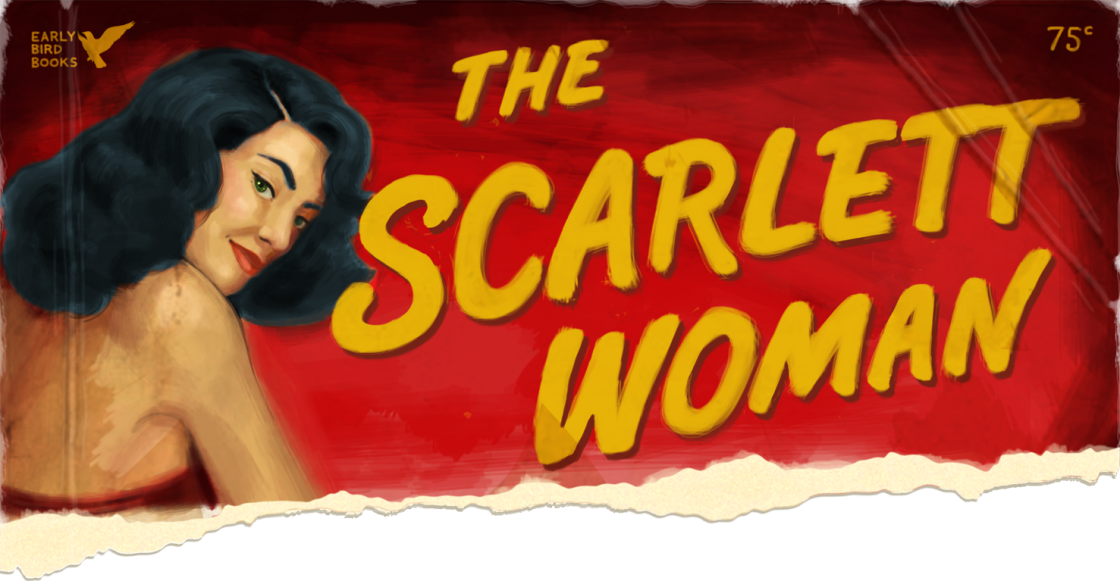
Megan Fox Transforms From “Android Ice Queen” to Relatable Person.


From an interview with Megan Fox on Moviefone:

“[Interviewer] This role seems to…

“[Fox] Make me seem human?…

“I just think the idea is that because most of the way that people have seen me, it’s the glorified pin-up girl with motorcycle boots who is also fighting to save the world. It’s not necessarily someone who you connect with because they’re not real people necessarily who exist like that—the glossy lips in the middle of the desert… You don’t necessarily see the human side of whoever is playing that person. And I just think [in] the media, in general, I just don’t really get portrayed as someone who has feelings or who is sympathetic. Or I sort of am portrayed as this—I feel—like a self-absorbed ice queen.

I feel people think I’m almost like a robot—like an android. And that I’m all about me and my thoughts are all about me. That I want to be famous.”

I can relate to these feelings expressed by Fox, albeit on a much smaller scale. I’m often accused of being a bitchy ice queen with no feelings because I choose not to express them in public. I feel like I’m also torn between citing my opinions and ideas and being attention-seeking or, at least, I think this is how people perceive my actions. I try not to let these things get the best of me, and it seems Fox subscribes to a similar school of thought. I can’t imagine how hard it would be for her to be dragged through the mud in the tabloids and the blogs when, to me, she seems like a genuine, relatable person, especially in this interview.

What do you think?

Related: Megan Fox Too “Spicy” for Transformers?

“She Just Wants Attention.”

The Beautiful, Bigmouthed Backlash Against Katherine Heigl & Megan Fox.

Elsewhere: [Moviefone] Megan Fox on Shia LaBeouf, Her Public Image & Starting Over with Friends with Kids.

Image via Broad Recognition.