On the (Rest of the) Net.


Attack of the cupcakes!:

“… Badassery and toughness aren’t mutually exclusive with cupcakes. A woman can go home from her power-suit-wearing corporate job and unwind in front of Cute Overload. A ‘supermom’ can enjoy a vintage cocktail—and even wear a vintage apron, if she wants to—without becoming squishy and ineffective…” [Feministe, HuffPo]

Gloria Steinem’s not the feminist hero we think she is, according to Suzanne Venker. [National Review Online]

The Catholic Church respects women more than feminism? Laughable. [National Catholic Register]

Erica Bartle writes on the perils of being a Christian in a sometimes-misunderstanding world. I don’t think what she’s experiencing is a uniquely “Christian” thing. (More on that next week.) I abhor organised religion, but I still feel “hyper-sensitive”, as she puts it, to the small-minded bigots around me. I think it comes down to what kind of person you are, regardless of religion and faith, which aren’t mutually exclusive.

I think you can still keep your “awesomeness”, “pride” and “talents” and fight like Mike Tyson (minus the ear-biting and sexual assault). Those are the things that make us good people, in my opinion. [Girl with a Satchel]

Gala Darling on how “to be the person in the photo, instead of the person looking at it.”
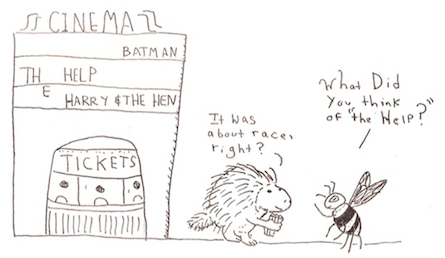
The Help from a porcupine and bumblebee’s point of view. You’ll get it from mine next week. [Jezebel]

In the wake of recent assertions that Hillary Clinton might have made a better president than Barack Obama, I came across this 2008 article pitting the “Madonna” against the “whore”; “the hard-ass” against “the lightweight”; “the battle-ax” against “the bubblehead”; “the serious, pursed-lipped shrew” against “the silly, ineffectual girl”; “the bitch” against  “the ditz”, and why the Clinton/Sarah Palin debate was a futile one. [New York Magazine, The New York Times]

It’s all about the discontent of young Asian women, and how they want to look more Western. [Gender Across Borders, Sydney Morning Herald, SBS Insight]

To the inconsiderate douches who use the word “rape” as a joke. Brilliant. [Lipstick Feminists]

“The Deficient Single Woman.” [Zero at the Bone]

Discrepancies in the way college men and women dress are lauded as anti-feminist by Lisa Belkin, while Amanda Marcotte contends the sight of a woman dancing in her underwear on Halloween doesn’t mean she’s a) not a feminist, b) going to insight yearnings of violent assault in all men who lay eyes on her, and c) dumb:

“Men are perfectly capable of being turned on by a woman dancing in her underwear while never forgetting that said woman has a family that loves her, a mind of her own, and ambitions that are equal to his.  We don’t allow men’s sexuality to dehumanise them in our eyes.  If a young man spends his weekends partying and flirting with women, and spends his time in the classroom pulling down As, we don’t see that as a contradiction. The belief that female sexual expression is uniquely dehumanising is a double standard, no matter how much you dress it up in feminist language.” [The New York Times, Slate]

Somewhat in response to Caitlin Moran’s How to Be a Woman (I’m eagerly awaiting my copy in the mail), Jason Sperber tells us “How to Be a Man”. [The Good Men Project]
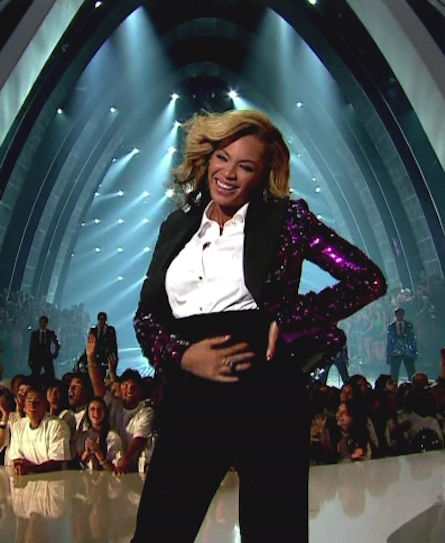
Baby Beyonce is inciting debate about motherhood, race, and “doing it the right way”. [Jezebel]

Gay marriage is a human rights violation of children to be brought up by a female mother and a male father. Hmm… [The Australian]

“Professor Feminism” and the “Chronicles of Mansplaining”:

“I’m pretty confident that Professor Feminism is not Professor Understands Sarcasm, either, so I’ll spell it out: The point of listening to women and feminists is to listen to women and feminists. Because if you listen to them, you might start to understand certain basic points, such as: Women do not automatically have to accept you as an expert, particularly not when the subject under discussion (sexism!) is something you’ve never experienced first-hand. Women do not have to make you ‘comfortable’ and ‘welcome’ in every single conversation. Women do not automatically have to grant you a space in their discussions, on their blogs, or in their lives. Women do not have to permit you to enter their political movements, their self-created spaces, their personal space, their bodies, or anything else that belongs to them; you, as a man, are not entitled to women’s attention, praise, affection, respect, or company, just because you want it. And when a woman says ‘no,’ you respect that this particular woman said ‘no,’ and you stop. You don’t make excuses, you don’t explain why you should be able to get what you want, you don’t throw a tantrum, you don’t call that woman names: You just stop what you are doing. Because she said ‘no.’” [Tiger Beatdown]

See here for another example.

What Adele… and Lil Wayne… can teach us about love. [This Single Life]

“I Thought Success Meant Wearing a Suit.” So did I. I used to fantasise about working on Southbank, wearing suits (I had a penchant for an imaginary hot pink one!) and carrying my files in a suitcase-on-wheels. My how the tables have turned. In my day job, I wear a uniform that I try to spice up every now and then with biker boots and studded flats, and for my unpaid blogging duties, it’s usually trackies or pyjamas. This morning it’s raining, so I’ve invested in some extra insulation with my dressing gown. What do you were that indicates “success”. (In no way am I equating my mundane daily grind with success. I loath my paid job. Just doing it to pay the bills.) [MamaMia]
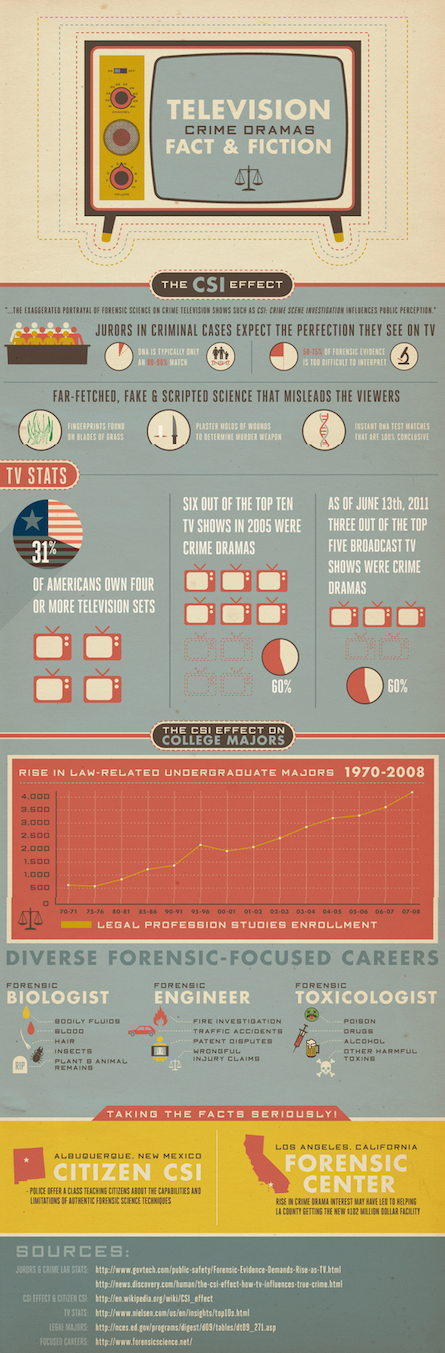
The facts and fictions of television’s crime dramas. [Jezebel]

Apparently, “Confronting Men About Sexism Makes Them Nicer,” and from my experience, I believe it. [Jezebel]

Sarah Wilson contemplates stopping for optimism. What am I optimistic about when I have to stop? The last two bouts of gastro I had I used to lie in bed and catch up on box sets between running to the bathroom. I don’t have an excuse for doing this every other day!

Images via YouTube, Jezebel, BuzzFeed. Bump Shack.
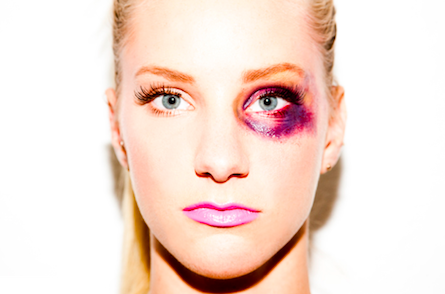
Heather Morris Glee-ful About Domestic Violence?


Now, I love me some Brittany S. Pierce, but perhaps her decision to pose for photographer Tyler Shields wasn’t the wisest.

Since the images went public to much fanfare, Shields has announced all proceeds from the sale of one of the images, starting at $100,000, will go to a domestic violence charity.

Well, I suppose that’s one good thing about the pictures.

What do you think? Glorifying domestic violence or blown out of proportion?

Related: The Underlying Message in Glee‘s “Britney/Brittany” Episode.

Elsewhere: [Jezebel] Controversial Photos of Glee Star With a Black Eye to Benefit Domestic Abuse Charity.

Images via MamaMia.

Guest Post: On Stalking.

I am standing at a tram stop in Brunswick waiting when a poster catches my eye. Someone has stuck it over the City of Moreland sign—a prominent place. Its headline screams: “Women Should Be Careful.” I’m hooked.

Upon reading the article I become increasingly angered as it goes on to explain how women should cover up and not expose their bodies to men as men can’t help but be attracted to that “provocative attire.” Not only should women expect to be sexually assaulted if showing skin, they are actually “asking for it.” I am outraged and start tearing the poster down but the man (I would assume and hope) has stuck it on with liquid nails. I manage anyway, throwing the wad of paper in the bin with a satisfying clunk. A woman is sitting on the bench near me also waiting for the tram. She turns to me and asks, “Didn’t like what it said?” No, I didn’t like it at all.

*

The idea that a woman is asking for it if she wears revealing clothing is repugnant. Not only is it outdated in 2011, it also allows men to get off scot-free. Whatever the length of my skirt, I refuse to be an excuse for a man’s behaviour. It is a common misconception that most women are harassed, attacked and stalked because of their provocative clothing or behaviour.

When I asked a group of friends to define the look of a stalking victim the consensus was a young (18–25) woman, thin, attractive, large breasts and, most importantly, wearing “slutty” clothing. It was also decided that most of these women will be stalked by men who had seen them out at a club/pub and followed home at very late hours. This profile is not true. According to California State University, 77% of female victims and 64% of male victims know their stalker and 59% of female victims and 30% of male victims are stalked by an intimate partner. This changes the image of a creepy guy hanging out in your garden after watching you dance at a party.

In a study by the Australian Centre for the Study of Sexual Assault it was revealed that only 1% of women surveyed were raped by a stranger. Clearly there is a different representation of this in the media. Still, even if most cases of stalking and rape will be carried out by someone who knows the victim, there are still instances when a stranger will take a shine to them.

*

I am on the train, coming home from work. I’m wearing a black dress, black stockings and a black coat and holding a bag of groceries. I sit down and accidentally knock the man in front of me with my bag.

“Sorry,” I say giving him a small apologetic smile.

“That’s okay,” he says, looking me up and down. “Are you coming home from work?”

“Yes.” I reply, not impolitely.

He then asks me where I work, what I do etc. I proceed to tell him, being polite but not particularly inviting. He then brags about working in an industry with a lot of money and invites me to join him at his work one day soon. I decline and then get off at my stop. He also gets off at my stop and I feel a tug at my bag of groceries. He offers to carry them for me and asks if I am married. I say no but that I have a boyfriend and he tells me that “we could always break up.”

He then asks where I live and follows me home. At this point I am pretty scared. It isn’t dark, it’s not isolated, I’m not wearing anything revealing… this isn’t how I expect the stalking story to play out. I panic and actually walk down my street before common sense kicks in and I stop two houses down from mine, pretending that it is my house, even going so far as to fumble with the letterbox pretending to check for mail. I get out my keys and ask him to leave. He then tries to invite himself in for coffee, then dinner, then a chat. I say no and am rude to him for the first time.

“Aren’t you going to go inside?” he asks, as if calling my bluff.

“Not until you are down the end of this street,” I say.

Then he says the words that stop me cold: “That’s ok, I know where you live. I can come anytime.”

The problem I had after this occurred was that I felt that it had been my fault. I shouldn’t have spoken to him, I shouldn’t have smiled at him, I should have been wearing a sack… all sorts of irrational thoughts went through my mind. Actually, the only thing I should regret is practically leading him to my door. That was stupid. When I told people, I was actually asked by one friend what I was wearing. Another told me I shouldn’t have used my “devastating” smile. The most common feedback I got, however, was that I’m just too nice. I shouldn’t be so polite and friendly to men because they take it as a sign that I’m flirting. This isn’t right! It just confirms what the poster said, that it’s the woman’s responsibility not to be stalked or get raped. I’m getting quite sick of men being blameless in these situations. It is the narrative that is constantly being touted by the media, in ads like the Razzamatazz stockings where you only see a woman’s legs in Razzamatazz and in the background are the men’s reactions to her sexy legs, implying they can’t help it. One of them spills a coffee, another trips over and a third is slapped by his girlfriend for looking. Unless ads like this stop then we will forever live in a sexist society that backs up the theory that the sexualisation of women is innate and part of our evolutionary journey.

At this point, I would like to say that I was living in fear every time I got on a train. I switched to the tram, I started calling my boyfriend to meet me at the station so we could walk home together and told all of my friends what had happened.

*

I am at work, re-entering the building after a break. He’s there in the foyer greeting me like an old friend. My colleague thinks we know each other, so walks ahead and leaves us alone. I am scared. I tell him I am busy and that I finish at 5pm. Why do I say that? The fear makes me irrational.

I try to tell him I’m busy after work and not to meet me, but he just smiles and says he’ll see me at five. I walk into the administration area, call my boss and start hyperventilating. Security sees me out at 5pm. I am flanked by two friends but I don’t see him. I can only hope that he is bothering another girl instead, then feel terrible for inflicting him on someone else.

*

I haven’t seen him since. I do live with the idea of him in that back of my mind, though. I just wish that other victims of stalking don’t blame themselves. Whatever I wear, wherever I go, yes means yes and no means no.

—Laura Money.

Related: Ain’t Nothin’ Gonna Break My Slutty Stride.

The Taboos of Sexual Harassment.

On Stripping.

Elsewhere: [California State University Department of Police Services] Stalking, Threats & Annoying/Harassing Calls.

[Australian Centre for the Study of Sexual Assault] Statistical Information.


UPDATED: Will Boys Be Boys When it Comes to Objectifying Women?

From “Should the Ugly Have Special Legal Protections” on Jezebel, featuring excerpts from Daniel S. Hamermesh’s article in The New York Times, entitled “Ugly? You May Have a Case”:

“… While we may disagree on who the most beautiful person in a room is, we can all easily agree on what class of attractiveness someone is in.

“Where someone fits on that scale is determined by the way they dress, how they do their makeup, their hairstyle, their personality, how they carry themselves, our personal preferences, and many other factors. Even if there are some disadvantages for people many of us don’t find attractive, that doesn’t mean we need to task our legal system with determining who’s a ‘grenade.’”

Emphasis mine.

*

From a 2009 post by The Punch and News.com.au editor-in-cheif David Penberthy on MamaMia about what men think about female body image:

“Men are much more attracted to a woman’s face than any other part of her body—68 per cent of men surveyed said they looked for a pretty face, just 8 per cent said great breasts, 8 per cent nice legs, and 16 per cent a perfect fat-free figure. In terms of ranking the importance of overall qualities, not one man said appearance was the most important—24 per cent cited personality as the most important, with 76 per cent citing personality and appearance in equal measure.”

Mia Freedman continues in her response to Penberthy’s piece:

“Interestingly, what shouts loudest to me from Penb[erthy]’s post and The Punch survey results is that men don’t really HAVE an ideal. They think we’re all pretty hot. So hot that they’re baffled as to why we’re not lesbians. How can we resist tearing each other’s close off and frolicking in all our diverse glory?”

While this piece doesn’t state the age of the male participants (a condition of the survey was that it was anonymous, so men could speak freely about what they really think), judging from The Punch’s target demographic, I’d be willing to bet they’re of the Generation X age group. From my experience, men that age formed their opinions of and preferences for women before the internet, porn and airbrushing culture were as rampant as they are now, and don’t really complain if they have the chance to get their kit off with some chick.

Hence why I go for older men…

*

It’s been a beauty-centric week here at The Scarlett Woman.

We’ve talked about Grey’s Anatomy and beauty as represented by Cristina Yang, and brains over beauty.

I’d already planned to post those two articles last week before a beauty-related scandal came to light at my workplace.

Apparently, two of my male co-workers had devised a “ranking system” for the hottest to nottest girls in our department.

This is sickening on four levels.

One: it’s sexual harassment and discrimination based on gender and appearance, and those who were victimised by the “ranking” could take those who were responsible for it to H.R. Just look at the Pricewaterhouse Coopers incident. Or the Duke “Fuck List”, on the other side of the coin.

Two: we interact with these men boys (as that’s what they are: one has just turned 21, and the other is 23. But age really has nothing to do with maturity) as friends, colleagues; PEOPLE. Not as objects for them to rate and pit against each other in terms of how we look and nothing else.

Three: I don’t want to have to stoop to their level, but if we were ranking them, one would be at the top in terms of looks, but both would be at the bottom in terms of personality, morals and decency, which is all that really matters. So what gives them the right to judge us?

Four: this is not the ’50s and women are not reduced to what they look like.

The men boys who devised this ranking are sexist misogynists, one of whom I am deeply ashamed to have dated for a short period. Thank God I never got naked with him, ’cause who knows what he would have to say about me then!

What gives them the right to rank us? The same right men’s magazine editors have to rank female celebrities in terms of hotness, I suppose. But the difference there is that, while it’s still pretty sexist but somewhat understandable and accepted, most of the women on the list don’t work with and consider(ed) them friends.

How can you separate the things you know about someone—their personalities, interests, history, temperament etc.—with how they look? I know I can’t.

I was taken aback recently when a coworker praised me for being close friends with a man who’s not super attractive. Unlike the two who ranked me, I don’t make friends in terms of looks. If anything, I find it easier to be myself around and make friends with men I don’t find attractive.

But my so called “ugly” friend has an awesome personality; anyone would agree. And that makes him attractive. And at the end of the day, it’s what’s on the inside that counts.

As I mentioned above, one of the men who devised this ranking is probably about an eight in terms of looks, but knowing this about him, in addition to other undesirable traits that lead to our dating demise, makes him a one in the personality department.

Now, I don’t know where I ranked on this list and, frankly, I don’t care. My self-esteem is high enough to not give a shit about what other people think of the way I look. But that’s not the point. How would someone who doesn’t have such high self-esteem feel? As much as we say looks don’t—or shouldn’t—matter, to them, it does.

So is this just a case of “boys will be boys”, as one co-worker who knows about the list put it?

I don’t think it is. You will notice that two out of about thirty were involved in this. The overwhelming majority chose not to act as boys do, whatever that means these days. Again, this is 2011: not 1951.

Another co-worker said “judging” is just what people do. Sure, I judge young mothers who leave their kids with a babysitter so they can go out clubbing, the guidos/ettes from Jersey Shore and, certainly, these two men in light of this list. But I’m judging them on their behaviours and attitudes, not what they look like. And who am I, really, to judge them based on any factor? No one. The same as the makers of this list are to judge us. Nobodies.

At the end of the day, beauty is in the eye of the beholder. Ellen DeGeneres brought this up when she interviewed FHM AND Maxim’s Most Beautiful Woman, Rosie Huntington-Whiteley, on her show last week. DeGeneres compared Rosie’s “ranking” to her own as “Most Beautiful Woman” on This Old House magazine’s cover. We know Ellen, we like her, and that’s what makes her beautiful, in addition to her physical beauty. Bitch looks good at 53!

And true beauty comes from within. Don’t ever let someone else’s “ranking” of how you look make you forget that.

Related: Beauty VS. Brains.

Cristina Yang as Feminist.

Elsewhere: [Gawker] The “Top 10” Office Email That’s Scandalising Ireland.

[Jezebel] College Girl’s PowerPoint “Fuck List” Goes Viral.

[MamaMia] What MEN Think About Women’s Body Image.

[Jezebel] Should the Ugly Have Special Legal Protections?

[The New York Times] Ugly? You May Have a Case.

Guest Post: London’s Burning—A Riot By Any Other Name?

Last month, London burned.

Rioters took to the streets and for five days, smashed, robbed and burned their way through a number of suburbs. News footage showed teenagers being robbed by groups of people pretending to assist them, restaurant goers being mugged over dinner by large mobs, vigilante groups taking to the streets for justice, and thieves trying on shoes before stealing them from looted shops.

Buildings which had stood for over 150 years were burned to the ground, and riot police were ignored or attacked by large mobs of young people who sacked the streets.

The riots, which caused over a billion dollars worth of damage, saw more than 1000 people arrested and left five people dead, have been blamed on criminal gangs, social networking sites and a lawless generation of young people who lack respect.

British Home Secretary, Theresa May, has denounced the riots as being acts of “sheer criminality.”

“The violence we’ve seen, the looting we’ve seen, the thuggery we’ve seen—this is sheer criminality,” she said, and by saying so she has, like so many others, simplified the issue to deal with it in the simplest terms possible. But these watery explanations about lawless youths do not fully address the issues of rioting and are rife with problematic reasoning and contradiction.

A perfect example of the problems with this type of reasoning can be found in an Australian publication which discussed the London riots. The Herald Sun’s Andrew Bolt took a similar approach to May, and attributed the violence that took place on the streets of London to a loss of family values in a contemporary world. (But let’s be honest here; what does Bolt not blame to a loss of family values?) Missing no opportunity to push his conservative agenda, Bolt claims that in the London riots, “What we saw was the kind of people hidden in the cavities of decaying society” and that these people, or at least what he refers to as its “underclasses”, are “lazy, resentful and greedy, being handed everything from the food on their plate to the plasma in the corner”.

He then gives a number of examples of the youths participating in the riots, documenting their crimes, and painting a picture of a generation of young people who are out of control. But herein lies the first contradiction; if young people are the main perpetrators of these types of crimes, as Bolt highlighted by giving examples of 11-year-old children participating in the riots, how can he object to them being given the food on their plate, or even a plasma television? (Not that I have ever heard of the poor being given free plasmas anywhere in the world, now that he has mentioned it). Since when do we not feed our children, or expect them to provide for themselves? And does it really seem logical to blame the riots on the poor for being spoiled with food? Doesn’t it seem more likely that there may be something more to this story? Rather than simplifying the issue by blaming riots on a loss of family values and a delinquent underclass, it would be better to engage with the complex history of rioting that exists across Europe and with the unique psychological effects of rioting, particularly on children and young people, who live in areas of diverse socio-economic backgrounds, and who experience high levels of feelings of relative depravation as a consequence.

Relative deprivation is basically where someone feels as though that have been deprived, not in worldly comparison, but in comparison to affluence or privilege that surrounds them on a daily basis, and which they are unable to access. It is becoming increasingly common across the Western world, and other places, as the global division between rich and poor becomes wider and as wealth becomes more visible through the media. Relative deprivation is an increasingly important phenomenon, which has been linked not only to rioting, but to other acts of violence and civil unrest, including terrorism. The psychological impacts of relative deprivation need to be further studied and better understood, particularly when “blaming-the-poor” narratives keep appearing in articles like Bolt’s, potentially adding more fuel to the civil unrest fire by ignoring the phenomenon.

Having noted the importance of feelings of relative deprivation, it is also quite plausible that the deprivation felt by these young rioters, may not only be relative. The social and political changes which have occurred in London over the past 12 months, and which have had negative consequences for many Londoners, are also likely to have had a significant impact on the rioters. One of the most notable in this case is police violence.

Riots are not typically the acts of criminals, although criminals have been known to capitalise on them; rioting has been used since before the seventeenth century by groups and individuals to express civil unrest and negative feelings toward authority figures. Although usually triggered by a particular event, riots occur after ongoing and sustained civil unrest.

The catalyst which triggered the London riots was the suspicious police shooting of Mark Duggan, an unarmed civilian, killed by police. One witness has alleged Duggan was shot at close range while pinned the ground by the police, and although this account is far from substantiated, it is known the Duggan was unarmed at the time of his death and that the bullets which the police claimed were fired at them, came from a police gun. The riots began as a peaceful vigil outside a police station, where friends and family of Duggan gathered to demand police adequately explain the circumstances of Duggan’s death. Other people, not involved in the vigil or immediately known to the Duggan family, triggered the riots by setting fire to a police car when police refused to acknowledge the vigil or address the mourning family. From then on, the riots rapidly escalated and spread throughout the city, far removed from their peaceful beginnings, and without being condoned at any point by Duggan’s family.

It is important to note that although Duggan’s shooting was the catalyst to the riots, it was not an isolated case. Police violence has become an increasingly troubling problem for the English over the last few years, particularly since the introduction of tasers in 2004, and in the last 12 months alone London Police have been widely criticised for a number of violent acts, including the brutalising of a non-violent student protester with cerebral palsy by fully-riot-gear-equipped police officers, who dragged him from his wheelchair (his only source of mobility) and then hauled him across the pavement. Similar acts of police aggression can be seen even after the riots, in the deaths of Dale Burns, 27, Jacob Michael, 25, and Philip Hulmes, 53, who all died within the last month, following incidents in which police used either tasers or pepper spray. In each case, there were at least eight officers arresting a single person, and in Michael’s case, there were 11 police present after Michael himself called them for help. During his arrest for an unknown crime, he was pepper sprayed, pinned to the floor, handcuffed and then beaten for up to 15 minutes by all 11 officers before being arrested. Two hours later, Michael died in police custody.

The purpose of presenting this evidence of police violence is not to vilify police and champion rioters, but rather to demonstrate that the issues which have contributed to the civil unrest that led to riots are complex and widespread. It also highlights that there are significant policing issues which need to be addressed in the UK and which are, by Scotland Yard’s own admission, causing a “growing anti-police sentiment” which is marked by “fury” and that during the riots “there was an atmosphere of absolute hatred towards the police and the establishment—the government—because they feel abandoned, the cuts in youth services, the cuts right across the board.” The increase in police violence is, in turn, leading to an increase in civil unrest. It is no coincidence that one day after the death of Hulmes, a marked police car was petrol bombed while patrolling in North London; just as it was no coincidence that riots ensued after the shooting of Duggan.  The same thing happened in Tottenham in 1985 with riots against racially motivated police violence and it will happen again, if these issues are not addressed.

Police violence was a trigger for the London riots, but not the only cause of civil unrest in London. Other recent and highly inflammatory occurrences include the rising unemployment rate (just under 8% of the population cannot find a job in England, a figure which continues to rise), an openly corrupt media blatantly flaunting basic human rights and the law (see billionaire Rupert Murdoch and his cronies escaping criminal charges after deleting vital evidence in the murder investigation of Milly Dowler, where phone messages were deleted by journalists in the first few days after Milly’s disappearance. As a result friends and relatives of Milly concluded wrongly that she might still be alive.), the rapidly increasing cost of living (the cost of a loaf of bread has tripled in the last five years), and the extremely fast-rising cost of education (the cost of a university degree has also nearly tripled in England in the last year). These are but a few of the troubles ailing England; it is not surprising that young people might feel helpless and angry, or that they might not care if their actions disrupt plans for the Olympic games, or upset local diners and traders.

Furthermore, that the riots spread so far so fast doesn’t mean London’s “underclasses” are felonious criminals. It is well known that once a riot begins, individuals begin to exhibit pack-like behaviours in the heightened excitement and highly charged atmosphere. Young people and children are particularly prone to this psychological influence, which makes it very easy for them to be caught up in the activities of the crowd, and similarly, it can be difficult for them to associate their actions with concepts of right and wrong.

Yet little of the reporting that has taken place about the London riots has yet to examine rioting in London, and indeed the wider context of Europe, and to examine the social, political and psychological aspects of rioting, not to mention the economic considerations, which most certainly would have played their part.

England has a close history with rioting, which spans over centuries, and it is not now, nor has it really ever been, merely the acts of criminal groups who opportunistically pray on an unsuspecting society. Instead, riots reflect a much deeper and wider frustration, which in 2011 was triggered by episodes of police violence. The areas which were most badly damaged in the riots are those which have high levels of poverty, and relative deprivation, where the rich and the poor share spaces as neighbours, living in deep contrast of one another. Blaming the poor for being spoiled is like saying “let them eat cake.” It didn’t work for the French all those centuries ago, and it won’t work now.

—Tessa Keane.

Related: Life Below the Poverty Line is a Horrible Place.

Elsewhere: [The Age] London Riots Spread as Police Lose Control.

[Herald Sun] Rioters Show a Nation Split & Family Values Gone Forever.

[CBC News] London Riots Erupt After Fatal Police Shooting.

[London Progressive Journal] Jody McIntyre: Victim of Police Brutality & Media Distortion.

[The Guardian] Man Does After Taser Arrest Near Bolton.

[The Guardian] Notting Hill Carnival: Tensions High After Recent Deaths, Say Police.

[The Observer] Notting Hill Carnival Curfew Plan is “Pie in the Sky”, Warn Police on Ground.

[The Guardian] Missing Milly Dowler’s Voicemail Was Hacked by News of the World.

[The Telegraph] London Living Costs on the Rise.

Movie Review: Horrible Bosses*.


Horrible Bosses, despite being a “sophomoric”, Judd Apatovian-esque, “toilet-humour”-filled outing, was much better than I thought it would be.

However, putting aside how hilarious it was much I enjoyed it, there were some race and sex issues I wanted to discuss.

  • “Take us to the most dangerous bar in the city.” Which just happened to be full of black people. Racist much?
  • Men being sexually harassed by their hot female boss isn’t an issue. While Jason Bateman’s Nick and Kurt, played by Jason Sudeikis, have douchebag-asshole-psycho male bosses who are making their lives hell, Charlie Day’s Dave is being sexually harassed and manipulated by his “maneater” boss, Julia, played by Jennifer Aniston. She accosts him in her office wearing nothing by suspenders and a lab coat, she sprays him with a dental irrigation hose in the crotch to “make out the shape of his penis” and blackmails him with photos she took of them together while he was passed out in the dentists chair and she was half-naked. While the movie made it plain as day that what Dave was experiencing was pretty distressing, his buddies brushed it off, saying that in comparison to their bosses, his doesn’t sound so bad.
  • Crazy, manipulative bitches can have “the crazy fucked out of them”. This is an age old trope whereby uptight, bitchy, mentally ill and a myriad of other negative personality traits in women can have them gone, so long as they get a good fuck. Apparently, this isn’t the case, as Julie’s just as crazy as she was before Kurt slipped and fell into her during his reconnaissance mission.
  • Male rape doesn’t exist. Much like how True Blood dealt with it, when Dave cries rape after Julie shows him the aforementioned photos, his friends brush it off with a guffaw, saying there’s no such thing and if only they were “raped” by a boss as hot as his. Fail.
  • There’s such a thing as being “more rapable” than someone else. When their plot looks all but foiled by a comedy of errors, someone (probably Nick, the most level headed one) mentions the possibility of going to jail. Kurt says he can’t go to jail because he’d get raped like there’s no tomorrow. Nick says he would too, and Kurt asserts that he’s more rapable than Nick. They bring Dave in as tiebreaker, and he sides with Nick being more rapabale, as prison rapists go for “weakness” and “vulnerability”. Regular rapists do, too, if Dave’s dental chair experience is anything to go by!

*It has come to my attention that I give away too much in my movie reviews, so the asterisk will now serve as a blanket *spoiler alert* from now on.

Related: Bridesmaids Review.

Rachel Berry as Feminist.

Male Rape on True Blood.

Elsewhere: [Persephone Magazine] Gorgeous, Sexy, “Crazy”: The Fetishisation of On-Screen Mental Illness.

Image via IMDb.

Why Young Feminists Still Have “A Long, Long Way To Go” in the Eyes of Second-Wave Feminists.

Last week I wrote about the Melbourne Writers’ Festival event, entitled A Long, Long Way to Go: Why We Still Need Feminism, presented by Sophie Cunningham and Monica Dux.

On the whole, Cunningham’s presentation was thought-provoking, if a little small-minded, but my main point of contention is as follows.

Cunningham brought up third/fourth wave feminism (the feminism we’re experiencing now, by most accounts), saying that while she applauds the grassroots feminist movements such as SlutWalk, she wasn’t sure 25-year-old women could fully understand the concept of feminism because they still have men fawning all over them at that age.

Now that’s just a whole lot of wrong.

First of all, I am soon-to-be-24 and I don’t have men falling at my feet (well, except when it’s unwanted), and nor do my similarly-aged friends.

Secondly, who’s to say that even if we did, we wouldn’t recognise that, unless they had had some kind of interaction with us other than staring at our boobs, they were interested in us purely for our looks, and that’s anti-feminist. (Then again, I know girls who do have men fawning all over them purely for their looks and couldn’t care less.)

And thirdly, this kind of feminism in fighting is exactly what has been undoing the feminist movement in recent years. As I wrote:

“… Cunningham saw a sort of ‘bottleneck’ in modern feminism, where white, privileged feminists like myself don’t understand the problems facing feminists of colour, feminists with sexual orientation other than straight, feminists with gender other than cis, and feminists with disabilities…”

This is not to mention conflict between the ages, or waves, of feminism.

In Susan Faludi’s attempted takedown of young feminists in her article, “American Electra: Feminism’s Ritual Matricide”, last year, she writes:

“… Despite its [feminism’s] many victories, it seems to falter along a ‘mother–daughter’ divide. A generational breakdown underlies so many of the pathologies that have long disturbed American [or, rather, Western] feminism—… its bitter divisions over sex… [and] alongside the battle of the sexes rages the battle of the ages.”

I can’t think of a better example than, oddly enough, an episode of Gossip Girl from its most recent season, in which it addresses the clash between young and old feminists after Serena van der Woodsen is accused of having an STD. Her dean at Columbia University tells her:

“Women of my generation had to fight for every opportunity. And to be taken seriously, and your attitude, Miss van der Woodsen, makes a mockery of that.”

I wrote in response at the time, in reference to Faludi’s article:

“Now if that isn’t the second wave looking down upon the third wave for our apparent flippancy about ‘activism’, our ‘obsession with technology’ (Gossip Girl’s blasts are a prime example of this), our ‘unwilling[ness] to challenge sexual exploitation for fear of pissing off men’ (hello, Serena), and our infatuation with Lady Gaga (well, Gossip Girl did feature the Lady herself in an episode…), I don’t know what is.

“… It would be interesting to see Serena fight back and declare herself ‘sick to death of hearing about the glory days of Seventies feminism’, whilst older women, like Dean Reuther, ‘declaring themselves sick to death of being swept into the dustbin of history.’

“Faludi spends a lot of time criticising (via her second wave subjects) the technology third wavers use, specifically blogging: ‘All they want to do is sit at their computers and blog.’ Ouch.

“I’m sure Gossip Girl would have something to say about that.”

Exhibit A: SlutWalk as an anti-testament to Faludi’s assertion.

Could it be jealousy these second-wavers are suffering from? I’d like to think feminism is above that, but it is one of the seven deadly sins and can get the better of us. Contrary to what Cunningham said, I don’t think it’s because of the way we look. Everyone knows age is not a precursor to looking hot. I think second-wavers might long for their glory days of making things happen, being invigorated and excited by feminism, instead of seeing their options shrivel up and die the older they get. Again, please see exhibit A. While I don’t know the ages of those who were critical of the SlutWalk, but if they were older it might be easy to see why they were a bit miffed by the anti-slut-shaming and -victim-blaming movement that they felt left them behind.

There needs to be something done to rectify this. Not only the gap between the ages, but the gap between the races, the abilities, the genders and the sexual orientations.

I don’t pretend to know how we’re going to do this, but it will have to start with listening and understanding, empathy, perhaps some mentoring and—what feminism is all about, not just between the sexes, but between all those I mention above—equality.

Related: Melbourne Writers’ Festival: A Long, Long Way to Go—Why We Still Need Feminism.

Ain’t Nothin’ Gonna Break My Slutty Stride.

The Taboos of Sexual Harassment.

Will Boys Be Boys When it Comes to Objectifying Women?

Surfing the Third Wave: Second-Wave VS. Third-Wave Feminism on Gossip Girl.

Elsewhere: [Harper’s Magazine] American Electra: Feminism’s Ritual Matricide.

Event: Melbourne Writers’ Festival—Beyond White Guilt.

The final day of the Melbourne Writers’ Festival brought Beyond White Guilt, taken from the name of author Sarah Maddison’s Beyond White Guilt: The Real Challenge for Black-White Relations in Australia and hosted by Tony Birch.

Maddison and Birch spoke about the crux of Maddison’s book, published in June—guilt and shame—and how they can both be “deeply personal experiences” in the way we look at race relations in Australia.

The absence or a certain “whitewashing” of black history in Australia can induce guilt, a feeling of “sick” and “anxiety”, and can “immobilise” us in striving for a more equal Australia.

On this, Birch spoke about being honoured by the Victorian East Timorese community* for doing not a whole lot other than sitting in front of the TV and thinking, “how awful”.

I think a lot of Australians feel this way, whether it be watching World Vision ads on TV, seeing homeless people begging in the street, or watching boats crash and people perish as they try to seek asylum in Australia (although, from the barrage of “fuck off, we’re full” jibes in response to that tragedy, perhaps it is the minority of Australians).

Maddison spoke of Australia’s roots as “a land of people who dig stuff up and chop stuff down”; an “Aussie battler” sentimentality, if you will. And I think that mentality lends itself to the bigotry we express towards the “other”, ie. people trying to get a “free ride” as asylum seekers, the poor and Indigenous on welfare, the homeless, the disabled, etc.

Unfortunately, when this kind of attitude rears its ugly head, such as in the Redfern and Cronulla riots, and the inaugural Indigenous protesting of Australia Day in 1988, as Maddison mentioned, it usually pits “true blue Aussies” against un-Australians. (Birch wrote a 2001 article entitled “The Last Refuge of the Un-Australian”, which is available for download from the University of Melbourne’s website.)

Whichever way you put it, none of us are truly happy with our country. Lefties abhor the way our environmental and human rights sensibilities are heading, whilst conservatives want to stop the boats, abortions, taxing the rich etc. One thing I think we all can agree on, as Maddison noted, is that our current government sucks.

Birch asked, “How are we going to love our country wholly?” An Aboriginal elder in the audience suggested Maddison’s book become compulsory reading for all Australians as a solution. One thing’s for sure: like feminism, we’ve got a long, long way to go, baby.

*Updated 09/09/11: The original version of this post cited Birch as being honoured by a Papua New Guinean community. In actual fact, it was the East Timorese community of Victoria.

Related: Cowboys VS. Aliens & Indians… Does It Really Matter? They’re All the Same Anyway, According to the New Movie.

My Response: Go Back to Where You Came From.

It’s Not Easy Being Green: The Latest Trend in Discrimination.

Melbourne Writers’ Festival: A Long, Long Way to Go—Why We Still Need Feminism.


On the (Rest of the) Net.


Spice World as metatext madness! [Thought Catalog]

Are we living in the post-ideas age? [New York Times]

“The Opposite of ‘Man’ is ‘Boy’, Not ‘Woman’” by Hugo Schwyzer:

“… Men who long for a vanished world of all-male preserves are making a fundamental mistake about masculinity. They think that the opposite of ‘man’ is ‘woman’ and that in order to prove oneself the former they must do (perform) things that no woman can. But it makes good sense to suggest that the better antonym of ‘man’ is ‘boy.’ To ‘perform masculinity’ isn’t about doing what women don’t. It’s about doing what boys lack the will or the maturity to do.

“If we really are in a ‘man crisis’ in America, I suspect it’s rooted as much as anything else in this fundamentally mistaken belief that manhood needs to be about rejecting anything that smacks of the feminine.” [The Good Men Project, via Jezebel]

How they got Osama bin Laden. [The New Yorker]

“Talking to an Abortion Clinic Protester.” [Jezebel]

The “proper etiquette” for drunk Jersey Shore sluts. [Jezebel]

Cutting off your animal cruelty to spite your feminism. Feminaust’s Ms Elouise on PETA’s latest anti-animal cruelty porn site:

“Is using Pamela Anderson’s body as a sex object and comparing it with a piece of meat an acceptable way of drawing attention to the plight of animals in the meat industry?

“PETA’s use of women’s bodies as a means to furthering their animal rights activism undermines their claims to ‘we all have the same parts’ because they’re saying the exact opposite, they’re saying:

“‘LOOK BOOBIES! Now that we have your attention, meat is bad.’”

While this is a great article, I don’t agree with its sentiments 100%. Yes, some of PETA’s campaigns have been unnecessarily focused on the female form, illustrating no real point, but I do think the “I’d rather go naked than wear fur” and the Pamela Anderson campaigns use it in a positive way. Both for women and animals. What do you think?

“Do You Prefer ‘Fashion Victim’ or ‘Ensembly Challenged’?” Squee! All of Cher Horowitz’s outfits in less than 60 seconds! [Worn Fashion Journal]

Questions for “perfect-looking women”, if there is such a thing. [Thought Catalog]

A letter to Gloria Steinem. [Ms. Magazine]

Rachel Rabbit White on “femme-guilt, beauty-privilege and the phenomenon of girls slut-shaming other girls.”

Everything Sarah Hepola learned about New York City. [The Morning News]

The victim-blaming of Lara Logan for deigning to be hot, bare cleavage and get raped. [Broad Street Review]

“Feminism, Colonialism and Islamophobia” at Qantara.

Image via Fan Pop.

TV: Male Rape on True Blood.


True Blood is known for pushing the boundaries when it comes to sex scenes. Graveyard rape fantasies, BDSM, and head-turning vampire sex. But let’s get one thing straight; last night’s gang rape of Jason Stackhouse by the Hot Shot werepanther women was not a sex scene, as some reviewers have been calling it.

But, while it is most definitely a glorified rape scene, it is also an exercise in slut-shaming and male-rape denying.

When asked about the scene, True Blood creator Alan Ball said,

“It’s kind of interesting to see the kind of guy who really gets his sense of worth from his sexual prowess to all of a sudden to be kind of objectified and sort of [laughs] used against his will.”

Slut-shaming by any other name.

The idea that someone who is sexually promiscuous isn’t really raped because they’re just getting their “comeuppance” is horrifying.

Jason even echoes Ball’s perspective, perfectly portraying how some rape victims feel as thought their attack was their fault. And why wouldn’t they? Unless you’re a young virginal woman dressed head to toe in a burqa walking alone down an alley at night and are attacked by a man in a mask and report it immediately, you’re not really raped. Jason says:

“As much as I love it, every bad thing that has ever happened to me is because of sex, [he enumerates on his fingers] jealous boyfriends, becoming a drug addict, being accused of murder… Maybe God’s punishing me for having too much sex. He’s like ‘Jason Stackhouse you have fucked too many hot women, now let’s see how you like it.’”

Hoyt goes on to compare his relationship problems with Jessica to “kind of” being like Jason’s sexual assault—and let’s not forget his potential werepanther turn!

You wouldn’t catch (most) women trying to compare their relationship problems to a friend’s rape; maybe that’s because in a lot of peoples’ eyes, and Ball’s, apparently, male-rape doesn’t exist.

Sure, Jason was drugged with Mexican Viagra, but it is still possible for a man to become physically aroused whilst not being mentally aroused, just as it is for women.

Bitch magazine puts it best:

“… When a rape clearly occurs onscreen and we call it something else, that contributes to a culture that says straight men can’t be victims of rape, especially if they’re young and attractive and enjoy sex with women.”

It will remain to be seen whether True Blood handles the aftermath of Jason’s attack realistically, or if he lapses back into his fun-loving, iron-pumping, consensually women-fucking ways, without any acknowledgement of what happened to him. Oh, and there’s that whole werepanther thing…

Elsewhere: [Bitch Magazine] True Blood: A Werepanther Rape is Not a “Sex Scene”.

[Feministe] True Blood Season Four & Female-on-Male Rape.

[Thought Catalog] On Rape in True Blood.

[Jezebel] Ass-Kicking, Rape & Fairy Godmother Murder.

[Tumblin Feminist] HBO’s True Blood, Rape & Sexual Slavery.

Image via Bitch, Jezebel.