Apocalypse Now—2012 Come Early?


With all the natural disasters and political uprisings in the world at the moment, you’d be forgiven for thinking the end of the world—2012, according to the Mayan calendar—was happening as we speak I write.

But with Japan’s earthquake, tsunami and nuclear crisis, New Zealand’s recent earthquake, Queensland and Victoria’s floods and Cyclone Yasi, the civil war in Libya and the Egyptian revolution, the end is nigh.

Now personally, I don’t actually believe the end of the world will occur on December 21, 2012, when the Mayan, or the Mesoamerican Long Count calendar, finishes. I think it will be more of an ideological shift caused by catastrophic events, like those happening in Japan, than Armageddon.

But let’s have a look at when the end of said calendar occurs and what it actually means.

In a (very sketchy) nutshell, December 20, 2012 marks the end of the 13th b’ak’tun, (equivalent to 144,000 days and 394.3 solar years), while December 21, 2012 will be the beginning of the 14th b’ak’tun.

There have been rumours that no prophetic predictions have been made after 2012 by Nostradamus et al., but Susan Milbrath, curator of Latin American Art and Archaeology at the Florida Museum of Natural History, says that reaching the end of a b’ak’tun cycle was cause for celebration and that the 2012 hullabaloo is “a complete fabrication and a chance for a lot of people to cash in.”

This lends evidence to my theory that with the world literally cracking up, it’s only a matter of time before we have to take heed of global warming warnings, which are manifesting themselves in natural disasters across the globe. Is it merely a coincidence that the first stage of the ratification of the Kyoto protocol finishes in December 2012?

Anyone who hasn’t been living under a rock (pardon the highly distasteful pun) in recent days would know that the Japanese quake was the seventh most powerful in history, and was actually so forceful, according to Italy’s National Institute of Geophysics and Volcanology, the University of Toronto, and NASA’s Jet Propulsion Laboratory that it actually “shifted the Earth’s axis by 25 centimeters (9.8 in). This deviation led to a number of small planetary changes, including the length of a day and the tilt of the Earth. The speed of the Earth’s rotation increased, shortening the day by 1.8 microseconds due to the redistribution of Earth’s mass.”

Not to mention its repercussions across the rest of the world, including Hawaii, the U.S. and Canada’s west coasts, Tonga, American Samoa, New Zealand, Russia, Mexico, Peru and Chile, and the holdup the nuclear disaster will cause for other countries interested in adopting nuclear power, including Australia.

Egypt’s uprising and Libya’s civil war seem like child’s play in comparison, but one humanitarian disaster after another seems to be the way of the future unless we get our act together and think of the bigger picture.

Twitter played a huge part in Egypt’s revolution (the Libyan people haven’t been so lucky, with internet access shut down by the government); mobile phones allowed Christchurch’s residents trapped in the rubble to contact family and emergency services with their whereabouts. With electricity, phone and internet connections down in Japan, it’s proving difficult to take the same road (again, pardon the pun; the tsunami washed out roads and train lines, leaving most Japanese residents in affected areas stranded). However, Google Person Finder, which was used in the Haitian, Chilean and New Zealand disasters, is coming in handy.

I’m not 100% sure what this all means, or even how it all relates to the supposed “end of the world”.

What I do know is that it seems increasingly likely that every time we turn on the news or open up our web browsers, we won’t see Charlie Sheen’s latest antics, but another disaster that is leading us to the end of the world if we don’t take a look at ourselves and make a change, as Michael Jackson so poignantly sung.

Elsewhere: [Wikipedia] Mesoamerican Long Count Calendar.

[Wikipedia] 2011 Japanese Earthquake and Tsunami.

[USA Today] Does Maya Calendar Predict 2012 Apocalypse?

[WebCite] Japan’s Quake Shifts Earth’s Axis by 25 Centimetres.

[CBS] Earth’s Day Length Shortened by Japan Earthquake.

Related: The Big Issue Review, 1-14 March, 2011.

Minus Two & a Half Men.

Images via YouTube, Wish I Didn’t Know.

UPDATED: Skinny-Shaming VS. Fat-Shaming.

I originally wrote this article in December last year in relation to my mum and her weight problems.

Now, I’m updating with a comment my friend April posted around the same time:

“My mum is faced with the same skinny-shaming as yours. She gets called anorexic all the time. She has always been thin. Her bones have always been visible. And although she is of a rather small stature, her average weight of 42kg is well below the normal weight range. However, my mum doesn’t have an eating disorder or even a problem with food (if you don’t factor in her aversion to vegetables!). My mum put on quite a lot of weight when pregnant with me, peaking at a size 14. That is the biggest she’s ever been and it took a toll on her poor skin. The fact she has stretch marks or even wrinkles that have come with age do not affect her self esteem anywhere near as much as people pointing out her weight (or lack thereof!). I don’t know if it’s ever brought her to tears but I have witnessed her get angry about it. There is only so much judgment we can take. My mum still has a womanly figure, with child bearing hips and thighs that touch. It’s what she’s been given and she’s learnt to live with it. But when it comes down to it, if people ever actually saw a real anorexic they would definitely see my mother’s au natural body in a different light.”

I’ve met April’s mum before, and can’t say her size was the first thing I noticed about her. Then again, I’m used to tiny mums!

But on the weekend I went to a part at April’s auntie’s house, which her mother also attended. Some comments about April’s mothers’ weight I overheard prompted me to republish this post, with an added musing: JUST BECAUSE YOU’RE NOT COMMENTING ON SOMEONE’S FAT DOESN’T MAKE ANY OTHER NEGATIVE COMMENTS JUSTIFIABLE. If you don’t have anything nice to say (like, “You look great” or “Wow, you’ve got a lovely shape”), don’t say anything at all.

My mum is very thin.

She wasn’t always, though. In her late teenage years and early twenties, she was quite overweight. Dare I say, borderline obese?

Now, though, she’s tiny. At 53 years of age (and about 47kgs on the scale), she struggles to put and keep weight on.

She is constantly told how skinny she is by friends, family and even people she’s just met. If she were heavier, do you think people would be drawing as much attention to her weight; at least to her face? I doubt it (with the exception of the media if she were a public figure).

Why do people feel the need to objectify and vilify thin women—using their weight as a weapon against them? Is it because it’s un-PC to do so with a fat person? Because they’re jealous? I would tend to lean more towards the former.

I have received this treatment myself, and while my body is nowhere near the slight size of my mother’s, I do try to take care of it by exercising. And to offset the fattening effects of my sweet-tooth indulgences. (The other day I ate a whole block of Cadbury Top Deck. And another whole block the following day!)

I wasn’t always the size I am now, either. (Truth be told, however, I have always hovered around a size 12; now I’m just more toned and lean towards a size 10.) In high school, my weekends usually consisted of sitting on the couch watching Friends and Will & Grace and eating. I led a very sedentary lifestyle back then; the difference between me then and me now is the fact that I exercise to counteract hours spent at the desk (okay, I won’t lie; it’s usually the couch!) blogging, or evenings spent chilling out with some books, magazines, blogs and TV.

So what gives people the right to blatantly draw attention to a small frame to the inhabitant of that frame? Don’t get me wrong; inhabitants of a larger frame have attention drawn to them all the time. But we usually have the decency to not do it to their faces. I don’t know which is worse; personally, that kind of thing is water off a duck’s back to me. Because I come across as cold, aloof and feeling-less, people think I have emotions of steel and they can say and do anything they want to me. I can take a lot of shit, but people like my mother can’t. People pointing out her pin-thinness is a sore subject for her; it’s not like she wants to be that thin.

I think it comes down to a similar school of thought that slut-shaming belongs to. And that seems to be that women who sell their bodies out to succumbing to the ideal shape or to receiving sexual pleasure are at the mercy of ridicule from others.

In this day and age, we’re learning to accept the curves of a larger woman (but only as large as the advertising and magazine industry displays as acceptable). But when can we learn to accept that women do take care of their bodies, and shouldn’t be singled out for doing so. More importantly, though, when will we learn to accept that some people really just can’t put weight on, and they shouldn’t be targeted as succumbing to the narrow beauty ideal presented by society. Much the same way as overweight people shouldn’t be targeted for not succumbing to it.

Related: Skinny-Shaming VS. Fat-Shaming.

Images via Holy Taco, Losing Weight Zone, Pink Sheep of the Family.

TV: Glee “Sexy” Review.


Never before have I been so offended by Glee. They’ve gone wrong a lot in the past season and a half: “Duets”, where everyone but the token gay Kurt got to sing with a partner; Mercedes’ eating disorder cured by Quinn giving her a granola bar; and the Justin Bieber episode in general, which I actually liked, but several of my friends voiced their concern over it. But this episode was so ignorant in addressing the theme of sex amongst the New Directions members that it made me want to hurl.

Firstly, Gwyneth Paltrow’s return as Holly Holiday was unnecessary, but obviously they’re going to milk the character for all she’s worth. She was derogatory, snarky and just plain annoying; worlds away from her first appearance on the show.

Holly insults guidance counselor Emma for still being a virgin four months after her marriage to Carl the dentist, when clearly the girl has intimacy and bodily fluids issues, amongst many others. Plus, she’s still in love with Will Shuester, which Holly takes pleasure in rubbing in her face by hooking up with him.

She heads up the celibacy club, which she makes a mockery of, even more so than Santana’s recent membership.

When Emma leads Carl, Puck, Quinn and Rachel in a rendition of “Afternoon Delight”, Holly Gleefully points out that an afternoon delight is a romp in the PM, not a dessert as Emma thinks it is.

She leads the kids in a leather-clad performance of “Do You Wanna Touch Me”, which completely undermines Mr. Shue’s previous efforts to protect the kids from singing songs by such risqué artists as Britney Spears. But, you know, this is Glee, where the storyline takes a back seat to big names and bigger songs.

But the most offensive part of the show was Holly and Will massacring one of my favourite Prince songs, “Kiss”.

The only redeeming quality of the episode was Santana’s heartfelt, yet obviously tormented, declaration of love for Brittany, who turned her down in favour of Artie.

Related: The Underlying Message in Glee’s “Blame it on the Alcohol” Episode.

How to Make a Woman Fall in Love With You, Glee Style.

Glee “Silly Love Songs” Review.

The Underlying Message in Glee’s “Furt” Episode.

The (Belated) Underlying Message in Glee’s “Never Been Kissed” Episode.

The Underlying Message in Glee’s “The Rocky Horror Glee Show” Episode.

The Underlying Message in Glee’s “Duets” Episode.

The Underlying Message in Glee’s “Grilled Cheesus” Episode.

The Underlying Message in Glee’s “Britney/Brittany” Episode.

Images via YouTube.

Where Have All the Good Men Gone?


From “Where Have the Good Men Gone” by Kay S. Hymowitz on The Wall Street Journal:

“What explains this puerile shallowness? I see it as an expression of our cultural uncertainty about the social role of men. It’s been an almost universal rule of civilization that girls became women simply by reaching physical maturity, but boys had to pass a test. They needed to demonstrate courage, physical prowess or mastery of the necessary skills. The goal was to prove their competence as protectors and providers. Today, however, with women moving ahead in our advanced economy, husbands and fathers are now optional, and the qualities of character men once needed to play their roles—fortitude, stoicism, courage, fidelity—are obsolete, even a little embarrassing.

“Single men have never been civilization’s most responsible actors; they continue to be more troubled and less successful than men who deliberately choose to become husbands and fathers. So we can be disgusted if some of them continue to live in rooms decorated with Star Wars posters and crushed beer cans and to treat women like disposable estrogen toys, but we shouldn’t be surprised.”

Elsewhere: [Wall Street Journal] Where Have the Good Men Gone?

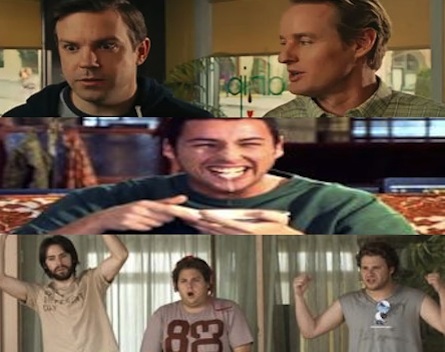
Images via The Frat Pack, Marshill Church, Zu Guide.

Cherchez La Femme (Fatale).


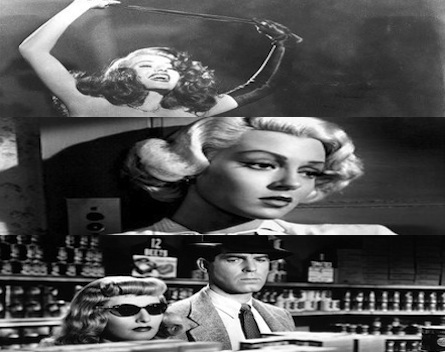
From “What Happened to the Femme Fatale”, originally excerpted from “Cherchez La Femme Fatale” by Kevin Nance on Obit, by Sadie Stein on Jezebel:

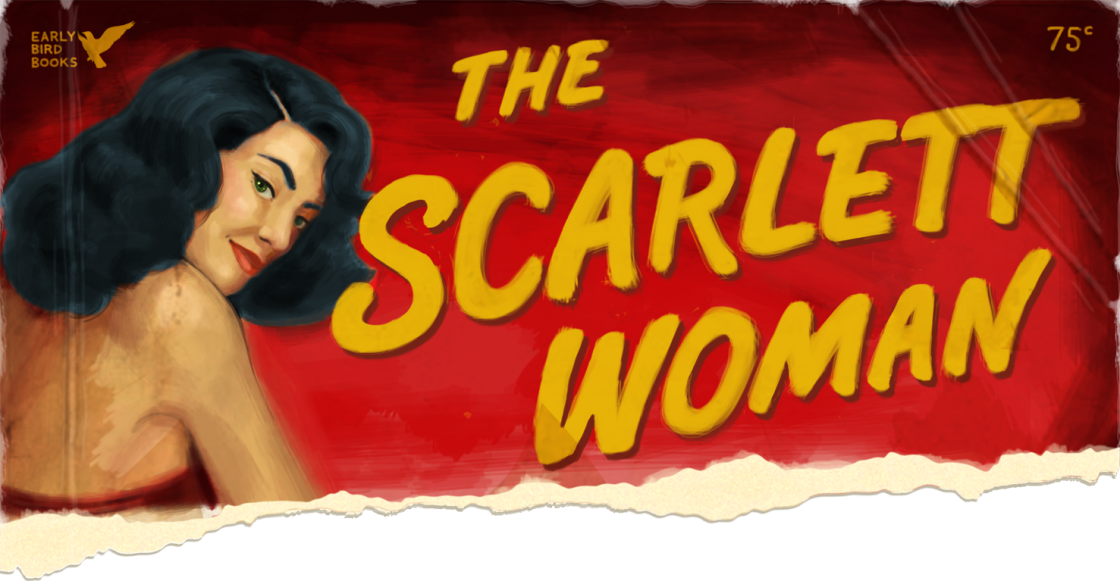
“The femme fatale isn’t passive, waiting for her life to improve on its own. Instead she takes the initiative, attacking the problem with nerve, drive and intelligence. Yes, she uses cat’s-paws, rather than her own paws, to accomplish her goals. But whose fingerprints do you want on the smoking gun, yours or someone else’s? Yes, she uses her sexual power over a man to get what she wants, but power is power. She is the actor, he the acted upon. It’s she who controls her destiny, for better or worse.”

Elsewhere: [Jezebel] What Happened to the Femme Fatale.

[Obit] Cherchez La Femme Fatale.

Images via Doctor Macro, Warwick, Dazzling Divas.

On the (Rest of the) Net.


How to be a Victoria’s Secret Angel:

“Holding tight to a mission statement that stands first and foremost to ‘empower women,’ and a slogan stating the brand is one to ‘Inspire, Empower and Indulge,’ the company ‘helps customers to feel sexy, bold and powerful.’

“Where once sexualized representations of women in the media presented them as passive, mute objects of an assumed male gaze, today women are presented as active, desiring sexual subjects who choose to present themselves in an objectified manner because it suits their ‘liberated’ interests to do so.

“Not only are women objectified as they have been, but through sexual subjectification, they must also now understand their own objectification as pleasurable and self-chosen.”

Why Britney Spears is the everywoman pop star of our generation.

Unfortunately for John Galliano, “Rehab Does Not Cure Anti-Semitism”.

Also, Gawker wonders “How the Hell is Anti-Semitism Having a ‘Moment’?”

Owen Wilson managed to escape the tabloid microscope of Hollywood after his 2007 suicide attempt, unlike so many other stars who’ve fallen of the mental health wagon (the aforementioned Britney, Lindsay Lohan and flavour of the moment, Charlie Sheen):

“…it is Wilson who seems to have gotten the hall pass. He has never explained what happened to him that anguished Sunday in August…

“It’s a fascinating instance of a celebrity hiding in plain sight—and getting away with it—that stands virtually alone in Hollywood’s PR playbook.

“What’s the statute of limitations on personal issues in Hollywood?”

Baby bullying in the Bonds Baby Search competition. Seriously?! Baby bullying?!

What would it be like to sleep with a women’s magazine?:

“Vogue: You’re really flattered. They’re probably the hottest person you’ve ever slept with. Neither of you gets off.”

US political commentator Rush Limbaugh feels that Michelle Obama doesn’t have the right body type to be an advocate for beating childhood obesity:

“I’m trying to say that our First Lady does not project the image of women that you might see on the cover of the Sports Illustrated Swimsuit Issue, or of a woman Alex Rodriguez might date every six months or what have you. I mean, women are under constant pressure to look lithe, and Michelle My Belle is out there saying if you eat the roots and tree bark and the berries and all this cardboard stuff you will live longer, be healthier and you won’t be obese. Okay, fine, show us.”

Racist, sexist and sizeist on so many levels.

On that, “Beauty is Not a Spectrum” at Eat The Damn Cake.

The secret lives of sex store workers.

“Charlie Sheen’s ‘Porn Family’, Explained.”

Images via Squa.re, Everyday Facts.


Minus Two & a Half Men.


Girl with a Satchel featured an excerpt from a Washington Post column about body snarking at the Oscars:

“I would like to note that more space was devoted to photographs of ladies wearing dresses… than for the last two weeks’ coverage of the events in Libya.”

This is also true of the news coverage in Vietnam, where a colleague of mine (whom I mentioned as the friendly workplace Big Issue provider earlier this week) is spending five weeks. In a recent email, he said that the hot topic on the news there is Charlie Sheen, not Libya, Egypt or Japan, which bore the brunt of a 7.3 magnitude earthquake yesterday afternoon.

A story on MamaMia written by publicist Steven Murphy echoes this:

“His weakness for drugs and alcohol is… well documented and he has been fodder for the tabloid press for years.

“But this latest incident is front-page news like no other. But why? Why is this incident haunting our news services day and night?”

The article somewhat-annoyingly glossed over the fact that his drug and alcohol problems are put at the forefront of his negative publicity, when his hatred of women and obvious mental illness are shoved to the back.

Jezebel hasn’t forgotten, however, with a no-bullshit article entitled “Charlie Sheen’s History of Violence Toward Women” published last week. The article also dealt with John Galliano’s disgraceful display of anti-Semitism, and what the news stories don’t tell you:

“Galliano allegedly grabbed gallery curator Geraldine Bloch by the hair and said, ‘Shut your mouth, dirty bitch, I can’t stand your dirty whore voice.’”

I, myself, didn’t even know that happened until I read the article, and I usually take a vested interest in these sorts of things.

On the plus side, Galliano has been fired as head designer of Christian Dior and—finally!—Sheen’s been fired as head douchebag on Two & a Half Men, to be replaced, allegedly, by reformed bad boy and fellow brat pack member, Rob Lowe.

While I couldn’t be happier about the latter (let’s shout it from the rooftops!), Galliano’s reign at Dior produced some of the finest garments the fashion world has seen, and it’s unfortunate it had to come to this.

But I applaud the fashion house for ousting the anti-Semite, and stars like Natalie Portman, who have publicly spoken out against him.

Both men’s firings show that there is a zero tolerance policy against these kinds of abhorrent behaviours, and hopefully other companies, in the entertainment industry and otherwise, will follow suit.

Although Michael Specter of The New Yorker doesn’t think so, writing that:

“the fashion world has a remarkable ability to shrug off the odd deeply flawed human being, as long as he or she can cut a dress like Galliano can or wear one like Kate Moss, who, despite behaviour that sets a disastrous example for millions of girls, including issues with drugs, is forgiven because, well, she is really very pretty.”

I haven’t always been innocent in providing double standards to those I like, think are talented, and should be forgiven for their indiscretions.

Just yesterday, some co-workers and I were talking about Catherine Deveny’s tweets at last year’s Logies. Personally, I didn’t find them to be offensive, and sorely miss her column on the back page of The Saturday Age’s Life & Style (formerly the A2). But, looking back on it, The Age did the right thing by sacking her. At the time, both Deveny and I used the excuse that she’s a comedienne; that’s her job. I guess it takes the disgraces of people you don’t like to understand the repercussions of (the disgraces of) those you do.

Once such repugnant crime committed by professional wrestler Chris Benoit in 2007, when he murdered his wife and son and killed himself, gave me lots to think (and write) about. On the one hand, I felt his legacy as one of the best professional wrestlers ever to grace the squared circle shouldn’t be forgotten, however, Benoit took three lives and sullied the reputation of professional wrestling (okay, there wasn’t much of a reputation left to sully!) and sparked a debate on steroids and drug testing that raged for years; the smoke of which still lingers today.

I’ve written several articles on that story and, with a new frame of mind to cast a different light on the story, I think I may just revisit said articles. (The anniversary of the double-murder suicide is June 24, so watch this space around that time.)

Benoit was obviously seriously mentally ill; the (not-so-) funny thing is, his friends, family and co-workers never picked up on it.

Charlie Sheen, however, has a long history of violence and drug use, and there’s no telling what he’s capable of.

Related: The Big Issue Review, 1-14 March 2011.

The Anatomy of a Douchebag.

Guilty Until Proven Innocent: Charlie Sheen’s Witness.

Why Are Famous Men Forgiven for Their Wrongdoings, While Women Are Vilified for Much Less?

Elsewhere: [MamaMia] Advice to Charlie Sheen from Australia’s Top Publicist.

[Jezebel] Charlie Sheen’s History of Violence Toward Women.

[The New Yorker] John Galliano’s Implosion.

[Girl with a Satchel] Body Snarking is So No Funny But Jacki Weaver is Fab.

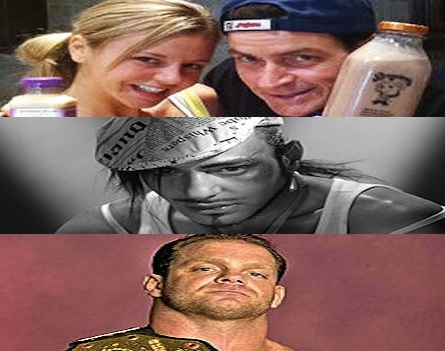
Images via NY Daily News, The Gloss, Pop Culture Madness.

Strong Female Characters in the Land of Oz.


From Wicked: The Life & Times of the Wicked Witch of the West—Theme of Gender” on Shmoop:

Wicked is all about strong female characters: Elphaba, Glinda, Nessa, Sarima, Melena, Dorothy, Nanny, Nor, Morrible, Princess Nastoya… This legacy actually comes from L. Frank Baum himself, as [Gregory] Maguire explains:

“‘It was Baum who set up the powerful princesses of Glinda, the witches, and Ozma as the real wielders of power in Oz, and the Wizard was just a sham. Baum was an early and ardent feminist, as anyone who has read his biography knows. I think he’d have been delighted that Elphaba and Glinda (both in the musical Wicked and in my novels) are figures of power to admire, to emulate—and yes, as in any powerful figure, to question.’”

Related: The Wizard of Oz VS. Wicked.

It’s All About Popular… Lar, Lar, Lar, Lar!

Women in Fiction: Are Our Favourite Fictional Females Actually Strong, or Stereotypes?

Women in Fiction: My Favourite Fictional Females.

“With a Gun Between Her Legs” Take 2.

“With a Gun Between Her Legs”: Why “Strong” (AKA “Sexy” Whilst Being “Strong”) Female Characters Are Bad For Women.

Elsewhere: [Shmoop] Wicked: The Life & Times of the Wicked Witch of the West—Theme of Gender.

[USA Today] Wicked Author Gregory Magurie Casts His Spell.

Image via Johnny Jet.

A Slut By Any Other Name?


From “Slut Shaming: It’s Not About How Much Sex You Have” by Rachel Hills on Musings of an Inappropriate Woman:

“When I hear the word ‘slut’ bandied about, it usually has less to do with the number of partners a girl has or what she wears, than with her perceived threat to the Girl Code.

“It’s about stuff like flirting with another girl’s boyfriend (or hell, flirting with another girl’s love interest), or seeming too interested in the attentions of men (particularly men whom other women are interested in the attentions of). It’s about the possibility that professional success might be predicated in some way on sex appeal. It’s about the fear that the ‘slut’ in question might betray you for a man … or even just for a fun night out.”

Elsewhere: [Musings of an Inappropriate Woman] Slut Shaming: It’s Not About How Much Sex You Have.

Images via IMDb.

TV: The Underlying Message in Glee’s “Blame it on the Alcohol” Episode.


Blame it on the alcohol, indeed.

This week’s episode deals with McKinley High’s Alcohol Awareness Week, after Principal Figgins exclaims that there have been six alcohol-related suspensions in the past week due to the alcopop phenomenon and pop music promoting the consumption of alcohol.

So what better time for Finn and Puck to convince Rachel to have an unsupervised party at her house, right?

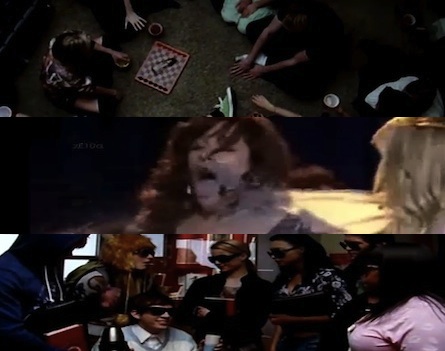
Body shots, Brittany getting her kit off, karaoke and spin the bottle ensue, creating a drunken love triangle between Rachel, Kurt and Blaine, where someone is bound to get hurt. And you can’t blame that on the alcohol.

In my experience, people don’t do things drunk that they don’t already want to do sober. It gives them liquid courage, if you will. Which, funnily enough, is what “Blame it on the Alcohol” is all about. Who knew that listening to Jamie Foxx would pay off?

But “the alcoholic teen-vomit fetishist” (Sue’s words, not mine!) Mr. Shuester doesn’t approve of their rendition of the song, so instead they perform “Tik and also Tok, by Key dollar sign Ha,” as Principal Figgins introduces it at the school assembly. And that’s so much better how?

But for all their seemingly sexual acceptance (Kurt, Blaine, Brittany and Santana and their “scissoring”), Kurt’s comment about bisexuality made me question how accepting the show really is:

“‘Bisexual’ is a term gay guys in high school use when they wanna hold hands with girls and feel like a normal person for a change.”

Sounds a bit like Miranda’s reasoning that bisexuality is a blanket term for guys who turn out to be gay and girls who turn out to be straight, thus explaining the man-drought, on Sex & the City.

But it wouldn’t be the first time Glee’s ostracised their characters and potential audience members who may identify with them.

Related: How to Make a Woman Fall in Love With You, Glee Style.

Glee “Silly Love Songs” Review.

The Underlying Message in Glee’s “Furt” Episode.

The (Belated) Underlying Message in Glee’s “Never Been Kissed” Episode.

The Underlying Message in Glee’s “The Rocky Horror Glee Show” Episode.

The Underlying Message in Glee’s “Duets” Episode.

The Underlying Message in Glee’s “Grilled Cheesus” Episode.

The Underlying Message in Glee’s “Britney/Brittany” Episode.

Elsewhere: [Jezebel] Glee: New Directions’ Alcohol-Fuelled Bisexual Awakening.

[Jezebel] Glee: Everyone’s Duetting It (Except Kurt).

[Jezebel] Why Glee Still Needs to Work on Diversity.

Images via YouTube.