The Harassed & the Harassed-Nots.

I was harassed on the way to work the other morning.

A youngish (25–30 years old, I suppose) man ran up behind me and said hello and asked me how I was. I replied, and stupidly told him where I work because I couldn’t think of a lie quickly enough when he asked me. I was quickly approaching my bus stop and had to think of a diversion lest he wait with me for it. He was asking me if I like my job and I said no. He said if I was looking for work he knows of some jobs going. I pleasantly tried to get rid of him as I stepped into the news agency, but he followed me in asking if he could have my email to send me the jobs. I said I wasn’t interested and told him goodbye, but he said he’d like to get to know me better, and could he have my number. I said no. He asked if he could give me a compliment, and told me I was beautiful. I begrudgingly said thanks and tried to bury myself in a magazine as he exited the store.

CAN’T A GIRL JUST GO TO WORK IN PEACE?!

When I told some co-workers/friends about this later that morning, one of them complained that no one ever harasses her in the street, and the other said she’d love for someone to harass her on the way to work.

Um, I didn’t tell them that some lovely man approached me on the way to work and was super-polite when he paid me compliments and asked me for my number. I told them that I repeatedly said I wasn’t interested, yet he still followed me into a shop and invaded my personal space. I was HARASSED. How is that something to be envious of?

Friend #1, who lamented that she never gets harassed, later explained to me her reaction and shed some light on Friend #2’s reaction. She said a few years ago she was very self-conscious and hated the way she looked. The fact that strange men didn’t approach her whilst she was going about her business, or wolf whistle and honk from moving cars, only added to her bad body image. She said she felt that Friend #2 was where she was several years ago.

I tend to agree, but I certainly don’t understand. Being approached with no invitation, being asked personal questions and being repeatedly asked for your contact details when you’ve already told them no is in no way a confidence booster. The fact that our society encourages us to see women as public property and the only measure of their (self-)worth is if they appeal to the opposite sex is abhorrent and a reflection on Friend #2’s reaction.

Even when I was blatantly sexually harassed in my workplace a few months ago, Friend #2 exclaimed that if it was a young, hot guy who had said to me, “I’d like to take you home,” I wouldn’t have complained. Actually, I would have.

Firstly, I would never go for a guy who would say something like that to me, regardless of age and appearance, without any prior contact. Secondly, I was just standing there, minding my own business. Since when (okay, since forever) did a woman just being in your general vicinity make it okay to approach her with rude comments? And lastly, harassment is harassment regardless of the body it comes in.

A few weeks ago I was going to meet my housemate for a movie. On the way, a young guy, about 19, came up to me and told me he just had to talk to me because I stopped him in his tracks. He asked me if he could have my number, and I said no because I’d just started seeing someone (I can finally use that as an excuse without it being a lie!) and didn’t feel comfortable giving my number out to him. I said I was really flattered, though, and he told me to have a nice day and enjoy the movie. Now, that’s how you approach someone without it being deemed harassment. That’s how my friend would like to be “harassed”.

I’m all for confident men going up to someone they find attractive and would like to get to know, paying them a compliment and asking for their number and, when rebuffed, go about their business—and let us go about ours—in a respectful way. But if some young women are so starved for affection and approval by our predominantly looks-based society that they would be happy to be harassed if it means being acknowledged by the opposite sex, there is something seriously wrong.

I’m calling for more education on harassment for both men and women.

Related: The Taboos of Sexual Harassment.

I Ain’t No Hollaback Girl: Street Harassment in CLEO.

So a Tattoo Makes me Public Property, Huh?

Image via YouTube.

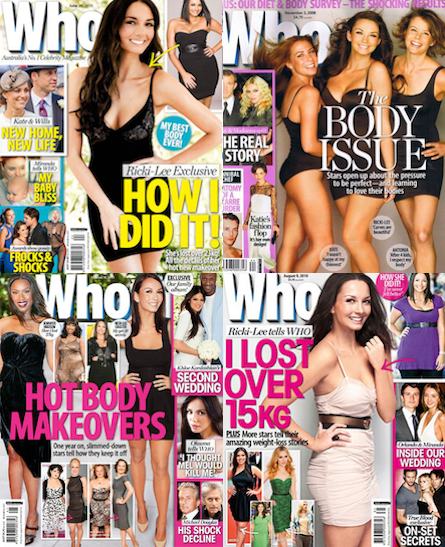
Magazines: Ricki-Lee—Who Cares?


There have been a few articles in the media over the past week or so kicking up a stink about Ricki-Lee Coutler’s Maxim photo shoot, and her need to bare her new skinny body in general.

My beef isn’t with her new, “sexy” (if sexy means being draped in some pink chiffon and a machine gun ammo belt with your mouth open and eyes half closed…) look; it’s with the inevitable fact that this time next year she will have put all the weight back on and will be on the cover of Who or Women’s Day in an “exclusive” about how she’s fat.

I’ve been wanting to write this article for at least a year now, as it seems that every twelve months or so Ricki-Lee’s espousing how she got skinny or how she got fat again in some magazine tell-all. Not to mention the endorsement deals (Big W’s Hold Me Tight range, anyone?).

My point: Who cares?

Why Ricki-Lee would voluntarily document the changes of her body reflected by the scrutiny of the media and the general public is beyond me. And also, she’s no Kardashian or Oprah; we just don’t care about her that much.

What do you think? A big hullabaloo about nothing, or are Ricki-Lee’s actions damaging to her (predominantly young female [although, with that Maxim cover…]) audience?

Elsewhere: [Sydney Morning Herald] Ricki-Lee Coutler: Too Nude, Too Often?

[MamaMia] Ricki-Lee, Why?

Images via Yahoo!, Who’s Dated Who?, MyGC.

Book Review: How to Be a Woman by Caitlin Moran.

When I first heard of this memoir some months back (probably on Musings of an Inappropriate Woman or some similarly feminist blog), I wasn’t really into it. I hadn’t been familiar with Caitlin Moran until I read a couple of reviews, particularly Rachel Hills’ in Sunday Life, and I knew I had to read it.

How to Be a Woman doesn’t disappoint. While it is a memoir of sorts, it’s also a poignant commentary of just what’s required of women in today’s society. Think Mia Freedman’s Mia Culpa and Mama Mia, but far less politically correct.

When I reviewed those books, I didn’t feel my words could do them justice, so I simply relayed my favourite parts and most funny moments, which is what I’m going to do here. But really, even these snippets don’t do How to be a Woman justice, and you need to get your grubby little mitts on it ASAP!

On Porn.

“Freely available, hardcore 21st-century pornography blasts through men and women’s sexual imaginations like antibiotics, and kills all mystery, uncertainty and doubt—good and bad.

“But in the meantime, I have found this thing. I have discovered this one good thing, so far, about being a woman, and it is coming” [p. 31].

“That single, unimaginative, billion-duplicated fuck is generally what we mean by ‘porn culture’—arguably the biggest cultural infiltration since the counter-cultural revolution of the 1960s; certainly more pervasive that peer rivals, such as gay culture, multi-culturalism or feminism” [p. 33].

“… We needed more pornography, not less… free-range porn… Something in which—to put it simply—everyone comes.

“… Why can’t I see some actual sex? Some actual fucking from people who want to fuck each other? Some chick in an outfit I halfway respect, having the time of her life? I have MONEY. I am willing to PAY for this. I AM NOW A 35-YEAR-OLD WOMAN, AND I JUST WANT A MULTI-BILLION-DOLLAR INTERNATIONAL PORN INDUSTRY WHERE I CAN SEE A WOMAN COME.

“I just want to see a good time” [p. 37, 39].

On Waxing.

“And all of this isn’t done to look scorchingly hot, or deathlessly beautiful, or ready for a nudey-shoot at the beach. It’s not to look like a model. It’s not to be Pamela Anderson. It’s just to be normal” [p. 46].

“Whilst some use the euphemism ‘Brazilian’ to describe this state of affairs, I prefer to call it what it is—‘a ruinously high-maintenance, itchy, cold-looking child’s fanny’” [p. 47].

On Puberty.

“Puberty us like a lion that has raked me with its claws as I try to outrun it” [p. 58].

On the C-Word.

“In a culture where nearly everything female is still seen as squeam-inducing, and/or weak—menstruation, menopause, just the sheer, simply act of calling someone ‘a girl’—I love that ‘cunt’ stands, on its own, as the supreme, unvanquishable word” [p. 62].

On Mansplaining.

“I am shouted down by a male editor, who dismissed everything I say out of hand, and concludes his argument with the statement, ‘You wouldn’t know what it’s like to be a fat teenage girl, being shouted at in the street by arseholes.’

“At the time, I am a fat teenage girl, being shouted at in the street by arseholes. I am rendered silent with astonishment that I a being lectured on a radical feminist youth movement by a middle-aged straight white man…

“‘Oh, I get it all the time,’ Charlie [Moran’s homosexual friend] says, cheerfully. ‘It’s mainly conversations about how difficult it is to be a gay man—explained to me by a straight man’” [p. 140–141].

On Getting Ahead of Yourself in Potential Future Relationships.

“I imagine possible relationships all the time” [p. 149].

On Pole-Dancing Classes.

“Just as pornography isn’t inherently wrong—it’s just some fucking—so pole-dancing, or lap-dancing, or stripping, aren’t inherently wrong—it’s just some dancing. So long as women are doing it for fun—because they want to, and they are in a place where they won’t be misunderstood, and because it seems ridiculous and amusing, and something that might very well end with you leaning against a wall, crying with laughter as your friends try to mend the crotch-split in your leggings with a safety pin—then it’s a simple open-and-shut case of carry, girls. Feminism is behind you.

“It’s the same deal with any ‘sexy dancing’ in a nightclub—any grinding, any teasing, any of those Jamaican dancehall moves, where the women are—not to put too fine a point on it—fucking the floor as if they need to be pregnant by some parquet tiles by midnight. Any action a woman engages in from a spirit of joy, and within a similarly safe and joyous environment, falls within the city-walls of feminism. A girl has a right to dance how she wants, when her favourite record comes on” [p. 174].

“I Am in Heels! I Am a Woman!”

“I have a whole box full of such shoes under my bed. Each pair was bought as a down payment on a new life I had seen in a magazine, and subsequently thought I would attain, now I had the ‘right’ shoes” [p. 199].

“WE CANNOT WALK IN THE DAMN THINGS… So why do we believe that wearing heels is an intrinsic part of being a woman, despite knowing it doesn’t work? Why do we fetishise these things that almost universally make us walk like mad ducks? Was Germaine Greer right? Is the heel just to catch the eyes of men, and get laid?” [p. 202–203].

On Ladymags.

“… Those women’s magazines… are making me feel genuinely bad about my life achievement. Because I don’t yet have an ‘investment handbag’” [p. 205].

Fashion: Turn to the Left.

“… Fashion is… a compulsory game… And you can’t get out of it by faking a period. I know. I’ve tried” [p. 210].

On Childbirth.

“Finally, I have met someone who realises what I have known all along. This bitch [midwife] sees me for what I truly am: incapable [of giving birth]” [p. 221].

“I haven’t told you the half of it. I haven’t told you about Pete [Moran’s husband] crying, or the shit, or vomiting three feet up a wall, or gasping ‘mouth!’ for the gas and air, as I’d forgotten all other words. Or the nerve that Lizzie [her firstborn daughter] damaged with her face and how, ten years later, my right leg is still numb and cold. Or the four failed epidurals, which left each vertebra smashed and bruised, and the fluid between them feeling like hot, rotting vinegar. And the most important thing—the shock, the shock that Lizzie’s birth would hurt me so much…” [p. 221–222].

“She [Lizzie, a couple of days after birth] still looks like an internal organ” [p. 223].

“You basically come out of that operating theatre like Tina Turner in Mad Max: Beyond the Thunderdome, but lactating” [p. 226].

On Feminism in General.

“… Again and again over the last few years, I turned to modern feminism to answer questions that I had but found that what had once been the most exciting, incendiary and effective revolution of all time had somehow shrunk down into a couple of increasingly small arguments, carried out among a couple of dozen feminist academics… Here’s my beef with this:

“1) Feminism is too important to only be discussed by academics. And, more pertinently:

“2) I’m not a feminist academic, but, by God, feminism is so serious, momentous and urgent, that now is really the time for it to be championed by a lighthearted broadsheet columnist and part-time TV critic, who has appalling spelling. If something’s thrilling and fun, I want to join in—not watch from the sidelines. I have stuff to say! Camille Paglia has Lady Gaga ALL WRONG! The feminist organization Object are nuts when it comes to pornography! Germaine Greer, my heroine, is crackers on the subject of transgender issues! And no one is tackling OK! Magazine, £600 handbags, tiny pants, Brazilians, stupid hen nights or Katie Price” [p. 12].

“I don’t know if we can talk about ‘waves’ of feminism anymore—by my reckoning, the next wave would be the fifth, and I suspect it’s around the fifth wave that you stop referring to individual waves, and start to refer, simply, to an incoming tide.

“But if there is to be a fifth wave of feminism, I would hope that the main thing that distinguishes it from all that came before is that women counter the awkwardness, disconnect and bullshit of being a modern woman, not by shouting at it, internalising it or squabbling about it—but by simply pointing at it, and going ‘HA!’, instead” [p. 14].

“‘I AM A FEMINIST’… It’s probably one of the most important things a woman will ever say… Say it. SAY IT! SAY IT NOW! Because if you can’t, you’re basically bending over, saying, ‘Kick my arse and take my voice now, please, the patriarchy.’

“And do not think that you shouldn’t be standing on that chair shouting ‘I AM A FEMINIST!’ if you are a boy. A male feminist is one of the most glorious end-products of evolution” [p. 72].

“What do you think feminism IS, ladies? What part of ‘liberation for women’ is not for you? Is it freedom to vote? The right not to be owned by the man you marry? The campaign for equal pay?… It’s technically impossible for a woman to argue against feminism. Without feminism, you wouldn’t be allowed to have a debate on a woman’s place in society. You’d be too busy giving birth on the kitchen floor—biting down on a wooden spoon, so as not to disturb the men’s card game—before going back to quick-liming the dunny” [p. 80].

“I don’t see it as men vs woman as all. What I see, instead, is winner vs loser… For even the most ardent feminist historian, male or female… can’t conceal that women have basically done fuck all for the last 100,000 years. Come on—let’s admit it. Let’s stop exhaustingly pretending that there is a parallel history of women being victorious and creative, on an equal with men, that’s just been comprehensively covered up by The Man. There isn’t” [p. 134–135].

On “Having It All”.

“Batman doesn’t want a baby in order to feel he’s ‘done everything’. He’s just saved Gotham again! If this means that Batman must be a feminist role model above, say, Nicola Horlick [British investment fund manager], then so be it…

“In the 21st century, it can’t be about who we might make, and what they might do, anymore. It has to be about who we are, and what we’re going to do” [p. 245–246].

On Pop Music.

“Pop [music] is the cultural bellwether of social change” [p. 254].

On Abortion.

“I cannot stand anti-abortion arguments that centre on the sanctity of life. As a species, we’ve fairly comprehensively demonstrated that we don’t believe in the sanctity of life. The shrugging acceptance of war, famine, epidemic, pain and lifelong, grinding poverty show us that, whatever we tell ourselves, we’ve made only the most feeble of efforts to really treat human life as sacred.

“I don’t understand then, why, in the midst of all this, pregnant women… should be subject to more pressure about preserving human life than, say, Vladimir Putin, the World Bank, or the Catholic Church” [p. 275].

“For if a pregnant woman has dominion over life, who should she not also have dominion over not-life?… On a very elemental level, if women are, by biology, commanded to host, shelter, nurture and protect life, why should they not be empowered to end life, too?” [p. 273].

On Being a Muse to Men. 

“Men go out and do things—wage wars, discover new countries, conquer space, tour Use Your Illusion 1 and 11—whilst the women inspire them to greater things, then discuss afterwards, a length, what’s happened…” [p. 300].

Related: Mama Mia: A Memoir of Mistakes, Magazines & Motherhood by Mia Freedman Review.

Mia Culpa: Confessions from the Watercooler of Life by Mia Freedman Review.

Feminism Respects Women More Than Anything, Including the Catholic Church!

Elsewhere: [Tiger Beatdown] Chronicles of Mansplaining: Professor Feminism & the Deleted Comments of Doom.  

Image via Metro.co.uk.
In Response to Questions About “Erotic Capital”.

A few weeks ago, Rachel Hills blogged at Musings of an Inappropriate Woman about “beauty positivity” and “erotic capital”. At the end of the post, she asked these questions of the blogosphere:

“Am I on the right track with the idea that it’s not valuing beauty that’s the problem, but the fact that we’re socialised to believe that we’re never beautiful enough? Is this experience of ‘lack’ just a ‘neurotic Rachel’ thing, or an ‘other people’ thing as well?

“Moreover, is it just a female thing, or do men experience it as well?

“Have you managed to develop a positive approach to the way you look? What did it look like and how did you get there?

“How do we stop beauty positivity from turning into beauty privilege?”

So, here I will attempt to give my opinions on “erotic capital.”

Firstly, I have to start by saying that, miraculously, I feel I have come away from my media-influenced adolescence relatively unscathed. I love my body and the way I look, and enjoy dressing to reflect this. Sure, every now and then I have my “fat”, “ugly” and “bad hair” days, but on the whole, I am happy with how I look.

But, I have to agree with Hills’ summation that liking beautiful things and people isn’t the problem, as everyone has their own unique perception of beauty (the way the media tries to influence this to make it a “one-size-fits-all” lens is another problem—and blog post—entirely), but that, as women especially, we’re never good enough.

Again, I have high self-esteem and I will never let anyone or anything make me think I’m not “good enough” or deserving of the things I want. But often I will go out of my way to “prove” these things. When I go out dancing or to parties, I make an effort to wear the tightest, sluttiest thing I own. If I’ve been a bit lax on the work out regimen, I’ll double up on the control underwear, or wear something a bit more flowing.

My most insecure point is probably when I’m seeing someone new. I’ll have thoughts of, “I can’t get naked with this person until I’ve eradicated all my love handles and cellulite,” which is something that I’ve never been able to do nor am interested in doing since they appeared when I was about 13 or 14. I enjoy having a curvier figure, but I guess that’s the influence of “pornification of culture”, and all the pretty young things we see getting their kit off on TV manifesting.

But, in my experience, this isn’t exclusively a “female thing”. Two of the most in-touch men I’ve ever met are two of my closest friends, and the fact that they aren’t afraid to voice their body image concerns or the pressure put on men to look and be a certain way is a refreshing change to the stereotype of either “ripped football bogan” or “beer-bellied goofy bogan”. While it can certainly be an either/or representation of ripped men (NRL players and the True Blood stars come to mind) versus the incompetent, pudgy father seen most commonly in advertisements for nappies and spray and wipe, at the end of the day that’s nothing compared to what women have to deal with in the media. As Mia Freedman put it in her book, Mia Cupla:

“Pretend the world was full of pictures of naked men. On billboards and the sides of buses, in magazines and ads for beer, cars and deodorant. Imagine there were penises everywhere you turned and you couldn’t escape seeing them every day.

“And all the images of nude men were fake. Every male model and celebrity had had penile enlargement surgery, and afterwards, his penis had been extensively photoshopped to make it look even bigger. So now, all the penises you saw in the media every day were knee-length and as thick as an arm.

“One day, next to a magazine article about a celebrity with a foot-long penis, you read the headline: ‘This is what a 43-year-old penis looks like’. The caption underneath read: ‘Asked for the secret to his long schlong, former male model Markus Schenkenberg insists he was just born that way. “I wear cotton boxer shorts and I exfoliate in the shower,” he shrugs. “That’s all I do.”’

“After reading a hundred stories like that and being bombarded by 10,000 images of men with surgically altered and digitally enhanced penises, do you think you might look down at your natural, un-photoshopped trouser snake and feel a little… deflated? Inadequate? Insecure? Angry?”

As I said before, it is amazing that I managed to emerge from adolescence without a lingering negative thought about my body. Sure, I don’t like my legs or my stomach, but I dress to reflect this, and try not to get too paranoid about it. I prefer not to lounge by the pool in a bikini all day, and won’t wear a miniskirt without stockings or pantyhose to hold everything in place, but I won’t let these insecurities stop me from having fun.

My mum was very insecure about the way she looked, and this was projected onto my sister who, I believe, suffered the beginnings of an eating disorder a few years ago. Considering I was the one who was very into movies, TV, magazines and pop culture in general, it would be more likely—at least in the eyes of body image scaremongers—that I would be the one with the eating disorder.

One thing I did inherit from my mum, though, was her bad skin. She’s had skin conditions like dermatitis, allergies and surface veins all her life, and I was (un)lucky enough to get these, too. However, while she’s had relatively clear skin, pimple-wise, I suffered for several years with huge, painful zits which left scars, some of which I still have today. After years of trying to find products to prevent and get rid of these pimples, I finally realised that simple is best when it comes to skincare. I still get a large pimple every now and then (unfortunately, it’s large or it’s not there at all), but I’ve learned how to manage them. But the scars on my face are my biggest insecurity, and the humiliation was exacerbated by both the media, where the aforementioned pretty young things would frolic “make-up free” at the beach or when they woke up, and by people I encountered in my everyday life, who wouldn’t look me in the eye, but rather in the eye of my pimple.

Sometimes I look back on my younger years and I want to kick myself for being so typically self-conscious. I would apply a mask of makeup every day when I didn’t need it at all. I think age and wisdom are the only ways to really appreciate what you’ve currently got.

Finally, I have no idea “how to stop beauty positivity from turning into beauty privilege”. Personally, I don’t think the media plays the most important part in this. I think it starts at home: if parents, teachers and close family and friends can encourage “critical thought” about representations of not just beauty, but stereotypes of women and men, in the media, then young people have a better chance of understanding that what we see on TV, in magazines and advertisements isn’t real. This can be found elsewhere, in books, on blogs and using resources such as the Body Image Advisory Group, chaired by Freedman.

Of course “beauty privilege” is something we see more of in the media than in real life, as beauty campaigns and the lead role in movies like She’s Out of My League depend on the calibre of physical beauty a person woman possesses, whereas friendships, romantic relationships, business partnerships etc. involve other aspects.

So, I will now pass on Hills’ original questions to you, reader: what are your thoughts on “erotic capital” and beauty privilege?

Related: Mia Culpa: Confessions from the Watercooler of Life by Mia Freedman Review.

Is There Really a Beauty Myth?

Will Boys Be Boys When it Comes to Objectifying Women?

Elsewhere: [Musings of an Inappropriate Woman] Some Questions I Have About “Erotic Capital” & Beauty Positivity.

UPDATED: Will Boys Be Boys When it Comes to Objectifying Women?

From “Should the Ugly Have Special Legal Protections” on Jezebel, featuring excerpts from Daniel S. Hamermesh’s article in The New York Times, entitled “Ugly? You May Have a Case”:

“… While we may disagree on who the most beautiful person in a room is, we can all easily agree on what class of attractiveness someone is in.

“Where someone fits on that scale is determined by the way they dress, how they do their makeup, their hairstyle, their personality, how they carry themselves, our personal preferences, and many other factors. Even if there are some disadvantages for people many of us don’t find attractive, that doesn’t mean we need to task our legal system with determining who’s a ‘grenade.’”

Emphasis mine.

*

From a 2009 post by The Punch and News.com.au editor-in-cheif David Penberthy on MamaMia about what men think about female body image:

“Men are much more attracted to a woman’s face than any other part of her body—68 per cent of men surveyed said they looked for a pretty face, just 8 per cent said great breasts, 8 per cent nice legs, and 16 per cent a perfect fat-free figure. In terms of ranking the importance of overall qualities, not one man said appearance was the most important—24 per cent cited personality as the most important, with 76 per cent citing personality and appearance in equal measure.”

Mia Freedman continues in her response to Penberthy’s piece:

“Interestingly, what shouts loudest to me from Penb[erthy]’s post and The Punch survey results is that men don’t really HAVE an ideal. They think we’re all pretty hot. So hot that they’re baffled as to why we’re not lesbians. How can we resist tearing each other’s close off and frolicking in all our diverse glory?”

While this piece doesn’t state the age of the male participants (a condition of the survey was that it was anonymous, so men could speak freely about what they really think), judging from The Punch’s target demographic, I’d be willing to bet they’re of the Generation X age group. From my experience, men that age formed their opinions of and preferences for women before the internet, porn and airbrushing culture were as rampant as they are now, and don’t really complain if they have the chance to get their kit off with some chick.

Hence why I go for older men…

*

It’s been a beauty-centric week here at The Scarlett Woman.

We’ve talked about Grey’s Anatomy and beauty as represented by Cristina Yang, and brains over beauty.

I’d already planned to post those two articles last week before a beauty-related scandal came to light at my workplace.

Apparently, two of my male co-workers had devised a “ranking system” for the hottest to nottest girls in our department.

This is sickening on four levels.

One: it’s sexual harassment and discrimination based on gender and appearance, and those who were victimised by the “ranking” could take those who were responsible for it to H.R. Just look at the Pricewaterhouse Coopers incident. Or the Duke “Fuck List”, on the other side of the coin.

Two: we interact with these men boys (as that’s what they are: one has just turned 21, and the other is 23. But age really has nothing to do with maturity) as friends, colleagues; PEOPLE. Not as objects for them to rate and pit against each other in terms of how we look and nothing else.

Three: I don’t want to have to stoop to their level, but if we were ranking them, one would be at the top in terms of looks, but both would be at the bottom in terms of personality, morals and decency, which is all that really matters. So what gives them the right to judge us?

Four: this is not the ’50s and women are not reduced to what they look like.

The men boys who devised this ranking are sexist misogynists, one of whom I am deeply ashamed to have dated for a short period. Thank God I never got naked with him, ’cause who knows what he would have to say about me then!

What gives them the right to rank us? The same right men’s magazine editors have to rank female celebrities in terms of hotness, I suppose. But the difference there is that, while it’s still pretty sexist but somewhat understandable and accepted, most of the women on the list don’t work with and consider(ed) them friends.

How can you separate the things you know about someone—their personalities, interests, history, temperament etc.—with how they look? I know I can’t.

I was taken aback recently when a coworker praised me for being close friends with a man who’s not super attractive. Unlike the two who ranked me, I don’t make friends in terms of looks. If anything, I find it easier to be myself around and make friends with men I don’t find attractive.

But my so called “ugly” friend has an awesome personality; anyone would agree. And that makes him attractive. And at the end of the day, it’s what’s on the inside that counts.

As I mentioned above, one of the men who devised this ranking is probably about an eight in terms of looks, but knowing this about him, in addition to other undesirable traits that lead to our dating demise, makes him a one in the personality department.

Now, I don’t know where I ranked on this list and, frankly, I don’t care. My self-esteem is high enough to not give a shit about what other people think of the way I look. But that’s not the point. How would someone who doesn’t have such high self-esteem feel? As much as we say looks don’t—or shouldn’t—matter, to them, it does.

So is this just a case of “boys will be boys”, as one co-worker who knows about the list put it?

I don’t think it is. You will notice that two out of about thirty were involved in this. The overwhelming majority chose not to act as boys do, whatever that means these days. Again, this is 2011: not 1951.

Another co-worker said “judging” is just what people do. Sure, I judge young mothers who leave their kids with a babysitter so they can go out clubbing, the guidos/ettes from Jersey Shore and, certainly, these two men in light of this list. But I’m judging them on their behaviours and attitudes, not what they look like. And who am I, really, to judge them based on any factor? No one. The same as the makers of this list are to judge us. Nobodies.

At the end of the day, beauty is in the eye of the beholder. Ellen DeGeneres brought this up when she interviewed FHM AND Maxim’s Most Beautiful Woman, Rosie Huntington-Whiteley, on her show last week. DeGeneres compared Rosie’s “ranking” to her own as “Most Beautiful Woman” on This Old House magazine’s cover. We know Ellen, we like her, and that’s what makes her beautiful, in addition to her physical beauty. Bitch looks good at 53!

And true beauty comes from within. Don’t ever let someone else’s “ranking” of how you look make you forget that.

Related: Beauty VS. Brains.

Cristina Yang as Feminist.

Elsewhere: [Gawker] The “Top 10” Office Email That’s Scandalising Ireland.

[Jezebel] College Girl’s PowerPoint “Fuck List” Goes Viral.

[MamaMia] What MEN Think About Women’s Body Image.

[Jezebel] Should the Ugly Have Special Legal Protections?

[The New York Times] Ugly? You May Have a Case.

The Taboos of Sexual Harassment.

The other day at work I was sexually harassed by a customer.

I was just standing there, and a short (probably around my height), bald, fat man in a dirty navy blue polo shirt, who was about 50–55, came up to me and asked me where the toilets were. I told him, then he asked “how’ve you been”, with a tone that implied he knew me. I said fine, and he looked me up and down and said in a sleazy voice, “Ooo, I’d like to take you home.” I immediately walked away and told three of my colleagues who were stationed nearby. As I left, he said something to the effect of, “I probably shouldn’t have said that.”

No, he shouldn’t have.

Now, sexual harassment probably isn’t anything new to a lot of women. It’s just something we have to face because we have a vagina.

I’ve been harassed at work before, not as blatantly as Sunday’s episode, but I’ve never felt comfortable enough to eject myself from the situation. As someone who works in customer service, I think I placed not being rude above keeping myself safe. But, post-SlutWalk, I now have the confidence not to put up with that shit.

But I didn’t report it.

I told a few colleagues, until I eventually mentioned it several hours later to a security guard, who also happens to be a close friend of mine. He sternly asked me if I’d reported it to my manager. I told him no, and he asked me what I would do if he came back? If he stalked me? If he attacked me? If he attacked someone else? His older-brother protectiveness made me decide to report it.

It’s funny that I didn’t think to report it the moment it happened. I guess that’s the stigma of sexual harassment (and don’t even get me started on the stigma of sexual assault!). I think I thought that because I can handle myself and I won’t put up with that shit, that it wasn’t a big deal.

It was.

I filed a report with my manager, security know about it and have footage of the man, and it’s been forwarded to the appropriate department.

The responses I got from fellow colleagues were at each end of the spectrum. Some expressed outrage and encouraged me to report it, others asked me if he touched me, as if that would be the only thing to warrant filing a report. No, he didn’t, because that would be sexual assault. (Why do we not bat an eyelid when verbal harassment occurs, but are quick to leap into action when the physical barrier is breached? Both are violations of a person based on the fact that their harasser thinks they’re public property, or available for them to make comments on/touch.)

But these responses really illustrate the abovementioned taboo of sexual harassment. That boys will be boys. That as a young, pretty woman, you just have to suck these things up. That it doesn’t really count because you were only verbally violated.

I am somewhat ashamed that I was so quick to brush it off. (Let’s be clear: I’m not ashamed that I was harassed. I’m ashamed that I didn’t take it seriously to begin with. Rape is my biggest fear, but if I was ever raped, you can be damn sure I wouldn’t keep quiet about it because I was ashamed.) This is 2011. This kind of thing shouldn’t be happening. But it does. So as modern women, we should be able to say that making comments about our physical appearance without our consent is a no-go. Just like making physical contact with our bodies without our consent is.

Related: I Ain’t No Hollaback Girl: Street Harassment in CLEO.

Ain’t Nothin’ Gonna Break My Slutty Stride.

So a Tattoo Makes Me Public Property, Huh?

Will Boys Be Boys When it Comes to Objectifying Women?

UPDATED: Will Boys Be Boys When it Comes to Objectifying Women?

From a 2009 post by The Punch and News.com.au editor-in-cheif David Penberthy on MamaMia about what men think about female body image:

“Men are much more attracted to a woman’s face than any other part of her body—68 per cent of men surveyed said they looked for a pretty face, just 8 per cent said great breasts, 8 per cent nice legs, and 16 per cent a perfect fat-free figure. In terms of ranking the importance of overall qualities, not one man said appearance was the most important—24 per cent cited personality as the most important, with 76 per cent citing personality and appearance in equal measure.”

Mia Freedman continues in her response to Penberthy’s piece:

“Interestingly, what shouts loudest to me from Penb[erthy]’s post and The Punch survey results is that men don’t really HAVE an ideal. They think we’re all pretty hot. So hot that they’re baffled as to why we’re not lesbians. How can we resist tearing each other’s close off and frolicking in all our diverse glory?”

While this piece doesn’t state the age of the male participants (a condition of the survey was that it was anonymous, so men could speak freely about what they really think), judging from The Punch’s target demographic, I’d be willing to bet they’re of the Generation X age group. From my experience, men that age formed their opinions of and preferences for women before the internet, porn and airbrushing culture were as rampant as they are now, and don’t really complain if they have the chance to get their kit off with some chick.

Hence why I go for older men…

*

It’s been a beauty-centric week here at The Scarlett Woman.

We’ve talked about Grey’s Anatomy and beauty as represented by Cristina Yang, and brains over beauty.

I’d already planned to post those two articles last week before a beauty-related scandal came to light at my workplace.

Apparently, two of my male co-workers had devised a “ranking system” for the hottest to nottest girls in our department.

This is sickening on four levels.

One: it’s sexual harassment and discrimination based on gender and appearance, and those who were victimised by the “ranking” could take those who were responsible for it to H.R. Just look at the Pricewaterhouse Coopers incident. Or the Duke “Fuck List”, on the other side of the coin.

Two: we interact with these men boys (as that’s what they are: one has just turned 21, and the other is 23. But age really has nothing to do with maturity) as friends, colleagues; PEOPLE. Not as objects for them to rate and pit against each other in terms of how we look and nothing else.

Three: I don’t want to have to stoop to their level, but if we were ranking them, one would be at the top in terms of looks, but both would be at the bottom in terms of personality, morals and decency, which is all that really matters. So what gives them the right to judge us?

Four: this is not the ’50s and women are not reduced to what they look like.

The men boys who devised this ranking are sexist misogynists, one of whom I am deeply ashamed to have dated for a short period. Thank God I never got naked with him, ’cause who knows what he would have to say about me then!

What gives them the right to rank us? The same right men’s magazine editors have to rank female celebrities in terms of hotness, I suppose. But the difference there is that, while it’s still pretty sexist but somewhat understandable and accepted, most of the women on the list don’t work with and consider(ed) them friends.

How can you separate the things you know about someone—their personalities, interests, history, temperament etc.—with how they look? I know I can’t.

I was taken aback recently when a coworker praised me for being close friends with a man who’s not super attractive. Unlike the two who ranked me, I don’t make friends in terms of looks. If anything, I find it easier to be myself around and make friends with men I don’t find attractive.

But my so called “ugly” friend has an awesome personality; anyone would agree. And that makes him attractive. And at the end of the day, it’s what’s on the inside that counts.

As I mentioned above, one of the men who devised this ranking is probably about an eight in terms of looks, but knowing this about him, in addition to other undesirable traits that lead to our dating demise, makes him a one in the personality department.

Now, I don’t know where I ranked on this list and, frankly, I don’t care. My self-esteem is high enough to not give a shit about what other people think of the way I look. But that’s not the point. How would someone who doesn’t have such high self-esteem feel? As much as we say looks don’t—or shouldn’t—matter, to them, it does.

So is this just a case of “boys will be boys”, as one co-worker who knows about the list put it?

I don’t think it is. You will notice that two out of about thirty were involved in this. The overwhelming majority chose not to act as boys do, whatever that means these days. Again, this is 2011: not 1951.

Another co-worker said “judging” is just what people do. Sure, I judge young mothers who leave their kids with a babysitter so they can go out clubbing, the guidos/ettes from Jersey Shore and, certainly, these two men in light of this list. But I’m judging them on their behaviours and attitudes, not what they look like. And who am I, really, to judge them based on any factor? No one. The same as the makers of this list are to judge us. Nobodies.

At the end of the day, beauty is in the eye of the beholder. Ellen DeGeneres brought this up when she interviewed FHM AND Maxim’s Most Beautiful Woman, Rosie Huntington-Whiteley, on her show last week. DeGeneres compared Rosie’s “ranking” to her own as “Most Beautiful Woman” on This Old House magazine’s cover. We know Ellen, we like her, and that’s what makes her beautiful, in addition to her physical beauty. Bitch looks good at 53!

And true beauty comes from within. Don’t ever let someone else’s “ranking” of how you look make you forget that.

Related: Beauty VS. Brains.

Cristina Yang as Feminist.

Elsewhere: [Gawker] The “Top 10” Office Email That’s Scandalising Ireland.

[Jezebel] College Girl’s PowerPoint “Fuck List” Goes Viral.

[MamaMia] What MEN Think About Women’s Body Image.

Movies: Male Body Image in Captain America.


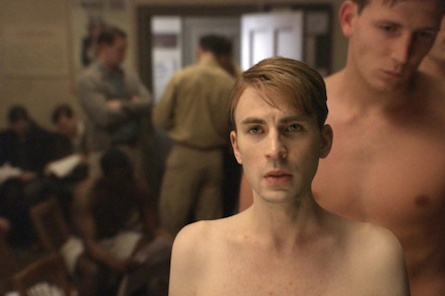
Captain America begins with the runty little Steve Rogers getting knocked back again and again for army enlistment because of his size. The CGI was done so well that a lot of people commented that they didn’t even know it was Chris Evans’ head seemingly Photoshopped onto a scrawny body.

It’s hard to rectify the pre-Captain America Rogers with the post-Stanley Tucci experiment Captain America. Evans looked so odd for the first half an hour or so, which is a far cry from the other films we’ve seen him in: Not Another Teen Movie and Fantastic Four, where he was predominantly shirtless and acting like an arrogant douchebag.

And as much as I preach that looks don’t matter, once I’d seen CGI-Chris Evans, I could not get that image out of my head!

It seems Peggy Carter had no problem forgetting Rogers’ humble beginnings, though. Carter had only a short interaction with Rogers before he became a muscle-bound superhero, and only began to show interest in him after the fact. Granted, five minutes of conversation, which Rogers admits is the longest amount of time he’s ever spoken to a woman for, isn’t enough to get to know anyone. But the look in Carter’s eyes was noticeably different after he emerged from the super-soldier machine (lust, awe), than before he went into it (pity).

If we want to send the message that women should be valued for more than just what they look like, shouldn’t we be sending the same one about men? Indeed, all people should be assessed based on what they offer the world and the people around them besides eye candy.

Sure, the reason Rogers was allowed to enter the military after the experiment is because his physical capabilities were enhanced. Fair’s fair. But it seems Carter fell in love with the man behind the Captain America mask; the exact same man Rogers was before the experiment. The man Dr. Erskine chose for the experiment because of these traits. The baby blue eyes and the muscles just enhanced that.

I’m not going to pretend that physical attraction doesn’t matter; it does. But psychological attraction is the connection that will stand the test of time.

Anyone will tell you that the archetype of the comic book nerd identifies with superheroes because they’re usually the underdog. People walk all over them, not recognising them for who they are until they get a magic ring, or bitten by a spider, or made into a super-human in an experiment and can show the world what they’re made of.

But why do they have to undergo a physical transformation for these traits to be acknowledged? If comic book heroes teach us anything, it’s that courage comes from within. Captain America certainly teaches us that. If only Hollywood adopted this strategy, too.

Related: Captain America Review.

Will Boys Be Boys When it Comes to Objectifying Women?

Elsewhere: [MamaMia] Male Models. Inside Their Straaange World.

Images via IMDb.

Will Boys Be Boys When it Comes to Objectifying Women?

It’s been a beauty-centric week here at The Scarlett Woman.

We’ve talked about Grey’s Anatomy and beauty as represented by Cristina Yang, and brains over beauty.

I’d already planned to post those two articles last week before a beauty-related scandal came to light at my workplace.

Apparently, two of my male co-workers had devised a “ranking system” for the hottest to nottest girls in our department.

This is sickening on four levels.

One: it’s sexual harassment and discrimination based on gender and appearance, and those who were victimised by the “ranking” could take those who were responsible for it to H.R. Just look at the Pricewaterhouse Coopers incident. Or the Duke “Fuck List”, on the other side of the coin.

Two: we interact with these men boys (as that’s what they are: one has just turned 21, and the other is 23. But age really has nothing to do with maturity) as friends, colleagues; PEOPLE. Not as objects for them to rate and pit against each other in terms of how we look and nothing else.

Three: I don’t want to have to stoop to their level, but if we were ranking them, one would be at the top in terms of looks, but both would be at the bottom in terms of personality, morals and decency, which is all that really matters. So what gives them the right to judge us?

Four: this is not the ’50s and women are not reduced to what they look like.

The men boys who devised this ranking are sexist misogynists, one of whom I am deeply ashamed to have dated for a short period. Thank God I never got naked with him, ’cause who knows what he would have to say about me then!

What gives them the right to rank us? The same right men’s magazine editors have to rank female celebrities in terms of hotness, I suppose. But the difference there is that, while it’s still pretty sexist but somewhat understandable and accepted, most of the women on the list don’t work with and consider(ed) them friends.

How can you separate the things you know about someone—their personalities, interests, history, temperament etc.—with how they look? I know I can’t.

I was taken aback recently when a coworker praised me for being close friends with a man who’s not super attractive. Unlike the two who ranked me, I don’t make friends in terms of looks. If anything, I find it easier to be myself around and make friends with men I don’t find attractive.

But my so called “ugly” friend has an awesome personality; anyone would agree. And that makes him attractive. And at the end of the day, it’s what’s on the inside that counts.

As I mentioned above, one of the men who devised this ranking is probably about an eight in terms of looks, but knowing this about him, in addition to other undesirable traits that lead to our dating demise, makes him a one in the personality department.

Now, I don’t know where I ranked on this list and, frankly, I don’t care. My self-esteem is high enough to not give a shit about what other people think of the way I look. But that’s not the point. How would someone who doesn’t have such high self-esteem feel? As much as we say looks don’t—or shouldn’t—matter, to them, it does.

So is this just a case of “boys will be boys”, as one co-worker who knows about the list put it?

I don’t think it is. You will notice that two out of about thirty were involved in this. The overwhelming majority chose not to act as boys do, whatever that means these days. Again, this is 2011: not 1951.

Another co-worker said “judging” is just what people do. Sure, I judge young mothers who leave their kids with a babysitter so they can go out clubbing, the guidos/ettes from Jersey Shore and, certainly, these two men in light of this list. But I’m judging them on their behaviours and attitudes, not what they look like. And who am I, really, to judge them based on any factor? No one. The same as the makers of this list are to judge us. Nobodies.

At the end of the day, beauty is in the eye of the beholder. Ellen DeGeneres brought this up when she interviewed FHM AND Maxim’s Most Beautiful Woman, Rosie Huntington-Whiteley, on her show last week. DeGeneres compared Rosie’s “ranking” to her own as “Most Beautiful Woman” on This Old House magazine’s cover. We know Ellen, we like her, and that’s what makes her beautiful, in addition to her physical beauty. Bitch looks good at 53!

And true beauty comes from within. Don’t ever let someone else’s “ranking” of how you look make you forget that.

Related: Beauty VS. Brains.

Cristina Yang as Feminist.

Elsewhere: [Gawker] The “Top 10” Office Email That’s Scandalising Ireland.

[Jezebel] College Girl’s PowerPoint “Fuck List” Goes Viral.

Beauty VS. Brains*.

Earlier this week I blogged about Grey’s Anatomy’s Cristina Yang being a feminist.

I mentioned that she scoffs at being called beautiful by her husband, Owen, and would rather be complimented for her brains, not her beauty.

Sure, I enjoy being called beautiful just as much as the next girl, but I, too, would rather people recognise me for what’s on the inside, not what’s on the outside.

From “What’s the Point of Pretty?” by Sarah Von on Yes & Yes:

“‘How would you feel if the only thing people ever praised you for was something you had no control over? And how would you feel if every day, you were slowing losing the one thing people complimented you on?’”

Pretty shitty, especially when striving to be good at things outside the realm of the physical.

So I asked my friend Katrina, the most beautiful woman I know, what her thoughts on the matter were. Would she rather be considered beautiful, or be complimented on her mind?

“It’s a tough question really, so many women—beautiful or not—are inherently self-conscious. Living in the world we do, so much pressure is put on us to fit a particular type of mould. Sometimes I look at other women and think ‘I wish I had her legs’ or ‘I wish I was a unique creature like her’, but it’s not that often. More often I am happy with the way that I appear. In fact, I put more pressure on myself to be intelligent! This is therefore my choice—brains over beauty. I suppose I feel I have something to prove to myself—I’m always striving to be better, to know things. I feel like a failure if I’m not getting where I want to go—but it is my brain that enables me to get how far I am now! Our intelligence enables the world to be our opus, and I’d much rather be admired for taking up that challenge than for swanning around it in a cloud of beauty!”

But do those who are beautiful take it for granted? Is that why they choose brains over beauty? Because they’re already physically blessed? I’d be interested to know in the comments if anyone reading this feels they’re more well endowed in the brains than beauty department, and if they would change this given the choice.

As the quote from Yes & Yes illustrates, it’s actually kind of insulting to be complimented on your looks alone. If anyone should be proud of the way you look, it’s your parents, right? Beyond getting a flattering haircut, using makeup to present your (arguably) best self and—in extreme cases—getting cosmetic surgery, we don’t really have a hand in the way we look.

Maybe this is why young, cute girls are always told how young and cute they are over how smart, how unique, how funny, how nice they are. It’s usually parents and adults who say these things; children are often oblivious to the way they look until a certain age. There are articles circulating the blogosphere at the moment in regards to this. Let’s focus on things other than looks in kids, lest we end up with a world of Heidi Montag’s et al.

It’s also a generational thing, I think. People my age are more aware of the effects of focusing on looks alone, especially for women, and will hopefully raise their kids accordingly.

I had a coworker who’s pushing 40 comment on my hair recently. I was having a bad hair day anyway, and I asked if he was insulting me. He replied: “I could never insult you… not on your looks, anyway.” I found that even more insulting than the fact he thought my body hair was open for discussion!

Perhaps it was the age difference, perhaps it was because he was a man… I don’t know. I just know it’s so not appropriate to comment on people’s looks in the workplace (more on this to come tomorrow). And that equating looks to the only positive thing about someone is reprehensible.

So back to the question at hand: brains or beauty?

I would choose brains hands down. I have chosen brains.

If I hadn’t, I wouldn’t have gone to uni. Or started a blog. Or read books. Or incite spirited arguments amongst my friends to see what their opinions are on asylum seekers and SlutWalks, and to challenge my own.

Brains will still be with you when your looks have been washed down the drain with the dirty dish basin water. (Provided you don’t get dementia which, if my dad inherits from his dad, could be a very real possibility for me. Argh!)

*And by no means are brains and beauty mutually exclusive.

Related: Cristina Yang as Feminist.

Poor Little Rich Girl: Who Cover Girl Heidi Montag.

The Hills Have (Dead) Eyes.

My Response: Go Back to Where You Came From.

Elsewhere: [Yes & Yes] What’s the Point of Pretty?

[Jezebel] Should We Tell Little Girls They’re Pretty?

[The Huffington Post] How to Talk to Little Girls.

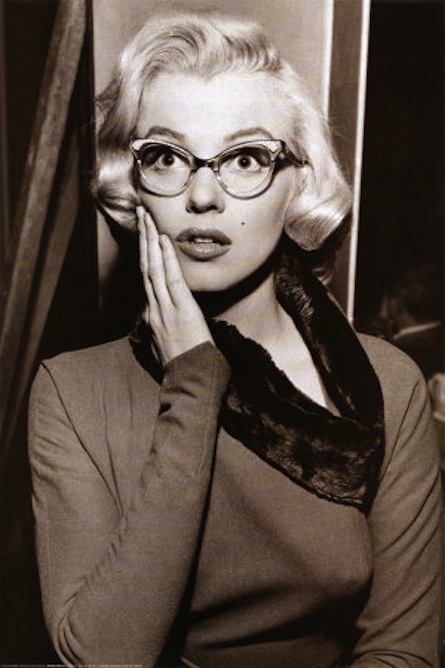
Image via All Posters.