… or rather, your book on your chest, with these classics from Out of Print Clothing.
I’ll take a Catcher in the Rye, One Flew Over the Cuckoo’s Nest, Lolita and a Nineteen Eighty-Four, please.
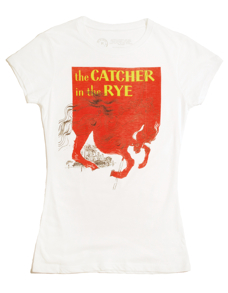

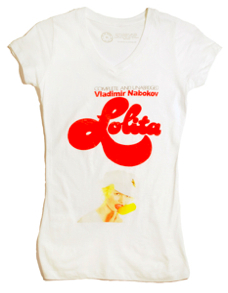

… or rather, your book on your chest, with these classics from Out of Print Clothing.
I’ll take a Catcher in the Rye, One Flew Over the Cuckoo’s Nest, Lolita and a Nineteen Eighty-Four, please.
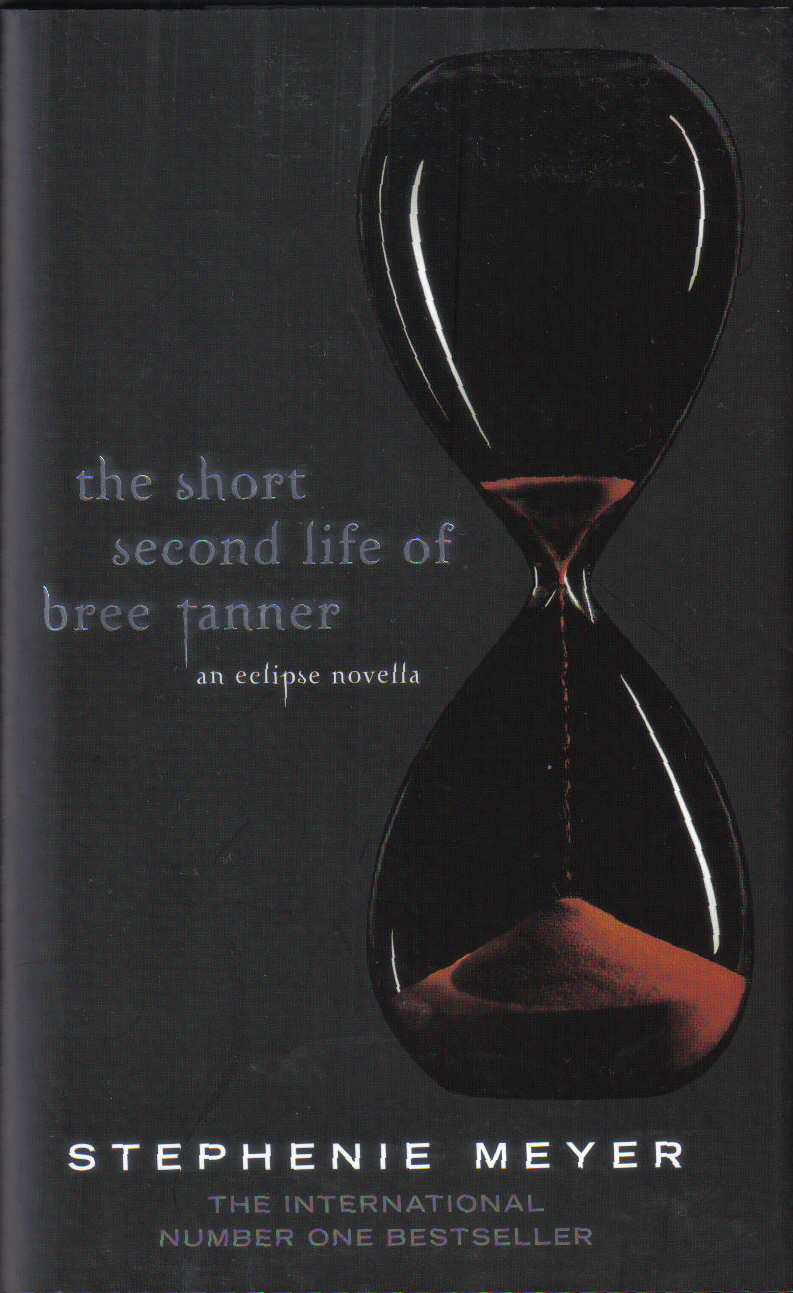
I got over all the Twilight hoopla early on, becoming obsessed with the first movie when it came out in late 2008, then devouring the four tomes in quick succession.
While I stand by my contention that the first film was great—indie-esque and unselfconscious, before all the money started rolling in and they tried to top themselves. Bring back Catherine Hardwicke, I say!—the books are so bad they could’ve been written by a grade sixer.
And that goes for The Short Second Life of Bree Tanner, too.
But at less than $15 and 178 pages, I flew through it in a few public transport sittings, and it is a must-have for fans, if only to add a hardback edition to the bookshelf’s collection of black and red spines.
The novella follows the “short second life” (duh) of 16-year-old Bree Tanner, who was a newborn vampire introduced in Eclipse, created by Riley and Victoria in their quest to overthrow the Cullens and get to Bella Swan.
In a nutshell, she falls in love with fellow newborn Diego, and they discover together that Riley has been lying to them about what Victoria created them for, amongst other things. One night when they’re hunting, they get sidetracked and stay out too late. Diego shows Bree that the sunlight won’t turn them to ashes, contrary to what Riley asserts. Enter fellow coven member, Fred, who has the ability to repel others with his mind, but chooses to befriend, or rather protect, Bree.
Then comes the action which Twilight fans will be familiar with, when Victoria and Riley lead their coven into battle against the Cullens and the werewolves, who definitely possess the element of surprise, and are devoured by them. Diego dies early on, and Fred diverts his focus to escaping the Volturi, who were liaising with Victoria in her attempt to capture Bella and who arrive after the slaughter to claim Bree’s life, as we all know from Eclipse.
A kind Carlisle Cullen offers to let Bree, the sole survivor, go if she promises not to fight. However, when Jane arrives, Bree realises she has nothing to live for anymore, with Diego dead and Fred gone, and succumbs to the Volturi quietly.
There are no chapters, and the action takes place mostly via dialogue between Bree, Riley, Diego, Fred, and later, Carlisle and his family.
All in all, a pretty tiresome effort by Meyer, but could we reallyexpect much else?
… and evidently, so do the 490 commenters that replied to Mia Freedman’s post on her blog, MamaMia, about the books that are currently “dwarfing” her bedside table.
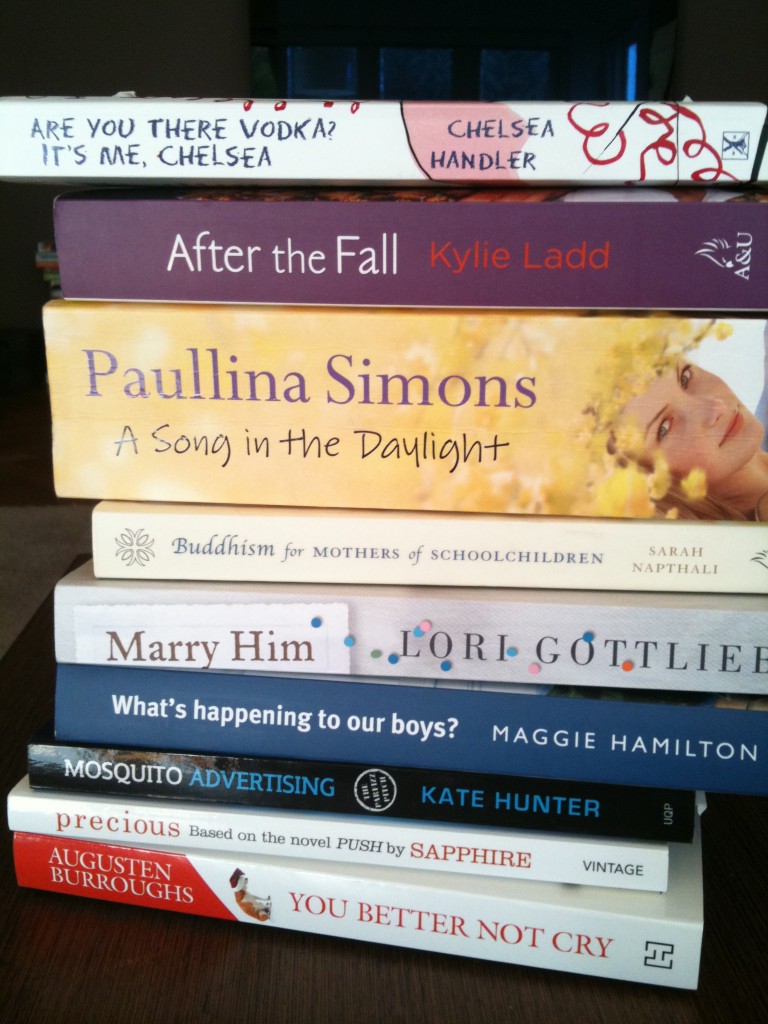
I have a similar pile of magazines that are threatening to do the same next to my bed.
However, I seem to be getting through the books nicely.
I just finished reading Freedman’s memoir, Mama Mia: A Memoir of Mistakes, Magazines and Motherhood for the second time, the review of which I posted yesterday, as well as Stephenie Meyer’s new Twilight tome, The Short Second Life of Bree Tanner, who was introduced in Eclipse, the movie version of which comes out in a little more than two weeks.
Phew!
After that, I have some Babysitters Club books I want to get back into and review (not suitable for public transport, so will have to set aside some designated home-time reading), Kathy Charles’ murder mystery, Hollywood Ending, which I still need to actually purchase, and American Psycho, which will no doubt take me an eternity to read, but Bret Easton Ellis is coming to Melbourne in August and I would love to tie a review of it in with his visit.
Oh, the perils of being a bookworm, hey?
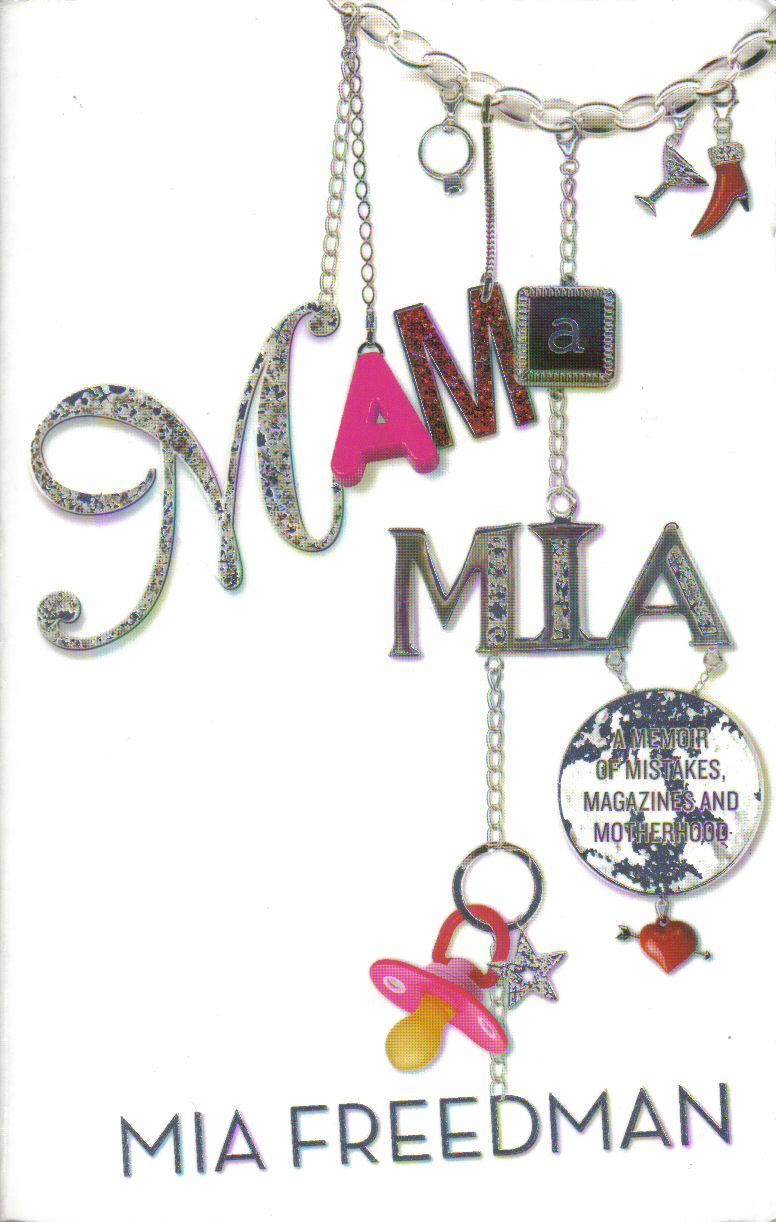
It’s no secret that Mia Freedman of Cosmo fame is my idol. She writes fabulously and is super down-to-earth yet eccentric. How do I know this? No, I don’t know her personally (I wish!), but I feel like I do from the way she writes her column and blog posts; so unabashedly open and hilariously true-to-life.
So you can imagine that when her memoir Mama Mia: A Memoir of Mistakes, Magazines & Motherhood came out last year, I was on that bandwagon faster than you can say “drag queen Kylie Minogue” (the theme for the opening chapter).
I loved, loved, LOVED the memoir and read it twice before re-reading it for this post. Some things stuck out in my mind, such as the way she describes blow-drying her hair whilst having contractions (“I took the opportunity to shower and wash my hair and use my travel blow-dryer… this was about as effective as having a small dog pant on my head.”) and packing a Collette Dinnigan dress to wear during the birth of her first child.
I could honestly go on and on about the merits of this memoir and just how fucking brilliant Freedman is as a writer and a woman in general, but instead, I’ve divided them into seven bite-sized reasons-to-read-the-book, replete with a myriad of quotes, to consume at your leisure.
I distinctly remember, even though I was thirteen and not yet allowed to read Cosmo, seeing Freedman being interviewed on one of the tabloid news programs after the furore that erupted over her decision to put Big Brother’s Sara-Marie, along with Britney Spears, on a flip-cover edition of Cosmo. This is what she has to say about that:
– “Them: You put Sara-Marie on the back cover because she’s fat, didn’t you? Britney was the real cover because she’s skinny.
Me: “That’s absolutely not true. I won’t pretend my job as an editor is not to sell magazines. Of course it is. But Cosmo is not new to the issue of body image. And this could never be described as a cynical or token gesture. We’re the only women’s magazine to feature women up to size sixteen every single month.”
The book also deals with Freedman’s present-day inner conflict over airbrushing the crap out of the magazines models and celebrities. But she admits that, “Sometimes I did change bodies but only to make them bigger. Oh, and to attach them to different heads.”
I always put Freedman on a pedestal during her editorship at Cosmo, but it’s nice to know she is actually a real person, not a devil wearing Prada as so many mag editors are made out to be, as the memoir conveys. She has a knack for self-deprecating humour, with such gems as, “Jason has lived with me for more than ten years and is used to my ability to create unwanted, unnecessary and unpleasant drama out of a perfectly nice evening,” when she decides to induce her own labour, “Department store cosmetic counters intimidate me. They still do,” and, on the more extreme end of the spectrum, “I no longer had his anger in my face, his clothes in my cupboard or his bong on my coffee table”!
“Bombarding myself with pop culture, diving in deep and splashing happily around is my idea of relaxation. It’s how I unwind.” Me too, Mia. Me too. (If you’ve seen my stack, you will know just how far this obsession goes.) However, when your son tells you, “‘Sometimes it seems like you love magazines more than you love me,’” it’s time for a perspective check.
A recent spate of mag editors have been taking to their Editor’s Letters to expose the tedious task of choosing a cover each month, however Freedman was one of the first to do so in Mama Mia.
She questions her ability as a mother…
… “Namely, WHAT THE HELL DO YOU DO WITH A BABY”! Freedman’s blissful ignorance as a first-time mum at 25 is a major aspect of the book.
At first, I was put off by the “motherhood” aspect. As a single 22-year-old, I don’t want to be reading about pregnancy and babies—I can get Cosmo Pregnancy for that. But in all honesty, “motherhood” is the best aspect of the book; it makes the memoir at once endearing and witty.
If you know anything about Freedman, you will know that her first child, Luca, was a welcome mistake that happened just after she accepted the editorship of Cosmo. Then came Coco eight years later, who put an end to Freedman’s fertility struggle and “reminded [her] how great it is that my first child is old enough to fetch me chocolate biscuits” during gestation. Finally, before her career segue into “the big head-fuck of TV” Freedman gave birth to Remy, “pure and uncomplicated… sunshine”.
A highlight is when she informs her boss, Pat Ingram, that she’s pregnant… but can still, like, totally do the job. “I only need three months [off] max…”, she told her. When Ingram lays down the law with no less than four months maternity leave for Freedman, Freedman asks, “But what will I do all day?… Surely the baby will, you know, eat and sleep a lot and I’ll have quite a lot of spare time, won’t I?”
Oh, how wrong she was!
Again, Freedman believes her parenting skills leave much to be desired, as you can see in these choice quotes on the topic:
– “Somewhere in one of the books Jason had read that a baby should associate long sleeps with his cot so you should only put him in there at night. This meant during the day we played with him until he passed out wherever he happened to be lying, no doubt dreaming of parents who knew what they were doing.”
– “‘Your daughter has one of the more extreme dummy addictions I’ve ever seen’… Super. Almost six months old and battling her first addiction… I first gave her a dummy at four weeks. Bad mother?… Soon, the mere act of buying dummies would cheer me up. They’d replaced shoes as the object of my retail therapy.”
– “When I picked her up, I half expected to see betrayal in her eyes, as if to say, ‘So where the hell were you last night, bitch?’ But her face was as open and as delighted to see me as ever. She appeared undamaged. Lifelong gift.”
– “To keep my spirits up and my perspective in check, I’d regularly remind myself how lucky I was… to have happy, healthy children I adore. How lucky I was not to be camping. Or homeless. When all of this lost its cheering power, I dug deeper, trying to summon gratitude for having limbs, oxygen and the ability to blink.”
– “Even when the sun is out, family holidays can leave me in need of a stiff drink and a long lie-down. Or, in the case of ten consecutive rainy days, a straightjacket… I threw such a spectacular tantrum, Jason threatened me with timeout and Coco looked at me with new respect.”
– “I was so tired that I kept losing the book… so I stuck little post-it note reminders all over the house like someone with Alzheimer’s. But Coco wouldn’t follow them. It seemed she couldn’t read and this was most inconvenient… ‘The book says “put the drowsy baby in the cot”. But I don’t HAVE a drowsy baby. I have a screaming baby and THE FUCKING BOOK DOESN’T MENTION WHAT TO DO WITH ONE OF THOSE.’”
– “With one hand I tossed the pills into my mouth and with the other I undid the lid of the bottle and washed them down with two big gulps of breast milk. It was still warm. Clearly, this is known as having it all…”
– “Dear Lord, what is happening to me? I am not that person. I am not someone who talks about poo. I am not the woman in labour who is out of control. Oh wait, I am.”
– “By the time Coco was seven months old, I’d had mastitis six times…
‘Babe, maybe you should think about giving up breastfeeding,’ Jason ventured carefully one day when Coco was about five months old and he was fetching me my ugg boots to wear in bed because I was shaking with cold under a doona and two blankets in the middle of a thirty-degree day.
‘No way,’ I shot back…
Strangely, stupidly, I had breastfeeding blindness which allowed me to ignore the fact it was making me terribly ill and taking a toll on my whole family. Not to mention the glaringly obvious: I was repeatedly subjecting Coco to the antibiotics via my breast milk. Doctors swore it was safe but they admitted that some of the medication was indeed being ingested by her. Why was I being so wilfully ignorant about the fact that this was surely doing more harm to her than any good that could come from the breast milk itself?”
– “At least I’m not vomiting into garbage bins behind my desk like another friend who is in the early stages and is trying to hide her pregnancy from workmates.”
I caught myself audibly laughing on public transport when reading this, so here are some quotes I prepared earlier to prime you for the hilarity:
– “When the plastic packaging burst, the condom slid on its lubricant across the page and onto Wendy’s face. Just another day at the office”.
– “Hey, I love animals… Animals won’t fuck me over like the magazine industry.”
– “It was big fun. The kind of fun when you laugh so hard you think you might wee in your pants and, if you’ve ever given birth, sometimes do.”
– “Since my late teens, I’ve tried a bunch of different pills and they’ve all been hugely effective in preventing pregnancy because they turned me into a stark raving loon who was so hideous, no guy wanted to be near me.”
– “All you really need to turn on your partner when you’re trying to conceive is to wave a thermometer around… and shriek like fishwife: ‘Fucking hurry up will you! I’m OVULATING!’”
– “I am calm through all this because apart from being pain-free, I am hooked up to a foetal heart-rate monitor. Nothing makes me happier in the world than being hooked up to machines for reassurance purposes.”
And my absolute favourite quote from the book:
– “Comfortable? COMFORTABLE? What part of having the pain equivalent of a rocking chair shoved up your arse might be COMFORTABLE…?… Thankfully, the two lovely Panadol have taken away all my pain so I’m feeling fantastic. No, wait. The Panadol doesn’t even touch the sides because I AM IN GODDAMN LABOUR AND PANADOL IS FOR PISSY LITTLE HEADACHES!”
Related: Workaholics Anonymous.
Elsewhere: [Mama Mia] Hello Ralph Lauren. It seems you’ve lost your mind. Twice.
[Jezebel] Photoshop of Horrors Hall of Shame 2000-2009.

The City of Hamburg is finally seeing the damage cigarettes can do and are instead giving cigarette vending machines a new lease on life as book vending machines.
Media Bistro’s Galleycat blog reports that “one publisher has changed cancer stick dispensers into book machines,” which hand out original works by Hamburg authors, all of which are available online, too.
Smoking never looked so good.
Elsewhere: [Galleycat] Cigarette Dispensers Refurbished as Book Vending Machines.
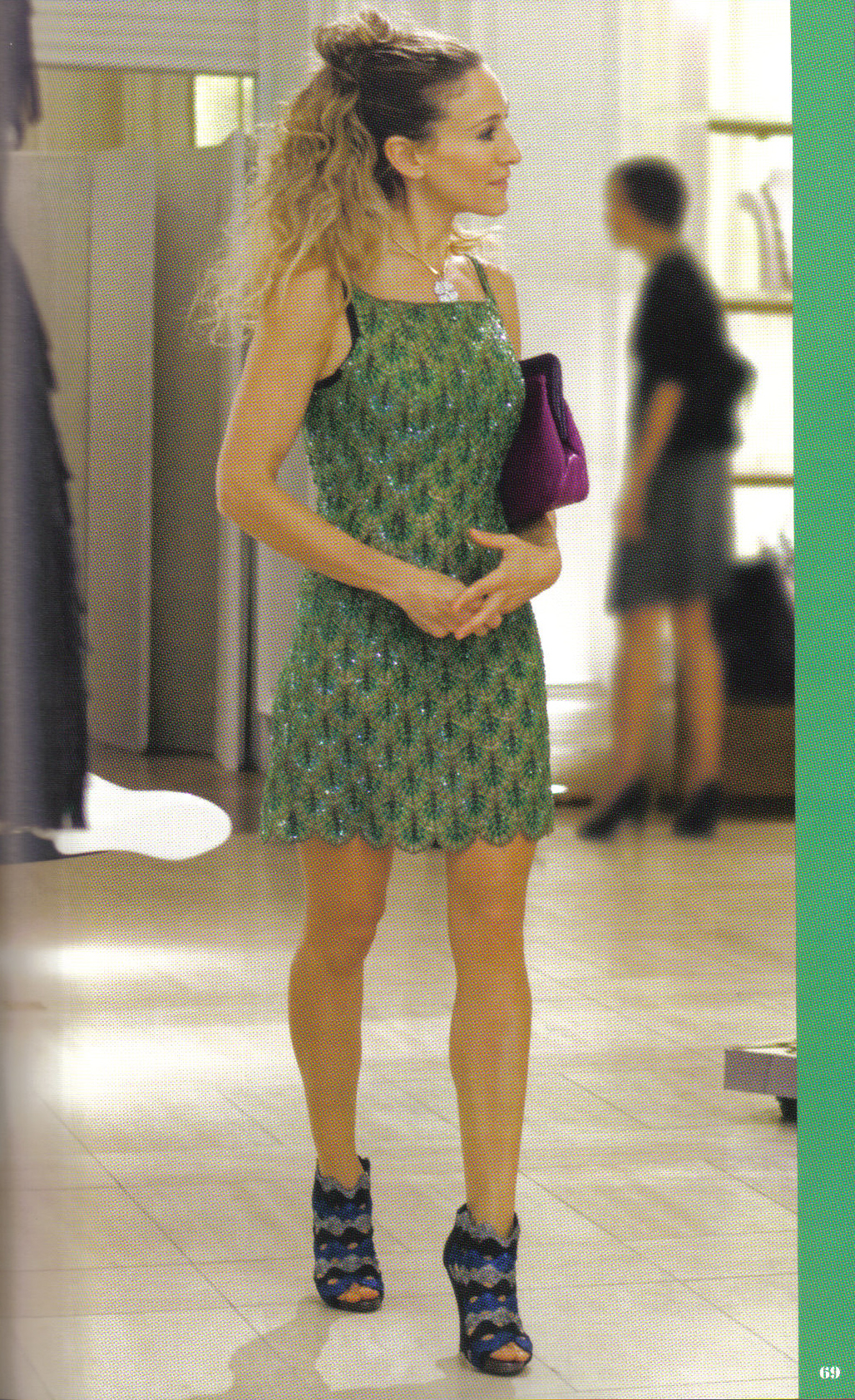
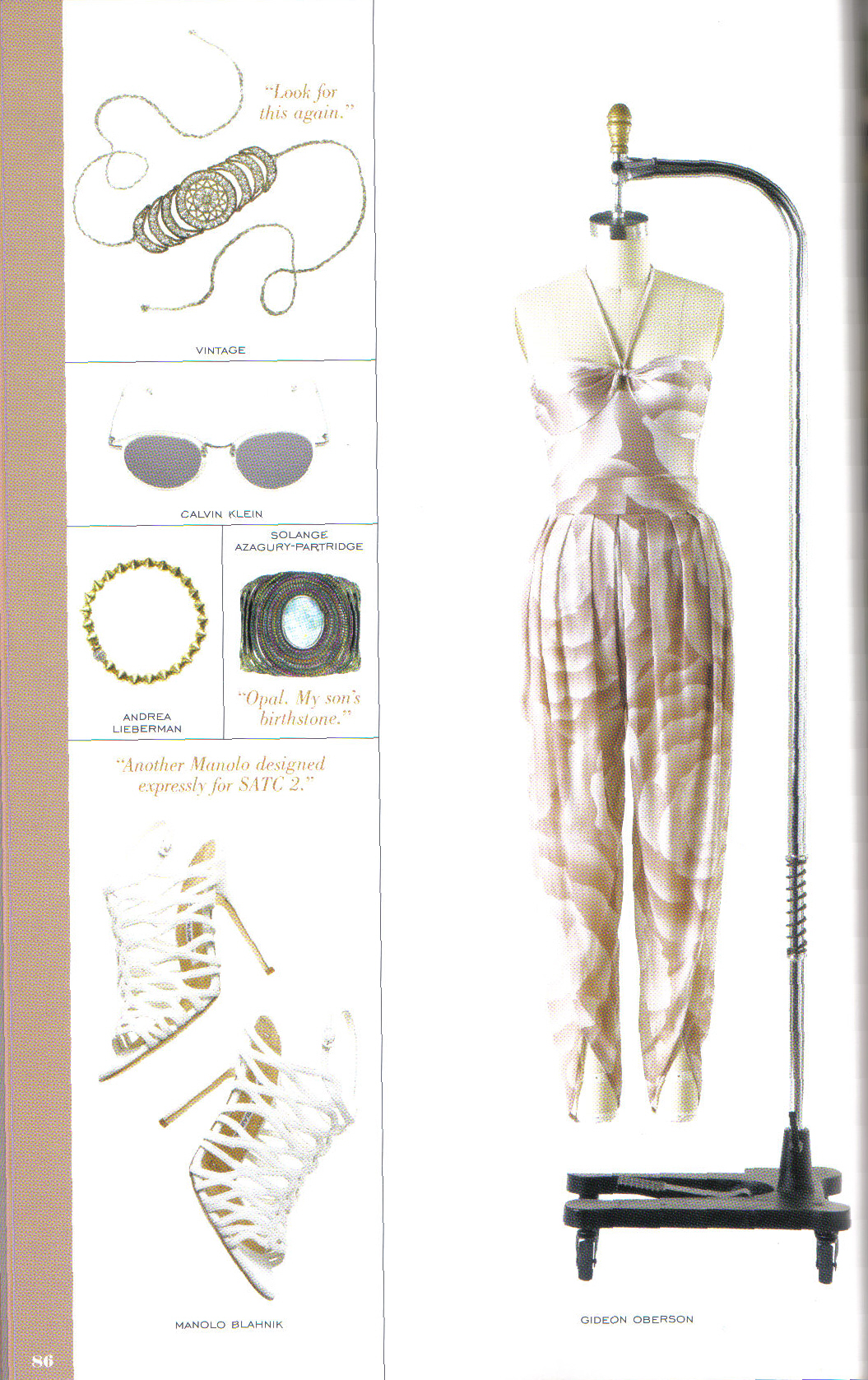
Okay, so this tome is not exactly heavy on the text, but it certainly is heavy on the fashion, friends and film sets featured in the movie.
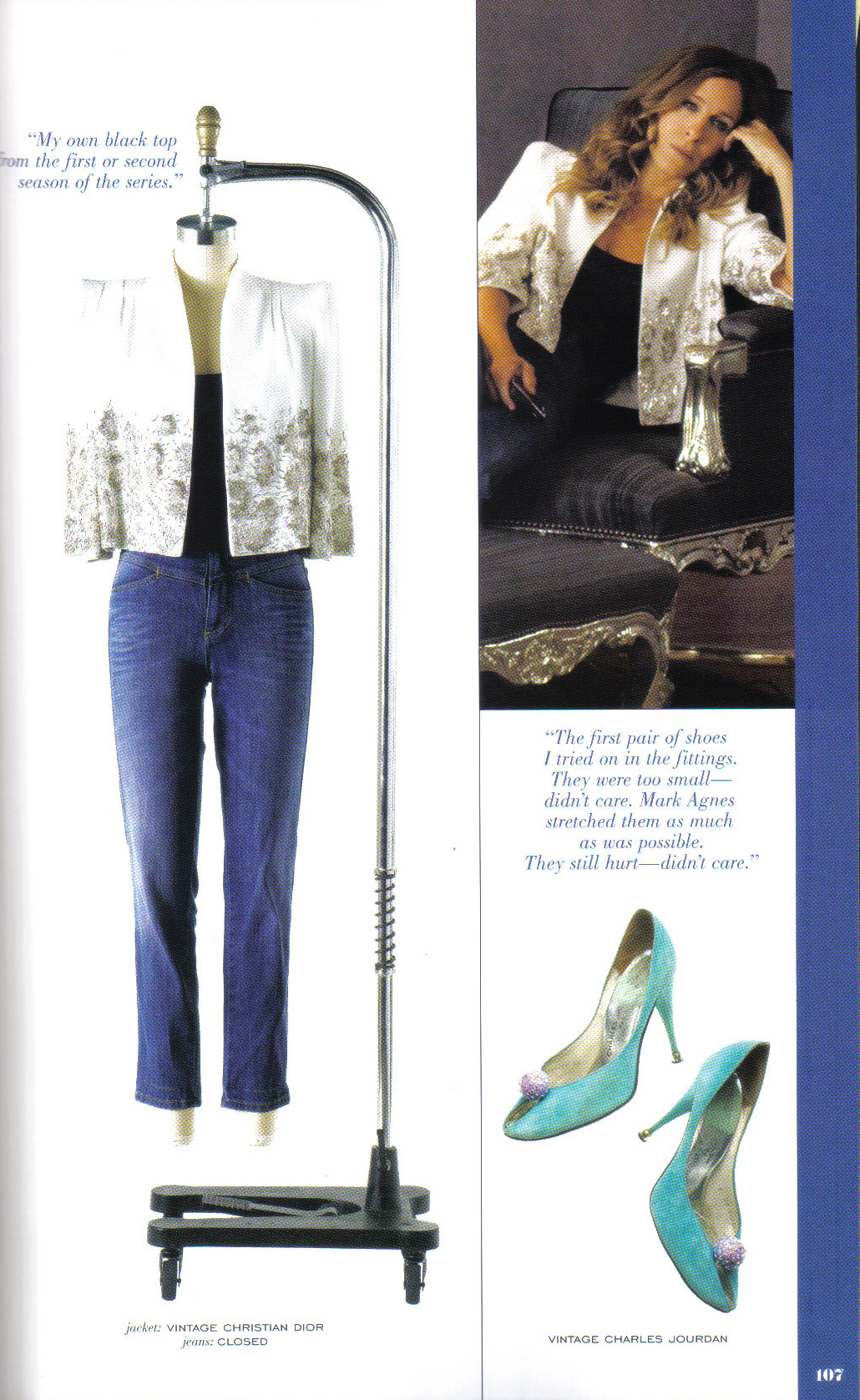
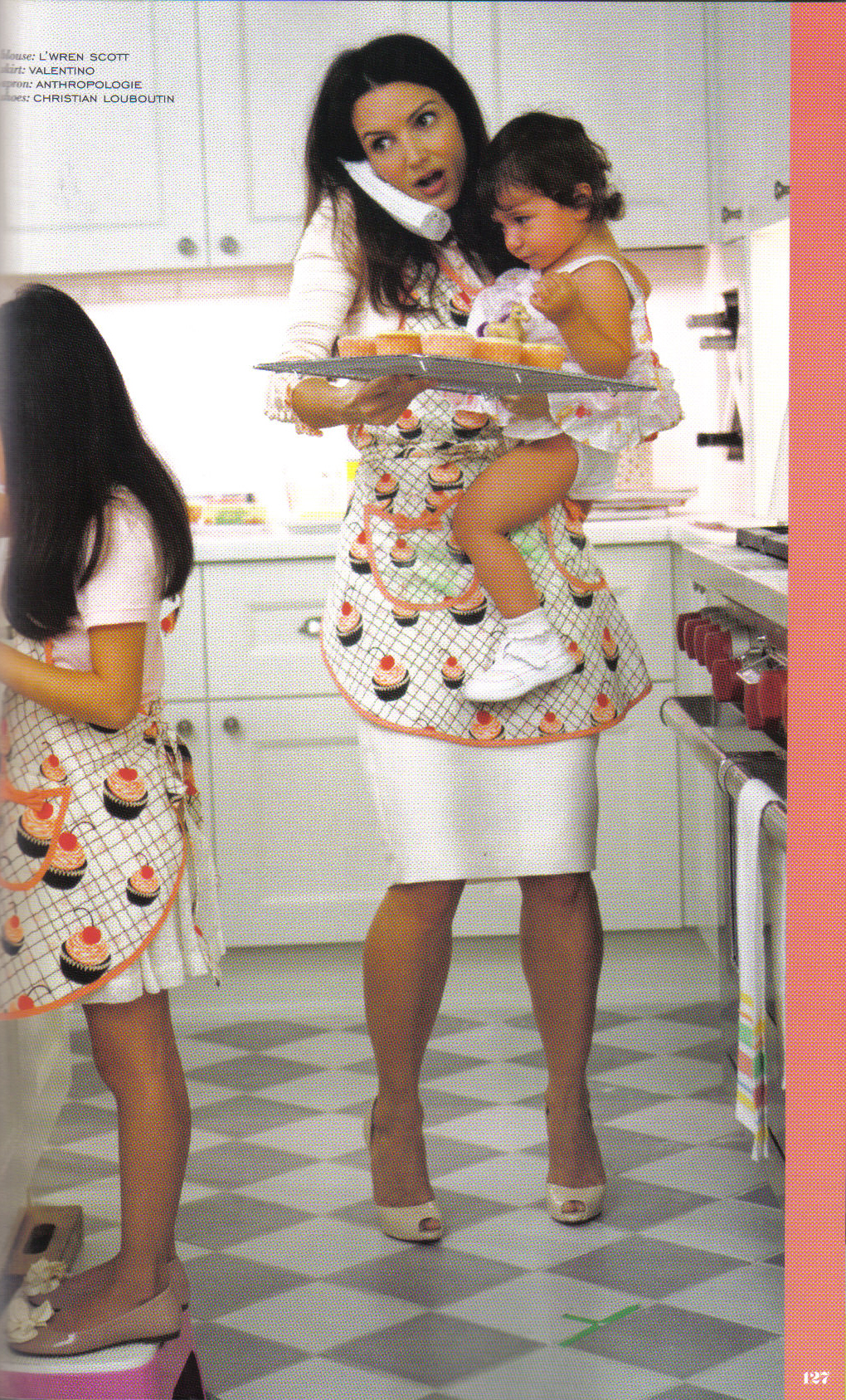
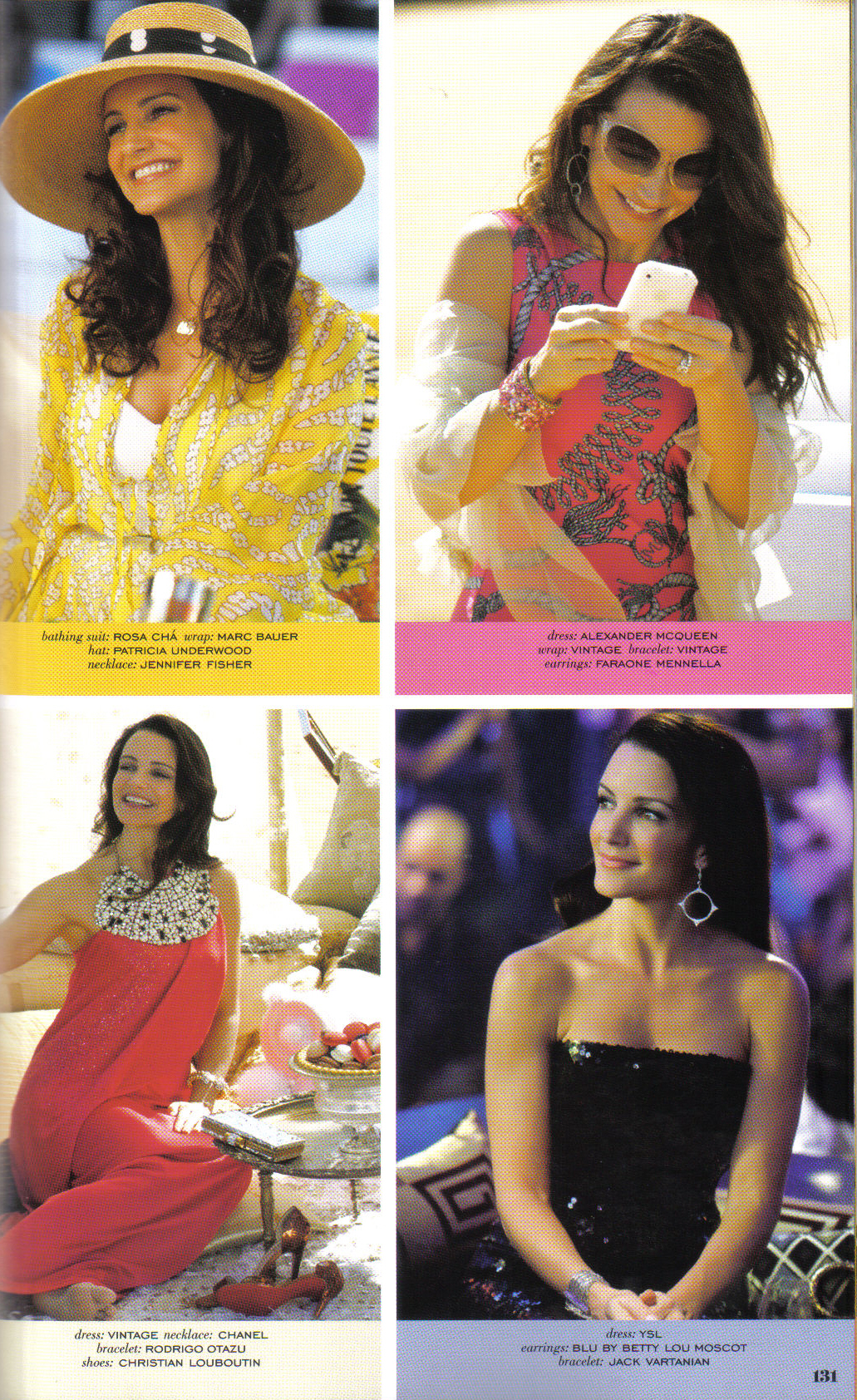
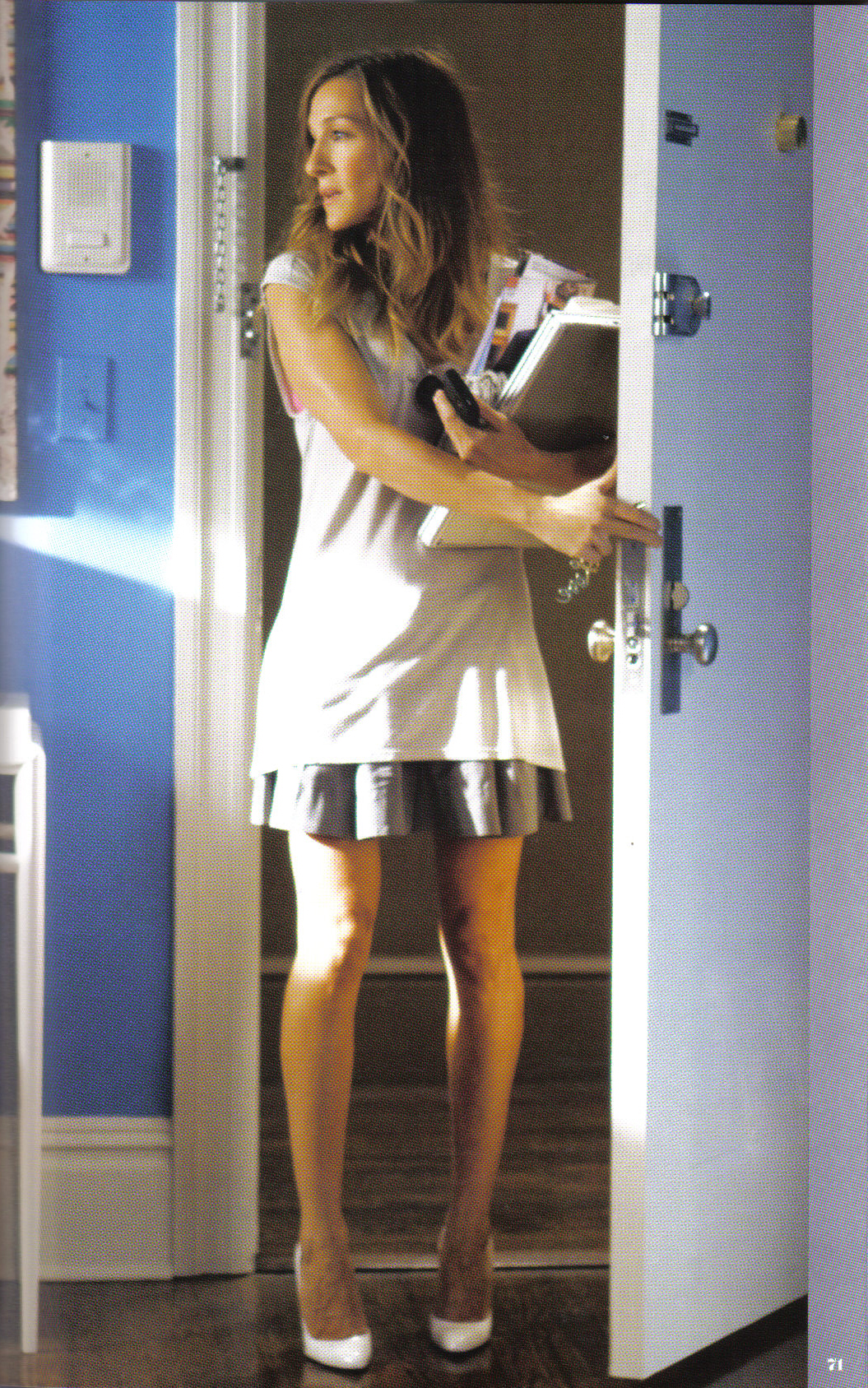
If you hated the movie (which you can read about here, here and here) like 80% of viewers, I would still recommend getting your hands on this book. The layouts are beautiful, every one of Carrie’s outfits is broken down with commentary by Sarah Jessica Parker and, my favourite aspect of the movie by far, the work that went into the set designs is fascinating.
And if you’re a fan of the series, fashion, or film in general, it is definitely worth checking out.
I’ve done all the hard work for you, so here’s a sneaky peek(y) at the book.

What They Wore
While I lamented in my earlier review of the movie that the fashions were a bit lacklustre, I have to argue, after reading this book, that the accessories are what really pushed SATC2 over the edge from mediocre to sartorial saviour. The vintage jewellery, especially, makes me glad I’m going to The Way We Wear vintage market next weekend in Williamstown, Melbourne, to pick some up for myself.







Sets & the City
A lot of the movies I like aren’t exactly Oscar winning (more like Razzie winning; ie. 27 Dresses and Suddenly 30), but it’s the scenery they evoke that piques my interest. In that respect, SATC2 really raised the bar.

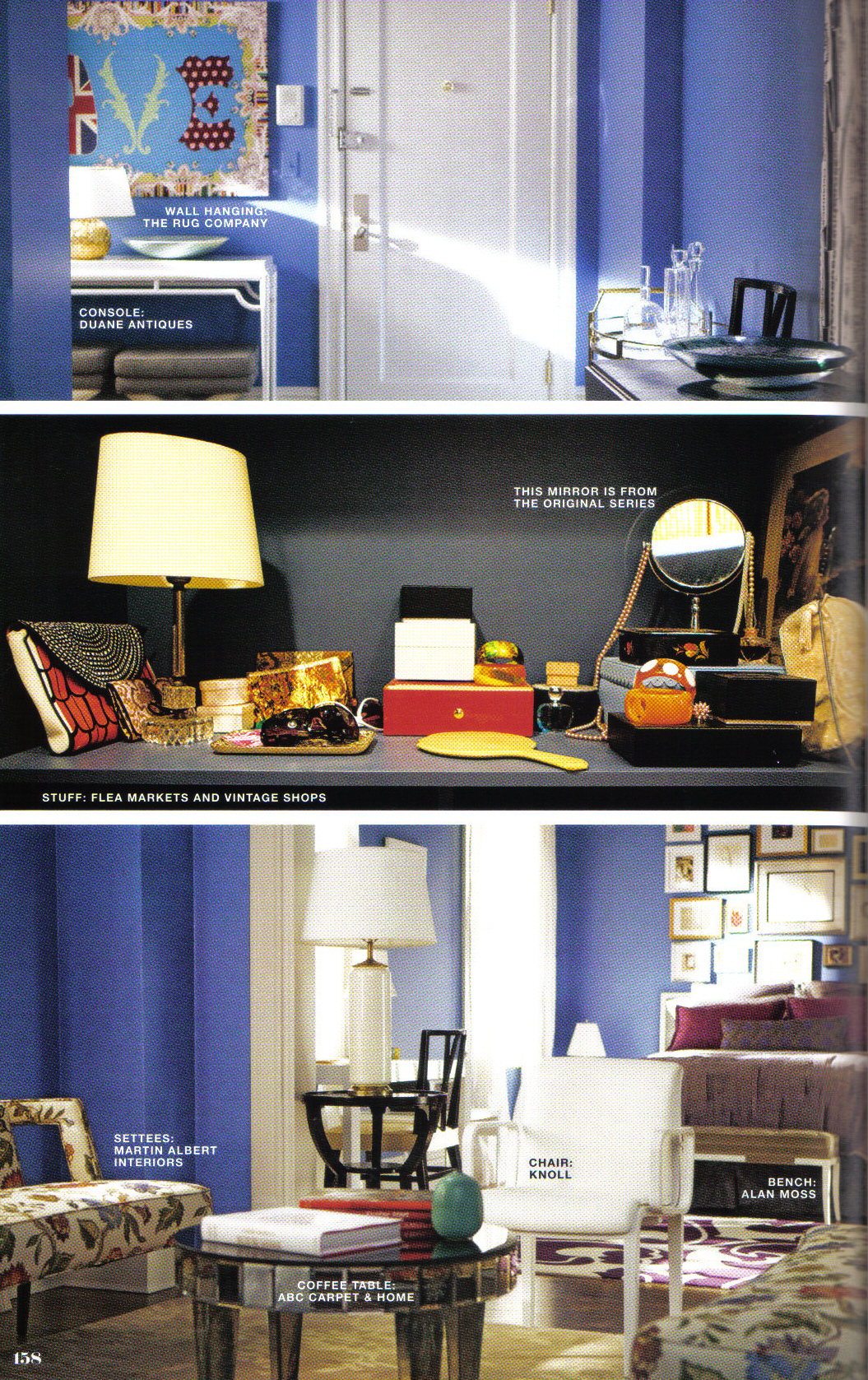


Stay tuned for a SATC(1) retrospective.

The Hotel New Hampshire is the second of John Irving’s books I’ve read, and I’ve come to notice a pattern.
My first encounter with Irving was with his 1998 release, A Widow for One Year. A hefty tome, weighing in at 537 pages, it profiles the intertwined lives of Ruth Cole and Eddie O’Hare, the latter of which has an affair with the former’s mother, only to meet again over thirty years later when they are both—albeit Ruth more so—successful novelists. Many other plotlines are intertwined to create an intricate story spanning several decades.
A similar time frame occurs in The Hotel New Hampshire, which was published in between Irving’s two most well-known novels—The World According to Garp (1978) and The Cider House Rules (1985) in 1981.
The story begins with the courtship of Win and Mary Berry, parents of the narrator, John Berry. They meet and fall in love while staying at the hotel, Arbuthnot by the Sea, in Maine one summer, which forms the basis for Win’s idea to open The Hotel New Hampshire later in the book. As the summer draws to a close, the couple are engaged and Win sets off to attend Harvard while Mary plays housewife and gives birth to their children, Frank, Franny, John, Lilly and baby Egg.
This is where it really starts to get good.
Win buys the abandoned girls school in their childhood neighbourhood of Dairy to turn into a hotel, primarily to meet the needs of all the parents who visit their boys—and later girls, as the school becomes co-ed—at the local boarding school. The whole family, including the grandfather, Iowa Bob, move into the dilapidated building with immovable furniture and “miniature-sized” bathrooms stemming from a mix-up during installation at the female seminary. They are followed by the housekeeper, Ronda Ray, whom John has his first sexual encounter with, and Mr and Mrs. Urick, the hotel chefs.
Many coming-of-age milestones take place at the Hotel for the Berry children: Egg is revealed to be deaf; Lilly “doesn’t grow”; Frank acknowledges his homosexuality; John has his first sexual encounter with Ronda; and, most poignantly, Franny is gang raped by Chipper Dove, the captain of the Dairy School’s football team, and his fellow team-mates. Junior Jones, also a member of the team and leader of the “Black arm of the law” comes to her rescue, and the two form a close bond.
Around this time, the family Labrador Sorrow and Grandfather Iowa Bob pass away. Frank feels sorry for Franny, who repeatedly bathes away the “scent” she is left with after the assault, and wants to cheer her up with a taxidermied reincarnation of Sorrow. Reincarnation is perhaps too literal a word, as Sorrow comes to Iowa Bob in a dream shortly before his death. Comically, Frank marvels at his preservation work, saying “I’ve done such a good job with Sorrow that Grandfather has had a premonition that Sorrow’s come home”. When this version of Sorrow accidentally falls from a closet in Iowa Bob’s room, it is too much for him and he has a heart attack. Frank feels badly.
Win gets a letter from Freud, the man Win worked with the summer he met Mary at Arbuthnot by the Sea, asking him to help him run a hotel in his native Austria. Win accepts, and the family move to Vienna to start up “the second Hotel New Hampshire.”
Before the Berry’s leave, a dance is held at the hotel. Junior Jones brings along his sister, Sabrina, to be John’s date. A rape victim herself, Sabrina is perhaps held up as a mirror to Franny, and what her life could become if she is able to get over her own trauma.
Mary and Egg take a later flight than the rest of the family, with Egg insisting they take Sorrow with them.
But they never make it to Vienna, as their plane crashes and the rescuers find only Sorrow floating in the water.
The family spends some years running the second Hotel New Hampshire, which houses businessmen on one floor, prostitutes the floor above them, and radical communists also taking up residence there. John becomes involved with one of the prostitutes/radicals, Fehlgeburt, who reveals to him a terrorist plot to bomb the opera and warns him to get his family out of the hotel.
Susie, an ugly woman dressed in a bear suit, is hotel security, and she becomes somewhat of a mother figure to Franny, as well as a lover. She, like Sabrina, is a character that shares similar neuroses about rape as Franny. Susie makes Franny “sing” in ecstasy, while Franny gives Susie the confidence to overcome being raped with a bag over her head so her attackers didn’t have to look at her.
During this time, Franny and John finally act on their attraction—but it goes much deeper than that; love—for each other and share a kiss. Following this, they avoid the hell out of each other to prevent committing incest.
The recurring theme of “Sorrow”, the black dog omen that was with the family during Franny’s rape and the deaths of Iowa Bob, mother Mary and Egg, pops up again at this juncture.
Frank and John see two of the radicals, Arbeiter and Ernst (who also shares a sexual relationship with Franny) driving along the streets of Vienna with a bomb in the back of their car. A bomb “that was as weighty as Sorrow, that bomb was as big as a bear”. Funnily enough, John reads in one of Frank’s books about the opera, that a bomb exploded during a performance of Lucia, “the mad story of a brother who drives his sister crazy and causes her death, because he forces her on a man she doesn’t love… well, you can see why this particular version… would seem especially appropriate, to me,” so John likes to believe the bomb exploded during a different opera.
As the date of the opera bombing approaches, Ernst informs the blind Freud that he will be driving the car with the bomb in it. If Freud “fuck[s] it up… we’ll kill them all,” Arbeiter informs him.
Furthermore, the radicals decide to use the Berry’s as hostages if the bombing doesn’t go to plan to gain worldwide recognition. “We’ll have an American family as hostage. And a tragic American family, too. The mother and the youngest child already the victims of an accident… And here we have a father struggling to raise his four surviving children, and we’ll have them all captured,” Ernst says.
In the aftermath of the bombing, Freud is killed as he took on the role of suicide bomber, along with the radicals, while Win is blinded by the blast. No one inside the opera is hurt, and the Berry’s become international heroes, which little Lilly capitalises on with the publication of her memoir, Trying to Grow.
“‘Now that I’m going to get published… I’ve got to keep growing… the next book has to be bigger than the first. And the one after that… will have to be even bigger,” Lilly says. Lilly will succumb to the pressure of failing to live up to her first book, and commit suicide.
“Sorry… just not big enough,” her suicide note would read.
John tells Frank, “… It would take anyone longer to cover twenty blocks and a zoo than it takes to fall fourteen stories— the distance from the window to the corner suite on the… fourteenth floor to the pavement…” as he beats himself up over not being able to save her.
The family does enjoy one last victory before Lilly’s death, though, and that is Franny’s revenge on her rapist, Chipper Dove.
Lilly crafts a script—“a real opera, a genuine fairytale”—which casts Susie the Bear as—what else?—a bear cum rapist, Franny and Frank as insane, and John as the only normal one, whom Chipper believes is an ally, with prostitutes and fellow rape victims in supporting roles. While the faux-bear-rape of Chipper serves as symbolic closure for not just Franny, but The Hotel New Hampshire as a story, it isn’t over yet.
Because, “as in any fairytale, just when you think you’re out of the woods, there is more to the woods than you thought…”
And so Sorrow returns in the form of Lilly’s death.
The rest of the family, however, go on to live relatively happily for the rest of the tale. John plays along with his blind father’s wish to run a third Hotel New Hampshire, a “joke I have played on Father for all these years”; Franny and John finally act on their incestuous love and get it out of their systems; Susie “exhausted her bear’s role” with Chipper Dove, and becomes John’s lover; Franny and Junior Jones get married, get pregnant, and get rid of their baby by giving it to John and Susie.
The Hotel New Hampshire is very much a novel about family, even more so than it is about coming-of-age, “Sorrow” and perseverance, and the ups and downs of this very eccentric one that Irving has crafted. As radical Arbeiter says, “Americans are simply crazy about the idea of the family.”
This may be a helpful post for any other writers who read this blog, specifically those who want to publish a novel someday.
Personally, I don’t like to be told what to do and, especially in terms of getting your work out there in the form of a novel or even a blog, you can often be given a lot of advice you haven’t asked for and don’t want or need.
Sometimes being told what not to do can be more helpful, as these are concrete, finite guidelines to disregard only if you want to fail.
Author of How to Be Inappropriate, Daniel Nester, recently submitted a blog post to We Who Are About to Die, entitled “13 Don’ts I Learned While Writing, Editing, Marketing and Promoting My Book.” I won’t go into too much depth, but feel free to check it out if you’re planning on becoming a novelist anytime soon.

1. Don’t worry about the niche until the niche finds you.
I have found “finding a niche” to be an annoying piece of advice, but as this blog goes on, I feel I am falling into one, rather than starting off with a clear-cut idea in mind.
2. Have a gimmicky title, but don’t take it too seriously.
Titles “grab people’s attention, but that’s it… The people who take titles too seriously, by and large, are reviewers…”
3. Don’t rely on yourself as a proofreader.
I cannot stress this enough. Incorrect grammar and, especially, spelling is my biggest pet peeve, and I can’t stand it when I see typos in published works. Facebook, Twitter and blogs are a bit of a different story, but I’m still pretty unforgiving when it comes to even that!
4. Don’t proofread your own galleys, either.
“So your book looks perfect because it’s all in a different font and there are page numbers, right? Wrong. Also, if you’re sick of your book by then, it’s probably not a good book.”
5. Don’t ask famous strangers for blurbs.
Nester asserts that to keep the dust jacket as “organic as possible,” it’s better to ask people you know who have expressed an interest in and generally like your work. “And ask them personally.”
6. Don’t read from your book at readings.
For those of you with eye conditions, “Print out your pieces in 14-point writing with ample margins.”
7. Don’t read from another book at readings.
I thought this was a given, as people who buy tickets or show up to readings by an author of their latest book generally want to hear writing from that author’s latest book.
8. Don’t take reviews too seriously.
At the end of the day, not everyone is in agreeance as to what constitutes a good piece of writing (see Negative Amazon Reviews). Speaking from personal experience, back in my uni days I worked my butt off on a research piece on the Chris Benoit double murder-suicide, only to receive a dismal C. If anything, the bad mark made me more loyal to and proud of the original work, and to strive to get better when writing future pieces. On the other hand, my Year 12 media project was a mock magazine, which wasn’t the greatest thing I’ve ever done, but my markers saw how much effort I put into it and thus, I received an A. Maybe it would have been a similar story if my damn uni marker had seen me slaving over the laptop…
9a. Don’t give away your books. Sell them.
Pretty self-explanatory.
9b. Do give out free stuff…
… in conjunction with the buying of the books.
10. Don’t feel guilty not having your event at the local indie bookstore.
Bottom line is, independent bookstores don’t cater to everyone’s needs, or may not pull the target audience you believe would be interested in your book.
11a. Don’t forget to time your readings.
See the original blog post for a profanity-laden anecdote on death matches.
11b. And don’t read more than 15 minutes.
12. Don’t have more than one drink before your reading.
“There’s plenty of time afterward to get drunk.”
13. Don’t forget that all this is supposed to be fun and joyful.
You had your book published! “Hug people… wear a silly outfit”!

I was wary of reading Anthony Burgess’s 1962 novella A Clockwork Orange. Who isn’t aware of its unbridled sexual and physical violence, but come on, it’s a classic! But, like many classics I’ve read over the years, I’m glad to have read it and to forget it.
I find the most enjoyable novels, for me at least, are those that are effortless to read. You don’t have to try to analyse what’s going on; it just falls in your lap through the author’s sheer skill. There may be themes and a “moral to the story”, but they don’t present themselves obviously and analytically; the pieces of the puzzle you weren’t even aware were there just fit together like a jigsaw.
A Clockwork Orange was not one of these novel(las).
Now, I’m not arguing that it doesn’t serve a purpose in pop culture as a manifesto of youth culture, violence, government and free will, just that it’s bloody hard to read!
I’m not a fan of the “new speech that is the teenage slang of the not-too-distant future” Burgess uses, a fictional language called Nadsat combined with Russian, that encompasses such phrases as “horrorshow” (good), “malenky” (little), “malchicks” (boy), “viddy” (see), “plenny” (prisoner), “tolchok” (beat) and “veshch” (thing). I find they distract from the story because you have to annoyingly search your brain (or, at least, the dictionary some copies come with to help decipher the prose) to understand what the hell narrator Alex is talking about!
I also watched the movie, which I had great expectations for, however, when I told some friends and family I was going to be reviewing the movie, I was met with words of warning. The guy at the library said it was disturbing, and my mother told me to watch it in the day. And so I did.
The time of day I watched it didn’t make much of a difference to the eerie subject matter and graphic scenes and the way I felt afterwards. Much like with the book, I felt deflated and uncomfortable at the end.
The final scene, though, was my favourite—no, not just because it was finally over after 120-plus minutes! Malcolm McDowell who plays Alex really showcases his range as an actor throughout the film, but specifically in this scene. His sinister reaction at being in hospital in a full body cast after jumping from a window at the sound of Beethoven’s Ninth Symphony, a recurring theme in the tale, is priceless. Ultimately, the film ends with Alex being informed he has recovered from the experiment, and he sarcastically looks into the camera, saying “I was cured, alright”, followed by a rousing performance of the repeated “Singin’ in the Rain”
The overt and excessive use of nudity was a bit much and would be out of place in a B-, C-, or even D-list movie, let alone one of A Clockwork Orange’s canonical calibre.
I will compliment Stanley Kubric on directing with such simplicity, which I think is what really tipped the film over the edge into the realm hard-hitting filmmaking.
I would recommend seeing the film and reading the book for those of you who haven’t already, just to recognise what all the fuss was—and is—about.
Personally, I don’t.

Two weeks ago I reviewed the lacklustre The Mansions of Limbo by Dominick Dunne. But as my favourite author, Dunne can do no wrong in my eyes. This time around, I’m reviewing the book that changed my life, Another City, Not My Own.
There’s nothing in particular that makes it a life changing book for probably anyone other than myself, but after I’d read it, there was no going back. I picked up the “novel in the form of a memoir” in mid 2009 after reading O.J. Simpson’s confessional, If I Did It. I had become fascinated and obsessed with the case, and Dunne’s commentary in the afterword was my first encounter with the famous name dropper.
I’m sure I Wikied him, as I do all new authors and books I come across to better familiarise myself with their writing and whether I want to commit to a book by them, and found out that Dunne was a Hollywood producer whose drug and alcohol fuelled lifestyle caused his wife to divorced him and the industry to shun him. Dunne became a recluse, penning his first New York Times Bestseller, The Winners, in a cabin in Oregon.
The murder of his daughter, Poltergeist star Dominique Dunne, and the subsequent “slap on the wrist” her killer—and boyfriend—received drew Dunne out of the woodwork and into the public glare once again. He became an advocate for victims rights and justice brought against rich and famous offenders, covering such high-profile cases as the trial of Claus von Bülow, charged with attempted murder as his estranged wife Sunny lay in a vegetative state after an alleged insulin overdose; Kennedy relatives Michael Skakel and William Kennedy Smith, serving time for the murder of teenage neighbour Martha Moxley (on which the 1993 novel, A Season in Purgatory, is based) and acquitted of rape charges, respectively; the Menedez murders; and, of course, the O.J. Simpson trial, for Vanity Fair. I could not get enough of his storied history and fascinating accounts of the dark side of Hollywood.
While I have only read a small sampling of Dunne’s published books, as they are quite hard to get a hold of, I just knew from the first self-deprecating paragraphs denouncing his credibility as a crime reporter and mention of the notorious footballer cum alleged murderer cum black hero O.J., as with all good books, that this was going to be one to remember.
Another City, Not My Own chronicles Dunne’s alter ego Gus Bailey’s return from New York back to the city that ruined his life, Los Angeles, for the murder trial of O.J. Simpson. It’s hard to tell what’s real and what’s fictionalised (Dunne’s real son Griffin is now Bailey’s son Grafton; A Season in Purgatory is the narrator’s book-turned-miniseries), and such famous names as Elizabeth Taylor, Frank Sinatra, the Spellings, Michael Jackson and Heidi Fleiss make guest appearances, if only in the form of dinner table gossip fodder. In addition, the larger-than-life main players, O.J., Nicole Brown Simpson, the Goldman family, Kim, Khloe and Kourtney’s dead daddy Robert Kardashian, pool boy Kato Kaelin, racist cop Mark Furhman, Nicole’s drug addicted friend, Faye Resnick, and super-lawyers, prosecutor Marcia Clark, and the arrogant Johnnie Cochran for the defence, make Another City, Not My Own read like a salacious gossip mag or blockbuster movie.
This book boats a twist, turn and pop culture reference on every page, making your eyes race to keep up as your mind tries to savour the action, because once you’ve read the shock ending, which links to another high profile ’90s murder, there’s no going back.
 The Scarlett Woman