Event: Stella—A Prize of One’s Own at The Wheeler Centre.

the wheeler centre stella prize

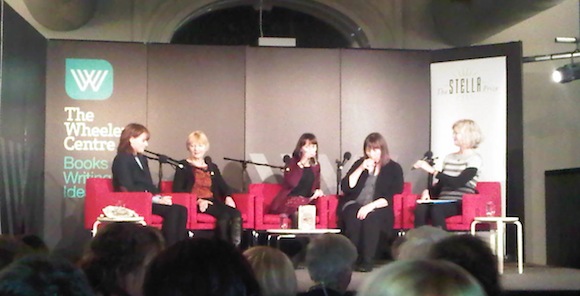
Last Tuesday the first women’s-only literary prize in Australia—the Stella, after the lesser-known first name of Miles Franklin—was awarded to Carrie Tiffany for her novel Mateship with Birds. On Thursday night, the winner; founding donor, Ellen Koshland, and chairs, Aviva Tuffield and Kerryn Goldsworthy, of the Stella Prize; and panel facilitator Sian Prior met at the Wheeler Centre to discuss the landmark event.

I’m sure most have heard of the dismal representation of female writers being reviewed and writing reviews in major publications, and winning prizes, despite the breakdown of actual books being published by women being pretty even with men. The Stella Prize was born of this with the goal to “put gender on the agenda”, and if the 80% of books by women being shortlisted for the Miles Franklin this year and the accompanying press is any indication, the Stella committee has certainly succeeded in opening up the discourse.

Most of the news media I consume is feminist-, or at least left-, skewed, so everything I’ve read about the Stella has been positive. However, on the panel Tiffany quoted this choice headline from a certain newspaper with this country’s name as its title amidst the news of her win: “Bush Romance Novel Wins Writer’s Prize” [online title differs slightly].

Because all women are capable of writing about is romance, right? Specifically, vampire- and sadomasochistic-romance. But as Prior asserted, if that’s the case, “what’s so wrong with vampire- and sadomasochistic-romance, anyway?”  And romance is a “small subject”, just like all the other “small subjects” apparently only women write about: domestic life, relationships, etc. And on the occasion that a man does write about these topics, they’re looked at through a different “scope” than when a woman tells the story.

stella prize shortlist

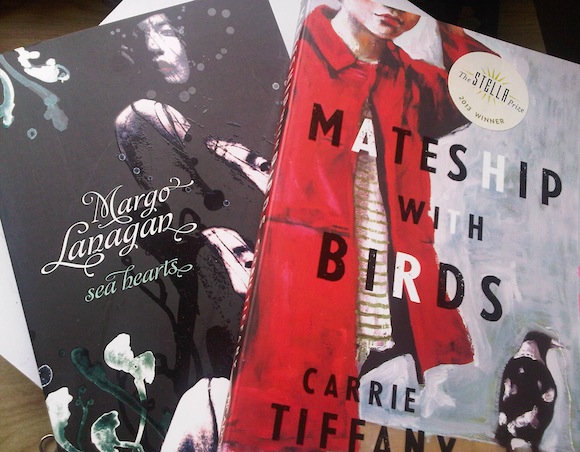
While I shamefully haven’t read any of the books on the Stella shortlist (although I did pick up Mateship with Birds and Margo Lanagan’s Sea Hearts, which I’ve wanted to read since I heard her speak at the Bendigo Writers Festival last year), not all of them subscribe to this “gender of genre” talked about above. Sea Hearts is a fantasy novel, while The Sunlit Zone by Lisa Jacobson is speculative fiction. Goldsworthy mentioned that the judges were wary of choosing books that ticked certain boxes; being a genre novel, fact-laden non-ficition, or from an Indigenous woman, for example.

When an audience member asked about Indigenous writers included on the longlist and quotas for them within the Stella prize during question time, Goldsworthy mentioned they didn’t want to “ghettoise” the prize by awarding it to a token Indigenous woman. By using this reasoning for not awarding the Stella to an Indigenous longlistee, doesn’t that just “ghettoise” and “tokenise” the longlist? What’s the point of including them on the longlist at all if they don’t have a chance at the main prize? I noticed a lot of head shaking during Goldsworthy’s answer, including my own, from people presumably on a similar train of thought. Indigenous people are a marginalised group, as are women (despite being more than half of the population and, indeed, about the same number of written word consumers). Born of the need to hear marginalised voices, would the Stella Prize even exist? I hope next year more Indigenous women are selected as contenders, not just for their tokenism.

Related: Bendigo Writers Festival.

Elsewhere: [The Australian] Bush Romance Tale a Stella Achievement.

Event: Midsumma Festival & Women Say Something—Should We Destroy the Joint?

women say something midsumma should we destroy the joint

Prompted by Alan Jones’ admonition that women in parliament and positions of power are “destroying the joint”, which spurred the online feminist movement of the same name, feminist group Women Say Something brought their panel consisting of such high profile Aussie feminists as Tara Moss, Catherine Deveny and Gretel Killeen to the Thornbury Town Hall on Saturday night to ask whether we should, in fact, destroy the joint.

I must say I didn’t know much about Killeen’s feminist credentials prior to the event, but her total rejection of the Destroy the Joint movement, and most modern movements, was the surprise of the night. Killeen said she didn’t really believe in the premise of feminism and that she identifies more as an egalitarian. Tara Moss interjected here, saying that there’s not just one Feminism and that everyone has their own version of what feminism is. While I do support this notion to a certain extent, I think feminism is first and foremost about equality for all, not just for women. And I also take issue with different feminisms for the fact that this allows people like Tony Abbott and Sarah Palin, who are the furthest things from feminism out there, to claim themselves as part of “the club”.

This idea certainly didn’t go undiscussed, either, as Killeen raised the point that modern feminism is always looking for “aggressive marketing terms” like Destroy the Joint, SlutWalk and reclaiming the word cunt to recruit new members, like Abbott, no matter their ideologies and at the risk of offending the general public. Who cares about the general public? They’re always offending me with their sexist, racist and homophobic ways, so why not ruffle some feathers with feminism?

This lead Killeen to ask when feminism became a label that just anyone could apply to themselves. While I agree with this, and it’s the point I tried to make above, it is contradictory to what (my) feminism is about: equality. Moss then raised the argument of who’s more or less of a feminist, which is an issue I struggle with and which I’ve written about before. Someone then said that feminism allows room for discussion and disagreement, which the panellists certainly demonstrated; feminism isn’t a one size fits all movement.

It seems as though Killeen was playing devil’s advocate at first, with all her snubbing of most of the other panelist’s ideas. But as the night progressed, it became clear that she actually has some pretty radical views of human rights. As Catherine Deveny asserted, it’s not about feminism: it just comes down to being an “asshole and not [being an] asshole”. Here, here.

Some current pop cultural issues came up during question time, such as Beyonce’s recent underwear-clad GQ cover and accompanying article in which she espouses some feminist ideals, without actually saying the word itself. (Let’s remember in 2011 that she neither confirmed nor denied that she was a feminist, instead she suggested we create a new word for the movement.) Moss again reiterated the notion of many feminisms and that “if one of them happens to be in their underwear then that’s great,” which I wholeheartedly support (even if I don’t support feminism being thrust upon an undeserving pop star).

If Abbott’s declaration is anything to go by, seemingly every Tom, Dick and Harry are clamouring to get a piece of the feminist pie, what about all the damning of feminism as a “failed” movement? Deveny insisted that, as many a book, blog post, feminist or historian will tell you, feminism is the most successful human rights movement alongside the black civil rights one. Without feminism, we wouldn’t have the Pill, childcare, pay advances, or the vote, amongst a myriad of other rights.

So, should women destroy the joint? As one panellist said (who it was escapes me now), movements like Destroy the Joint and SlutWalk are “training ground[s] for activism”. Killeen suggested, again, that they’re just angry marketing ploys and that they don’t do anything to further our cause. Facilitator Kate Monroe and fellow panellist Casey Jenkins insisted that primarily social media movements are vital in “chipping away” at the patriarchal zeitgeist, and we need that as much as the “fireworks” of Julia Gillard’s misogyny speech, for example.

On anger, Gillard managed to harness hers at her treatment by pretty much the whole of Australia and turn it into one of Aussie feminism’s most important moments heard ’round the world, regardless of her personal or political beliefs. Many of the panellists (except, again, Killeen) agreed with an audience member’s assertion that anger is an important virtue when it comes to feminism. Far from the archetype of the angry, man-hating, hairy pitted feminist, anger can be fermented into passion which is essential for any feminist and feminist movement, wouldn’t you say?

What do you think? Should we be destroying the joint or do you think there are less radical ways to bring people around to feminism?

Related: Why is Feminism Still a Dirty Word?

Image via Facebook.

Event: Legally Blonde—The Musical Review*.


Sydney is the host city for the Australian premiere of Legally Blonde: The Musical, and this time last week, a couple of friends and I came together from two other cities (Melbourne and Perth) to check out the latest import from Broadway.

I first became familiar with the musical version of the ditzy blonde from Bel Air with a heart of gold who makes good at Harvard a few years ago when I watched The Search for Elle Woods on MTV. I’m all over the pop-feminism of the Reese Witherspoon version (in fact, my friends and I gathered around my laptop the night before the stage show to watch the original as our hotel didn’t have a DVD player and the only thing I could fault about it eleven years on is the use of “spastic” and “retard”), and I’ve come to love musicals since seeing Wicked which I use as the benchmark for all theatre, so it was a no-brainer to make the jaunt to Sydney to see the Aussie version, starring Lucy Durack as Elle.

Let me start by saying the highlight of the night was the fact that we actually got to meet Durack, Rob Mills, who plays Warner, Cameron Daddo (Professor Callahan) and I Will Survive winner, Mike Snell as the UPS guy, after the show. Maybe because the theatre was only half full they encourage ticket holders to come to the stage door after the performance to meet the cast, but if you’re a fan of any of the above, you should pop along just for that little extra (or hang out in the back streets of the Lyric Theatre!).

I also thought the elaboration of Elle’s outing at a party dressed as a Playboy bunny was a genius addition to the play, but I might be a little biased: when a fellow party-goer tells Elle she looks like a skank in her costume, she comes up with the defence that she is actually dressed as Gloria Steinem when she went undercover at the Playboy club in 1963 and subsequently wrote the feminist manifesto “I Was a Playboy Bunny”, asking, “Would you call Gloria Steinem a skank?!” Token feminist/(ergo) lesbian Enid blurts out, “Who called Gloria Steinem a skank?!” We cheered and whistled from our third row seats and were pretty well the only ones who got the joke which was made a little more special for me personally as three days later I dressed as that exact incarnation of Gloria Steinem as a Playboy bunny for Halloween!

Perhaps watching the movie the night before the show wasn’t the best idea, as it made me appreciate the flawlessness of the former and the problematic nature of the latter, which I thought was rife with homophobia, racism and utter “what the?!” moments. Durack, Snell, Mills, Erika Heynatz as Brooke Wyndham and real live puppy dogs on stage were superb, but the clunkyness, out-of-place inclusions to the story and the abovementioned problems overshadowed the better aspects of the show.

Staying with the film, I think it’s a truly feminist piece of art because feminism isn’t really mentioned once, despite Enid’s blatant characterisation as a militant feminist, yet Elle exceeds the expectations placed on her based on her sex and sexiness. In the end you love her because she’s an awesome person, not because she’s hot, blonde, has a vagina and wears pink.

In the musical, however, feminism is almost shoved down the audience’s throat, but from an outsider’s perspective, as if the writers said, “Shit, we need to make this a bit more feministy. Quick, what do we think feminists value?” Whereas in the Witherspoon version, Elle truly does make it at Harvard on her own, on stage Emmett’s character features more heavily and he pretty much guides her through her trials and tribulations which Elle takes credit for solving all on her own. Not to worry, though: to really push the feminist point home, Elle proposed to Emmett because, you know, only feminists do those kind of newfangled pro-equality kinds of things.

If the dismal turn out in the session I bought tickets for is any indication, I don’t think Legally Blonde will continue its run to other Australian cities. Unless you live in Sydney, I wouldn’t recommend making the trip to see it.

*Blanket spoiler alert.

Image via Time Out Sydney.

Happy Slut-O-Ween: The Hyper-Sexualisation & -Feminisation of Costumes for Women.

It’s that time of year again when U.S. residents in particular, but an increasing amount of Aussies, too, start gearing up for the last day of October when the jack-o’-lanterns are lit, trick or treating is had, and costumes are curated: Halloween.

The holiday that is believed to have pagan roots in preparing for the onset of winter in the northern hemisphere and warding off evil spirits when the barrier between the dead and the living is at its thinnest, but is more traditionally an excuse for kids to dress up and gorge themselves on lollies, has been appropriated by the mostly-Gen Y masses as an excuse to get your kit off.

Obviously not everyone celebrates Halloween by finding the shortest, tightest, most low-cut outfit available, but the perception of female sluttiness is, if not encouraged, then more acceptable on All Hallow’s Eve than on a regular night out. (Not to worry; garden-variety slut-shaming is sure to be had on October 31st as well.) As Nicole Elphick points out, slutty Halloween costumes are acceptable because we’re often portraying if not a different version of ourselves, then someone else completely: “Oh, it’s just a costume – it’s not me!”

Certainly there are less mainstream Halloween-centric events out there, where party-goers take pride in creating the most original, obscure and ugly costumes they can. But for the not-so-dedicated novice Halloween goers who don’t have the time or money to come up with a truly fancy or left-of-centre costume, there’s always the “one slut fits all” section of the costume store brimming with options.

You know the area of Lombards or any costume hire store that’s segregated from the “serious” party paraphernalia and stocks such run-of-the-mill outfits as the sexy maid, the sexy nurse and the mediocre “tuxedo bunny” that resembles the traditional Playboy bunny costumes not one iota. (This Halloween I’m dressing up as Gloria Steinem when she went undercover at The Playboy Club in the ’60s, so I can attest to the poor quality and unrealistic [oh, the irony!] Playboy costumes available for purchase, so much so that I had mine made.) Sure, these costumes are quick, cheap and come with most of the accessories needed to complete the look—in fact, some of them consist solely of the accessories and little else, fabric-wise—but they’re boring  and flash as much flesh as possible. Where are the options for those who don’t want to default to eye-candy or the “sexy nurse” or “sexy nun” instead of a legitimate doctor or person of the clergy?

Furthermore, the problem with the sexy person woman-in-uniform, sexy animal and sexy Scrabble costumes is not only the unoriginality of the former and the absurdity of the latter, but the blatant feminising of these costumes: apparently only women can be sexy fire-fighters, sexy Nemos and sexy showers, while men are just fire-fighters, Nemo and a shower. (The argument could be made that all men in uniform are inherently sexy, but their occupations definitely aren’t sexualised the way in which women in these professions—or even just in these costumes—are.) Elphick adds that, “You can think of almost any regular costume and odds are some costume manufacturer has already made a risqué version for full-grown women.”

Lisa Wade elaborates on the dearth of “sexy” male costumes in an article on Sociological Images. Not only that, but the “sexy” costumes that areavailable to men focus on sex as something to be laughed at or on a man’s status as a recipient of sex from women, not as sex objects themselves:

“When men go sexy, it means joking about how men should be sexually serviced, have access to one night stands, or being in charge of and profiting from women’s bodies. A different type of ‘sexy’ entirely.”

Maybe with the success of Magic Mike this year we’ll be seeing an influx of male stripper-inspired costumes… Something tells me this is doubtful.

*

I think this obsession with Halloween hyper-feminisation is just a magnified reflection of society’s need for women to be heteronormatively feminine: long hair augmented with extensions for the event, facial symmetry exaggerated with over-the-top makeup and false eyelashes, slender (I, personally, have upped my fitness regime over the past couple of months in preparation), wears dresses (have you noticed how even if the effigy’s garb resembles a dress in no way, the Halloween costume will inevitably appropriate it into a skirt or, less-often, short-shorts if it’s marketed towards women? The “sexy” Sesame Street costumes that have been in the news of recent come to mind).

Rachel Hills hit the nail on the head when, in a response to a similar post earlier this year, she pondered whether the gravitation towards hyper-feminine and-sexy get-ups either in daily life or for special events reflect a fear of not being seen as attractive enough.

Reflecting on my past costume party ensembles, which include Catwoman, sexy Rosie the Riveter and Eve bare as much flesh as possible, it would seem a fear of being perceived as unattractive, unfeminine and/or unsexy is inherent in them, too. As someone who is relatively content with her appearance and in touch with her feminist side (no matter how “slutty” my costumes appear to the naked eye, I always try to incorporate my feminism in there somewhere), this is not something that is front of mind when putting my outfits together, but I guess the evidence speaks for itself: the most conservative Halloween costume I’ve worn was a long, pink vintage dress that I accessorised with fishnets, a feather boa and a headband to portray a 1920s flapper. The only time I’ve ever incorporated pants into the mix was when they were skin-tight pleather leggings (Catwoman, a female wrestler, and one of Barbie’s Rockers), going back as far as my first outing as Catwoman at my tenth birthday party. Inappropriate? Perhaps. But I guess that also conveys a telling tale of our expectations of femininity and, increasingly, sexiness, when it comes to young girls, a topic which is probably best left unpacked til another time.

But maybe we’re reading too much into this? Just because a woman chooses to amp up her sexuality and flash some flesh on Halloween doesn’t necessarily mean that this desire is insidiously ingrained in her by the patriarchy. Feminist du jour Caitlin Moran insists that women are “not dressing up sexy: It’s a parody of sexuality. They’re being silly,” while sex and gender writer Hugo Schwyzer thinks that “the lack of options for any other kind of costume make sexiness the default position rather than the chosen one.” But I have plenty of friends—both female and male—who enjoy getting their sexy on as often as they cover up in the costume department.

When I asked a friend who is so dedicated to her more masculine costumes that I often don’t recognise her for all the faux facial hair, but who also tarts it up with the best of them, most recently in a “sexy” Little Bo Peep costume for her birthday, she said she honestly doesn’t give it much thought. “[Costumes] allow me to hide any insecurities I would usually have… I can hide who I really am for the time I’m in costume,” she said, which is not unlike Elphick’s above assertion that “Halloween is all about taking on an identity that is explicitly not yours.” None of said friends are particularly feminist in their thinking so, as “civilians”, it’s refreshing that they dress up this way without pushing an anti-gender stereotyping message; they haven’t given it a second thought and do it because they want to. Perhaps there is hope for us yet…

Schwyzer sums it up thusly:

“[The] mandatory sexualization of girls and women reflects a culture ill at ease with women’s power. Halloween is at least partly about how we manage fear—and one fear we seem to still have is of powerful women. Sexualising everyone from tween girls to grown mothers is actually a way of reinforcing traditional values. Underneath it all, the message is, all women are the same—they just want attention from men.”

Going back to the earlier point that the reason we see so much skin on Halloween is because of the utter lack of pre-packaged sartorial alternatives, you have to wonder about the costumes that mimic their real-life and/or fantasy life counterparts to a tee: is the reason Halloween has strayed so far from its pagan roots because of our increasingly sex-obsessed society and need for the genders to perform as they always have? For all the absurdly sexualised children’s characters, pets and household appliances, there are as many traditionally scantily attired female superheroes, pop stars and influential women in history to choose from.

As for the guys, Schwyzer thinks the popularity of Magic Mike might see the odd male dressed in short shorts, a bow tie and not much else, but for the most part, they’ll stick to the established costumed-gender norms of “endless capes and Harlequin masks”, just as most women will go for the shorter, tighter, sexier option.

Related: Slut-Shaming in Romantic Relationships—It’s Not On Unless It’s Not On.

‘Tis the Season…

Costumes & Gender.

Elsewhere: [Daily Life] Why Sexy Halloween Costumes Are Okay.

[Jezebel] A Musical Reminder That You Can Wear Clothes on Halloween & That’s Okay.

[Sociological Images] What Do Sexy Halloween Costumes for Men Look Like?

[io9] Slutty Sesame Street Halloween Costumes Prove (Again) That Nothing is Sacred, Culture is a Sham.

[Salon] Caitlin Moran: Women Have Won Nothing.

Image via Buzzfeed.
Event: The Golden Age of Television.

I thought a panel about how great American television is was a bit of a misnomer for the Wheeler Centre’s “America” week. I mean, has anyone seen Here Comes Honey Boo Boo or any of the Real Housewives series?

But once the panel, consisting of pop culture expert Jess McGuire, television reviewer Debi Enker and producer Amanda Higgs and emceed by the director of the Wheeler Centre, Michael Williams, got started on their favourite American feats of TV, I warmed to the notion.

I mean, don’t get me wrong: American TV is the type I consume the most. I usually only watch Aussie shows in case I can get some blog or freelance fodder, and British television? Fugedaboutit! But the shows the panel named as their top idiot box must-sees are some real high-brow shit, most of which I’ve never seen an episode of in my life. Think Mad Men, The Soprano’s, The Wire, Six Feet Under. I like my TV a bit fluffier.

Having said that, though, the panellists got me thinking about my favourite shows. While they struggled to whittle down their favourite to just five, I realised I can only count two faultless series: Grey’s Anatomy and Law & Order: SVU. Most of the other shows I watch (Glee, for example) infuriate me to no end with their racist, sexist, classist, ableist and homophobic undertones. Grey’s and SVU don’t always have happy endings, at least, and aren’t afraid to push the boundaries, get rid of popular characters if it strengthens the story (or they cause trouble on set, like Isaiah Washington, or can’t settle their pay disputes, as with Chris Meloni’s departure), and portray really real characters.

I love the way Grey’s has unlikeable characters who still get as much screen time and storylines as the title character, and their personality quirks are those that people in real life actually have. For example, April’s uptight, shrill virgin character bordered on stereotype, but at the same time everyone else’s obsession with her sexless existence is what you would expect from unenlightened real people. Alternatively, you have Cristina, who always looks out for number one and refuses to discuss the possibility of having children with her husband. Ordinarily that would make for a hateful character, but Sandra Oh portrays the nuances of Cristina perfectly. The medical storylines always have a synergy with the doctors’ personal ones, and while it sometimes gets a bit after-school special-y when Miranda has to give a “long speech” or a patient makes a doctor realise something, I don’t think it never not works. Except for that whole Gizzie/Izzie sees dead people thing…

In terms of Special Victims Unit, though, you’d think watching a weekly police procedural about sexual assault for fourteen seasons would be morbid but, for me, I find it one of the most enjoyable shows to sit through. I love how the beginning of an episode is set up so that the audience thinks it’s going to be about one crime but, oftentimes, there can be two or three criminal storylines by the time the forty minutes is up. While it’s almost always about the crime first, character storylines second, you never lose sight of Munch’s conspiracy theorist paranoia, Elliot’s (when he was still in it. Sob!) fiery temper and Olivia’s feminist heroics. And they have some top notch guest stars portraying the lowest of the low and the creepiest of the creepy. Some memorable performances include Cynthia Nixon as a fake sufferer of multiple personality disorder, John Ritter as a distraught husband who attacks his pregnant wife when he finds out the baby might not be his, and Chloe Sevigny as a bored housewife who cries rape.

Both shows deal with things like disability, sexual politics and mental illness in a sensitive and true way which they have to be commended for.

In terms of what television does wrong, though, the discussion turned to Aussie networks. We seem to have a penchant for “flogging” successful shows to death, as both McGuire and Higgs noted. The success of Underbelly meant copious amount of spin-offs with links so tenuous to the original premise that they might as well be standalone shows. And using the success of an overseas import, like Modern Family, The Big Bang Theory, Two & a Half Men and, earlier, Friends, to flog the show to death in double-episode reruns is another hallmark of Aussie networks.

There was also talk of our modern viewing habits. While Vanity Fair may have declared movies usurped by television in a recent issue, which served as the jumping off point for the panel, not a lot of people sit down at the same time each week to watch their shows ritualistically. McGuire admitted to watching “box sets” illegal downloads and streams of her favourite shows, because Australia still has a ways to go when it comes to airing shows consistently and on par with American air dates. I liked it last year when Ten aired Glee the same week it premiered in the U.S., however with events like Thanksgiving, Christmas and the Superbowl interrupting the schedule north of the equator, this means that repeats and “returning in two weeks” promos take the place of consistency Down Under. And don’t even get me started on the treatment of SVU: new episode followed by repeat followed by months of nothing followed by new episode without promotion so most loyal viewers miss it. No wonder there’s an epidemic of illegal interwebs watching: the networks are just so unreliable.

So while it may be the “golden age” of television, it seems to be edging closer to a golden age of twenty-to-forty (or fifty for HBO productions) minute feats of film to be watched on the laptop or iPad, not so much the silver screen.

Related: Glee: The Right & Wrong of It.

What’s Eating April Kempner?

The Underlying Message in Grey’s Anatomy‘s “Superfreak” Episode. 

Cristina Yang as Feminist.

Grey’s Anatomy Final Asks “When Does Life Begin?”

Event: Melbourne Writers Festival — In Conversation with Germaine Greer.

Germaine Greer is an Aussie feminist icon who’s kind of passed me by. After the whole “Julia Gillard has a fat arse” debacle earlier in the year, I officially declared her irrelevant to a friend when the opportunity to buy a book of hers came up.

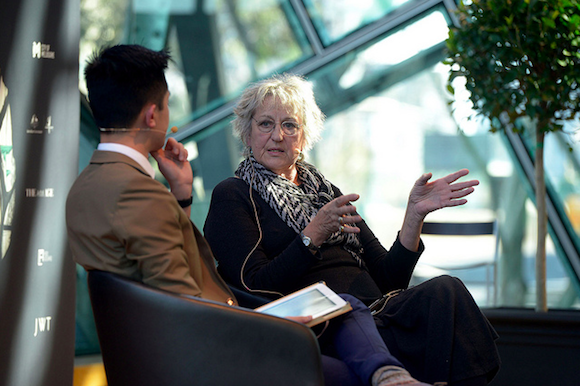
Nonetheless, I attended her talk at the Melbourne Writers Festival, hosted by Germaine’s new bestie Benjamin Law, whom she met at that infamous episode of Q&A, in the hopes that she would address some of those issues in more depth.

I wasn’t wrong, but instead of Greer herself admitting she was, she dug a deeper hole for herself, both at the session and on 60 Minutes the week prior, where she was interviewed in relation to Samantha Brick’s months-ago comments that women find her threatening because she’s beautiful and she enjoys being a “trophy-wife” to her chauvinistic French husband.

Sometimes I just wish public figures would admit it when they’ve said the wrong thing, instead of trying to justify or cover it up (Todd Akin, I’m looking at you). Where Germaine could have taken the opportunity to own up to speaking out of turn about Julia Gillard’s appearance, a snarky phenomenon that most women—and, indeed, most feminists—succumb to at some stage or another, and use it to start a dialogue about how we treat female politicians based on their looks and not their policies, she just said “women have fat asses” and “a woman is not her jacket”. Greer’s a smart woman, no doubt, but I think she needs to think more before she speaks, as her comments on cosmetic surgery, genital mutilation and the morning after pill on Q&A will attest.

However, Germaine did make some good points about her past, present, our ecological future, and “what turned her into a feminist” (a question I was asked at the work watercooler a few weeks ago when I revealed I write about gender studies and feminism. That co-worker is so misogynistic he now avoids me. One less woman-hater I have to make nice with on a daily basis: score!), citing her work on the 1974 university porn magazine she helped create, Screw. After concluding that the name “screw” was too “sadistic” and implied that a woman was “ruined” after she’d been “screwed”, they changed the name to Suck, which connotes a more female-friendly vibe.

Germaine talked about her willingness to get her gear off for the magazine in an effort to portray women differently in porn magazines. She was offered money to pose for Playboy and she insisted her pose be standing with her body away from the camera, bent over, and looking at the photographer through her legs, her vagina and anus on show. They rejected the image, obviously, which turned up in Suck, an alternate copy of which someone in the audience had brought along!

She also had some interesting things about our definition of consent and SlutWalk to say and, to my surprise, they weren’t out of step with current feminist notions of the two. She championed women who take their rapists to court and show their faces to the public to lend support to the wider anti-slut-shaming movement.

Those who still follow Greer’s work know that she now leans towards writing about Australian culture and the environment as opposed to being the authority on all things feminism (see abovementioned irrelevance), and she concluded with a conversation with an audience member, who probed her in overtime about recognising the similarities between feminism and vegan-/vegetarianism. Indeed, feminism these days is about human rights, and most people I know who are for feminism are for human rights, animal rights and practice vegetarianism. I, myself, am a budding ecotarian.

These days, Germaine Greer is someone to be hated, feared or admired, as Law contended in his introduction of the great Australian thinker. While these women don’t necessarily practice feminist acts or even call themselves feminists, Madonna and Lady Gaga are two iconic females Greer mentioned during her sermon. They’re also two icons who polarise almost as much as Greer. I don’t think she’s that different to them, really… They’re all outspoken, brash females who have undoubtedly contributed so much to the plight of women, and culture as a whole, some more recently than others.

Related: Should Meat Be Off the Menu?

Images via TheVine, Flickr.

Event: Melbourne Writers Festival—Notes on Women in Culture.

The panel was chaired by the director of feminist publishing house, Spinifex Press, Susan Hawthorne, and the speakers were Tamil writer CS Lakshmi, and feminist fiction and non-fiction writers Emily Maguire and Sophie Cunningham.

I saw Cunningham speak at last year’s festival, and some of her comments on third and/or fourth wave feminism really rubbed me the wrong way. This year she spoke again about the discrepancies between the pay rates of men and women and where that money goes. While only $0.40 for every dollar earned of men’s income goes to the family, $0.90 of women’s money goes to the family. Therefore, “women need to work or our culture falls apart.”

Cunningham also spoke about her pet project, women in literature. As the chair of the Literature Board of the Australia Council and of the Stella Prize, she knows her stuff. Apparently when the representation of women in literature hits 30%, people think it’s about half. (I believe she mentioned it’s at about that percentage currently, in terms of how many books by women are reviewed and how many books are reviewed by women in major publications.) This reminds me of the 33%–66% division of labour rule in male–female households: that women will do up to 66% of housework before they start to think they’re doing too much, while men will do 33% before they start to think they’re doing too much.

I think both of the following quotes came from a piece Lakshmi read to the audience. They’re poignant no matter who wrote them and where they appeared:

“Women pretend to conform whilst they’re breaking the rules.”

“Sit still otherwise you’ll rock the boat.”

That last quote reminds me of 50 Shades of Grey, in which Christian makes Anastasia “sit still” and not move when he’s performing sexual acts on her. I don’t know many men who prefer a woman to be physically non-responsive to their touch, but there are a lot of things about the book I don’t understand.

Speaking of 50 Shades (at this point in time, when it’s the highest selling book ever, who isn’t?!), in another panel I attended on Saturday about writing about sex (featuring Susan Johnson, Chris Flynn and another appearance by Maguire) it was brought up. Nothing of note was added to the discussion really (sex and gender roles are conservative, defined; the sex is clinical, etc.), but Johnson did, it’s worth noting, spoil the ending for me! Not that I was planning on reading the next two installments (one’s enough!), but there were a few audible groans from the audience when she revealed that *spoiler alert* Christian married Anastasia in the end.

Johnson has a piece on the trend of the trilogy in this weekend’s Q Weekend magazine, for which she is the senior features writer. She mentioned how she finds the book like a sexed up version of Beauty & the Beast, which made my heart yearn for a simpler time, when feminism and Stockholm syndrome and abusive relationships were not at the forefront of my mind when examining my favourite Disney movie. Sigh… I’ll never be able to enjoy it like I once did thinking about the Beast forcing Belle to eat and suspending her from the ceiling of his Red Room of Pain if she doesn’t do as she’s told!

But back to the panel at hand.

The notion of positive female representation in science fiction and fantasy came up, an issue about which I’m quite passionate, but which I’d like to know more about, too. Maguire says it’s easier to write a “strong female character” in sci-fi because you “don’t have to have the rules of this world” posed onto the character. I think it was Cunningham who then mentioned that that’s why a lot of sci-fi is set in post-apocalyptic worlds where the restraints of our current notions of society and culture are abolished so writers can explore different aspects of the characters that they might not have should they exist in this world.

Author John Banville was brought up, who has said he’s “never understood women… Don’t want to… I’m in love with all of them, always have been fascinated by them… They always do the unexpected—at least I don’t expect what they do. They say: ‘We’re ordinary, we’re just like you.’ I say: ‘You’re not. You’re magical creatures.’”

While that’s a lovely gesture on the surface, do we really want to be seen as otherworldly? At the end of the day, everyone’s just a person. And, at the end of the panel, Lakshmi told a story with the theme that gender has “no specific qualities”. So how can one be “ordinary” and one be “magical”? Reverse sexism on Banville’s part, perhaps?!

Related: Melbourne Writers Festival 2011: A Long, Long Way to Go—Why We Still Need Feminism.

Bendigo Writers Festival.

Sexism in Fantasy.

Image via TheVine.

Event: Melbourne Writers Festival — Richard Holloway on Christianity & Jesus Christ.

“Jesus was one of these disturbing figures who spoke the truth and died because of it. However, if you put it to me that he didn’t exist he would still exist in a book and, to me, books are their own truth”—Richard Holloway, former Bishop of Edinburgh, author and thought leader.

There was more to this quote, however my voice recorder didn’t catch it. But, from memory, Holloway went on to say that the teachings of Jesus Christ would still be remarkable even if he was a fictional character, and that fictional characters can sometimes teach us as much, if not more, than real people.

Image via The Vine.

Event: Melbourne Writers Festival — You Animals.

Symposiums about the ethical treatment of animals are some of my favourite kinds of public debate. Earlier in the year I attended an Intelligence2 debate about the ethics of eating meat, and while the arguments put forth didn’t change my mind (or palate), I think we can all agree that to treat animals humanely is something most normal people would endeavour to do.

But after researching her Quarterly Essay, “Us & Them”, Anna Krien closed the session with the assumption that humans just aren’t that great. You only have to look at our treatment of asylum seekers to realise our view of treating “others” differently extends to them, too. In fact, that’s why Krien named the essay “Us & Them”: not only to signify that animals are the “them”, but after the Four Corners meat exportation exposé last year, so are the Indonesians.

The other three intellectuals and authors on the panel were equally as intriguing, if not all as equally pro-animal. Charlotte Wood, author of the novel Animal People, about people who don’t like animals—or don’t understand our adoration and obsession with them—echoes the sentiments of her characters in the book, saying that she doesn’t get how we dress our toy dogs up in clothes and put them in bags and coo over them like they were babies, but that we should ultimately respect animals and not treat them as objects, like we are so wont to do.

Tim Flannery, environment expert, needed no introduction, and he talked about how our modern culture doesn’t allow for the inclusion of animals as equals. Interestingly, he also added that 10% of our bodies aren’t even us: it’s animal matter, like mites that grow in our eyebrows. Eww! But that demonstrates how highly evolved and diverse animals are, much more than humans, I would say.

Speaking of evolution, Flannery also mentioned that animals from the parts of the world where people have been living the longest have a hatred of humans more deeply ingrained. Like water buffalo in Africa who will circle back around on humans who are hunting them and try to beat them at their own game. Whereas in America, their water buffaloes are relatively tame by comparison. And in Australia, we can coax native birds and wildlife to eat apples out of the palms of our hands, like my dad and grandfather used to do when I was a kid. But most animals are still so terrified of us because we destroyed their habitats, just as we are scared of exotic, archaic and extremely dangerous animals, like the cassowary or a crocodile.

It was obvious that author Sonya Hartnett likes animals a whole hell of a lot more than humans, which is also evident in her books, most of which are about or draw inspiration from animals. She said she’s happy to be the slave for her cats and dogs if they will “show me their secrets”. She made the observation that a bunch of crows she passed scavenging over a rubbish bin looked at her with such disdain that she had no doubt they not only fear us, but hate us, too.

I guess this is part of Aussie culture: domesticated animals are cute, wildlife is cool to look at in zoos, but none of this must come between us and them our meat. As Wood wrote in The Age last year:

“We force a dichotomy in which animals are either so like us that we cannot separate their needs from our own, or so unlike us as to be aliens, undeserving of any rights at all. The more we sentimentalise, the more we also brutalise.”

But animals have culture, too, as Flannery asserts. They use tools, forage for food, talk to each other, love, mate, and engage in group dynamics, just like us. (This culture was evident when a friend and I took our dogs away on a holiday last week and saw the dynamics occurring between them: my friend Deb’s dog, Minnie, is older and definitely in charge, whereas my dog, Mia, is happy to go along with that. Minnie even had the audacity to jump up onto my lap and sit there proudly while Mia was napping beside me in a nook between the couch and a blanket.) After all, who do you think we evolved from…?

Speaking of foraging for food, being a vegan doesn’t allow you immunity from contributing to the devastation of the animal kingdom. For example, wheat for bread—a staple in many vegetarian and vegan diets—is grown on land that has been cleared of its natural, animal-dwelling terrain and unless the proper practices are used, the soil may be rendered obsolete and more wheat won’t be able to be grown there. It’s a catch-22 between being a vege- or ecotarian and throwing up your hands because nothing we do will ever be good enough.

Flannery believes that as higher intelligence beings, we are the arbiters of the future of the planet and its animal (and human, for that matter) inhabitants, and to fully understand this and to be fully human we have to realise that “we’re animals, too”. After all, the four-legged, fury, feathery and fishy animals “are so much more than we’ve ever allowed them to be”. Maybe it’s time we loosened that chain a little bit.

Related: Should Meat be Off the Menu?

Top 11 TV Moments of 2011.

Elsewhere: [Charlotte Wood] This Dog is Not a Human Being… Right?

Image via The Vine.

Event: Melbourne Writers Festival — Censorship, The Body & Porn.

With a panel consisting of David Marr, Slutwalk Melbourne mastermind Karen Pickering and author of Money Shot, Jeff Sparrow, Saturday’s Censorship, The Body & Porn session was going to be full of surprises.

I think at this stage, when it comes to porn, we’ve heard (and probably seen) it all. Marr mentioned pedophilia, and that the banning of images like Bill Henson’s is nonsensical when pedophiles have access to all the “church ceilings” in the world!

Sparrow said that we place too much importance on children respecting authority—“Do what your uncle tells you. Do what the babysitter tells you.”—when in reality, authority figures known to the child are more likely to be the ones abusing them.

Marr also asserted that porn puts all of our “human horribleness” on display:

“If you want to know what human beings are like, don’t forget the distasteful categories of porn: that’s what human beings are… It is there to paint a portrait of humanity.”

I don’t necessarily agree with that, but speaking of displays of sexuality, Sparrow had a lot to say about that as he spent a good deal of time researching the sex industry for his latest book.

Interestingly, he mentioned going to Sexpo and Planetshakers, an Aussie youth church group associated with the Pentecostal Christian church, and how they both essentially offer up sex as a commodity, and who can offer the best price for it.

Of course, in this narrow-minded society, if you’re sexually unattractive your value goes down and you’re ridiculed on websites like Is Anyone Up, a revenge-porn Tumblr, essentially. If you deign to be sexually attractive (not necessarily active) in public then you “deserve everything that’s coming to you”, but if you’re sexually unattractive, the same rules apply. And you’d better enjoy it, too, ’cause we all know you won’t be getting it elsewhere.

50 Shades of Grey was certainly in the crossfire, too, with bondage and anything that even “pinks the skin” in the porn industry receiving an unclassified and essentially illegal status, whilst the “mommy porn” novel sweeping the world is literally sold in the supermarket, but deals with the same subject matter.

Sparrow said there are two sides to the success of something like 50 Shades of Grey and, I guess, the not-necessarily-positive “pornification” and sexualisation of modern culture. On the one hand, 50 Shades is “extremely transgressive” and would have been banned 30 years ago, however it also upholds “deeply conservative” views on sex, gender and society.

I’m about halfway through the book and I can certainly attest to that. More to come on this issue.