TV: Rachel Berry as Feminist.


Last week I wrote in defence of Rachel Berry.

This week, I wanted to explore the character as a feminist one.

While Glee isn’t exactly known for its positive portrayals of women, people of colour, the disabled, or the gays, Rachel has managed to grow in spite of all this, and become somewhat of a feminist icon.

I wrote that audiences have come to know and love Rachel not because her obnoxious know-it-all persona has changed, but because “We’ve been given time to understand Rachel’s initially painful personality and to identify both her strengths and weaknesses. Her ambitions and drive haven’t shifted, but the context for understanding them has,” as Dr. Karen Brooks reiterates.

Other bloggers have come to similar conclusions.

Leah Berkenwald at Jewesses With Attitude writes:

“I… have trouble with the vilification of Rachel Berry on a feminist level. How often do we dismiss women as ‘bossy,’ ‘know-it-all[s],’ or ‘control-freaks’ when their behavior would be interpreted as leadership, assertiveness, or courage if they were men?

“… In the right context, Rachel Berry’s personality would not seem ‘intolerable’ or ‘annoying’ so much as bad-ass, renegade, and hardcore.”

And Lady T, who used Rachel as her “Female Character of the Week” on The Funny Feminist, said:

“… The show wanted us to root for a girl who was ambitious, daring, and driven.”

It might be because I have been known to be seen as bossy, a know-it-all, a control-freak (just ask my new housemate!) and ambitious that I’m standing up for her, but just think of another feminist heroine in modern pop culture who could also be described using these words: Hermione Granger. The only difference is, she isn’t vilified for these attributes.

I have also been called ugly and a slut, not because I am ugly and a slut, but because these qualities are removed from the “‘good’ [female] character… [who] soars to impossible heights, not on the back of hard-work and self-belief, but usually [because of] a love interest and wishing hard.”

If you look back to the beginning of Glee, especially, Rachel was often deemed ugly. Now, anyone who’s seen Lea Michele knows she’s not exactly unconventionally attractive, but Rachel is charactertised as this because she’s annoying. And she’s annoying because she stands up for herself, knows what she wants and how to get it. (From a racial point of view, she could also be seen as being “ugly” because of her Jewishness.)

Despite these inherently “unattractive” qualities, Rachel manages to snag her man, Finn, in what can be seen as typical Glee sexism and discrimination:

“‘I love her even though she’s shorter than Quinn and has small boobs and won’t put out and is loud and annoying.’ 

“The show wanted to make me believe that Finn was doing Rachel some grand favor by simply being with her at all.”

On the other hand, it can be seen as a poignant take on teenage life that the underdog is always being compared to the most popular girl in school: Quinn Fabray.

If Rachel is Glee’s feminist heroine, Quinn is her polar opposite. She has had next to no character development, which leads to her motivations changing week to week.

In “Original Song” she tore Rachel down, telling her to get over her “schoolgirl fantasy happy ending” with Finn, who would never leave Lima, taking over Burt Hummel’s mechanics business, with Quinn, a real estate agent.

But in “Born This Way”, she was “broken down” by her fat past coming back to haunt her, to come across as more “relatable”.

Sure, Rachel’s had her fair share of being “broken down” (being dumped and subsequently egged by Jesse St. James, being publicly broken up with by Finn, getting slushied… I sense a food theme here.), but in the grand Glee scheme of things, she’s actually doing pretty well for a female character.

Now, if only we can get Mercedes a boyfriend

Related: In Defence of Rachel Berry.

The Problem with Glee.

The Underlying Message in Glee’s “Original Song” Episode.

Brown Eyed Girl.

The Underlying Message in Glee’s “The Rocky Horror Glee Show” Episode.

The Underlying Message in Glee’s “Duets” Episode.

The Underlying Message in Glee’s “Born This Way” Episode.

Sookie as Feminist? Hear Her Roar.

Do “Strong Female Characters” Remind You of You?

SlutWalk.

Slut-Shaming as Defence Mechanism.

Elsewhere: [Bitch] The Transcontinental Disability Choir: Glee-ful Appropriation.

[Jewesses with Attitude] Why Rachel Berry Deserves Our Compassion.

[Huffington Post] Hermione Granger: The Heroine Women Have Been Waiting For.

[Feministing] Pretty Ugly: Can We Please Stop Pretending That Beautiful Women Aren’t Beautiful?

[The Funny Feminist] Female Character of the Week: Rachel Berry.

[Jezebel] Why Won’t Glee Give Mercedes a Boyfriend?

Image via Wet Paint.

Magazines: I Ain’t No Hollaback Girl—Street Harassment in CLEO.


I recently moved to Kensington, on the west side of Melbourne, from Richmond.

I’ve been out of the house only a few times since then, jogging, going to the supermarket, train station etc., and I’ve already been honked at twice.

I haven’t been honked at for awhile. I think the last time was in Craigieburn (an outer suburb north west of Melbourne) when I was going to the dentist. Or maybe it was back in my hometown in country Victoria.

It was about 6:30am on a summer morning so it was already quite light and I wanted to get my jog out of the way before it got too hot. There’s a lake near my mum’s house, and there were ducks all over the bridge. There weren’t many people around—pedestrians or drivers—but some hoon came around the corner, saw me jogging, and decided to show off, revving his car. I looked back because he was heading in the direction of the lake, but he must have thought I was looking back at him, which only encouraged his sophomoric antics, and he sped off, right into the congregation of ducks. After he was gone, I went back to see if he’d hit any. He had. With such velocity that the body of the duck was on one side of the bridge; its sack of internal organs on the other.

Street harassment is not only juvenile and sexist, but a danger to animals, too!

CLEO’s latest issue has a feature on this very phenomenon.

It runs with the premise of the website Hollaback, which got its start in New York City in 2005, and charts areas where women most experience street harassment. You can also upload photos of offenders, who are monitored for repeat indiscretions.

The article, by deputy features editor Rebecca Whish, also asks if kicking up a stink over street harassment is “an overreaction”. According to 12% of CLEO readers polled, they feel flattered when yelled or honked at on the street.

While I don’t feel offended when men leer, honk or yell at me (with the exception of animal endangerment and pure objectification by friends/coworkers), I don’t particularly see it as a compliment either. The type of guys who do these things aren’t the type I’m seeking compliments from. If anything, it’s more about having the right to go about your daily business without being harassed while doing it.

Is that too much to ask?

Related: Will Boys Be Boys When it Comes to Objectifying Women?

Elsewhere: [Hollaback] Homepage.

TV: Private Practice—Pro-Choice?


I’ve recently finished watching the latest series of Private Practice, the final of which aired here just over a month ago. The season dealt with the brutal rape of Dr. Charlotte King, about which you can read here and here, as well as the abortion debate that is raging across the world, but particularly in the U.S., with the rise of the über-conservative Tea Party, and 2012 presidential hopeful Michele Bachmann.

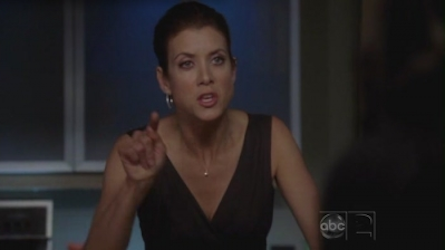
The second last episode of the season was said “abortion episode”. A woman named Patty came to see Dr. Addison Montgomery with pain, cramping and nausea after getting an abortion a month or two prior. When Addison does an ultrasound, she regrettably informs her patient that she’s still pregnant: the abortion didn’t take.

Patty’s foetus is now at 19 weeks, which would make the pregnancy in its second trimester, at which time an abortion is dubbed a “partial-birth abortion” by pro-lifers, as Dr. Naomi Bennett points out. Addison chides her for using political terminology, and that an abortion at 19 weeks is still perfectly legal, reiterating Patty’s right to choose, especially since she already made her decision the first time around several weeks ago.

Television and the media have a responsibility to present both sides of the story on such a contentious issue, even if they don’t live up to this most of the time. That’s why, when a show like Private Practice represents the abortion debate in such a refreshingly honest manner, it can be seen as revolutionary. (And it’s not the first time, either.) Not as revolutionary as Maude’s title character choosing to abort her unwanted pregnancy back in 1972, before the groundbreaking Roe VS. Wade decision, as this article points out, but still.

Naomi is a character I’ve never been a big fan of. She overreacts to everything (granted, overreaction may be warranted when your 16-year-old daughter gets pregnant and your best friend starts dating your ex-husband) and has a self-righteous, holier-than-thou attitude to most things, and her interference with Patty is no exception.

She uses her granddaughter Olivia to potentially guilt Patty into going ahead with her pregnancy, completely ignoring that Patty is single, after her deadbeat boyfriend took off when she told him she was pregnant, works two jobs, is poor, and is on her feet eight hours a day.

I had a real problem with this. Doctors should not push their personal beliefs on patients. If I were to fall pregnant tomorrow, I would be hitting up my nearest abortion clinic in a second, expecting to be given the care I’ve chosen, not to be lectured or threatened. As Addison says:

“… Even after you make the most difficult and personal decision that there is, it’s still not safe. Because you have some fanatic who claims to value life who can walk into an abortion clinic and blow it up.”

She continues:

“Why can’t Patty get what she needs, a safe and legal abortion without judgement?  Why does she have to go through this?  Why do I have to go through this?  I hate what I am about to do but I support Patty’s right to choose.  It is not enough to just have an opinion because in a nation of over 300 million people there are only 1700 abortion providers.  And I am one of them.”

The statistics are grim.

But, while trying to express the “pro-life” argument as well, Private Practice manages to remain pro-choice, which is no mean feat in the wake of reproductive rights being ripped from women across the world, and another PP, Planned Parenthood, being defunded en masse.

Related: Grey’s Anatomy Final Asks “When Does Life Begin?”

Cristina Yang as Feminist.

Elsewhere: [New York Magazine] Emily Nussbaum on the Rape Episode of Private Practice.

[E! Online] The Morning After: Let’s Talk About Private Practice.

[Feminist in the City] Private Practice Tackles Abortion.

[Televisual] The Changing Economics of the TV Abortion.

[Fuck Yeah Choice] Just Keep Swimming: Abortion on Private Practice’s “God Bless the Child”.

[Dakota Women] And the Abortion Portrayal Award Goes to… Private Practice?

Images via Kate Walsh Fan.

Strong Female Characters—A Lesson in Cartoon.


Related: Do “Strong Female Characters” Remind You of You?

“With a Gun Between Her Legs,” Take 3.

“With a Gun Between Her Legs,” Take 2.

“With a Gun Between Her Legs”: Why “Strong (AKA “Sexy” Whilst Being “Strong”) Female Characters Are Bad For Women.

Strong Female Characters in the Land of Oz.

Women in Fiction: Are Our Favourite Fictional Females Actually Strong, Or Stereotypes?

Elsewhere: [Film Schooled] Getting a Sense of Humour.

Movie Review: Bad Teacher*.


Bad Teacher was released at an inopportune time, having to follow in the footsteps of Bridesmaids, a movie that has been deemed revolutionary for the simple “fact that two women hav[e] a realistic conversation about sex in a café,” as Caitlin Moran told Rachel Hills in her Sunday Life profile last weekend.

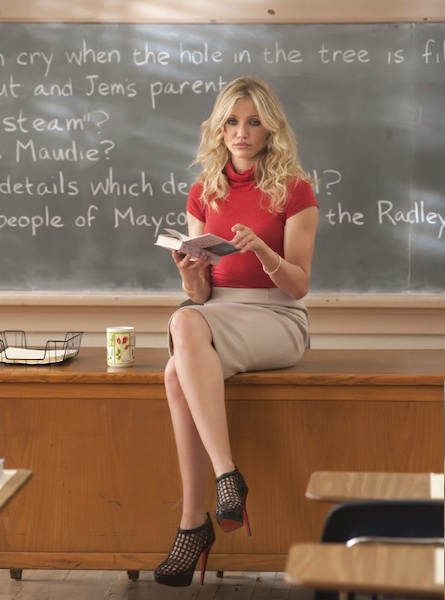
In comparison to Kristen Wiig’s “realistically weak female character” in the Judd Apatow hit, who acts exactly how a real down-on-her-luck woman would act, Cameron Diaz’s Elizabeth Halsey has been called “a lazy, lying, scheming, slutty, and obstinately materialistic [character], whose sole redeeming virtue is her hard body… who is so delusional that she thinks her ostentatious assholery is rock-star sexy, and whose delusions are essentially validated by narrative resolution,” by Karina Longworth in Los Angeles Weekly.

And while this was true (she gets away with stealing the results to the state test in order to win money to get a boob job, and gets the sweet and goofy guy she’d been treating like shit the whole movie), it was no way near as bad as I envisioned it to be in terms of it being anti-women, or at least anti-Bridesmaids-esque-feminism.

It was horrifically racist and downright disturbing in some parts, though. Unhinged goody two-shoes Amy Squirrel is forced to transfer to one of the most dangerous and underprivileged schools in the state, Malcolm X High School. Her boyfriend, Justin Timberlake’s pathetic character, Scott Delacorte, praises Elizabeth for teaching her kids that they should never stop working on themselves by getting a boob job. He also has a thing for “oriental” food. And don’t even get me started on the dry hump scene. It was as pointless as Timberlake’s appearance in The Love Guru. Or his whole acting career in general.

It was hilariously funny in some parts, but if you’re looking for a strong narrative with diverse and realistic female characters, maybe seek out Bridesmaids again. If you’re looking for some mind-numbing 90-minute escapism (as opposed to all these two-and-a-half-hour wastes of time), Bad Teacher’s your movie.

*It has come to my attention that I give away too much in my movie reviews, so the asterisk will now serve as a blanket *spoiler alert* from now on.

Related: Bridesmaids Review.

Elsewhere: [Musings of an Inappropriate Woman] Caitlin Moran Cover Story Sunday Life.

[LA Weekly] You Want a Raunchy Comedy Starring Women? Be Careful What You Wish For.

Aliens’ Ellen Ripley as Everywoman.


From “Sigourney Weaver on the Legacy of Aliens & Her Sequel That Hollywood Won’t Make” by Eric Larnick on Moviefone:

“I feel like Ripley is all of us; I don’t feel like she’s an action hero. She is called to reach down and find the resources to fight in every way possible. To me it’s about all of us. There’s a Ripley in all of us. I think that’s why people love the movie and the series. She’s not a special person, she’s an every-person, and we are put into these circumstances where we have to protect others and not give up…

“What’s so exciting about women in action is that women bring a different focus to the action and it comes from a different source… Every woman you see, in her kitchen or wherever else, has a secret action heroine in her; just wait til something happens to her children or husband, then you’ll see it.”

Women in the kitchen. Hmm…

Elsewhere: [Moviefone] Sigourney Weaver on the Legacy of Aliens & Her Sequel That Hollywood Won’t Make.

Image via Moviefone.

Slut-Shaming as Defence Mechanism.

A good male friend of mine has recently started dating someone new.

When I asked him how it was going, he said fine, blah blah blah, but that one thing she said really offended him. I was intrigued, so I asked him to tell me more. She must have been looking through his Facebook photos, and came across several in which we’re tagged together. She confronted him about it, saying, “Who’s that Scarlett girl, huh? She looks like a bit of a skank.” He proceeded to set her straight and defend my honour.

Upon going through the photos we’re tagged in myself, I have to say she made a fair call! They’re mostly from costume parties where my skank switch is on full throttle.

But, more than that, it is not uncommon for me to be called names like this. I’m not going to deny it, because if SlutWalk taught me anything, it’s that denying you’re a slut means that you’re acknowledging that other women are. What is a slut/skank, anyway?

But I know why she called me that: she’s jealous. Instead of asking nicely who I was and why my friend looked so chummy with me in the photos she saw, she was threatened by our relationship, so in lieu of admitting this, she questioned the relationship by insinuating that he shouldn’t be hanging around with someone (who seemed) so skanky.

I don’t begrudge her for this; I kind of think it’s funny and a bit sad. In this day and age, people are going to have to start accepting that men and women can be platonic friends. This is why I wrote on my online dating profile that if a man wants to date me, they have to be comfortable with the other men in my life. Especially since my new roommate come Saturday is one of my closest (male) friends.

What to you think? Have you ever experienced this kind of jealousy from another woman, manifesting itself as slut-shaming?

Related: ’Tis the Season…

Ain’t Nothin’ Gonna Break My Slutty Stride.

SlutWalk.

Ten Things I Love About Shrews.


From “Why Shrews Should Never Be Tamed” on Pamflet:

“… We are all, by Shakespeare’s definition, shrews!

“We demand, we assert, we argue, we’re unruly, we believe our opinions are as valid as our partners. We poke fun at them, boss them about, and it seems they love us for it. Life with a shrew will never be easy—expect tears, shouting, ominous silences, door slamming and probably regular existential crises—but it will never ever be boring. Life with a shrew means impassioned debates (whether about world politics or Mad Men season 4), adventure, passion, a unique perspective on the world and much more besides. Smart men understand that if you want a quiet life, you go for a nice girl like Bianca, but if you want a rollercoaster ride, always opt for a Kat… There are men out there who are willing to embrace our shrewish tendencies—they’re as feminist as we are. Of course being a shrew shouldn’t mean being cruel, allowing a sharp tongue to wound just because you can, nor should it mean being intolerant of other people’s failings and frailties. It just means not being afraid to use your voice. So on this one, I have to say Mr. Shakespeare, I think you got it wrong. Embrace your inner shrew.”

Related: Do Nice Girls Finish Last?

Elsewhere: [Pamflet] Why Shrews Should Never Be Tamed.

Image via DVD Active.

Lady Blogging.

From “Why Blogs for Women are Bad for Women” by Susannah Breslin at Forbes:

“Once upon a time, the feminist movement was about policies. It was about marching in the streets. It was about making change. It was about being a female superhero. These days, the so-called feminist movement has gone online, and its practitioners’ greatest political act is writing a blog post. It’s about writing 200 words on that TV show last night that really pissed you off because the way it portrays women is not right in some way you can’t articulate. It’s about talking over and over again about how there’s not enough women in [FILL IN THE BLANK]. It’s about reclaiming the word ‘slut’, and then going on a SlutWalk, and then having a discussion in which you talk about how you’re not a slut, but people said you were a slut, and that upset you, so you decided to call yourself a slut, because that way, at least you own it. The best thing that can be said about the feminist politics of blogs for women is that they are confused.”

Didn’t we have this debate, like, last year?

Breslin crtitcises young feminists for not getting out there and being involved in rallies and “making change[s]”, but crticises SlutWalk, too. If my memory serves me correct, SlutWalk was, and is, the biggest feminist issue this year; an event that got the likes of me, a “so-called” feminist who’s “gone online” and whose “greatest political act is writing a blog post”, out to her first feminist rally.

If it weren’t for the internet, I wouldn’t be as heavily involved and interested in feminist and gender studies. I am insulted by Brelin’s comments and, as a blogger herself, she’s undermining her authority.

Related: Ain’t Nothin’ Gonna Break My Slutty Stride.

Elsewhere: [Forbes] Why Blogs for Women are Bad for Women.

[Girl with a Satchel] Are Blogs for Women Counterproductive?

[Pandagon] I Expect to be Writing This Same Post When People Are Discussing the 16th Wave…

Yet Another Way in Which Madonna & Lady Gaga Are Alike.


From “Madonna: Finally, a Real Feminist” by Camille Paglia, in an article from 1990 in the New York Times:

“Madonna has a far profounder vision of sex than do the feminists. She sees both the animality and the artifice. Changing her costume style and hair colour virtually every month, Madonna embodies the eternal values of beauty and pleasure. Feminism says, ‘No more masks.’ Madonna says we are nothing but masks.”

Paglia is notoriously anti-Gaga, perhaps fearing that Mother Monster may be stealing the waning spotlight from Her Madgesty.

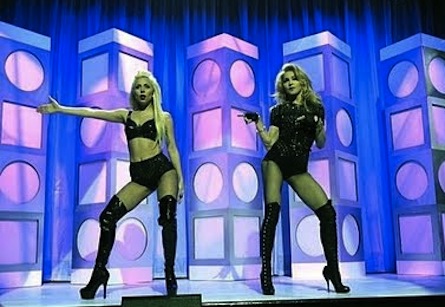
It’s funny that this was written 21 years ago, because it could very well have been written only recently, in relation to Gaga: “she sees both the animality and artifice” of sex. She changes “her costume style and hair colour” one better than Madonna; every day, it seems. And Gaga, as I have written, exists as something of a mask, while espousing the importance of being yourself.

So it’s not just the novelty bras and “Express Yourself” tune in “Born This Way”…

Related: Gaga Ooo La La?

Elsewhere: [The New York Times] Madonna: Finally, a Real Feminist.

[The Sunday Times] Lady Gaga & the Death of Sex.

Image via Gale Chester Whittington.