The Time is Now.

If you could live in any other period in history, when would it be?

That’s a question I’ve been grappling with lately. Or rather, I’ve asked a few friends here and there and they’ve been grappling with the question.

For me, though, the answer is a no brainer: the time is now. There is no other time period I’d rather experience. We have access to so many technological, medical, economical, social and travel advancements now. There’s the internet and everything that brings (underage sexting and online harassment are unfortunate evolutionary glitches in the system), the eradication of polio, globalisation, and minorities have never been more equal than they are now.

That’s not to say there isn’t more work to be done. When I expressed my disbelief that anyone would rather live in any time but the present to a friend, she asked me if I wouldn’t rather live in a future where women, gays, the disabled, transgendered people and those of colour were viewed as equal to the straight, white male: of course I would! But when I’ve asked the question that makes up the first sentence of this post to a gay friend, for example, he said he’d love to live in 19th century America! Now the 1800s span a vast period, but it was an era where blacks were slaves, women couldn’t leave the house without a chaperone and were deemed washed up pariahs if they weren’t married by their early twenties, smallpox and cholera were endemic, and forget the liberated lives gay men in the Western world experience today!

But this wasn’t an isolated opinion: I went on a tour of historical beats (public sex spots for gay men; think George Michael) in Melbourne run by a gay man as part of the Midsumma festival over the weekend. Telling us about the underbelly of gay culture in the ’50s, ’60s and ’70s, our guide expressed a nostalgia for those times and that as a modern gay man he felt he “missed out” on experiencing some of that culture. Are you kidding me?! Sure, maybe the thrill of doing something you’re not supposed to is enticing, but the reason so many of these beats weren’t known to the general public is because homosexuality was still a crime in Victoria until 1980!

As a “minority” (even though women make up roughly 52% of the global population), I just can’t fathom that any fellow minority would voluntarily give up the progress and relative freedom we experience in the West for the prohibition of yesteryear.

I’m sure some of these comments were just made in passing without taking into account the other factors I’ve mentioned above, and I myself am partial to some ’20s, ’50s and ’80s fashions and, being a child of that era, some ’90s music every now and then, but I wouldn’t change my existence for anything. The struggles those who came before us endured paved the way for people like me to be able to speak up about the myriad injustices still taking place all over the world. I only hope that when my children or children’s children (NB: I don’t plan on having children) step out into the big, wide world (though it’s getting increasingly smaller with each new advancement) they can look back on 2013 and wonder how their parents and grandparents lived free with all our times’ limitations.

What do you think? Am I overreacting or do you agree that our time is now?

Event: Midsumma Festival & Women Say Something—Should We Destroy the Joint?

women say something midsumma should we destroy the joint

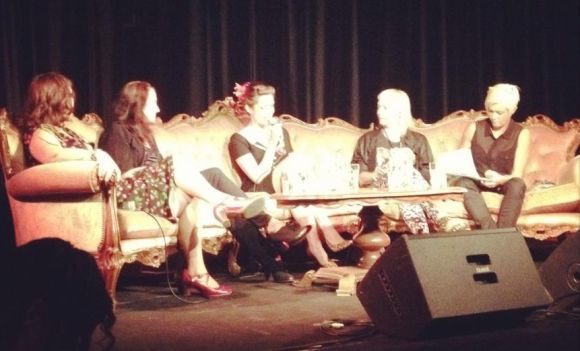
Prompted by Alan Jones’ admonition that women in parliament and positions of power are “destroying the joint”, which spurred the online feminist movement of the same name, feminist group Women Say Something brought their panel consisting of such high profile Aussie feminists as Tara Moss, Catherine Deveny and Gretel Killeen to the Thornbury Town Hall on Saturday night to ask whether we should, in fact, destroy the joint.

I must say I didn’t know much about Killeen’s feminist credentials prior to the event, but her total rejection of the Destroy the Joint movement, and most modern movements, was the surprise of the night. Killeen said she didn’t really believe in the premise of feminism and that she identifies more as an egalitarian. Tara Moss interjected here, saying that there’s not just one Feminism and that everyone has their own version of what feminism is. While I do support this notion to a certain extent, I think feminism is first and foremost about equality for all, not just for women. And I also take issue with different feminisms for the fact that this allows people like Tony Abbott and Sarah Palin, who are the furthest things from feminism out there, to claim themselves as part of “the club”.

This idea certainly didn’t go undiscussed, either, as Killeen raised the point that modern feminism is always looking for “aggressive marketing terms” like Destroy the Joint, SlutWalk and reclaiming the word cunt to recruit new members, like Abbott, no matter their ideologies and at the risk of offending the general public. Who cares about the general public? They’re always offending me with their sexist, racist and homophobic ways, so why not ruffle some feathers with feminism?

This lead Killeen to ask when feminism became a label that just anyone could apply to themselves. While I agree with this, and it’s the point I tried to make above, it is contradictory to what (my) feminism is about: equality. Moss then raised the argument of who’s more or less of a feminist, which is an issue I struggle with and which I’ve written about before. Someone then said that feminism allows room for discussion and disagreement, which the panellists certainly demonstrated; feminism isn’t a one size fits all movement.

It seems as though Killeen was playing devil’s advocate at first, with all her snubbing of most of the other panelist’s ideas. But as the night progressed, it became clear that she actually has some pretty radical views of human rights. As Catherine Deveny asserted, it’s not about feminism: it just comes down to being an “asshole and not [being an] asshole”. Here, here.

Some current pop cultural issues came up during question time, such as Beyonce’s recent underwear-clad GQ cover and accompanying article in which she espouses some feminist ideals, without actually saying the word itself. (Let’s remember in 2011 that she neither confirmed nor denied that she was a feminist, instead she suggested we create a new word for the movement.) Moss again reiterated the notion of many feminisms and that “if one of them happens to be in their underwear then that’s great,” which I wholeheartedly support (even if I don’t support feminism being thrust upon an undeserving pop star).

If Abbott’s declaration is anything to go by, seemingly every Tom, Dick and Harry are clamouring to get a piece of the feminist pie, what about all the damning of feminism as a “failed” movement? Deveny insisted that, as many a book, blog post, feminist or historian will tell you, feminism is the most successful human rights movement alongside the black civil rights one. Without feminism, we wouldn’t have the Pill, childcare, pay advances, or the vote, amongst a myriad of other rights.

So, should women destroy the joint? As one panellist said (who it was escapes me now), movements like Destroy the Joint and SlutWalk are “training ground[s] for activism”. Killeen suggested, again, that they’re just angry marketing ploys and that they don’t do anything to further our cause. Facilitator Kate Monroe and fellow panellist Casey Jenkins insisted that primarily social media movements are vital in “chipping away” at the patriarchal zeitgeist, and we need that as much as the “fireworks” of Julia Gillard’s misogyny speech, for example.

On anger, Gillard managed to harness hers at her treatment by pretty much the whole of Australia and turn it into one of Aussie feminism’s most important moments heard ’round the world, regardless of her personal or political beliefs. Many of the panellists (except, again, Killeen) agreed with an audience member’s assertion that anger is an important virtue when it comes to feminism. Far from the archetype of the angry, man-hating, hairy pitted feminist, anger can be fermented into passion which is essential for any feminist and feminist movement, wouldn’t you say?

What do you think? Should we be destroying the joint or do you think there are less radical ways to bring people around to feminism?

Related: Why is Feminism Still a Dirty Word?

Image via Facebook.

So Anne Hathaway Didn’t Wear Underwear. Enough with the Slut-Shaming! (NSFW)

Last week, arriving at a premiere for Les Miserables, Anne Hathaway was snapped exiting a car sans-panties, exposing to the world a hint of trimmed pubic hair and not much else.

From the way the blogosphere blew up, particularly one shamed-tinged article on MamaMia, you’d think the end of the world had arrived early. A sample:

“Do people really do this these days, not wear underwear? Do regular people do it or just celebrities? Did nobody learn ANYTHING from Britney Spears?”

To answer your accusations, yes, regular people don’t always wear underwear. I know this because I’m a normal person and I don’t always wear underwear. I’m a shocker for putting off underwear shopping, therefore I have less than ten pairs of undies on rotation and sometimes there’s just not a clean pair in sight. I wear tight running pants under which I don’t like wearing full-cut briefs because of the VPL and I figure, why waste a perfectly clean pair of skimpy undies on a 30-minute workout when I can just chuck my running pants in the washing machine when I’m finished working out? Better waiting for one item of clothing to dry than two.

I also have a penchant for wearing body-con dresses and pleather leggings when I go out, so sometimes I won’t wear underwear with these lest I ruin the streamlined effect I’m going for. And when I wear tights I figure they practically double as underwear anyway, so why bother. But the most important reason I don’t always wear underwear is because I don’t always want to, and that’s my choice. You would think a mainstream women’s website that serves up a healthy helping of feminism would be all over that…

Note that while Hathaway seems mortified and uncomfortable talking about the incident, she doesn’t make any apologies for choosing to go without panties, and she shouldn’t have to. She said, “I was getting out of the car and my dress was so tight that I didn’t realise it until I saw all the photographers’ flashes… It was devastating. They saw everything. I might as well have lifted up my skirt for them.”

Sure, it’s probably not the greatest feeling to have all and sundry seeing your business without your consent (which raises a whole ’nother issue about whether the photographer should have deleted the shot instead of publishing it, which I’m not going to go into here), but if our society didn’t have such a problem with the female anatomy and the shame associated with it what its owner sees fit, would we be acting so outraged with the whole situation? The fact that all that’s visible is a bikini line and a landing strip makes it that much more petty: it’s just a bit of pubic hair, not a porno.

Elsewhere: As Anne Hathaway’s Vagina Goes Viral We Ask: Do Girls Not Wear Undies Anymore?

Image via Starcasm.

Books: Marilyn Monroe as Manic Pixie Dream Girl?

Marilyn-Monroe---Glasses

As with yesterday’s post, this comes from Gloria Steinem’s Outrageous Acts & Everyday Rebellions in an article entitled “Marilyn Monroe: The Woman Who Died Too Soon”:

“[Marilyn Monroe disliked] to be interpreted by them [her male admirers] in writing because she feared that sexual competition made women dislike her… In films, photographs, and books, even after her death as well as before, she has been mainly seen through men’s eyes.”

Just like our favourite Manic Pixie Dream Girls Holly Golightly, Ruby Sparks, Annie Hall, and Zooey Deschanel.

Related: Procrastination Proclamation.

Posts Tagged “Ruby Sparks”.

Manic Pixie Dream Girly Girls & Not-So-Girly Girls.

Image via Discount Poster Sale.

On the Net: The Sexual Double Standards of Celebrities.

When it comes to the sexual politics of celebrities and blatant double standards between the genders in Hollywood, Clementine Ford sums it up best in a recent Daily Life piece:

“Kristen Stewart has found herself in a similar position [to Lara Bingle and her affair with Brendan Fevola] after the revelation she had an affair with the married director of Snow White and the Hunstman. The much older Rupert Sanders has a wife and children, but it’s Stewart who’s been labelled a ‘trampire’ and a home wrecker. A recent US tabloid cover story warned Jennifer Garner to be ‘very, very worried’ at the news Stewart was in talks with Ben Affleck to make a film together. For Stewart and Bingle, the message is clear—they were caught using their sexuality inappropriately, and now they have to pay the consequences. Sanders and Fevola have since gone back to their wives. Unlike Stewart, Sanders didn’t lose the lucrative contract to work on the next Snow White film. Meanwhile, Fevola has since featured on Channel Seven’s Dancing With The Stars, and shared the reconciliation with his wife in a saccharine spread for New Idea. Will their sexual indiscretions and choices follow them around, ad infinitum? It’s highly unlikely.”

A girl after my own heart.

Related: Why Are Famous Men Forgiven for Their Wrongdoings, While Women Are Vilified for Much Less?

In Defence of Lara Bingle.

Was Kristen Stewart’s Public Apology Really Necessary?

Elsewhere: [Daily Life] The Purity Complex.

[TheVine] All Dogs Go to Seven.

Taylor Swift: The Perfect Victim.

Her songs may be catchy—even I can’t stop singing her latest, “We Are Never Ever Getting Back Together”—but Taylor Swift is one of the most detrimental-to-young-peoples’-self-esteem artists out there in my opinion.

I know a lot of people who would beg to differ: but she’s not overtly sexy, so therefore she’s portraying a healthy message to young girls. And she actually writes her own songs and plays instruments, so that’s positive for young people to see, too. But I liken her to pop cultural phenomenons like Glee and 50 Shades of Grey: on the surface they give off the impression of acceptance for the former and empowerment for the latter. When I’ve expressed disdain for these things I’ve literally had people feed me these lines of reasoning. And just like Swift is feeding the messages of the fairytale of young love and not to settle for second best to her fans, what she’s really espousing is an attitude to the opposite sex and to relationships that is toxic.

For example, she waffles on about princes and castles and Romeo, but anyone who’s been in a relationship for more than five minutes (just how long have Swift’s high-profile partners stuck around?) knows that it doesn’t really work like that. Swift is 22 years old and is still singing about relationships and boys as if she were 17, the age she was when her first album was released.

Natalie Reilly writes in the article that inspired me to muse on Swift:

“What if he doesn’t look at you in the right way at the right time of day when the dappled sunlight is falling just the right way across your face? Well, you’re going to WANT TO DIE. Is it any wonder Swift’s songs contain so much wounded anger when her expectations are so teeteringly high? Which guy could ever live up to this Instagram-worthy narrative and still be considered a human?”

I know a girl who loves Swift, has all her albums and went to her concert in Melbourne earlier this year. Recently, she started dating her first boyfriend. I quietly observed that their relationship seemed to progress as if it were taking place on a teen soap or movie: have sex after three dates, publicly announce the progression from “dating” to “boyfriend and girlfriend” after a month… And after two months the relationship fizzled because one party apparently wasn’t making enough “grand gestures” to satisfy the Swiftian ideal of what a relationship should be.

And that’s one of my many problems with Swift: she perpetuates the notion that men are the arbiters of happiness in relationships and unless they are standing outside your bedroom window with a boombox, riding off into the sunset on a lawnmower or sneaking into your room to watch over you as you sleep then there’s some crucial romantic element missing in your union. Why must Swift insist on portraying these archaic heteronormative notions of men being the “doers” and women are just there?

Because Taylor Swift hates feminism. An article a few weeks ago asked Swift whether she viewed herself as a feminist, a key question in most interviews with successful women who haven’t already come out as a women’s libber. Here’s her answer:

“I don’t really think about things as guys versus girls. I never have. I was raised by parents who brought me up to think if you work as hard as guys, you can go far in life.”

Paging Taylor Swift: that’s exactly what feminism is. And as I originally commented, if Swift is about nothing else, she is about guys versus girls. Her prime song lyric generator is breaking up with men who’ve wronged the poor, innocent Taylor. You know, when she’s not slut-shaming the popular girl who’s the girlfriend of the boy she wants for herself, and if only he could look past her sluttiness he would see Swift is the one he’s really supposed to be with. See: the “You Belong With Me” video for which, handily enough, Swift was awarded best female video at the 2009 MTV VMAs in the infamous Kanye West-“Beyonce had one of the best videos of all time” incident. Poor little Taylor cast as the victim yet again.

Swift really is the perfect victim (Reilly notes Swift is a key proponent in the “‘lover as victim’ trope”), though, because she manages to hide the playing up of the victim status so well. Sure, she writes songs teens can relate to, but the self-absorbed, angsty and tormented world of a teenager is a far cry from the real world a 22-year-old should be inhabitating. There comes a time when you need to stop blaming other people for relationships gone awry and maybe look inside yourself for the cause of the problem.

As Reilly asks, is Swift’s ideal of relationships “the narrative we want for young women? For any women?” Certainly not.

Related: 50 Shades of Grey by E L James Review.

Elsewhere: [Daily Life] The Problem with Taylor Swift’s Love Songs.

[Jezebel] Don’t Go Calling Taylor Swift a Feminist, Says Taylor Swift.

Image via Jezebel.

Happy Slut-O-Ween: The Hyper-Sexualisation & -Feminisation of Costumes for Women.

It’s that time of year again when U.S. residents in particular, but an increasing amount of Aussies, too, start gearing up for the last day of October when the jack-o’-lanterns are lit, trick or treating is had, and costumes are curated: Halloween.

The holiday that is believed to have pagan roots in preparing for the onset of winter in the northern hemisphere and warding off evil spirits when the barrier between the dead and the living is at its thinnest, but is more traditionally an excuse for kids to dress up and gorge themselves on lollies, has been appropriated by the mostly-Gen Y masses as an excuse to get your kit off.

Obviously not everyone celebrates Halloween by finding the shortest, tightest, most low-cut outfit available, but the perception of female sluttiness is, if not encouraged, then more acceptable on All Hallow’s Eve than on a regular night out. (Not to worry; garden-variety slut-shaming is sure to be had on October 31st as well.) As Nicole Elphick points out, slutty Halloween costumes are acceptable because we’re often portraying if not a different version of ourselves, then someone else completely: “Oh, it’s just a costume – it’s not me!”

Certainly there are less mainstream Halloween-centric events out there, where party-goers take pride in creating the most original, obscure and ugly costumes they can. But for the not-so-dedicated novice Halloween goers who don’t have the time or money to come up with a truly fancy or left-of-centre costume, there’s always the “one slut fits all” section of the costume store brimming with options.

You know the area of Lombards or any costume hire store that’s segregated from the “serious” party paraphernalia and stocks such run-of-the-mill outfits as the sexy maid, the sexy nurse and the mediocre “tuxedo bunny” that resembles the traditional Playboy bunny costumes not one iota. (This Halloween I’m dressing up as Gloria Steinem when she went undercover at The Playboy Club in the ’60s, so I can attest to the poor quality and unrealistic [oh, the irony!] Playboy costumes available for purchase, so much so that I had mine made.) Sure, these costumes are quick, cheap and come with most of the accessories needed to complete the look—in fact, some of them consist solely of the accessories and little else, fabric-wise—but they’re boring  and flash as much flesh as possible. Where are the options for those who don’t want to default to eye-candy or the “sexy nurse” or “sexy nun” instead of a legitimate doctor or person of the clergy?

Furthermore, the problem with the sexy person woman-in-uniform, sexy animal and sexy Scrabble costumes is not only the unoriginality of the former and the absurdity of the latter, but the blatant feminising of these costumes: apparently only women can be sexy fire-fighters, sexy Nemos and sexy showers, while men are just fire-fighters, Nemo and a shower. (The argument could be made that all men in uniform are inherently sexy, but their occupations definitely aren’t sexualised the way in which women in these professions—or even just in these costumes—are.) Elphick adds that, “You can think of almost any regular costume and odds are some costume manufacturer has already made a risqué version for full-grown women.”

Lisa Wade elaborates on the dearth of “sexy” male costumes in an article on Sociological Images. Not only that, but the “sexy” costumes that areavailable to men focus on sex as something to be laughed at or on a man’s status as a recipient of sex from women, not as sex objects themselves:

“When men go sexy, it means joking about how men should be sexually serviced, have access to one night stands, or being in charge of and profiting from women’s bodies. A different type of ‘sexy’ entirely.”

Maybe with the success of Magic Mike this year we’ll be seeing an influx of male stripper-inspired costumes… Something tells me this is doubtful.

*

I think this obsession with Halloween hyper-feminisation is just a magnified reflection of society’s need for women to be heteronormatively feminine: long hair augmented with extensions for the event, facial symmetry exaggerated with over-the-top makeup and false eyelashes, slender (I, personally, have upped my fitness regime over the past couple of months in preparation), wears dresses (have you noticed how even if the effigy’s garb resembles a dress in no way, the Halloween costume will inevitably appropriate it into a skirt or, less-often, short-shorts if it’s marketed towards women? The “sexy” Sesame Street costumes that have been in the news of recent come to mind).

Rachel Hills hit the nail on the head when, in a response to a similar post earlier this year, she pondered whether the gravitation towards hyper-feminine and-sexy get-ups either in daily life or for special events reflect a fear of not being seen as attractive enough.

Reflecting on my past costume party ensembles, which include Catwoman, sexy Rosie the Riveter and Eve bare as much flesh as possible, it would seem a fear of being perceived as unattractive, unfeminine and/or unsexy is inherent in them, too. As someone who is relatively content with her appearance and in touch with her feminist side (no matter how “slutty” my costumes appear to the naked eye, I always try to incorporate my feminism in there somewhere), this is not something that is front of mind when putting my outfits together, but I guess the evidence speaks for itself: the most conservative Halloween costume I’ve worn was a long, pink vintage dress that I accessorised with fishnets, a feather boa and a headband to portray a 1920s flapper. The only time I’ve ever incorporated pants into the mix was when they were skin-tight pleather leggings (Catwoman, a female wrestler, and one of Barbie’s Rockers), going back as far as my first outing as Catwoman at my tenth birthday party. Inappropriate? Perhaps. But I guess that also conveys a telling tale of our expectations of femininity and, increasingly, sexiness, when it comes to young girls, a topic which is probably best left unpacked til another time.

But maybe we’re reading too much into this? Just because a woman chooses to amp up her sexuality and flash some flesh on Halloween doesn’t necessarily mean that this desire is insidiously ingrained in her by the patriarchy. Feminist du jour Caitlin Moran insists that women are “not dressing up sexy: It’s a parody of sexuality. They’re being silly,” while sex and gender writer Hugo Schwyzer thinks that “the lack of options for any other kind of costume make sexiness the default position rather than the chosen one.” But I have plenty of friends—both female and male—who enjoy getting their sexy on as often as they cover up in the costume department.

When I asked a friend who is so dedicated to her more masculine costumes that I often don’t recognise her for all the faux facial hair, but who also tarts it up with the best of them, most recently in a “sexy” Little Bo Peep costume for her birthday, she said she honestly doesn’t give it much thought. “[Costumes] allow me to hide any insecurities I would usually have… I can hide who I really am for the time I’m in costume,” she said, which is not unlike Elphick’s above assertion that “Halloween is all about taking on an identity that is explicitly not yours.” None of said friends are particularly feminist in their thinking so, as “civilians”, it’s refreshing that they dress up this way without pushing an anti-gender stereotyping message; they haven’t given it a second thought and do it because they want to. Perhaps there is hope for us yet…

Schwyzer sums it up thusly:

“[The] mandatory sexualization of girls and women reflects a culture ill at ease with women’s power. Halloween is at least partly about how we manage fear—and one fear we seem to still have is of powerful women. Sexualising everyone from tween girls to grown mothers is actually a way of reinforcing traditional values. Underneath it all, the message is, all women are the same—they just want attention from men.”

Going back to the earlier point that the reason we see so much skin on Halloween is because of the utter lack of pre-packaged sartorial alternatives, you have to wonder about the costumes that mimic their real-life and/or fantasy life counterparts to a tee: is the reason Halloween has strayed so far from its pagan roots because of our increasingly sex-obsessed society and need for the genders to perform as they always have? For all the absurdly sexualised children’s characters, pets and household appliances, there are as many traditionally scantily attired female superheroes, pop stars and influential women in history to choose from.

As for the guys, Schwyzer thinks the popularity of Magic Mike might see the odd male dressed in short shorts, a bow tie and not much else, but for the most part, they’ll stick to the established costumed-gender norms of “endless capes and Harlequin masks”, just as most women will go for the shorter, tighter, sexier option.

Related: Slut-Shaming in Romantic Relationships—It’s Not On Unless It’s Not On.

‘Tis the Season…

Costumes & Gender.

Elsewhere: [Daily Life] Why Sexy Halloween Costumes Are Okay.

[Jezebel] A Musical Reminder That You Can Wear Clothes on Halloween & That’s Okay.

[Sociological Images] What Do Sexy Halloween Costumes for Men Look Like?

[io9] Slutty Sesame Street Halloween Costumes Prove (Again) That Nothing is Sacred, Culture is a Sham.

[Salon] Caitlin Moran: Women Have Won Nothing.

Image via Buzzfeed.
TV: The Puberty Blues Give Way to Feminism.

There was an inkling that Ten’s standout show, Puberty Blues, would touch on ’70s-era second-wave feminism a few weeks ago when Sue tried to borrow her boyfriend’s surfboard. Then, last week, she expressed dissatisfaction with their sex life and her partner told her not to “get all femmo” on him. Throw in Sue and Debbie’s strong mothers, and Puberty Blues really taps into “the problem that has no name”—The Feminine Mystique—that both Gary and Debbie’s mums experience, as well.

The show deals tenderly but realistically with Debbie’s parents’ relationship breakdown and how a strong woman in the house both working and doing the domesticities can cause tension in the home. Debbie told her mum in last night’s final that she really admires her for working and having a family, and that makes her believe that she, too, can lead a “big life”.

After saving an old friend from repeated gang rape in the back of a panel van, Debbie and Sue feel empowered and emboldened to do something else with their newfound feminist leanings. So, with nothing to lose in the form of boyfriends and keeping up appearances in the “cool” clique, the young girls the show is centred around venture away from the towels on the beach that is the domain of the “molls” and try their hand in the surf. You go, girls!

Image via This Island Continent…

TV: Feminism, Barbeque & Good Christian Bitches.

For a show as fluffy as GCB, it sure does tackle some pertinent ethical issues.

Obviously, there’s the comedic take on religion that is the shows hallmark, but there’s also politics, money and, according to last night’s episode, “Adam & Eve’s Rib”, feminism.

Bad girl gone good Amanda Vaughn is always looking to set an example for her fatherless children after he cheated on Amanda with her bestie, died in a car accident and left them without a cent to their name. She doesn’t want her rich mother buying her kids designer threads and she doesn’t want them to be part of the popular crowd that she reigned supreme over at high school. (Well, this really only applies to Amanda’s daughter, Laura. I’m not really sure where the son’s at.)

When the annual Dallas Interfaith BBQ Invitational comes around and it emerges that only men are allowed to participate, Amanda throws her hat in the ring with her team consisting of only her daughter and, begrudgingly, her mother at that time. As each of the other female characters’ partners wrong them, they slowly join Amanda in her feminist crusade, helping to provide the meat, the secret sauce, and the wood that makes the smoke smell—and therefore the ribs taste—so good. It goes to show that if men from different religions can get along in the name of barbeque, then so can women who hate each other in the name of feminism.

Of course the show steers clear of invoking the “F” word too much, though there is a nod to Gloria Steinem (“Glory what?!” Laura exclaims. It might have been wise to teach your daughter about gender equality before you decided to adopt the movement, Amanda.) But we all know that the crafty incorporation of moral and ethical issues into pop culture is how we get the message across to the layman.

With all of GCB’s posturing on the oftentimes absurdity of religion, the hypocrisy of white, rich, straight (or presumed straight, in Blake’s case) male-dominated Dallas (and, indeed, Church) life, and the role of the female in these institutions, it’s a shame the show has been cancelled. Only one more episode to go on Australian shores…

Image via ABC.

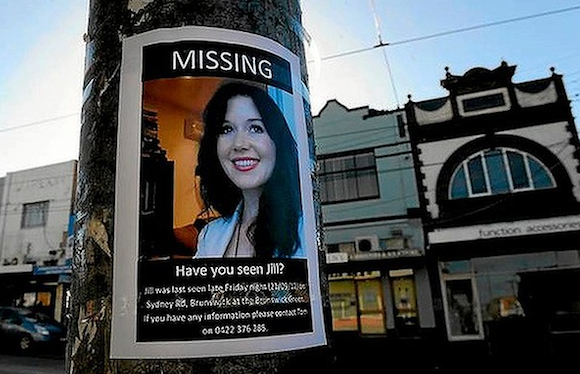
To Live & Die in Brunswick: Reflections on Jill Meagher.

I’m not usually one to be so deeply affected by violent crimes resulting in the deaths of people I don’t even know, but there’s something different about Jill Meagher’s brutal abduction, rape and murder that has touched the hearts of many. Perhaps later this week or next I will attempt to unpack what Jill’s death and the litany of speculation surrounding it means to me, but first, I thought I’d ask a friend who lived in the suburb that Jill also lived and (presumably) died in for her experiences in Brunswick.

Laura Money is no stranger to guest posting on The Scarlett Woman, just as she’s no stranger to the pitfalls of living in Brunswick, a suburb that both I and she, and I’m sure many other women, have experienced street harassment in. Maybe it’s not just Brunswick, as Laura asserts below. Maybe it’s just a Melbourne thing. Or maybe it’s what comes with the territory of being female in public.

*

Hi, I’m Laura and I’m from Brunswick. Sounds like a confession. In the wake of the rape and murder of Jill Meagher the idea of living in Brunswick has become hollow. I lived in Brunswick from 2009 to January this year after moving to Melbourne from Perth. It’s a similar story to Jill’s: her family are in Perth as well.

When I first moved to Brunswick I was so excited. My street had beautiful old cottages and Victorian-era terraces. Old people peered over their white picket fences to chat to one another. They gave me lemons and sometimes herbs. (Always legitimate!) It was a beautiful place to live. My boyfriend and I secured a one-bedroom unit you couldn’t have swung a cat in but we loved it. One of the reasons was its location: we were only two streets away from Sydney Road, where Jill disappeared. Pubs, bars, late night restaurants and enough kebab shops to ensure that your night out ended well and not regretfully.

Sydney Road was also a place where I felt pretty safe. I must have walked alone to get home so many times I’ve lost count. Until moving to Melbourne, though, I’d never really experienced much street harassment. Sure, I had a guy show up at my work every day to propose until I had to hide in the back room while my colleagues told him I didn’t work there anymore. I also had one guy decide he liked me that much he brought his whole family to my work to meet me, even though all I’d said to him was “hi”. My mistake, obviously, victim-blamers would decry. There was a creepy guy who requested I grow my leg hair for him and a couple of other incidents. But being harassed on the street was new to me, until Brunswick.

I’m not going to document everything but I will give you my top three not-feeling-so-safe-now moments. Firstly, I was reading on the train. I do this a lot. I was getting so involved in my book that I missed my stop. I do this frequently too! I got off at the next stop and decided to walk; hey I could use the exercise. It was about 6pm and the street was deserted so I decided to be a little cocky and keep reading while walking along the pathway near the train tracks. Hey, it was a really good book! I hadn’t been walking long when I noticed a small group of young men up ahead. As I got closer the cat calling started. I ignored it. They followed me. I ignored them. They postulated how they wanted to “shove that book up me if kept ignoring them”. I put down the book, placed it under my arm and told them to get lost. I then half walked, half ran to a tram stop and caught the tram the rest of the way. Walk home ruined.

Secondly, I was waiting for the tram. My stop was the first one, and the tram came empty from the depot so I always got a seat. As I was waiting, I was reading and standing next to the giant picnic bag I had. An old man came over and asked me for the time, presumably so he could look at the timetable, though I could have told him that it had been vandalised ages ago and you had to text for the next tram time. I told him the time and he asked where I was going. “I’m going to the city. I’m having a picnic with some friends,” I replied. “Oh, are your friends men? Are you married?” “No, just a few girlfriends. I’m not married.”

At this point I put my book back up and hoped the tram would hurry up. The tram came and I hoisted my picnic bag up, found a seat and continued reading. The old man walked up and down the tram before sitting down next to me. Seriously, he had the whole tram. I tried to keep reading.

“You must like that book, is it good?”

“Yes.”

“What’s it about?”

(Why did I answer?) “Oh, it’s just a detective series I’ve been reading.”

“So, are your friends single?”

“Sorry?”

“The girls you’re meeting, are they single?”

“Yes, it’s just a picnic in the park. Good weather, isn’t it?” I tried to change the subject.

“I’m single. Keep looking for a nice girl. I can’t go out with women my age, they’re all too boring. I need someone young, like you.”

At this point I start to panic and smile sympathetically for lack of another option.

“You don’t have to go and meet your friends. I’ve got a high-rise apartment in the city. If you come with me, I can give you a present.”

This on-sided conversation occurred throughout the entire tram ride, he even followed me when I moved seats and spoke like that in front of other passengers. A few of them laughed. I kept my eye out at the tram stop for him for weeks.

Thirdly, I was stalked home. I wrote a post a about it. It was pretty scary.

I know this sounds like Brunswick-bashing but hear me out. Despite all of these things happening, I just thought it was Melbourne. To a certain extent it is. These things happen anywhere. I’m back in Perth now and have already had a few incidents occur. My dad didn’t want me to move to Melbourne; he said it was too dangerous. In the first two months of me moving there there was a shooting, two bashings, a building collapse and a warehouse fire all within a kilometre radius from my dream-unit.  This didn’t stop me from living my life, though. I was often out late, heading home to my boyfriend. My mum reads and watches a lot of true crime. Because of this, I would call her or my brother in Perth late at night—time differences are great, aren’t they?— and say “I’m calling you while I ‘m walking home so that if I get attacked or something they will know my last whereabouts!” It was always a bit of a joke but I used to think that it was unlikely that they would attack someone on the phone because they’d get caught. When I saw the footage of Jill Meagher calling her brother in Perth shortly after talking to the man in the hoodie, I knew what she was doing.

To reiterate, my name is Laura and I used to live in Brunswick. I now live in Perth again and the harassment has slowed down. Actually it’s pretty much just at my new place of employment—gotta love that! For those who think, “if you felt threatened, why not just take a taxi?” Firstly, it’s only two blocks: so not worth it! Secondly, I used to get taxis after work f I was working late and the company paid. I got hit on in those taxis on most nights. Sure, I like a chat. I even chatted to a taxi driver so much that he remembered us later on when my friend left her phone in the cab. He was able to identify us because I’d been taking to him. By the same token, often when I got in the taxis from work, the male drivers would stare at my skirt. One driver focused the rear-view mirror onto my cleavage and one dropped the receipt onto my lap and groped around to find it. Fun stuff.

—Laura Money.

Related: On Stalking.

The Taboos of Sexual Harassment.

The Harassed & the Harassed-Nots.

I Ain’t No Hollaback Girl: Street Harassment in CLEO.

Elsewhere: [Daily Life] Brunswick, Alone & After Dark.

[unWinona] I Debated Whether Or Not to Share This Story.

Image via Daily Life.