TV: The Farmer Wants to Uphold the Patriarchy.


Twice in the last fortnight I’ve had two different people—who I would say are good friends, but not close friends, if there’s a difference—tell me I should go on Farmer Wants a Wife. Now, I have no idea why they would say that as a) I love living in the city and would never move to the country—nor anywhere I didn’t want to— for a man; b) this isn’t to say all farmers are dumb bogans, as you have to be fairly agriculturally savvy to run a farm, but that is not my type of guy—nor person in general—at all; and c) considering these people know how “stridently feminist” (as Caitlin Moran writes in How to Be a Woman) I am, they should know I would never go on a show that describes the sole purpose of the female as “the wife”, while the man gets to be the big, burly, masculine breadwinning “farmer”.

Furthermore, reality TV has become so commodified since its inception, that it would ruin any chance I have at making a name for myself in the writing world, as well as as a human being. Sure, it might popularise my blog and therefore lead to more some freelance work, but at what cost?

But, perhaps most offensively, although I’m still pretty ticked off at the anti-feminist connotations this suggestion brought: do these people think my long-term single status is so pathetic that my only hope is a reality TV show? While I’m not happily single, and haven’t been for a while, I’d rather be that than go on a reality show that would portray me in a certain way (although, in these friends’ minds, I’m already “that way”), pit me against other women in inane, stereotypical challenges and rate me against them, all in a nice little 40-minute package. No, thank you!

So, while I quietly stew over this misperception of me (although, when I surveyed another friend as to whether I should go on Farmer Wants a Wife, they replied: “Wow, I really had you pegged wrong,” if I was actually to consider it. That’s what good friends are for!), would you ever go on a reality dating show? If so, which one(s)? If not, why not?

Related: Lady Gaga is “For Us”.

Will Boys Be Boys When it Comes to Objectifying Women?

So Misunderstood.

Image via Media Spy.


TV: Snooki & the Jersey Shore Girls as Feminists?


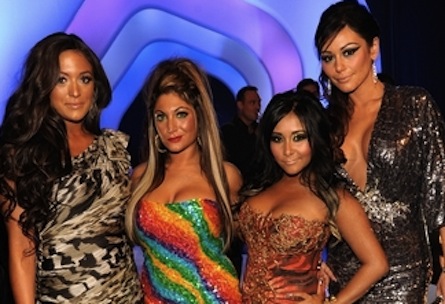
This notion has been on my mind since the start of the year, and watching season three of Jersey Shore got me thinking about it again. So, are the fake-tanned, fake-boobed and fake-nailed women of Seaside feminists?

On the one hand, while Vinny, Pauly D, Mike “The Situation” and Ronnie spend 20 minutes blowdrying their hair and plucking their eyebrows each morning (okay, if they’ve been out clubbing the night before, it’s the afternoon), followed by GTL (gym, tan, laundry), and frequently cook “family” dinners, the girls lie around the house, get in fights and try to score with guys at the club. If this isn’t throwing gender norms on their head, I don’t know what is.

As Tracie Egan Morrissey writes:

“… so much of what these people do actually challenges old school notions about gender-appropriate behavior: Men who wax their eyebrows? Men who place that much of an importance on hair products? Women who fistfight? Women who drink so heavily?”

But on the other, JWoww, for example, subscribes to the stereotypical sexualised female body: fake boobs, fake hair, and done up to the nines when she hits the clubs. If she’s got it, should she flaunt it?
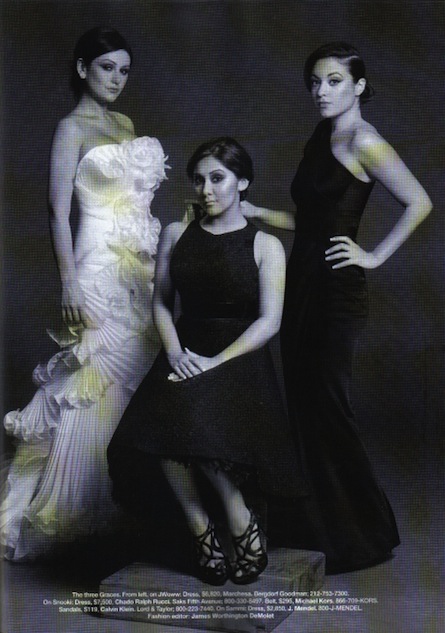
I’ve always been a big believer in this, so more power to her. In fact, despite their meteoric rise to fame in the last two years or so, the guidettes haven’t changed a thing about themselves. They’re still the trash-talking, ugg-boot-in-public-wearing, pussy-flashing white Italian trash they always were, even after Harper’s Bazaar attempted to make them over under. The problem with that was that millionairess socialite Tinsley Mortimer acted as the guidette’s teacher, insinuating that “richer… mean[s] ‘classier’ or better or nicer”. Especially considering “… the socialites of the last ten years have done everything they can to prove that ‘trashiness’ appears at every income level.”

Paging Paris Hilton, who’s never been accused of being classy or well dressed.

If being a feminist means not changing to reflect the views of mainstream society and The Patriarchy, then so be it. After all, Snooki “seems real precisely because we can’t believe that anyone would actually try to look that awful.”

In strapping their boobs up and wedging their short-shorts further into their buttcracks, the mating dance the guidettes perform each night (which has nothing on the aforementioned regimen of the boys!) seems to subvert the very look their trying to achieve: sexiness. I don’t believe this is done purposefully, so in that sense it’s not very feminist-like, however the brazen bedroom talk the girls engage in—or rather, lamenting the lack of bedroom action, especially when it comes to Snooki—makes them highly relatable. As Sady Doyle writes, “we are all Snooki”.

I’m sure all women can relate to slut-shaming, regardless of how many sexual partners they’ve had, and that’s something the Jersey Shore females have to deal with on a seemingly episodic basis. Egan Morrissey puts it best, after Pauly D voices his views on sexual double standards (“She’s [Angelina] brought all these random people home. She’s a girl. You don’t do that. That’s a guy thing. Guys do that, not girls.”):

“Shouldn’t Pauly and The Situation be grateful for sluts? If there were no sluts then they would never be able to have sex. Do they think for one minute that they would even want to live in a world in which all girls acted the way that they’re ‘supposed’ to?”

Still with sex, feminists are either viewed as sex-negative man-haters, or insatiable sex machines who throw away men once they’ve got theirs. JWoww certainly falls into the latter category, who says in the opening credits, “I’m like a Praying Mantis: after I’ve had sex with a guy, I will rip their head off.” If Jersey Shore were a scripted show, JWoww’s bad breakup with Tom, who steals her hard drive, which contained naked pictures of the reality star, amongst other things, would be payback for her independent woman status. How dare a woman step outside of the stringent guidelines The Patriarchy has set for her?!

Speaking of bad breakups, if there’s one guidette who falls furthest from the feminism tree, it’s Sammi. While she finally plucked up the courage to leave Ronnie after their tumultuous on-off relationship ended in a very realistic fight in season three, in which Ronnie trashed Sammi’s bedroom and her belongings, including breaking her spectacles, reports about the fourth season seem to indicate that Sammi took Ronnie back.

While we can never understand the dynamics of each individual abusive relationship, and feminism can’t realistically be applied to them when a woman (sometimes a man, but mostly women) has had all of her resources—family, friends, employment, finances, access to a car etc.—taken away from her and therefore has limited means to escape, Ronnie and Sammi’s relationship may have some benefits to viewers of the show. Because Jersey Shore is marketed as “reality TV” (although, after The Hills and the revelation this week that one of the “geeks” on Australia’s version of Beauty & the Geek is an actor, its dubious how “real” the show is), female viewers who may be involved in an abusive relationship at some stage in their life can see that the relationship is being portrayed in a negative light, that Sammi’s housemates, friends and family are telling her it’s not healthy, and that she should get out. We can only hope that the one in four women who will have an abusive partner will take heed.

A little too deep? How can we derive all that from something as asinine as Jersey Shore, a show that, grammatically, should have a “The” at the beginning of its title?

Take what conclusions you want from the overtly sexual show, but one thing’s for sure: the guidettes are “empowered sexually, that’s what I’m seeing on Jersey Shore… The women seem to be making their own decisions about who they sleep with [Scarlett Woman note: or don’t sleep with] and when.

“Almost by definition ‘guidette’ is a derivative term. It is a male-based subculture… The women were always defined as sex objects. And I think that’s something that they’re reversing.”

So, guidettes as sex subjects? If talking about “hairdos, shoes and body image snafus” and “preen[ing] and put[ting] on lipgloss” is a stereotypically female—and therefore weak—trait, then the guidos are certainly the background characters of Jersey Shore.

Related: Extreme Makeover: Jersey Girls.

The Mystery of Snooki Revealed.

In Defence of Rachel Berry.

The Hills: All Good Things Must Come to an End.

Elsewhere: [Salon] Jersey Shore’s F’ed Up Brand of Feminism.

[Jezebel] If Men Can Wax Their Eyebrows, Why Can’t Women Sleep Around?

[Jezebel] Snooki & Her Boyfriend Break Up Over Her Pussy.

[Jezebel] Bazaar Gives Jersey Shore Guidettes Elegant Makeovers.

[Jezebel] JWoww’s Terrible, Horrible, No Good, Very Bad Ex.

[The Atlantic] We Are All Snooki.

Images via The Gossip Wrapup, Harper’s Bazaar.
TV: The Meaning of War According to True Blood.


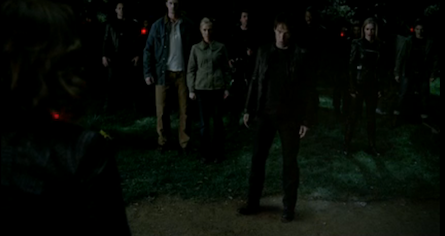
“War isn’t about whether you think you can win. It’s about being willing to die for something you believe is worth dying for.”

After this speech from the new and improved brainwashed Eric, Sookie goes on to declare that she’ll be fighting the witches alongside Bill and Eric, despite their best interests to “protect” her, which they seem to try to do every episode.

“Call me crazy, but I’m willing to die if it means keeping an entire group of people I know—and love—from being eradicated in the name of hate.”

With shades of pretty well every war in history, as well as the latest ruling allowing women to fight on the frontlines, who ever said True Blood doesn’t tackle the big issues?

Related: Male Rape on True Blood.

Images via VideoBB.

TV: The Underlying Message in Glee’s “Asian F” Episode.


Despite the racism of the title (is it racist if the two token Asian characters and their tiger parents say it?), last night’s episode of Glee was all about girl power, with some political undertones.

Brittany is continuing her race for class president, performing “Run the World (Girls)” by Beyonce to a standing ovation in the gym. It’s not the first time Brittany’s done a Beyonce song (remember “Single Ladies [Put a Ring On It]” when Kurt was trying to pass her and Tina off as his girlfriends?), and the episode was pretty Bey-heavy, with lots of Dreamgirls songs to boot.

If you haven’t seen this video from NineteenPercent, I wholeheartedly recommend you watch it. “Run the World” “lulls girls into a false sense of achievement and distracts them from doing the work it takes to actually run the world.” Hence Brittany performing in the halls of William McKinley in a leather miniskirt and suspenders, when she should really be working on her campaign promises. But she does look damn fine!

The whole Brittany versus Kurt (versus Rachel) thing evokes feelings of the Barack Obama/Hillary Clinton democratic primary race of 2008, not to mention the Sarah Palin-as-feminist debate.

Santana, Brittany’s right-hand campaign woman, tells Rachel that if she votes for “Jimmy Fallon’s butch daughter”, Kurt, “it would only empower another Frankenbeans,” whatever that means. (A Google search for both “Frankenbeans” and “Frank & Beans” yielded no relevant results.)

Brittany follows this up with all the shit male leaders have gotten America into lately: “double digit inflation, economic freefall, oil spills, the war in Afghanistan.”

But to make women feel like they have to vote for their political counterpart just because they’re a woman isn’t the way it should go. Palin is a perfect example of this: the only reason John McCain chose her as his running mate was because of the close upset of Clinton by Obama in the primaries. Upon further inspection, it was revealed that Palin didn’t know jack about most things. Perhaps Brittany’s run for senior class president is intended to reflect Palin’s vice-presidency bid, or her possible 2012 presidential candidacy, as Brittany isn’t the sharpest tool in the shed.

When Rachel realises Mercedes might beat her for the role of Maria in McKinley’s production of West Side Story, she decides to run for president, too, so she’ll have a stellar extra-curricular on her application for NYADA. Kurt is understandably upset, as he knows that Rachel’s running for personal gain, and perhaps Brittany’s been brainwashed by Beyonce, but he can actually make a difference at the school for fellow outcasts like them.

So it looks like the thinking students of McKinley will be faced with a similar dilemma that Democrats were in 2008: to vote for the marginalised  candidate (coloured Obama/gay Kurt), or the female candidate, who also belongs to a marginalised group…

Related: The Underlying Message in Glee’s “I Am Unicorn” Episode.

Glee Back in Full Force.

Image via VideoBB.

TV: Is Kris Jenner a Bad Mother?


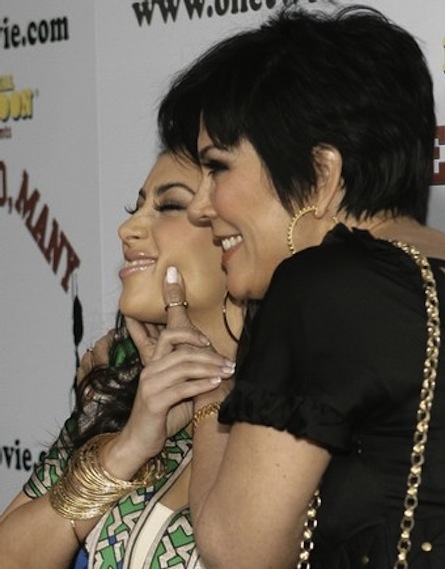
She’s constantly on Khloe for her weight, Kim to prioritise her money-making appearances with family and love, and Kourtney to get married before she has another child. Not to mention that she neglects, according to them, Kendall and Kylie in favour of her older daughters.

But is Kris Jenner a bad mother because of this?

One could argue that she spent her former days of motherhood raising her six kids (not to mention Bruce’s four other children from previous marriages), and is rewarded by earning 10% from their business endeavours.

But some of the things Kris says and does arguably aren’t in the best interests of the wellbeing of her children. Or is that just how they choose to portray her on the show?

In the first season of Khloe & Lamar, Kris berates Khloe for her size (in the same episode that Lamar calls her “not small” in Playboy magazine), saying it’s not cohesive with her other sisters’ frames, nor with QuickTrim, the diet supplement the Kardashian sisters promote. In other episodes of the Keeping Up with the Kardashians franchise, Kris is on Khloe’s back to have a baby. After all, she has been married for two years (who would have thought that would last?!) and is relatively young, so it shouldn’t be that hard, right?

Kris also doesn’t approve of Kourtney’s boyfriend and baby daddy Scott Disick, and in earlier seasons of the show, who could blame her? But even after Scott made a 180° turnaround in his behaviour after son Mason was born, Kris still can’t accept him.

Kim, the head moneymaker of the Kardashian cklan, can usually never put a foot wrong in her mother’s eyes, but every now and then Kris will get upset with her for being so uptight. So do her sisters, for that matter.

But, in the latest season of Keeping up with the Kardashians, Bruce surprises Kris and the family with a trip to Bora Bora to celebrate the couple’s twentieth anniversary. The tables are turned from Khloe’s weight woes to Kris’, as she worries about her body and even contemplates surgery before they go away.

Kris asks how she’s supposed to strut around poolside in a bikini, when all of her young, hot daughters are, too? When I heard this, I wanted to throw up in my mouth a little bit. If anyone had any doubts about Kris being a “stage mum” of sorts, I think the proof is in the pudding (pardon the pun) here, as she’s jealous of her children.

I’m not a mother, so I don’t know if this is a common occurrence, but mothers should be proud of their daughters, not envious. And it’s not healthy for mothers to talk down about their own weight and appearance at the risk of passing that attitude on to their children. At the end of the day, she helped make them the way they are, and she should be proud they’re so successful.

It’s a peek into the insecurities she perhaps projects onto Khloe. I know my mum and I have clashed because of our similar traits.

If you’ve ever watched an episode of the show, you’ll see each 20-minute installment is wrapped up nicely by the time it comes to an end. Like Beverly Hills, 90210, each episode has a message, and everyone learns their lesson and it’s all hunky-dory at its culmination. Khloe realises she has nothing wrong with her body, and she’ll become pregnant sooner or later. Kim realises she needs to loosen up and, incidentally, her new husband, Kris Humphries, helps her do that.

But does the neat little package the Kardashians’ antics are tied up into mean that Kris’s overbearing and insensitive nature is just for show, or edited from an even more tyrannical version of herself?

Elsewhere: [Jezebel] Is Kris Kardashian Just a Glorified Pimp?

[Jezebel] Kris Jenner, Momager Extraordinaire, Has Body Issues Too.

Image via Celebuzz.

TV: The Underlying Message in Glee’s “I Am Unicorn” Episode.


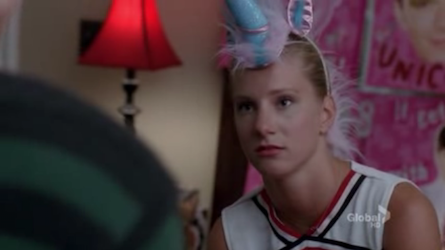
“When a pony does a good deed be becomes a unicorn, and he poops out cotton candy until he forgets he’s magical, and his horn falls off… then he becomes a zebra,” according to Brittany. Or rather, “A unicorn without a horn is just a horse,” as Burt Hummell puts it.

Take away all the Brittany-craziness and metaphors, and I am starting to relate to Glee like never before.

What Brittany is trying to tell Kurt—whose campaign for class president she wants to run—is that he’s unique, and he should never forget that.

As I wrote in relation to Glee’s season three debut last week, I’m struggling at the moment with not only believing in my uniqueness (or just in myself, period), but also having it recognised by others. But when you keep getting similar responses—“Everyone else has to get by with the daily nine-to-five grind, why shouldn’t you?” is a paraphrase that springs to mind—in the quest to realise your dreams, it’s hard not to become disheartened.

Kurt’s struggling with this, too, as he auditions for the lead male role in McKinley High’s production of West Side Story, which the co-directors, Coach Beiste, Miss Pillsbury and Artie, think he might not be masculine enough for.

Really incorporating a key element in the gender blogosphere this past year, Burt tells Kurt to stop sulking about being too flamboyantly gay to play a straight guy from the streets and to write his own realistic portrayal of gay characters.

Sing it, daddy! (I intended that to be less creepy than it came out!)

Brittany also makes a poignant point when she informs Kurt she’s decided to run for class president, too:

“You know, the last six senior class presidents have all been guys, and look where that’s got us: teetering in a double-dip recession.”

Finally, Glee’s starting to acknowledge some pertinent issues, minus the offensiveness. Maybe Santana’s right in saying that Brittany’s a genius, and a unicorn. We all are.

Related: Glee Back in Full Force.

Images via VideoBB.

TV: At Home With Julia—Funny or Disrespectful?


After watching last Wednesday night’s third episode with my hard-to-please comedy-wise housemate who hadn’t seen the previous installments, it certainly wasn’t funny.

I did enjoy the first two episodes though and, as Mia Freedman mentioned on MamaMia TV a couple of weeks ago, it did make the Prime Minister seem more “human” and relatable, if that’s even possible coming from a scripted, comedic version of Julia Gillard.

But why is a comedy show that mocks her living arrangements with her de facto partner Tim Mathieson, amongst other things, being made about a prime minister in office? Would this shit fly if John Howard—or even Kevin Rudd—had a show made about them whilst in office?

Sure, there were comics of Howard with his bushy eyebrows and his morning walk, and Rove had a weekly segment about K.Rudd and Wayne Swan’s prime ministerial faux pas, which came to be my favourite part of the show. But they dealt with their public lives, not their personal ones, which seems to be all the public can focus on since Gillard ousted Rudd.

Gillard has been disrespected in the past because of her gender. She is constantly referred to as “Julia” instead of the courteous “Prime Minister”, was berated by Alan Jones for being a few minutes late on his talkback radio program (which, incidentally, was the same day she was also called “Ju-liar” by the shock jock), and cops it in the press for the way her hair is styled and how she dresses.

On that, there is a heavy influence on At Home with Julia about Tim’s “house-husband” status and how he’s a sad hairdresser who just wants to marry the independent Julia. While I’m not sure the show seeks to contribute to the status quo, but rather critique it, I do have a problem with the fact that in this society, an unmarried couple is an unhappy one.

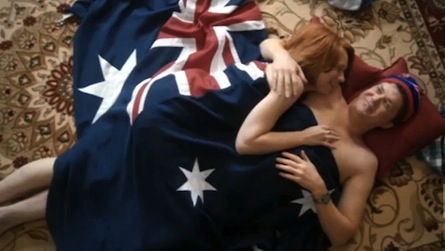
Despite my problem with the fact that there is a comedy show about a sitting prime minister, it is an accurate and (mostly) funny satire of Gillard’s time in office. I voted for her, and regret doing so because of the way she’s blundered the carbon tax and the asylum seeker issue. I hope At Home with Julia seeks to delve more into these issues, instead of portraying sex—an act the show asserted it would never do—under the Australian flag in the Prime Minister’s office. As Anthony Sharwood wrote on The Punch:

“Yet somehow, it was deemed OK to make sexual jokes about an incumbent prime minister in her late 40s, whose love life has never had the tabloid quality of, say, Bob Hawke’s. Even if you dislike Labor and Gillard, the nookie scenes were cringeworthy and savagely inappropriate.”

What do you think? Much ado about nothing, or wildly inappropriate and disrespectful?

Related: Not Quite Out of the Woods: The State of Australian Politics.

Elsewhere: [The Punch] Why is the ABC Screening This Crap?

[MamaMia] At Home with Julia: Love or Loathe?

Image via News.com.au.

TV: Glee Back in Full Force.


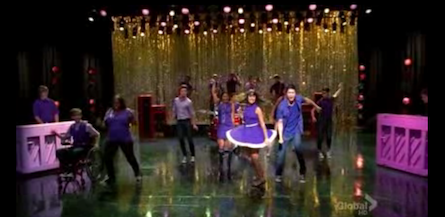
Last night’s season three premiere had a certain musical flair, with songs from Hairspray, Annie Get Your Gun, Anything Goes, and The Wizard of Oz. There was even a nod to Grease in Quinn’s rebellious turn as a pink(-haired) lady and one of the potential New York Academy of Performing Arts students playing Rizzo in an all-male production of the musical.

The colours and vibrancy of the episode, with Quinn’s new hair, the indigo costumes for New Directions’ “You Can’t Stop the Beat” performance, the purple pianos—and let’s not forget the Cheerio’s costumes and Sue Sylvester’s tracksuit—was also a highlight.

There were also some “underlying messages” in Sue’s campaign to shut down arts programs in public schools (an issue that has been rampant in schools, especially in the U.S., for as long as I can remember), whether following your dreams is a feasible option for everyone and whether Rachel and Kurt are good enough to make it to New York. The latter two were particularly poignant for me, as these are issues I have been struggling with of late.

In typical Glee fashion, there were still some offensive comments (Sue likening “Chopsticks” to the national anthem for “whichever country” Tina and Mike come from; the “self-diagnosis” of Asperger’s syndrome to explain away new student Sugar’s blatant uncouthness) but, if this episode in an indication of what’s to come in season three, I like this new direction. See what I did there?

Images via VideoBB.

TV: Male Rape on True Blood.


True Blood is known for pushing the boundaries when it comes to sex scenes. Graveyard rape fantasies, BDSM, and head-turning vampire sex. But let’s get one thing straight; last night’s gang rape of Jason Stackhouse by the Hot Shot werepanther women was not a sex scene, as some reviewers have been calling it.

But, while it is most definitely a glorified rape scene, it is also an exercise in slut-shaming and male-rape denying.

When asked about the scene, True Blood creator Alan Ball said,

“It’s kind of interesting to see the kind of guy who really gets his sense of worth from his sexual prowess to all of a sudden to be kind of objectified and sort of [laughs] used against his will.”

Slut-shaming by any other name.

The idea that someone who is sexually promiscuous isn’t really raped because they’re just getting their “comeuppance” is horrifying.

Jason even echoes Ball’s perspective, perfectly portraying how some rape victims feel as thought their attack was their fault. And why wouldn’t they? Unless you’re a young virginal woman dressed head to toe in a burqa walking alone down an alley at night and are attacked by a man in a mask and report it immediately, you’re not really raped. Jason says:

“As much as I love it, every bad thing that has ever happened to me is because of sex, [he enumerates on his fingers] jealous boyfriends, becoming a drug addict, being accused of murder… Maybe God’s punishing me for having too much sex. He’s like ‘Jason Stackhouse you have fucked too many hot women, now let’s see how you like it.’”

Hoyt goes on to compare his relationship problems with Jessica to “kind of” being like Jason’s sexual assault—and let’s not forget his potential werepanther turn!

You wouldn’t catch (most) women trying to compare their relationship problems to a friend’s rape; maybe that’s because in a lot of peoples’ eyes, and Ball’s, apparently, male-rape doesn’t exist.

Sure, Jason was drugged with Mexican Viagra, but it is still possible for a man to become physically aroused whilst not being mentally aroused, just as it is for women.

Bitch magazine puts it best:

“… When a rape clearly occurs onscreen and we call it something else, that contributes to a culture that says straight men can’t be victims of rape, especially if they’re young and attractive and enjoy sex with women.”

It will remain to be seen whether True Blood handles the aftermath of Jason’s attack realistically, or if he lapses back into his fun-loving, iron-pumping, consensually women-fucking ways, without any acknowledgement of what happened to him. Oh, and there’s that whole werepanther thing…

Elsewhere: [Bitch Magazine] True Blood: A Werepanther Rape is Not a “Sex Scene”.

[Feministe] True Blood Season Four & Female-on-Male Rape.

[Thought Catalog] On Rape in True Blood.

[Jezebel] Ass-Kicking, Rape & Fairy Godmother Murder.

[Tumblin Feminist] HBO’s True Blood, Rape & Sexual Slavery.

Image via Bitch, Jezebel.

TV: Rachel Berry as Feminist.


Last week I wrote in defence of Rachel Berry.

This week, I wanted to explore the character as a feminist one.

While Glee isn’t exactly known for its positive portrayals of women, people of colour, the disabled, or the gays, Rachel has managed to grow in spite of all this, and become somewhat of a feminist icon.

I wrote that audiences have come to know and love Rachel not because her obnoxious know-it-all persona has changed, but because “We’ve been given time to understand Rachel’s initially painful personality and to identify both her strengths and weaknesses. Her ambitions and drive haven’t shifted, but the context for understanding them has,” as Dr. Karen Brooks reiterates.

Other bloggers have come to similar conclusions.

Leah Berkenwald at Jewesses With Attitude writes:

“I… have trouble with the vilification of Rachel Berry on a feminist level. How often do we dismiss women as ‘bossy,’ ‘know-it-all[s],’ or ‘control-freaks’ when their behavior would be interpreted as leadership, assertiveness, or courage if they were men?

“… In the right context, Rachel Berry’s personality would not seem ‘intolerable’ or ‘annoying’ so much as bad-ass, renegade, and hardcore.”

And Lady T, who used Rachel as her “Female Character of the Week” on The Funny Feminist, said:

“… The show wanted us to root for a girl who was ambitious, daring, and driven.”

It might be because I have been known to be seen as bossy, a know-it-all, a control-freak (just ask my new housemate!) and ambitious that I’m standing up for her, but just think of another feminist heroine in modern pop culture who could also be described using these words: Hermione Granger. The only difference is, she isn’t vilified for these attributes.

I have also been called ugly and a slut, not because I am ugly and a slut, but because these qualities are removed from the “‘good’ [female] character… [who] soars to impossible heights, not on the back of hard-work and self-belief, but usually [because of] a love interest and wishing hard.”

If you look back to the beginning of Glee, especially, Rachel was often deemed ugly. Now, anyone who’s seen Lea Michele knows she’s not exactly unconventionally attractive, but Rachel is charactertised as this because she’s annoying. And she’s annoying because she stands up for herself, knows what she wants and how to get it. (From a racial point of view, she could also be seen as being “ugly” because of her Jewishness.)

Despite these inherently “unattractive” qualities, Rachel manages to snag her man, Finn, in what can be seen as typical Glee sexism and discrimination:

“‘I love her even though she’s shorter than Quinn and has small boobs and won’t put out and is loud and annoying.’ 

“The show wanted to make me believe that Finn was doing Rachel some grand favor by simply being with her at all.”

On the other hand, it can be seen as a poignant take on teenage life that the underdog is always being compared to the most popular girl in school: Quinn Fabray.

If Rachel is Glee’s feminist heroine, Quinn is her polar opposite. She has had next to no character development, which leads to her motivations changing week to week.

In “Original Song” she tore Rachel down, telling her to get over her “schoolgirl fantasy happy ending” with Finn, who would never leave Lima, taking over Burt Hummel’s mechanics business, with Quinn, a real estate agent.

But in “Born This Way”, she was “broken down” by her fat past coming back to haunt her, to come across as more “relatable”.

Sure, Rachel’s had her fair share of being “broken down” (being dumped and subsequently egged by Jesse St. James, being publicly broken up with by Finn, getting slushied… I sense a food theme here.), but in the grand Glee scheme of things, she’s actually doing pretty well for a female character.

Now, if only we can get Mercedes a boyfriend

Related: In Defence of Rachel Berry.

The Problem with Glee.

The Underlying Message in Glee’s “Original Song” Episode.

Brown Eyed Girl.

The Underlying Message in Glee’s “The Rocky Horror Glee Show” Episode.

The Underlying Message in Glee’s “Duets” Episode.

The Underlying Message in Glee’s “Born This Way” Episode.

Sookie as Feminist? Hear Her Roar.

Do “Strong Female Characters” Remind You of You?

SlutWalk.

Slut-Shaming as Defence Mechanism.

Elsewhere: [Bitch] The Transcontinental Disability Choir: Glee-ful Appropriation.

[Jewesses with Attitude] Why Rachel Berry Deserves Our Compassion.

[Huffington Post] Hermione Granger: The Heroine Women Have Been Waiting For.

[Feministing] Pretty Ugly: Can We Please Stop Pretending That Beautiful Women Aren’t Beautiful?

[The Funny Feminist] Female Character of the Week: Rachel Berry.

[Jezebel] Why Won’t Glee Give Mercedes a Boyfriend?

Image via Wet Paint.