On the (Rest of the) Net.

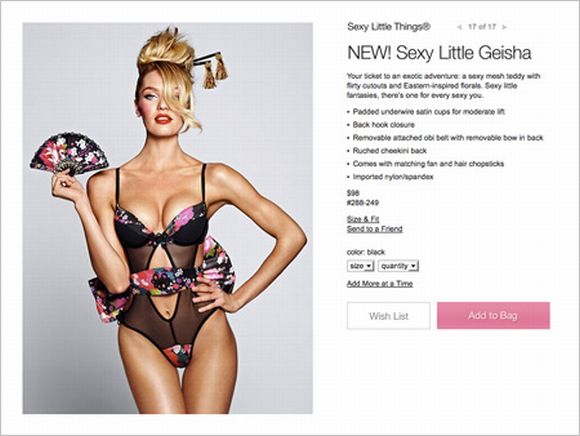
Victoria’s Secret gets their racism on with “sexy Geisha” outfits. [Racialicious]

The conundrum of getting cat-called on the street when you’re looking like a piece of shit. [Jezebel]

Is #StopTheTrolls in favour of stopping trolling against some more than others? [MamaMia]

The demise of Channel Ten. [TheVine]

On Lana Del Ray’s naked GQ cover and what it tells us about the value we place on women’s bodies over men’s. [Daily Life]

The 20 kick-ass quotes from 20 kick-ass women at the Democratic National Convention. [Jezebel]

Image via Racialicious.

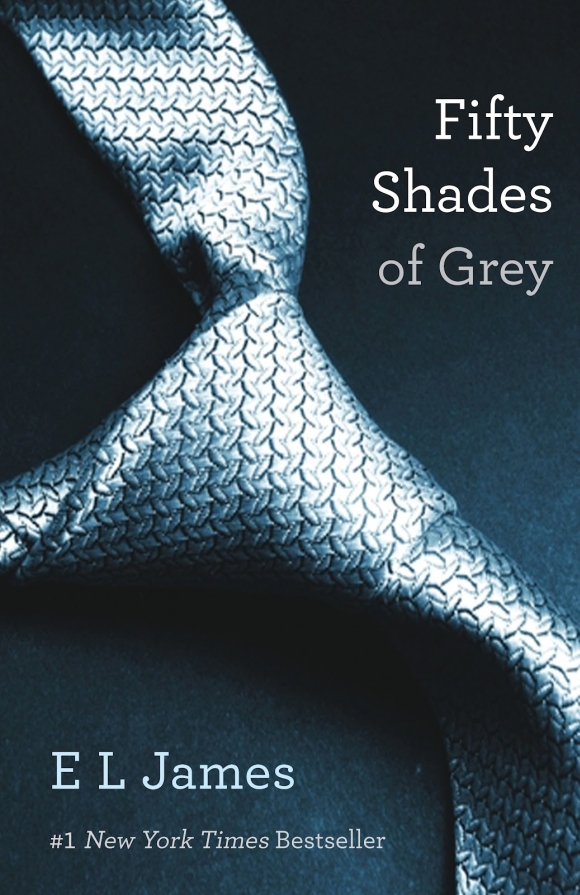
Book Review: 50 Shades of Grey by EL James.

The title of this post is something I never thought I’d write. Ever since the 50 Shades phenomenon hit the mainstream, however many subsequent BDSM and erotica-filled pop cultural months ago that was, I vowed to never let EL James’ literary abomination come between me and an actual good read. However, after hearing the anti-feminist and abusive relationship aspects of the trilogy in blog post after book review after writers festival talk, I finally succumbed to the pull of Christian Grey and swallowed my pride. (It must be noted that I am coming at 50 Shades from a critical and research perspective. It must also be noted that having finished with the first instalment, I will not be returning to the Red Room of Pain.)

Firstly, let me start by saying that I had very low expectations for 50 Shades, and while I won’t go as far to say it’s not as bad as I thought it was going to be, I will say that the writing is not as bad as I thought it would be (using its inspiration, Twilight, as a benchmark). However, I still found the book deeply problematic.

There’s Christian’s obsession with making Anastasia eat, which is included in the contract she must sign upon entering into a sexual, submissive relationship with him. (Conveniently, at the end of the first book she has yet to sign it.) Also included is the wearing of clothes provided by Christian, the requirement of eight (begrudgingly downgraded to seven at Anastasia’s request) hours sleep a night, refraining from physical endangerment with regard for safety (New Moon!) and the way Anastasia must conduct herself in the company of Christian, and others.

It must be noted that I’m not opposed to submissive sexual relationships. They’re not for me personally, but I don’t find a problem with them in general. I’m under the impression that most of these relationships focus on dominance and submission in the bedroom, whilst out of it the participants go about their daily life in relative equality (correct me if I’m wrong). Certainly, there are a myriad of sexual relationships out there, and some of them do take the form of Christian and Anastasia’s. But they are not the subject matter of the highest selling book in the world; one that’s sold in supermarkets next to the celery, no less.

What I find most troubling about the worldwide embrace of James’ “clit lit” is that it’s completely archaic and conservative, for all the sex-positivity it claims (or champions of it claim) to spout. For example, it holds up the notion that bad boys can be tamed. Despite Christian’s repeated pleas early on in the book that “You should steer clear of me… I’m not the man for you… I’m not a hearts and flowers kind of guy… I don’t make love, I fuck,” the catch-cries of commitment phobes everywhere looking for quick, easy sex without attachment, Anastasia still thinks that if she just did more of this or less of that, he would love her:

… He needs to walk before he can run… You are making him mad—think about all that’s [sic] he’s said, all he’s conceded… I need to be able to show him affection—then perhaps he can reciprocate. [Original emphasis]”

Somewhere in the midst of the trilogy (apparently it’s not at the climax, as writer Susan Johnson revealed at the Melbourne Writers Festival a couple of weeks ago), Christian marries Anastasia (note how I—and many others who’ve written and spoken about the book—referred to the union not as “they get married” but as “he married her”, insinuating that marriage is something that happens to Anastasia, like pretty well everything else in the book. For someone who’s the central protagonist and first person narrator of this sordid love affair, she actually has no autonomy over her own story), demonstrating to millions of impressionable young (and no so young) women and any men out there reading it that you can change a bad boy!

But Christian’s not just your average bad boy. He’s a filthy rich, disarmingly handsome (James, living vicariously through Anastasia, never fails to mention this as if it’s his only redeeming quality—who am I kidding? It kinda is—and all red blooded humans of the XX chromosome persuasion fall weak at the knees in his glorious presence), “control freak with stalker tendencies”: yep, sounding more and more like Edward Cullen with every adjective. In essence, he is an abusive partner. As mentioned above, he tries to control Anastasia’s eating, sleeping, sex- and friend-having, and pretty well everything else in her life. After a fight, he barges, uninvited, into her apartment she shares with a friend, who tells him to get out and that he’s not welcome there. He persists and spends the night with Anastasia, something he has previously said he will “never do”. He finds out which flight she’s on to Atlanta, where she’s going to visit her mother and escape him, and changes her seat to first class. Later, he turns up at the hotel Anastasia and her mother are dining at. He expresses jealousy and anger when Anastasia hangs out with her male friend Jose who, incidentally, tried to sexually assault her. He buys her a new phone, laptop, car and clothes. He likes her plied with alcohol because she’s more open with her emotions in an inebriated state. She is not allowed to masturbate (not that she does that anyway. It’s icky in 50 Shades’ world), because he “want[s] all your pleasure”.  Anastasia cannot touch or look Christian in the eyes when they’re having sex. If she does, he will discipline her. That last one isn’t inherently damaging, but the fact that Anastasia herself refers to the physical debasement that occurs in Christian’s playroom/Red Room of Pain as a “beating” and him “hitting” her shows that she’s definitely not into it, and that’s what makes the sex problematic.

Anastasia is scared of Christian. She often tells him, “I’m sorry… Please don’t be angry/Please don’t hit me,” the hallmark of a battered spouse. At the end of book one, when he pushes her physical limits too far and she makes the decision to leave him, she tells him it’s her fault: “I asked for it.” “I’m a complete failure. I had hoped to drag my Fifty Shades into the light, but it’s proved a task beyond my meagre abilities,” she laments. From an abuser’s point of view, he’s got her right where he wants her. Anastasia lacks self-confidence to begin with, and often expresses disbelief that someone like him could want someone like her. She defends him to his detractors (namely the abovementioned roommate), shouting subconsciously, “I KNOW WHAT HE’S REALLY LIKE—YOU DONT!” After a fight, he makes puppy dog eyes at her or some such thing and she melts: “How can I resist him when he’s like this [emphasis mine]?” Her “innocence” and “naivety” which Christian loves so much blind her to the fact that this is a classic abusive relationship: as someone who grew up amongst one, I can vouch for it.

When it comes to Anastasia as the protagonist, her incessant whining about her “inner goddess” versus her “subconscious” is infuriating. While it makes for consistency in terms of character traits, it certainly doesn’t make her any more likeable. Her conservative personality (Anastasia’s literary heroines are all submissives—Tess Durbeyfield and Jane Austen’s female characters—not to mention her reaction to Christian having paid for sex in the past. So being shackled and whipped semi-unwillingly is fine, but prostitution isn’t? Perhaps it hints at Anastasia’s deep-seated  discomfort at having Christian buy her things as part of their contract), however, makes it less likely that she would so willingly enter into a contractual agreement to be Christian’s sex slave, essentially. Oh, but then there’s that “innocence” again…

And the sex. Don’t even get me started on the sex. Author John Flaus mentioned at the Bendigo Writers Festival last month that he thought the sex scenes were really “clinical” and written from an “outsider’s” perspective. Like a lot of sex scenes I’ve read and seen before, though never in real life, the virgin experiences orgasm her first time. She also comes quickly and without fail during each instance of vaginally penetrative sex, a highly unlikely occurrence, and when her clitoris is whipped with a riding crop. I don’t know about you, but that doesn’t connote the most warm and fuzzy feelings down there. (Oh, and “down there” and “sex” instead of vagina, vulva and clitoris, the latter of which is only mentioned once or twice, are repetitive, conservative euphemisms that are littered throughout.) Further to the dominance Christian seeks to exert over Anastasia, he repeatedly demands her to “sit still” when he performs sex acts on her. I, for one, don’t know many men who prefer a woman to be unresponsive to his touch, but then this book isn’t exactly based on reality. Despite James being the (seemingly biological) mother of two children, it’s as though 50 Shades was written by someone who’s never had sex before.

One last thing I want to add before I attempt to erase the experience of 50 Shades of Grey from my memory is that I can kind of understand where James is coming from when she writes about the tumultuous, sometimes physically and emotionally painful relationship between Christian and Anastasia. I have fantasised about being emotionally hurt by a lover and having him come back and make it all better again. I have also felt the need to be overpowered by a man, in the seemingly simple, harmless way of pulling me to him in an embrace when I don’t want to be. In that sense I think she taps into a biological need (and I hate to buy into the notion that men and women are evolutionally different and that’s why one hunts and gathers while the other tends to the “heart and home”. Ugh.) to be physically (not necessarily sexually) loved. Like, as a child, when you fall down or mum yells at you and you just want her to hug you and make it all better again. I think it’s also important to note that just because a fantasy occurs in the mind, doesn’t mean it has, needs or wants to be acted out in reality: rape fantasy, for example. That is the one tiny, take-away titbit that warrants merit in 50 Shades, I think. The rest can be filed under the severely abusive, gender- and hetero-normative guidelines that so much of popular culture is today. 50 Shades of Grey as sexual liberation for women? My ass.      

Related: Bendigo Writers Festival.

Melbourne Writers Festival: Notes on Women in Culture.

Melbourne Writers Festival: Censorship, The Body & Porn.

Elsewhere: [Good Reads] Katrina Lumsden’s Review of 50 Shades of Grey.

Image via November Grey.
On the (Rest of the) Net.

I had the lead article on TheVine for a fleeting moment in cyberspace and time this week. Head on over to check out my pondering of the use of “bitch” in rap and hip hop.

On cyber-bullying and Charlotte Dawson. [MamaMia]

In defence of the Paralympics’ scheduling. [ABC Ramp Up]

The appeal of presidential wives. [Jezebel]

The sexism of Aaron Sorkin and The Newsroom. [Slate]

Australia loves its B-grade British celebrities as talent show judges. [The Punch]

Image via TheVine.

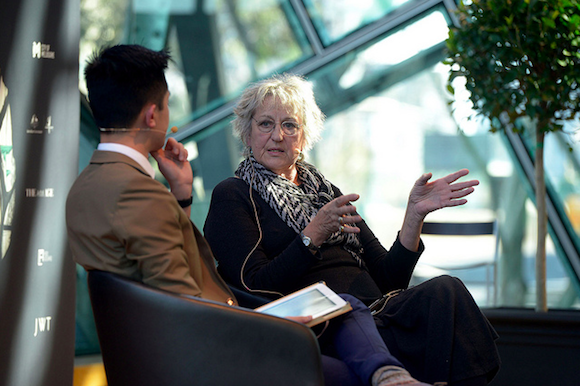
Event: Melbourne Writers Festival — In Conversation with Germaine Greer.

Germaine Greer is an Aussie feminist icon who’s kind of passed me by. After the whole “Julia Gillard has a fat arse” debacle earlier in the year, I officially declared her irrelevant to a friend when the opportunity to buy a book of hers came up.

Nonetheless, I attended her talk at the Melbourne Writers Festival, hosted by Germaine’s new bestie Benjamin Law, whom she met at that infamous episode of Q&A, in the hopes that she would address some of those issues in more depth.

I wasn’t wrong, but instead of Greer herself admitting she was, she dug a deeper hole for herself, both at the session and on 60 Minutes the week prior, where she was interviewed in relation to Samantha Brick’s months-ago comments that women find her threatening because she’s beautiful and she enjoys being a “trophy-wife” to her chauvinistic French husband.

Sometimes I just wish public figures would admit it when they’ve said the wrong thing, instead of trying to justify or cover it up (Todd Akin, I’m looking at you). Where Germaine could have taken the opportunity to own up to speaking out of turn about Julia Gillard’s appearance, a snarky phenomenon that most women—and, indeed, most feminists—succumb to at some stage or another, and use it to start a dialogue about how we treat female politicians based on their looks and not their policies, she just said “women have fat asses” and “a woman is not her jacket”. Greer’s a smart woman, no doubt, but I think she needs to think more before she speaks, as her comments on cosmetic surgery, genital mutilation and the morning after pill on Q&A will attest.

However, Germaine did make some good points about her past, present, our ecological future, and “what turned her into a feminist” (a question I was asked at the work watercooler a few weeks ago when I revealed I write about gender studies and feminism. That co-worker is so misogynistic he now avoids me. One less woman-hater I have to make nice with on a daily basis: score!), citing her work on the 1974 university porn magazine she helped create, Screw. After concluding that the name “screw” was too “sadistic” and implied that a woman was “ruined” after she’d been “screwed”, they changed the name to Suck, which connotes a more female-friendly vibe.

Germaine talked about her willingness to get her gear off for the magazine in an effort to portray women differently in porn magazines. She was offered money to pose for Playboy and she insisted her pose be standing with her body away from the camera, bent over, and looking at the photographer through her legs, her vagina and anus on show. They rejected the image, obviously, which turned up in Suck, an alternate copy of which someone in the audience had brought along!

She also had some interesting things about our definition of consent and SlutWalk to say and, to my surprise, they weren’t out of step with current feminist notions of the two. She championed women who take their rapists to court and show their faces to the public to lend support to the wider anti-slut-shaming movement.

Those who still follow Greer’s work know that she now leans towards writing about Australian culture and the environment as opposed to being the authority on all things feminism (see abovementioned irrelevance), and she concluded with a conversation with an audience member, who probed her in overtime about recognising the similarities between feminism and vegan-/vegetarianism. Indeed, feminism these days is about human rights, and most people I know who are for feminism are for human rights, animal rights and practice vegetarianism. I, myself, am a budding ecotarian.

These days, Germaine Greer is someone to be hated, feared or admired, as Law contended in his introduction of the great Australian thinker. While these women don’t necessarily practice feminist acts or even call themselves feminists, Madonna and Lady Gaga are two iconic females Greer mentioned during her sermon. They’re also two icons who polarise almost as much as Greer. I don’t think she’s that different to them, really… They’re all outspoken, brash females who have undoubtedly contributed so much to the plight of women, and culture as a whole, some more recently than others.

Related: Should Meat Be Off the Menu?

Images via TheVine, Flickr.

Event: Melbourne Writers Festival—Notes on Women in Culture.

The panel was chaired by the director of feminist publishing house, Spinifex Press, Susan Hawthorne, and the speakers were Tamil writer CS Lakshmi, and feminist fiction and non-fiction writers Emily Maguire and Sophie Cunningham.

I saw Cunningham speak at last year’s festival, and some of her comments on third and/or fourth wave feminism really rubbed me the wrong way. This year she spoke again about the discrepancies between the pay rates of men and women and where that money goes. While only $0.40 for every dollar earned of men’s income goes to the family, $0.90 of women’s money goes to the family. Therefore, “women need to work or our culture falls apart.”

Cunningham also spoke about her pet project, women in literature. As the chair of the Literature Board of the Australia Council and of the Stella Prize, she knows her stuff. Apparently when the representation of women in literature hits 30%, people think it’s about half. (I believe she mentioned it’s at about that percentage currently, in terms of how many books by women are reviewed and how many books are reviewed by women in major publications.) This reminds me of the 33%–66% division of labour rule in male–female households: that women will do up to 66% of housework before they start to think they’re doing too much, while men will do 33% before they start to think they’re doing too much.

I think both of the following quotes came from a piece Lakshmi read to the audience. They’re poignant no matter who wrote them and where they appeared:

“Women pretend to conform whilst they’re breaking the rules.”

“Sit still otherwise you’ll rock the boat.”

That last quote reminds me of 50 Shades of Grey, in which Christian makes Anastasia “sit still” and not move when he’s performing sexual acts on her. I don’t know many men who prefer a woman to be physically non-responsive to their touch, but there are a lot of things about the book I don’t understand.

Speaking of 50 Shades (at this point in time, when it’s the highest selling book ever, who isn’t?!), in another panel I attended on Saturday about writing about sex (featuring Susan Johnson, Chris Flynn and another appearance by Maguire) it was brought up. Nothing of note was added to the discussion really (sex and gender roles are conservative, defined; the sex is clinical, etc.), but Johnson did, it’s worth noting, spoil the ending for me! Not that I was planning on reading the next two installments (one’s enough!), but there were a few audible groans from the audience when she revealed that *spoiler alert* Christian married Anastasia in the end.

Johnson has a piece on the trend of the trilogy in this weekend’s Q Weekend magazine, for which she is the senior features writer. She mentioned how she finds the book like a sexed up version of Beauty & the Beast, which made my heart yearn for a simpler time, when feminism and Stockholm syndrome and abusive relationships were not at the forefront of my mind when examining my favourite Disney movie. Sigh… I’ll never be able to enjoy it like I once did thinking about the Beast forcing Belle to eat and suspending her from the ceiling of his Red Room of Pain if she doesn’t do as she’s told!

But back to the panel at hand.

The notion of positive female representation in science fiction and fantasy came up, an issue about which I’m quite passionate, but which I’d like to know more about, too. Maguire says it’s easier to write a “strong female character” in sci-fi because you “don’t have to have the rules of this world” posed onto the character. I think it was Cunningham who then mentioned that that’s why a lot of sci-fi is set in post-apocalyptic worlds where the restraints of our current notions of society and culture are abolished so writers can explore different aspects of the characters that they might not have should they exist in this world.

Author John Banville was brought up, who has said he’s “never understood women… Don’t want to… I’m in love with all of them, always have been fascinated by them… They always do the unexpected—at least I don’t expect what they do. They say: ‘We’re ordinary, we’re just like you.’ I say: ‘You’re not. You’re magical creatures.’”

While that’s a lovely gesture on the surface, do we really want to be seen as otherworldly? At the end of the day, everyone’s just a person. And, at the end of the panel, Lakshmi told a story with the theme that gender has “no specific qualities”. So how can one be “ordinary” and one be “magical”? Reverse sexism on Banville’s part, perhaps?!

Related: Melbourne Writers Festival 2011: A Long, Long Way to Go—Why We Still Need Feminism.

Bendigo Writers Festival.

Sexism in Fantasy.

Image via TheVine.

Event: Melbourne Writers Festival — Richard Holloway on Christianity & Jesus Christ.

“Jesus was one of these disturbing figures who spoke the truth and died because of it. However, if you put it to me that he didn’t exist he would still exist in a book and, to me, books are their own truth”—Richard Holloway, former Bishop of Edinburgh, author and thought leader.

There was more to this quote, however my voice recorder didn’t catch it. But, from memory, Holloway went on to say that the teachings of Jesus Christ would still be remarkable even if he was a fictional character, and that fictional characters can sometimes teach us as much, if not more, than real people.

Image via The Vine.

TV: Religious Extremism in the Fifth Season of True Blood.

True Blood has always had a socio-cultural-political-sexual statement to make: vampires are marginalised like blacks and gays. Supernatural beings are inherently sexual and therefore can’t be stopped. Vampires are just the beginning of a myriad of other “supes”: maenads, witches, “shifters, were-chickens and whatever the fuck else is out there!” as Sheriff Andy Bellefleur so eloquently puts it. If we grant acceptance to them, we have to accept everyone else.

So when mention of the biblical Lilith is made at the beginning of season five, along with the existence of Salome, it’s obvious the season was going to tackle the hard, religious issues.

Lilith has long been appropriated as a vampiric being, so it’s not unusual that she should be reappropriated for True Blood’s “original bible”—the vampire bible—as being created before Adam and Eve, not with Adam, and in God’s image. Ergo, God’s a vampire and “human shall nourish vampire”.

Lilith takes on the role of the temptress, her manifestation turning everyone who drinks her blood into hallucinating psychopaths, no one more than Bill, who kills numerous Authority members in his quest to be Lilith’s chosen one. Lilith urges both him, Salome and others to “Drink the blood, drink all the blood”, which destroys Bill’s vampire form and brings him back as something demonic and altogether other worldly. Lilith’s blood is no doubt a metaphor for blindly drinking the Kool Aid of organised religion.

The rest of the season, which culminated in Bill’s transcendence last night, also focusses on religious extremism, but I think it’s the Obama mask-wearing, supe-killing hate group terrorising Bon Temps that makes the most poignant remarks about religion.

The Human Patriots don’t come to the fore til about midway through the season, when Sam’s shifter friends, then Sam himself, Luna and Emma, are attacked. The conclusion is drawn that they were targeted because they’re shifters. Some digging by Sam and the sheriff’s office uncovers a website called the Human Patriot Manifesto, replete with a “grand dragon” à la the Ku Klux Klan, which vows to stop supes stealing our jobs, controlling the media, gaining equal rights and “making us feel bad for being regular old humans”. Sookie’s even caught in the cross-fire for simply being “associated with vampires”. Sounds an awful lot like, from an Australian perspective, the panic about asylum seekers in the media and the government. The amount of times I’ve heard someone say that we shouldn’t be accepting “boat people” into our country because they want to change our way of living, steal our jobs and mooch off our tax dollars on Centrelink (for those non-Aussies playing at home, that’s our department of welfare): so which is it? Do they want to take our jobs or not work at all?

It’s a very relevant debate on the way mainstream Western culture treats “others”: in this case, supernatural beings. That the terrorists wear Barack Obama masks (a reporter even asks if it’s true that Barack Obama is killing supes!) is a not-so-subtle dig at the opinion that Obama enables minorities (Muslim’s ’cause he is one, didn’t you know? And don’t the Republicans hate Mexicans?) instead of looking out for his countrymen. Again, not so different from the asylum seeker debate…

Speaking of “mainstreaming”, that’s the name given to the assimilation of vampires with humans, the movement which Chris Meloni’s Roman heads up. According to the U.S. Government’s liaison, he’s “the only one stopping the world from sliding back into the dark ages”. When the opposing Sanguinista movement (religious fundamentalists who believe in the literal translation of the vampire bible: that humans serve only as a food source for vampires) rises up from within the ranks of the Authority, all hell begins to break loose, some of which I couldn’t keep up with and am still trying to work through mentally.

But not everyone is hip to this idea, with the phrases “Wake up sister, it’s just a book. I knew the guy who wrote it and he was high the whole time,” “You are destroying the world based on a book that is thousands of years old… That’s the opposite of evolved,” and “The small-mindedness of your religion has literally kept you in the dark” rattling around throughout the season. If these aren’t a commentary on the religious right attempting to control the government in the U.S., then I don’t know what is. In fact, the Authority, as Pam so helpfully points out, is the vampire government and church: the church controls the government. Ever the bitchy voice of reason, she also ponders aloud the question of how many times she’ll have to live through the same “scenario happen[ing] over and over”. Rest assured, if the Republicans are elected this year, the United States will begin to resemble the dark age-esque, blood soaked mise en scène of Bon Temps, Louisiana. I guess we know who Alan Ball et al will be voting for…

Images via AllMyVideos.

On the (Rest of the) Net.

Feminist Barack Obama! [Nerve]

Despite Everybody Dance Now being axed and the dismal ratings of Being Lara Bingle, The Shire and the relaunched Can of Worms, at least Channel Ten’s taking risks. [MamaMia]

Conservative rape-talk fatigue. [Jezebel]

Why “hookup culture” is good for women. [The Atlantic, via Jezebel]

Rihanna spoke to Oprah about forgiving and still having feelings for Chris Brown, but we shouldn’t shame her for keeping her abuser in her life. [Jezebel]

The Beheld’s Autumn Whitefield-Madrano on Helen Gurley Brown, beauty and effort. [The New Inquiry]

“The Official Guide to Legitimate Rape.” [Jezebel]

Event: Melbourne Writers Festival — You Animals.

Symposiums about the ethical treatment of animals are some of my favourite kinds of public debate. Earlier in the year I attended an Intelligence2 debate about the ethics of eating meat, and while the arguments put forth didn’t change my mind (or palate), I think we can all agree that to treat animals humanely is something most normal people would endeavour to do.

But after researching her Quarterly Essay, “Us & Them”, Anna Krien closed the session with the assumption that humans just aren’t that great. You only have to look at our treatment of asylum seekers to realise our view of treating “others” differently extends to them, too. In fact, that’s why Krien named the essay “Us & Them”: not only to signify that animals are the “them”, but after the Four Corners meat exportation exposé last year, so are the Indonesians.

The other three intellectuals and authors on the panel were equally as intriguing, if not all as equally pro-animal. Charlotte Wood, author of the novel Animal People, about people who don’t like animals—or don’t understand our adoration and obsession with them—echoes the sentiments of her characters in the book, saying that she doesn’t get how we dress our toy dogs up in clothes and put them in bags and coo over them like they were babies, but that we should ultimately respect animals and not treat them as objects, like we are so wont to do.

Tim Flannery, environment expert, needed no introduction, and he talked about how our modern culture doesn’t allow for the inclusion of animals as equals. Interestingly, he also added that 10% of our bodies aren’t even us: it’s animal matter, like mites that grow in our eyebrows. Eww! But that demonstrates how highly evolved and diverse animals are, much more than humans, I would say.

Speaking of evolution, Flannery also mentioned that animals from the parts of the world where people have been living the longest have a hatred of humans more deeply ingrained. Like water buffalo in Africa who will circle back around on humans who are hunting them and try to beat them at their own game. Whereas in America, their water buffaloes are relatively tame by comparison. And in Australia, we can coax native birds and wildlife to eat apples out of the palms of our hands, like my dad and grandfather used to do when I was a kid. But most animals are still so terrified of us because we destroyed their habitats, just as we are scared of exotic, archaic and extremely dangerous animals, like the cassowary or a crocodile.

It was obvious that author Sonya Hartnett likes animals a whole hell of a lot more than humans, which is also evident in her books, most of which are about or draw inspiration from animals. She said she’s happy to be the slave for her cats and dogs if they will “show me their secrets”. She made the observation that a bunch of crows she passed scavenging over a rubbish bin looked at her with such disdain that she had no doubt they not only fear us, but hate us, too.

I guess this is part of Aussie culture: domesticated animals are cute, wildlife is cool to look at in zoos, but none of this must come between us and them our meat. As Wood wrote in The Age last year:

“We force a dichotomy in which animals are either so like us that we cannot separate their needs from our own, or so unlike us as to be aliens, undeserving of any rights at all. The more we sentimentalise, the more we also brutalise.”

But animals have culture, too, as Flannery asserts. They use tools, forage for food, talk to each other, love, mate, and engage in group dynamics, just like us. (This culture was evident when a friend and I took our dogs away on a holiday last week and saw the dynamics occurring between them: my friend Deb’s dog, Minnie, is older and definitely in charge, whereas my dog, Mia, is happy to go along with that. Minnie even had the audacity to jump up onto my lap and sit there proudly while Mia was napping beside me in a nook between the couch and a blanket.) After all, who do you think we evolved from…?

Speaking of foraging for food, being a vegan doesn’t allow you immunity from contributing to the devastation of the animal kingdom. For example, wheat for bread—a staple in many vegetarian and vegan diets—is grown on land that has been cleared of its natural, animal-dwelling terrain and unless the proper practices are used, the soil may be rendered obsolete and more wheat won’t be able to be grown there. It’s a catch-22 between being a vege- or ecotarian and throwing up your hands because nothing we do will ever be good enough.

Flannery believes that as higher intelligence beings, we are the arbiters of the future of the planet and its animal (and human, for that matter) inhabitants, and to fully understand this and to be fully human we have to realise that “we’re animals, too”. After all, the four-legged, fury, feathery and fishy animals “are so much more than we’ve ever allowed them to be”. Maybe it’s time we loosened that chain a little bit.

Related: Should Meat be Off the Menu?

Top 11 TV Moments of 2011.

Elsewhere: [Charlotte Wood] This Dog is Not a Human Being… Right?

Image via The Vine.

Event: Melbourne Writers Festival — Censorship, The Body & Porn.

With a panel consisting of David Marr, Slutwalk Melbourne mastermind Karen Pickering and author of Money Shot, Jeff Sparrow, Saturday’s Censorship, The Body & Porn session was going to be full of surprises.

I think at this stage, when it comes to porn, we’ve heard (and probably seen) it all. Marr mentioned pedophilia, and that the banning of images like Bill Henson’s is nonsensical when pedophiles have access to all the “church ceilings” in the world!

Sparrow said that we place too much importance on children respecting authority—“Do what your uncle tells you. Do what the babysitter tells you.”—when in reality, authority figures known to the child are more likely to be the ones abusing them.

Marr also asserted that porn puts all of our “human horribleness” on display:

“If you want to know what human beings are like, don’t forget the distasteful categories of porn: that’s what human beings are… It is there to paint a portrait of humanity.”

I don’t necessarily agree with that, but speaking of displays of sexuality, Sparrow had a lot to say about that as he spent a good deal of time researching the sex industry for his latest book.

Interestingly, he mentioned going to Sexpo and Planetshakers, an Aussie youth church group associated with the Pentecostal Christian church, and how they both essentially offer up sex as a commodity, and who can offer the best price for it.

Of course, in this narrow-minded society, if you’re sexually unattractive your value goes down and you’re ridiculed on websites like Is Anyone Up, a revenge-porn Tumblr, essentially. If you deign to be sexually attractive (not necessarily active) in public then you “deserve everything that’s coming to you”, but if you’re sexually unattractive, the same rules apply. And you’d better enjoy it, too, ’cause we all know you won’t be getting it elsewhere.

50 Shades of Grey was certainly in the crossfire, too, with bondage and anything that even “pinks the skin” in the porn industry receiving an unclassified and essentially illegal status, whilst the “mommy porn” novel sweeping the world is literally sold in the supermarket, but deals with the same subject matter.

Sparrow said there are two sides to the success of something like 50 Shades of Grey and, I guess, the not-necessarily-positive “pornification” and sexualisation of modern culture. On the one hand, 50 Shades is “extremely transgressive” and would have been banned 30 years ago, however it also upholds “deeply conservative” views on sex, gender and society.

I’m about halfway through the book and I can certainly attest to that. More to come on this issue.