TV: Glee Gets Down on Friday at the Prom.


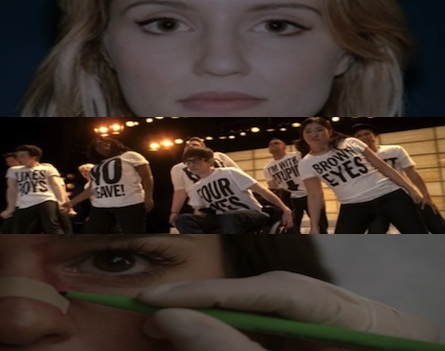
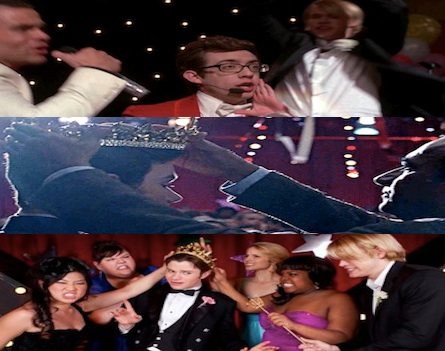
So Rebecca Black has officially permeated the zeitgeist, with “Friday” being performed by Puck, Artie and Sam at McKinley High’s junior prom on last night’s episode of Glee.

And despite Quinn’s monotonous efforts to be crowned prom queen, along with Finn as her king, she lost out to “queen” Kurt.

Kurt’s date Blaine told Kurt of what happened to him at his last prom (he and another gay friend were set on by the school homophobes and gang bashed) and that he wasn’t 100% comfortable with attending, but he went for Kurt anyway.

Kurt’s dad, Burt, was concerned that Kurt’s “royal wedding-inspired” tux, which he handmade himself, wasn’t appropriate and that Kurt shouldn’t draw any extra attention to himself and Blaine.

Kurt thinks, despite Santana and Karofsky escorting him to and from classes as part of their Bully Whips anti-bullying squad, that McKinley is really coming around to the idea of gay acceptance, because he hasn’t been physically or verbally abused since returning from Dalton Academy.

Hatred builds up inside if we can’t let it out, and it seems that the kids at McKinley let it out sneakily and quietly, by “secret ballot” for prom queen.

But you know Kurt: he sucked it up and went out there in front of the school to tell them… “Kate Middleton, eat your heart out.” Okay, I was expecting something a little more inspirational than that, considering the “gay prom” issue is one that’s rampant in the U.S., and also here, as a recent episode of SBS’s Insight will attest.

But I suppose we have Chris Colfer’s Golden Globes speech to comfort us.

And, as is Glee’s trademark, the controversy was wrapped up nicely into one 42-minute episode and McKinley’s homophobia will live to fight another day.

Until then, let’s get down on “Friday”!

Related: The Underlying Message in Glee’s “Born This Way” Episode.

The Underlying Message in Glee’s “Original Song” Episode.

Gwyneth Paltrow Addresses Tabloid Culture & Her Haters.

Glee “Sexy” Review.

The Underlying Message in Glee’s “Blame it on the Alcohol” Episode.

How to Make a Woman Fall in Love With You, Glee Style.

Glee “Silly Love Songs” Review.

The Underlying Message in Glee’s “Furt” Episode.

The (Belated) Underlying Message in Glee’s “Never Been Kissed” Episode.

The Underlying Message in Glee’s “The Rocky Horror Glee Show” Episode.

The Underlying Message in Glee’s “Duets” Episode.

The Underlying Message in Glee’s “Grilled Cheesus” Episode.

The Underlying Message in Glee’s “Britney/Brittany” Episode.

Elsewhere: [SBS] Gay in School: SBS Insight.

Images via Showbiz Nest, I Am Thea 07, Maurissa Weiner.
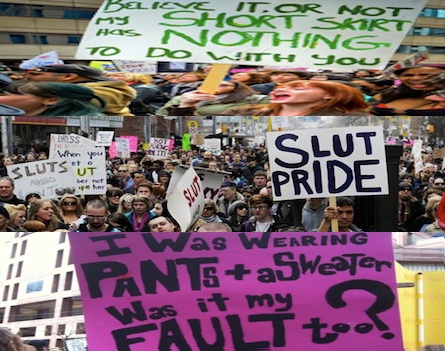
UPDATED: SlutWalk.

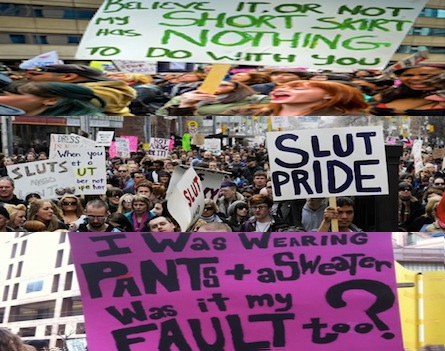
For those of you yet to be persuaded to join in the SlutWalk festivities this Saturday 28th May at the State Library, here are some excerpts from SlutWalker Jaclyn Friedman’s talk at the Boston, Massachusetts event, from Feministing:

“Is a slut a girl who has sex too young? With too many partners? With too little commitment? Who enjoys herself too much? Who ought to be more quiet about it, or more ashamed? Is a slut just a woman who dresses too blatantly to attract sexual attention? And what do any of these words even mean? What’s too young, too many partners, too little commitment, too much enjoyment, too blatant an outfit? For that matter, what’s a woman, and does a slut have to be one?

“… You can call us that name, but we will not shut up. You can call us that name but we will not cede our bodies or our lives. You can call us that name, but you can never again use it to excuse the violence that is done to us under that name every single fucking day.

“… We can be called sluts for nearly any reason at all. If we’re dancing. If we’re drinking. If we have ever in our lives enjoyed sex. If our clothes aren’t made of burlap. If we’re women of colour, we’re assumed to be sluts before we do a single thing because we’re ‘exotic.’ If we’re fat or disabled or otherwise considered undesirable, we’re assumed to be sluts who’ll fuck anyone who’ll deign to want us. If we’re queer boys or trans women, we’re called sluts in order to punish us for not fearing the feminine. If we’re queer women, especially femme ones, we’re called sluts because we’re obviously ‘up for anything,’ as opposed to actually attracted to actual women. If we’re poor, we’re gold diggers who’ll use sex to get ahead. And god forbid we accuse someone of raping us—that’s the fast track to sluthood for sure, because it’s much easier to tell us what we did wrong to make someone to commit a felony violent crime against us than it is to deal with the actual felon.

“You know what I expect will happen when I’m dressed like a slut? People will want to get with me. You know what I don’t mean when I dress like a slut? That anyone I encounter can literally do anything at all they want to me. I know. It’s shocking. Because clearly you thought me wearing my tits out like this gives every single one of you carte blanche to do anything whatsoever you might want to do with my body. I’m very sorry to disappoint.

“… I just want to point out how ridiculous it all sounds when you spell out the meaning of ‘she was asking for it.’ Because the rapists are not confused. Those tiny percentage of guys doing most of the raping? They’ve told researchers that they know full well they don’t have consent. It’s the rest of us that seem confused. We’re the ones that let them off with a little ‘boys will be boys’ shrug and focus our venom on ‘sluts’ instead, leaving those boys free to rape again and again.

“… There’s nothing wrong with being a slut. Not a thing. It’s OK to like sex. Sex can be awesome. It can be life-alteringly awesome, but even when it’s not, it can be a damn good time. Our sexual desire is part of our life force. And as long as you’re ensuring your partner’s enthusiastic consent, and acting on your own sexual desires, not just acting out what you think someone else expects of you? There’s not a damn thing wrong with it. Not if it’s a hookup, not if you’re queer, not if you like it kinky, not if your number’s too high. If you’re playing on your own terms and you’ve got an enthusiastic partner? Please, I beg of you, just have a fucking awesome time. Our lives are way too often full of struggle and pain. If you can do something with someone else that brings both of you pleasure and joy? You’re increasing the pleasure and joy in the world.

“There has been a lot of misunderstanding about the meaning of the SlutWalk, and none more egregious than those who claim our agenda is to encourage all women to be sluts. Whatever that means, our mission could not be further from that. Our mission here today is to create a world in which all of us are free to make whatever sexual and sartorial choices we want to without shame, blame or fear. If you dress and experience your sexuality in decidedly unslutty ways, and you know that there’s nothing we can do to make someone rape us, the SlutWalk is your walk, too…”

*

Never before (okay, this year) have I been so excited for something. That includes the multitude of costume parties I’ve been to this year.

About a month ago, I cottoned on to the buzz surrounding SlutWalk, an event spawned by Sonya Barnett and Heather Jarvis, after they heard a Toronto police officer telling a rape victim that she wouldn’t have been attacked had she been dressed less provocatively.

The first march was in early April, and was met with great success. Other events have been staged in Dallas, Texas and Boston, Massachusetts.

Next Saturday 28th May, SlutWalk comes to Melbourne, and I am beside myself with excitement. The only rally I’ve ever marched in was when I was 15, for (or rather, against) nuclear power with my mum, sister and bestie. I wasn’t really informed enough to have views on nuclear power back then, and I’m still undecided about it. Obviously the disaster in Japan highlights the question mark surrounding the idea of nuclear power in Australia.

However, I do have strong views about slut-shaming, rape, sex and reproductive rights, and I will be immensely proud to walk alongside my fellow sluts, as we reappropriate the word, much like the gays have reclaimed “fag”.

Obviously, rape is not about how a woman is dressed or how much lust she inspires in men, regardless of what she’s wearing. Women are raped when they’re on their morning jog, walking to and from work, out at night in their nicest outfit, or in their home by a friend or family member. I resent the comments that police officer made, and I will be wearing my “sluttiest” outfit in protest. But I’ll be wearing it with a prim and proper bun.

To join the SlutWalk, visit their Facebook page.

Related: Apocalypse Now: 2012 Come Early?

So a Tattoo Makes Me Public Property, Huh?

Elsewhere: [Feministing] “You Can Call Us That Name, But We Will Not Shut Up.”

[Facebook] SlutWalk.

Images via MamaMia.

On the (Rest of the) Net.

Embrace your inner slut:

“If someone calls you a slut, there’s nothing you can say to refute the claim because it never had any cognitive content anyway.

“If you try to argue that you’re not a slut, you’re implicitly buying into the idea that there are sluts out there. If there’s some criterion that will set you free, that standard will indict someone else—someone with a higher ‘number,’ or shorter skirt, or a later curfew. So we get bogged down in slut/non-slut border skirmishes over a line nobody should have tried to draw in the first place, and we all lose.

“Even virginity is not a defense against alleged sluttiness. Virgins can be sluts if they dress the wrong way, walk the wrong way, or even instill the wrong thoughts in other people. Some people will convict you of sluttitude because your body is the wrong shape, or the right shape.”

Sluts just can’t win. That’s why you should (as above) embrace your inner slut and join the SlutWalk next weekend in Melbourne, at the State Library from 1pm. I’ll be blogging more about this throughout next week.

Glee’s Mercedes just can’t get a date!

Video vixen VS. female bodybuilders:

“It is not ‘respectable’ to be black, female, voluptuous, and sexy on a stage for profit, but it is perfectly acceptable to be black, female, muscular, and ‘unsexy’. Is this double standard acceptable? Is one profession truly more sexualized than the other?”

I don’t entirely agree with this hypothesis. I think it’s far more acceptable to be conventionally and femininely sexy, as opposed to muscular and unconventionally masculine. Sure, the video vixen job title isn’t exactly perceived as a classy, “respectable” occupation, but neither is female bodybuilding. Society as a whole would much rather see women shaking what they were born with (or, you know, what the plastic surgeon gave them) than manipulating their bodies via hormones and free weights.

The surrogacy debate rages on at MamaMia

“$150,000 Doesn’t Make You Rich. Discuss.” Okay, I will: I come from a family where my mother stayed home with my sister and I, and my dad worked three jobs at some stages. I was very young then, so I have no idea how much money he brought in. But I can tell you, it sure as hell wasn’t $150,000, and we struggled to keep our heads above water week-to-week. We never had savings, we could never go on family holidays that required much travel because we couldn’t afford flights or accommodation. I missed out on all but one of my seven cousins’ weddings because we couldn’t make it interstate. My parents have only bought two houses in their lifetime: the other nine we resided in throughout my lifetime were rentals. I also don’t know how much my dad makes now, but it is a lot less than $100,000, and my mum’s on a pension. In my opinion, $150,000 a year is rich.

“Opposition leader Tony Abbott says the Government is punishing ‘aspiration and hard work’,” with the new middle class welfare breaks. Is working three jobs and hardly being able to see your family not hard work, Mr. Abbott?

How to deal with your boyfriend’s porn-watching habit.

The argument for Pixar movie heroines who aren’t princesses, “from all the girls with band-aids on their knees”.

The perils of being smiled at by a cute guy in a café when you’re not wearing makeup.

Texas’ “10 Hottest Female Sex Offenders”. “No doubt that 4-year-old boy, that 2-year-old boy and that 13-year-old girl are taking solace even as we speak that at least they were abused, molested and assaulted by a hot person.”

Hillary Clinton, brownies and Vanity Fair’s cover line.

The aftermath of the royal wedding and the state of Britain’s monarchy for the next 30 years.

Gay/straight chicken: when straight men insult homosexuality and “gay men insult women”.

“Is Kate Hudson Coasting on Cuteness?” My money is on “yes”. When was the last time she starred in a box-office smash, or was nominated for an award other than a Razzie?

Images via Jezebel, Fashion Fame.

Event: SlutWalk.

Never before (okay, this year) have I been so excited for something. That includes the multitude of costume parties I’ve been to this year.

About a month ago, I cottoned on to the buzz surrounding SlutWalk, an event spawned by Sonya Barnett and Heather Jarvis, after they heard a Toronto police officer telling a rape victim that she wouldn’t have been attacked had she been dressed less provocatively.

The first march was in early April, and was met with great success. Other events have been staged in Dallas, Texas and Boston, Massachusetts.

Next Saturday 28th May, SlutWalk comes to Melbourne, and I am beside myself with excitement. The only rally I’ve ever marched in was when I was 15, for (or rather, against) nuclear power with my mum, sister and bestie. I wasn’t really informed enough to have views on nuclear power back then, and I’m still undecided about it. Obviously the disaster in Japan highlights the question mark surrounding the idea of nuclear power in Australia.

However, I do have strong views about slut-shaming, rape, sex and reproductive rights, and I will be immensely proud to walk alongside my fellow sluts, as we reappropriate the word, much like the gays have reclaimed “fag”.

Obviously, rape is not about how a woman is dressed or how much lust she inspires in men, regardless of what she’s wearing. Women are raped when they’re on their morning jog, walking to and from work, out at night in their nicest outfit, or in their home by a friend or family member. I resent the comments that police officer made, and I will be wearing my “sluttiest” outfit in protest. But I’ll be wearing it with a prim and proper bun.

To join the SlutWalk, visit their Facebook page.

Related: Apocalypse Now: 2012 Come Early?

So a Tattoo Makes Me Public Property, Huh?

Elsewhere: [Facebook] SlutWalk.

Images via MamaMia.

TV: The Underlying Message in Glee’s “Born This Way” Episode.


The underlying message this week is that there is none: acceptance—of Rachel’s Jewish nose, Quinn’s chubby-checker past and Tina’s “Orient descent”—was right there on the surface for all to see.

This is Glee’s second Lady Gaga-themed episode, the first of which was very Gaga-centric, however this week’s effort kicked last seasons’ butt!

The storyline began with Rachel getting hit in the face by Finn during a dance number, and her doctor recommending she get a nose job to fix her deviated septum, like big-nosed babes, Jennifer Aniston and Ashlee Simpson, before her.

She decides to take angel-faced Quinn along to the appointment, using her nose as an example of what she wants the new and improved Rachel to look like.

This is followed up by a tear-jerking rendition of “Unpretty” by TLC by unlikely soul-sisters Rachel and Quinn.

You might remember a few episodes back (although it’s been so long since a new episode has aired, both on Ten and in the U.S., that you could be forgiven for not remembering) when Quinn morphed from struggling with her social standing after giving birth last season to prom-queen obsessed, “I’m relatively sane for a girl”-espousing zombie.

I didn’t buy it then, and I’m glad we get a more in-depth look at her life now.

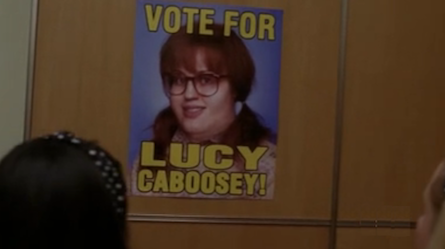
Lauren Zizes decides to run for prom queen, with Puck by her side as her king. Most of the non-size-two students at McKinley are ecstatic to see someone who looks like them running for prom queen, which should have given Lauren the heads up that her plan to take down Quinn wouldn’t work: she unearths Quinn’s past as Lucy Fabray, before she transferred to McKinley in eighth grade.

Lucy was overweight, uncool, and bullied constantly at her old school, until she joined ballet, gymnastics and cheerleading, lost weight and asked her parents for a nose job, at which point they began to call her by her middle name, Quinn.

Lauren plasters posters of Quinn as Lucy all over the school, which inadvertently sees Quinn’s approval rating go up 40% because her student body realises she’s not just a vapid beautiful person, but someone with problems and a past, just like them.

But not all of the glee club’s members are accepting that they were “born this way” out in the open.

Santana manages to convince Dave Karofsky to help her get Kurt back to McKinley, or else she’ll tell everyone he’s gay. In turn, her “Macbethian” and “Latina Eve Harrington” ways, she believes, will help her become prom queen.

Eventually, word gets back to Kurt about what’s really going on, and he agrees to return to McKinley on the condition that Karofsky be schooled in acceptance of gays and lesbians, even if he doesn’t come out.

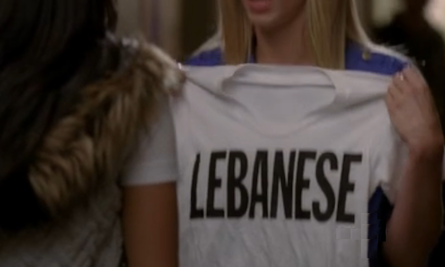
Santana could do well to adopt this school of thought, as she is still in the closet and still in pain that Brittany can’t be with her. Brittany makes Santana a “Lebanese” t-shirt for her to wear in this week’s performance (it was meant to say “lesbian”, but it’s a nice tie in to the “Born This Way” lyrics!)

Of course all the storylines are neatly wrapped up into a special 90 minute package, as is Glee’s style. Emma even manages to address her crippling OCD and goes to therapy.

But I think the most interesting “underlying message” of the episode was Santana’s view at the three-minute mark on changing things you’re not happy with.

As much as, on the one hand, our society preaches self-love and acceptance, what of all the beauty products, foods and exercise regimes that are spruiked to us on a daily basis via all mediums?

I don’t want to turn this into a rant on body image and the affect advertisements, magazines, TV, movies etc. have on it, but Santana does raise a good point: if changing things about you, like Rachel’s nose, Tina’s eye colour, or Sam’s “guppy lips”, makes you feel better about yourself, then so be it.

I got a tattoo a couple of weeks ago because I didn’t like the way the back of my neck looked without one; does that make me “hate myself”? Hell no! Anyone who knows me will tell you that I am confident in who I am, both on the inside and the outside. (Those who don’t just think I’m an arrogant bitch!)

But I think that if you are happy with yourself in general in most aspects of your life and can engage in “active critical thought” about the things you aren’t, what’s a little hairdo change here or gym membership there?

Or—dare I say it?—a nose job?

Related: The Underlying Message in Glee’s “Original Song” Episode.

Gwyneth Paltrow Addresses Tabloid Culture & Her Haters.

Glee “Sexy” Review.

The Underlying Message in Glee’s “Blame it on the Alcohol” Episode.

How to Make a Woman Fall in Love With You, Glee Style.

Glee “Silly Love Songs” Review.

The Underlying Message in Glee’s “Furt” Episode.

The (Belated) Underlying Message in Glee’s “Never Been Kissed” Episode.

The Underlying Message in Glee’s “The Rocky Horror Glee Show” Episode.

The Underlying Message in Glee’s “Duets” Episode.

The Underlying Message in Glee’s “Grilled Cheesus” Episode.

The Underlying Message in Glee’s “Britney/Brittany” Episode.

Is There Really a Beauty Myth?

Images via Megavideo.

On the (Rest of the) Net.


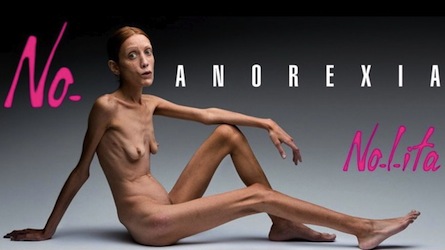
“The Fashion Industry’s Anorexia Problem.”

Gala Darling offers an interesting take on pageantry. It seems not all beauty queens are vapid glorified prom queens with “miles of hair extensions, industrial-sized cans of hairspray and gallons of butt glue”.

Do you have to be a mother to be empathetic?:

“The reason Queensland Premier Anna Bligh was able to handle the flood crisis with such competence [is because she is a mother], according to a fellow mum. How true, how true, clucked a host of TV talk show mums the next day, as the commentators all agree that Anna won the ‘image’ war over Julia in the aftermath. Then of course she would—only a mother can cry with conviction for lives lost.”

90210: “The Sexist Postcode”?:

“So 90210 was an important early building block of enlightened sexism because it insisted that the true, gratifying pleasures for girls, and their real source of power, came from consumerism, girliness, and the approval of guys…”

My friend Anthony and I were discussing the benefits of cheap Coles milk when we paused and though, what exactly does cheap milk mean for farmers and why all the fuss? Rick Morton of MamaMia is here to answer our questions.

Also at MamaMia, the defence force sex scandal.

Speaking of, MamaMia’s 3.0 launch is the only blog redesign I’ve liked in recent months (Jezebel, I’m looking at you).

“Wait? What? This is where it gets interesting for me as a sex positive parent. My son just went from wishing he was sexy to shaming a girl for being just that? I rolled up my sleeves and got ready to do some unpacking.” The unpacking the primary school backpack on “Slut-Shaming on the Playground”.

This is just plain wrong: “The 15 Most Inappropriate Baby Outfits”.

The cigarette packaging reform.

Michael Cole, WWE announcer, tweets a gay slur. GLAAD faux pas or staying in character?

Are disability jokes really that bad? Or are we all just going PC crazy? (Just ask Laura Money and Kieran Eaton at their Unfinished Business stand-up show for the Melbourne International Comedy Festival.)

The meaning of Sucker Punch according to io9:

“1. Insane people and sex workers are interchangeable.

“2. Women can only triumph over adversity in their dreams.

“3. Action movies spring from the imaginations of enslaved, mentally unstable prostitutes.”

“Do You Know What a Normal Female Body Looks Like Anymore?”

Francine Pascal as feminist literature pioneer?:

“In the beginning, that wasn’t enough for many booksellers, who deemed Sweet Valley too ‘commercial’ for their readers. The Times snubbed the series; librarians fought to keep their stacks free of the ‘skimpy-looking paperbacks,’ as one library journal put it. It was Pascal’s fans who defended her: buying a dizzying 250 million copies before the series published its 152nd and final title, in 2003. The series even became a case study in how to get young girls to read. ‘Sweet Valley changed the dynamics of the industry,’ says Barbara Marcus, who, as former president of Scholastic’s children’s business, published The Babysitter’s Club, Goosebumps, and Harry Potter. Sweet Valley spawned seven spinoff series, a TV show, a board game, and dolls. Not until Twilight came along have girl fans been so loyal.”

In this vintage post from the time of Jersey Shore’s debut, Irin Carmon discusses the cast’s views “On Beauty & Not Even Looking Italian”. Quite interesting, actually.

It’s time to go, Betty Draper.

Forget menopause; say hello to “manopause”.

First the video music world, now the movie world: Rebecca Black’s film debut in “Sunday Comes Afterwards”.

Porn WikiLeaks: damaging the reputation and safety of porn performers by publishing addresses, personal documents and hateful HIV diatribes (SFW).

The ugly step sister?

Images via Jezebel.

On the (Rest of the) Net.


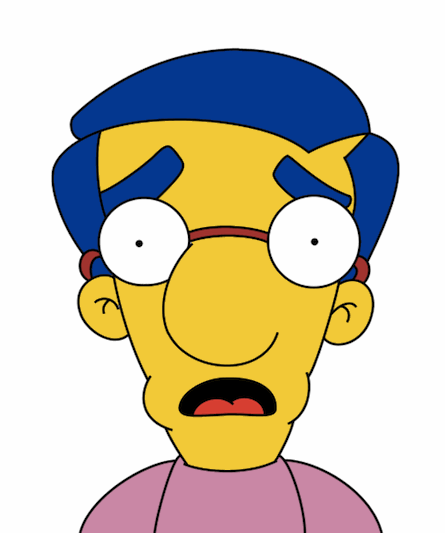
The beauty of Milhouse.

Mercury’s in retrograde. No wonder everything in my life has been up shit creek lately: friends, family, home life and, especially, work life. Here’s how to survive it.

Lots of good stuff on Musings of an Inappropriate Woman this week, where Rachel Hills writes on friendship and sameness in the life of an expat, “lessons in feminist activism” and her thoughts on teens and sexuality on TV:

“… The New York Observer’s Nate Freeman…, bafflingly, draws from this exchange that the characters on Skins get laid more often than the actors who play them because they don’t own web-enabled mobile phones. I’d be more inclined to suggest that they get laid more often because they’re fictional, and from a narrative drama perspective, having sex is more interesting than not having it. As one of my interview subjects put it: ‘Television is not an accurate portrayal of real life, but that’s kind of what we all like it for.’”

The joys of op-shopping for party favours.

“Giving The Big Bang Theory a Fair Chance.”

Spoiler Alert: Big Love Was About Feminism All Along.”

Control underwear is “Just a Girdle By Another Name”. Thoughts?

Gwyneth Paltrow puts her foot in it… again!

One of my favourite past Australian Idol contestants, Em Rusciano, who now presents for The 7pm Project, writes—hilariously—on the self-help book for MamaMia.

Also at MamaMia, Rick Morton on the app to “cure” homosexuality:

“Mobility guilt, yours for free.

“The app is mostly a direct port of information available on the website but, importantly, it’s available while you’re out and about in case you are overcome with sexual urges and need to keep your hands busy fiddling with an iPhone instead of, you know, the same sex.”

Mel Evans doesn’t like Belle de Work Expérience‘s take on Cosmo.

Image via Simpson Crazy.

TV: The Underlying Message in Glee’s “Blame it on the Alcohol” Episode.


Blame it on the alcohol, indeed.

This week’s episode deals with McKinley High’s Alcohol Awareness Week, after Principal Figgins exclaims that there have been six alcohol-related suspensions in the past week due to the alcopop phenomenon and pop music promoting the consumption of alcohol.

So what better time for Finn and Puck to convince Rachel to have an unsupervised party at her house, right?

Body shots, Brittany getting her kit off, karaoke and spin the bottle ensue, creating a drunken love triangle between Rachel, Kurt and Blaine, where someone is bound to get hurt. And you can’t blame that on the alcohol.

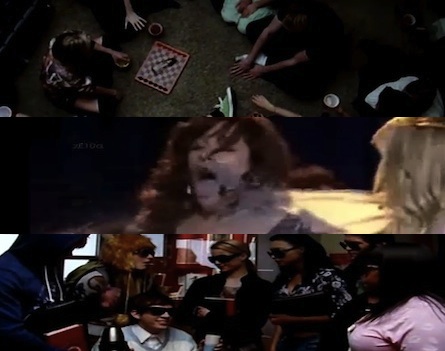
In my experience, people don’t do things drunk that they don’t already want to do sober. It gives them liquid courage, if you will. Which, funnily enough, is what “Blame it on the Alcohol” is all about. Who knew that listening to Jamie Foxx would pay off?

But “the alcoholic teen-vomit fetishist” (Sue’s words, not mine!) Mr. Shuester doesn’t approve of their rendition of the song, so instead they perform “Tik and also Tok, by Key dollar sign Ha,” as Principal Figgins introduces it at the school assembly. And that’s so much better how?

But for all their seemingly sexual acceptance (Kurt, Blaine, Brittany and Santana and their “scissoring”), Kurt’s comment about bisexuality made me question how accepting the show really is:

“‘Bisexual’ is a term gay guys in high school use when they wanna hold hands with girls and feel like a normal person for a change.”

Sounds a bit like Miranda’s reasoning that bisexuality is a blanket term for guys who turn out to be gay and girls who turn out to be straight, thus explaining the man-drought, on Sex & the City.

But it wouldn’t be the first time Glee’s ostracised their characters and potential audience members who may identify with them.

Related: How to Make a Woman Fall in Love With You, Glee Style.

Glee “Silly Love Songs” Review.

The Underlying Message in Glee’s “Furt” Episode.

The (Belated) Underlying Message in Glee’s “Never Been Kissed” Episode.

The Underlying Message in Glee’s “The Rocky Horror Glee Show” Episode.

The Underlying Message in Glee’s “Duets” Episode.

The Underlying Message in Glee’s “Grilled Cheesus” Episode.

The Underlying Message in Glee’s “Britney/Brittany” Episode.

Elsewhere: [Jezebel] Glee: New Directions’ Alcohol-Fuelled Bisexual Awakening.

[Jezebel] Glee: Everyone’s Duetting It (Except Kurt).

[Jezebel] Why Glee Still Needs to Work on Diversity.

Images via YouTube.

Born This Way.


From “If We’re Born Gay, How Would We Know?” by Lisa Wade on Jezebel:

“It is a specifically American belief that gay men act feminine and lesbians act masculine.  But, in fact, gay men and lesbians have a wide range of gender performances, as do straight and bisexual people.  In fact, most of us could probably find a picture or two in our histories showing gender non-conformity.  Meanwhile, most gay men and lesbians could probably find pictures of themselves conforming.  That gender performance is associated with sexual orientation in our society is a belief in U.S. culture, but it’s not somehow inevitable or biological.”

Elsewhere: [Jezebel] If We’re Born Gay, How Would We Know?

Images via YouTube.

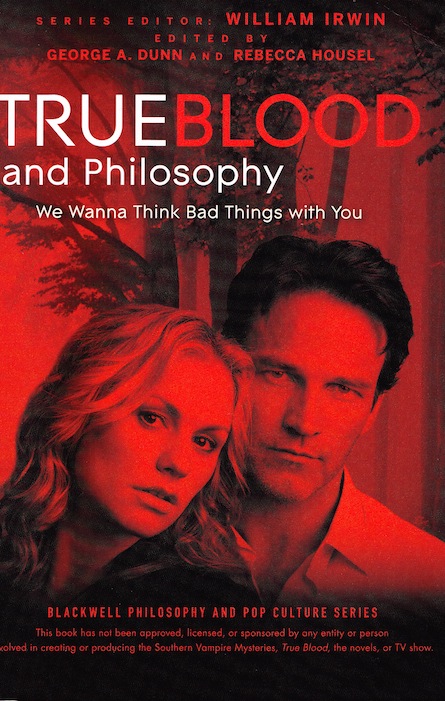
Book Review: True Blood & Philosophy by George A. Dunn & Rebecca Housel.


I bought this book last year around the time season three of True Blood was coming to an end, and the inspiration struck me to write a post on Sookie Stackhouse and feminism. Needless to say, that post has yet to come to fruition (watch this space next week), but I finally got around to reading the book in the past fortnight or so.

The great thing about the Pop Culture and Philosophy series is that you don’t need to be an avid fan of the topic each book deals with; most of the philosophical musings can be applied to everyday life. (I’m making a gross generalisation here, as True Blood & Philosophy is the first Pop Culture volume I’ve read!)

Anyone who’s familiar with the show and Charlaine Harris’ books will know that the way vampires are treated in the somewhat alternate universe of Bon Temps, Louisiana, is a metaphor for how gays and blacks have been treated for centuries.

True Blood and Philosophy delves into this throughout the book, but particularly in the “Eros, Sexuality & Gender” section, where the issue of “orientation” is raised: “Vampires seem to be unlike gays in that we can’t say that vampires are born that way… But there is still a parallel to being born either gay or straight, for once you become a vampire, there’s no returning to a human existence” (p. 98).

One way vampires and gays are different, though, is that “a homosexual predator” cannot “attack or coerce an unwilling person into homosexual acts”, whereas a vampire can take someone against their will (p. 99). You can’t “catch” homosexuality, but you can catch vampirism.

To take it a step further, there was a time when propaganda that the gays will give you AIDS was rife (some might argue that it still is), and were prohibited from participating in sports and other activities where blood could be spilled. This raises the question of the marginalisation of vampires in sports, as well as the use of their blood as medicine. (See “Coming Out of the Coffin & Coming Out of the Closet”, p. 93–108.)

My favourite chapter deals with the attitudes of humans towards vampires and vice versa, and how the way they treat each other amounts to the way non-fiction humans treat animals.

For example, Eddie Gauthier, the vampire whom Jason Stackhouse and Amy Burley take hostage and use as their own personal V vat, is a parallel for “the way millions of animals are treated every day on factory farms… Eddie, like the animals on factory farms, is exploited as a commodity with no regard for his suffering” (p. 36–37).

Furthermore, “… many… vampires actually regard human beings as lower forms of life ripe for exploitation, not much different from the way Aristotle and others regarded non-human species,” in “a classic example of speciesism” (p. 38–39).

Last year, I blogged about an article I read in Time, about how animals that we once thought to not be able to understand language, reasoning, fairness and pain, actually do experience these things. Vampires seem to have a similar attitude towards humans, whom they see only as a food source, and “incapable of feeling pain as we do”, according to the magister when ordering Bill to turn Jessica as punishment for killing one of their own to protect his “human pet”, Sookie (p. 44).

In a similarly intriguing chapter, William C. Curtis asks “can vampires be good citizens”?:

“Should there be a Truth and Reconciliation Commission to require vamps to come clean about their past murders in return for a grant of amnesty? How should vampires be taxed, especially since they don’t need many of the services that government provides, like Social Security, health care, and education? Can they join, or be drafted into, the armed forces?… Will their vulnerability to sunlight be treated as a disability under the Americans with Disabilities Act? Can vampire convicts be sentenced to life in prison, or would eternal incarceration violate the Eighth Amendment prohibition on cruel and unusual punishment?” (p. 65–66).

All these questions have been brought about by the advent of synthetic blood, allowing vampires to “come out of the coffin”, so to speak.

On this, an interesting footnote from the chapter “Un-True Blood: The Politics of Artificiality” by Bruce A. McClelland, refers to a 1927 study by Takeji Furukawa on the correlation between blood types and personality. Being a Japanese study, and the fact that synthetic TruBlood was developed by the Japanese; is there some connection? Or just a coincidence? The clot plot thickens…

A memorable event thus far on True Blood has been the introduction of Maryann the Maenad and her Dionysian debacle. “Let the Bon Temps Roll: Sacrifice, Scapegoats and Good Times” deals with the self-preservation of the Bon Temps residents in “not wanting to know what’s in the sausage”, as Lafayette Reynolds would say (p. 141–142). Or rather, not wanting to know what’s in Maryann’s “hunter’s soufflé”!

This ignorance is further symbolised by the black eyes of Maryann’s followers; they’re literally blind to her wicked ways (p. 142).

Of course this book is more suited to the True Blood fan, however it’s not a prerequisite. (I’m trying to force-feed my friend Laura this book in the hopes that she will cotton on to the sexy-smarts of the show. She’s doing the same to me with Mad Men.) Many of the thoughts discussed go much deeper than just Charlaine Harris’ Southern Vampire Mysteries and vampirism, and it’s quite a thought-provoking—yet still light—book.

Related: Time’s “What Animals Think” Issue: August 16, 2010.