Let’s Talk About the Sexualisation of Girls, Baby.


From “Fight the Sexualisation of Young Girls the Right Way” by Sarah Seltzer on Alternet:

“But does it follow that the teens who are on TV should not be seen as sexual at all? Teens in real life are sexual beings, after all, and they make sexual choices every day.

“This brings us to our second anti-sexualisation movement, a movement whose origins and goals are entirely different. SPARK is a movement to celebrate girls for more than their sexuality and to aggressively combat product placement, advertising, and cultural messages aimed at tweens and preteens that directly sexualise them—like pole dancing for twelve-year olds and push up bras before training bras. This is a movement that also has beef with media portrayals of writhing, gyrating teen and twentysomething pop sensations—like the Glee stars’ racy GQ poses.

“But the beef is not because they’re seen as sexual, because they’re playing into a version of sexuality that is catering to male fantasies. It’s about treating sexuality as something that comes from within, not a plastered-on image in high heels and short skirts.

“…And so they oppose the imposition of a male-oriented sexuality on women.

“Therefore their issue isn’t just that teen girls on TV have sex or engage in sexual behaviour like suggestive dancing or making out. Instead, their concern is that teen girls on TV are often reduced to sex objects or miniature versions of sexual stereotypes: temptresses, vixens, sluts. Girls having sex in long-lasting relationships or because they *gasp* want to? That’s okay, as long as they’re armed with the right information and a spectrum of choices and alternatives about how they can be sexy and still be themselves.

“If you want to know why feminists are obsessed with shows like Friday Night Lights and the late, great My-So-Called Life, it’s because they show the reality of teen girls being obsessed with and learning about and experimenting with sex—as teen girls generally do—but only as part of a broader spectrum of their lives which includes classes, parents, sports, and friendship.

“Sexuality vs. Sexualisation. It’s a distinction we all need to practice making so we can continue the work that SPARK has begun.”

Related: Disturbing Behaviour: Terry Richardson Does Glee.

Elsewhere: [Alternet] Fight the Sexualisation of Young Girls the Right Way.

On the (Rest of the) Net.

Millennials Magazine profiles the beauty of the to-do list, Daniel D’Addario gets nostalgic for Daria Morgendorffer, while Katie Baker wishes she was an orphan:

“Orphans are adored by their peers, but tormented by evil guardians, stay cool under pressure and abuse, and rarely fail to win true familial love and affection in the end.”

Also at Millennials Mag, the awesomeness of The O.C. was that “it was just fucking dramatic”:

“Kirsten’s an alcoholic. Marissa almost dies in an alley in Tijuana. Luke’s dad turns out to be gay. Luke and Julie Cooper hook up, grossly. Seth, who’s supposed to be this huge nerd, nabs the most popular girl in school. Summer gets into Brown, which is actually kind of realistic considering her money, but that’s another story. Obviously some lesbian stuff happens. Marissa shoots Trey. Marissa dies. Ryan and Taylor go into a parallel universe while in a coma. And yet everyone keeps on being rich and impossibly well dressed and extremely easy on the eyes.”

“The 9 Most Racist Disney Characters.”

Continuing with the “Why Don’t You Love Me?” theme, Tiger Beatdown discusses the cultural relevance of Beyonce’s anthem, in relation to buying access to a stripper’s body via a $10 lap dance:

“I was able to buy access to this woman’s body and (very convincing) pretend affections for less than I would spend picking up a couple of last-minute things at the grocery store. It was worth almost nothing. Less than an oil change. Less than someone cutting my hair. Less than getting a decent tailor to hem a pair of pants. Less than a bouquet of roses.

“And that’s the day that I realized we were all the victims of a sick joke. A despicable charade where so much is demanded of women, so much compliance and poking and prodding, so much effort to make ourselves beautiful and radiant and perfect, so much forcing of square pegs into round holes, just so we could meet it all, do it all, get close to the apex of perfection and still be worth nothing. We would be left with alienation from our own bodies, our bodies that we squeezed into stilettos and shaved and waxed and whittled into tiny silhouettes at the gym, always striving for more perfect, thinner, prettier, more alluring. Working so hard to satisfy the cultural imperative toward female perfection—how could we have time for our own desires except to be desired?

“Latoya Peterson writes about the video that ‘Once again, Beyoncé’s lyrics define her positive attributes in the context of why she should be desirable to some fool that doesn’t appreciate her. The video, however, is a lot more interesting since, with Beyoncé playing the role of “B.B. Homemaker”, it is openly mocking a lot of the ideals and tenets of womanhood’. I’d go much further than that. I’d say that the song and the video together form a radical critique of femininity, full stop. Because this is what femininity is about: making yourself appealing to men by adhering as closely possible to cultural ideals of perfect womanhood. Her lyric is not ‘when I am so damn easy to love’, but ‘when I make me so damn easy to love’. It’s effort, it’s a construct, it is something she does and not something that she is. It is performative.”

“Man up” seems to be a fairly frequently used phrase in my vernacular, and The New York Times ponders its true meaning:

“But man up isn’t just being used to package machismo as a commodity. Its spectrum of meanings runs from ‘Don’t be a sissy; toughen up’ all the way to ‘Do the right thing; be a mensch,’ to use the Yiddishism for an honourable or upright person. The Man Up Campaign, for instance, is a new global initiative that engages youth to stop gender-based violence: ‘Our call to action challenges each of us to “man up” and declare that violence against women and girls must end,’ its mission statement reads.”

Now that is something we can all certainly man up stand up for.

The top ten reasons why anyone follows anyone who’s anyone on Twitter.

Uplift Magazine on those Crystal Renn food photos.

In defence of books:

“Many books are screwy, a great many are dull, some are irredeemable, and there are way too many of them, probably, in the world. I hate all the fetishistic twaddle about books promoted by the chain stores and the book clubs, which make books seem as cozy and unthreatening as teacups, instead of the often disputatious and sometimes frightening things they are. I recognize that we now have many ways to convey, store, and reproduce the sorts of matter that formerly were monopolized by books. I like to think that I’m no bookworm, egghead, four-eyed paleface library rat. I often engage in activities that have no reference to the printed words. I realize that books are not the entire world, even if they sometimes seem to contain it. But I need the stupid things.”

The perils of HalloSlut-o-Ween, at Rabbit White.

Meet Me at Mike’s Pip Lincolne writes about what makes a successful blog.

More on the Glee/GQ photo shoot scandal, this time from NPR and the girls at Go Fug Yourself.

On the (Rest of the) Net.

Indeed, “What Is the Difference Between Charlie Sheen and Lindsay Lohan?”

Again, in the wake of Sheen’s “drug-alcohol-and-woman abusing” bender, Girl with a Satchel asks if men’s mags focussing on UFC and, alternatively, retro Mad Men style sensibilities is a result of the “soggy” men’s mag market trying to inject some much needed zest:

“In the current socio-cultural context, where women assert more power and influence, the ‘reality’ may be why more men are turning into Don Draper lookalikes and turning to UFC. It doesn’t take Two & a Half Men to work [sic] out that in magazines, men need escapism, inspiration and style tips, too. The appeal of men’s magazines is to service wants, needs and desires; I just wonder what men really aspire to.”

Tiger Beatdown’s response to Beyonce’s “Why Don’t You Love Me?” video is, in a word, hilarious (more on it to come next week):

“A blog post, we hear, should be short, and timely, and probably pegged to some manner of news item. This ensures that it can be part of the blog conversation on the Interwebs. Where immediate response is king! And that, of course, is why we write 3,000 to 5,000 word posts about long-running TV shows, and movies we rented from iTunes, and also, albums that came out when we were twelve.

“However, sometimes it only takes us weeks to respond to something! For example, a music video, of the sort that the kids enjoy today. A music video like this one!”

Joan Holloway’s Mad cartoon curves are poured into a Little Miss book.

In other Mad Men-related news, The Washington Post writes in defence of the show’s alleged sexism:

Mad Men’s writers are not sexist. The time period was.”

Feminist Themes on Lady Gaga and Beauty.

Slate asks “How Long Has the ‘Dumb Blonde’ Meme Been Around?”:

“The poet Propertius, for example, wrote: ‘All beauty is best as nature made it… In hell below may many an ill befall that girl who stupidly dyes her hair with a false colour!’ So while he didn’t connect blondeness with idiocy exactly, he implied that wish to be blondes, and contrive to be blondes using artificial means, don’t have much going on.

“As for why the dumb-blonde idea resonatesone idea is that it’s basically Propertius’ logic at work. It’s a fairly well-known fact that few adults are naturally blond[e], and that many apparent blondes actually die their hair. If you die your hair, you must be superficial or vapid, Q.E.D. There’s also a theory, outlined in The Encyclopedia of Hair, that blondeness connotes youth, since children are far more likely than adults to have naturally blond[e] hair. Blondeness, then, seems innocent but also naïve.”

Steve Pavlina discusses which aspects of your life are worthy of your attention, and which aren’t.

Organisational Post-It porn at MamaMia.

From The Awl, “How to Lose [Facebook] ‘Friends’” and alienate people:

“Christopher Sibona… explains the top reasons fro defrienestration: updating too frequently about boring things, posting about controversial subjects like politics or religion, and writing racist or sexist stuff. It’s a lot like life, although in life these people are actually friends and not some random body count you’ve assembled through networking or total availability.”

Godammit, I’m Mad profiles “Bloggers With Influence”, and has some particularly scathing words to say about Gala Darling. Ouch.

Along the same lines, The Feminist Breeder says not to “assume that more ‘fans’ or ‘followers’ means they’ll all be adoring. The truth is, the more people who read you, the more bullshit you’re going to have to put up with…”

In the wake of those controversial GQ photos and last week’s Rocky Horror episode, Glee is questioned as to whether it has a “Body Image Problem” or not.

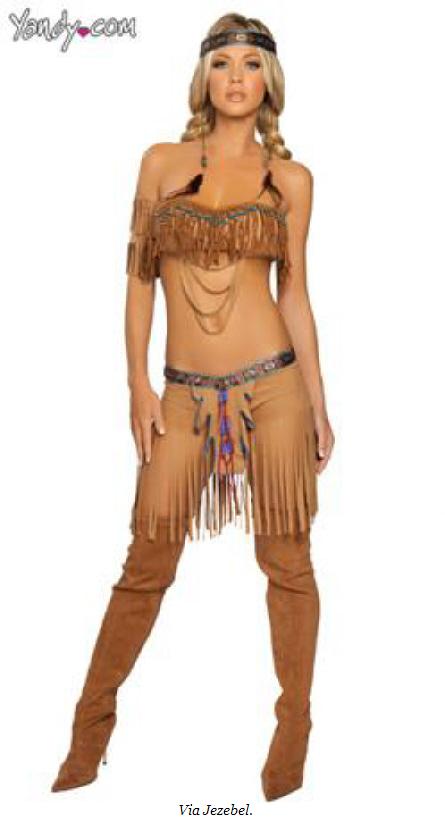
As Halloween is swallowed back into the underworld for another year, Gawker has some All Hallows Eve etiquette tips on how to tell if your costume is racist:

“… When the entirety of your costume is ‘I am a person of a different race, LOL,’ that qualifies as a racist costume.”

But is it racist if, like, you’re of Native American descent? (FYI, I actually am.) Paris Hilton, take note.

Magazines: Disturbing Behaviour—Terry Richardson Does Glee.


Über-inappropriate fashion photographer Terry Richardson has done it again, using his magic creepy touch on the cast of Gleeor rather, the most vanilla cast members from Glee, Cory Monteith (Finn Hudson), Dianna Agron (Quinn Fabray) and Lea Michele (Rachel Berry)to turn them into “porny” high schoolers to rival Britney Spears in “Baby, One More Time” (which Michele did a cover of, complete with schoolgirl tartan and feathers in her hair, on the “Britney/Brittany” episode) for the November cover of GQ.

Seriously, when will people stop employing him to work with subjects who, granted, aren’t underage but portray underage characters on a family show, when he is a known predator of underage and vulnerable women?

And does anyone else find Michele extremely offputting, in more ways than one? Or is it just me?

Related: The Underlying Messages of Glee’s “Britney/Brittany” Episode.

Food Fight.

Elsewhere: [GQ] Glee Gone Wild.

[Jezebel] Terry Richardson Makes Glee All Porny.