TV: The Problem with Smash.


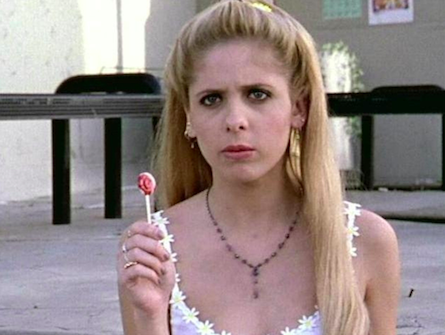
Smash, the Steven Spielberg-produced musical-serial about a Marilyn Monroe Broadway show, debuted with promise. I quite enjoyed the first few episodes, with Debra Messing as one of the musical’s writers, Angelica Huston as its producer, and Broadway star Megan Hilty as the number one contender for the role of Marilyn. But then Smash kind of plateaued.

Clem Bastow, writing for TheVine, seems to think it’s because of Katharine McPhee’s inclusion as the other competitor vying for the lead, and I have to agree. Bastow writes:

“The trouble with McPhee’s performance in Smash is that it jolts me out of my suspension of disbelief… [B]ut whenever Karen/Katharine opens her mouth, the fourth wall comes crashing down around me. Her voice is thin, her performance mannered, she acts with her chin like a young Gwyneth Paltrow, and self-consciously holds her mouth in such a way to suggest a very pretty female version of Jack Nicholson’s Joker.”

I’m all for Hilty’s Ivy Lynn, who’s spent ten years in the chorus and lives and breathes Marilyn through and through. But I just can’t get behind McPhee’s Karen Cartwright who, as Ivy rightfully observes, got to New York five minutes ago, hasn’t paid her dues and is already getting callbacks for lead roles. She can’t act (McPhee as Karen nor Karen as Marilyn), complains about everything and is an ineffable dolt.

But in the last few weeks, Smash has been looking up. I immensely enjoyed the episode when Ivy lost the plot after being replaced as Marilyn by Uma Thurman’s major movie star, Rebecca Duvall, and had to go back to being an angel in the chorus line of Bombshell’s (the name they’ve settled on for the fictional—but very well could be a real Broadway show if Smash’s commercial success continues—musical) writers’ other Broadway show, Heaven on Earth. Ivy loses it, mixes her throat medication with alcohol, goes on stage high, and ends up singing Rihanna’s “Cheers (Drink to That)” with Karen in Times Square (video above. Please excuse the horrid quality, but I wanted a clip that actually showed the scene rather than just the audio).

I still can’t stand Karen and Ellis, the sneaky assistant to Huston’s Eileen and, formerly, Bombshell writer Tom Levitt but, if it’s about Marilyn Monroe, I’m willing to let Smash go out with a bang.

Are you watching Smash? What do you think of it?

Elsewhere: [The Vine] You Ain’t Gettin’ 88 Cents From Me, Smash.

Image via IMDb.

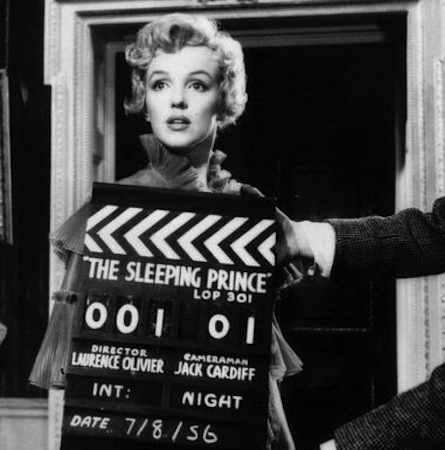
Books: Was This What Marilyn Monroe Was Really Thinking When She Was Filming The Prince & the Showgirl?

From Fragments: Poems, Intimate Notes, Letters by Marilyn Monroe edited by Stanley Buchthal & Bernard Comment:

“Fear of giving me the lines new

maybe won’t be able to learn them

maybe I’ll make mistakes

people will either think I’m no good or

laugh or belittle me or think I can’t act.

Women looked stern and critical—

unfriendly and cold in general

afraid director won’t think I’m any good.

remembering when I couldn’t do a god

damn thing.

then trying to build myself up with the

fact that I have done things right that

were even good and have had moments

that were excellent but the bad is heavier

to carry around and feel have no confidence

depressed mad”

According to archival information, this was actually written in 1951 while The Prince & the Showgirl was released in 1957. So perhaps these weren’t Marilyn’s exact thoughts during the filming of the movie that was the basis for this year’s My Week with Marilyn, but it just goes to show she was plagued by insecurities from the beginning.

Related: My Week with Marilyn Review.

Fragments of Marilyn Monroe’s Literary Life.

All Eyes on Marilyn.

Image via The Passionate Movie Goer.

On the (Rest of the) Net.


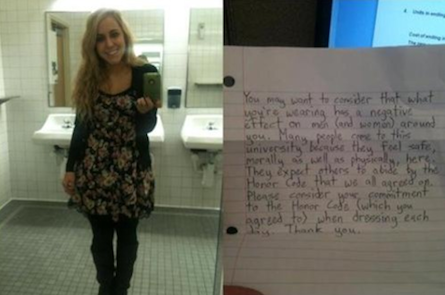
How a uni student wearing a modest floral dress, tights and a cardi inspired a fellow (male) student to give her a note detailing all the reasons her outfit was slutty and distracting. [Footage Not Found]

Why Bridesmaids should win an Oscar. [Daily Life]

Some snarky ways your Personhood-holding feotus can have their constitutional rights granted. [Jezebel]

A timeline of Chris Brown’s heinousness. [BuzzFeed]

Rachel Hills is a Friday feminaust. [Feminaust]

Why is it okay for gay men to bag women when we would never accept the same behaviour from a straight man? Is it because we don’t see gay men as “real men”? [Daily Life]

Nicki Minaj has got the same sized hands as Marilyn Monroe? [The Grio]

My year as a rom-com watcher. [Jezebel]

Hugo Schwyzer responds to Bettina Arndt’s assertion that women who dress provocatively and then complain about attention from the “wrong” type of men are teases:

“The calculus of entitlement works like this: if women don’t want to turn men on, they need to cover up. If they don’t cover up, they’ll turn men on. If they turn men on, women are obligated to do something to assuage that lust. Having turned them on, if women don’t give men what they want, then women are cruel teases who have no right to complain if men lash out in justified rage at being denied what they’ve been taught is rightfully theirs.” [Jezebel]

Image via Footage Not Found.

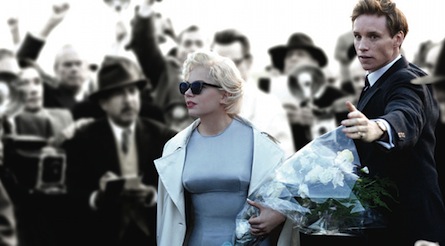
Movie Review: My Week With Marilyn*.


“Thanks for telling me the truth, Colin.”

My Week With Marilyn is concerned with truth. Laurence Olivier tries to get Marilyn to perform a truthful portrayal of showgirl Elsie in The Prince & the Showgirl, while Marilyn expresses trepidation that Olivier’s imagining of Elsie isn’t realistic. Elsie could be seen as a metaphor for Marilyn Monroe’s misunderstood likeness since she changed her name from Norma Jean and became the buxom bombshell we all know and some of us love today.

But I didn’t find that the movie delved any further into the Marilyn mystique than any of the characters she played or any of the men who loved her did when she was alive. It was really only after she died, and in a slew of “lost” letters and photos that have made up such publications as Fragments and The Genius & the Goddess: Arthur Miller & Marilyn Monroe, that we came to discover that she was much more than just a dumb, sexy, childlike blonde who posed with Ulysses to make her look smarter.

It tried to go there, though, when Michelle Williams spoke such lines as “Shall I be her?” when Marilyn and Colin Clark  visit Windsor Castle, and after a fight with her husband, Arthur Miller, she says, “When they realise I’m not Marilyn Monroe they run.” But the film didn’t really show us anything different than the common perception of her.

Don’t get me wrong, though, I really enjoyed the movie and thought Williams did a great job with the script she was given. I just don’t think it was an apt representation of all that Marilyn was. As Dodai Stewart writes,

“… the biggest problem with My Week With Marilyn is that the film treats the woman who loathed being a sex object as a sex object. The story is told by a man who looked at her as a mesmerising other-worldly creature. Though he did have some intimate moments with her, a lot of the film involves Marilyn being gawked at by this slack-jawed fan-turned-friend who calls her a goddess. As a character, she is frustrated because she wishes people would see her as a human being, but she’s shot in the softest, most radiant light, frolicking through the English countryside and ever so gently batting her lashes: Male gaze ad nauseam.”

And while the film is wrapped up in a nice little package with Marilyn coming to say goodbye and thank you to Clark after having kicked him out of her bed and her life, I had the feeling he was still embittered about his unrequited love.

I haven’t read The Prince, the Showgirl & Me, so I couldn’t tell you for sure if this is the case, but even if it wasn’t, Clark was a 23-year-old boy who fell in love with the image of Marilyn Monroe, not the actual Norma Jean.

Related: Fragments of Marilyn Monroe’s Literary Life.

All Eyes on Marilyn.

Elsewhere: [Jezebel] The Problem with My Week With Marilyn.

*Blanket spoiler alert.

Image via Screen Rant.

On the (Rest of the) Net.


Why the Marilyn meme does more harm than good for body love:

“I would prefer the focus be on health, rather than appearance. The Monroe Meme seems about the furthest thing from healthy. This is a woman who abused alcohol and sleeping pills later in her life, this is a woman who (probably) died due to depression. But, hey, as long as someone thinks she looks good, I guess that’s what matters.” [Shameless Magazine]

I’m a Friday Feminaust!

The media-perpetuated myth of the bad man. Interestingly, substitute the words “bad” and “aggressive” for “weak” and “victim”, and you pretty much have the media-perpetuated myth of the good woman. No one can win in this game. [The Good Men Project]

Why guys cat-call, explained. [Jezebel]

The making of Britney Spears: The Cabaret. [Bryant & Frank’s Blog]

Apparently conservatives are dumber than progressives. For the amount of Facebook arguments I’ve had on the topics of abortion and asylum seekers, this doesn’t surprise me. [HuffPo]

Not all registered sex offenders are dangerous: “Should Teens Be Jailed for Sex Offences?” [The Daily Beast]

The Rodarte sisters look at their favourite Buffy episodes. I feel a marathon coming on… [Rookie]

Does Katherine Heigl have any fans left? After Killers, I’d say I’m hanging by a thread! [The Daily Beast]

Real Housewife Taylor Armstrong’s “violent marriage”. Sad. [Jezebel]

“In Defence of Rescue Dogs.” The don’t need defending in my mind, but apparently they’re seen as dirty rejects by a lot of people. [MamaMia]

2 Broke Girls hasn’t even aired here yet, but prepare yourself for racism galore! [Grantland]

The must-watch new show of the year: Revenge. [Jezebel, Gawker]

The angry, black female trope. [Washington Post]

And even more “angry” women:

“‘God, you really don’t like being a woman, do you?’

“In two short moves we’d leapt from his infidelity to my ostensible gender dysmorphia and/or self-loathing…

“What struck me was that both Rex and the attorney had delivered ill-timed, emotionally charged information, and when I’d expressed proportionate anger or irritation, the blame somehow boomeranged back onto me. I’d been expected to remain amiable… [y]et their reaction was still confusion and rancor when I pointed out their inanity.

“How do we alter the notion that a woman who stands up for herself, her loved ones, or her beliefs is the one who’s causing trouble? By accepting once and for all that legitimate female anger isn’t the hallmark of a bitch, cunt, ballbuster, or drama queen.”

[Nerve, via Jezebel]

The beauty of the corset. [Jezebel]

Images via Rookie, Rhinestone Religion, Jezebel.

Books: Stacked.

The other day a friend asked me how I “prioritise my stack” of books, and I thought it might make an interesting blog post, if only so I can navel-gaze at the books, magazines and articles piling up on my bedside table and bookshelf as opposed to offering any valuable insight into how I get through them.

’Cause the answer is, there is no system to getting through them. If anything, more books, magazines and articles are added to the piles than what is taken away from them and filed neatly in the bookshelf or recycling bin.

My friends often tease me ’cause it usually takes me several months to get through a book. The book I’m currently on, My Sister, My Love: The Intimate Story of Skyler Rampike by Joyce Carol Oates, I started over two months ago! I try to put away a few chapters each night, but this is in addition to the probably 500 other pages of content I read per week. Blogs, magazines, articles. If you ask me, that’s a pretty good effort. I wonder how many of the haters get through a 500 page book per week :P.

My love of taking in anything and everything in the feminist blogosphere is both a blessing and a curse. I love that there’s always new content and I’m always being informed, but at the same time, it would be so easy to just curl up in bed with a good book and turn my brain off for a few hours. Then again, if I really wanted to turn my brain off, I’d carve out a nook in the couch and flick through channels all night. And who has time for that?

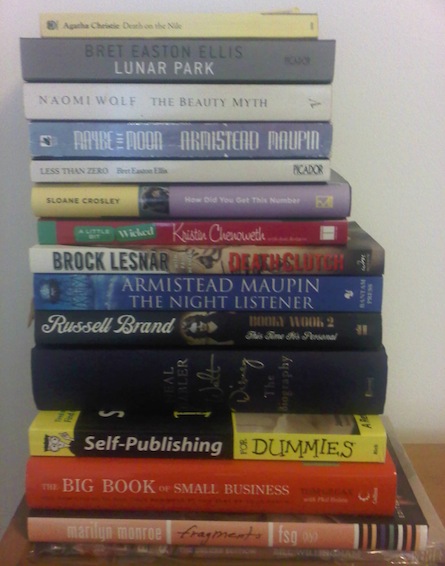
Currently in my book stack, I have three books that were gifts from my birthday last year, and winning a worst dressed contest (Fables comic book, The Big Book of Small Business and Self-Publishing for Dummies); three that are borrowed (Walt Disney’s biography by Neal Gabler, Russell Brand’s second memoir and Kristin Chenoweth’s autobiography); two I bought from Amazon in January (Marilyn Monroe’s Fragments and Sloane Crosley’s second book of essays, How Did You Get This Number?); and the rest (The Night Listener and Maybe the Moon by Armistead Maupin, Brock Lesnar’s Death Clutch, Less Than Zero and Lunar Park by Bret Easton Ellis, Naomi Wolf’s The Beauty Myth and Agatha Christie’s Death on the Nile) I’ve bought in recent months, mostly secondhand.

And the magazines and article stack, which is a complete eyesore on my bedside table, consists of several Vanity Fair’s, some Monthly’s and… to be honest, I don’t actually know what’s in there! When I go on holidays next week, I aim to get through that stack, and it will be a veritable treasure trove! Like Christmas morning!

Seeing as I can offer absolutely no substance to “how do I prioritise my stack”, I’m handing it over to you. Does anyone have any tried and true methods? Here’s one, at the suggestion of my friend Clare: stop buying books til I’ve finished the ones I already have. But they’re too good!


Event: Evolution of the Bookshop at the Wheeler Centre.

I never thought a seemingly boring panel conversation about e-books versus hard copy print media would trump a discussion about masculinity in Australia, but it seems “The Evolution of the Bookshop” has come out on top when it comes to talks I’ve seen at the Wheeler Centre lately.

I’m a bit late reporting on this one, but a couple of weeks ago I attended “The Evolution of the Bookshop”, which entailed the panel of Michael Webster, Corrie Perkin, Jo Case and Chris Flynn, with Sally Heath as the facilitator.

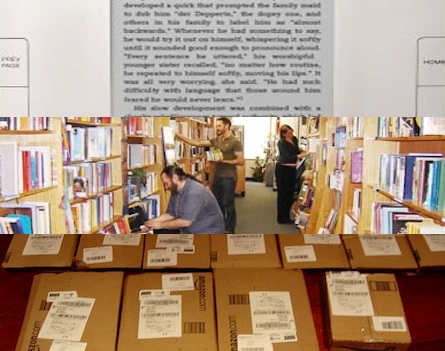
The main item of contention on the agenda was the receivership of the REDgroup, which includes Borders and Angus & Robertson (for those of you living under a rock in recent months) and how online shopping from overseas stores, like Amazon and the Book Depository, may have contributed.

2010 was a good year for books in Australia, actually, as Webster, of RMIT and Nielson BookScan, pointed out in a riveting (no, I’m not kidding!) spreadsheet. There was no denying the large amount of Australian dollars that were spent online on books, what with parity and all that jazz, and the panel urged the audience to buy local throughout the night.

But when Flynn, fiction editor of The Australian Review of Books, compared the prices of all the books he bought over the course of a year at Borders (the devil’s bookstore, according to the panel!), Readings (of which Case is a staff member) and the Book Depository (there was over $1000 difference between online and at a bricks and mortar bookstore), it doesn’t bode well for physical bookstores.

Personally, I’m not in the financial bracket to be supporting local bookstores when I can get the books I want online for half the price at a click of a button.

Earlier this year, I went into Borders at Melbourne Central wanting to purchase Marilyn Monroe’s Fragments, The Great Gatsby and Sloane Crosley’s two books of essays (which you may remember me writing about here). They had none of them in store. An hour later I was at home on Amazon, $70 poorer but immeasurably happier that four brand new books were on their way to me.

Case made the case (haha!) for the experience of shopping at a bookstore, but Flynn countered with the presumption that people who shop online probably already belong to an online community, and thus their experience at an online bookstore is just as valid and important as at a physical one.

As the owner of her own bookshop, Perkin asserted that she just can’t compete with free shipping and the iPhone app Shazam, which allows users to record a piece of music, to which the app generates the full details of and where you can buy it online.

But independent bookstores compete on service, not price. Perkin relayed the example of running out of Jamie’s 30 Minute Meals recipe book and being told that the next shipment wouldn’t be for awhile as it was, and is, a very popular title. She was forced to buy copies of the book on the Book Depository at her own expense, and provide them to her customers who had already committed to the title via pre-sale. Now that is service!

Flynn countered that whether we like it or not, e-readers have hijacked traditional forms of reading, but based on a show of hands, not one person at the Wheeler Centre that night owned or read books on an e-reader.

On a side note, I will be visiting the best second-hand bookstore I’ve ever been to over the weekend, and there’ll be more to come on that next week.

Related: “Who the Bloody Hell Are We?”: The Sentimental Bloke at the Wheeler Centre.

The Ten Books I Wanted to Read This Year But Didn’t.

All Eyes on Marilyn.

Images via Crunch Gear, TS Bookshop, Lance Wiggs.

Hot Girls Reading Books.

We’ve done the guys, now it’s time for the girls.

You wouldn’t believe what a struggle it was to find pictures of hot chicks reading. You would think there was a stereotype of beautiful women being dumb, wouldn’t you?

There’s non-threatening beauties like Audrey Hepburn, whom most would buy as a smart lady, and drop-dead stunners like Angelina Jolie, who’s proved herself via years of pushing the boundaries in terms of her art and her humanitarian work.

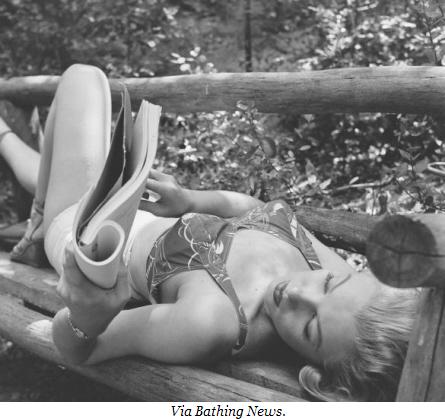
Everyone knows I love Marilyn Monroe, especially images of her laughing in the face of the stereotype surrounding her andGod forbid!reading.

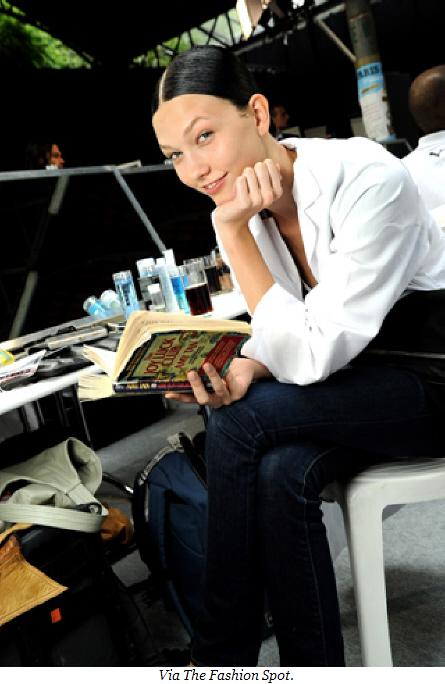
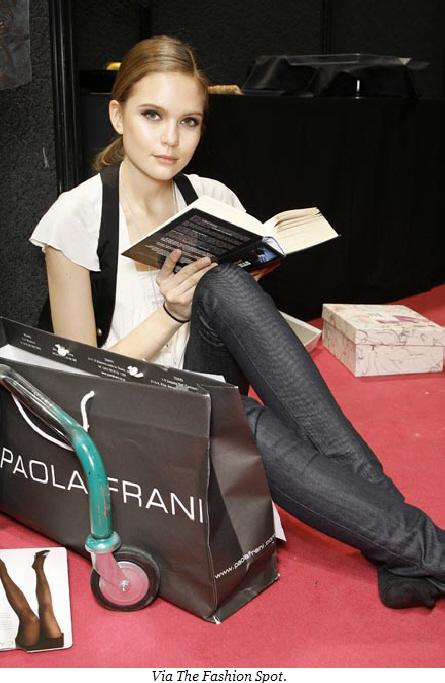
You can’t get much hotter than a supermodel, right? Especially one who has a book on hand for all those idle hours backstage.

Related: Beauty & the Book.

Beauty & the Book, Take 2.

“With a Gun Between Her Legs”: Why Strong (AKA “Sexy” Whilst Being “Strong”) Female Characters Are Bad For Women.

All Eyes on Marilyn.

Fragments of Marilyn Monroe’s Literary Life.

Guest Post: On Stripping.

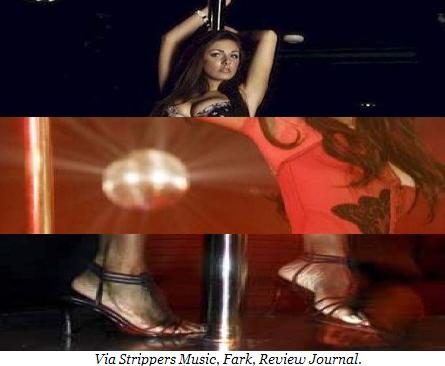
“A striptease is an erotic or exotic dance in which the performer gradually undresses, usually to music, either partly or completely, in a seductive and sexually suggestive manner.”Richard Wortley, A Pictorial History of Striptease (1976).

Well, I guess someone forgot to tell the one I saw that it was supposed to be a subtle gradation of undress.

But let’s back up: I am a feminist and proud of it. As a feminist, I am mature enough to recognise that women have control over their bodies and can do as they please with them. But, when asked recently to a friend’s birthday celebration culminating in seeing a stripper in a private hotel room, I must admit, it did not sit well with me.

For the week prior to “The Big Exposure”, as I like to call it, I debated between endorsing the empowerment of the stripper and condemning the voyeurism of myself and my friends. I tried to look at it from the point of view of a “lipstick feminist”, as Ariel Levy mentions in Female Chauvinist Pigs, who believes that stripping is empowering for women and that “putting on a show to attract men, e.g. through make-up, doing girl-on-girl physical contact, is not contrary to the goals of feminism.” Still, no matter how hard I tried to see it as empowering, I could see nothing empowering about gyrating up and down in front of men whose eyes were popping out of their sockets. I couldn’t help but feel that women who objectify their own bodies for others had no respect for themselves or other women. How could we possibly advance as respectable members of society when we are endorsing nude gymnastic moves in a spectator arena?

With all these things in mind, and a pit in my stomach, I went to the hotel room with my friends. I’d like to point out that the friend whose birthday it was is a lesbian. So, I guess we were in more progressive company. Not really.

The ratio was still bizarre: seven straight girls, three lesbians, five straight guys and one gay man. It was even. Only 50% of the crowd was supposed to be stereotypically aroused by this performance.

When she arrived, I was surprised to see her “manager”, a man in his forties wearing a tracksuit looking more like a swimming coach than an accomplice to a stripper. (What was I expecting, a pimp?) He proceeded to lay blankets and an ominous shower curtain over the carpet and plugged in the CD player. After blasting us with Lady Gaga, she arrived.

She wasn’t what I expected; tall, long black-dyed hair, a face like Layne Beachleybut with none of the talentcomplete with one grey tooth, tattoos all over and quite small breasts. I must admit, I was disappointed! I was picturing a Marilyn Monroe-esque bombshell, or at least a healthy, glowing Jennifer Hawkins type.

The complete lack of sex appeal of this particular stripper made it a lot easier to find stripping degrading. I wondered how conflicted I would have felt if I found her attractive; because, in my eyes, someone who is sexy and confident is also empowered.

There was no element of teasing, of gradually taking clothes off, as Wortley describes above. She walked in wearing a school-girl costume, with a skirt so short I could see her breakfast, and immediately bent over in front of the birthday girl. So much for the game.

From there it continued to be a sordid and debasing mixture of gyrating and splits with each layer of clothing being unceremoniously ripped off and thrown towards the manager who was “keeping an eye on us.”

I felt weird. I knew that my gaze (masculine) was objectifying her body (feminine) but, by the same token, I felt that I was being objectified by the manager’s gaze.

Once all clothing had been removed, it was time for interaction. I can tell you, there is nothing empowering about having whipped cream licked off of your breasts by a pair of lesbiansone at each breast!

A memorable act of horror occurred when one of the guys was whipped with his own belt… he very quickly stopped her and sat down again. It was interesting, as I guess everyone felt that it was okay for her to debase herself, as she’s “just a stripper” and therefore an object, but the festivities crossed the line when a man was forced to feel degraded and objectified by the gaze of his peers.

The culmination of the evening was when she proceeded to insert a man’s spectacles into her vagina… proving that she was nothing but a spectacle herself under the scrutiny of the male gaze. It almost felt like a (horror) movie moment to be discussed in a feminist studies lecture!

Mary Wollstonecraft wrote in The Vindication of the Rights of Women, the “public [male] fixation upon the female person [body] has entailed and sustained the subjection of women,” and I agree. If we didn’t live in a society that objectified women and perpetuated the notion that we are only sexy when playing to masculine fantasies, we wouldn’t be watching strippers in hotel rooms, or at all.

For me though, that’s the last time I say “whatever you want, it’s your birthday” to a friend!

Laura Money.

Fragments of Marilyn Monroe’s Literary Life.


From “Marilyn & Her Monsters” by Sam Kashner, in the November 2010 issue of Vanity Fair:

“Several photographs taken of Marilyn earlier in her lifethe ones she especially likedshow her reading. Eve Arnold photographed her for Esquire magazine in a playground in Amagansett reading James Joyce’s Ulysses [above]. Alfred Eisenstaedt photographed her, for Life, at home, dressed in white slacks and a black top, curled up on her sofa, reading in front of a shelf of books [which forms the cover for Fragments]her personal library, which would grow to 400 volumes. In another photograph, she’s on a pulled-out sofa bed reading the poetry of Heinrich Heine.

“If some photographers thought it was funny to pose the world’s most famously voluptuous ‘dumb blonde’ with a bookJames Joyce! Heinrich Heine!it wasn’t a joke to her. In these newly discovered diary entries and poems [which make up the bulk of Fragments], Marilyn reveals a young woman for whom writing and poetry were lifelines, the ways and means to discover who she was and to sort through her often tumultuous emotional life. And books were a refuge and a companion for Marilyn during her bouts of insomnia.”

Related: All Eyes on Marilyn.

Marilyn Misfit.

Lindsay Lohan: Marilyn, Eat Your Heart Out.

The Ten Books I Wanted to Read This Year But Didn’t.