On the (Rest of the) Net.

One Direction and performing straight-queer masculinity. [Daily Life]

Why India is the worst country in which to be a woman. [Daily Life] 

FOMO (fear of missing out) on YOLO (you only live once). I can totally relate to Mia’s predicament: at the moment I’m kind of experiencing a guilt or anxiety about not getting out and being social enough and doing things, but at the same time, as Mia writes, no matter how much you want to want to do something, you can’t force yourself to want to do it. So I’m taking solace in that fact. [MamaMia] 

I’ve been in two minds about the show in recent episodes, but looking back, I’m sad to see Don’t Trust the Bitch in Apartment 23 go. [Jezebel] 

We need to talk to our partners about porn. [Jezebel] 

Gala Darling has some fab tips for getting inspired and your time organised as a blogger. For those of you who visit this site regularly, you’ll have noticed that I’ve been pretty slack with content over the past couple of months, and that’s because I’ve been so uninspired. Now, as I start to get back into the swing of things and I’ve made a concerted effort to get inspired and start thinking of blog and freelance ideas, I think The Scarlett Woman will start looking more like the blog you know and (hopefully!) love. Thanks, Gala!

On the (Rest of the) Net.

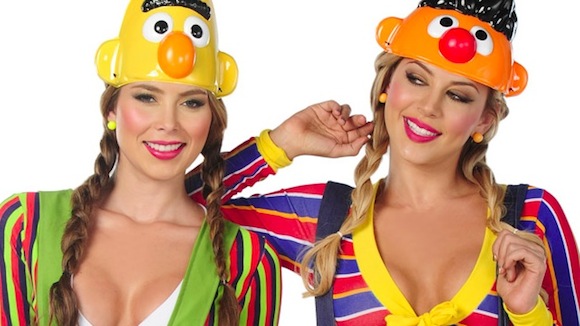
Yikes! Sesame Street gets the slutty Halloween costume treatment. [io9]

“Porn in China.” [Daily Life]

Mitt Romney’s history of flip-flopping on abortion. [Jezebel]

Plus-sized women may be getting more roles on TV and in movies and are topping the charts, but the emphasis is still on their weight rather than their talents. [Wall Street Journal]

Erin Handley interviews Clementine Ford on her feminism:

“A lot of people will only tolerate feminism if it doesn’t affect their lives in any way, at all. They will tolerate women’s quest for equality as long as it has no impact on them or their lives. And that is obviously not equality.” [Right Now]

Two Aussie feminists on why Tony Abbott can be one if he labels himself so, and why his anti-choice sentiments prove he most definitely isn’t. I tend to lean towards Monica Dux’s latter assertion: just because you say you are, doesn’t necessarily mean you are. You have to have the values to back it up, and Abbott’s coming out via his wife as a feminist is all about politics. Sarah Palin, anyone? [Crikey, ABC Unleashed]

Kate Waterhouse defends her “full-figured” question to Christina Hendricks. [The Age]

It’s unrealistic for ugly guys to get hot chicks and for hot chicks to have low self-esteem. Please. I know plenty of conventionally attractive women who have self-worth issues because self-esteem doesn’t just hinge on the way you look. Revolutionary, I know! I also know plenty of ordinary-looking guys who are a hit with the ladies. This is because personality trumps ease on the eye. And liking yourself trumps the way you look. [Daily Life]

Further to that (in fact, this article was quoted in the one above), why do conventionally attractive comediennes, like Tina Fey, play the ugly card? [New Inquiry]

Everyone should just get over nudity. After all, everyone has a naked body. [Jezebel]

It’s time to remove the stigma from STIs. [MamaMia]

Image via io9.

On the (Rest of the) Net.

The iconic photograph of “The Kissing Sailor” may actually be an image of sexual assault. [Crates & Ribbons]

Let’s put more nudity on Page 3, not ban it:

“… I say the answer is more nudity in newspapers, not less. Put more boobs on Page 3, and add some cocks too. Show people of every size, shape, colour, gender and sexuality; let them speak in their own voice, and celebrate them all. That, rather than self-censorship of adult-oriented content, would be a progressive tabloid revolution worth fighting for.” [New Statesman]

While I don’t agree with most of her sentiments, Clem Bastow makes some interesting points about the inclusion of men in feminism. This was also a topic that came up during the abovementioned “who’s-a-feminist” debate with my friends. [Daily Life]

Let’s stop debating the “culture wars”: people deserve rights. The end. [Jezebel]

Julia Gillard’s Question Time smackdown against Tony Abbott and the liberal party’s sexism and misogyny primarily against her gets the New Yorker treatment. In a nutshell, maybe Obama could take a page out of her book?

Michelle Smith’s Wheeler Centre Lunchbox/Soapbox address on girls in culture, both now and in the Victorian era. Wait, they’re not the same thing?!

I’ve been embroiled in a “I-don’t-believe-in-feminism-I-believe-in-equality” debate this week but, as Ben Pobjie rightly points out, when it comes to Kate Ellis being talked over and shouted down on Q&A, it’s about human decency, not feminism. [MamaMia]

Jill Meagher and safety on the streets from a disability point of view. [ABC Ramp Up]

The case against condom use in porn. [Jezebel]

In defence of Mean Girls‘ Janis Ian. [Rookie]

Brave isn’t “Just Another Princess Movie”. [The New Inquiry]

Image via Tumblr.

On the (Rest of the) Net.

“What It’s Really Like to Wear a Hijab.” [Daily Life]

While the mainstream media is not always the most tasteful industry, its coverage of Jill Meagher’s disappearance was invaluable in helping catch her killer. [MamaMia]

And here’s an amusing take on the sexist comments thrown women’s way after the Jill Meagher tragedy. I’ve been experiencing some of these “restrictions” myself since then, preached to me by well-intentioned but misguided friends, which I’ll be writing more about next week. [Feminaust]

Why fur is back in fashion. [Jezebel]

Instead of petitioning the fashion magazines, should we be making love instead of porn? [TheVine]

The perils of getting a hair cut as a black woman. [Jezebel]

Two of my favourite writers and unofficial mentors, I guess you could say, are in the midst of writing books. Rachel Hills and Sarah Ayoub-Christie detail their struggles with the process. Keep ya heads up, girls! [Musings of an Inappropriate Woman, Chasing Aphrodite]

“Reverse Photoshopping” a “too thin” Karlie Kloss isn’t any better than Photoshopping away cellulite or blemishes. [Daily Life]

Famous writers throughout history reimagine Cosmo’s sex tips. [McSweeney’s]

Why are all the feminists these days funny? Um, because we wised up to the fact that our ideals are better digested by the mainstream through less-threatening humour than shoving it down unwilling throats. Though we still do a lot of that!

“[Sexism’s] existence at the moment requires a tougher, wilier, more knowing, and sophisticated stance.” [Slate]

Clementine Ford’s full Wheeler Centre Lunchbox/Soapbox address on the equality myth.

Incorporating part of her speech, Ford elaborates on Alan Jones’ misogynistic comments about the Prime Minister and women in general. [Daily Life]

On the male-male-female threesome. [XOJane]

Why isn’t Mitt Romney being questioned about the way Mormonism treats women? [Daily Beast]

Event: Melbourne Writers Festival — Censorship, The Body & Porn.

With a panel consisting of David Marr, Slutwalk Melbourne mastermind Karen Pickering and author of Money Shot, Jeff Sparrow, Saturday’s Censorship, The Body & Porn session was going to be full of surprises.

I think at this stage, when it comes to porn, we’ve heard (and probably seen) it all. Marr mentioned pedophilia, and that the banning of images like Bill Henson’s is nonsensical when pedophiles have access to all the “church ceilings” in the world!

Sparrow said that we place too much importance on children respecting authority—“Do what your uncle tells you. Do what the babysitter tells you.”—when in reality, authority figures known to the child are more likely to be the ones abusing them.

Marr also asserted that porn puts all of our “human horribleness” on display:

“If you want to know what human beings are like, don’t forget the distasteful categories of porn: that’s what human beings are… It is there to paint a portrait of humanity.”

I don’t necessarily agree with that, but speaking of displays of sexuality, Sparrow had a lot to say about that as he spent a good deal of time researching the sex industry for his latest book.

Interestingly, he mentioned going to Sexpo and Planetshakers, an Aussie youth church group associated with the Pentecostal Christian church, and how they both essentially offer up sex as a commodity, and who can offer the best price for it.

Of course, in this narrow-minded society, if you’re sexually unattractive your value goes down and you’re ridiculed on websites like Is Anyone Up, a revenge-porn Tumblr, essentially. If you deign to be sexually attractive (not necessarily active) in public then you “deserve everything that’s coming to you”, but if you’re sexually unattractive, the same rules apply. And you’d better enjoy it, too, ’cause we all know you won’t be getting it elsewhere.

50 Shades of Grey was certainly in the crossfire, too, with bondage and anything that even “pinks the skin” in the porn industry receiving an unclassified and essentially illegal status, whilst the “mommy porn” novel sweeping the world is literally sold in the supermarket, but deals with the same subject matter.

Sparrow said there are two sides to the success of something like 50 Shades of Grey and, I guess, the not-necessarily-positive “pornification” and sexualisation of modern culture. On the one hand, 50 Shades is “extremely transgressive” and would have been banned 30 years ago, however it also upholds “deeply conservative” views on sex, gender and society.

I’m about halfway through the book and I can certainly attest to that. More to come on this issue.

Event: The Reading Hour.

In celebration of the National Year of Reading, today marks the National Reading Hour. While the exact time frame for the event is sketchy, and anyone who knows me knows I’ll be spending much more than one hour reading today (or on any day, for that matter), the aim of the event is to instill the importance of reading in children. From my point of view, reading is important at all ages and it’s never too late to start. The only downside is there’s less time to read all the fantastic books out there.

So, I’ve decided to get in on the action by going over all the books I’ve read this year and whether I found them good, bad or otherwise and if you should read them, too.

I haven’t read this many books since my uni days, I don’t think, when I was traveling up to six hours a day from country Victoria to Deakin in Burwood. Needless to say, there were a lot of public transport hours that needed filling, and reading was the perfect way to do that. Aside from primary school, of course, when nightly “readers” were a must and I got through several, if not up to a dozen, books a week, uni really got me back in touch with my love for reading; a love without which I wouldn’t be who I am today.

So, without further ado…

My Booky Wook 2 by Russell Brand.

If I if I didn’t have to give this book back to a friend before she moved interstate at the start of the year, I think it would still be sitting in my stack of to-be-read books (like some other borrowed tomes). While it didn’t change my world, and I much preferred Brand’s first memoir, I’m glad to have read it and moved on. Much like Katy Perry. Burn!

The Barbie Chronicles: A Living Doll Turns 40 edited by Yona Zeldis McDonough.

While Barbie is now 53 and there is now thirteen more years of fodder for a compilation of feminist musings on the doll, I really enjoyed this book and ponder it often. Aforementioned interstate friend, Laura, currently has it in her possession. I believe it is out of print now, so I was quite lucky to have happened upon it at my local secondhand bookstore. Pick it up if you get the chance.

Big Porn Inc. edited by Melinda Tankard Reist & Abigail Bray.

I was so looking forward to reading this conservative collection on why porn is bad, and it didn’t disappoint. I didn’t agree with anything in the book, but it was an eye opening look at just how anti-sex (not to mention anti-choice, anti-feminism, anti-vaccination) some people can be. What scares me is that Tankard Reist and Bray’s ideologies could be rubbing off on the susceptible with the release of this book.

The Book of Rachael by Leslie Cannold.

Feminist crusader Cannold looks at what could have been the life of Jesus’ sister, Rachael. What’s more, the book focuses on her relationship with the ultimate betrayer, Judas. It wasn’t mind blowing, but if you’re looking for something to read and want to support local, female writers, this is one for you.

The Black Dahlia by James Ellroy.

To be honest, I had lots of things on my mind when I read this so it’s almost like I never read it at all. I found it really hard to get into and to focus on the words on the page. Maybe I’ll watch the movie in an effort to more fully understand the storyline. Shameful, I know.

We Need to Talk About Kevin by Lionel Shriver.

If you haven’t read this book yet, you need to get on it, like, yesterday! So well written, so emotional, so involving and with a massive twist at the end. And please, if you’re thinking about watching the movie (which I haven’t seen yet, so don’t take my word for it: it might even be better than the book), read the book first. Looking back, this is probably the best book I’ve read this year and, dare I say it, ever.

The Hunger Games by Suzanne Collins.

Not the worst teen trilogy out there (I’m looking at you, Twilight Saga), but not the greatest, either. I found the book easy to read and also well written which, again, is more than I can say for Stephenie Meyer.

Fragments by Marilyn Monroe, Bernard Comment & Stanley Buchthal.

This part-coffee table book, part-Marilyn musings tome had been sitting in my pile of to-be-reads for almost a year and a half before I decided to actually read about one of my favourite icons. I enjoyed a rare insight into the mind of the sex symbol herself, but honestly, I think there are probably better books about her out there.

Hitman: My Real Life in the Cartoon World of Wrestling by Bret Hart.

This is the book I spent the most amount of time reading; or rather, it took me the most amount of time to read. It is a hefty memoir, but it’s not exactly written in a challenging tone, either. I quite enjoyed it, all in all, and while you probably need a background knowledge of professional wrestling to get into the book, it was kind of sad reading about all the tragedies in Hart’s life.

Remarkable Creatures by Tracy Chevalier.

I love me some historical fiction and Remarkable Creatures didn’t disappoint. Easy to get into with a bit of fluff, but it has nothing on Girl with the Pearl Earring.

11.22.63 by Stephen King.

This was my first encounter with King, and I quite liked it. He obviously has the suspense/mystery/horror (though you won’t catch me dead with one of his books—nor the movie adaptations—in this genre. I hate horror!) formula down pat. While the title and cover lines were a bit misleading (JFK doesn’t come into it until right near the end, and even then it’s anticlimactic), I really liked it and found out some historical tidbits I didn’t know previously.

The Informers by Bret Easton Ellis.

Easton Ellis is one of those writers who is good in theory, not so good in practice. I still plan on reading all of his efforts, no matter how gory and gratuitously sexy and druggy they are (this one had a central theme of sex, drugs and rock ’n’ roll in ’80s L.A.… with a side-serving of vampirism!), but sometimes I think he’s a bit over hyped. As was The Informers.

Fables: The Deluxe Editions Volumes 1 & 2 by Bill Willingham.

These are the comics Once Upon a Time is allegedly inspired by, and let me tell you, these are much better than the show. I’m not usually a fan of the comic book format, but I really enjoyed these two. Bring on the next two installments!

Drowned by Therese Bowman.

When I read Drowned, I actually had no idea what the storyline was. I remembered reading an enticing review in The Age a month or two before I convinced a friend to buy it in order for me to borrow it, but other than that, I was clueless. After reading it, it seemed there was no storyline; it was more high-concept literary fiction to my mind. But it was very evocative. Short and sweet.

Never Let Me Go by Kazuo Ishiguro.

I just finished this one on a trip away and I loved it. Similarly to The Black Dahlia, it took me awhile to get into it, concentration-wise, but once I did I found it very enjoyable. The storyline is unique and interesting, and the character development and style were some of the best I’ve had the pleasure of reading.

Music for Chameleons by Truman Capote.

So does reading one short story in the collection count as actually reading the whole of Music for Chameleons?! I bought this book from a secondhand store with the sole intention of reading the Marilyn Monroe chapter and that’s all. Kind of a waste, I suppose, but I like to support small, local businesses!

50 Shades of Grey by EL James.

I have oh-so-ashamedly left this one til last as it is by far the worst, but it’s also the one I’m currently reading. I always said I would never be caught dead reading this mediocre tripe, but after hearing John Flaus and Jess Anastasi (a coincidence her surname is practically the same as the first name of 50 Shades’ protagonist?) discuss the book at the Bendigo Writers Festival, I finally succumbed. The way I look at it, I’m approaching it with a critical eye for the purposes of research. It’s better to have an informed opinion, right? More to come.

What are you going to be reading for the National Reading Hour?

Related: Big Porn Inc. Edited by Melinda Tankard Reist and Abigail Bray Review. 

The Book of Rachael by Leslie Cannold Review.

Bendigo Writers Festival.
On the (Rest of the) Net.


Zoo Weekly, what will you think of next? Australia’s hottest asylum seekers, it would appear. [Daily Life]

The dearth of protected sexytimes on TV and in movies lead young people to have more unprotected sexytimes. [Jezebel]

Twitter: humanising the porn star. [Jezebel]

To bleed or not to bleed, that is the question most doctors should be asking their female patients interested in hormonal birth control. [AlterNet]

Apparently, six-year-olds want to be “sexy”. Cue outrage. While some points of the argument are valid, children are naturally sexually curious beings. I remember all my prep friends and I wanted to be “strippers” when we grew up, we thought Salt-N-Pepa’s “Let’s Talk About Sex” was the coolest thing going, and we used to play the “sex game” regularly. Kids just want to do what they think adults do, which they emulate in make-believe. I think it starts to become a problem if these ideals are still being expressed come the onset of puberty when the body is physically ready for what typically accompanies “sexiness”, but certainly not mentally. [Jezebel]

Image via The Hoopla.

On the (Rest of the) Net.

Glamour models as feminists? On Jodie Marsh, bullying, beauty and being “worthy” and “good” enough:

“This isn’t just a random channel 5 program anymore. Suddenly, this is feminism and misogyny in microcosm.” [Libertarian Lou’s Blog]

The leggings-as-pants debate continues, this time at feminaust. While MsElouise does make some good points about admonishing others for wearing leggings as pants being akin to fat-shaming and sexual harassment, I still maintain that if you’re going to go there, you should go there sans underwear. I’m all for a legging-as-workout pant or legging-as-costume (I regularly wear both options), but please, opt out of the VPL. Or at least wear a really long t-shirt.

And some more from feminaust: female genital mutilation.

The “barely legal” porn phenomenon. [Jezebel]

When Brynne Edelsten makes it onto a “50 Women You Should Admire” list and the prime minister doesn’t. [MamaMia]

Thank you, Sasha Pasulka, for writing this hard-hitting and just plain brilliant admonition of Chris Brown’s Grammys “comeback”. More to come on the abomination that is Brown next week. [HelloGiggles]

Still on the topic, heinous Facebook and Twitter updates from young women defending Brown’s assault on Rihanna and actually expressing a desire for him to hit them, too! What is this world coming to? [The Good Men Project]

“He just has a crush on you” in response to playground harassment of little girls at the hands of little boys is just reinforcing that adult harassment of women at the hands of men means “he just really loves you”. Bullshit! [Views from the Couch]

Is this the end of men’s magazines in Australia? [MamaMia]

Why is Australian TV so white? [MamaMia]

On being a gay black man. [In America]

The horrible reality of being a fashion mag intern. In the U.S., anyway. [Jezebel]

Following on from the anti-abortion controversy of iPhone’s Siri, Android’s ChaCha search engine is “anti-abortion, anti-evolution, racist and even thinks that rape may be justifiable”. [Gizmodo]

Image via Acid Cow.

Book Review: Big Porn Inc. Edited By Melinda Tankard Reist and Abigail Bray.


As I’ve written here before, I don’t really see a problem with porn. So long as it’s consumed in a healthy way, viewed in perspective and is made in an ethical way (no child pornography, for example, which Big Porn Inc. focuses heavily on), I don’t see a problem with it.

However, the contributors and editors of Big Porn Inc., a tome that’s made a splash since its release, thinks all porn is bad, okay? They don’t take into account things like upbringing, socio-economic background and other factors, such as peer groups, in the affect porn can have on consumers. When those aspects are relatively good, I don’t think porn is a problem.

But it’s not just consensual, enthusiastic porn the book focuses on. Take the chapters on sex with animals, child porn and degradation. “Slavefarm” (p. xx) and “the ‘crack’ of an infant’s pelvis while you are penetrating them” (p. 199) are some of the most extreme and abhorrent examples in the book (I’ll pause while you throw up over that last one, especially), but are by no means the norm. Bestiality, rape and pedophilia are mental illnesses and are about control; they’re not just something you decide to do after stumbling upon the wrong porn link.

Not only does Big Porn Inc. focus on the extreme, it’s also quite sexist. The majority of articles see women as needing to be protected from porn and the men who view it. Militant anti-porn feminist Catharine MacKinnon writes that “women have long known” the evils of pornography (p. 12), while “Caroline” writes pathetically about how discovering her husband used porn was the ultimate betrayal (p. xxix).

I also found Big Porn Inc. to be anti-choice and anti-feminism. Renate Klein, in “Big Porn + Big Pharma: Where the Pornography Industry Meets the Ideology of Medicalisation” (p. 86–104), asserts that female bodies are being “cut, modified, drugged and penetrated—all in the name of ‘choice’ and ‘it is my right’.” The footnote to this sentence admonishes sexual reassignment procedures as a bi-product of the pornography industry.

This is not to mention its anti-vaccination sentiments.

Pseudoscience reigns supreme, also, when Maggie Hamilton writes, “… boys and girls generally do not have a natural [original emphasis] sexual sense until they are between 10 and 12 years old.” I studied psychology in high school, and even at its base level, we know that young children are very aware of their sexuality. I remember playing the “sex game” (whatever we thought that meant!) in my first year of primary school. Observing children in the playground as part of my Year 10 childhood psychology class they, too, were playing the “sex game”! Sure, we don’t want kids that age accessing porn and getting all these fucked up ideas about what naked bodies and (porn) sex looks like, but their natural curiosity will ensure they will try to at some stage. That’s where healthy discussion from parents, teachers and other adults about what sex, in all its carnations, means.

Not all of the contributors are people I disagree with. Sex and anti-violence writer Nina Funnell is someone I admire, and whose inclusion in Big Porn Inc. was what compelled me to read it. She writes about sexting and the intrusion of the camera in our lives (p. 34–40), topics on which she is writing a book. While teen sexting and “peer-to-peer porn” can be dangerous (child pornography charges and having your image on the internet til the end of time before you’ve even come of age are frightening thoughts), I think they are a little out of place in the Big Porn scope of things. In my opinion, they are worlds away from actual consensual porn; the making and consumption of. Again, as long as parents and teachers are there to advise why sexting is something that should be done after careful thought and your 18th birthday, I don’t see it as the problem porn is made out to be.

When I spoke to Rachel Hills about her profile on Melinda Tankard Reist and her thoughts on Big Porn Inc., she contended that the book could have done away with the multitude of contributors in favour of fewer, more in-depth essays. This would perhaps allow Big Porn Inc. to be taken more seriously by pro-porn (or at least anti-anti-porn) people like ourselves. I have to say I agree, as by about two thirds of the way through I was ready to put it down, especially as the last section reads like an advertorial for Anti-Porn Inc., which is something I’m not buying.

Related: In Defence of Porn.

Is Big Porn Inc. Anti-Vaccination As Well As Anti-Porn?

Picture Perfect.

Elsewhere: [Sydney Morning Herald] Who’s Afraid of Melinda Tankard Reist?

Image via Melinda Tankard Reist.

Books: Is Big Porn Inc. Anti-Vaccination As Well As Anti-Porn?

It’s unfair to throw all the contributors into the one, anti-porn basket, but the authors featured in Big Porn Inc., edited by Melinda Tankard Reist and Abigail Bray all seem to think porn is eroding our society. I haven’t finished the book yet, but stay tuned next week for the entire review.

One aspect of Renate Klein’s essay on the correlation between pornography and the medical industry (“Big Porn + Big Pharma: Where the Pornography Industry Meets the Ideology of Medicalisation”) had me livid: that the cervical cancer vaccine, Gardasil, was an unnecessary luxury vaccine promoted by the porn industry for slutty girls. Sure, Klein doesn’t actually write that, but it is certainly implied.

Klein has done her research, though. She sites the website SaneVax which reports that the HPV (human papillomavirus) vaccine has resulted in 5,010 women who “did not recover” after receiving it, whatever that means. On viewing the website, it looks more like a propaganda machine rather than “an international women’s group that promotes safe vaccination practices.”

This way of thinking—that vaccination is unnecessary, a moneymaking scheme thought up by the government to keep tabs on us, and that girls who receive the Gardasil vaccine are also receiving license to slut around without thinking about the consequences of unprotected sex (or sex in general, some would say)—is rampant on the U.S. conservative scene at the moment. Michele Bachmann, anyone?

In Klein’s chapter, she talks about Gardasil in relation to the safety measures porn stars should take to ensure they stay disease free and are thus able to work. But Gardasil is only recommended for teens, or at least those who’ve never had sex before (including oral), as most people have contracted or will contract HPV during their sexual lifetime.

Just like with any vaccine or medical ailment, there are risks, but is it safer to go unvaccinated and risk spreading disease onto others? What infuriates me is that those who already have small minded, conservative views are the people whom Big Porn Inc. will attract; those who are susceptible to the anti-porn, anti-sex and anti-vaccination messages the book espouses.

Related: Conservative Feminist Melinda Tankard Reist for Sunday Life.

Elsewhere: [SaneVax Inc.] Homepage.

[New Yorker] HPV, Perry & Bachmann.

[Jezebel] Michele Bachmann’s Curious Tale of Vaccination Gone Wrong.

[Jezebel] Oral Sex Linked to Throat Cancer, Is Best Argument Yet for Giving Boys HPV Vaccine.

Image via Melinda Tankard Reist.