“In some ways, Gaga’s entire persona seems to question what’s expected of women. It’s there in the internal contradiction of her name: ‘Lady’ with its suggestions of gentility, sweetness, high breeding; ‘Gaga’ with its intimations of infantility, madness, antic spirit. She has often been compared with a drag queen and, in many ways, this seems apt. Part of the brilliance and beauty of drag, of course, is that it can potentially expose sex roles—most often femininity—as a performance. A drag queen in enormous false eyelashes, teetering heels, a tight dress, heavy makeup, a voluminous wig, talon-like nails, is mimicking a woman, while underlining that what’s expected of women is in no way natural. With her increasingly bizarre getups, Gaga does the same.” [Queerty]
“By baring it all, be it emotionally or physically, both reality stars and porn stars have a certain vulnerability about them that’s relatively uncommon for Hollywood celebrities. Neither porn stars nor reality stars are removed; their brand of entertainment is the exact opposite. And this unabashed openness makes them more relatable than their mainstream counterparts; these stars are human. They’re sweaty. Their faces are animated. Their makeup gets smudged. Their hair gets fucked up. They’re not perfect, and they’re comfortable presenting that to the world.”
“The FB site provides an opportunity for men everywhere to share their sexual fantasies for the young maid of honour. Knock her up, bash her in, cause her injury such that she would not be able to walk. Wrecking and shredding a woman’s anus is a popular porn script.
“And all this is supposed to be accepted as a compliment. Of course there are no ‘Pippa the Wonderfully Supportive Sister Appreciation Societies’ or other pages lauding her gifts and character and other non-body related attributes.”
Ever been hollered at in the street as you walk past a construction site? “Why Men Cat Call” sounds interesting, but is disappointingly dismal.
“Amélie sex (noun): intercourse undertaken in the classic missionary position which, by itself, is not objectionable—during which the male is impervious to the female’s lack of enjoyment.”
“If someone calls you a slut, there’s nothing you can say to refute the claim because it never had any cognitive content anyway.
“If you try to argue that you’re not a slut, you’re implicitly buying into the idea that there are sluts out there. If there’s some criterion that will set you free, that standard will indict someone else—someone with a higher ‘number,’ or shorter skirt, or a later curfew. So we get bogged down in slut/non-slut border skirmishes over a line nobody should have tried to draw in the first place, and we all lose.
“Even virginity is not a defense against alleged sluttiness. Virgins can be sluts if they dress the wrong way, walk the wrong way, or even instill the wrong thoughts in other people. Some people will convict you of sluttitude because your body is the wrong shape, or the right shape.”
Sluts just can’t win. That’s why you should (as above) embrace your inner slut and join the SlutWalk next weekend in Melbourne, at the State Library from 1pm. I’ll be blogging more about this throughout next week.
“It is not ‘respectable’ to be black, female, voluptuous, and sexy on a stage for profit, but it is perfectly acceptable to be black, female, muscular, and ‘unsexy’. Is this double standard acceptable? Is one profession truly more sexualized than the other?”
I don’t entirely agree with this hypothesis. I think it’s far more acceptable to be conventionally and femininely sexy, as opposed to muscular and unconventionally masculine. Sure, the video vixen job title isn’t exactly perceived as a classy, “respectable” occupation, but neither is female bodybuilding. Society as a whole would much rather see women shaking what they were born with (or, you know, what the plastic surgeon gave them) than manipulating their bodies via hormones and free weights.
“$150,000 Doesn’t Make You Rich. Discuss.” Okay, I will: I come from a family where my mother stayed home with my sister and I, and my dad worked three jobs at some stages. I was very young then, so I have no idea how much money he brought in. But I can tell you, it sure as hell wasn’t $150,000, and we struggled to keep our heads above water week-to-week. We never had savings, we could never go on family holidays that required much travel because we couldn’t afford flights or accommodation. I missed out on all but one of my seven cousins’ weddings because we couldn’t make it interstate. My parents have only bought two houses in their lifetime: the other nine we resided in throughout my lifetime were rentals. I also don’t know how much my dad makes now, but it is a lot less than $100,000, and my mum’s on a pension. In my opinion, $150,000 a year is rich.
“Opposition leader Tony Abbott says the Government is punishing ‘aspiration and hard work’,” with the new middle class welfare breaks. Is working three jobs and hardly being able to see your family not hard work, Mr. Abbott?
Texas’ “10 Hottest Female Sex Offenders”. “No doubt that 4-year-old boy, that 2-year-old boy and that 13-year-old girl are taking solace even as we speak that at least they were abused, molested and assaulted by a hot person.”
“Is Kate Hudson Coasting on Cuteness?” My money is on “yes”. When was the last time she starred in a box-office smash, or was nominated for an award other than a Razzie?
Actress Ashley Judd released her memoir recently. In it she shares her thoughts on hip hop and rap being misogynistic and promoting a “rape culture”.
She’s not the only one to have released a memoir with her thoughts on the sexualisation of violence in rap and hip hop.
I just finished reading Mia Freedman’s latest effort, Mia Culpa: Confessions from the Watercooler of Life (review pending), and in it she writes:
“… If I were prone to hyperbole, which I totally am, I would also add: pornographic smut! That would be the music videos playing on the screens. It was the usual stuff: slutty, near-naked, thrusting, panting women and misogynist black rappers singing about sex and bitches and hos. Music-video shows are banned at my house for this exact reason. I don’t expect them while surrounded by bowling kiddies, okay? … dozens of small boys and girls hurling their bowling balls towards giant jangling fake breasts and writhing G-string-clad buttocks.”
Okayyy, she’s painted a very realistic picture there, and when it’s put like that, it’s hard to see why there was such an uproar about Judd’s comments on the subject.
It’s not like there wasn’t any childhood sexual assault and drug use in there for critics to get all shocked and awed over!
I was absolutely disgusted by Bob Ellis’ take on the ADFA sex scandal on ABC’s The Drum Unleashed, comparing the unconsented filming of a young female cadet during sex to the girls discussing last night’s date on Sex & the City. Here are some choice excerpts:
“Let us imagine the girl agreed to be filmed, and then, afterwards, being mocked for it, and flabbergasted by the number of leering hoons who saw the film, made the complaint. Would that then occasion the sacking of her commanding officer, the court-martial of fifteen or twenty of her fellow recruits, and the bastardising of her lover?
“… She would have been mortified. She would have cursed for months the prurient observers of her bed games. She would have railed at them in the canteen. She would have sobbed on the phone to her mother. She would have attracted some sympathy. She would almost certainly have got over it… And she might… have married the boy.”
“… They, and we, should be careful when we attend too closely to what occurs in a bedroom consensually, and how we punish either participant.
“… Is the young woman, moreover, to be named, and acclaimed, and promoted, and hereafter entrusted with frontline command on some field of battle? Who would trust her in any high army position? Who would be sure she was truthful? Or sound of judgment? Or loyal? Or reliable under fire?”
To end, he makes sure we know that group sex didn’t occur, “as it sometimes does in traveling footballers’ motel rooms”, as if that somehow makes it okay.
Kim Powell writes in response at News with Nipples about Ellis’ assertion that (male) society owns female bodies, as he began the above piece by reminiscing about an old M.A.S.H. episode in which the shower Hot Lips Houlihan is using is lifted by a crane and the menfolk gaze at her naked body.
Girl with a Satchel posts a smashing review of Tina Fey’s Bossypants.
“If a fat person defied any of these pronouncements in any way, they spoke of having their lives and experiences denied. They couldn’t really have low blood pressure. They couldn’t really be getting married.
“The hostility fat people experience is extreme. One woman spoke about being on an operating table for a C-section and having a surgeon mock her fat, suggesting they get rid of it while they’ve got her open. Another spoke of sitting in an ambulance while a police officer refused to believe she was raped. Others were told they should be happy to have been sexually assaulted. We heard about how transgender persons were belittled for being too fat to pass. We heard about fat people who were sick and were denied treatment until they lost weight. Fat mothers were told they were selfish for being fat because they would orphan their children. Or that their children would never love them. Or that they’d just ruin their children’s lives so maybe the baby should just die in the womb.”
Gala Darling offers an interesting take on pageantry. It seems not all beauty queens are vapid glorified prom queens with “miles of hair extensions, industrial-sized cans of hairspray and gallons of butt glue”.
“The reason Queensland Premier Anna Bligh was able to handle the flood crisis with such competence [is because she is a mother], according to a fellow mum. How true, how true, clucked a host of TV talk show mums the next day, as the commentators all agree that Anna won the ‘image’ war over Julia in the aftermath. Then of course she would—only a mother can cry with conviction for lives lost.”
“So 90210 was an important early building block of enlightened sexism because it insisted that the true, gratifying pleasures for girls, and their real source of power, came from consumerism, girliness, and the approval of guys…”
My friend Anthony and I were discussing the benefits of cheap Coles milk when we paused and though, what exactly does cheap milk mean for farmers and why all the fuss? Rick Morton of MamaMia is here to answer our questions.
Speaking of, MamaMia’s 3.0 launch is the only blog redesign I’ve liked in recent months (Jezebel, I’m looking at you).
“Wait? What? This is where it gets interesting for me as a sex positive parent. My son just went from wishing he was sexy to shaming a girl for being just that? I rolled up my sleeves and got ready to do some unpacking.” The unpacking the primary school backpack on “Slut-Shaming on the Playground”.
Michael Cole, WWE announcer, tweets a gay slur. GLAAD faux pas or staying in character?
Are disability jokes really that bad? Or are we all just going PC crazy? (Just ask Laura Money and Kieran Eaton at their Unfinished Business stand-up show for the Melbourne International Comedy Festival.)
“In the beginning, that wasn’t enough for many booksellers, who deemed Sweet Valley too ‘commercial’ for their readers. The Times snubbed the series; librarians fought to keep their stacks free of the ‘skimpy-looking paperbacks,’ as one library journal put it. It was Pascal’s fans who defended her: buying a dizzying 250 million copies before the series published its 152nd and final title, in 2003. The series even became a case study in how to get young girls to read. ‘Sweet Valley changed the dynamics of the industry,’ says Barbara Marcus, who, as former president of Scholastic’s children’s business, published The Babysitter’s Club, Goosebumps, and Harry Potter. Sweet Valley spawned seven spinoff series, a TV show, a board game, and dolls. Not until Twilight came along have girl fans been so loyal.”
In this vintage post from the time of Jersey Shore’s debut, Irin Carmon discusses the cast’s views “On Beauty & Not Even Looking Italian”. Quite interesting, actually.
“Holding tight to a mission statement that stands first and foremost to ‘empower women,’ and a slogan stating the brand is one to ‘Inspire, Empower and Indulge,’ the company ‘helps customers to feel sexy, bold and powerful.’
“Where once sexualized representations of women in the media presented them as passive, mute objects of an assumed male gaze, today women are presented as active, desiring sexual subjects who choose to present themselves in an objectified manner because it suits their ‘liberated’ interests to do so.
“Not only are women objectified as they have been, but through sexual subjectification, they must also now understand their own objectification as pleasurable and self-chosen.”
“I’m trying to say that our First Lady does not project the image of women that you might see on the cover of the Sports Illustrated Swimsuit Issue, or of a woman Alex Rodriguez might date every six months or what have you. I mean, women are under constant pressure to look lithe, and Michelle My Belle is out there saying if you eat the roots and tree bark and the berries and all this cardboard stuff you will live longer, be healthier and you won’t be obese. Okay, fine, show us.”
“This gets at my perennial problem with Oprah. She’s all about the self-determined destiny. This comes from hanging out constantly with celebrities, the cultural lottery winners of the world, and asking them about their origins and beliefs. Sure, some of them say they were lucky in some way, but what Oprah really digs for is that little gold nugget of ego in everyone that says, “I did it my way, and I always knew I would!” But success woven from big dreams is an easy pattern to discern if you’re only interviewing winners…”
While I don’t agree with Erica Bartle’s comments—I believe that Stefani Joanne Angelina Germanotta was “born this way” as Lady Gaga, and everything she does is an extension of herself—the girl with the satchel raises some interesting points about not needing “an alter ego when you’re happy with who you really are”.
“…If I ever saw a woman dressed like that either here in the city, or anywhere else in the world, I’d throw a Twinkie at them, tell them to take a long look in the mirror and eat a damn carb for a change. Yes, I keep Twinkies on me for such occasions… Carrie once threw a Big Mac at Big, so throwing things have been all the rage ever since, right?”
“… Men aren’t happy because they’re not being real men. They’re denied the opportunity to pursue, to go after the woman they reckon is perfect for them. That’s because they’re being pursued by women. Why? Cos everything is out of whack (women are used to chasing things and get impatient when men don’t approach, but also because the men aren’t pursuing… cos they don’t have to… and it goes around and around). And so men feel emasculated by this. Because men are meant to be the hunters. The peacocks who do dances and display their prowess to women, to earn female trust and affection. Since the cost of partnering is higher for women, they must be fussier and sit back and weigh up their options. This is a biological imperative.”
“…What’s important is getting women to question every decision they make on the grounds of what insecure men might potentially think about it, men you’d never want to date anyway because their insecurities would make the relationship hell. And, more importantly, because you’re not physically attracted to them—something no amount of data or bullshit studies on the internet will ever change. Yes, women are ruining everything by not planning their lives expressly according to men’s biological clocks and wishes.”
“Michelle Obama is a Princeton and Harvard-educated lawyer and former executive at the University of Chicago Hospitals system who happens to dress pretty well and be married to the president of the United States of America. But what are the stories about her that have dominated the media? They’re not about her skills, her experience, her mind, or even about her almost disgustingly uncontroversial pet issue, fighting childhood obesity. The Michelle Obama News is about whether her eyebrows are ‘angry.’ Whether her clothes mark her as a ‘new Marie Antoinette’… [or a] ‘new Jackie Kennedy.'”
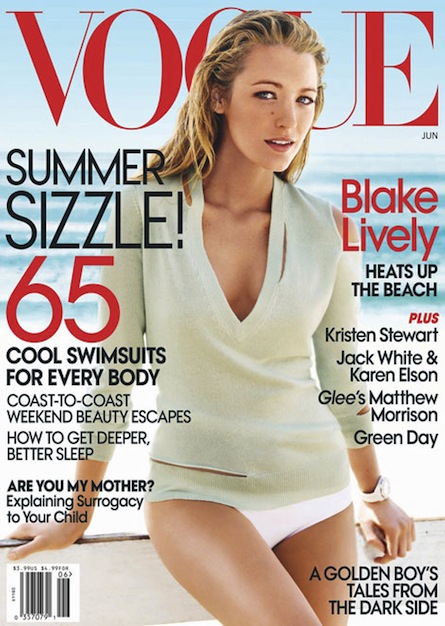
I disagree with most of Miranda Devine’s views in “Buying a Baby—Not a Pair of Shoes”, but one thing’s for sure: Nicole Kidman’s surrogacy is one contentious issue.





 The Scarlett Woman