On the (Rest of the) Net.


Once upon a time, a disillusioned Los Angeles writer bemoaned the fact that when you start getting dermal fillers and can’t speak to someone else who hasn’t, “you realise there is actually something quite wrong with L.A… And then along comes Heidi Montag and you feel normal again.”:

“The amount of women, like Heidi, I see in Los Angeles walking around like blow up dolls, victims to the horrific mental disorder of body dysmorphiais huge. Body dysmorphia is as much a disease as anorexia, as bulimia, as over-eating, as alcoholism, drug addiction. These are mental disorders which manifest themselves in physical self-harm.”

Like the compulsion to have DDD size boobs implanted on your tiny, surgically-sculpted frame that cause you constant pain and prevent restful sleep and exercise.

Girl with a Satchel asks if new British magazine “…Just as Beautiful [is] Fetishising & Sexualising Fuller Female Figures?”

From “Gender is Not Just a Performance”:

“It is a crass oversimplification, as ridiculous as saying all gender is genitals, all gender is chromosomes, or all gender is socialisation. In reality, gender is all of these things and more.”

To celebrate No Make Up Week, Rachel Hills contemplates why we feel there’s something wrong with us if we don’t go around looking flawless at all times.

Still with Rachel Hills: her “Kanye West Syndrome” article, “I’mma Let You Finish…” and “Himglish & Femalese”, about how men are women are the same, but different, are stand-outs.

The New York Times, in an article from last year, ponders the vampire’s place in fashion.
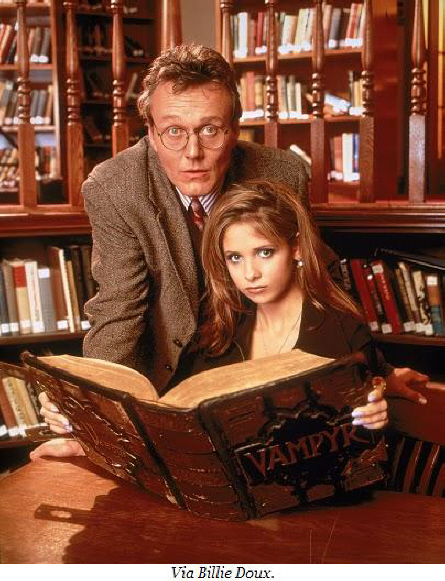
In more vampire news, Billie Doux offers up Buffy Quotes for Every Occasion”, paying special attention to librarianship, in which these gems pop up: “I love the smell of desperate librarian in the morning,” and “I mean, I can’t believe you got into Oxford… That’s where they make Gileses”.

Gender blogger Greta Christina lists the “5 Stupid, Unfair & Sexist Things Expected of Men”, in which she states that “… sexism hurts men. In particular, … our society’s expectations of men, [and] our very definitions of maleness. I’ve been looking at how rigid and narrow many of these expectations are…”, such as “being tall”! Not much a man can do about his height… much like the stupid, unfair and sexist things expected of women.

We all know how much I love professional wrestler cum author cum sexual assault crusader, and finally, Jezebel has cottoned on to the awesomeness that is Mick Foley, even going as far as to say that “we need more men like him.” Amen to that. Also, check out his blog.

There’s a lot of debate over whether a straight man and a straight woman can be “just friends” (FYI, I believe they can), and this article favours the notion that having “Platonic Female Friendships Can Make For a Better Man”.

If my love for Beauty & the Beast (the DVD is currently out of the Disney vault on re-release; I have a birthday coming up…) is anything to go by, “Brunettes Love Beauty & the Beast”. As “princess hero”-affirming as that might be, the article ends on a negative note, saying that “a brunette [is] more prone to rational expectations of life and thus… the ‘We Love Belle’ fan-club must be an awfully boring place to be… Blondes: 1 Brunettes: 0”. Ouch.

ScreenCrave on why Twilight’s Bella Swan is a Feminist’s Nightmare”.

In the spirit of such Girls Night In staples as Mean Girls and Bring It On (more on my Girls Night In to come next week), Jezebel advocates for the “5 Life Lessons Learned from The Ladies of 00s Teen Films”.

In “Print This Out & Give it to Every Boy You Know”, Jezebel debunks the myths of the feminist. For example:

“[Myth:] Feminists are angry/predominantly lesbians/man-haters/all of the above… Some women are angry, yes. Some are lesbians. And some probably hate or fear men. Some women also identify as feminists. These characteristics exist independently of each other. If there’s overlap, it’s coincidental and correlated or causal…”

and

“Feminism has more flavours than Baskin-Robbins and a hundred and one areas of focus, covering everything from reproductive rights to international development to political reform or popular culture. Beyonce is a feminist and so is Hilary Clinton. And men can be feminists, too! It’s a big tent party, y’all! Heck, some women live their entire lives according to feminist principles, but never use the term.”

I would like to tell that to a certain “I hate feminism” espousing lady I know…

Magazines: Poor Little Rich Girl—Lindsay Lohan in Who.


Who’s feature on Lindsay Lohan’s fourth trip to jail (albeit for less than a day), and the accompanying four mug shots, paints a bleak picture.

While I think Lindsay is a great actress and has the promise to really shine onscreen, I do believe she has massive psychological issues stemming from her upbringing, the burden of a career as a child star and subsequent foray into the Hollywood drug and party scene.

She was obviously coddled by her parents and, later, her minders, managers and enablers so that, at age 24, “she can’t stand to be alone, ever” at a time in her life when she should be taking responsibility for her actions and turning into a true adult.

A recent article in The New York Times Magazine that deals with the Gen Y/“20-something” stigma, aptly titled “What is it About 20-Somethings?”, asserts that those “who don’t have an emerging adulthood” (from ages 18-25, which involves finishing school, moving out of home, becoming financially independent all of which Lohan has done and, traditionally, getting married and having children [factors which aren’t so paramount nowadays] but, especially, making mistakes and learning from them on your own), like Lohan, “might face developmental tasks identity exploration, self-focus, experimentation in love, work and worldview” may manifest themselves in later life, as a mid-life crisis, for example.

“Emerging adulthood must be both universal and essential,” because “if you don’t develop a skill at the right stage, you’ll be working the rest of your life to develop it when you should be moving on… The rest of your development will be unfavourable altered.”

Perhaps one of these skills is appreciating alone time, not only in superficial terms, like spending a day at home by yourself engrossed in a good book, a movie marathon, or spring cleaning, but in terms of reflecting on your experiences and, again, learning from them.

Clearly, Lohan has not learnt from her mistakes involving drugs and alcohol, with five stints in rehab in addition to her four in jail.

“What is it About 20-Somethings?” mentions the Yellowbrick residential program in Illinois, whose “philosophy is that young people must meet these challenges without coddling or rescue.”

While some rehab programs try to nip undesirable behaviour in the bud, Yellowbrick does the opposite: “We want the behaviour to unfold, and we want to be there in that critical moment, to work with that behaviour and help the emerging adult transition to great independence.”

A common belief in opposition to the “Lindsay Lohan needs help” mentality is that she’s still young, and for a lot of normal (re: out of the spotlight) young people, her behaviour is conventional. If so, this behaviour is unfolding naturally, and hopefully she will grow out of it. After all, she does have one more year left of “emerging adulthood”.

Elsewhere: [NYTimes] What is it About 20-Somethings?

[Jezebel] In Defence of Lindsay Lohan.

On the (Rest of the) Net.


I’m filing all Mad Men titbits in one hit. I hope you can handle it.

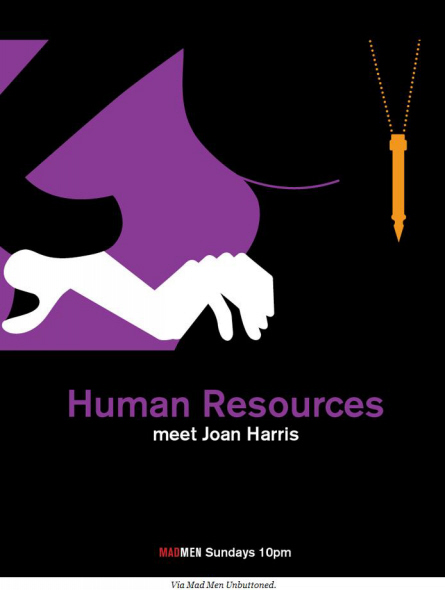
1. Love the latest promo posters designed by Christina Perry. The one with Joan’s likeness is, of course, the fiercest.

2. Damaged child of Don Draper and Betty Francis, Sally Draper, deserves “A Freudian Analysis”. And her fair share of Freudian therapy, I would guess.

3. And so does Betty, for that matter. Perhaps a therapist that doesn’t report back to her husband. For now, though, she’s content to make herself over.

Advice blogger Penelope Trunk tells us “How to Write About Your Life”:

“… [The] number one rule is that if you write about your life there must be a redemptive moment because people like that…

So, okay. I try to see that. I mean, I’ve read plenty of memoirs Girl, Interrupted, Smashed, Darkness Visible all good books. All very redemptive at the end, for sure. But I’ve also read Anna Karenina. Well, I haven’t, but I’m able to spoil the ending for you right now anyway… She gets hit by a train. I think she kills herself.

That seems redemptive to me. I mean, at least she doesn’t have to wake up to her same problems every day.

I have told this to my… agent. She said that people do not want to read about my fascination with suicide.”

Jill at Feministe writes of her “commitment to ending up an old maid” in the 2007 article, “I’m Never Getting Married”.

Diablo Cody asks the original “Misery Chick”, Daria Morgendorffer, if her crush, Trent Lane, and the other “Trents of the world are ever suited to long-term relationships…?”. Daria’s response?

“I always thought of Trent as being the Dave Navarro of high school… Considering a girl like Carmen Electra couldn’t maintain true love with Dave Navarro; and Sandra Bullock couldn’t whip Jesse James into commitment; and Pam Anderson couldn’t land Tommy Lee or Kid Rock or Tommy Lee. All epic fails.” How profound.

Since when did mobile phones cease to become telephones? “When my so-called phone rings, my first reaction is ‘Shit. What’s wrong now?’ [However] When I get an email or text message, I feel a tingle of optimism.” My feelings exactly.

Harkening back to the “Feminism Has Failed” debate, where my thoughts were that it hasn’t failed for me personally, but for a woman who is not able-bodied, perhaps it has. Disabled Feminists ask if there’s “A Place at the Table For Me?” when discussing body image. Very thought provoking.

Keanu Reeves just can’t catch a break. Now, “The 12 Most Depressing Keanu Reeves Quotes”. My favourite? See above.

More feminist goodness, this time from Echidne of the Snakes and touching on the “burqa debate” and how women dress in different societies and cultures.

Again, an old-school article from The New York Times entitled “What’s Wrong with Cinderella?”. This is (apparently) what’s wrong with Cinderella and the other Disney princesses:

“…‘I see girls expanding their imagination through visualising themselves as princesses, and then they pass through that phase and end up becoming lawyers, doctors, mothers or princesses, whatever the case may be.’

Mooney [who produced the above quote] has a point: There are no studies proving that playing princess directly damages girls’ self-esteem or dampens other aspirations. On the other hand, there is evidence that young women who hold the most conventionally feminine beliefswho avoid conflict and think they should be perpetually nice and prettyare more likely to be depressed than others and less likely to use contraception…

The infatuation with the girlie girl certainly could, at least in part, be a reaction against the so-called second wave of the women’s movement of the 1960s and ’70s (the first wave was the fight for suffrage), which fought for reproductive rights and economic, social and legal equality. If nothing else, pink and Princesses have resuscitated the fantasy of romance that that era of feminism threatened, the privileges that traditional femininity conferred on women despite its costsdoors magically opened, dinner checks picked up, Manolo Blahniks, Frippery. Fun. Why should we give up the perks of our sex until we’re sure of what we‘ll get in exchange? Why should we give them up at all? Or maybe it’s deeper than that: the freedoms feminism bestowed came with an undercurrent of fear among women themselvesflowing through Ally McBeal, Bridget Jones’s Diary, Sex & the Cityof losing male love, of never marrying, of not having children, of being deprived of something hat felt essentially and exclusively female.”

Following on from this, Rachel Hills of Musings of an Inappropriate Woman, writing in The Australian Literary Review in July 2008, untangles the sexualisation of children. Again, well worth the read.

We’ve gotta give the guys some attention, too, and Newsweek does just that with “Men’s Lib” and retrosexualisation:

“Since the 1950s, the image of American women has gone through numerous makeovers. But masculine expectations remain the same… The term ‘retrosexual’ has all but replaced ‘metrosexual’ in the lifestyle sections of national magazines, which are full of stories about affluent urbanites wearing hunting garb, buying designer axes and writing about the art of manliness on blogs with names like (ahem) The Art of Manliness.”

Jezebel with the quirky genius that is their movie reviews: and a double-whammy at that. Firstly, there’s “Important Life Lessons from B-List Teen Movies of the ’90s” like The Craft and Can’t Hardly Wait. And secondly, in the same vein, they profile Easy A and how it “… Tackles Slut-Shaming, Gossip & What We Expect from Girls Now”. Review to come next week.

Stylish Thought muses on “The Joys of Being Alone”, a concept which I am none-too-familiar with. I find people who don’t like being alone freaks, as does blogger Fajr. Love the accompanying pic, too.

After all that, this should have been called the jumbo edition!

On the (Rest of the) Net.

Frock & Roll asks “What Makes a Compelling Website?” Frequent updates, a unique writing style, an interesting story to tell and expertise (on things like “how to make a pillowcase from a DVD player”). Also, the final instalment of “The Blogger’s Guide to Hustling” is now online.

Darling of the magazine world, Frankie, is profiled on Pedestrian.TV.

A pro-hunting friend of mine put me on to this article featured in The Age, entitled “Men Who Kill”. The provocative title certainly reflects what a lot of animal-loving, vegetarian Greenies think about hunters (I, myself, have conflicting feelings about being a meat-eating, leather-wearing, zoo-goer versus being staunchly against animal cruelty, puppy mills/pet shops, fur, whaling etc.), but one quote from the article is particularly thought-provoking: “It’s [the rabbit] out and about and ‘bang’, the next thing it knows is nothing. It’s not tormented by a slaughter yard or fed hormones.”

In other Barbie news, Chloë Browne, guest blogging at Em & Lo, asserts that you can be a feminine feminist… and a Barbie connoisseur. Amen.

To celebrate season two of Jersey Shore, The Atlantic thinks that “We Are All Snooki”, the undisputed breakout star of the show, in terms of “crafting public selves”. Only Snooki’s public self is a whole lot more outrageous and famous than most of ours.

Bret Easton Ellis does The Babysitters Club? WTF? But he does it oh so well. For example, Kristy says, “Like, sorry that you have diabetes Stacey, but do we have to spend half the afternoon discussing it? And yeah, it really bums me out to watch Claudia snort up half those Pixie Stix when she is so blatantly trying to get attention to her sugar problem…” Speaking of Claudia, her chapter is far better; very passive aggressive, in the vein of BEE:

“We were going 30 in a 25 mph Stoneybrook crossing lane, my dad’s hands clenched white against the wheel while I could practically hear him grinding his teeth all the way in the backseat. I was sitting next to my older sister Janine, who had spent the last three days on some sort of cleanse diet because she was, in her words, ‘packing on the pounds like I was the one eating all the junk food.’ Or because someone had switched out her carefully hidden birth control pills with orange Tic Tacs last month. Either one.”

Sometimes it seems my sister and I are the only ones on the face of the earth who have seen/remember/love the ’80s teen movie, Teen Witch. Until Jezebel profiled it! Above, a choice rap clip from the film!

Erica Bartle has a discusses the perils of committing to a comprehensive review of all the September issues and promotes blog loving on Girl with a Satchel.

An oldie but a goodie: “The Self-Manufacture of Megan Fox” at The New York Times.

We can’t have “On the (Rest of the) Net” without the requisite Mad Men link. This week it’s “Mad Men’s Very Modern Sexism Problem” at The Atlantic.

On the (Rest of the) Net.

Taking inspiration from Gala Darling: These stunning pictures make me nostalgic for summer days at the fairground… oh, that’s right, I never spent summer days at the fairground. And certainly not in a playsuit with balloons. Via The Cherry Blossom Girl.

Jezebel really has it in for Facebook, doesn’t she? My favourite anti-FB post from the site this week is “When it Comes to Women’s Issues, Facebook Still Hasn’t Figured Out How to Play Fair”.

I absolutely LOVED Through a New Lens‘s post on “How Your Audience is Like the Mogwai”! While I’m certainly not a Gremlins fan, Joey Strawn draws some good points from the film and how they relate to blog audiences. Will be keeping his thoughts in mind.

More Gala goodness; it’s an oldie but a goodie. Gala counts down her “Top 5 Fictional Female Style Icons”. I have to confess, I’ve never seen The L Word or Henry & June, so I’ll have to take her word for it. However, I am totes down with Cher Horowitz, Blair Waldorf and Carrie Bradshaw as 3, 2 and 1, respectively.

Following in the vein of her workaholism posts, Rachel Hills uses Zen Habits’ assertion “that, instead of scheduling our days and weeks and months with small tasks that eventually lead us to whatever place we’re trying to get to, we should just go with wherever our will takes us on any given day.” Like going to bed at 8 o’clock on a Monday night, sleeping through til 8 o’clock the following morning, doing a spot of blogging, and watching 90210 for the rest of the day? Definitely worth a look.

Also at Musings of an Inappropriate Woman, Hills looks at the Kyle & Jackie O rape scandal, as well as the Matthew Johns group sex scandal (which continues to get my goat), and the issue of “grey rape”.

In other GG news, this circa-season one post perfectly encapsulates the addiction to the show its audience faces. Admitting it is the first step, right? More on this post here.

Styleite lists “6 Things Elle Magazine is Doing Right”, three being their heavy online and television presences, and their intelligence section, which I couldn’t agree with more. Half the reason (okay, more than half) I continually buy Elle is because of their great articles and book reviews, and their book blog Lit Life is on my blogroll.. “Think Vogue meets Vanity Fair“.

Still with magazines on reality TV, The New York Times profiled Teen Vogue, which you may remember from (other than the newsstand/agency) The Hills.

Postcards to Alphaville “is a project dedicated to film characters featured in guest-made illustrations”. Below, my favourites.

Finally, try an enlightening personality test this weekend, with the Myers-Briggs test. I got an INFJ result, which means I’m Introverted and expend energy in social situations; iNtuitive and focus on the bigger picture and the possibilities; prefer Feeling to thinking and give more weight to emotions than logic; and I’m Judgemental and like to have my plans made well in advance. Oh, how accurate!

On the (Rest of the) Net.

It’s shocking to know there are other blogs out there on the net besides this one! So I urge you to check out my favourite posts this week (and in the case of some, this year!). I hope you likey:

While I can’t exactly understand this site (it’s written in Dutch!), it’s oh-so-pretty to look at. And I love blogger Nenz’s links to other quirky sites. Below, she lists blogging as one of her fave pastimes (duh!) and THX THX THX blog for its sweet notes. More on this one coming soon!

“In Defence of Taylor Momsen”, over at Jezebel, tells us why we should just leave the 17-year-old the bloody well alone!

Jersey Shore’s Nicole “Snooki” Polizzi is subjected to a scathing profile by The New York Times.

I’ve been humming and hawing over whether to write a blog response to this article, but instead, check out Mark Sarvas’ blog, The Elegant Variation, and this article, “Advice for the Lovelorn… I Mean Writers”.

In other Momsen news, Jezebel reports on “the biggest feud of our time week” with Miley Cyrus.

One of my favourite bloggers, Rachel Hills, struggles to marry who she feels she is with who people perceive her to be. I feel ya, sister!

There’s been a bit of unrest in the Facebook ranks of late, and this Jezebel post“Why People Really Hate Facebook: It’s Complicated”asserts why it generates so much hate.

Sex & the City permeated the zeitgeist and defined a television-watching generation. Can Mad Men do the same?

US Vogue worked very hard in 2009 trying to boost its image, what with The September Issue and Fashion’s Night Out. Maybe “Vogue just might be culturally relevant” again?

Sarah Ayoub interviews impending Cleo editor, Gemma Crisp, about where she intends to steer the mag. Exciting!

And everybody’s been raving about Fashematics, which has been around for over a year, but is somehow only just coming to my attention now.

It’s Time to Use Your “Library Voice”.

Sung J. Woo writes in The New York Times’ Complaint Box about the “lost library voice” and how she reminisces of a bygone era when “the only sounds [in the library] were shuffles, whispers and the occasional shushdelivered with an index finger crossing the lips of a bespectacled, cardigan-wearing librarian.”

She wonders, “when did libraries become a cacophonous combination of café, video store, music store, computer lab and playground?”

I feel ya, sister.

Recently I went to the Melbourne City Library in Flinders Lane, thinking I would spend the day catching up on reading and preparing for the launch of this blog. Oh, how wrong I was.

For some unbeknownst reason, there is a café next to the entrance, the sounds from which carry up the stories and into my cosy (and by cosy, I mean not-so-cosy; air-conditioning in winter? I don’t think so!) little study bubble, permeating my concentration. If I wanted to listen to the clatter of a restaurant kitchen, I’d go to one. Next time, I think I’ll just stay home.

Woo relays the story of “two teenage girls” who “clamped on headphones and proceeded to talk to each other while enjoying their music. Have you ever tried conversing with someone wearing Princess Leia-like headphones?” No, no I haven’t. ’Cause when I’m hanging out with friends, I want to hang out with them, not their iPods.

Hilariously, this problem transfers to adolescent internet usage at the library. “… they log onto the public computers to watch their favourite YouTube videos while opening up 15 windows of Instant Messenger. They may be quietly typing ‘LOL’, but they are also literally laughing out loud.”

Another phenomenon libraries have been experiencing is the “urban sprawl”, where the homeless move away from the big cities and to the outer suburbs to utilise their facilities, namely libraries. While this is all well and good if they’re being used for educational and legitimate recreational reading/listening/watching/internetting purposes, the majority of the time libraries are being used as a sleeping place, a place to look at inappropriate web content, and a place to come in from the cold.

I have personally experienced this at my home town’s local library. I had an hour or so to kill before meeting a friend, so I decided to duck into the library to read an online magazine. I picked a computer that had two free ones on either side, which was a mistake in itself. I should have picked one in between two normal-looking folks. So I’m happily absorbed in my magazine, when a shabbily-dressed, low attention-spanned young man in need of some deodorant sat next to me. We each stole glances at the others’ screen; he gawked at pictures of models on my screen while I grimaced as he audibly attempted to secure an online date. Oh, the people you meet, hey?!

Again, I have no problem with libraries being used for the purposes they’re intended for by a wide range of people, but to borrow a phrase from a psychologist who recently ran a “Dealing with Difficult Customers” seminar at my workplace, libraries “are not your home/bedroom/kitchen/bathroom” etc., so you shouldn’t be having sex/eating/grooming/having domestic issues in them!

However, I have been guilty of not using my “library voice” a time or two. At the aforementioned home town library, I happened to bump into a friend whilst visiting for the weekend. It was very serendipitous as she now lives only blocks away from me in the western suburbs of Melbourne. As it was almost closing time and not many people around, we chatted about work, love, life for a good 15 minutes, throwing caution to the wind. Were we abusing the purpose of the library? Perhaps, but what about the children?

This is a common argument between the haves and haves not (children, that is); remember on Sex & the City when Samantha was at a restaurant on her cell phone, when the waiter asked her to put it away as they don’t allow them inside. Samantha obliged, but retorted with “well, what are you going to do about that?”, pointing to a child slopping around his pesto. The waiter responded, “that’s a child”; basically, there’s nothing to be done about a child. I believe this was also the episode in which Carrie perceived she was being punished for not havingnor wantingchildren when her $400 Manolo’s were stolen from a baby shower.

Woo continues: “… Tykes are burning up the carpet. I cannot remember the last time I went to my library when children were not playing hide-and-seek in the stacks, shrieking as they chased one another.”

And where are the parents? “Nowhere to be seen.”

Oh, I hear you! My life revolves around a good book, in a nutshell, so whenever I get the chance to peacefully sit down with one outside my home, I do not want to be overhearing my carriage-mate’s iPod, especially if it’s a song I recognise (SexyBack, anyone?). I do not want to be sitting in a café, trying to tune out when a mothers club meeting is commencing at the table next to me, especially if one of the children has the same name as me. And I certainly do not want to be approached by the crazies on the tram/train/bus/library/park bench seat/cafe table/anywhere basically, especially when I’m trying to read!

Elsewhere: [City Room] Complaint Voice: The Lost “Library Voice”.