The Underlying Message in Madonna’s “Like a Prayer” Video.

About a month ago, I posted a quick revision of a presentation I did at uni on Madonna’s most controversial videos. In it, I wished to go into further detail on “Madonna’s influence on the music video and religion in pop culture”. Here I attempt to do so.

Another pop culture icon who’s had a big influence on modern religion is Oprah, who pushes her brand of “pick and mix religion” to her millions of followers. Funnily enough, Shmoop comes to a similar conclusion about the “Like a Prayer” video:

“The blending of Italian American and African American traditions and cultures should also be considered a postmodern choice. It resists interpretation. Where a critic might try to understand the video as an endorsement of Catholicism, the blending of Catholicism with the African Methodist Episcopal choir Madonna meets in her dream prevents such a simple interpretation. The video is neither here nor there on particular religions, only communicating the power of some force of faith to empower her.”

But when the video was released in 1989, that was the least of its critics’ problems. Perhaps it was the rape scene at the beginning, the depicition of a “black Christ”, who was in actuality the black Saint Martin de Porres, to critique racism, or—my pick—the burning crosses in the field behind Madonna, who prances around in black negligee. It could have been any combination of these factors that made Pepsi back out of its $5 million deal with the star in the aftermath of the video’s release.

Granted, the film clip was made more than twenty years ago, and it was groundbreaking for its time. However, fast-forward to 2011, and what we’ve seen since then makes “Like a Prayer” seem positively tame.

Madonna herself has been responsible for some of these, like her clip the following year for “Justify My Love”, her Sex book or, on the tamer side of things, kissing Britney Spears and Christina Aguilera onstage at the MTV Video Music Awards in 2003, which seems to be an enduring image of ranch culture in this day and age.

But you don’t go about these things without thinking of them seriously, and that’s why Madonna’s legacy has persisted all these years. She knew exactly what she was doing in that clip, and all other clips that followed. The fact that at the end of the song the events of the clip are revealed to be a performance indicates that “we all play a part in this little scenario”. What part, exactly?

While religious groups trying to get the video banned could be interpreted as the Church being unwilling to accept square pegs that don’t fit into round holes, Pepsi backing out of their deal with the star is an example of big conglomerates being scared to buck the system and take a risk less they lose customers.

Someone who isn’t afraid to buck the system and is accepting of all walks of life (except, perhaps, those whose body parts were used in the assembling of her meat dress) is Lady Gaga, who is a huge Madonna fan, if some of her recent videos are anything to go by. Last year I blogged about Gaga’s film clip for “Alejandro” and how it emulated “Like a Prayer” and other Madonna videos almost to a tee.

While we would like to think that we have grown as a society and have become more accepting of different people in the twenty years since “Like a Prayer” was banned, “Alejandro”’s critical reception from religious and parenting groups may indicate otherwise…

Related: More Madonna.

Katy P. VS. Lady G.

Madonna (and Her Brand of “Feminism”) On the Rocks.

Elsewhere: [Shmoop] Like a Prayer Meaning.

Images via YouTube.
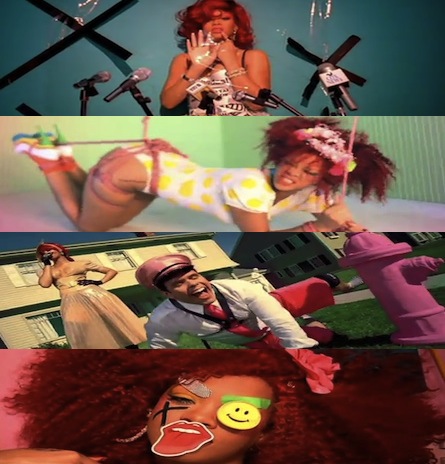
Rihanna’s “S&M”: Is it Really So Much Worse Than Her Other Stuff?

Rihanna said it herself: “They watched ‘Umbrella’… I was full nude.”

So why so much fuss about her latest offering, “S&M”?

Sure, the title, lyrics and film clip are controversial at best, but once they are unwrapped and their true meaning is revealed, the song is more a dig at the press and Rihanna’s sadomasochistic relationship with them, hence Perez Hilton’s appearance.

The video does deal with sexual violence also, which Rihanna is no stranger to, but this time around it’s consensual violence. Jezebel explains:

“It’s notable, though, following her assault by Chris Brown, that in the video for ‘S&M,’ she’s interested in exploring consensual acts of violence and aggression, and finding pleasure in pain. Although she does appear bound in the video (as well as literally restrained by the media), mostly she plays the role of a dominant, perhaps to prove (or remind us) that she’s the one in control. Is this the desire of one who’s been called a victim? To recast oneself as authoritative and commanding?”

The film clip—the aspect of the song that has drawn the most controversy—is actually not that bad, in my opinion. It’s got a bright, pop-arty feel (a direction which the singer seems to be heading in these days), and “shows us a bright, vivid, eye-popping adult playground of her own imaginative making, exciting chains and whips [just happen to be] included.”

Where “Madonna and Lady Gaga have cornered the market on the black pleather and whips on white backgrounds of the S&M-themed music-video world… Rihanna is refusing to cede them the entire territory: She’ll do S&M if she wants to, she’s just going to make it really, really goofy.”

Granted, both Madonna and Lady Gaga’s videos and music are a cut above Rihanna’s, who is somewhere between Katy Perry’s “California Gurls” and Gaga’s “Telephone”, but you’ve got to admit: “S&M” is something a bit different, and something that’s getting people talking. And that’s the aim of the game, right?

Think of Rihanna’s other videos for a moment: “Te Amo” featured Laetitia Casta as Rihanna’s lesbian love interest; “Rude Boy” shows the singer peeking down the pants of a male dancer; her collaboration with Eminem in “Love the Way You Lie” dealt with domestic violence; and the aforementioned “Umbrella” marked her transition from “good girl” to “gone bad”.

Lyric-wise, “S&M” (Sex in the air, I don’t care, I love the smell of it/Sticks and stones may break my bones/But whips and chains excite me) is probably equally as graphic as “Rude Boy” (Come here rude boy, boy, can you get it up?/Come here rude boy, boy, is you big enough?). But officials in the UK don’t think so, with the song being completely reworked and renamed (“Come On”) so it can get radio play.

I do see their point—that they’re trying to protect the children or something—but if that’s the case, just don’t play the video on Video Hits; save it for cable television or late-night music programs. But that’s also the combined beauty and curse of the internet age: tech-savvy kids are just going to access the video online.

Related: Whipped Cream Feminism: The Underlying Message in Katy Perry’s “California Gurls” Video.

Elsewhere: [Digital Spy] Rihanna Video Labeled Inappropriate.

[Billboard] Sneak Peak of Rihanna’s “S&M” Video.

[Jezebel] Rihanna’s New Video Celebrates Ball-Gags, Whips & Latex.

[The New Gay] Yes, Master: Rihanna’s S&M World.

[New York Magazine] Rihanna Gets Tied Up in Technicolour for S&M Video.

Images via YouTube.

The Wizard of Oz VS. Wicked.

Many of my friends ask how I can love Wicked, yet hate the musical it was spawned from, The Wizard of Oz. Easily.

The Wizard of Oz is creepy, clichéd and fairly boring. Wicked is innovative, original (or as original as a semi-spinoff can get) and riddled with “underlying meaning”. Sure, Wicked tells the story of what happened “before Dorothy dropped in” and runs somewhat parallel to the events of The Wizard of Oz, but is a stand-alone story that blows its predecessor out of the water.

There are so many similarities and differences and storyline quirks to put into words, not to mention those between the book and the stage show, so I’m going to attempt to unravel some of them in a pictorial format. Feel free to join the discussion and change my “wicked ways”.

The Wicked Witch of the West VS. Elphaba.

In The Wizard of Oz, the Wicked witch is the epitome of Hollywood villain and has the appearance to match, whereas in Wicked, Elphaba’s friends are able to find beauty in her despite and in spite of the colour of her skin.

Glinda the Good Witch of the North VS. Galinda.

There are more similarities between the film and musicals’ versions of Glinda/Galinda than the “wicked” witches, as they both come across as superficial and somewhat ditzy, but their intellect and ability to see the good in people come out as both stories progress. Galinda, however, is far more three-dimensional than her Wizard of Oz counterpart.

The Scarecrow VS. Fiyero.

In Wicked, Fiyero goes undercover as a scarecrow in order to run away with Elphaba as the angry mob comes after her. In The Wizard of Oz, the Scarecrow accompanies Dorothy in search of a brain, which is echoed in Fiyero’s performance of “Dancing Through Life” in the play. The song deals with Fiyero’s depreciation of school and that the students of Shiz should follow his lead and dance “mindlessly” and “brainlessly” through life, thus harkening back to his transformation into the Scarecrow.

Boq VS. The Tin Man.

The Tin Man is an underdeveloped character to say the least, as is Boq in the musical. Boq is in love with Galinda, who doesn’t give him the time of day, so settles for the disabled Nessarose, who goes on to become the Governor of Munchkinland. Nessarose becomes so upset when Boq threatens to leave her that she casts an ill-fated spell on him which causes his heart to shrink. Elphaba, coming to the rescue, is able to save him, but he will never have a heart, and thus becomes the Tin Man.

Dorothy and the Cowardly Lion.

The two principle characters in The Wizard of Oz are merely extras in Wicked, with Elphaba saving the lion cub from an experiment at school, and Dorothy “dropping in” on Nessarose and killing her. While Dorothy’s appearance in Wicked stays true to the storyline of The Wizard of Oz, Elphaba’s act of kindness in saving the cub contributes to his cowardice in later life.

The Wicked Witch of the East VS. Nessarose.

As previously mentioned, Nessarose is wheelchair bound and later assumes her father’s role as Governor of Munchkinland. She is also Elphaba’s sister and dubs herself “The Wicked Witch of the East” after condemning Boq to a life as a tin woodsman. The famous ruby slippers don’t turn up til later in the play, when Elphaba enchants them to give Nessarose the ability to walk. Then Dorothy ruins it all by crash landing her house on Nessarose.

The Wizard of Oz VS. erm… the Wizard of Oz.

In both the film and the musical, the Wizard of Oz is revealed to be a bumbling fraud. In The Wizard of Oz, he represents the finish line of the metaphorical journey the four musketeers embark on to get their respective wishes granted, whereas in Wicked, the wizard is a puppet for Madame Morrible and is revealed as Elphaba’s birth father.

While The Wizard of Oz is a story of the comforts of home, the oppression faced in small country towns, and the politics of 1890s America, Wicked hits much closer to home with its themes of beauty, racism, acceptance, good and evil, and friendship. Perhaps Wicked is a new story for a new generation that isn’t so concerned with the “fairytale” offered by last century’s The Wizard of Oz?

Related: Women in Fiction: My Favourite Fictional Females.

Elsewhere: [Wikipedia] Political Interpretations of The Wonderful Wizard of Oz.

Images via Michael Boykin, Lisa Galek, Andrew Garvey, Daddy Catchers Realm, Culture Guide, Parody Files, Aussie Theatre, Centre Portal, Christopher’s Mark, Courier Mail, Acidemic, Persnickety Penelope.

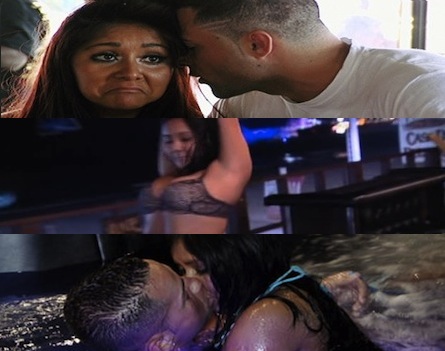
The Mystery of Snooki, Revealed.


From Jersey Shore: Unlucky in Love” by Brian Moylan on Gawker:

“Snooki is the modern day Divine [actor and drag queen]. Just like Divine, Snooki is a bit over-weight, known for her high hair, garish makeup, and skin-tight clothing. She isn’t so much a real woman as a hyperbolic idea of what a woman should be. And much like Divine’s character in seminal movie Pink Flamingos, Snooki is generally regarded by mainstream society as the filthiest person alive. Snooki is Divine! That is why no one loves her. Everyone loves to see a drag queen do her thing and behave foolishly on stage, but no one wants to take her home and cuddle once the makeup is off.”

Elsewhere: [Gawker] Jersey Shore: Unlucky in Love.

Images via Ecelebrity, Jezebel, The Hollywood Gossip.

On the (Rest of the) Net.

Flavorwire celebrates the Chinese New Year with “40 Culturally Relevant Rabbits”.

Ryan Gosling as feminist icon?

Jennifer Aniston controversially embraces her inner Lolita for Allure.

Speaking of… The allure of Mormon housewife blogs.

Chad Woody on “The Oprahverse”:

“This gets at my perennial problem with Oprah. She’s all about the self-determined destiny. This comes from hanging out constantly with celebrities, the cultural lottery winners of the world, and asking them about their origins and beliefs. Sure, some of them say they were lucky in some way, but what Oprah really digs for is that little gold nugget of ego in everyone that says, “I did it my way, and I always knew I would!” But success woven from big dreams is an easy pattern to discern if you’re only interviewing winners…”

While I don’t agree with Erica Bartle’s comments—I believe that Stefani Joanne Angelina Germanotta was “born this way” as Lady Gaga, and everything she does is an extension of herself—the girl with the satchel raises some interesting points about not needing “an alter ego when you’re happy with who you really are”.

Also at GWAS, Bartle laments the demise of The Saturday Age’s A2 supplement in favour of “the more generic Fairfax Life & Style moniker). I feel your pain :(.

“Why I (Really, Seriously, Truly) Hate Carrie Bradshaw”:

“…If I ever saw a woman dressed like that either here in the city, or anywhere else in the world, I’d throw a Twinkie at them, tell them to take a long look in the mirror and eat a damn carb for a change. Yes, I keep Twinkies on me for such occasions… Carrie once threw a Big Mac at Big, so throwing things have been all the rage ever since, right?”

Not only do strong women get branded “the bitch” for knowing what they want and standing up for themselves (if I can be so cavalier, I consider myself a strong woman who is often called “bitch”), but apparently it’s hardest for us to find equally as strong, if not stronger, men in the dating market. Woe is us.

Some more thoughts from Sarah Wilson:

“… Men aren’t happy because they’re not being real men. They’re denied the opportunity to pursue, to go after the woman they reckon is perfect for them. That’s because they’re being pursued by women. Why? Cos everything is out of whack (women are used to chasing things and get impatient when men don’t approach, but also because the men aren’t pursuing… cos they don’t have to… and it goes around and around). And so men feel emasculated by this. Because men are meant to be the hunters.  The peacocks who do dances and display their prowess to women, to earn female trust and affection. Since the cost of partnering is higher for women, they must be fussier and sit back and weigh up their options. This is a biological imperative.”

In a similar vein, “The Sexual Cost of Female Success”:

“…What’s important is getting women to question every decision they make on the grounds of what insecure men might potentially think about it, men you’d never want to date anyway because their insecurities would make the relationship hell. And, more importantly, because you’re not physically attracted to them—something no amount of data or bullshit studies on the internet will ever change. Yes, women are ruining everything by not planning their lives expressly according to men’s biological clocks and wishes.”

Gender Agenda and Melinda Tankard-Reist get their wordplay on in the fight against Kanye West’s Monster video.

Can everyone get over Michelle Obama’s clothing choices already?:

“Michelle Obama is a Princeton and Harvard-educated lawyer and former executive at the University of Chicago Hospitals system who happens to dress pretty well and be married to the president of the United States of America. But what are the stories about her that have dominated the media? They’re not about her skills, her experience, her mind, or even about her almost disgustingly uncontroversial pet issue, fighting childhood obesity. The Michelle Obama News is about whether her eyebrows are ‘angry.’ Whether her clothes mark her as a ‘new Marie Antoinette’… [or a] ‘new Jackie Kennedy.'”

The straight guy’s guide to Glee.

In response to Natasha Vargas-Cooper’s “Hardcore”, Tana Ganeva debunks “The Anti-Male, Anti-Sex Falsehoods That Rule Discussions About Porn and Sexuality”.

Shut up, Mark Latham!

I disagree with most of Miranda Devine’s views in “Buying a Baby—Not a Pair of Shoes”, but one thing’s for sure: Nicole Kidman’s surrogacy is one contentious issue.

The secret diary of a call girl.

The private lives of Pippa Lee public people.

The dating game according to the ladies of the Jersey Shore.

“The Baby-Sitters Club: Where Are They Now?”

Image via Sassi Sam.

Lea Michele Just Can’t Win.


From “Righteous Moms Just Can’t Let Lea Michele Be Sexy” by Margaret Hartmann on Jezebel:

“Yes, some children will probably see the cover while walking past a newsstand, but it’s doubtful that this issue alone will lead to the crushing realization that sex sells. The GQ cover was tasteless and the Cosmo cover may appear a bit desperate, but it isn’t as if Lea’s doing Playboy. Ten years ago, parents were losing it because Britney Spears delivered sexed-up performances, seemingly with no regard for the little girls who idolized her. Britney summed it up well (and ridiculously) with her song ‘Not A Girl, Not Yet A Woman.’ In American pop culture, this dichotomy is nothing new, Lea Michele is just our current scapegoat.”

Related: Disturbing Behaviour: Terry Richardson Does Glee.

Elsewhere: [Jezebel] Righteous Moms Just Can’t Let Lea Michele Be Sexy.

Images via Reality by Rach, Twenty2.OnSugar.

TV: Come Together Right Now… Over Gossip Girl—“Gaslit” Review.


Gossip Girl’s Thanksgiving episodes are always ones to remember.

Season one hosted the first instalment without a voiceover from Gossip Girl herself, Kristen Bell. And last year’s episode dealt with the fallout from Dan, Vanessa and Hilary Duff’s threesome and Lily’s whereabouts the past summer.

However, this year’s holiday chapter fell short of expectations, with it’s surrounding episodes being much juicier. Last week, the vixen Juliet drugged Serena and turned all her friends against her, while Juliet’s beef with the Manhattan socialite is finally revealed.

But “Gaslit” did serve two main purposes, both of which are very promising:

1. Vanessa comes undone and her involvement in Operation Takedown Serena comes out, forcing her out of the city. Ding dong, Vanessa’s dead!

and

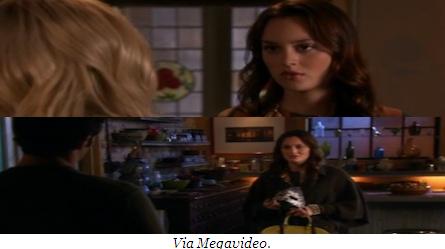
2. Blair and Dan join forced to find out what Juliet really wants with Serena. Whilst the two have never been shy about their hatred for one another, as winter passes, perhaps a new-found “appreciation” for each other will blossom along with spring…

xoxo

Related: Let Them Eat Cake… And Wear Headbands.

Gossip Girl Proves There’s No Such Thing As Wonder Woman.

Sexual Healing: Gossip Girl Takes a Page Out of John Irving’s Book.

Pretty But Dumb: Serena’s Tertiary Education Predicament.

Surfing the Third Wave: Second Wave VS. Third Wave Feminism on Gossip Girl.

The Last Tango… For the Season. Gossip Girl Season 3 Final.

Let’s Talk About the Sexualisation of Girls, Baby.


From “Fight the Sexualisation of Young Girls the Right Way” by Sarah Seltzer on Alternet:

“But does it follow that the teens who are on TV should not be seen as sexual at all? Teens in real life are sexual beings, after all, and they make sexual choices every day.

“This brings us to our second anti-sexualisation movement, a movement whose origins and goals are entirely different. SPARK is a movement to celebrate girls for more than their sexuality and to aggressively combat product placement, advertising, and cultural messages aimed at tweens and preteens that directly sexualise them—like pole dancing for twelve-year olds and push up bras before training bras. This is a movement that also has beef with media portrayals of writhing, gyrating teen and twentysomething pop sensations—like the Glee stars’ racy GQ poses.

“But the beef is not because they’re seen as sexual, because they’re playing into a version of sexuality that is catering to male fantasies. It’s about treating sexuality as something that comes from within, not a plastered-on image in high heels and short skirts.

“…And so they oppose the imposition of a male-oriented sexuality on women.

“Therefore their issue isn’t just that teen girls on TV have sex or engage in sexual behaviour like suggestive dancing or making out. Instead, their concern is that teen girls on TV are often reduced to sex objects or miniature versions of sexual stereotypes: temptresses, vixens, sluts. Girls having sex in long-lasting relationships or because they *gasp* want to? That’s okay, as long as they’re armed with the right information and a spectrum of choices and alternatives about how they can be sexy and still be themselves.

“If you want to know why feminists are obsessed with shows like Friday Night Lights and the late, great My-So-Called Life, it’s because they show the reality of teen girls being obsessed with and learning about and experimenting with sex—as teen girls generally do—but only as part of a broader spectrum of their lives which includes classes, parents, sports, and friendship.

“Sexuality vs. Sexualisation. It’s a distinction we all need to practice making so we can continue the work that SPARK has begun.”

Related: Disturbing Behaviour: Terry Richardson Does Glee.

Elsewhere: [Alternet] Fight the Sexualisation of Young Girls the Right Way.

Sookie as Feminist? Hear Her Roar.

Ever since I started watching True Blood, I’ve had a hard time believing Sookie Stackhouse as a feminist icon. Sure, she kicks a lot of butt, sometimes seeking danger out herself (taking down the Rattrays when they milk blood from Bill in the car park of Merlottes), is in charge of her sexuality, if that means staying a virgin until the right man comes along, and doesn’t take shit from anybody. But… she’s just so damn annoying!

So is Glee’s Rachel Berry and most of the Gossip Girl cast, and they could be seen as icons of feminism for the texting set. However, instead of whining to her teacher, withholding sex from her boyfriend or plotting revenge against her nemeses, Sookie is just the opposite. She may be blonde, virginal and innocent in every sense, but she is also very much like Buffy Summers, who was created with bucking the horror movie victim stereotype in mind.

As one commenter on True Blood’s Nest points out, “Sookie is brave to the point of being stupid at times…”. While this can be an admirable quality sometimes, it does contribute to her annoyingness.

Speaking of characters who act before they speak, Tara Thornton comes to mind.

True Blood is all about juxtaposing discrimination against the blacks and the gays against the discrimination of vampires. The book True Blood & Philosophy, which I reviewed last week, mentions that Sookie and Tara were both raised—for the most part—by Sookie’s grandmother, yet Sookie is “admired, protected and coeveted by every heterosexual male main character and loved by a sweet, nurturing grandmother” while “Tara is blunt, sarcastic, morose, love-starved and goes home each night to an alcoholic mother” and gets caught up in Maryann’s spiral of lies and magic. Racist stereotypes or social criticism?

And while we’re on Maryann, she seems to embody “certain stereotypes of late-1970s feminism”, both in the clothes she wears (floaty, feminine and ethereal maxi dresses) and the hedonistic, maenadic lifestyle she espouses. Given her obsession with taking down Sam, using Eggs as her partner in crime and erecting the meat-statue in Sookie’s yard (not to mention her “hunter’s soufflé”!), she really embodies the “feminist as man-eater” ideal.

While these are good examples of other, non-blonde/innocent/virginal heroines in True Blood (and while we’re at it, let’s not forget Pam, Lorena and Sophie-Ann), I would also like to examine Sookie in relation to the men of Bon Tempts. Let’s look at True Blood’s Nest again:

“… Bill and various other hot men are always rescuing Sookie from certain death, or so it seems. But remember y’all, it was her that tried to find the town serial killer, not the useless cops. It was her that killed Rene the Killer with a shovel to the neck while the menfolk bumbled around the graveyard uselessly. It was her that decided to go to Dallas in order to get Lafayette out of Eric’s icky dungeon, AND she wanted money and a driveway as part of the deal. Once again the menfolk spluttered and marvelled at her bravery and sauciness, and lusted after her even more for it. She is the mistress of her own kick ass destiny while Bill, Sam and even Eric can only follow in her wake, hoping to be of some use.”

The original title for this post was “What is it With Sookie”, and seriously, what is it with Sookie?! By the end of season three, we have found out that Sookie’s appeal to the “menfolk” may be because of her fairy heritage, not because of her physical attributes or personality traits.

This is unfortunate for Bill, because it is plain to see that he does love Sookie for who she is, not what she can do for him. But I will say that the fairy blood storyline is an intriguing one; did Sookie’s blood allow Bill to crawl, albeit with his flesh charring with each movement he made, to her rescue in the graveyard at the end of season one? Is that also why Eric wants her?

But when you take away their supernatural abilities, Bill and Sookie’s relationship is one with issues that I’m sure a lot of modern day couples face: Bill has old-fashioned sensibilities in wanting to protect his lover, while Sookie struggles with the concept of maintaining “independence in sexual relationships”, which second- and third-wave feminism have told us we must do. Nothing illustrates this conflict (and metaphorical backlash?) than the second episode of season two, when Sookie storms out of Bill’s car after a fight about said independence and protection only to be attacked by a mythical creature for her efforts!

Elsewhere: [True Blood’s Nest] Fangirls Speak Out: Sookie—Feminist Icon?

[Racialicious] True Blood. Tired Stereotypes.

[Feminist Frequency] Beyond True Blood’s Sensationalism.

Related: True Blood & Philosophy by George A. Dunn & Rebecca Housel Review.

Has Feminism Failed?

Top 10 TV Moments of the Year.

Gossip Girl Proves There’s No Such Thing as Wonder Woman.

Surfing the Third Wave: Second Wave VS. Third Wave Feminism on Gossip Girl.

On the (Rest of the) Net.


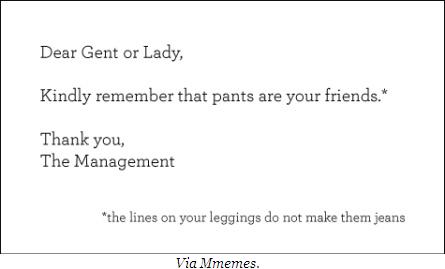
The perils of pants-less ladies.

Does Gossip Girl care about women in politics?

Bryce Corbett in defence of Nicole Kidman:

“… it seems to me that Nicole Kidman is engaged in what must be a most dissatisfying unrequited love affair with her homeland. She flies to Australia to pimp her country on Oprah. She makes a film with Baz Luhrmann which (whatever you may have thought of the final product) was a massive shot in the arm for the local film industry and a two-hour love-song to her country of birth. She fronts up to G’Day USA every year to flog the myriad wonders of Down Under. And following the Victorian bushfires, she donated half-a-million dollars of her own money to the Red Cross relief fund. What a cow.”

“Sexual Assault & the Super Bowl.”

Anna Chong, a designer from the London College of Fashion, has re-imagined Lady Gaga’s most popular get-ups into Barbie-sized outfits. But she’s not the first to do it

“Why is Captain America Ruling Our Screens & Not Wonder Woman?”

Seinfeld’s Elaine Benes as modern-day hipster fashion icon.

The New York Times profiles “nice-guy blogger” Jared Eng on his “cheery, quotidian, Britney-goes-to-Starbucks” blog, JustJared.com.

Also at The New York Times, The Catcher in the Rye’s Holden Caulfield is un-relatable.

Jacob Lambert on “The Paper-Reader’s Dilemma”:

“No longer are books being pitted against pixels; pointing out that paper isn’t reflective either seems very 2007.  The war is now between tablets, as if the book never existed at all.”

Yet more dispelling of the Nicole Kidman vitriol, this time in a vintage (2008) article on Girl with a Satchel.

In the same vein of “17 Arguments Against Gay Marriage & Why They’re Bollocks” and “10 Things You Need to Understand About Asylum Seekers”, comes John Birmingham’s defence of Sandra Reynolds, via MamaMia.

I’d been searching for this article for awhile to reference in a few Lady Gaga musings, and finally came across it again last week and re-read it in the bath. Bliss. A fine example of quality journalism.

Reblogged from Fuck Yeah, Gender Studies, Rachel Hills runs a post on the question of “Who Sexualises Children?”:

“God, it doesn’t even make sense—HOW can a child be sex vixen? When I look at a child, I see a child. Regardless of costume. Dressed like Mary Poppins or dressed like Britney Spears, a kid is a kid! If you see something sexual, the problem is with you.”

I haven’t been shy about my hatred of Charlie Sheen (I know hate is a strong word, but honestly, he is a despicable human being), especially when he gets a free pass because he happens to be the star of TV’s most successful show, while Lindsay Lohan’s career is in ruins. Jezebel reiterates this:

“In recent years no stars (with the possible exception of the oddly lovable Celebrity Rehab cast members) have had their problems with addiction more publicized than Charlie and Lindsay. However, the way these stars are treated by the media and the public is vastly different, mainly due to the double standard for female celebrities.

“The scorn for Lindsay is particularly strange because compared to Charlie, she’s only hurting herself. Let’s review some of Lindsay’s biggest tabloid scandals: Two DUI arrests, four stays in rehab, missing numerous court hearings, going to jail for failing a drug test, battling bulimia, battling her father, and breaking up with her girlfriend. As for Charlie, he’s been in and out of rehab for years, he “accidentally” shot fiancee Kelly Preston in the arm, he was named as a frequent visitor to brothels owned by Heidi Fleiss, he’s dated numerous porn stars, he ODed on cocaine, allegedly shoved Denise Richards and verbally abused her during their marriage, and was arrested for domestic violence against Brooke Mueller, but avoided jail time due to a plea deal. Lindsay has never been married and has no children. Charlie has been married three times and has five kids, four of whom are under the age of 10.”