Men on Chapel Street.

Even though I live quite close to Chapel Street in Melbourne, I try to avoid going there as it is not my scene at all.

The other night I ventured as far down as I’ve been in years, to Lucky Coq, on High Street, for drinks with a friend.

The outing reminded me of the last time I’d been that far down, which was back in 2008 for a uni project. Odd, I know, but stay with me.

One of my final units was a media subject entitled Men & Masculinities. I was hesitant to take on the course, but it was my final year and I’d already done all the good ones. Aside from my inept teacher, the unit was really fun, and some of the topics I studied have influenced me to this day.

The reason my study group and I trekked to Chapel Street was to examine the different types of masculinities we observed there. With the National Institute of Circus Arts and the multitude of gyms and boutiques located there, I was expecting to see a lot of buff, fashionable men concerned with their appearance. In short, I expected to see the “metrosexual” in his natural habitat.

After a bit of rummaging through my hard drive, and a quick Google search, I managed to find the articlean interview with Professor of English, Sociology & Women’s Studies at the University of California, Toby Miller, by Jenny Burton and Jinna Tayby which I used to establish some theories about men on Chapel Street.

Keep in mind that these observations were collected two years ago, and I have tried to keep my notes as close to the originals as possible (present day annotations in italics). A lot of the subject matter discussed then has entered our current vernacular; or at least, the vernacular of this here blog, and the ones I frequently read.

Metrosexuality.

“… The phenomenon of the new man, which tends to annex beauty to the wider theoretical works of fashion, with grooming making fleeting, untheorised appearances.”

That’s not so true anymore, as fashion and grooming are becoming as equally important to men who want to look good and take pride in their appearance. Even something as simple as shaving is classed as grooming, and most men we observed on Chapel Street were clean shaven, or at least were doing something different with their facial hair (such as “designer stubble” and goatees instead of a full beard). [Had it been November when the study was done, perhaps I would have seen some mo’s out there?]

“Is the metrosexual a middle- rather than working-class phenomenon?”

I think typically the metrosexual is viewed as upper- to middle-class, and we certainly did see men of these demographics whom you could call metrosexual. However, the working class (tradies, construction workers) could also be seen as metrosexual, because even though they were engaged in manual labour and had “hard” bodies [muscly; evidence of working out], they were still well-groomed and took pride in their appearance.

“Taking pleasure in one’s body, nurturing it, caring for it, protecting it from the elements and so on kind of loosens those old bonds of conventional masculinity, which forbade these behaviours for men and made them taboo.”

The theory here is that men taking pleasure in their bodies and wanting to look physically attractive, for example by going to the gym, is taboo. Do the men we see going to the gym look ashamed of, thereby succumbing to the taboo, or proud of, their hard or soft bodies? (Hard bodies at the gym; soft bodies in certain subcultures like emo, punk, grunge etc.) I wasn’t expecting to see men ashamed of their bodies, especially in a trendy, affluent place like Chapel Street. However, older, out of shape men were a bit more self-conscious than their younger, better-looking counterparts because they tended to look at the ground when they were walking and didn’t make eye contact as much as the more confident men.

“Given all the effort women make to look okay, it seems only fair that men should have to go through something approximating to that level.”

As we expected, there weren’t really any significantly out of shape, badly-groomed or badly-dressed people on Chapel Street. The women took great pride in their appearance, both in their body shapes as well as how they dressed and groomed themselves. This was echoed in the male population, who all were well-dressed, mostly in shape, and well-groomed. In that respect, it could be seen that men are taking a leaf out of the females species’ book.

“… I think it’s [metro sexuality] pretty peculiar to Australia.”

The typical Australian man is seen as a “blokey bloke” in footy shorts and a bluey, doing manual labour and playing sport recreationally. The younger generation of Australian men are challenging this stereotype by being well-dressed, well-groomed and having more unconventional jobs (according to the stereotype) like consulting, fashion, etc. There wasn’t a typical “blokey bloke” that I saw on Chapel Street; even the construction workers, who have the most “Australian” occupation, weren’t physically reflective of the stereotype. In terms of metrosexuality being unique to Australia, it’s true in that a lot of younger men are taking care of themselves, but false in the way that Australia isn’t the only country that has metrosexuals: the US does with Queer Eye for the Straight Guy and the abundance of men in the media who take pride in their appearance and endorse beauty and fashion products, like George Clooney endorsing watches, and Matthew Fox from Lost is the face of a new L’Oreal beauty range for men. I’m not so sure about the UK, because on one hand you’ve got really metrosexual men like Hugh Grant and Jude Law, but on the other there are quite scruffy men like Rhys Ifans, who was engaged to Sienna Miller, and the downright disgusting, like Pete Doherty.

Queer Eye for the Straight Guy.

“… One way to analyse Queer Eye [for the Straight Guy] is as a professionalisation of queerness; a form of management consultancy for conventional masculinity.”

This can be seen in some of the shops on Chapel Street (and Church Street). We saw gyms and health food stores selling protein shakes, etc. in clusters, as well as a beauty salon specifically for men on Church Street.

“… Queer Eye for the Straight Guy is actually about re-asserting, re-solidifying very conventional masculinity.”

Because it separates the “queer” guys, who are fashionable, neat, well groomed, from the “straight” guys, who are messy, unkempt, in need of “styling” by the “queer” guys. Men on Chapel Street challenged this idea. You could speculate about which men were straight and which men were gay, but the stereotypically “straight” ones weren’t messy or “blokey”. There were a lot of business men who needed to look tidy and well-groomed for their jobs, but there were also construction workers whom you would think were typically very masculine and therefore untidy, but even they were taking pride in their appearance, both in terms of their physically hard bodies as well as their grooming.

Sport.

“… While it’s still about toughness, sport is equally about beauty, with the NFL now marketing its players as sex symbols.”

While there weren’t really any “sports” men on Chapel Street (apart from the circus/dance performers), the masculinities we observed were as much about being physically attractive to attract a mate as they were about looking tough and hard-bodied.

Eating Disorders.

“… Clearly there are big problems with eating disorders and performance enhancing drugs amongst men… These are partly narcissistic, psychological worries to do with an image to the outside world in general… Male beauty consciousness is primarily a marketing creation… Do men use toiletries and cosmetics because advertising tells them to?”

There were a lot of advertisements on Chapel Street that would support this notion, specifically the ad in the window of a gym/health food store that promotes an unachievable body type for most men. There weren’t as many hard bodies as we expected to see, however the ones that we did see in no way reflected the extreme ideal that that specific advertisement promoted. The men who worked in fashion stores on Chapel Street succumbed to the ideal that that specific store promoted.

“… Eating disorders, insecurity about looks and image, men now being oppressed by the ‘beauty trap’ and so on, but for me this doesn’t allow for the possibility that this may also be a good thing for individual men and conventional masculinity, allowing men to indulge in some self nurture.”

The men on Chapel Street who were well-groomed obviously took pride in their appearance, and weren’t ashamed of the fact that they looked after themselves. The majority of men looked healthy, which therefore supports the claim that male grooming and “metrosexuality” (men taking care of themselves) is a good thing.

Related: The Underlying Message in Glee’s “The Rocky Horror Glee Show” Episode.

Elsewhere: [Media Culture] Metrosexuality: What’s Happening to Masculinity?

[MamaMia] Male Models: Inside Their Straaaange World.

TV: The Underlying Message in Glee’s “Furt” Episode.


Last night’s episode of Glee marked the final in a three-episode arc about bullying.

In Sue’s final act as principal before she resigns at the end of the episode, she expels Dave Karofsky for bullying Kurt. Jezebel notes that “rather than yelling, ‘William, my hands are tied!’ she promises to stop Karofsky once they have proof that he’s harassing Kurt”but not before Sue takes to calling Kurt Porcelain, which could be seen as an act of bullying in itself.

Carol Burnett makes an appearance as Sue and Jean’s absentee mother, Doris, who in addition to being Sue’s own “bully”, left the girls to be a Nazi hunter. While Doris doesn’t appear all that bad, it does give some insight into Sue’s present-day behaviour as McKinley High’s student body tormenter. Why was Sue’s mother in the episode, you ask? Because Sue was getting married… to herself! But that’s a whole other can of worms.

In other bullying news, the glee guys start a fight with Karofsky in the football team’s locker-room in defence of Kurt, but stepbrother to be, Finn, doesn’t partake. Even when it is revealed that the attack was Rachel’s idea, “setting the feminist movement back fifty years”, according to Quinn. (It’s no secret that I can’t stand Rachel, but a strong woman like her needs an equally strong man.) In what seems to be another instalment in Finn’s tour of whimping out, he doesn’t want to be perceived as being a homo-sympathiser. But not to worry, he makes up for it at his mum and Kurt’s dad’s wedding, by making a speech about standing up for “Team Furt” (in the tradition of celebrity couplings like Brangelina). And then they “dance their troubles away”.

The wedding also serves as a catalyst for Kurt to break out this memorable one-liner: “I’ve been planning weddings since I was two!”

Oh Kurt, we’ll miss you when you transfer to Dalton Academy…

Related: The (Belated) Underlying Message in Glee’s “Never Been Kissed” Episode.

The Underlying Message in Glee’s “The Rocky Horror Glee Show” Episode.

The Underlying Message in Glee’s “Duets” Episode.

The Underlying Message in Glee’s “Grilled Cheesus” Episode.

The Underlying Message in Glee’s “Britney/Brittany” Episode.

Women in Fiction: Are Our Favourite Fictional Females Actually Strong, or Stereotypes?

Elsewhere: [Jezebel] Glee: Three Weddings & a Furt.

Guilty Until Proven Innocent: Charlie Sheen’s Witness.


Maybe it’s because she’s a porn star/escort. Maybe, but hopefully not, it’s simply because she’s a woman. But more than likely, it’s because Charlie Sheen has been allowed to get away with (practically attempted) murder for decades now.

It’s no secret how I feel about Charlie Sheen, and I think it is an absolute disgrace that our celebrity-obsessed culture has allowed him to escape jail and rehab for drug use, property damage, domestic violence, alleged child pornography consumption, and shooting Kelly Preston, yet retain his $1.2 million per episode pay check for Two & a Half Men.

But the way the media has treated Capri Anderson is just as bad. It has been proven that she is the woman who was found locked in a bathroom of the hotel suite that Sheen was staying at when the incident occurred. Is the fact that she’s a porn star damaging her credibility as a victim of domestic violence who feared for her life?

This perception of her harkens back to a lot of articles I’ve written about or referenced on this here blog in the past few months, but it basically comes down to slut-shaming, in my opinion.

So Anderson has sex on camera for money, but what Sheen does off-camera but is still paid a pretty penny for what he does on-screen is far worse.

Related: Why Are Famous Men Forgiven for Their Wrongdoings, While Women Are Vilified For Much Less?

Good-Time Girls.

Elsewhere: [Ideologically Impure] I Am a Women & I Enjoy Sex.

[Jezebel] Jersey Shore: If Men Can Wax Their Eyebrows, Why Can’t Women Sleep Around?

[Jezebel] Easy A Tackles Slut-Shaming, Gossip & What We Expect From Girls Now.

[Jezebel] Capri Anderson Says Charlie Sheen Choked Her, Does Not Like Being Called a Whore.

On the (Rest of the) Net.

How to “cure” a feminist.

Zoe Foster at her absolute best in her ode to “second day spaghetti”. Perhaps she should consider penning a food column in addition to relationship and beauty advice?

Overthinking It on the differences, but more so, similarities, of “California Gurls and California Girls”. One choice titbit: “The popsicle melting part means that California girls are sufficiently attractive that, under the right circumstances, they will cause men to ejaculate. Just in case Katy Perry didn’t make it obvious enough with her coy and artful wordplay, ‘popsicle’ means penis.”

More on Katy Perry and how she’s now claiming to be a gay icon. If you think back to her first song, before the success of “I Kissed a Girl” (“which panders to my least favourite cliché ever, that of the straight girls who make out at frat parties to turn on frat boys”), entitled “Ur So Gay”, it was insinuating that being gay “was the ultimate, be-all, end-all putdown to someone that treated her wrong.”

Matriarchy in Glee.

Also at Overthinking It, the likeability of male characters versus female characters is discussed. Hint: female characters aren’t likeable, even if the male characters they’re being compared to are sociopaths.

Jezebel on owning your sluthood:

“… Sluthood isn’t an action, it’s a state of mind.

“I’m telling you this because my sluthood saved me. Sluthood gave me the time and space to nurse a shattered heart. It gave me a place where I could exist in pieces, some of me craving touch, some of me still too tender to even expose to the light. Sluthood healed the part of me that felt my body and my desires were grotesque after two years in a libido-mismatched partnership. Now I felt hot, wanted, powerful. My desire and enthusiasm was an asset, not an unintended weapon.”

You go, girl!

Lifehacker offers up the “Top 10 Tips for Better Writing”.

Hugo Schwyzer on “The Problem With Being ‘Sexy But Not Sexual’”.

“The Televised Guide to Teen Girl Friendships”, featuring My So-Called Life, Full House and Popular.

Jezebel explains our (but not my) interest in the royal wedding by way of Disney:

“For me, an American pop-culture junkie, Prince William and Kate Middleton’s engagement means one thing: She gets to be a Princess. And seriously, some part of me, formed when I was three or four, believes that this means she will be dressed by birds, wear clothes sewn by tiny mice, and have woodland creatures as friends. Oh, sure, there’s a handsome Prince, but more important are the jewels! And the singing! And the castles! And the woodland creatures.”

Apparently positive people live longer. Good news for me, then!

“Do All of Us Need ‘The One’?” at The Ch!cktionary.

A rant on the annoyance of ignorance:

“… In our infoculture, it takes work not to expose yourself to interesting ideas, facts, news and points of view… the average person online spends seventy seconds a day reading online news. Ouch.”

New York, I Love Hate You:

“New York, I won’t miss your fierce morning halitosis exhaled from your subway grates along Third Avenue.

“I won’t miss you drooling on me from your high-rise air-conditioners in the burning heights of summer.

“I won’t miss how… to me you always smelled like Camel Lights, and warming urine, and the No. 14 busa perfume I never could quite embrace.

“New York, I’ll never forget how dating you made me so poor that when I wanted to read I had to unscrew a bulb from the bedroom and carry it to the living room.”

Let Them Eat Cupcakes.


Not to be confused with “Let Them Eat Cake… And Wear Headbands”, which I wrote earlier this week, this excerpt comes from Jeremiah’s Vanishing New York’s “King Kong & Cupcakes” by Jeremiah Moss:

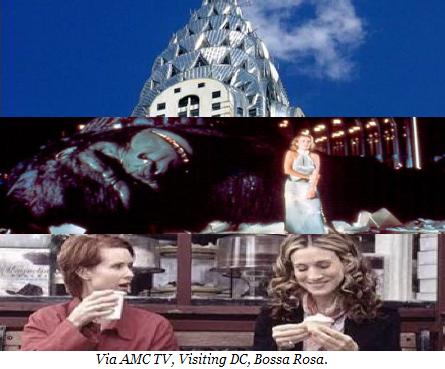
“Cupcakes are just a symbol for the shiny Bloomberg-ized, Carrie Bradshaw-defined boutique city New York is turning into. I grey up during the 1970s, when the old New York‘King Kong’s New York’ if you likewas still very much in evidence, and would be well into the ’90s. Like you, I’ve watched, often in horror, and particularly over the last decade, as the city has been transformed into something nearly unrecognisable and sadly lacking in character.

“I certainly have nothing against the cupcakes themselves. Shortly after I handed this cartoon in, I tried a Magnolia cupcake for the first time. It was good. I suppose I could have written ‘Twas Marc Jacobs killed the beast’, but cupcakes was funnier, and it won’t get me sued.

“… But to answer your question about how New York being overrun with cupcake shops, and the (designer) baggage that goes along with them, can kill a 25-foot-tall ape, it is in much the same way that ‘beauty’ did him inby breaking his heart.

“Is that too corny? OK, then he slipped on a goddamn cupcake.”

Related: Let Them Eat Cake… And Wear Headbands.

Elsewhere: [Jeremiah’s Vanishing New York] King Kong & Cupcakes.

It’s All About Popular… Lar, Lar, Lar, Lar!

From this weekend’s Good Weekend in The Age, in an article by Tom Ballard entitled “Too Cool for School”:

“If Footyheads are the oafish kings of high school, Popular Girls are assuredly the vapid queens. Deemed ‘The Plastics’ in the 2004 film Mean Girls, this clique is made up of attractive females who are attractive and wear make-up and are attractive and giggle and are attractive and fully hot.

“The members of this group are often the first among their peers to produce any inkling of breast and to discover foundation. Their classroom catch cry“So, like… what are we doing?”is well known and feared.

“Popular Girls enjoy chewing gum, looking vacant and protesting about the confiscation of jewellery. They feed on expensive formal dresses. They’re really, really popular.”

Examples of the Popular Girl in Popular Culture include, as Ballard mentioned, the Plastics in Mean Girls; Cher Horowitz of Clueless, who sees the light in the end; Louise from ’80s cheese fest Teen Witch, who gains popularity from a supernatural amulet; and “good” witch Galinda from Wicked, who tries to make over the self-conscious and “green” Elphaba during the musical’s “Popular” tune, from which the title of this post was derived.

Related: Women in Fiction: My Favourite Fictional Females.

Women in Fiction: Are Our Favourite Fictional Females Actually Strong, or Stereotypes?

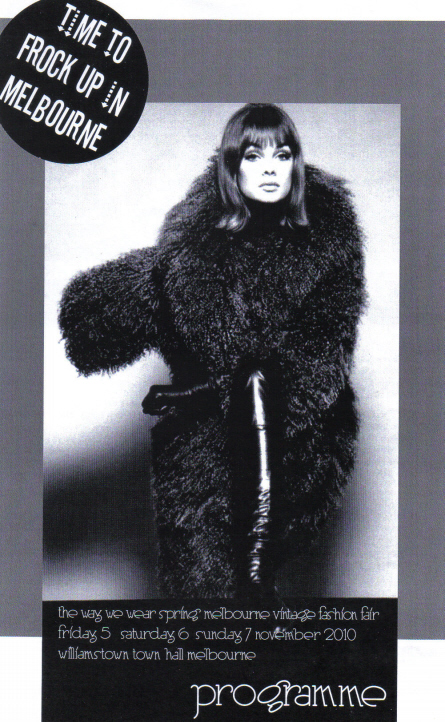
Event: Go Get Frocked—The Way We Wear Spring Vintage Fashion Fair.

It’s that time of year again, when The Way We Wear vintage market rolls around again.

Six months ago I cleaned up, picking up a gorgeous yellow dress, some jewellery and some postcards.

This time, however, I had my heart set on an A-line floral skirt and/or dress, and maybe some more jewellery, but to my chagrin, the items that caught my eyea red, Victoria Beckham-esque shift and a navy and white floral A-line dress with matching bolerowere way out of my price range.

Instead, I got a scarf with a Hermes air about it, and a black satin poodle skirt for my Mum. As Clueless’s Cher would say, “It is a far, far better thing doing stuff for other people.”

In accompaniment to the vintage wares on sale, the event hosted a “Little Black Dress” exhibition, with authentic dresses from the likes of Chanel. In an ode to this week’s “Outfit Envy”, Lauren Conrad was also featured as a LBD aficionado!

Related: Event: The Way We Wear Vintage Market.

TV: Let Them Eat Cake… And Wear Headbands.


It has been a Gossip Girl-heavy week here on The Scarlett Woman, and today is no exception.

Blair Waldorf is known for her Upper East Side opulence and her stop-at-nothing mindset to becomeand staythe Queen B. But now she’s more concerned with being taken seriously as an academic Columbia student and an “empowered” woman.

And who was more empowered than Marie Antoinette, one of Blair’s idols, whom she adorns her bedroom with images of? While some view her as a decadent, frivolous vixen, others (including me) see her as the ultimate emblem of grace, class and power. Kind of like a latter-day Joan of Arc, but with bigger hair. Plus, she has the same birthday as me.

Both misunderstood in some respects, the vision of Marie Antoinette as everything that was wrong with the French monarchy persists to this day, as does the common perception of Blair as one-dimensionally vindictive and conniving. That’s why she and Chuck make such a good couple!

However, anyone who’s done their research or is committed to the guilty pleasure that is Gossip Girl, will know that this is not entirely true. Accounts of the Queen’s true persona by those close to her say that she was generous, kind and courageous. While the first two adjectives aren’t usually applied to Blair, fragments of her nature underneath all the hating, haute couture and headbands show that she’d do anything for her closest friends, family and lovers.

Marie Antoinette is even alleged to have carried on a sordid affair with Count Axel Fersen, similar to her Gossip Girl counterpart’s on-again-off-again trysts with Chuck Bass.

While the character of Blair Waldorf has been compared to such female fictional greats as Scarlett O’Hara (who also has a penchant for the Queen) and Holly Golightly, who both have certain Antoinetteisms, Blair is one of the only characters who is modelled so closely on the French queen. This is evident most recently in the episodes “Juliet Doesn’t Live Here Anymore” and “The Witches of Bushwick”, in which Blair tries to distract herself from Chuck with macaroons, Marie’s dessert of choice, and decides she can’t be with him until she makes something of herself first.

If Blair does follow in the footsteps of Marie Antoinette, this surely won’t be a problem for her. Who remembers her husband, anyway?

Related: Gossip Girl Proves There’s No Such Thing as Wonder Woman.

Sexual Healing: Gossip Girl Takes a Page Out of John Irving’s Book.

Women in Fiction: My Favourite Fictional Females.

Women in Fiction: Are Our Favourite Fictional Females Actually Strong, or Stereotypes?

TV: Gossip Girl Proves There’s No Such Thing as Wonder Woman.


The crux of third-wave feminism seems to be the “Wonder Woman” effect, which asks the question, “can women really have it all?”

Last week’s Gossip Girl somewhat addressed this issue, with Blair and Chuck finally succumbing to their undeniable love and giving their relationship another shot. Their only reservations are that Chuck’s hotel, The Empire, will suffer if he banishes his bad boy image by getting back together with Blair, while positive opportunities for Blair, like taking over from Nate’s mother, Anne, as the face of the Girls Inc. foundation, will be jeopardised by the negative reputation of her boyfriend.

While this prophecy turns out to be untrue for Chuck, with his business manager telling him his new-found image might work out for The Empire after all if Blair agrees to attend events as “Chuck Bass’s girlfriend”, Blair is told by Anne that the man in her life might not be a reflection of her, but she will always be a reflection of him.

When Chuck says, “We really can have it all”, Blair tells him she wants to be “Secretary of State, except with better hair” not “Hillary Clinton in the White House ”.

Chuck reasons that they can be like “Brad and Angelina” and “take turns on top” (with two strong characters like Blair and Chuck, I’m sure this is a contentious issue in their relationship!), but Blair says she has to be Blair Waldorf and do something with her life, before she can be “Chuck Bass’s girlfriend”.

While I beg to differ (as long as both partners in a relationship are supportive of one another, they can be successful in their own rights), this dilemma does echo those of powerful women today. As Blair says to Anne, “Should empowered women get to have relationships, too?” A common argument, though, seems to be that powerful women were too busy with their careers that they “forgot” to get married and have a baby.

I’m sure marriage and a baby is the furthest thing from Blair’s mind right now (however, Chuck was set to propose to her last season), but I hope the writers use this development as the catalyst to set Blair on her merry way into the land of success, and potentially reunite her and Chuck at the end of the season. Until then, XOXO.

Related: Has Feminism Failed?

Surfing the Third Wave: Second Wave VS. Third Wave Feminism on Gossip Girl.

Pretty But Dumb: Serena’s Tertiary Education Predicament.

Women in Fiction: Are Our Favourite Fictional Females Actually Strong, or Stereotypes?

Sexual Healing: Gossip Girl Takes a Page Out of John Irving’s Book.

The Last Tango… For The Season. Gossip Girl Season Three Finale.