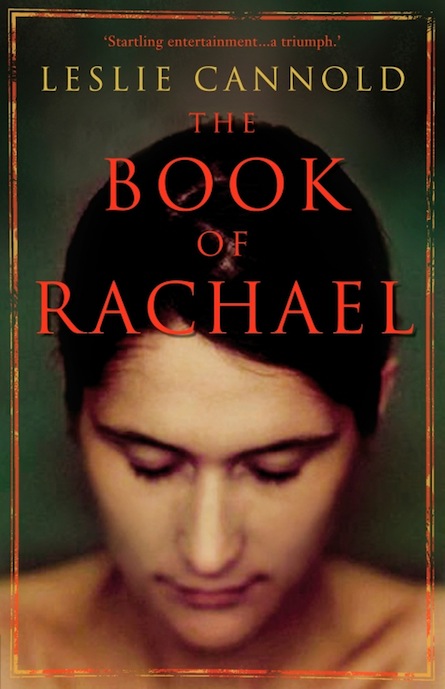
Book Review: The Book of Rachael by Leslie Cannold—I’m Still in Love with Judas, Baby.


In Jesus’ time, nothing much was recorded about the women. So, for all we know, Jesus could have had many sisters, in addition to his brothers.

Leslie Cannold has imagined the lives of his sisters in The Book of Rachael. Shona is in love with one man but is raped by another and forced to become his wife and move far away from her family and sister Rachael, who is the rebellious one in the family. She’s inquisitive and passionate, and teaches herself to read when women weren’t allowed to. When she meets her brother’s (called Joshua in the book) friend, Judah, she falls head over heels in love with him, but the feelings aren’t reciprocated until some time after. They become married, but Rachael isn’t ready to become just a mother to Judah’s offspring, and consistently aborts his children using herbal remedies, which causes a rift in their marriage.

As a noted Aussie feminist, you’d have to expect some feminist sentiments thrown into the mix from Cannold. For example, the notorious mansplaining is invoked:

“‘Why is it,’ I asked, cutting across Judah’s lovesick cant, ‘that a female infant renders the mother more unclean than a male?… Forty days confinement if the child is a boy, twice this time for a girl,” I said, rattling off the well-known rule.

“‘The cause for difference,” Judah ventured hesitantly, ‘could be the labours. The distinct way that women labour when bearing a boy as against a girl. And the difference in the burden of guilt they acquire.’

“‘What?’ Distinct labours? Different guilt? Since my own flowering I had attended dozens of births. My preparation for initiation had required I listen to Bindy describe hundreds more. Not once had I even heard it suggested that an infant’s sex determined the severity of the trial faced by the mother. ‘Whatever are you talking about, Judah?’

“But Judah mistook my confusion for a confession of ignorance and a request for enlightenment. Relieved to have been restored to his accustomed role of authority, he set forth confidently to explain. ‘Everyone knows, Rachael, that in her hour of suffering, the mother is desperate and swears she will not live in intimacy with her husband again. If a boy is born, she repents this vow sooner because he occasions such rejoicing. But with a girl, all is gloom. Many women feel their failure keenly, so the mother’s return to her husband’s arms is delayed.’

“It was the silliest thing I had ever heard. And from a man! A man who knew nothing of monthly cycles and giving birth, yet had no hesitation in describing—explaining!—the features of that experience as if they were his own. A man, like the Great God Almighty, who had no right to say!” (p. 123–125).

Furthermore, when Rachael seeks to liberate the women tasked with midwifery duties from doing so until they “are free to serve and worship the Queen”, Bindy, her crone employer, warns, “What of the women who will be trampled in the stampede for freedom?” (p. 201). Do I detect a hint of second-wave vs. third/fourth-wave feminism?

Obviously, the unknown story of women in that time drew a feminist to them, and the characters’ plights to be seen as more than just baby- and bread-making machines are inherently feminist. Hell, to be forced to marry your rapist to restore pride to your family, and to claim that your out-of-wedlock pregnancy is the result of the consort of God, harkens back to a grim time for women, indeed. Cannold does a lovely job of trying to bring those women and their struggles to life.

Related: Surfing the Third Wave: Second Wave VS. Third Wave Feminism on Gossip Girl.

Elsewhere: [Tiger Beatdown] Chronicles of Mansplaining: Professor Feminism & the Deleted Comments of Doom.

Image via Verity La.

Sexism in Fantasy.

From “Young Females as Superheroes: Superheroines in the World of Sailor Moon” from FemSpec journal:

“Further illustrating the negotiation of femininity and empowerment, girl power characters are often represented in a fantasy setting. This is a particularly significant factor when interpreting these characters in terms of their fighting abilities. The heroes generally face fantastic villains that are often unmistakably evil and are represented as protectors of innocence and humanity. This reinforces the idea that girl power heroes should have a nurturing, protective nature: both one of the conflicting femininities described by Douglas and an aspect of femininity reclaimed within third wave feminism.

“… Fantasy helps to alleviate the threat of castration because these characters are not meant to represent reality. Thus, the threat itself is marked ‘not real’.”

I think this was what Sady Doyle was trying to get at in her scathing critique of George R.R. Martin’s A Song of Ice & Fire series which, while valid, didn’t win her many fans in the fantasy community.

In a nutshell, I think she was trying to say that women experience sexism, rape, sexual harassment and value based only on their looks in everyday real life; we don’t need to be represented that way in fantasy too, where the author has the opportunity to create an alternate reality for women.

In FemSpec (an article which I originally accessed online but has since been taken down), the author studies Sailor Moon and how the heroines in that were created as a response to third wave feminism, but as a large portion of the show and manga’s audience is male, they’re typically feminised in order to eliminate threat to the status quo.

I’m not a fantasy fan, but I think we can all agree on less sexism in fantasy (nay, all fiction. Or, here’s a radical idea, in real life!) and more accurate portrayals of what it’s like to be a woman that doesn’t centre around sexuality.

Elsewhere: [Tiger Beatdown] Enter Ye Myne Mystic World of Gayng-Raype: What the “R” Stands for in “George R.R. Martin”.

[Tiger Beatdown] Chronicles of Mansplaining: Professor Feminism & the Deleted Comments of Doom.

Book Review: Big Porn Inc. Edited By Melinda Tankard Reist and Abigail Bray.


As I’ve written here before, I don’t really see a problem with porn. So long as it’s consumed in a healthy way, viewed in perspective and is made in an ethical way (no child pornography, for example, which Big Porn Inc. focuses heavily on), I don’t see a problem with it.

However, the contributors and editors of Big Porn Inc., a tome that’s made a splash since its release, thinks all porn is bad, okay? They don’t take into account things like upbringing, socio-economic background and other factors, such as peer groups, in the affect porn can have on consumers. When those aspects are relatively good, I don’t think porn is a problem.

But it’s not just consensual, enthusiastic porn the book focuses on. Take the chapters on sex with animals, child porn and degradation. “Slavefarm” (p. xx) and “the ‘crack’ of an infant’s pelvis while you are penetrating them” (p. 199) are some of the most extreme and abhorrent examples in the book (I’ll pause while you throw up over that last one, especially), but are by no means the norm. Bestiality, rape and pedophilia are mental illnesses and are about control; they’re not just something you decide to do after stumbling upon the wrong porn link.

Not only does Big Porn Inc. focus on the extreme, it’s also quite sexist. The majority of articles see women as needing to be protected from porn and the men who view it. Militant anti-porn feminist Catharine MacKinnon writes that “women have long known” the evils of pornography (p. 12), while “Caroline” writes pathetically about how discovering her husband used porn was the ultimate betrayal (p. xxix).

I also found Big Porn Inc. to be anti-choice and anti-feminism. Renate Klein, in “Big Porn + Big Pharma: Where the Pornography Industry Meets the Ideology of Medicalisation” (p. 86–104), asserts that female bodies are being “cut, modified, drugged and penetrated—all in the name of ‘choice’ and ‘it is my right’.” The footnote to this sentence admonishes sexual reassignment procedures as a bi-product of the pornography industry.

This is not to mention its anti-vaccination sentiments.

Pseudoscience reigns supreme, also, when Maggie Hamilton writes, “… boys and girls generally do not have a natural [original emphasis] sexual sense until they are between 10 and 12 years old.” I studied psychology in high school, and even at its base level, we know that young children are very aware of their sexuality. I remember playing the “sex game” (whatever we thought that meant!) in my first year of primary school. Observing children in the playground as part of my Year 10 childhood psychology class they, too, were playing the “sex game”! Sure, we don’t want kids that age accessing porn and getting all these fucked up ideas about what naked bodies and (porn) sex looks like, but their natural curiosity will ensure they will try to at some stage. That’s where healthy discussion from parents, teachers and other adults about what sex, in all its carnations, means.

Not all of the contributors are people I disagree with. Sex and anti-violence writer Nina Funnell is someone I admire, and whose inclusion in Big Porn Inc. was what compelled me to read it. She writes about sexting and the intrusion of the camera in our lives (p. 34–40), topics on which she is writing a book. While teen sexting and “peer-to-peer porn” can be dangerous (child pornography charges and having your image on the internet til the end of time before you’ve even come of age are frightening thoughts), I think they are a little out of place in the Big Porn scope of things. In my opinion, they are worlds away from actual consensual porn; the making and consumption of. Again, as long as parents and teachers are there to advise why sexting is something that should be done after careful thought and your 18th birthday, I don’t see it as the problem porn is made out to be.

When I spoke to Rachel Hills about her profile on Melinda Tankard Reist and her thoughts on Big Porn Inc., she contended that the book could have done away with the multitude of contributors in favour of fewer, more in-depth essays. This would perhaps allow Big Porn Inc. to be taken more seriously by pro-porn (or at least anti-anti-porn) people like ourselves. I have to say I agree, as by about two thirds of the way through I was ready to put it down, especially as the last section reads like an advertorial for Anti-Porn Inc., which is something I’m not buying.

Related: In Defence of Porn.

Is Big Porn Inc. Anti-Vaccination As Well As Anti-Porn?

Picture Perfect.

Elsewhere: [Sydney Morning Herald] Who’s Afraid of Melinda Tankard Reist?

Image via Melinda Tankard Reist.

Books: Is Big Porn Inc. Anti-Vaccination As Well As Anti-Porn?

It’s unfair to throw all the contributors into the one, anti-porn basket, but the authors featured in Big Porn Inc., edited by Melinda Tankard Reist and Abigail Bray all seem to think porn is eroding our society. I haven’t finished the book yet, but stay tuned next week for the entire review.

One aspect of Renate Klein’s essay on the correlation between pornography and the medical industry (“Big Porn + Big Pharma: Where the Pornography Industry Meets the Ideology of Medicalisation”) had me livid: that the cervical cancer vaccine, Gardasil, was an unnecessary luxury vaccine promoted by the porn industry for slutty girls. Sure, Klein doesn’t actually write that, but it is certainly implied.

Klein has done her research, though. She sites the website SaneVax which reports that the HPV (human papillomavirus) vaccine has resulted in 5,010 women who “did not recover” after receiving it, whatever that means. On viewing the website, it looks more like a propaganda machine rather than “an international women’s group that promotes safe vaccination practices.”

This way of thinking—that vaccination is unnecessary, a moneymaking scheme thought up by the government to keep tabs on us, and that girls who receive the Gardasil vaccine are also receiving license to slut around without thinking about the consequences of unprotected sex (or sex in general, some would say)—is rampant on the U.S. conservative scene at the moment. Michele Bachmann, anyone?

In Klein’s chapter, she talks about Gardasil in relation to the safety measures porn stars should take to ensure they stay disease free and are thus able to work. But Gardasil is only recommended for teens, or at least those who’ve never had sex before (including oral), as most people have contracted or will contract HPV during their sexual lifetime.

Just like with any vaccine or medical ailment, there are risks, but is it safer to go unvaccinated and risk spreading disease onto others? What infuriates me is that those who already have small minded, conservative views are the people whom Big Porn Inc. will attract; those who are susceptible to the anti-porn, anti-sex and anti-vaccination messages the book espouses.

Related: Conservative Feminist Melinda Tankard Reist for Sunday Life.

Elsewhere: [SaneVax Inc.] Homepage.

[New Yorker] HPV, Perry & Bachmann.

[Jezebel] Michele Bachmann’s Curious Tale of Vaccination Gone Wrong.

[Jezebel] Oral Sex Linked to Throat Cancer, Is Best Argument Yet for Giving Boys HPV Vaccine.

Image via Melinda Tankard Reist.

Book Review: How to Be a Woman by Caitlin Moran.

When I first heard of this memoir some months back (probably on Musings of an Inappropriate Woman or some similarly feminist blog), I wasn’t really into it. I hadn’t been familiar with Caitlin Moran until I read a couple of reviews, particularly Rachel Hills’ in Sunday Life, and I knew I had to read it.

How to Be a Woman doesn’t disappoint. While it is a memoir of sorts, it’s also a poignant commentary of just what’s required of women in today’s society. Think Mia Freedman’s Mia Culpa and Mama Mia, but far less politically correct.

When I reviewed those books, I didn’t feel my words could do them justice, so I simply relayed my favourite parts and most funny moments, which is what I’m going to do here. But really, even these snippets don’t do How to be a Woman justice, and you need to get your grubby little mitts on it ASAP!

On Porn.

“Freely available, hardcore 21st-century pornography blasts through men and women’s sexual imaginations like antibiotics, and kills all mystery, uncertainty and doubt—good and bad.

“But in the meantime, I have found this thing. I have discovered this one good thing, so far, about being a woman, and it is coming” [p. 31].

“That single, unimaginative, billion-duplicated fuck is generally what we mean by ‘porn culture’—arguably the biggest cultural infiltration since the counter-cultural revolution of the 1960s; certainly more pervasive that peer rivals, such as gay culture, multi-culturalism or feminism” [p. 33].

“… We needed more pornography, not less… free-range porn… Something in which—to put it simply—everyone comes.

“… Why can’t I see some actual sex? Some actual fucking from people who want to fuck each other? Some chick in an outfit I halfway respect, having the time of her life? I have MONEY. I am willing to PAY for this. I AM NOW A 35-YEAR-OLD WOMAN, AND I JUST WANT A MULTI-BILLION-DOLLAR INTERNATIONAL PORN INDUSTRY WHERE I CAN SEE A WOMAN COME.

“I just want to see a good time” [p. 37, 39].

On Waxing.

“And all of this isn’t done to look scorchingly hot, or deathlessly beautiful, or ready for a nudey-shoot at the beach. It’s not to look like a model. It’s not to be Pamela Anderson. It’s just to be normal” [p. 46].

“Whilst some use the euphemism ‘Brazilian’ to describe this state of affairs, I prefer to call it what it is—‘a ruinously high-maintenance, itchy, cold-looking child’s fanny’” [p. 47].

On Puberty.

“Puberty us like a lion that has raked me with its claws as I try to outrun it” [p. 58].

On the C-Word.

“In a culture where nearly everything female is still seen as squeam-inducing, and/or weak—menstruation, menopause, just the sheer, simply act of calling someone ‘a girl’—I love that ‘cunt’ stands, on its own, as the supreme, unvanquishable word” [p. 62].

On Mansplaining.

“I am shouted down by a male editor, who dismissed everything I say out of hand, and concludes his argument with the statement, ‘You wouldn’t know what it’s like to be a fat teenage girl, being shouted at in the street by arseholes.’

“At the time, I am a fat teenage girl, being shouted at in the street by arseholes. I am rendered silent with astonishment that I a being lectured on a radical feminist youth movement by a middle-aged straight white man…

“‘Oh, I get it all the time,’ Charlie [Moran’s homosexual friend] says, cheerfully. ‘It’s mainly conversations about how difficult it is to be a gay man—explained to me by a straight man’” [p. 140–141].

On Getting Ahead of Yourself in Potential Future Relationships.

“I imagine possible relationships all the time” [p. 149].

On Pole-Dancing Classes.

“Just as pornography isn’t inherently wrong—it’s just some fucking—so pole-dancing, or lap-dancing, or stripping, aren’t inherently wrong—it’s just some dancing. So long as women are doing it for fun—because they want to, and they are in a place where they won’t be misunderstood, and because it seems ridiculous and amusing, and something that might very well end with you leaning against a wall, crying with laughter as your friends try to mend the crotch-split in your leggings with a safety pin—then it’s a simple open-and-shut case of carry, girls. Feminism is behind you.

“It’s the same deal with any ‘sexy dancing’ in a nightclub—any grinding, any teasing, any of those Jamaican dancehall moves, where the women are—not to put too fine a point on it—fucking the floor as if they need to be pregnant by some parquet tiles by midnight. Any action a woman engages in from a spirit of joy, and within a similarly safe and joyous environment, falls within the city-walls of feminism. A girl has a right to dance how she wants, when her favourite record comes on” [p. 174].

“I Am in Heels! I Am a Woman!”

“I have a whole box full of such shoes under my bed. Each pair was bought as a down payment on a new life I had seen in a magazine, and subsequently thought I would attain, now I had the ‘right’ shoes” [p. 199].

“WE CANNOT WALK IN THE DAMN THINGS… So why do we believe that wearing heels is an intrinsic part of being a woman, despite knowing it doesn’t work? Why do we fetishise these things that almost universally make us walk like mad ducks? Was Germaine Greer right? Is the heel just to catch the eyes of men, and get laid?” [p. 202–203].

On Ladymags.

“… Those women’s magazines… are making me feel genuinely bad about my life achievement. Because I don’t yet have an ‘investment handbag’” [p. 205].

Fashion: Turn to the Left.

“… Fashion is… a compulsory game… And you can’t get out of it by faking a period. I know. I’ve tried” [p. 210].

On Childbirth.

“Finally, I have met someone who realises what I have known all along. This bitch [midwife] sees me for what I truly am: incapable [of giving birth]” [p. 221].

“I haven’t told you the half of it. I haven’t told you about Pete [Moran’s husband] crying, or the shit, or vomiting three feet up a wall, or gasping ‘mouth!’ for the gas and air, as I’d forgotten all other words. Or the nerve that Lizzie [her firstborn daughter] damaged with her face and how, ten years later, my right leg is still numb and cold. Or the four failed epidurals, which left each vertebra smashed and bruised, and the fluid between them feeling like hot, rotting vinegar. And the most important thing—the shock, the shock that Lizzie’s birth would hurt me so much…” [p. 221–222].

“She [Lizzie, a couple of days after birth] still looks like an internal organ” [p. 223].

“You basically come out of that operating theatre like Tina Turner in Mad Max: Beyond the Thunderdome, but lactating” [p. 226].

On Feminism in General.

“… Again and again over the last few years, I turned to modern feminism to answer questions that I had but found that what had once been the most exciting, incendiary and effective revolution of all time had somehow shrunk down into a couple of increasingly small arguments, carried out among a couple of dozen feminist academics… Here’s my beef with this:

“1) Feminism is too important to only be discussed by academics. And, more pertinently:

“2) I’m not a feminist academic, but, by God, feminism is so serious, momentous and urgent, that now is really the time for it to be championed by a lighthearted broadsheet columnist and part-time TV critic, who has appalling spelling. If something’s thrilling and fun, I want to join in—not watch from the sidelines. I have stuff to say! Camille Paglia has Lady Gaga ALL WRONG! The feminist organization Object are nuts when it comes to pornography! Germaine Greer, my heroine, is crackers on the subject of transgender issues! And no one is tackling OK! Magazine, £600 handbags, tiny pants, Brazilians, stupid hen nights or Katie Price” [p. 12].

“I don’t know if we can talk about ‘waves’ of feminism anymore—by my reckoning, the next wave would be the fifth, and I suspect it’s around the fifth wave that you stop referring to individual waves, and start to refer, simply, to an incoming tide.

“But if there is to be a fifth wave of feminism, I would hope that the main thing that distinguishes it from all that came before is that women counter the awkwardness, disconnect and bullshit of being a modern woman, not by shouting at it, internalising it or squabbling about it—but by simply pointing at it, and going ‘HA!’, instead” [p. 14].

“‘I AM A FEMINIST’… It’s probably one of the most important things a woman will ever say… Say it. SAY IT! SAY IT NOW! Because if you can’t, you’re basically bending over, saying, ‘Kick my arse and take my voice now, please, the patriarchy.’

“And do not think that you shouldn’t be standing on that chair shouting ‘I AM A FEMINIST!’ if you are a boy. A male feminist is one of the most glorious end-products of evolution” [p. 72].

“What do you think feminism IS, ladies? What part of ‘liberation for women’ is not for you? Is it freedom to vote? The right not to be owned by the man you marry? The campaign for equal pay?… It’s technically impossible for a woman to argue against feminism. Without feminism, you wouldn’t be allowed to have a debate on a woman’s place in society. You’d be too busy giving birth on the kitchen floor—biting down on a wooden spoon, so as not to disturb the men’s card game—before going back to quick-liming the dunny” [p. 80].

“I don’t see it as men vs woman as all. What I see, instead, is winner vs loser… For even the most ardent feminist historian, male or female… can’t conceal that women have basically done fuck all for the last 100,000 years. Come on—let’s admit it. Let’s stop exhaustingly pretending that there is a parallel history of women being victorious and creative, on an equal with men, that’s just been comprehensively covered up by The Man. There isn’t” [p. 134–135].

On “Having It All”.

“Batman doesn’t want a baby in order to feel he’s ‘done everything’. He’s just saved Gotham again! If this means that Batman must be a feminist role model above, say, Nicola Horlick [British investment fund manager], then so be it…

“In the 21st century, it can’t be about who we might make, and what they might do, anymore. It has to be about who we are, and what we’re going to do” [p. 245–246].

On Pop Music.

“Pop [music] is the cultural bellwether of social change” [p. 254].

On Abortion.

“I cannot stand anti-abortion arguments that centre on the sanctity of life. As a species, we’ve fairly comprehensively demonstrated that we don’t believe in the sanctity of life. The shrugging acceptance of war, famine, epidemic, pain and lifelong, grinding poverty show us that, whatever we tell ourselves, we’ve made only the most feeble of efforts to really treat human life as sacred.

“I don’t understand then, why, in the midst of all this, pregnant women… should be subject to more pressure about preserving human life than, say, Vladimir Putin, the World Bank, or the Catholic Church” [p. 275].

“For if a pregnant woman has dominion over life, who should she not also have dominion over not-life?… On a very elemental level, if women are, by biology, commanded to host, shelter, nurture and protect life, why should they not be empowered to end life, too?” [p. 273].

On Being a Muse to Men. 

“Men go out and do things—wage wars, discover new countries, conquer space, tour Use Your Illusion 1 and 11—whilst the women inspire them to greater things, then discuss afterwards, a length, what’s happened…” [p. 300].

Related: Mama Mia: A Memoir of Mistakes, Magazines & Motherhood by Mia Freedman Review.

Mia Culpa: Confessions from the Watercooler of Life by Mia Freedman Review.

Feminism Respects Women More Than Anything, Including the Catholic Church!

Elsewhere: [Tiger Beatdown] Chronicles of Mansplaining: Professor Feminism & the Deleted Comments of Doom.  

Image via Metro.co.uk.
Books: Caitlin Moran on Princess Culture.

From How to be a Woman by Caitlin Moran:

“The books; the Disney films; the most famous woman in the world being, when I was a child, Princess Diana: whilst there were other role models around, the sheer onslaught of princessalia every girl is subject to wedges its way into the heart, in a quietly pernicious way.

“In the last decade, the post-feminist reaction to princesses has been the creation of ‘alternative’ princesses: the spunky chicks in Shrek and the newer Disney films, who wear trousers, do kung-fu, and save the prince. Possibly a reaction to the life, and then death, of Diana, princesses have had to be reconfigured to acknowledge that we all now know that being a real princess isn’t all about wafting around in a castle, being beautiful and noble. It’s about eating disorders, loneliness, Wham! mix-tapes, shagging around, waging a pitched battle with the royal family, and, eventually, the incredible fascination that you hold over others conspiring to kill you.” [p. 300–301]

Sounds peachy! I certainly don’t envy Kate Middleton.

Related: Poor Pippa.

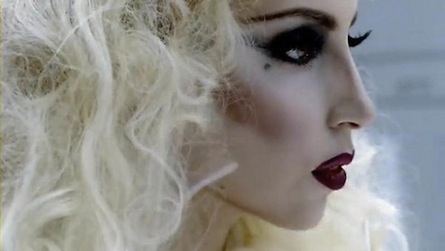
Books: Lady Gaga is “For Us”.

From How to be a Woman by Caitlin Moran (review to come next week):

“‘Even though you wear very little clothing,’ I said slightly primly, gesturing to [Lady] Gaga’s bra and thong, ‘you’re not doing all this as a… prick-tease, are you?’

“‘No!’ Gaga replied, with a big, drunken beam. ‘It’s not what straight men masturbate over when they’re at home watching pornography. It’s not for them. It’s for… us.’

“And she gestured around the nightclub, filled to the brim with biker-boy lesbians and drag queens.

“Because Gaga is not there to be fucked. You don’t penetrate Gaga. In common with much of pop’s history, an particularly its women—she’s not singing these songs in order to get laid, or give the impression she wants to. She wishes to disrupt, and disturb: sunglasses made burning cigarettes, beds bursting into flame[s], dresses made of raw meat, calipers made of platinum, Gaga being water-boarded in a bathtub—eyes dilated with CGI so that she looks like her own manga cartoon. Her iconography is disconcerting, and disarranged what we are used to seeing.” [p. 260]

Image via Roccerka.

Book Review: Never, Ever, Again… Why Australian Abortion Law Needs Reform by Caroline de Costa.


Abortion activist Caroline de Costa gets the name for her book from the Queensland trial of young couple Tegan Leach and Sergie Brennan, who were charged with procuring an illegal abortion by using the “controversial abortion drug”, RU486, which is a situation that should happen “never, ever, again” (p. 24).

This unique case garnered so much media attention because it was the first time since 1959 that a woman was charged, under section 225 of the Queensland Criminal Code, with procuring her own abortion. This section of the criminal code hasn’t been changed since it was written… in 1899.

The couple were declared innocent after the trail came to a close on the 14th October last year, but it brought to a head the debate surrounding the aforementioned “controversial abortion drug” RU486.

de Costa has also written another book on RU486, and a lot of that material is rehashed in this publication. Before this case, I only ever thought there were surgical abortions, performed in a hospital using suction. I supported them nonetheless. Now that I’m aware there is an “abortion drug”, which not only assists in the safe termination of pregnancy, but “could help treat, among many other things, certain inoperable brain tumours, breast cancers, burns and, ironically enough, the fertility-inhibiting condition of endometriosis” (p. 151), I’m even more in favour of allowing access to abortion to women who don’t want to be pregnant.

de Costa continues:

“Mifepristone/misoprostol [RU486] is also an effective way of starting labour in women when it is found that the fetus has died in the uterus at any time up to mid-pregnancy, and this is now recommended practice in many countries overseas.

“Mifepristone has also been shown in trials to be useful for Emergency Contraception (EC)” (p. 152).

de Costa is quick to point out that RU486 is not the same as EC, as one assists in abortion while the other prevents an egg being fertilised in the aftermath of unprotected sex.

The drug has also been seen to be effective in small doses as a contraceptive pill, assist in the treatment of Cushing’s syndrome (the “over-production of glucocorticoids”), depression, dementia and Alzheimer’s, arthritis, “certain types of hypertension”, glaucoma, and even HIV and AIDS (p. 152, 154).

But RU486 is only available from a few medical practitioners in a few locations in Australia, hence why Leach and Brennan decided to purchase theirs from overseas. It is also a fairly recent development.

Before medical abortion was available, women tried all sorts of treatments and home remedies to abort their foetuses, a cacophony of which are detailed in Never, Ever, Again. Most of these cases resulted in the desired death of the unborn child, but also in the death of the mother.

Whilst Victoria, New South Wales, Western Australia and the Territories have abolished abortion as a crime, Queensland still considers it an illegal and punishable offence. So do, to a lesser extent, Tasmania and South Australia. Seriously, people: when some third world countries have no problem with mifepristone, why should a progressive country such as Australia?

The book talks about the majority of Australians who think abortion should be legal, and how Queensland residents and the media came out in support of Leach and Brennan during their trial. For example, “as journalist Emma Tom wrote in 2009:

“Like many people who believe women should have the right to safe, affordable and legal terminations, I don’t like being described as pro-abortion because it sounds like I think terminations are fabbo things that women should hop into as often as possible. The truth is I’d like to see a whole lot less of them, but via sex education and contraception rather than by robbing women of their right to decide whether they’re up to seeing through a pregnancy” (p. 24).

Now that’s something everyone can agree on, no?

In the final chapter of the book, a recent addition to this second edition, de Costa writes in a much more relatable and personable tone than the rest of the book. Perhaps that’s because the final chapter is an account of the trial of Leach and Brennan, which de Costa attended.

de Costa also repeatedly writes the assertion that abortion should be a matter that exists between a woman, her partner and her doctor, and not the government, the police and the legal system. In the final sentence, de Costa writes:

“It [the second chapter of abortion law reform in Australia] will be written when finally State Premiers and Attorneys-General have the wisdom and courage to remove abortion from the too-hard basket and agree on uniform decriminalization of abortion law across the country. Then, and only then, can abortion truly be a matter for a woman, her partner and her doctor.”

Amen to that!

Related: Melbourne Writers’ Festival: Never, Ever, Again: Why Australian Abortion Law Needs Reform by Caroline de Costa Book Launch.

Feminism Respects Women More Than Anything, Including the Catholic Church!

Image via Fishpond.

Event: Melbourne Writers’ Festival—Beyond White Guilt.

The final day of the Melbourne Writers’ Festival brought Beyond White Guilt, taken from the name of author Sarah Maddison’s Beyond White Guilt: The Real Challenge for Black-White Relations in Australia and hosted by Tony Birch.

Maddison and Birch spoke about the crux of Maddison’s book, published in June—guilt and shame—and how they can both be “deeply personal experiences” in the way we look at race relations in Australia.

The absence or a certain “whitewashing” of black history in Australia can induce guilt, a feeling of “sick” and “anxiety”, and can “immobilise” us in striving for a more equal Australia.

On this, Birch spoke about being honoured by the Victorian East Timorese community* for doing not a whole lot other than sitting in front of the TV and thinking, “how awful”.

I think a lot of Australians feel this way, whether it be watching World Vision ads on TV, seeing homeless people begging in the street, or watching boats crash and people perish as they try to seek asylum in Australia (although, from the barrage of “fuck off, we’re full” jibes in response to that tragedy, perhaps it is the minority of Australians).

Maddison spoke of Australia’s roots as “a land of people who dig stuff up and chop stuff down”; an “Aussie battler” sentimentality, if you will. And I think that mentality lends itself to the bigotry we express towards the “other”, ie. people trying to get a “free ride” as asylum seekers, the poor and Indigenous on welfare, the homeless, the disabled, etc.

Unfortunately, when this kind of attitude rears its ugly head, such as in the Redfern and Cronulla riots, and the inaugural Indigenous protesting of Australia Day in 1988, as Maddison mentioned, it usually pits “true blue Aussies” against un-Australians. (Birch wrote a 2001 article entitled “The Last Refuge of the Un-Australian”, which is available for download from the University of Melbourne’s website.)

Whichever way you put it, none of us are truly happy with our country. Lefties abhor the way our environmental and human rights sensibilities are heading, whilst conservatives want to stop the boats, abortions, taxing the rich etc. One thing I think we all can agree on, as Maddison noted, is that our current government sucks.

Birch asked, “How are we going to love our country wholly?” An Aboriginal elder in the audience suggested Maddison’s book become compulsory reading for all Australians as a solution. One thing’s for sure: like feminism, we’ve got a long, long way to go, baby.

*Updated 09/09/11: The original version of this post cited Birch as being honoured by a Papua New Guinean community. In actual fact, it was the East Timorese community of Victoria.

Related: Cowboys VS. Aliens & Indians… Does It Really Matter? They’re All the Same Anyway, According to the New Movie.

My Response: Go Back to Where You Came From.

It’s Not Easy Being Green: The Latest Trend in Discrimination.

Melbourne Writers’ Festival: A Long, Long Way to Go—Why We Still Need Feminism.


Book Review: My Sister, My Love: The Intimate Story of Skyler Rampike by Joyce Carol Oates.


My Sister, My Love: The Intimate Story of Skyler Rampike had me at hello its first two sentences:

“Dysfunctional families are all alike. Ditto ‘survivors.’

“Me, I’m the ‘surviving’ child of an infamous American family…”

My favourite book being a fictional account of the O.J. Simpson murder trial, Another City, Not My Own by Dominick Dunne, I’m a sucker for true crime and conspiracy theories.

My Sister, My Love is the fictionalised account of the JonBenet Ramsey murder of Christmas 1996, a story that has captivated me since it hit the newsstands some fifteen years ago.

It is written by the awesome Joyce Carol Oates, whom I’ve never read in novel form before, but whose articles I have come across online. Since its publication in 2008, I’ve longed to read it, and serendipitously came across it in a secondhand bookstore earlier this year. It has taken me since then to read it!

But coming in at 562 pages, it’s not exactly light reading, both in size and subject matter.

The book focuses on the life of Skyler Rampike, brother to child ice-skating prodigy, Bliss Rampike (nee Edna Louise Rampike), and he and his parents’ struggle to come to terms with her murder.

The book is somewhat longwinded, but thoroughly enjoyable. Some parts before and after the murder could have been spared, but it’s all part of Oates’ effort to build the story and the characters within it.

The story is written from Skyler’s perspective, but switches rapidly from first- to second- to third-person narration, which can be jarring at first but ultimately lends itself to the insight we get into the twisted and troubled mind of Skyler.

Oates also borrows from other high-profile pop cultureisms, like the Simpson murder (Skyler’s boarding school for troubled/famous children girlfriend is most definitely supposed to be Simpson’s daughter), Wicked (“Popular! In America, what else matters?” [p. 152]), and The Catcher in the Rye, with Skyler calling faux snow “phony-looking” (p. 319). In fact, I think Oates’ key inspiration was probably J.D. Salinger’s most famous fictional outing.

It’s hard to separate the fictional Rampike family Oates has so expertly crafted from the real Ramsey family, which has fallen to pieces since JonBenet’s murder. As in real life, mother Betsey died, and father Bix remarried. But what do we know of Burke Ramsey, whom Skyler was based on? Nothing much.

And that’s where Oates saw an opening: to tell one of America’s most fascinating unsolved murders from the perspective of the person who, by a lot of peoples’ accounts, is the prime suspect.

Related: Another City, Not My Own by Dominick Dunne Review.

Book Now, Bendigo.

Stacked.

It’s All About Popular… Lar, Lar, Lar, Lar.

The Ten Books I Wanted to Read This Year But Didn’t.