UPDATED: SlutWalk.

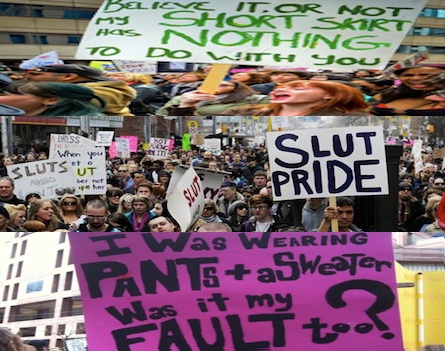
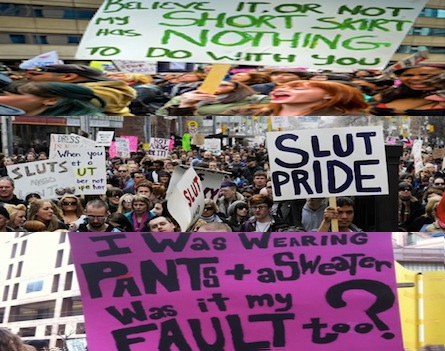
For those of you yet to be persuaded to join in the SlutWalk festivities this Saturday 28th May at the State Library, here are some excerpts from SlutWalker Jaclyn Friedman’s talk at the Boston, Massachusetts event, from Feministing:

“Is a slut a girl who has sex too young? With too many partners? With too little commitment? Who enjoys herself too much? Who ought to be more quiet about it, or more ashamed? Is a slut just a woman who dresses too blatantly to attract sexual attention? And what do any of these words even mean? What’s too young, too many partners, too little commitment, too much enjoyment, too blatant an outfit? For that matter, what’s a woman, and does a slut have to be one?

“… You can call us that name, but we will not shut up. You can call us that name but we will not cede our bodies or our lives. You can call us that name, but you can never again use it to excuse the violence that is done to us under that name every single fucking day.

“… We can be called sluts for nearly any reason at all. If we’re dancing. If we’re drinking. If we have ever in our lives enjoyed sex. If our clothes aren’t made of burlap. If we’re women of colour, we’re assumed to be sluts before we do a single thing because we’re ‘exotic.’ If we’re fat or disabled or otherwise considered undesirable, we’re assumed to be sluts who’ll fuck anyone who’ll deign to want us. If we’re queer boys or trans women, we’re called sluts in order to punish us for not fearing the feminine. If we’re queer women, especially femme ones, we’re called sluts because we’re obviously ‘up for anything,’ as opposed to actually attracted to actual women. If we’re poor, we’re gold diggers who’ll use sex to get ahead. And god forbid we accuse someone of raping us—that’s the fast track to sluthood for sure, because it’s much easier to tell us what we did wrong to make someone to commit a felony violent crime against us than it is to deal with the actual felon.

“You know what I expect will happen when I’m dressed like a slut? People will want to get with me. You know what I don’t mean when I dress like a slut? That anyone I encounter can literally do anything at all they want to me. I know. It’s shocking. Because clearly you thought me wearing my tits out like this gives every single one of you carte blanche to do anything whatsoever you might want to do with my body. I’m very sorry to disappoint.

“… I just want to point out how ridiculous it all sounds when you spell out the meaning of ‘she was asking for it.’ Because the rapists are not confused. Those tiny percentage of guys doing most of the raping? They’ve told researchers that they know full well they don’t have consent. It’s the rest of us that seem confused. We’re the ones that let them off with a little ‘boys will be boys’ shrug and focus our venom on ‘sluts’ instead, leaving those boys free to rape again and again.

“… There’s nothing wrong with being a slut. Not a thing. It’s OK to like sex. Sex can be awesome. It can be life-alteringly awesome, but even when it’s not, it can be a damn good time. Our sexual desire is part of our life force. And as long as you’re ensuring your partner’s enthusiastic consent, and acting on your own sexual desires, not just acting out what you think someone else expects of you? There’s not a damn thing wrong with it. Not if it’s a hookup, not if you’re queer, not if you like it kinky, not if your number’s too high. If you’re playing on your own terms and you’ve got an enthusiastic partner? Please, I beg of you, just have a fucking awesome time. Our lives are way too often full of struggle and pain. If you can do something with someone else that brings both of you pleasure and joy? You’re increasing the pleasure and joy in the world.

“There has been a lot of misunderstanding about the meaning of the SlutWalk, and none more egregious than those who claim our agenda is to encourage all women to be sluts. Whatever that means, our mission could not be further from that. Our mission here today is to create a world in which all of us are free to make whatever sexual and sartorial choices we want to without shame, blame or fear. If you dress and experience your sexuality in decidedly unslutty ways, and you know that there’s nothing we can do to make someone rape us, the SlutWalk is your walk, too…”

*

Never before (okay, this year) have I been so excited for something. That includes the multitude of costume parties I’ve been to this year.

About a month ago, I cottoned on to the buzz surrounding SlutWalk, an event spawned by Sonya Barnett and Heather Jarvis, after they heard a Toronto police officer telling a rape victim that she wouldn’t have been attacked had she been dressed less provocatively.

The first march was in early April, and was met with great success. Other events have been staged in Dallas, Texas and Boston, Massachusetts.

Next Saturday 28th May, SlutWalk comes to Melbourne, and I am beside myself with excitement. The only rally I’ve ever marched in was when I was 15, for (or rather, against) nuclear power with my mum, sister and bestie. I wasn’t really informed enough to have views on nuclear power back then, and I’m still undecided about it. Obviously the disaster in Japan highlights the question mark surrounding the idea of nuclear power in Australia.

However, I do have strong views about slut-shaming, rape, sex and reproductive rights, and I will be immensely proud to walk alongside my fellow sluts, as we reappropriate the word, much like the gays have reclaimed “fag”.

Obviously, rape is not about how a woman is dressed or how much lust she inspires in men, regardless of what she’s wearing. Women are raped when they’re on their morning jog, walking to and from work, out at night in their nicest outfit, or in their home by a friend or family member. I resent the comments that police officer made, and I will be wearing my “sluttiest” outfit in protest. But I’ll be wearing it with a prim and proper bun.

To join the SlutWalk, visit their Facebook page.

Related: Apocalypse Now: 2012 Come Early?

So a Tattoo Makes Me Public Property, Huh?

Elsewhere: [Feministing] “You Can Call Us That Name, But We Will Not Shut Up.”

[Facebook] SlutWalk.

Images via MamaMia.

Event: SlutWalk.

Never before (okay, this year) have I been so excited for something. That includes the multitude of costume parties I’ve been to this year.

About a month ago, I cottoned on to the buzz surrounding SlutWalk, an event spawned by Sonya Barnett and Heather Jarvis, after they heard a Toronto police officer telling a rape victim that she wouldn’t have been attacked had she been dressed less provocatively.

The first march was in early April, and was met with great success. Other events have been staged in Dallas, Texas and Boston, Massachusetts.

Next Saturday 28th May, SlutWalk comes to Melbourne, and I am beside myself with excitement. The only rally I’ve ever marched in was when I was 15, for (or rather, against) nuclear power with my mum, sister and bestie. I wasn’t really informed enough to have views on nuclear power back then, and I’m still undecided about it. Obviously the disaster in Japan highlights the question mark surrounding the idea of nuclear power in Australia.

However, I do have strong views about slut-shaming, rape, sex and reproductive rights, and I will be immensely proud to walk alongside my fellow sluts, as we reappropriate the word, much like the gays have reclaimed “fag”.

Obviously, rape is not about how a woman is dressed or how much lust she inspires in men, regardless of what she’s wearing. Women are raped when they’re on their morning jog, walking to and from work, out at night in their nicest outfit, or in their home by a friend or family member. I resent the comments that police officer made, and I will be wearing my “sluttiest” outfit in protest. But I’ll be wearing it with a prim and proper bun.

To join the SlutWalk, visit their Facebook page.

Related: Apocalypse Now: 2012 Come Early?

So a Tattoo Makes Me Public Property, Huh?

Elsewhere: [Facebook] SlutWalk.

Images via MamaMia.

Event: Clunes Back to Booktown.

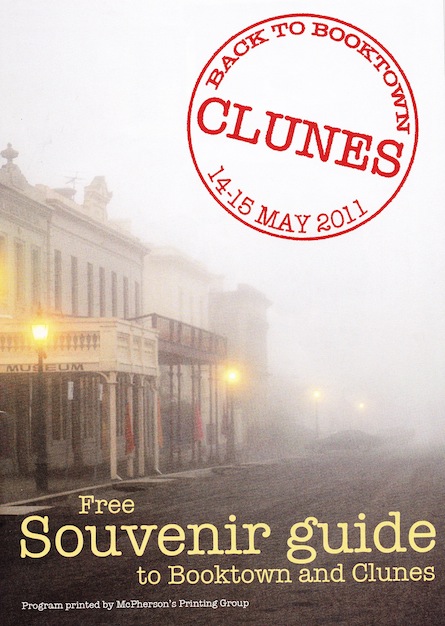
Last weekend I went to Clunes for their annual Back to Booktown event, encompassing more than 60 booksellers in almost every store on the main street, plus churches, historical buildings and marquees erected especially for the weekend.

As I’ve blogged about here and here, I’d been wanting to attend for the past two years, but the lack of public transportation and friends willing to drive there (as I don’t have a car nor a license) meant this was the first year I could go.

My friend Andrew and I trekked the two hours from Melbourne to the country town located somewhere between Ballarat, Creswick and Maryborough; a town so small it defaults to Ballarat when looking it up on a weather website. (It was sunny and 11° on Saturday. Brrr!)

Honestly, I was surprised by the sheer amount of booksellers. I was expecting a couple of old buildings and trestle tables and that was it. Granted, the town is small, but there’s a reason people flock from far and wide to Clunes for a weekend in May.

I managed to unearth a couple of Bret Easton Ellis books for under $10 each, a copy of The Catcher in the Rye for $12.50 (steep for a secondhand copy, but c’mon, it’s J.D. Salinger!), and Agatha Christie’s Death on the Nile. I also saw a copy of Perfect Murder, Perfect Town by Lawrence Schiller on the JonBenet Ramsay murder, but I wasn’t sure I could commit to a book that thick on a subject I already know a lot about. Plus, I already have Joyce Carol Oates’ My Sister, My Love ready to go after I finish The Great Gatsby, which is a fictional account of the crime. Alas, when I decided to go back for it it had already been sold. I guess it just wasn’t meant to be.

There were also some fabulous food stalls at Clunes, with baked potatoes and Dixie cups, but I was most impressed by Widow Twankey’s Lolly Shop & Ice Cream Parlour, which sold the cheapest lollies and cakes in town (or most towns, for that matter!). Of course we stocked up on Red Skins (the racist lolly of the masses), Fantails, boiled candy and Toffee Apples. Yum!

While I was planning on picking up a few more titles than I did, I will definitely be making an appearance again next year, and I urge you to, too. Book lovers will feel like they’ve died and gone to heaven.

Related: Go Back to Booktown This Weekend (2011).

Go Back to Booktown This Weekend (2010).

Elsewhere: [Back to Booktown 2011] Homepage.

[Widow Twankey’s] Homepage.

Event: Go Back to Booktown This Weekend.

Yes, for those of you who’ve been with The Scarlett Woman from the beginning, I have already used this title for a blog post this time last year.

But it is that time of year again when the Clunes Back to Booktown book fair rolls around again.

I’ve been dying to go for the past two years, but canceling friends and no drivers license meant I’ve had to sit it out. But this year I managed to wrangle a friend with a car, and will finally be making an appearance at the fair.

I tell you what, it’d better bloody be worth it!

I’ll regale you with my tales of the city country town next week.

See the website for the location, times and how to get there.

Related: Go Back to Booktown This Weekend.

Armistead Maupin in Conversation with Noni Hazlehurst.

Elsewhere: [Back to Booktown 2011] Homepage.

VCE Top Designs—frankie Editor Jo Walker Talks to Media Students.


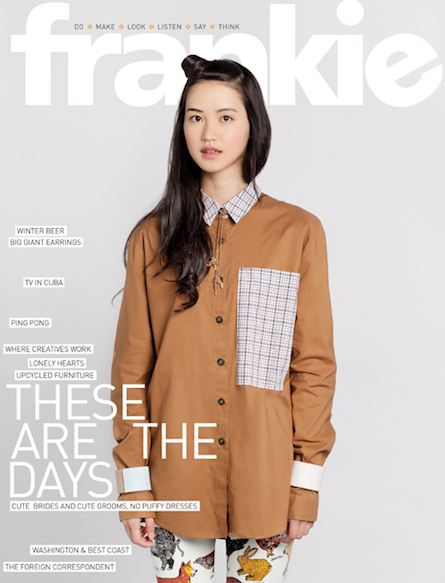
Last Thursday frankie editor Jo Walker spoke to VCE students studying media and design at Melbourne Museum, as part of their annual VCE Top Designs exhibition.

The forum was also headed by two VCAA State Reviewers, who got the event off to a promising start when they asked the students if any of them read magazines as inspiration for their projects, and a tumbleweed blew by.

But you know what high school kids can be like: in the words of Matilda’s Miss Trunchbull, “I’m glad I never was one!”

Walker can count me as one of her loyal subjects, and I hung on her every word.

Granted, a lot of it is stuff I’ve heard before, as it’s been five and a half years since I graduated from high school, but interesting nonetheless.

She spoke about frankie’s humble beginnings, the founding editors Louise Bannister, who left not long after the mag’s inception to backpack around Canada, and Lara Burke, who’s still there as creative director today.

Walker described frankie as a “general interest magazine for hipsters”, which I have to say was a turn off, as I can’t stand hipsters! But, like my friend Zoe, who looks like a hipster on the outside, but is really just a normal, cool, great person on the inside, frankie is similar.

Walker said it’s easier to describe what frankie isn’t than what it is: it’s not a colourful, mainstream mag about how to please your boyfriend in bed. frankie readers already know how to do that, according to Walker!

The mag is inspired by “random conversations in pubs”, bookstores, news shows like ABC’s Australian Story, the internet, social media and frankie staff’s favourite blogs (no word on if The Scarlett Woman is one of them!). But essentially, if editors Walker and Burke  like it, it goes to print.

frankie has stopped using models for its fashion shoots (though not for the cover evidently), instead using musicians in what could be seen as a token gesture to silence its critics.

Stepping away from the typical frankie-esque story, this month has a “frankie weddings” special, which Walker described as “not just another [Cosmo Bride] wedding story”.

Ultimately, Walker says she looks to give each issue the balance, flow and rhythm of a “mixtape” (though I don’t think many of the kids knew what one is; “an iPod playlist”, if you will.)

I was so inspired by the talk and the amount of references to the current issue, I went out and bought a copy, even though I don’t get paid til next week and had already exhausted my magazine allowance!

Related: George Michael Paper Dolls in Independent Zine ZINm.

 frankie Review: January/February 2011.

Elsewhere: [Musings of an Inappropriate Woman] Why It’s Worth Talking About frankie Magazine.

Image via Girl with a Satchel.

The Royal Wedding—The Other Event of the Decade?

Today is Friday (Friday, everybody’s looking forward to the weekend…), 29th April, and you all know what that means: it’s the Royal Wedding, y’all!

Granted, I couldn’t care less, but I will be spending the evening on the couch with some books and mags, tuning in every now and then to check on the festivities (namely Kate’s Her Royal Highness Princess Catherine’s dress and to perve on Prince Harry).

(I also have a special event of my own occurring today that takes excitement precedence, and that is getting my first tattoo!)

But with an expected audience of 2 billion people, is this the event of the decade?

It hasn’t quite been ten years since September 11, so is it possible that the Royal Wedding could take the terrorist attack’s place as the most significant event in the past decade? (On that note, what about Japan’s earthquake, tsunami and nuclear crisis?)

It’s hard to compare the two: one was one of the most horrific events in human history that changed the way we think, act and feel, the other is an exercise in royal extravagance and tabloid obsession.

2001 to 2011 will be book ended by the saddest and happiest televised moments.

How will you be spending the day?

Related: Apocalypse Now: 2012 Come Early?

Images via Think Progress, Great Dreams.

Bendigo Art Gallery: Giving the Metro Museums a Run for Their Money.

As past posts this week would indicate, I spent the weekend in Bendigo, in country Victoria. I visited some old friends, went secondhand book shopping, got my hair did, and attended the opening of the Bendigo Art Gallery’s American Dreams exhibition.

There were some stunning portraits by some of America’s most gifted and famous photographers, like Walker Evans, Cindy Sherman and Richard Avedon.

While this exhibition isn’t the greatest I’ve seen (FYI, that was The Golden Age of Couture, also hosted by the Bendigo Art Gallery, which displayed gorgeous garments from the likes of Christian Dior and his 1940s “New Look”, Cristóbal Balenciaga, Hubert de Givenchy and Pierre Balmain), it is one in a long line of coups for the country gallery.

Last year I saw Frederick McCubbin’s Last Impressions and Looking for Faeries, in addition to 2009’s Golden Age of Couture, and this year the gallery has The White Wedding Dress display in store for us. But the exhibition I’m most looking forward to won’t be opening until 2012, but it’s well worth the wait: Grace Kelly—Style Icon, featuring costumes from her most famous films (Rear Window, I’m looking at you) and couture gowns from her reign as Her Serene Highness, Princess Grace of Monaco.

With stellar exhibitions like these, Melbourne’s galleries and museums had better watch out!

Related: Book Shop: Book Now, Bendigo.

Loving… Grace Kelly as Lisa Fremont in Rear Window.

Gustave Moreau’s The Eternal Feminine Exhibition at the National Gallery of Victoria.

Elsewhere: [Bendigo Art Gallery] Homepage.

[Bendigo Art Gallery] American Dreams: 20th Century Photography from George Eastman House.

[Bendigo Art Gallery] The Golden Age of Couture: Paris & London, 1947–1957.

[Bendigo Art Gallery] McCubbin Last Impressions: 1907–1917.

[Bendigo Art Gallery] Looking for Faeries: The Victorian Tradition.

[Bendigo Art Gallery] The White Wedding Dress: 200 Years of Wedding Fashions.

[Bendigo Art Gallery] Grace Kelly: Style Icon.

Images via Bendigo Art Gallery, Ethical Style.

Event: Evolution of the Bookshop at the Wheeler Centre.

I never thought a seemingly boring panel conversation about e-books versus hard copy print media would trump a discussion about masculinity in Australia, but it seems “The Evolution of the Bookshop” has come out on top when it comes to talks I’ve seen at the Wheeler Centre lately.

I’m a bit late reporting on this one, but a couple of weeks ago I attended “The Evolution of the Bookshop”, which entailed the panel of Michael Webster, Corrie Perkin, Jo Case and Chris Flynn, with Sally Heath as the facilitator.

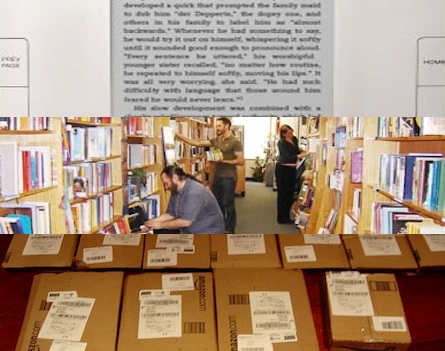
The main item of contention on the agenda was the receivership of the REDgroup, which includes Borders and Angus & Robertson (for those of you living under a rock in recent months) and how online shopping from overseas stores, like Amazon and the Book Depository, may have contributed.

2010 was a good year for books in Australia, actually, as Webster, of RMIT and Nielson BookScan, pointed out in a riveting (no, I’m not kidding!) spreadsheet. There was no denying the large amount of Australian dollars that were spent online on books, what with parity and all that jazz, and the panel urged the audience to buy local throughout the night.

But when Flynn, fiction editor of The Australian Review of Books, compared the prices of all the books he bought over the course of a year at Borders (the devil’s bookstore, according to the panel!), Readings (of which Case is a staff member) and the Book Depository (there was over $1000 difference between online and at a bricks and mortar bookstore), it doesn’t bode well for physical bookstores.

Personally, I’m not in the financial bracket to be supporting local bookstores when I can get the books I want online for half the price at a click of a button.

Earlier this year, I went into Borders at Melbourne Central wanting to purchase Marilyn Monroe’s Fragments, The Great Gatsby and Sloane Crosley’s two books of essays (which you may remember me writing about here). They had none of them in store. An hour later I was at home on Amazon, $70 poorer but immeasurably happier that four brand new books were on their way to me.

Case made the case (haha!) for the experience of shopping at a bookstore, but Flynn countered with the presumption that people who shop online probably already belong to an online community, and thus their experience at an online bookstore is just as valid and important as at a physical one.

As the owner of her own bookshop, Perkin asserted that she just can’t compete with free shipping and the iPhone app Shazam, which allows users to record a piece of music, to which the app generates the full details of and where you can buy it online.

But independent bookstores compete on service, not price. Perkin relayed the example of running out of Jamie’s 30 Minute Meals recipe book and being told that the next shipment wouldn’t be for awhile as it was, and is, a very popular title. She was forced to buy copies of the book on the Book Depository at her own expense, and provide them to her customers who had already committed to the title via pre-sale. Now that is service!

Flynn countered that whether we like it or not, e-readers have hijacked traditional forms of reading, but based on a show of hands, not one person at the Wheeler Centre that night owned or read books on an e-reader.

On a side note, I will be visiting the best second-hand bookstore I’ve ever been to over the weekend, and there’ll be more to come on that next week.

Related: “Who the Bloody Hell Are We?”: The Sentimental Bloke at the Wheeler Centre.

The Ten Books I Wanted to Read This Year But Didn’t.

All Eyes on Marilyn.

Images via Crunch Gear, TS Bookshop, Lance Wiggs.

Event: “Who the Bloody Hell Are We?”—The Sentimental Bloke at the Wheeler Centre.

I was so looking forward to “So Who the Bloody Hell Are We?: The Sentimental Bloke”, held on Monday night at the Wheeler Centre, which I attended with my staunchly feminist friend Laura (who has written for The Scarlett Woman here, and whom I’ve written abouthere) and staunchly MRA friend Andrew (who has also guest posted here and here).

I was rudely disappointed.

I expected the panel to delve into the masculinity crisis facing Australian men today by addressing such issues as rape culture in sport, domestic violence, metrosexuality and parenting. Well, three out of four ain’t bad.

I’m not the only one who felt that way, as Andrew Frank writes:

“I’ve got two words for you: Sarah Palin”—Dr. Anne Summers, AO.

I didn’t get it. Based on the participation rates of the laughter that followed, I don’t think half the audience did either.

Using a right wing American female politician to attempt to illustrate that there are no gender issues related to  men that hunt in contemporary Australia, only cultural ones, is using a form of logic that I can’t understand. But then again, she claims to be a feminist.

The setting was The Wheeler Centre, and the discussion loosely titled, “So Who the Bloody Hell Are We?: The Sentimental Bloke”. The presenter: Michael Cathcart. The panel was comprised of Craig Reucassel, founding editor of The Chaser newspaper and ABC television personality, Craig Sherborne, memoirist, poet and playwright, and Dr. Anne Summers AO, “best-selling author, journalist, and thought leader”. About that last one: I am worried.

Initially, the discussion promised to focus upon being a man, as individuals and as an ideal, in contemporary Australian society. This would include several aspects of particular relevance, such as parenting, the workplace, and various social settings. It would also examine the evolution of the ideals of masculinity, over the 20th century to the present. I was sadly disappointed.

After being egged on by Scarlett and Laura to “man up” [Scarlett Woman note: I say that sarcastically; I strongly disagree with “man-up” as motivation to be courageous.], I decided to ask the question that plagued me from the start, and gets under my skin from time to time. My question went something like this:

“I am a very passionate hunter. I do it because I love it, not because I need to feel manlier. This is something for which I am socially criticized, in a manner that suggests I use it as a method of compensation for feelings of being emasculated. Do any of you perceive any distinction between the social pressures placed on men of decades past to be the stiff-upper-lipped, emotionally suppressed and distant figure, and the social pressures contemporary Australian men are subject to in terms of being ‘metrosexual’ or the ‘Sensitive New Age Guy’?”

I missed Sherborne’s reaction, but Reucassel mocked hunting as an activity for the royal family {unbeknownst to him, I also fence!). Dr Anne Summers, screwed up her face and said, “Between being a SNAG and hunting?” in as condescending a tone as you can imagine.

It was asked that the microphone be returned to me. Reucassel asked me how I started hunting. I replied that it came to me through my Dad, and my Dad’s Dad. I then turned my attention to Summers again and stated that the hunting’s relevance here rested in the fact that according to my friends, hunting and masculinity were, for the distant father figure, and are, now, according to my friends, inextricably intertwined. It is the quintessential example of men today not conforming to the metrosexual, SNAG criteria.

Reucassel then said that the idea of hunting abhors him; that It is definitely an antiquated recreation, but it takes bravery to pursue in light of contemporary attitudes and if I want to, then more power to me. I respect his viewpoint. I would never force someone to hunt who didn’t want to, and he reflects my right to be autonomous in deciding where I get my food. But he missed the vital issue: is there a difference between my social pressure not to hunt and the social pressure on men from decades past to be emotionally restrained?

Insert Summers’ initial right-winged impression here, to which I didn’t get another chance to respond.

Sarah Palin hunts. I think Summers was trying to say that dealing with the bad rap that being a hunter carries is not specifically a male problem. And in that single fact, she is correct. So therefore, the issue faced here by hunters is not gendered, but cultural. However, to go so far as to imply that because Palin hunts, the social criticism of male Australian hunters—or indeed other men who engage in traditionally masculine recreational activities—does not warrant discussion is a fallacy. I believe that is what she intended to say. And soon after it became apparent from the comments of Cathcart and Sherborne that they believed she had jumped on the “cultural, not gendered” tack as well. However, because I did not warrant a detailed response, evidenced in hindsight by her curt reply and insulting tone, we cannot be sure. Perhaps she meant to say that Palin is an idiot, and therefore, all hunters are. But I shall continue through with the interpretation that Laura helped me conclude.

If we accept the premise of Summers, any criticism of my masculinity with hunting as evidence is blatantly flawed. Speaking regarding men in contemporary society, Summers has decided that the social reality is… wrong? Because a number of women engage in hunting, including the prominent Palin, they must be subject to exactly the same social criticisms that the men who engage in this statistically dominated male activity, right? If we accept this, Summers did not respond to me, as she intended. She responded to those that undermine the masculinity of Australian male hunters. Undermining my “masculinity in the metrosexual sense” because I hunt is wrong because women hunt, too. Unfortunately for her, your average person that rips on a hunter seems unaware of the tradition that hunting is a male thing. By the way: I hate that tradition. I really, really do.

On that count, any person seeking a discourse regarding being a man in contemporary Australia rather than trying to fulfill a feminist agenda would disagree. It’s like saying because both men and women are in the police force they obviously have precisely the same experience—I would have loved to get her started on that one pertaining to rape cases. If the topic for the evening had been, “The Sentimental Bloke and the Empowered Woman: Being a Man, Or a Woman, in Contemporary Society”, then perhaps it would have been a valid vein of thought. But could anyone really think that her premise was not flimsy and tenuous? She, too, missed the point: attempting to discern the differences and similarities of social pressure on males not to hunt and the social pressure on men from decades past to be emotionally restrained.

Discussion that followed pigeonholed me into the “shooter” stereotype as if I wasn’t even there. I won’t forget for a long time the sneer in her voice: “He’s a shooter”. I despise hoons that are hunters according to external perception, blazing through the bush with a beer in one hand and a gun in the other. Summers was perfectly willing to condemn me using a stereotype to which I do not conform. This after using a prominent female American politician, a single example, to attempt to nullify two gendered stereotypes and the resulting social pressures of two different eras that I wished to contrast. Yeah, that woman totally understood the topic for the evening. She is sooo smart! And yes, I’m bitter I didn’t get to verbally tear her to shreds.

The presenter, in my opinion, then made an awful mistake. Cathcart asked the panel, “Have any of you killed a mammal, and eaten it?” I think this was asked with the goal of illustrating the cultural differences between the contemporary and past societies in which hunters and men have existed. This wandered further still from the vital issue, as whether or not someone has killed an animal they have eaten and whether or not hunting is ethical does not address the relevant gendered issues. Reucassel said no, and then admitted to being a meat eater which, he realised, weakened his argument. Sherborne said yes, and told stories of how he grew up on a farm. Summers said no, and her admission to being a meat eater was accompanied with a bowed head.

In order to further display her tight grasp on the issues that were, but should not have been at hand, I remember Sherborne raising the following issue, when asked if he himself has ever hunted:

Sherborne: “Is fishing hunting?”

Summers: “No.”

Cathcart: “Why not?”

Summers: “I don’t know”

Cathcart ended that portion of the discussion with, “Well, I don’t know if we answered your question, but they certainly had fun ridiculing you”.

Subsequent audience questions referred to mine. They tried again to get at my “underlying question.” As far as I could tell, no such luck. My spirits were buoyed somewhat as I exited the room, as I heard the word hunting on the lips of four or five people, was complimented by a few others, and heard several chide the panel’s incorrect interpretation and inadequate response to my questioning. Walking down the street five minutes later I fortuitously heard an elderly couple discussing the exact same issue, and they could not have approved of my thoughts more.

Perhaps my motivation to have written all this down rests in the fact that I wanted answers—validation—and I didn’t get any. I am a hunter. I am also a kind, caring and sensitive man, who fully acknowledges the depths of his emotion wherever possible. I even have passing interests in skin care from time to time. The people on the stage were supposed to confirm my belief that pressures on me to be the latter (SNAG) are directly related to pressures not to be the former (strong, silent and conventionally “masculine”), and that the same situation with different polarities existed for men decades ago. Or, they were supposed to admonish this point of view, and provide me with enlightenment such that I could embrace my modern masculinity as the sensitive young man and the hunter with no sense of conflict.

But they didn’t. Aspects of life difficult for the contemporary sentimental bloke didn’t exist for every sentimental bloke. Consequently they were considered circumstantial and did not warrant discussion. Or difficulties that didn’t apply only for men, as women suffered similarly, meant that they did not warrant discussion. Or difficulties founded in culture were dealt with in a manner that suggested their gendered implications were irrelevant. Honestly, the only issue duly treated, was the evolution of male parents who now change nappies and push prams, juxtaposed against past male parents who would only pace outside the birthing room then work to support the child, occasionally throwing in a life lesson. Everything else was glossed over in a cursory fashion, played way, way down, or even straight out denied, suggesting that none of the panel members were prepared to really get their hands dirty and discuss issues that contemporary Australian men deal with in defining who and what we are. After all, even though the title of the event was “So Who the Bloody Hell Are We?: The Sentimental Bloke” it just wouldn’t be fair to deal with the impact issues have on men when they also effect women, would it?

Related: How to Make a Woman Fall in Love with You, Glee Style.

Double Standards.

On Stripping.

Unfinished Business at the Melbourne International Comedy Festival.

Images via The Wheeler Centre, Indie Posted.

Event: Unfinished Business at the Melbourne International Comedy Festival.

If you’ve ever wondered what goes into a Melbourne International Comedy Festival gig, Unfinished Business, the brainchild of Laura Money and Kieran Eaton, answers all your questions, including “can a couple do a comedy show together?”

Yes, they can.

Unfinished Business begins with Laura arriving home from a day at work, where Kieran greets her with toilet humour and “fat beats about wanking”, which got the show off to a shaky but promising start.

Knowing Laura and Kieran personally, it was fun to see their odd-couple dynamic come alive on stage as they fictionally battled for who would headline this year’s MICF show, as they can only afford for one of them to enter the festival. Kieran likens his lady love to a potato, professing that he “likes my women like my potatoes”: in a brown jacket (insert a conveniently brown t-shirt-clad Laura). Sometimes he even likes them mashed up and to stick carrots inside.

Kieran does have a certain odd-ball quality, which he milks for all it’s worth, likening his social awkwardness to a mild case of autism, to which Laura replies, “Maybe I should apply for a carer’s card?” Joke of the night.

Meanwhile, Laura brings her signature sarcastic bitchiness to the table, mocking a girl she works with, whom she likes to call the “OMG girl”, which was totes, like, epic and shit, and a brilliant take on pretentious Toorak mums with their “prams the size of the Himalayas”, “babychinos” and “gluten-free, sugarless biscotti’s” when they’re actually “looking wistfully over at the lemon meringue pie and thinking, ‘If only I could separate eggs’.”

The show culminates in the duo giving us their best comedic scenarios and one-liners, including a fabulous “I did I.T. at uni cos I liked the book by Steven King” quip.

If you’re into independent comedy and have a spare $12 left over from seeing the Akmals Saleh’s, Danny Bhoy’s and Catherine Deveny’s, you should check out Unfinished Business. And not just because Kieran and Laura spared me $12 (media pass; score!) to say that!

Related: On Stripping.