Movie Review: Easy A.


As with a lot of things lately, I’ve hyped them up in my mind so much that when they actually eventuate, they’re a let down.

Some such things that come to mind are a recent work training seminar (can’t give too much information away as it is top secret ;)), the Britney Spears episode of Glee, and Easy A.

Don’t get me wrong, I thought it was a really good movie; Emma Stone is a fantastic actress, Stanley Tucci played the dad (I want a dad like Stanley Tucci!), Gossip Girl’s Pen Badgley played the gorgeously mellow love interest Todd, and it dealt with slut shaming, sex, lies and gossip.

But I felt that some of the actors could have toned their performances down a notch. The always over-the-top Lisa Kudrow played the guidance counsellor who was married to Olive’s (Stone) favourite teacher, but *spoiler alert* cheating on him with a member of the high school’s religious clique. Amanda Bynes was the school bitch and president of said church group and, quite frankly, I find it hard to take her seriously as an actress after seeing an episode of The Amanda Show. And while I do love Tucci, he could have toned down the camp-quality he tends to have in moviesespecially as he was playing the straight father.

Other than that, the film was very smart, funny and highlighted the dark undertones that high school can have.

The premise of Easy A is that Olive Penderghast feels sorry for her gay best friend, *again, spoiler alert* so she agrees to fake sleep with him he will stop being ridiculed by the lynch mobs that are his fellow high school students. What Olive doesn’t bargain for, however, is that she’s labelled the school slut, and boys start paying her money to say they had sex. When her female bestie turns on her, Olive takes to sewing a red “A” on all her clothing, à la The Scarlet Letter, which Easy A is loosely based on“but not the Demi Moore film version”.

Without giving too much more away, Easy A has a certain Mean Girls quality to it, and also harkens back to the teen movies of the ’80s, like The Breakfast Club and Sixteen Candles, which appear in a montage at the end of the film.

And Badgley is more likeable here than he is in Gossip Girl, and in a funny twist, the first time Olive “didn’t and said she did” kiss a boy in the eighth grade, she did it to boost Todd’s social standing. Unlike in most teen movies, where the girl/guy does something shady and spends the rest of the movie trying to win back their guy/girl love interest, *final spoiler alert* Todd stands by Olive through her tenure as faux slutty liar, because he knows she did it with good intentions in mind.

Related: The Underlying Message in Glee‘s “Britney/Brittany” Episode.

Elsewhere: [Jezebel] Easy A Tackles Slut-Shaming, Gossip & What We Expect From Girls Now.

[Jezebel] Is Easy A the New Mean Girls?

Movie/Book Review: Tomorrow, When the War Began by John Marsden.


At the risk of sounding bogan-esque, I recently read the first book in John Marsden’s Tomorrow series, Tomorrow, When the War Began, in anticipation of the movie version.

While a lot of my peers read the books as part of their school curriculum, I never did, but after seeing the trailer during New Moon, I was intrigued to say the least.

For a young adult book, it was really good. I loved the suspense Marsden created, and I felt it was very true to the way Australian teenagers talk and act.

For those of you who haven’t read the book or seen the film, I won’t spoil the ending, but I raced to finish the last couple of chapters last Wednesday before I went to see it that night. I wasn’t planning on reading the whole series because I just don’t have time, but once you get to the end of book one, it’s impossible not continue on to book two.

Reading the book and seeing the movie within hours of each other, it’s hard to reconcile what happened in each, respectively. But I loved that the film stayed almost completely true to the book, with the exception of Flip, Kevin’s dog, staying with the gang as they attempted to take back their country, the exclusion of the Hermit in Hell and, *spoiler alert*, a certain religious member of the team who refused to kill anyone shooting up the soldiers at the very end.

I was pleasantly surprised by the book, and if I can say just one thing about the movie, it’s this cliché little ditty: if you see only one movie this year, make it Tomorrow, When the War Began.

Bragging right: My cousin and housemate went to acting school with Deniz Akdeniz, who plays Homer.

Movie Review: The Expendables.


When I first expressed interest in seeing The Expendables, those who don’t know me well wondered why. But those who do know me well, know that I’m not as traditionally feminine as I appear to be.

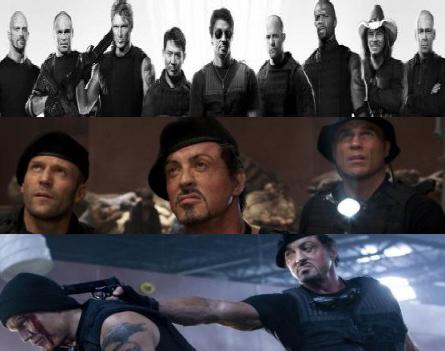
My dirty little secret is… I love wrestling. I haven’t watched it in about six months, because my body corporate doesn’t allow cable in my apartment building. But I’ve been devoted to World Wrestling Entertainment for almost ten years now, and anyone who is remotely familiar with the product will know the name “Stone Cold Steve Austin”. And anyone remotely familiar with the action-hero line-up for The Expendables, will know that “Austin” is one of the names that appears alongside “Stallone”, “Lundgren” and “Schwarzenegger” on its poster.

While there is a storyline per se (The Expendables, a group of elite mercenaries, are commissioned to overthrow a Latin American dictator, General Garza, on the island Vilena in the Gulf of Mexico. Whilst there, writer and director Sylvester Stallone’s character, Barney Ross, meets their contact Sandra, who turns out to be Garza’s daughter, and makes it his own personal mission to rescue her from the tyranny of her father and her country, and in turn, open his mind and heart. Gag me.), it’s so badly written that I didn’t even know that Jason Statham’s (my new action hero crush, BTW) character’s name was Christmas until a friend mentioned it to me days later!

But the reason movie-goers flock to a film like this (as opposed to Eat, Pray, Love, which opened the same weekend as The Expendables) isn’t for its storyline. My fellow patrons at the cinema were a primarily male audience, obviously into action films, weaponry, fight scenes and professional wrestling. Jet Li, UFC fighter Randy Couture, former NFL player Terry Crews (who is one of my favourite comedy/action actors, and was relegated to cheap one liners and blowing stuff up in favour of more screen time for surgery-damaged, pillow-faced and drawn-on-facial-haired Stallone) and Austin got the best pops from the audience, especially when those actors were utilised for their talents, with Li taking on Dolph Lundgren’s character Gunnar Jensen in an entertaining fight scene, Crews throwing an explosive as if it were a football, and Couture and Austin pulling out their street fighting skills/wrestling mat moves (Figure Four leglock, anyone?) in the final scenes.

I definitely know my wrestling trivia, but as far as action films go, The Longest Yard (another Austin/Crews collaborationgo figure), The Fast & the Furious and The Scorpion King are about as far as my knowledge extends. So I asked my friend and fellow Expendables-watcher, Eddie, to point out his top five throwbacks to the great action films of the ’80s and ’90s, which this film is meant to emulate.

1) At the start of The Expendables, they are taking down The Pirates. Pirates of the Caribbean is one of the past decade’s most successful action film franchises, in which the leads are played by pretty boys Johnny Depp and Orlando Bloom; a far cry from the rough and tumble action heroes of Stallone and Schwarzenegger’s era.

2) “The Stormtrooper Effect”: Garza’s henchmen have their faces painted as they go into battle with The Expendables. This is known as the Stormtrooper effect, where the enemy’s face is obscured so as to help the audience deal with them being killed off by our incomparable heroes.

3) The Expendables all wear different hats (Li’s character Yin Yang in a baseball cap, Couture’s Toll Road in a bucket hat, Ross and Christmas in black military-style berets) so that the members of the audience with a lower IQ can tell them apart during the fight scenes. And let’s face it; with a movie like this, the majority of its audience tend to lean that way.

4) As the team is descending on Vilena for the final showdown, Ross switches their plane’s controls to autopilot, and from there on in, the rest of the film travels on autopilot also. That’s funny; I thought the whole film was travelling on autopilot.

5) In the closest scene to character development, Mickey Rourke’s character Tool divulges to Ross his inner torment about not saving a woman when he had the chance to, and encourages Ross to go back for Sandra. Similarly, when Christmas discovers his ex-girlfriend has been beaten by her new boyfriend, Christmas ambushes said new boyfriend and his friends on the basketball court, bringing the beaten ex along for the ride. The whole movie, disguised by boys club banter and blowing stuff up, is about a man’s desire to save a woman. It’s most guys’ dream to be the knight in shining armour, as Stallone and Statham are here, and come to the rescue. Sure, this is a dated and highly sexist ideal posits that it’s a biological truth ingrained in most men.

Certainly in the man who wrote and directed The Expendables, wouldn’t you think?

Movie Review: Sex & the City 2.

In lieu of Monday’s weekly book review, I went to see Sex & the City 2 on Friday night, so I will be reviewing that instead. Well, it is based on a book…

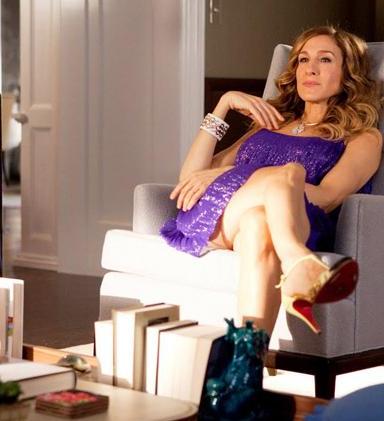
Having read all the 2-star reviews on blogs and in magazines over the past weeks, I went into the whole thing with very low expectations. I knew the flick would be an exercise in product placement even more so than the first one, what with Sarah Jessica Parker sitting on the board of, and now designing for, Halston Heritage. Not to mention the Manolos, Jimmy Choos and Louboutins that we’ve come to know and love because of SATC. Mr. Blahnik was even quoted as saying “that shoe [the blue satin shoe that Carrie goes back for in the first film and gets Big as well] saved our company”. (Ironically, he’s also slammed the show for making him famous.)

The controversy surrounding the heavily Photoshopped promo poster and the “sex in the Middle East” subject matter also overshadowed the film’s premier and the memories of the girls gallivanting around New York City, breaking boundaries for women in television, and in life.

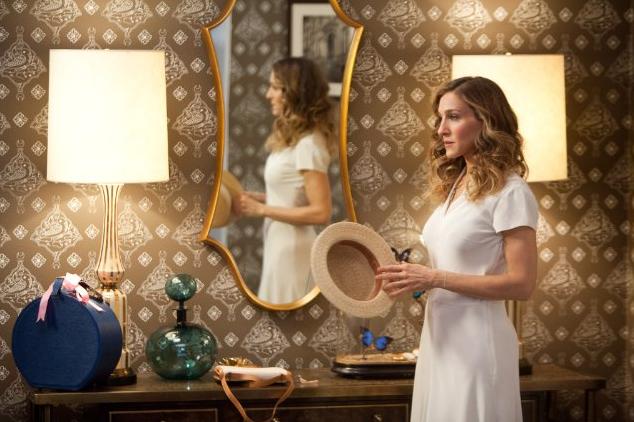
While SATC2 itself wasn’t groundbreaking, it was much better than I thought it was going to be. It was a visual explosion, for one thing; the sets, particularly Carrie and Big’s apartment, were stunning and so inspirational, as Paula Joye reiterates in her e-newsletter, LifeStyled. I am having major apartment-envy, and I wouldn’t be surprised if SATC style becomes the interior du jour.
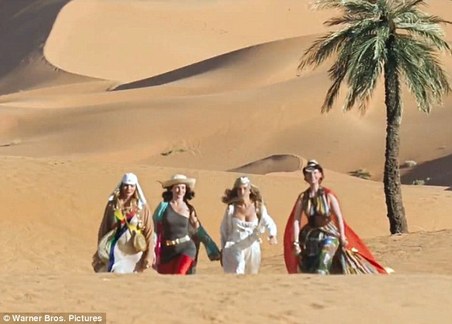
The main image fans have been bombarded with in the lead up to the film’s release was that of the four stars traipsing across the desert, Samantha in a studded helmet-like headdress and Charlotte channelling Olivia Newton John in “Let’s Get Physical”. Thank God this scene is not representative of the rest of their wardrobes. While costume designer Patricia Field should be sartorially ashamed, most of the other outfits really evoked a Middle Eastern flair.

In other areas, especially the scenes back in New York, Field fell flat. Yes, two years have passed since the first film, which was absolutely decadent in it’s use of fashion, replete with 50-plus costume changes for Carrie, and we are now in a recession. However, with an alleged $10 million costuming budget, you’d think Field could have jazzed it up a bit, especially when it came to Carrie. Boring white Halston with some gold accents, and a belly-caring gingham top with jeans aren’t very Carrie-esque.

But I will applaud the movie for bringing back some fashion favourites. In the ’80s flashback scene, you will notice Carrie’s navy hat box, which reappears on the Abu Dhabi trip some 25 years later. The pink and white suitcases Carrie uses when she moves to Paris with Petrovski are also used again in UAE. And during Carrie and Big’s marriage crisis, Big arrives at Carrie’s old apartment in his town car like the days of old, where she greets him in her Autumn/Winter 2000/2001 Dior newsprint dress. That certainly elicited a response from the movie-goers!

The new characters were endearing, especially Carrie’s butler in Abu Dhabi, Guarau , whose personal life made her reflect on her own. (Spoiler alert: Carrie begins to resent Big for wanting to spend more time at home, ie. on the couch, while she still wants to embrace her inner party girl. She decides to spend some time at her old apartment [see above] to “write”, and when she returns to their communal quarters, they have a wonderful night getting “reacquainted”. When Big suggests they make a habit of having “two days off from their marriage a week”, Carrie freaks out and flees to Abu Dhabi with the girls; Guarau’s wife still lives in India and he commutes whenever he has the time/money to see her.) And how Samantha referred to them was even better! Some gems were “‘Paula’ Abdul”, Samantha’s gay butler, and her UAE expat love interest, “Lawrence of Arabia my labia”.

In other sex-scandal related news, Samantha’s Birkin is broken at the spice market, and out spills a plethora of condoms. Samantha is shamed by the shoppers in the street, and in a display of sexual liberation, she throws her birth control at the Middle Easterners as only she could, which harkens back to other Samantha moments (ie. accusing a Playboy bunny of stealing her fake Fendi; throwing her wig into the audience at a breast cancer benefit). While this may not have been an appropriate way to represent attitudes to sex in this part of the world, it is Samantha, and it is Sex & the City.

What I found even less appropriate was the amount of cleavage on show, especially Carries! My friend and I mused about whether SJP’s had a boob job; I doubt she has, but her bountiful bosom was certainly out there. And don’t even get me started on the braless nanny!

The storylines were a bit disjointed, I will admit to that; Anthony’s revelation, during their Liza Minnelli-infused nuptuals, that he will most likely cheat on Stanford, Charlotte’s nanny neuroses, and Aidan’s disappearance after he kisses Carrie were all left unresolved. While it may be plausible for you to run a mile from the man you cheated on your husband with in the Middle East, it doesn’t make for formidable storytelling on the big screen. I will never forget how the audience rejoiced in gasps, followed by laughter at our mutual reactions, when Aidan deigned to kiss Carrie when they’re both happily married.

While the consensus does seem to be that the movie sucks (it’s worth seeing for Liza’s rendition of “Single Ladies” alone!) , I was pleasantly surprised at how much I liked it. My friends and I are a hard audience to please, and we all enjoyed it immensely. Can’t wait to get it on DVD and gift to all. Christmas, perhaps?

Elsewhere: [Jezebel] Why SATC2 Never Stood a Chance.

[Jezebel] New Sex & the City 2 Poster: A Photoshop Oasis.

[Pop Crunch] Manolo Blahnik Slams Sex & the City.

Book Review: A Clockwork Orange by Anthony Burgess


I was wary of reading Anthony Burgess’s 1962 novella A Clockwork Orange. Who isn’t aware of its unbridled sexual and physical violence, but come on, it’s a classic! But, like many classics I’ve read over the years, I’m glad to have read it and to forget it.

I find the most enjoyable novels, for me at least, are those that are effortless to read. You don’t have to try to analyse what’s going on; it just falls in your lap through the author’s sheer skill. There may be themes and a “moral to the story”, but they don’t present themselves obviously and analytically; the pieces of the puzzle you weren’t even aware were there just fit together like a jigsaw.

A Clockwork Orange was not one of these novel(las).

Now, I’m not arguing that it doesn’t serve a purpose in pop culture as a manifesto of youth culture, violence, government and free will, just that it’s bloody hard to read!

I’m not a fan of the “new speech that is the teenage slang of the not-too-distant future” Burgess uses, a fictional language called Nadsat combined with Russian, that encompasses such phrases as “horrorshow” (good), “malenky” (little), “malchicks” (boy), “viddy” (see), “plenny” (prisoner), “tolchok” (beat) and “veshch” (thing). I find they distract from the story because you have to annoyingly search your brain (or, at least, the dictionary some copies come with to help decipher the prose) to understand what the hell narrator Alex is talking about!

I also watched the movie, which I had great expectations for, however, when I told some friends and family I was going to be reviewing the movie, I was met with words of warning. The guy at the library said it was disturbing, and my mother told me to watch it in the day. And so I did.

The time of day I watched it didn’t make much of a difference to the eerie subject matter and graphic scenes and the way I felt afterwards. Much like with the book, I felt deflated and uncomfortable at the end.

The final scene, though, was my favouriteno, not just because it was finally over after 120-plus minutes! Malcolm McDowell who plays Alex really showcases his range as an actor throughout the film, but specifically in this scene. His sinister reaction at being in hospital in a full body cast after jumping from a window at the sound of Beethoven’s Ninth Symphony, a recurring theme in the tale, is priceless. Ultimately, the film ends with Alex being informed he has recovered from the experiment, and he sarcastically looks into the camera, saying “I was cured, alright”, followed by a rousing performance of the repeated “Singin’ in the Rain”

The overt and excessive use of nudity was a bit much and would be out of place in a B-, C-, or even D-list movie, let alone one of A Clockwork Orange’s canonical calibre.

I will compliment Stanley Kubric on directing with such simplicity, which I think is what really tipped the film over the edge into the realm hard-hitting filmmaking.

I would recommend seeing the film and reading the book for those of you who haven’t already, just to recognise what all the fuss wasand isabout.

Personally, I don’t.