On the (Rest of the) Net.


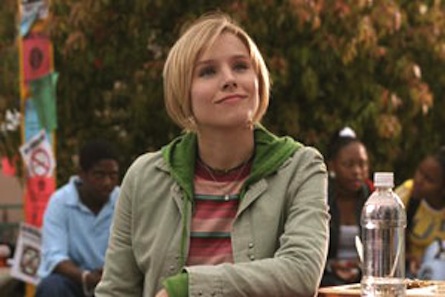
“The Class Boundaries of Veronica Mars.”

Why the Body Image Advisory Group’s voluntary code of conduct didn’t work.

Rachel Hills on the internet, artifice and being fake.

“The New Middleton Class”.

Speaking of the Middleton’s, Melinda Tankard Reist takes issue with the admiration of Pippa’s ass online:

“The FB site provides an opportunity for men everywhere to share their sexual fantasies for the young maid of honour. Knock her up, bash her in, cause her injury such that she would not be able to walk. Wrecking and shredding a woman’s anus is a popular porn script.

“And all this is supposed to be accepted as a compliment. Of course there are no ‘Pippa the Wonderfully Supportive Sister Appreciation Societies’ or other pages lauding her gifts and character and other non-body related attributes.”

Bret Easton Ellis on the spectacle that is Charlie Sheen.

“Filling the Gaps” in the online feminist community’s “call-out culture”.

In what was Elizabeth Taylor’s last interview, with Kim Kardashian for US Harper’s Bazaar, she divulges her thoughts on living like a queen, the Krupp diamond and Twitter. I was never a fan of Taylor, but this interview made me one.

What does it mean to be a feminist today?

Is the male body “Repulsive or Beautiful?”

Ever been hollered at in the street as you walk past a construction site? “Why Men Cat Call” sounds interesting, but is disappointingly dismal.

Amélie sex (noun): intercourse undertaken in the classic missionary position which, by itself, is not objectionable—during which the male is impervious to the female’s lack of enjoyment.”

The bromance VS. Bridesmaids“Homance”.

Don’t give up your day job: “Freelancing on the Side.”

Images via I Just Have So Many Feelings, Sydney Morning Herald.

“With a Gun Between Her Legs,” Take 3.


From “Gosh, Sweetie, That’s a Big Gun”, a dialogue between The New York Times’  chief film critics, A.O. Scott and Manohla Dargis, on The New York Times website:

“The question is why are so many violent girls and women running through movies now, especially given that the American big screen hasn’t been very interested in women’s stories, violent or not, in recent decades, an occasional Thelma, Louise and Jodie Foster character notwithstanding. There are other exceptions, of course, usually romantic comedies that are so insipid and insulting I want to kill everyone on screen. Wait a minute—is it female rage fueling this trend?

“It is interesting how frequently the violence of these girls is overseen or inculcated by a father figure who is not always a literal dad: Nicolas Cage in Kick-Ass, training his killer pixie to use sharp blades, big-caliber guns and foul language; Scott Glenn in Sucker Punch, urging his girl warriors into battle; and Eric Bana in Hanna, sending his darling out to fight the wicked witch (Cate Blanchett). Are these paternal figures reassuring or creepy?

“The bad seed isn’t new, but what seems different is that young women and girls can kill today without being necessarily and fatally pathologised.

“It used to be easier to make movies with women. You could put them on a pedestal and either keep them there (as revered wives, virginal girls) or knock them down, as with femmes fatales.

“[David Fincher’s The Girl with the Dragon Tattoo]… movie will be better than the Swedish model because he’s the superior director, but I also hope he will more forcefully engage the theme that was blatant in Larsson’s book, as evident in its blunt original title: Men Who Hate Women.

“I think the first [Lisbeth] Salander movie ran into a serious problem when it tried to translate Larsson’s anger about pervasive sexual violence into cinematic terms. It is in the nature of the moving image to give pleasure, and in the nature of film audiences—consciously or not, admittedly or not—to find pleasure in what they see. So in depicting Salander’s rape by her guardian in the graphic way he did, the director… ran the risk of aestheticizing, glamorizing and eroticizing it…

“The risk is not dissolved but rather compounded when the answering, avenging violence is staged and shot in almost exactly the same kind of gruesome detail, since the audience knows it is supposed to enjoy that. In other words, even though the earlier violation can be said to justify the later revenge, that logic turns out to be reversible. You could call this the I Spit on Your Grave paradigm. It is definitely at work in Sucker Punch, which gains in sleaziness by coyly keeping its rape fantasies within PG-13 limits and fairly quivering with ecstasy as it contemplates scenes of female victimization.

“The gun-toting women and girls in this new rash of movies may be performing much the same function for the presumptive male audience: It’s totally ‘gay’ for a guy to watch a chick flick, but if a babe is packing heat—no worries, man!

“Jean-Luc Godard posited that all he needed to make a movie was a girl and a gun… To put the gun in the hands of the girl may be a way to cut out the middleman, as it were, and also, as you suggest, to maximize commercial potential by providing something for everyone…”

Related: Sucker Punch Review.

“With a Gun Between Her Legs,” Take 2.

“With a Gun Between Her Legs”: Why “Strong” (AKA “Sexy” Whilst Being “Strong”) Female Characters Are Bad for Women.

Elsewhere: [NY Times] Gosh, Sweetie, That’s a Big Gun: Women as Violent Characters in Movies.

Images via The Independent, The New York Times.

On the (Rest of the) Net.

Embrace your inner slut:

“If someone calls you a slut, there’s nothing you can say to refute the claim because it never had any cognitive content anyway.

“If you try to argue that you’re not a slut, you’re implicitly buying into the idea that there are sluts out there. If there’s some criterion that will set you free, that standard will indict someone else—someone with a higher ‘number,’ or shorter skirt, or a later curfew. So we get bogged down in slut/non-slut border skirmishes over a line nobody should have tried to draw in the first place, and we all lose.

“Even virginity is not a defense against alleged sluttiness. Virgins can be sluts if they dress the wrong way, walk the wrong way, or even instill the wrong thoughts in other people. Some people will convict you of sluttitude because your body is the wrong shape, or the right shape.”

Sluts just can’t win. That’s why you should (as above) embrace your inner slut and join the SlutWalk next weekend in Melbourne, at the State Library from 1pm. I’ll be blogging more about this throughout next week.
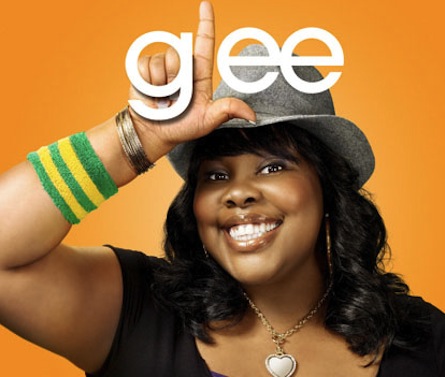
Glee’s Mercedes just can’t get a date!

Video vixen VS. female bodybuilders:

“It is not ‘respectable’ to be black, female, voluptuous, and sexy on a stage for profit, but it is perfectly acceptable to be black, female, muscular, and ‘unsexy’. Is this double standard acceptable? Is one profession truly more sexualized than the other?”

I don’t entirely agree with this hypothesis. I think it’s far more acceptable to be conventionally and femininely sexy, as opposed to muscular and unconventionally masculine. Sure, the video vixen job title isn’t exactly perceived as a classy, “respectable” occupation, but neither is female bodybuilding. Society as a whole would much rather see women shaking what they were born with (or, you know, what the plastic surgeon gave them) than manipulating their bodies via hormones and free weights.

The surrogacy debate rages on at MamaMia

“$150,000 Doesn’t Make You Rich. Discuss.” Okay, I will: I come from a family where my mother stayed home with my sister and I, and my dad worked three jobs at some stages. I was very young then, so I have no idea how much money he brought in. But I can tell you, it sure as hell wasn’t $150,000, and we struggled to keep our heads above water week-to-week. We never had savings, we could never go on family holidays that required much travel because we couldn’t afford flights or accommodation. I missed out on all but one of my seven cousins’ weddings because we couldn’t make it interstate. My parents have only bought two houses in their lifetime: the other nine we resided in throughout my lifetime were rentals. I also don’t know how much my dad makes now, but it is a lot less than $100,000, and my mum’s on a pension. In my opinion, $150,000 a year is rich.

“Opposition leader Tony Abbott says the Government is punishing ‘aspiration and hard work’,” with the new middle class welfare breaks. Is working three jobs and hardly being able to see your family not hard work, Mr. Abbott?

How to deal with your boyfriend’s porn-watching habit.

The argument for Pixar movie heroines who aren’t princesses, “from all the girls with band-aids on their knees”.

The perils of being smiled at by a cute guy in a café when you’re not wearing makeup.

Texas’ “10 Hottest Female Sex Offenders”. “No doubt that 4-year-old boy, that 2-year-old boy and that 13-year-old girl are taking solace even as we speak that at least they were abused, molested and assaulted by a hot person.”

Hillary Clinton, brownies and Vanity Fair’s cover line.

The aftermath of the royal wedding and the state of Britain’s monarchy for the next 30 years.

Gay/straight chicken: when straight men insult homosexuality and “gay men insult women”.

“Is Kate Hudson Coasting on Cuteness?” My money is on “yes”. When was the last time she starred in a box-office smash, or was nominated for an award other than a Razzie?

Images via Jezebel, Fashion Fame.
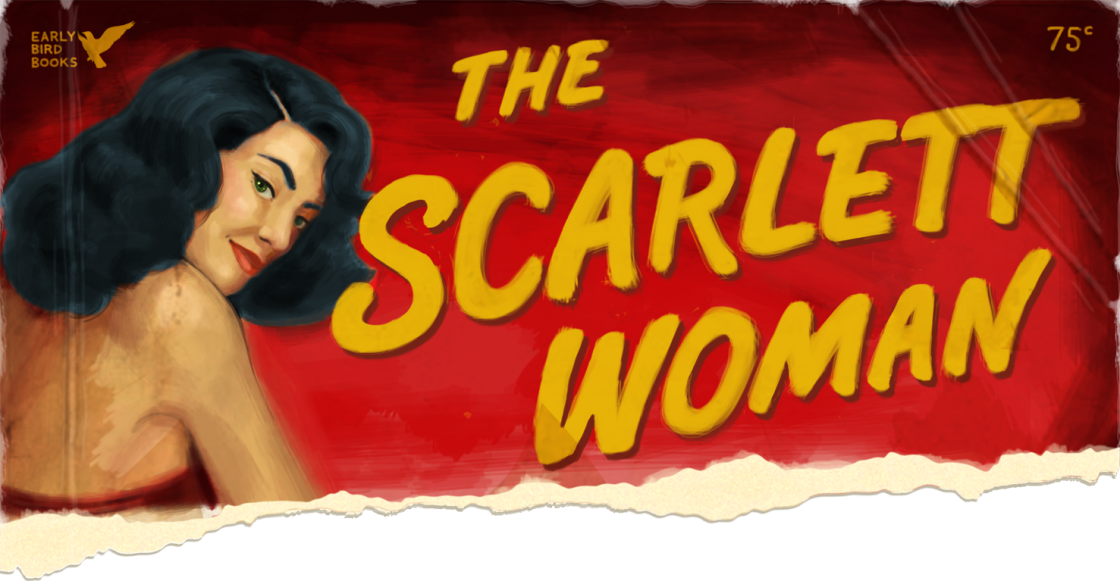
The Cultural Politics of Hair Colour in Fiction.


From “Betty & Veronica: The Cultural Politics of Hair Colour” by Jeet Heer on Sans Everything:

“… One very common convention of the nineteenth-century novel is the use of two heroines, one dark and one light. The dark one is as a rule passionate, haughty, plain, foreign or Jewish, and in some ways associated with the undesirable or with some kind of forbidden fruit like incest. When the two are involved with the same hero, the plot usually has to get rid of the dark one or make her into a sister if the story is to end happily.”

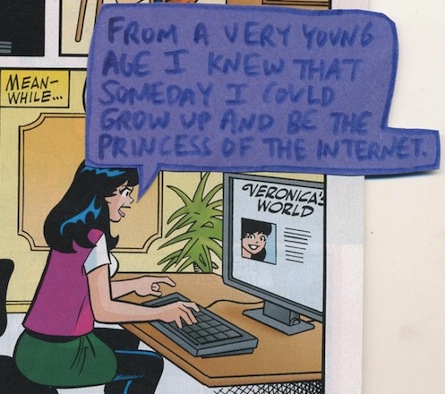
Related: Betty & Veronica Could’ve Totes Been Bloggers.

Blondes Have More Fun—And They’re Magical!—In Tangled.

Elsewhere: [Sans Everything] Betty & Veronica: The Cultural Politics of Hair Colour.

Images via The Gloss, SFGate, The Film Experience.

On the (Rest of the) Net.


These iconic images, taken by photographer Lennart Nilsson for Life magazine in 1965, and later used for pro-life propaganda materials, have actually been taken of aborted embryos, not living fetuses in the womb:

“Although claiming to show the living fetus, Nilsson actually photographed abortus material obtained from women who terminated their pregnancies under the liberal Swedish law. Working with dead embryos allowed Nilsson to experiment with lighting, background and positions, such as placing the thumb into the fetus’ mouth.”

“Does Carrying Condoms Make You Easy?” Will.I.Am seems to think so.

Erica Bartle on maintaining the balance between “frothy and bubbly and frivolous” and her passion for writing about her faith and God on Girl with a Satchel, which she understands can sometimes be “like receiving a knock on the door from a Jehovah’s Witness  (or a pamphlet in the postbox)” for some. (Okay, I’ll admit it: I’m one of them.) Food for “critical thought”.

Should the government be pouring money into funding to fight domestic violence against women and children, when there are also men who are victims of domestic violence out there?

Girl crush porn in Mia Freedman’s new weekly post, “A Week in the Life” on MamaMia.

The importance of “good, old-fashioned” sub-editing.

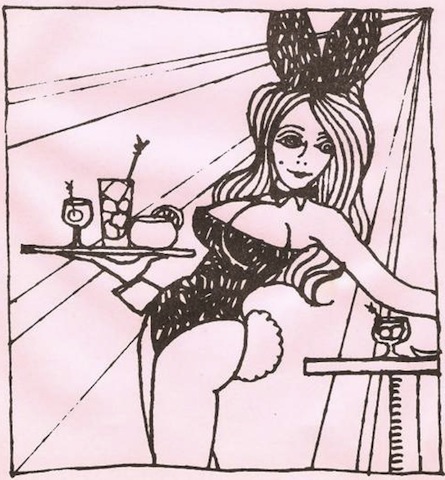
How to be a Playboy Club Bunny, circa 1968.

Love, domestic violence and Gossip Girl.

On Hillary Clinton being photoshopped out of the situation room photo in Hasidic newspaper Der Tzitung:

“The religious paper never publishes pictures of women, as they could be considered ‘sexually suggestive.’ Apparently the presence of a woman, any woman, being all womanly and sexy all over the United States’ counterterrorism efforts was too much for the editors of Der Tzitung to handle…

Der Tzitung edited Hillary Clinton out of the photo, thereby changing history. To my mind, this act of censorship is actually a violation of the Jewish legal principle of g’neivat da’at (deceit).”

Would you rather be blind or obese? According to an Arizona State University study, 1 in 6 women would choose the former…

Images via The Hairpin, Sociological Images.

The Gender Politics of the Royal Wedding.


From “Theory: Why Women Care About Princesses” by Echidne of the Snakes on Jezebel:

“… What is it that little girls seem, once again, to be emulating in their play? Cinderellas and ballet dancers. I believe that the reasons for those choices (by their parents and the toy industry and the society) are the same old ones: Here are role models for girls which apply even in a world of gender inequality, yet don’t truly alarm more egalitarian parents. Those role models are not that different from the models given to boys: football players, space heroes, characters with gigantic muscles and super-powers. That they are fewer and more anemic goes with the territory of gendered expectations.

“Sure, children grow past those types of toys, and they even grow past the gender-policing stage. But perhaps something remains, something which is then evoked by a royal wedding in women or a football game in men.”

Related: The Royal Wedding: The Other Event of the Decade?

Elsewhere: [Jezebel] Theory: Why Women Care About Princesses.

[Echidne of the Snakes] Homepage.

Images via Legitimate News, Vipfuly, Coco Perez.

On the (Rest of the) Net.


Porn star Stoya Tweets, “If you think pubic hair on a woman is unnatural or weird, you aren’t mature enough to be touching vaginas.” You go, girl!

Beware hot baths in winter: they can cause heart attacks!

Celebrities and mental illness.

I was absolutely disgusted by Bob Ellis’ take on the ADFA sex scandal on ABC’s The Drum Unleashed, comparing the unconsented filming of a young female cadet during sex to the girls discussing last night’s date on Sex & the City. Here are some choice excerpts:

“Let us imagine the girl agreed to be filmed, and then, afterwards, being mocked for it, and flabbergasted by the number of leering hoons who saw the film, made the complaint. Would that then occasion the sacking of her commanding officer, the court-martial of fifteen or twenty of her fellow recruits, and the bastardising of her lover?

“… She would have been mortified. She would have cursed for months the prurient observers of her bed games. She would have railed at them in the canteen. She would have sobbed on the phone to her mother. She would have attracted some sympathy. She would almost certainly have got over it… And she might… have married the boy.”

“… They, and we, should be careful when we attend too closely to what occurs in a bedroom consensually, and how we punish either participant.

“… Is the young woman, moreover, to be named, and acclaimed, and promoted, and hereafter entrusted with frontline command on some field of battle? Who would trust her in any high army position? Who would be sure she was truthful? Or sound of judgment? Or loyal? Or reliable under fire?”

To end, he makes sure we know that group sex didn’t occur, “as it sometimes does in traveling footballers’ motel rooms”, as if that somehow makes it okay.

Kim Powell writes in response at News with Nipples about Ellis’ assertion that (male) society owns female bodies, as he began the above piece by reminiscing about an old M.A.S.H. episode in which the shower Hot Lips Houlihan is using is lifted by a crane and the menfolk gaze at her naked body.

Girl with a Satchel posts a smashing review of Tina Fey’s Bossypants.

Vintage Gala Darling, circa 2005. Glad to see she hasn’t changed :).

“7 Reasons to Get Excited About the Royal Wedding”… one week later!

In relation, is Princess Catherine doomed to repeat the same fate as Diana? A royal comparison.

Also, “Jessica Rudd shines some perspective on the wedding and the Republic.”

Much to my chagrin, tanning beds are safe… for some things!

Sarah Wilson on private schooling:

“I know parents want to provide the best for their own kids… I don’t know that fancy pools and excursions to Tuscany make for a better education.”

“Things Fat People Are Told”:

“If a fat person defied any of these pronouncements in any way, they spoke of having their lives and experiences denied. They couldn’t really have low blood pressure. They couldn’t really be getting married.

“The hostility fat people experience is extreme. One woman spoke about being on an operating table for a C-section and having a surgeon mock her fat, suggesting they get rid of it while they’ve got her open. Another spoke of sitting in an ambulance while a police officer refused to believe she was raped. Others were told they should be happy to have been sexually assaulted. We heard about how transgender persons were belittled for being too fat to pass. We heard about fat people who were sick and were denied treatment until they lost weight. Fat mothers were told they were selfish for being fat because they would orphan their children. Or that their children would never love them. Or that they’d just ruin their children’s lives so maybe the baby should just die in the womb.”

Lisa Simpson would “totally be a Jezebel reader if she were human.”

Images via Jezebel.

The Bystander Effect.


From “The Bystander Problem” by the MamaMia Team on, you guessed it!, MamaMia:

“Malcolm Gladwell in his book The Tipping Point talks about the ‘bystander problem’. He writes:

“‘One of the most infamous incidents in New York City history … was the 1964 stabbing death of a young Queens woman by the name of Kitty Genovese. Genovese was chased by her assailant and attacked three times on the street, over the course of half an hour, as thirty-eight of her neighbours watched from their windows. During that time, however, none of the thirty-eight witnesses called the police.’

“At first this horrific case was explained away as being the result of the dehumanising effect of urban life, the fact that the anonymity and alienation of city life makes people hard and unfeeling.  But two New York City psychologists subsequently conducted a series of studies to undrestand what they called the ‘bystander problem’. Gladwell writes:

“‘When people are in a group… responsibility for acting is diffused. They assume that someone else will make the call, or they assume because no one else is acting, the apparent problem… isn’t really a problem.

“‘In the case of Kitty Genovese, then… the lesson is not that no one called despite the fact that thirty-eight people heard her scream; it’s that no one called because thirty-eight people heard her scream.  Ironically had she been attacked on a lonely street with just one witness, she might have lived.’”

I think this relates to “pack mentality”, as in the scene below from Scream 2, as well as “the bystander effect”. What do you think?

Elsewhere: [MamaMia] The Bystander Problem.

Images via the Film Chronicles, 411 Mania, EW.

Don’t Just Blame Barbie.


From “Barbie Doll With Life-Sized Proportions is Ridiculous, Scary” by Whitney Jefferson on Jezebel:

“As a pop-cultural icon, Barbie is often used as art to express one’s own personal opinions and views. Girls see female body images everywhere today and it’s critical that parents and caregivers provide perspective on what they are seeing. It’s important to remember that Barbie is a doll who stands 11.5 inches tall and weights 7.25 ounces—she was never modeled on the proportions of a real person.”

Elsewhere: [Jezebel] Barbie Doll With Life-Sized Proportions is Ridiculous, Scary.

Images via Guardian, Fashion Doll Guide, Angelic Accents.