When Your Heroes Let You Down is it Time to Wave Goodbye?

This article was originally published on TheVine on 8th January, 2015.

Recently, I attended the exclusive, two-day, $800 Blogcademy workshop in Melbourne, hosted by blogging extraordinaires Gala Darling, Shauna Haider of Nubby Twiglet and Rock N Roll Bride Kat Williams, who have turned their almost unprecedented success as bloggers into an international business. For that amount of money and time, my fellow attendees and I were expecting to come away bursting with fresh inspiration and tools to turn our blogs into mini success stories in the vein of the Headmistresses own blogs. What we emerged with, however, was an hours-long lesson in taking the perfect selfie and disappointment in our former entrepreneurial role models.

Before I turned my hand to the blogosphere, I fantasised about becoming a high-powered magazine editrix the likes of former mag hag turned web impressario, Mia Freedman. Ever since I cracked the glossy spine of my first Cosmo as a teenager, I wanted to be Freedman, so much so I even named my dog after her.

But, as with the Blogcademy Headmistresses, in recent years I’ve been forced to stop gazing adoringly at Freedman and acknowledge the stray, misguided comments coming out of her mouth.

For example, in April 2013, Freedman appeared on Q&A on an all-women panel with former sex worker and author of the book-turned-TV-series Belle de Jour: Diary of a London Call Girl, Dr. Brooke Magnanti, where Freedman stumbled over the use of this preferred term—sex worker—and said she would be “disturbed” if her daughter grew up wanting to work in the sex trade. In May that year, Freedman wrote on her website MamaMia in defence of Tony Abbott’s classist comments about “women of calibre” taking advantage of his paid parental leave scheme. Two Octobers ago she victim-blamed women who are assaulted whilst drinking. Freedman tweeted in April last year that she agreed with Joe Hildebrand’s attack on Rosie Batty whose son was murdered by her ex-husband in a domestic violence incident in February 2014, in which Hildebrand essentially blamed Rosie for her son’s death for not escaping her violent partner on Channel Ten’s morning show, Studio 10. And late last year Freedman came under fire for comparing gay sexual orientation to pedophilia. To her credit, though, Freedman immediately owned up to her mistake on The Project, admitting she was “mortified” that she caused offence to a community she’d so long been a champion of.

https://twitter.com/MiaFreedman/status/451191674379587584

https://twitter.com/MiaFreedman/status/522665144136896512

Freedman herself is no stranger to the disenchantment that comes when your icons speak out of turn. She confronted Australia’s once-patron saint of feminism, Germaine Greer, who was also a panelist on the abovementioned episode of Q&A, about those comments she made about Julia Gillard’s body and fashion sense. Freedman further lamented that Greer had “stayed too long at the party”. The most recent example of this has been Greer’s remarks about Duchess Kate’s pregnant body.

Another woman I look up to in the publishing industry is author of the forthcoming book The Sex Myth, Rachel Hills. She wrote about a similar phenomenon when her former feminist role model Naomi Wolf, author of The Beauty Myth and, more recently, Vagina: A New Biography, equated rape charges against WikiLeaks founder Julian Assange, who is still evading extradition on said charges in the Ecuadorian embassy in London four years later, with “honey trapping”.

When I spoke to Hills about how she felt about Wolf proving herself to be out of touch with rape culture she had this to say:

“My initial dismay over Naomi Wolf’s Julian Assange comments weren’t so much about what she said, as the way she responded when people criticised her for it. Why was this person I admired being so pigheaded and insensitive to the criticisms of people who were on her side? That was the moment when the Naomi Wolf gloss started to wear off for me.”

Likewise, my memories of the glossy pages of a Freedman-helmed Cosmo, with its Body Love campaign and articles on sexual assault and reproductive rights, have become disillusioned by Freedman’s continued tendency to put her foot in her mouth. But, as with many public figures we insist on asking for their opinions on any and all topics (ie. asking young female celebrities if they’re feminists), they’re “damning [themselves] to irrelevancy if [they] don’t stay up to date”, Hills says. (See Wolf’s ignorance of the term “cisgender”.)

We’re all human and, in the case of Freedman, Greer, Wolf et al. and their feminist faux pas, it’s not to say that they should be foisted out of the feminist club for being “bad feminists”, as Roxane Gay might put it. When an idol or hero has shaped so many of your formative years, whether positively or negatively, you can’t just turn their influence off as easily as a switch. We all say and do things we shouldn’t at times but a reluctance to appear vulnerable or ill informed shouldn’t prevent us from using those moments for growth. Failing that, we can start looking to other influences in our lives that are perhaps a little more positive and progressive and strive to be those influences ourselves.

Related: The Blogcademy Melbourne.

Elsewhere: [The Blogcademy] 

[Gala Darling]

[Nubby Twiglet]

[Rock N Roll Bride]

[Hello Tillie] Six Things I Learnt at The Blogcademy.

[Happy Hotline] Why I Don’t Have Idols. Anymore.

[ABC] Q&A—The F Word, 8th April, 2013.

[MamaMia] In Defence of Tony Abbott.

[MamaMia] This Isn’t Victim-Blaming. This is Common Sense.

[MamaMia] A Statement from Mia Freedman.

[MamaMia] Germaine Greer, You’ve Lost Me…

[Newsweek] The Duchess of Cambridge: How Britain Stopped Believing in the Royal Fairytale.

[Musings of an Inappropriate Woman] Naomi Wolf & Me, Or Why Heroes Are Only for the Young. 
[Jezebel] Feminist Gathering Sadly Lacking in Matricide.

Despite the Name, It’s All About the Women on Masters of Sex.

This article was originally published on TheVine on 17th October, 2014.

I recently spent a weekend in August listening to international guest of the Melbourne Writers Festival Emily Nussbaum, television critic for The New Yorker, wax lyrical about the “golden age of prestige TV” and its respective “antiheroes”. While we’ve been watching the Don Drapers, Tony Sopranos and Walter Whites for the past fifteen years it’s time for a new dawn of television where women are the focus, such as Orange is the New Black, Orphan Black and pretty much anything Shonda Rhimes puts her Midas touch to.

One such show that comes to mind is Masters of Sex, the second season finale of which aired on SBS last night. Masters might seem to focus on the man it’s named for, the steely, socially awkward OBGYN, Bill Masters, played by Michael Sheen, but who it’s really concerned with are the women in his life. These include the long-suffering wife, Libby (Caitlin FitzGerald), whose trajectory sees her struggle with the changing attitudes of the late ’50s and early ’60s, and the woman her husband is having an affair with: research assistant in Masters’ study of human sexual response, Virginia Johnson, played expertly by Lizzy Caplan. Both Masters and Johnson justify their extramarital activities by being adamant that “it’s for the work”. While nary a facet of Masters isn’t shown to Virginia at some stage or another he recoils from Libby, runs his mother out of town, slut-shames former sex worker cum secretary Betty and Virginia at times, and I don’t think there’s been an instance in which he interacts with his two infant sons.  In a scene that echoes Breaking Bad’s “I’m the one who knocks!”, Bill rages at Libby when she confronts him about their money troubles that “I provide the roof!”

Audiences may struggle to reconcile the way Masters treats the women in his personal life with his important medical work, not unlike Don Draper, for example, in the “masculinity masterpieces”—as Nussbaum put it in her presentation at the Writers Festival—of yore.

Masters of Sex is a show that has almost unbelievably advanced attitudes towards sex for the time it’s set and the fictional Masters and Johnson are held up as paragons of progression. At work Masters masquerades as the good, bleeding-heart doctor stuck in the conservative ’50s, as seen when he refuses to perform gender assignment surgery on an intersex baby. Masters similarly declines a teenaged patient’s parents request for her to undergo a hysterectomy to curb her sexual appetite. Careful, Bill, your God complex is showing.

Like Orange is the New Black, a show that follows a wide range of incarcerated women’s lives using a middle-class white woman as the Trojan horse to gain entry into that world, Masters’ focus on a male doctor is a cipher to take a better look at Virginia, Libby et al. in a time when women were viewed as second class citizens. (Some would argue that nothing much as changed.)

Also like OITNB, perhaps this has to do with the fact that it is a created by women, not “prickly auteurs and the antiheroes they love”, to borrow yet another line from Nussbaum. A different Emily—this time Emily Tatti, editor of online literary journal Ricochet—tweeted that “You can tell it’s written by women, you just don’t get female characters like that in other shows!”

Showrunner Michelle Ashford explains Masters of Sex’s portrayal of women thusly:

“[In season one] three of our episodes were directed by women, our staff was half women, my producing partner is a woman. A lot of the people that have interviewed us say, ‘Wow, this whole show is run by women.’ We look at each other and think, ‘We didn’t design it that way.’ And that’s actually pretty great.”

The capable, relatable women who are received by audiences as such outnumber the titular Masters. Where Breaking Bad’s Skyler White was eviscerated by armchair commentators for expressing concern over her husband’s drug dealing and the actress that played her subsequently wrote a New York Times op-ed about it, Libby’s “problem that has no name”, for example, is portrayed as empathetic. And Virginia might get around but she is never characterised as wanton to the audience. Other such “strong female characters”, to use the clichéd term, that aren’t so much likeable as they are realistic portrayals of women in the world include How to Get Away with Murder’s Annalise Keating, Hannah Horvath of Girls, and any number of the women on Scandal, Grey’s Anatomy and OITNB.

Masters of Sex is busy ushering in this new era of television that sees antiheroes shift ever so slightly out of the frame and the women who love them—or, in many instances, merely tolerate them—have their time in the spotlight.

Elsewhere: [NPR] Orange Creator Jenji Kohan: “Piper Was My Trojan Horse.”

[HuffPo] Masters of Sex Creator Michelle Ashford: “I Had Every Horrible Job Imaginable.”

[NYTimes] I Have a Character Issue.

[Amazon] The Feminine Mystique by Betty Friedan.

[New Statesman] I Hate Strong Female Characters.

[Buzzfeed] Not Here to Make Friends.

Can a Feminist Love Pro Wrestling?

This article was originally published on TheVine on 14th May, 2013.

Being a professional wrestling fan and a feminist don’t necessarily go hand in hand albeit I identify as both of them.

While I’ve been a wrestling fan since the age of 13 and have only begun calling myself a feminist in the past few years, I think I’ve always had feminist tendencies: I’ve always believed in reproductive rights, I try—and often fail—not to judge other women for their choices, and it’s instilled in me that everyone is and should be treated equally, no matter their gender, sexual orientation, race, religion, abilities or class.

So to have an affinity with professional wrestling has, at times, baffled me personally and anyone who knows my dirty little secret.

Because professional wrestling is very much a guilty pleasure: the homoeroticism of a bunch of muscular, oiled up and sweaty men grappling with each other’s flesh for the visual gratification of (primarily) other men and the reliance of tired and bigoted male stereotypes that go along with it don’t always connote a proud admission of fandom from its more self-aware enthusiasts.

For example, one of the most high-profile and long awaited feuds—between John Cena and The Rock, culminating in their match at this year’s annual WrestleMania, the 29th in the franchise—employed the use of homophobia and gay jokes in the several-year lead up. In 2011, the two traded barbs that included The Rock making fun of Cena’s purple garb, calling him a “Fruity Pebble” (a cereal for which he is now a mascot), and Cena retorting that in his movie career as Dwayne Johnson, The Rock tends to accept roles in which his character wears lipstick (Be Cool) and a skirt (The Game Plan, Tooth Fairy), which got them into trouble with GLAAD.

Earlier, in 2002, a same-sex life partnership ceremony between tag team partners Billy and Chuck was set to take place on live television, but was abolished at the last minute despite GLAAD previously showing support for the storyline.

More recently, WWE announcer Michael Cole tweeted fellow commentator Josh Matthews with one word: “faggot”, which was later deleted and apologised for. And just last month TNA World Heavyweight Champion Bully Ray was caught on camera living up to his name and calling a fan a “faggot” and a “fricken queer”.

For those with a passion for wrestling and who are also capable of intelligent, critical thought, such marginalising slurs are just embarrassing. As Anita Sarkeesian asserts in her exploration of the damsel in distress trope in video games, it is “both possible and even necessary to simultaneously enjoy media while being critical of its more problematic or pernicious aspects.” Similarly, in her fantastic article about the intersection of rap, feminism and cunnilingus (!), Maddie Collier urges us to acknowledge the instances our pop culture of choice “sickens and disappoints us” in order to “fully appreciate the moments when it’s good and kind and real”.

But if you thought the blatant promotion of one kind of masculinity (ripped, strong and, perhaps above all else, heterosexual) as supreme is the only agenda professional wrestling is guilty of pushing, it’s just the tip of the iceberg when it comes to the problematic nature of the sport (entertainment).

From a gender equality point of view, for example, professional wrestling most certainly has a long way to go, baby. Sure, there are female wrestlers, like Chyna, Jazz and Lisa Marie Varon (better known as Victoria in WWE and Tara in TNA) who eschew traditional femininity, but the bulk of women in professional wrestling are employed as eye candy, not as athletes. Those who do get to face off in the ring are often limited to three minute gimmick matches, which involve such male-gazey stipulations as Paddle on a Pole matches, where the winner is determined not by pinfall, submission or countout, as in most traditional (read: male) matches, but by retrieving a bat suspended from a pole with which to spank their opponent, and Bra & Panties Matches, in which the winner emerges victorious only after stripping her opponent of her clothes.

There are exceptions, though, such as a cage match between the aforementioned Victoria and Lita in 2003, which could be seen as damaging to the status of women in a whole different way in that it normalises violence against them, but by and large women in wrestling are used as managers, valets, guest ring announcers, wives and girlfriends. This attitude is evident in the demotion of the WWE Women’s Championship, held by such legends as the late Fabulous Moolah and Sherri Martel, Lita, Chyna and Trish Stratus, to the renamed Divas Championship, replete with a sparkly pink butterfly design, to better signify that it’s meant to be fastened around a slight, feminine waist.

This is not to mention the blatant disenfranchisement of non-able bodied wrestlers, often called “midget wrestlers”. At one point the SmackDown! brand of WWE had a “Juniors” midget wrestling division, and employs a little person on their roster whose character borrows from the leprechaun trope. As Margaret Cho once wrote, perhaps some kind of representation of minorities, stereotypical or not, is better than none…

Arguably above all of this, though, wrestling is one of the most obviously racist modes of mainstream entertainment going around. Let me count just some of the racial stereotypes throughout wrestling history that come to mind: The Iron Sheik was pitted against such all-American opponents as Hulk Hogan and Sgt. Slaughter during the height of the Iranian hostage crisis and the Gulf War; the Mexicools’ ring entrance comprised the use of a ride-on lawnmower, insinuating that people of Mexican descent make excellent yard workers; African American wrestler Charles Wright went from one black trope—a witch doctor named Papa Shango—to another—The Godfather, a pimp who came to the ring followed by his “Ho Train”; the Boogeyman was another witch-doctor-esque character played by another African American wrestler, Marty Wright (of no relation to Charles Wright); Native American wrestler Tatanka got around in traditional Native garb, such as headdresses and warpaint and carried a tomahawk; Kofi Kingston is from the Republic of Ghana, but somehow a Jamaican gimmick for his character made more sense; we all know people of African American descent are probably criminals, so why not bring two black wrestlers together in a tag team and call them Cryme Tyme?; Jim Harris played the wild “Ugandan giant” Kamala, while the late Edie Fatu had a similar, albeit as a Samoan giant, gimmick as Umaga; and Mohamad Ali Vaez, of Iranian heritage, plays up the Islamaphobia angle for his character. In a documentary entitled Wrestling for Rotary, which chronicles an independent wrestling gig for charity in country Victoria in 2011, Vaez talks about the internal struggle he faces in “perpetrating stereotypes that my family suffers because of.”

But, at the end of the day, “I’ve suffered inherent racism in the United States, so you know what? I’m gonna make money off of it.”

So while Vaez chooses to be an active participant in the culture that disenfranchises his people, fans have to acknowledge the part they play in holding up the gospel according to pro wrestling.

About a month ago I had the opportunity to be involved in the filming of a mockumentary about professional wrestlers on tour in Australia. My role encompassed escorting male wrestlers to the ring and looking pretty whilst doing it. While it was not something I initially wanted to do, after spending time with the seven men (Chris Masters, Carlito, Orlando Jordan, Rob Conway, Nick “Eugene” Dinsmore, Gene Snitsky and Vaez) I’d watched on TV in the past five to ten years, it became evident that this was a once in a lifetime opportunity I didn’t want to pass up.

As I got to know the wrestlers better, and they were made aware of my equalist proclivities and my intent to write about the experience, I became quite a novelty to them; I don’t imagine they encounter self-identifying feminists often in their line of work. One could argue that this is just substituting the fetishisation of women in wrestling with the tokenism of feminist women in wrestling, but I elected to be a consumer of a product that thrives on the objectification of women and to be an active participant in my own objectification which, to me, is no different from donning heels and some thicker eye makeup than usual for a Saturday night out on the town. (Apparently this makes me a bad feminist, according to the mansplainers. A choice response: “How can you play the role of a pretty cheerleader on the sidelines and still be a feminist?” How indeed.) Just because a woman happens to dress in a hyper-feminine way for her own pleasure, as I do, doesn’t mean she’s betraying the sisterhood. It makes her a person choosing her choice to go about her everyday business without being chastised for it.

So while I’ve resigned myself to feeding my wrestling addiction it doesn’t mean the myriad examples of racism, misogyny, homophobia and ableism can be ignored. In discussing this with a friend, he raised the notion of whether these bigoted views aren’t better off in the cultural underbelly of professional wrestling which, in Australia at least, doesn’t get paid much lip service, than industries like politics, for example, or the corporate world.

I wouldn’t argue that such ideologies aren’t rampant in politics and business, but pop culture can be a form of education to many and it helps to work through larger societal issues. Your average Joe wrestling fan doesn’t necessarily have a vested interest in dismal numbers of women (19%) and people of colour (16%) in United States Congress, the suicide rates of LGBTIQ youths or the selective abortion of disabled foetuses, for example. And younger fans, which WWE is increasingly marketing itself to, probably aren’t going to be as open to accepting the local gay or trans kid if their idol, John Cena, comes across as homo- and transphobic. So if some more progressive attitudes about non-white, non-straight, non-cis, non-able bodied, non-males can be snuck in amongst the titles, Hell in a Cell’s, blood, T&A and tables, ladders and chairs, then that’s a step in the right direction.

Related: My Weekend with Wrestlers.

Elsewhere: [Hollywood.com] All the Homoerotic Photos from WrestleMania 29.

[Cageside Seats] GLAAD Forces WWE & John Cena to Knock Off the Homophobic Jokes.

[TMZ] WWE Announcer Tweets Gay Slur, Deletes It.

[HuffPo] Bully Ray, Professional Wrestler, Apologises After Engaging in Anti-Gay Rants Towards Chicago Fan.

[Think Progress] Anita Sarkeesian’s Tropes VS. Women Series Is Up—And It’s Great. 

[The Pantograph Punch] Eat It Up & Lay Wit It: Hip Hop, Cunnilingus & Morality in Entertainment.

[Margaret Cho] Harajuku Girls.

[ABC] Behind the Scenes of Wrestling for Rotary.

Wonder Why They Call U Bitch.

This article was originally published on TheVine on 5th September, 2012.

Earlier in the year a rumour was circulating around the interwebs that Jay Z had shunned the age-old method of addressing women in rap and hip hop—“bitch”—after the birth of his baby with Beyonce, Blue Ivy, had made him realise the error of his ways. Alas, the poem in which Hova allegedly “curse[s] those that give it [bitch]”, turned out to be a fake, but it did raise some pertinent issues about calling women “bitches” in the rap game.

More recently, Jay Z’s bestie Kanye West revealed he wrote his song “Perfect Bitch” about Kim Kardashian, who took it as a compliment, showing how one person’s misogynistic insult is another’s compliment.

Rapper Lupe Fiasco’s latest track and accompanying video ask is “Bitch Bad”, using children to show the different ways we internalise the term. Again, one person’s put down is another’s feminist manifesto, like Bitch magazine, Missy Elliot’s “She’s a Bitch” and “Queen Bitch” by Lil’ Kim.

Perhaps in response to Fiasco’s request to start a dialogue on the “destructive” and “troubling elements” of bitch, Kanye has taken to Twitter to add to the discourse. He asks, perhaps in relation to “Perfect Bitch”, “is it acceptable for a man to call a woman a bitch even if it’s endearing?” To those who tend to towards “yes”, he asks, “would we refer to our mothers as bitches?”

A similar question comes to mind as the one brought up when the Blue Ivy poem, “Glory”, was released: why did Jay Z only shun the word after the birth of his daughter, as opposed to when he wed one of the most desirable women in the world, Beyonce? Is she not good enough to warrant not being called a “bitch”? I guess in this case, baby trumps baby mama.

But supposing that because women are addressed as “bitches”, “tricks” and “hos” in rap music they must automatically be viewed as such (and, really, what is a bitch or a ho? Someone who speaks their mind? Someone who gets some action between the sheets? If so, sign me up!) IRL is to subscribe to the outdated “hypodermic needle” theory of media studies. Certainly, though, popular culture does infiltrate other aspects of daily life so it’s important that Fiasco and West are contributing to the unpacking of this word that’s so inherent in rap and hip hop.

This is hardly a new phenomenon, though. 2Pac “Wonder[ed] Why They Call[ed] U Bitch” on his 1994 album, All Eyez on Me, concluding that having unprotected sex, getting paid for it, looking and moving a certain way and abusing the welfare system are all reasons why someone might “call you bitch”.

Eighteen years on, “bitch” is still “so prevalent in our culture right now,” says Fiasco. Because, as mentioned above, “bitch” is most certainly a derogatory term for many in the hip hop industry, as evidenced in “Bitches Ain’t Shit” by Dr. Dre and Too $hort’s pertinently titled “Call Her a Bitch”, but also in wider society to address a woman who doesn’t conform to femininity norms: mouth shut, “legs closed, eyes open,” from 2Pac’s abovementioned battle cry.

But, alternatively, as Busta Rhymes’ “I Love My Bitch”, Ja Rule’s “Down Ass Bitch” and Kim’s reaction to “Perfect Bitch” will attest, it’s also a term of endearment.

In a rare moment of clarity, Kanye Tweets, “Perhaps the word BITCH and N*GGA are now neither positive or negative. They are just potent and it depends on how they are used and by whom.”

Indeed. So while friends and lovers might use the word in passing affection, those who want to stifle independent women or ones who’ve scorned them, it’s still very much a problematic term.

Elsewhere: [Jezebel] Rapper Lupe Fiasco Weighs in on the B-Word: “Bitch Bad, Woman Good, Lady Better.”

[The Wire] Discussing Linguistics with Kanye West.

[The Rap Up] The Unified Bitch Theory.

The Rise of the Hunk.

This article was originally published on TheVine on 9th August, 2012.

“You know the apocalypse is nigh when men want to see a movie about a talking teddy bear and women want to see a movie about male strippers,” read a friends’ recent Facebook status.

While the world may be ending in December, and the integrity of Ted is questionable at best, I think it’s high time hetero women (and gay men to a lesser extent) turn subjugation on its head and become the voyeurs, and they’re using Magic Mike as a tool to do so.

Never before in mainstream Hollywood film can I recall a movie that so blatantly puts the male body on show for the unashamed consumption by straight women, primarily. Tom Cruise may have been shirtless for the majority of Rock of Ages, and True Blood has as much male eye candy as it does female, but Magic Mike is the first of its kind to feature conventionally attractive and perennially half-naked male actors as strippers: Hollywood’s last taboo, perhaps.

The male form has been sexualised for the last few decades, notably in underwear commercials. Remember Mark Wahlberg’s Calvin Klein’s and David Beckham’s distracting Armani ads? Or how about a shirtless Ryan Gosling in Crazy, Stupid Love, which arguably spawned the current obsession with him that has reached fever pitch? Porn star James Deen is experiencing a cavalcade of female appreciation not normally seen with adult actors. Even pay TV channel LifeStyle You is cashing in on the male body objectification trend, using in their advertisements shirtless men carrying out everyday household duties like ironing to reel the women in. (Because women are who we talk about when we talk about “lifestyle”.)

In the male stripper movie vein, there was that late ’90s UK effort, The Full Monty, which featured a bunch of average Joes getting their kit off at the encouragement of women, demonstrating that men don’t have to look like Channing Tatum, Joe Manganiello or Matthew McConaughey for women to find them sexy and to want to see them naked. But there is a certain allure to rippling abs, strong thighs and loaded guns that the comedic stripteases of unemployed steel workers just doesn’t have…

Dodai Stewart writes for Jezebel of the hollering and hooting in the cinema when she went to get her Channing fix, while I noticed more of a silent sexual tension in the air. There was nary a squeal of approval throughout, which lent a certain palpability that watching a sex scene with your parents or a potential love interest might elicit. Tatum’s dance moves succeeded in getting me and—if all the mute leg-crossing, uncrossing and squirming in seats was any indication—all the other red-blooded, presumably straight women in the audience hot under the collar. As Stewart continues, “Could it be that women are so used to seeing the female body sexualised on screen—from the point of view of the male gaze—that we don’t even know how to react to the sexualized male body?”

It seems that the characters who are virgins to the Tampa male stripping scene don’t know how to react either, with Alex Pettyfer’s portrayal of Adam consisting of equal parts disgust at Mike’s occupation and awe at the perks of his lifestyle. Adam’s sister, Brooke (played by Cody Horn), is closed in on by the camera when she first sees Mike dance and a range of emotions cross her face: judgement, arousal, amazement, discomfort at the role reversal male strippers provide. Discomfort and concern are also expressed by the bank clerk when Mike attempts to get a loan, showing up with a down payment in wads of ones and fives. Presumably the teller recognises Mike from the male revue, and offers to sign him up to a program for “distressed” clients, inferring that because he gets his kit off for money, he must be either strapped for cash or lacking self-esteem. Hmm, where have we heard this before? Usually directed at women who trade on their looks and are deemed “at risk”, “battered” and, yes, “distressed” as a result. Mike even has to resort to the ol’ spectacles trope to be taken seriously as he enters the bank, an action most often utilised by hot chicks who want to appear smarter. Speaking of hot chicks, in another play on man as sexual object, Mike’s lover, Joanna (Olivia Munn), tells him she doesn’t want to talk about his feelings: “just look pretty”.

With all the double standards that come with being a male stripper in Magic Mike—female adoration, money, drugs—Caroline Heldman at Sociological Images wonders why this kind of “stripping as fantasy life” attitude would never be seen in media about female stripping: because Magic Mike still panders greatly to male sexuality.

“Make no bones about it, this movie is all about reinforcing the notion that men are in control and men’s sexuality matters more…” Heldman writes. “… [M]any (but not all) of the simulated sex acts the dancers perform in their interactions with female audience members service the male stripper’s pleasure, not hers. Dancers shove women’s faces into their crotch to simulate fellatio, hump women’s faces, perform faux sex from behind without a nod to clitoral stimulation, etc. As a culture, we have deprioritised female sexual pleasure…”

Indeed, there is no full frontal male nudity in the film (does a stunt penis in an enlarging device count?!), however Munn and the actress who plays stripper Ken’s (Matt Bomer) wife have their breasts on show, as well as several other female nude scenes. When it comes to the penis, it would seem that it is the last taboo, not male stripping.

That Tatum’s penis ever so briefly flashed onscreen during a bedroom scene means there’s hope for a full-frontal peen shot yet, with Magic Mike 2 on the horizon. You’ll notice that most of the male stars of the films’ careers have thrived on the comidification of their bodies. McConaughey is more recognisable with his shirt off than on and Manganiello has been quoted as saying he “could care less” about being typecast as a beefcake. I find it kind of refreshing that men are wanting to show off their bodies in a way that has been traditionally reserved for women.

For those who cry “hypocrite” at the women who’re now wolf whistling at the screen, as if all women find the sexualisation of their bodies oppressive, I direct you to one of the core tenents of feminism: choice. If women are deemed autonomous enough to make their own decisions about their bodies and whether they want to use them as a commodity, it stands to reason that men are, too. It might be a hard concept to grasp, but after centuries of the ingrained objectification of women, perhaps men want to try their hand at being desired as opposed to desiring.

While the mainstream media still has a ways to go towards female sexual liberation and the refocusing of the gaze onto men and away from women in a way that benefits all parties and exploits none, Magic Mike is a step in the right direction.

Elsewhere: [Musings of an Inappropriate Woman] On #DailyWife & Writing for the “Women’s Pages”. 

[Jezebel] Magic Mike, Junk in the Face & the Female Gaze. 

[Sociological Images] Magic Mike: Old Sexism in a New Package.

[The Frisky] 12 Women Who’ve Used Their Sexuality (To Get Ahead).

[Salon] Male Strippers: Please, Just Leave It On.

All Dogs Go to Seven.

This article was originally published on TheVine on 9th July, 2012.

As Australia’s Got Talent nears its grand final, I find myself wondering why the hell the scandalous Kyle Sandilands is still hosting the family show.

You’d have to be oblivious to the Aussie media scene for the past few years not to remember the lie detector-sexual assault incident, the Magda Szubanski-concentration camp comments and the on-air berating of a journalist for her appearance after she expressed concern over the integrity of Sandilands’ and Jackie O’s radio show.

Despite this, Channel Seven still seems to deem him a valuable talent and, perhaps because of this, a host that draws in the ratings. I can understand his presence on a show like Ten’s Can of Worms or The Footy Show on Nine, which aim to shock, but what does Sandilands really bring to the judging panel on a talent show that airs in the kiddie timeslot of 7:30pm? The straight-talking, older white male talent show host trope in the vein of Simon Cowell and Ian “Dicko” Dickson is a tired one. Sandilands may not be causing any trouble at the moment, but you can bet another controversy is right around the corner…  

But Sandilands’ prominence is by no means a standalone occurrence in Seven’s lineup: After it was revealed that former NRL player Matthew Johns was involved in group sex with his fellow Cronulla Sharks teammates and a teenager whose consent was questionable at best, he received his own Channel Seven footy program, the creatively titled Matty Johns Show. And, staying with sportsmen, what about the Ben Cousins doco, Such is Life, which at once tragically and glamorously profiled his life as an addict? What about former Home & Away actor, Lincoln Lewis, whose sex tape with a co-star went public the same day he was announced as a contestant on the dancing show in 2009? Convenient, hey? Did you know fellow H&A alum Dan Ewing was charged with assault against his fiancé at the end of 2011, the same year he was a contestant on Dancing with the Stars, a show that loves its bad boys? Speaking of assault, it was only after Matthew Newton beat girlfriend Rachael Taylor in a Rome hotel room in 2010 that he was axed as host of—you guessed it, another family-geared talent show—The X-Factor. I suppose his history of trashing hotel rooms and violence with previous intimate partner Brooke Satchwell was written off as a onetime thing. Remember Axle Whitehead’s public act of indecency at the 2006 ARIA’s was all but forgotten when he moved to Summer Bay and received a gig as host of the network’s World’s Strictest Parents in 2009. And who could forget Brendan Fevola’s illustrious career of AFL tradeoffs, drug- and alcohol-fuelled benders, gambling problems, infidelity, inappropriate picture-taking of Lara Bingle and, just last week, his grammatically-incorrect Twitter tirade against a country footy umpire? Apparently, Channel Seven: Fev was signed up for this years’ season of DWTS as its lovable larrikin.

Television commentator Andrew Mercado put it best two years ago in the wake of the Newton incident when he wrote:

“… [T]he station is chock a block full of bad boys on big pay packets who are being rewarded for their unsavourity [sic] indiscretions with higher profile jobs during the family hour… So let me get this straight—gang bangers, bullies and bashers are in but closeted gay men (like NSW Transport Minister David Campbell) are to be outed on the 6pm News.”

But why? It’s not like any of the abovementioned men—bar perhaps Sandilands, who the general public pretty much abhor—are huge drawcards for the station like Charlie Sheen was for CBS (and, by extension, Channel Nine). Johns is but a blip on the radar of sports programming, Newton and Cousins have descended into the cycle of mental illness, and I challenge any non-H&A fan to identify Ewing by name.

A quick look at the Seven corporate website indicates the male chauvinist pig syndrome transfers from in front of the camera to behind it, with an all-male board of directors and management team. While I’m in no way insinuating that the male bosses at Seven get up to the same kind of extra-curriculars their talent does, could it be a contributing factor to the swept-under-the-rug mentality the commercial channels seem to subscribe to?

If so, could, at the very least, a lone female on the board be the voice of reason? I doubt it. The boys club zeitgeist of most traditional forms of media (nay, most industries in general) is not going to be permeated by one woman alone, despite their best intentions: just look at Mia Freedman’s foray into television at Channel Nine. And why should it be a woman’s job to make sure over-privileged, under-accountable man-children behave in their personal lives? Wouldn’t a better solution be to not reward verbal insults, physical violence, drug use, lewd behavior and sexual assault with free-to-air-time in the first place, regardless of who’s performing it and who’s in charge?

On the other channels, while Channel Ten is debuting Australia’s version of Jersey Shore, The Shire, in a couple of weeks and Sheen’s new vehicle, Anger Management, is sure to be a ratings hit, ABC and SBS push forward with groundbreaking shows that don’t reward the dominant, bad boy bogan culture, like Go Back to Where You Came From (celebrity version coming soon!) and Joe Hildebrand’s Dumb, Drunk & Racist. Unfortunately, the latter two programs appeal to what all-too-often happens to be the minority, while many of the shows listed throughout this piece are geared towards the lowest common denominator: those who are perfectly happy with the status quo or don’t notice what’s wrong with it.

On the (Rest of the) Net.

bridesmaids baking

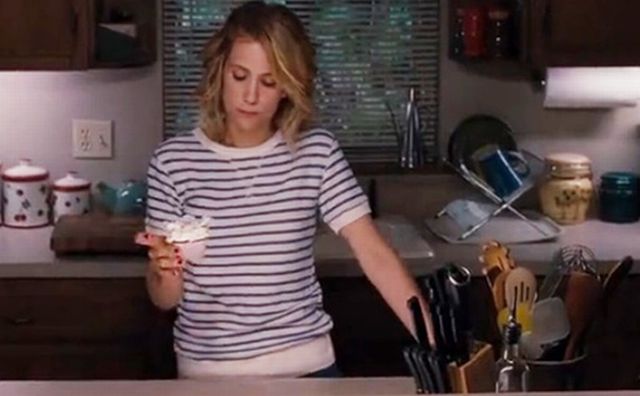
Women and baking: from social capital to comfort. [The Guardian]

Witches rode broomsticks, yes, but differently than they are traditionally depicted. [Broadly]

Equality vs. liberation in the wake of Michelle Payne’s Melbourne Cup win. [Daily Life]

Why does it always come down to the question of children for professional women? [Harper’s]

Annabel Crabb’s Kitchen Cabinet counter-intuitively attempts to make the people who dehumanise our most vulnerable people more human. [New Matilda]

My story about wrestling fandom and armchair criticism features on Tim Kail’s Work of Wrestling podcast.

ICYMI: “The Dark Side of Hollywood.”

Image via Bitchin’ Lifestyle.

On the (Rest of the) Net.

drake hotline bling gif

Check out my last minute Halloween costume ideas and the one I contributed to Junkee‘s roundup.

Speaking of Drake, his obsession with “good girls” is sexist. [Fusion]

On the silence of child sex abuse victims:

“Child sex abuse victims face a dilemma. To be recognised as victims, they cannot remain silent, but they must be silent enough to seem authentically hurt.” [WaPo]

Why putting women on the American banknote is far more complicated than we realise:

“What’s more insulting: to live in a society that treats you unfairly whose symbols remind you of that fact, or to live in a society that treats you unfairly but whose symbols belie progress?” [Jezebel]

Shonda Rhimes took on the “angry black woman” stereotype on Scandal, nailed it. [Slate]

The origins of the “It me” meme (it meme?). [Paper]

No, the Kardashians didn’t destroy Lamar Odom. They took him under their wing and supported him through his addictions and losses. [LA Times]

Celebrate Halloween by reliving periods and teen sexuality on film. [HuffPo]

The problem with speculating about homophobic people’s sexuality. [Kill Your Darlings]

“What happened to Whoopi Goldberg?” [WaPo]

On the (Rest of the) Net.


tumblr_nvw2k9aWLN1sj4xr4o3_500

Is there too much crying in women’s wrestling? The very fact of this question being asked about women’s wrestling (never mind the fact that Ric Flair, widely considered to be one of the best wrestlers ever, cries at the drop of a hat) is inherently sexist. If anything, crying further inures fans to the emotion of the match and the storyline, helping to solidify current women’s wrestling, particularly in NXT, WWE’s developmental brand, as some of the best ever. [Forbes]

I asked whether World Wrestling Entertainment can rise above pinkvertising in their effort to Rise Above Cancer. [Cageside Seats]

What to say when someone inevitably dresses in a racist costume this Halloween. A few years ago I dressed as Tiger Lily for a pirate-themed Christmas party (as part of a larger, Peter Pan group costume). At the time, I believed I was within my rights to dress up as a Native American as I have Native American heritage. Now, however, as someone who identifies primarily as and benefits from being white, I don’t think I’d appropriate that culture in the way I did. Sure, my Native heritage is an interesting part of my history, but I’m not part of that culture and haven’t taken the initiative to learn more about it so I shouldn’t benefit from it for the sake of a costume. [Native Appropriations]

Still on that topic, an interview with the CEO of silly, sexy Halloween costumes company, Yandy. [Maxim]

Two years ago, I had “A Very Manhattan Halloween”. I plan on doing the same next year.

tumblr_mcfaok1hv01qcb58yo1_500

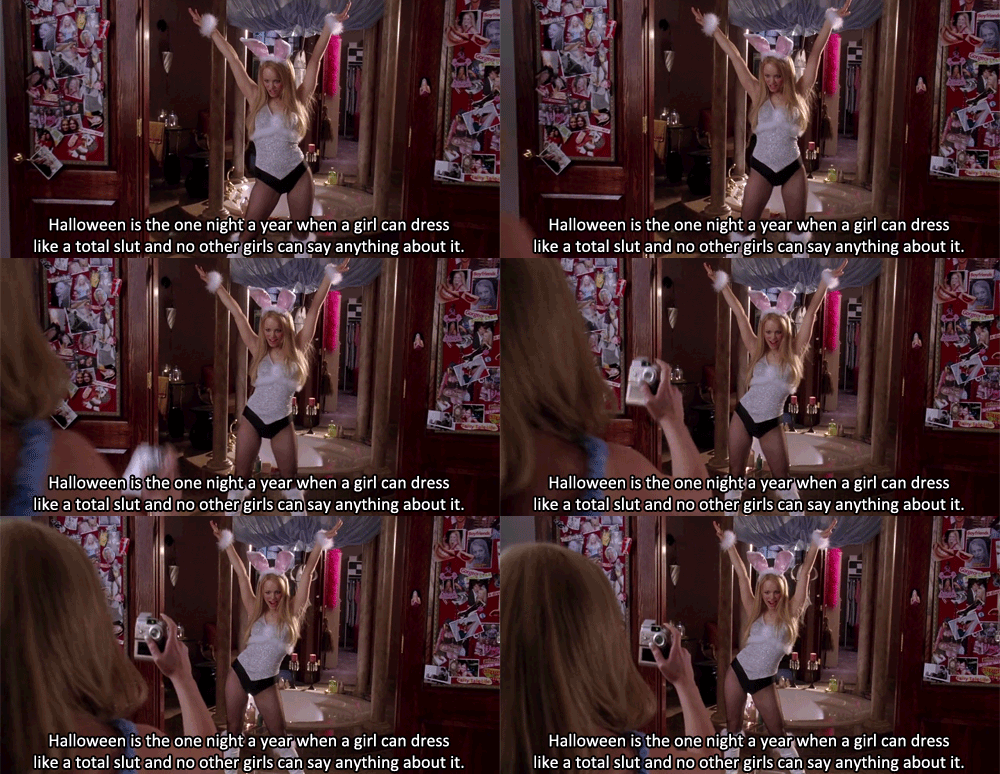
“Halloween is the one night of the year when a girl can dress like a total slut and no other girls can say anything about it”: the hyper-sexualisation and -feminisation of Halloween costumes.

Scream QueensAmerican Horror Story: HotelAmerican Crime Story: Ryan Murphy must be stopped! [Salon]

A year of Beyonce’s silence. [The Fader]

Zoo Weekly has published its final issue. [Mumbrella]

Adam Goodes spoke to Honi Soit in his first interview since retiring from AFL about racism, his future and Indigenous inclusion in the Australian constitution.

Images via Sasha Banks, Total Sorority Move.

On the (Rest of the) Net.

cosmo-kardashians

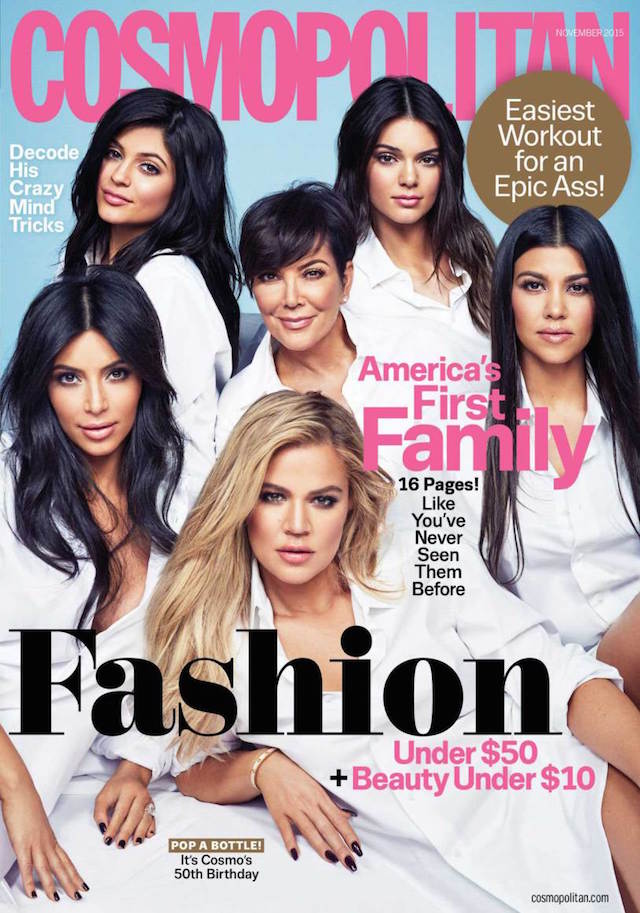
On U.S. Cosmopolitan naming the Kardashian’s “America’s first family”:

“If our first family is supposed to be an accurate representation of the American people, who’d be a better choice than this absurd, problematic and inexplicably wealthy crew of bad-rapper-enabling Instagram mavens from Hidden Hills, Calif.?” [The Root]

But where’s Caitlyn? [Go Fug Yourself]

Amber Rose’s SlutWalk changed the game for women of colour. [HuffPo]

Reproductive coercion in rap music. [Broadly]

Why do we decry artistic women for being “fake” but praise male artists for the same thing? [The Cut]

White #MasculinitySoFragile is the cause of so much gun violence. [HuffPo]

Why Kim Kardashian West’s pregnancy admission is revolutionary. [Daily Life]

And for more links from Aussie and NZ feminists, including yours truly, check out the latest Down Under Feminists Carnival. [Opinions @ BlueBec]

Image via Time.