When Serena feels backed into a corner by Gossip Girl and has to defend herself by penning her own blog at the typically British-named Diana’s (played by Warney’s squeeze Liz Hurley) New York Spectator, Blair harangues her, saying, “I’ve always thought you were too good to blog.” Thanks Blair; great to know where we stand.
But Blair’s is not a unique viewpoint: traditional forms of information gathering and sharing view blogging as the black sheep of the family. Because seemingly anyone can run a blog (though not everyone can run a good blog), those who excel in their field are sometimes deemed not as worthy of acceptance and recognition as those in conventional or “old” media, who rose up the ranks the old fashioned way. We all know one bad blogger can give the rest of us a bad name.
It wasn’t just Serena and her overt blogging dilemma that was relevant to budding online wordsmiths. When Dan freaks out that his book, Inside, has dropped from number nine on the New York Times Bestseller list last week, to completely off the chart this week, and forgoes his book touring commitments, trust old Rufus gives him a pep talk:
“It just takes one person to connect with your art, who feels like you directly communicated with them, to start a groundswell. But you can’t connect with that person unless you show up.”
So, disheartened bloggers, if your blog’s not bringing in the hits yet, just you wait: provided the content’s good (and even if it’s not!), it’s only a matter of time before you start a groundswell of your own. Now I’ve just got to remember that myself…
One of the best shows this year. Unfortunately, it only ran over two nights.
The Kennedys.
Wow. Just wow. I loved this miniseries that was cancelled by the History Channel in the U.S. because it allegedly portrayed the Kennedy family in too negative a light. Luckily, it was picked up by the ABC here. I am now officially in love with Greg Kinnear.
Apart from Sarah Ferguson’s Four Corners expose on the meat industry (below), SBS’s Go Back to Where You Came From was the most groundbreaking television this year. Unfortunately, I don’t think it changed anyone’s minds about the plight of refugees in this country, because those who already empathise with asylum seekers were the show’s target audience, and those who think refugees should go back to where they came from snubbed the show.
Sookie & Eric Finally Get Together on True Blood.
While I’m more of a Sookie and Bill fan, and an Alcide-in-general fan, Eric’s turn as sensitive Sookie-lover in True Blood’s fourth season was a must-watch. But thankfully, the Nordic vampire is back to his old, heartless self.
Charlotte King’s Rape in Private Practice.
Private Practice is an oft-shunned show, in favour of its Seattle counterpart, Grey’s Anatomy, but season four dealt with abortion and rape particularly sensitively and realistically.
Four Corners’ Expose on the Meat Market.
This was probably one of the most talked about news stories in Australia, if one of the most poorly rated episodes of Four Corners. Not because people didn’t care, but because it was so hard to watch. It’s perhaps too soon to tell, but I think we are seeing a chance in meat practices in Australia because of this story.
The Slap.
I found one of ABC’s most anticipated shows of the year to be a spectacular letdown. I’d had Christos Tsiolkas’ novel on my reading list since it was released, however I missed out on reading it before the show premiered in October. Perhaps if I had read the book first I would feel differently about the show, but I found it to be stereotypical and tokenistic, and a massive disappointment from the screen version I had hyped up in my mind. Fail.
MamaMia Gets Its Own TV Show.
Probably not many TV watchers outside of the insular community of MamaMia and Sky News would have known about Mia Freedman’s lifestyle website making the switch to TV. I don’t have pay TV but, luckily, the shows are available to watch on the MamaMia website, YouTube and Facebook, where the panelists talk about all manner of things, like sex, mental illness, celebrity, porn, religion, parenthood and more.
Angry Boys.
I hadn’t watched any of Chris Lilley’s stuff before Angry Boys and, while a lot who had thought the show was a bit of a letdown, I really enjoyed it.
Housos.
Another one that was a bit hit-and-miss, I’d anticipated the show all year. While some moments were gold, others were just supremely unfunny.
In the spirit Christmas, I’ve decided to revisit some of my favourite posts of the year in the twelve days leading up to December 25th.
I’m taking this final 12-Posts-of-Christmas opportunity to squeeze two Rachel Berry-related posts into the one. Think of it as one last Scarlett Woman gift to you.
The first post was written “In Defence of Rachel Berry”, while the second explores the character as a feminist one. You can access the original posts here and here, respectively.
In the first season of Glee, Rachel Berry was introduced as an attention- and approval-seeking know-it-all diva, who sticks a gold star next to her name on the New Directions’ sign-up sheet because that’s what she sees herself as. Season two showed the glee clubber soften her resolve a bit, realising that she’s still only in high school, and has her post-high school years to carve out a Broadway career and have the world see her as the star she knows she is. The season final saw her choose a relationship with Finn Hudson in her senior year at McKinley High, despite having to leave him to head to New York when she graduates.
Not all young girls have to wrangle their feelings for the school jock whilst contemplating a move to the big city to make their dreams come true, but many of Rachel’s problems are shared by the show’s audience.
In the most recent Lady Gaga-themed episode, Rachel struggles to accept her “Jewish nose” and considers rhinoplasty. She also strives for the acceptance of her New Directions band mates, and to be seen as fashionable and popular.
It’s in the character’s nature to be highly-strung, goal-oriented and ambitious, so it’s not likely she’ll change any time soon. And why should she? While there are certainly other young women out there who identify more with the saccharine Quinn Fabray, the sassy soul sisters Santana Lopez and Mercedes Jones, or badass Lauren Zizes, there are plenty who see Rachel as their Glee counterpart, myself included.
A recent New York Times article by Carina Chocano praised the “relatable” and “realistically weak female character”, like Kristen Wigg’s Annie in Bridesmaids—“a jumble of flaws and contradictions”—over the “strong” one. “We don’t relate to [the weak character] despite the fact that she is weak, we relate to her because she is weak,” Chocano writes.
But what exactly does she mean by “weak”?
Pop culture commentator Dr. Karen Brooks notes that talented, beautiful, popular and successful female characters need to be broken down before they can be seen as relatable. “The more talented and beautiful you are, the greater the threat you pose and so ‘things’ are introduced to reduce that threat,” she says. Just look at the “women falling down” video on YouTube.
While Rachel’s had her fair share of setbacks, it seems Glee’s audience is finally beginning to understand her. “We’ve been given time to understand Rachel’s initially painful personality and to identify both her strengths and weaknesses. Her ambitions and drive haven’t shifted, but the context for understanding them has,” Brooks says.
“Rarely are unpleasant characters redeemed, they are simply ‘punished’, while the ‘good’ characters soar to impossible heights, not on the back of hard-work and self-belief, but usually [because of] a love interest and wishing hard. Rachel is a healthy and welcome exception to that,” Brooks continues.
So she’s an unlikely heroine we can all get behind, you might say? “A girl who reminds you of you,” as Chocano opines. An everywoman, if you will?
If Rachel Berry encourages more young women to see themselves as gold stars striving to have their accomplishments recognised, then so be it!
I wrote that audiences have come to know and love Rachel not because her obnoxious know-it-all persona has changed, but because “We’ve been given time to understand Rachel’s initially painful personality and to identify both her strengths and weaknesses. Her ambitions and drive haven’t shifted, but the context for understanding them has,” as Dr. Karen Brooks reiterates.
“I… have trouble with the vilification of Rachel Berry on a feminist level. How often do we dismiss women as ‘bossy,’ ‘know-it-all[s],’ or ‘control-freaks’ when their behavior would be interpreted as leadership, assertiveness, or courage if they were men?
“… In the right context, Rachel Berry’s personality would not seem ‘intolerable’ or ‘annoying’ so much as bad-ass, renegade, and hardcore.”
And Lady T, who used Rachel as her “Female Character of the Week” on The Funny Feminist, said:
“… The show wanted us to root for a girl who was ambitious, daring, and driven.”
It might be because I have been known to be seen as bossy, a know-it-all, a control-freak (just ask my new housemate!) and ambitious that I’m standing up for her, but just think of another feminist heroine in modern pop culture who could also be described using these words: Hermione Granger. The only difference is, she isn’t vilified for these attributes.
If you look back to the beginning of Glee, especially, Rachel was often deemed ugly. Now, anyone who’s seen Lea Michele knows she’s not exactly unconventionally attractive, but Rachel is characterised as this because she’s annoying. And she’s annoying because she stands up for herself, knows what she wants and how to get it. (From a racial point of view, she could also be seen as being “ugly” because of her Jewishness.)
Despite these inherently “unattractive” qualities, Rachel manages to snag her man, Finn, in what can be seen as typical Glee sexism and discrimination:
On the other hand, it can be seen as a poignant take on teenage life that the underdog is always being compared to the most popular girl in school: Quinn Fabray.
If Rachel is Glee’s feminist heroine, Quinn is her polar opposite. She has had next to no character development, which leads to her motivations changing week to week.
In “Original Song” she tore Rachel down, telling her to get over her “schoolgirl fantasy happy ending” with Finn, who would never leave Lima, taking over Burt Hummel’s mechanics business, with Quinn, a real estate agent.
But in “Born This Way”, she was “broken down” by her fat past coming back to haunt her, to come across as more “relatable”.
Sure, Rachel’s had her fair share of being “broken down” (being dumped and subsequently egged by Jesse St. James, being publicly broken up with by Finn, getting slushied… I sense a food theme here.), but in the grand Glee scheme of things, she’s actually doing pretty well for a female character.
In the spirit Christmas, I’ve decided to revisit some of my favourite posts of the year in the twelve days leading up to December 25th.
I love watching Jersey Shore because, like Glee, I know I’m always going to get a blog post out of it. The gender issues that run rampant on the show were inspiration for the following post, the original version of which you can find here.
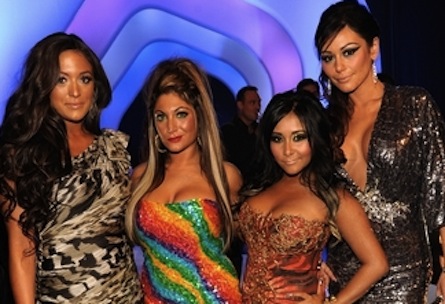
This notion has been on my mind since the start of the year, and watching season three of Jersey Shore got me thinking about it again. So, are the fake-tanned, fake-boobed and fake-nailed women of Seaside feminists?
“… so much of what these people do actually challenges old school notions about gender-appropriate behavior: Men who wax their eyebrows? Men who place that much of an importance on hair products? Women who fistfight? Women who drink so heavily?”
But on the other, JWoww, for example, subscribes to the stereotypical sexualised female body: fake boobs, fake hair, and done up to the nines when she hits the clubs. If she’s got it, should she flaunt it?
In strapping their boobs up and wedging their short-shorts further into their buttcracks, the mating dance the guidettes perform each night (which has nothing on the aforementioned regimen of the boys!) seems to subvert the very look they’re trying to achieve: sexiness. I don’t believe this is done purposefully, so in that sense it’s not very feminist-like, however the brazen bedroom talk the girls engage in—or rather, lamenting the lack of bedroom action, especially when it comes to Snooki—makes them highly relatable. As Sady Doyle writes, “we are all Snooki”.
I’m sure all women can relate to slut-shaming, regardless of how many sexual partners they’ve had, and that’s something the Jersey Shore females have to deal with on a seemingly episodic basis. Egan Morrissey puts it best, after Pauly D voices his views on sexual double standards (“She’s [Angelina] brought all these random people home. She’s a girl. You don’t do that. That’s a guy thing. Guys do that, not girls.”):
“Shouldn’t Pauly and The Situation be grateful for sluts? If there were no sluts then they would never be able to have sex. Do they think for one minute that they would even want to live in a world in which all girls acted the way that they’re ‘supposed’ to?”
Still with sex, feminists are either viewed as sex-negative man-haters, or insatiable sex machines who throw away men once they’ve got theirs. JWoww certainly falls into the latter category, who says in the opening credits, “I’m like a Praying Mantis: after I’ve had sex with a guy, I will rip their head off.” If Jersey Shore were a scripted show, JWoww’s bad breakup with Tom, who steals her hard drive, which contained naked pictures of the reality star, amongst other things, would be payback for her independent woman status. How dare a woman step outside of the stringent guidelines The Patriarchy has set for her?!
Speaking of bad breakups, if there’s one guidette who falls furthest from the feminism tree, it’s Sammi. While she finally plucked up the courage to leave Ronnie after their tumultuous on-off relationship ended in a very realistic fight in season three, in which Ronnie trashed Sammi’s bedroom and her belongings, including breaking her spectacles, reports about the fourth season seem to indicate that Sammi took Ronnie back.
While we can never understand the dynamics of each individual abusive relationship, and feminism can’t realistically be applied to them when a woman (sometimes a man, but mostly women) has had all of her resources—family, friends, employment, finances, access to a car etc.—taken away from her and therefore has limited means to escape, Ronnie and Sammi’s relationship may have some benefits to viewers of the show. Because Jersey Shore is marketed as “reality TV” (although, after The Hillsand the revelation this week that one of the “geeks” on Australia’s version of Beauty & the Geek is an actor, its dubious how “real” the show is), female viewers who may be involved in an abusive relationship at some stage in their life can see that the relationship is being portrayed in a negative light, that Sammi’s housemates, friends and family are telling her it’s not healthy, and that she should get out. We can only hope that the one in four women who will have an abusive partner will take heed.
A little too deep? How can we derive all that from something as asinine as Jersey Shore, a show that, grammatically, should have a “The” at the beginning of its title?
Take what conclusions you want from the overtly sexual show, but one thing’s for sure: the guidettes are “empowered sexually, that’s what I’m seeing on Jersey Shore… The women seem to be making their own decisions about who they sleep with [Scarlett Woman note: or don’t sleep with] and when.
“Almost by definition ‘guidette’ is a derivative term. It is a male-based subculture… The women were always defined as sex objects. And I think that’s something that they’re reversing.”
So, guidettes as sex subjects? If talking about “hairdos, shoes and body image snafus” and “preen[ing] and put[ting] on lipgloss” is a stereotypically female—and therefore weak—trait, then the guidos are certainly the background characters of Jersey Shore.
In the spirit Christmas, I’ve decided to revisit some of my favourite posts of the year in the twelve days leading up to December 25th.
I thought I’d take this Serena van der Woodsen-opportunity to talk about what a spoiled brat she was on last night’s episode (you can read about what a spoiled brat she is in general below, and in the original post here.)
When a friend releases their first book to such fanfare as Dan did last night, you should be happy for them, right? Even if one of the characters is semi-based on you, and perhaps doesn’t portray you in the best light, Dan was adamant that Inside is only loosely autobiographical and amplifies Serena, Blair et al’s worst qualities to make it a scandalous and best-selling novel.
But, of course, Serena thinks it’s all about her, all the time, and has a big cry because Dan wrote her character as a selfish, vapid, flighty and irresponsible Upper East Side princess, which she kind of is. She’s so blinded by her anger that she can’t be happy for Dan’s success, worried for Blair’s portrayal and her relationship with Dan and what it might mean for her engagement to Louis, or saddened by Chuck’s character’s death by asphyxiation in the book. Talk about a bonfire of the vanity!
She’s got the clothes, the hair, and she’s mighty fine to look at. But that’s about all Gossip Girl’s Serena van der Woodsen boils down to.
By the end of season two, she’d stopped evolving, though, and it turns out she was just a spoiled, vapid princess, intent on upstaging Blair Waldorf at every opportunity, stringing a multitude of guys along, and having her antics and dirty laundry on the cover of all the tabloids.
Like in the Cecily von Ziegesar (she made an appearance in last night’s final, telling Serena she’d “read a lot about her”) novels of the same name, Serena is the central protagonist of Gossip Girl. But unlike the books, the show has run with Blair and Chuck Bass in the driver’s seat; characters who have grown, changed and become more likeable as a result. Serena, along with her male counterpart Nate Archibald, followed closely by Dan, has remained a stagnant shell of a human being, like the kinds you overhear on the tram and thank God you don’t know them or, worse, aren’t like them.
There have been many a fan disappointed in and perturbed by Serena’s lack of development. Why has she languished in and regressed to the mindset of a highschooler, albeit with better clothes, more freedom and a more active sex life? Is she just “coasting on cuteness”? Most of her storylines seem to revolve around her busting her bust out in an evening gown or standing around looking bored and Amazonian-like. Just because she looks the way she does, doesn’t mean she shouldn’t be as well written as Gossip Girl’s other characters. In real life, how many of this type of woman do you know? Personally, I don’t associate myself with people with no personalities, who’ll turn on their besties for a taste of the spotlight, and who have no opinions save for what outfit they’re going to wear that day, so I don’t know anyone with the personality of a napkin Serena van der Woodsen.
But, let’s face it, Gossip Girl isn’t exactly a realistic interpretation of life. 20-year-olds don’t flit around the city unemployed, never wearing the same outfit twice, depending on Mummy and Daddy’s trust funds. And if they do, then that’s a reality I’m glad I’m not a part of.
This unreality and lack of character development makes the audience not care about Serena’s storylines. Personally, I loved the Juliet/Ben/Serena storyline, but it was because of the mystery surrounding who Juliet and Ben actually were and what their connection to Serena was, not because of Serena. And the latest development in the character’s tumultuous yet über-boring life leads me to make comparisons to the actress who portrays her, Blake Lively’s, life.
I remember when Gossip Girl first came out, Lively said in an interview that she was very low-key, didn’t like to go out to events and preferred to stay home and work on her Martha Stewart skills.
Flashforward four years and Lively’s oft-papped lifestyle is far from the one she naively spoke about. She’s Karl Lagerfeld and Anna Wintour’s muse, flitting from one European country to the next to attend fashion shows and sun herself on yachts. Not to mention her latest nude photo scandal.
While her acting’s not anything to write home about, Lively still has much more to offer than naked pics and Chanel ads. I just hope that it isn’t a case of life imitating art when it comes to Blake Lively and Serena van der Woodsen.
In the spirit Christmas, I’ve decided to revisit some of my favourite posts of the year in the twelve days leading up to December 25th.
It’s no secret I love underdogs and Grey’s Anatomy, so what better way than to combine the doctor drama with one of its most dramatic doctors, Cristina Yang, in a post about—what else?—feminism? The original post is here.
When it comes to “likeable” female characters on TV, you might think of Buffy Summers. Or Rachel Green. Or the Gilmore girls. But Grey’s Anatomy’s Cristina Yang probably isn’t one of them.
She’s abrasive, unfeeling, career-driven, ruthless and selfish. Everything a woman shouldn’t be, according to patriarchal norms.
Perhaps she could be more like the ousted Izzie Stevens, who was bubbly and sexy and baked cookies. Or the virginal and highly-strung April Kempner, whom Cristina praises for having “virgin super powers”, enabling her to be super-organised.
But I like Cristina just the way she is. She’s got her eye on the prize, won’t compromise her personal beliefs or goals to be liked or for a man, and she’s got “tiny little genius” hands that enable her to roll with the big guns.
This is why Cristina Yang is one of the only “feminist”—or “strong female”—characters on television. Nay, in all of fiction.
For one thing, she refuses to rely on her looks or her feminine wiles to get ahead. In “This is How We Do It” in season seven, she rejects Owen’s compliment about her beauty, saying, “If you want to appease me, compliment my brain.”
And in last week’s final, we saw Cristina exercise her right to choose, and schedule her second abortion on the show, after much (mostly solo) deliberation. While excluding the opinion of her significant other and father of the future child wasn’t the most respectful thing to do, ultimately it came down to her choice, and she chose to terminate the pregnancy.
In season two, Cristina divulges that she’s pregnant to Dr. Burke and, again, makes the decision to get an abortion on her own. Whereas a character like Izzie seems to serve the pro-life agenda (she gave up her own baby for adoption when she was a teenager growing up in a trailer park, and convinced a HIV-positive woman to carry her pregnancy to term), Cristina resists the societal pressures to tap into her maternal instincts and give birth to a child she does not want.
Regardless of whose agenda could be seen as being served by Cristina’s character, she acts without fear of what other people will think of her.
As a person, no matter what gender, it is seemingly second nature to want others to like us, and to portray our best selves to them. Just look at the ritual of the date or the job interview. That Cristina defies this action (though we have seen her star struck when meeting surgeons like Tom Evans, and Preston Burke for the first time) makes her not just a feminist character, but a truly humanist one.
There are people in this world who challenge us, grate on us, and whom we genuinely don’t like or approve of. But that’s what makes the world go around. Cristina Yang being one of these kinds of people, and being portrayed to us as a whole person on television, with hopes and dreams and trials and tribulations and relationships and a career and no desire for children, and not just as the bitchy mother-in-law who lives off her husband’s money and needs a good fuck, is truly a sight to behold.
So Blair’s pregnant and she doesn’t know who the father is. Oi vey, as her Jewish stepfather Cyrus would say.
Naturally, even though she’s only 20, is still in college as her mother points out, and doesn’t know if her fiancé Louis or past love Chuck impregnated her, she’s keeping the baby. Of course!
Dan tells her “has options” and Blair replies that she’s considered them all but, ultimately, the foetus was conceived out of love. I’m sure a lot of foetuses were conceived out of love, but that doesn’t mean it’s in the best interest of both the embryo and the parents to keep it.
Interestingly, while searching for some online articles on Gossip Girl being pro-life (there aren’t any that I could find), I came across a web entry for the actress who plays Eleanor Waldorf-Rose, Margaret Colin, who is a noted pro-life activist and has even been involved in (I won’t say propaganda) a pro-life made-for-TV movie. I wonder if her stance, which is well-publicised, had anything to do with the character of Blair deciding to carry the pregnancy to term…?
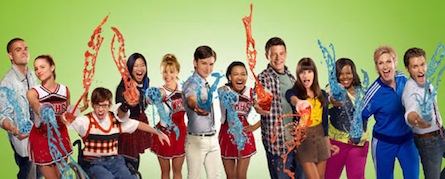
In lieu of a new episode of Glee last week, I attended a debate about the pros and cons of McKinley High and its glee club.
I was super excited, because I assumed the debate would entail a for Glee side, and an against. And it did. But while I thought the against side, consisting of Clem Bastow and Jess McGuire, would discuss the blatant sexism, racism, homo/transphobia, ableism, fatism and the many other phobias and -isms the show incorporates (feel free to add them in the comments), both panelists ultimately praised Glee for it’s inclusiveness and handling of the tough issues.
I’ve heard this rationalisation about Glee before. When my tuba-playing gay friend finally got into the show this season and fell hard for it, he thought I would sing its praises with him because he knew I watched it. (Evidently, he does not read this blog as he would know the main reason I like Glee is because I know I’ll always get a blog post out of it!) When I invited him to the debate, he had something else on but wondered what they would be debating, exactly. I referred to the list of problems I have with it (above and elaborated on below) and he replied, “But I thought Glee was about acceptance.” That’s what it wants you to think, and it blinds you to all the other issues with Katy Perry songs. As panelist for the “pro-Glee” side, Mel Campbell, said, “It’s best not to ask questions.”
While McGuire did touch on Glee’s pro-gay stance, and perhaps its best, and most underutilised, storyline of Brittany and Santana’s forbidden love, I was expecting SlutWalk Melbourne organiser and noted feminist Bastow to knock Glee out of the park for its anti-women portrayals. I was also sorely disappointed, as Bastow, a keen musical aficionado, chose to focus on the shows’ butchering of classic musical numbers.
So, I thought I’d take this opportunity to write about the issues I wished the panel had discussed last Thursday night.
Sexism.
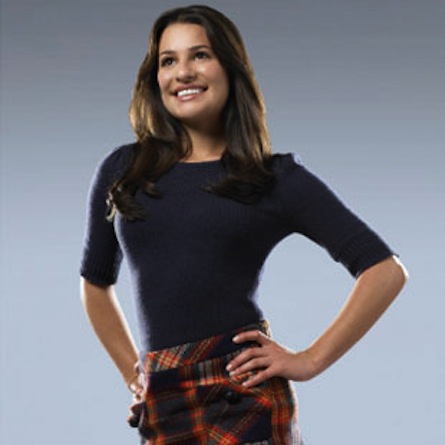
I’ve written about feminism in Glee before, specifically as it’s embodied in the character of Rachel Berry. It annoys me to no end that Rachel is deemed “ugly” (though Lea Michele is anything but) because she’s annoying. And she’s annoying because she eschews traditional gender roles that are perhaps embodied by Quinn by being ambitious, voicing her opinions and unapologetically going after what she wants.
Finally, I wouldn’t say sexism is the main problem in Mercedes’ perpetual (okay, she seems to have a boyfriend this season, but more on that later) bachelorettehood, rather some other issues I will address later in the piece.
Racism.
Now is as good a time as any to discuss Mercedes’ aforementioned singleness. Was she literally the only character in season two who didn’t have a significant other because she’s black? (Or because she’s fat?) Sure, she dated Sam for all of a few minutes in the season two final, but before that the only action she got was Kurt condescendingly suggesting she should date one of the guys on the football team because he was black and, like, they’d probably have heaps in common.
If that’s not enough proof of Glee’s insensitivity to race, all you need to do it look at any one episode for a myriad of references to Tina and Mike’s “Asianness”, Roy Flanagan’s “Irishness” (or leprechaunnes, as Brittany might refer to it) and Puck and Rachel’s “Jewishness” (though that also falls under religious prejudice as well).
Homophobia & Transphobia.
Sure, Glee’s pretty much a vehicle for Kurt and, increasingly, Blaine, to showcase their voices, fashion sense and flamboyance. McGuire chose to speak at length about how sensitively the show handled Kurt coming out to his dad and Kurt and Blaine’s first time, and I have to agree with her. And yes, seeing two men make gay love (okay, the implication of them making gay love) on primetime network television without a stink being kicked up is pretty groundbreaking, as panelist for Glee and MC, Tim Hunter, noted. But they still single out Kurt for his gayness (“Single Ladies [Put a Ring on It]” and “Le Jazz Hot!”, anyone?), not to mention how Finn went about outing Santana in “Mash Off”.
They’ve handled the Brittany/Santana thing the best out of every relationship in the show, so that’s one point for lesbianism, but at the expense of other sexual orientations and gender identities, perhaps?
Just look at “The Rocky Horror Glee Show”, for example. Not only to Mike’s parents make him pull out because they don’t want him associated with a “tranny” musical, but the show even substitutes the lyrics “I’m just a sweet transvestite from transsexual Transylvania” for “sensational Transylvania”. Pardon me, but I don’t see what all the fuss is about in using the word “transsexual”.
Finally, we can’t forget Coach Beiste. When she debuted on the show, her sexuality and gender was thrown up in the air, when she’s really just an unconventionally attractive, masculine straight woman who happens to coach a men’s football team. But of course attention is drawn to her 40-year-old virgin status every time there’s a virginity-themed episode. Because, you know, she’s old and funny-looking and has never been on a date! Riotous!
Ableism.
Where do I start? There’s Emma’s OCD, which is made fun of by everyone from Gwyneth Paltrow’s Holly Holiday to her own parents (not to mention Will trying to come to her rescue by attempting to “cure” her). Artie’s wheelchair-bound way of life, which was even pointed out during the debate, only for the panelists to laugh at Artie wanting to give Blaine a standing ovation, “because he can’t”, and a whole episode, “Wheels”, insensitively dedicated to his disability.
Puck’s rendition of “Fat Bottomed Girls” was a clip played at the talk, and was received by audible groans. To see Lauren so uncomfortable as Puck serenaded her was awkward for the audience, and the patronisation was palpable. Like, oh Glee has a plus-sized girl who doesn’t hate herself and is being chased by the hottest guy in school; we’ve come so far.
But when Mercedes is relegated to backing vocals in favour of the slim lined Rachel, can’t get a date and suffers from an alleged eating disorder which is swept under the rug with some sage advice and a granola bar from Quinn, it’s all just tokenism.
So there you have it: the debating of the issues I wished had’ve been brought up by the panel. As my friend, housemate and fellow debate-goer put it: “It was just like Glee: it slightly touched on the issues, but ultimately didn’t add anything new to the discourse.” So feel free to add anything I, or the panel, didn’t cover in the comments.
Rihanna was a guest on The Ellen Degeneres Show this past week and she had this to say about the kind of man she goes for and what she’s like in a relationship:
“I can’t have guys that are intimidated by me. I like men that are more aggressive… I like them to be sure of themselves and know that [they’re] the man. I’m the lady and the only way for us to make this work is for us to play our role. You know, I can’t really be the man for you—I don’t want to have to be—I’m the man at work all the time.”
“… Want to be a surgeon? Here’s what your life will be like at the hospital, according to Grey’s [Anatomy]: sex in the linen-supply room, catfights with your sister in front of the patients, sex in the on-call room, a ‘prom’ in the recovery room so you can wear your strapless evening gown to work, and sex with the married attending physician in an office. Oh, and some surgery. When was the last time you were in a hospital and spotted two doctors going at it in an empty bed?”




 The Scarlett Woman