On the (Rest of the) Net.

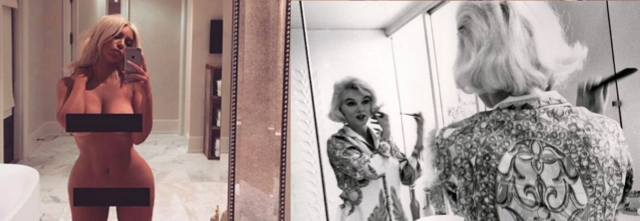
marilyn monroe kim kardashian

I’m at The Big Smoke asserting that Kim Kardashian is our modern day Marilyn Monroe.

Following on from my piece last week, I wrote about how World Wrestling Entertainment got from the Divas era to the women’s wrestling renaissance. [SBS Zela]

What happened when a WWE Superstar sicked his Twitter followers—inadvertently or no—onto a trans woman. [Harlot]

Why famous male wrestlers need to stop being the deciding factors in women’s matches. [The Spectacle of Excess]

*Spoiler alert* Olivia Pope may have killed the man who set her up to be kidnapped but Scandal has missed an opportunity to address her PTSD with therapy. [WaPo]

Why are white tank tops still called wife-beaters? [Mic]

Why I don’t want my daughter to be a footy fan. [Daily Life]

The history of cats in bookstores. [Lit Hub]

ICYMI: The rise of self-indulgent comedy.

The Rise of Self-Indulgent Comedy*.

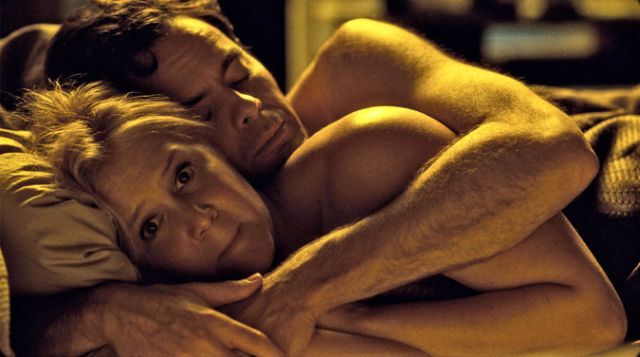
trainwreck_4

*The following contains spoilers for Master of None, Girls and Trainwreck.

The past year has been a banner one for alternative voices in comedy.

Hannibal Buress refocused the spotlight on Bill Cosby’s history of alleged sexual assault during a stand-up gig in Philadelphia at the end of 2014. The Mindy Project was cancelled by Fox but found a new, more risqué home at Hulu, while Fresh Off the Boat, Black-ish and Master of None are changing the historically white male face of comedy. Closer to home, Black Comedy and The Family Law are making similar strides, and we can’t forget the success Amy Schumer found in 2015.

But despite comedy’s newfound diversity, not all of it hits the spot.

A common theme many of these shows share is that they’re created, directed and/or produced by their stars which, while it’s an answer to the paucity of women and minorities both on screen and in positions of production power, it can also lead to self-indulgent storytelling that pigeonholes its creators into catering to a niche audience.

Master of None debuted on Netflix late last year to rousing success, becoming the streaming service’s most popular show. Several of its episodes were met with critical praise, particularly “Parents” and “Indians on TV”. Creator and star Aziz Ansari’s musings on children, race and sexual harassment were true to life, but they can be considered sporadic standouts amongst a largely self-indulgent experiment filled with bad acting and rambling jokes.

Take, for example, the 1:16 minute interaction between Ansari’s character Dev and Arnold (played by Eric Wareheim) about the meta dynamics of the Eminem movie 8 Mile and its theme song, “Lose Yourself”. I, too, have often wondered about the specifics of where Marshall Mathers ends and Eminem begins, but the bit’s backstory is something only die-hard comedy fans might be privy to and therefore could be alienating to a casual audience. The character of Denise (Lena Waithe), who has sat, off-camera, opposite the two throughout the duration of this exchange shares many audience members’ feelings when she says, “Can we please talk about literally anything else?”

When I asked stand-up comedian Martin Dunlop, who’s currently performing in his Melbourne International Comedy Festival show, Murder, He Spoke, for his thoughts on this flat transaction he said, “Like so much of the show, [this scene] doesn’t function as comedy. They’re not playing off anything… But it doesn’t really work as a slice-of-life scene either. Wareheim’s character is particularly ill-defined, an odd drifter who’s role in the series as a whole never becomes clear, though a lot of the blame for that falls on Wareheim, who doesn’t seem to be a very strong actor. That describes my problem with the series as a whole. Where something like Louis functions as a drama or a comedy at different times, Master never really worked for me as either.”

Osman Faruqi, Sydney-based writer and broadcaster, agrees, telling me that he “found the 8 Mile scene pretty jarring and lazy. Non-sequiturs can be funny but this came across like something two 15 year olds would have joked about in school. It was pretty self-indulgent and out of place… I think Master‘s comedy worked best when it reflected on aspects of contemporary society the audience was familiar with. When it deviated from that and inserted random jokes that had nothing to do with the story, it fell flat.”

And while I haven’t seen Ansari in much of anything else, I found his acting to be less-than-stellar, always coming across as if he’s been taken by surprise or an extra in one of those poorly acted insurance infomercials. His character acts primarily in commercials in the show, but I’m not sure it was Ansari’s intent to also give off this vibe himself. The use of Ansari’s real life parents in the roles of Dev’s elders may be an indictment of , but I found Fatima Ansari as Dev’s mother to be grating. Ansari’s the showrunner and what he says goes but the use of his parents seemed selfishly at the detriment to the show.

For all the things Master gets right, on the whole it’s a thought experiment about an unlikeable bad actor rife with rambling jokes and poor casting that left me wondering how far removed from Ansari his character is.


https://twitter.com/rgay/status/655253129353519104

Whereas Ansari is struggling to come up with content for a nonetheless greenlit second season of Master , Amy Schumer almost had too much material for her runaway box office hit, Trainwreck. Schumer’s character of the same name works at a misogynistic men’s magazine as a plot device to introduce her to her love interest, a sports doctor played by Bill Hader she’s writing a profile on, but she could just as easily have been a freelancer who works from home, sparing us the drawn out office scenes. Professional wrestler John Cena was hilarious as Amy’s muscle-bound meathead boyfriend but his scenes were a good twenty minutes of homophobia that could have been reserved for the director’s cut DVD edition.

As with some of Schumer’s stand up work, a lot of her shtick didn’t land,and for some inexplicable reason, the funniest jokes made it into the trailer but were absent from the theatrical release.

Trainwreck felt more like a rough draft of a film with far too many incidental storylines that came across as pandering to its writer and star (are we seeing a common theme amongst these comedies?). In refusing to make these edits, producer Judd Apatow does a disservice to Schumer as Trainwreck really did have all the attributes to become a different kind of rom-com, both from the Kate Hudson fare of the ’00s and Apatow’s own gross-out anti-women bro comedies such as Knocked Up and This is 40.

Another rom-com of sorts, Lena Dunham’s Girls, also produced by Apatow, is perhaps one of the most criticised comedies on air today. Dunham has been accused of everything from racism to exhibitionism to sex worker-exclusionary feminism to child molestation, with her responses to some of these appraisals coming through on Girls, now in its fifth and penultimate season.

tumblr_mep7ka7Axg1rbwafb

Of the three comedies discussed here, Girls’ Dunham is perhaps the least able to be extracted from her character. Dunham shot to mainstream notoriety with the release of her HBO show in 2012 whereas Ansari starred in Parks & Recreation for seven years prior to Master and Schumer had been going viral with her Inside Amy Schumer sketches long before Trainwreck. Perhaps her rapid success influences the oftentimes “painfully narcissistic [and] shockingly tone deaf”, as Ray puts it in this season’s opener, themes Dunham chooses to deal with in her show. Her repetitive nudity, though refreshing from a body-positivity standpoint, and the inclusion of a token black lover (played by Donald Glover) as a response to an unrealistically white Brooklyn she chose to portray in Girls’ first season come across as childish trigger responses to larger issues, which Dunham is normally open to discussing.

The argument could be made that criticisms are only foisted onto Girls and, indeed Master and Trainwreck, because they’re not made by white dudes. Do we hold Louie and Seinfeld to the same standard?

I asked fellow Girls devotee and freelance writer Camilla Peffer what she thought of the show’s self-centredness and whether objections to it can be boiled down to the fact that it’s for and mostly by women. “I think the self-indulgent shtick gets thrown around because society values high impact stories, not stories that rehash the minutiae of everyday life,” she told me. “To a man, the heartbreak of falling out with a best friend might hold no resonance. Neither does creating meth to save your family from poverty, but stories like that create a sort of prosthetic experience, much like playing a video game.

“Is Girls more self-indulgent than the work of Ansari or Woody Allen? It’s just as self-indulgent. But why is that a dirty word? All art is self-indulgent. Creating relies upon a certain level of introspection, so without that self reflection, it’s impossible to make anything that can truly have an emotional impact on an audience.”

Girls, along with Dunham, can be “painfully narcissistic”, as Ray put it, but it has moments (a lot in this season alone) when it’s one of the more realistic portrayals of young, white, New York millennials in pop culture today.

To some degree, the same can be said about Master of None, Trainwreck and other self-indulgent comedies. Self-indulgence doesn’t necessarily mean a lack of self-awareness: the two go hand in hand and are needed for a true-to-life portrayal of these undoubtedly personal stories. Just because they’re not necessarily speaking to me, an upper-middle class white chick who has the luxury of voicing her opinion on this platform, doesn’t mean there’s no value to them. It’s important to have diverse voices speaking about the myriad of topics Master, Trainwreck and Girls do, such as family, race, sex, dating, “finding yourself”, urban life, and what’s acceptable behaviour for women and minorities. It’s also important that these diverse voices have the opportunity to fail which, in some respects, I think they have.

Elsewhere: [USA Today] The 8 Mile Debate on Master of None Has a Surprisingly Emotional Backstory.

[THR] Will There Be a Second Season of Aziz Ansari’s Master of None?

[OUT] Trainwreck‘s Homophobia Puts John Cena in a Headlock.

[HuuPo] Lena Dunham, Girls Creator, Addresses Race Criticisms on Fresh Air.

Lead image via Your Movies in Mind.

On the (Rest of the) Net.

charlotte wrestlemania 32 women's championship

I wrote about World Wrestling Entertainment’s new Women’s Championship and the renaissance of women’s wrestling. [SBS Zela]

In praise of the “ugly cry”. [New Republic]

“She just wants attention”: the insult du jour. [Slate]

What we can learn about clapping-back from Beyonce. [Elle]

The toxic relationship between masculinity and meat hinges on the “factory farm industry that makes billions of dollars insisting that men are the strongest when they have the most muscle, the least amount of feelings, and ingest the most ‘manly’ protein, like bacon, steak, and sausage.” [The Establishment]

Amber Rose’s MuvaMoji is an alternative—not an answer—to Kim Kardashian’s Kimoji. [Good]

Hillary Clinton said feminism and being pro-life can co-exist. Here’s a reminder of what being pro-life actually means. [Daily Life]

And Jill Filipovic unpacks it in a practical, US-centric sense. [Cosmopolitan]

Melissa Harris-Perry interviews Anita Hill 25 years after testifying that Supreme Court Justice nominee Clarence Thomas sexually harassed her. [Essence]

More feminist goodness at the 95th Down Under Feminists Carnival. [Sacraparental]

Image via WWE.com.

On the (Rest of the) Net.

Chyna-1

It’s WrestleMania season and Chyna’s been blackballed from being inducted into the World Wrestling Entertainment Hall of Fame yet again. I’m wrote about her audacity to have a sexuality separate from the one WWE deems acceptable.

My feminist connectivity piece from last week, originally published at The Vocal, is now over at Daily Life.

The Nina Simone biopic is a racist issue. [The Atlantic]

Donald Trump’s core philosophy is misogyny. [Slate]

A deep dive into Jennifer Garner’s status as celebrity mum du jour. [Buzzfeed]

Is Justin Bieber an introvert? [Mel Magazine]

Is the rise of “no kill” about the welfare of animals or our feelings? [Aeon]

The homoeroticism of Batman V. Superman: “The passion between men is expressed as violence.” Sounds a lot like wrestling. [The Establishment]

Image source unknown.

On the (Rest of the) Net.

I wrote about Twitter as a tool for feminist connectivity. [The Vocal]

The objectification of Canadian PM Justin Trudeau isn’t sexist:

“You may be disturbed or annoyed by the shirtless photos and swoony responses to our new PM, but that concern shouldn’t come from a sense of worry that Trudeau will be hurt—socially, politically or personally—by this so-called ‘sexist objectification.’ Because that is simply not what is happening. It’s not as though Canadians will now see him as a vapid, slutty, airhead with nothing to recommend him but his pecs or as someone who got ahead through either fuckability or literal fucking. The reality is that these sexy pics and the fact that so many find him physically attractive serves to enhance his power rather than diminish it. This is because he is not a woman. He is a man. And a powerful one at that.” [Feminist Current]

Meanwhile, in the U.S. Presidential race, toxic masculinity reigns supreme. [Elle]

“Why aren’t we seeing more images of Kim Kardashian in business meetings or changing her kid’s diaper?” [Time]

The inherent sexism of emojis. [NYTimes]

The sexual politics of the “brogressive” and the Manic Pixie Dream Feminist. [Daily Life]

Why are so many white people identifying as Native American?

“One of the biggest reasons it’s been acceptable for white people to posture as Native is due to a certain romanticism about Native culture and people. ‘If you go back to the journals of Christopher Columbus,’ [Taté Walker, editor of Native Peoples magazine] said, ‘it references [Natives as] these free-spirited nature sprites who dance naked in the moonlight and their kids are running wild, and it just sounds so savage, but savage was a term for free.’ As colonialism spread across the continent, so did that idea of freedom, and ‘the idea that ‘Natives have it great, so let’s take it’ has become “Natives have it great, so let’s take it as an identity,”‘ Walker said.” [Fusion]

In praise of Vin Diesel’s Facebook page. [NYTimes]

On the (Rest of the) Net.

room ma jack

On the heels of Brie Larson’s Best Actress Oscar nod for Room, I wrote about her character’s attachment mothering. [Bitch Flicks]

I wrote about whether the Legends Football League has a place in the revolution of women’s sports.

I’m also at Feminartsy writing about Barbie’s new body and body image.

How To Be Single and afford to rent an apartment on your own in New York City. [The Concourse]

We need to talk about interracial relationships on Grey’s Anatomy. [Bitch Flicks]

Cults, women and pop culture. [Bitch]

Did you know that International Women’s Day was actually International Working Women’s Day? [This Ain’t Livin’]

Why don’t men show up to hear women speak? [Daily Life]

For more feminist rants from Australia and New Zealand, check out the latest Down Under Feminists Carnival. [Opinions @ BlueBec]

ICYMI: Sasha Banks’ trajectory from NXT to the main roster of World Wrestling Entertainment.

Image via Bitch Flicks.

The Beginning & the End of an Era: Sasha Banks’ Evolution from NXT to the Main Roster.

calling-spots-magazine-19

This article originally appeared in Calling Spots Issue 19. Republished with permission.

For my latest contribution to Calling Spots, check out Issue 20 featuring my story, “In Defence of Eva Marie”.

Anyone who’s been following Sasha Banks’ career trajectory in NXT is probably familiar with how the 99-pound biracial woman billed from Boston but originally from California, born Mercedes Kaestner-Varnado, came to be The Boss and arguably the best wrestler working today.

When she debuted in NXT in 2012, she was a tiny blonde “just happy to be there” without any discernable “It factor”. She aligned herself with Summer Rae, and later Charlotte, as the “BFFs” (the more sophisticated main roster version of which is Team B.A.D.) followed by a pre-orange haired Becky Lynch in her quest to make something stick character-wise.

In the backstage vignettes that dance around kayfabe that NXT has become known for, Banks has repeatedly said she took inspiration for her “Boss” character from her real-life cousin, Snoop Dogg. “I remember always being around him and people calling him [the] Boss,” she said on WWE 24 NXT Takeover: Brooklyn. We’ve also heard her talk about this on Talk is Jericho with Chris Jericho and Sam Roberts’ Wrestling Podcast.

Wrestling-wise, Banks takes inspiration from Eddie Guerrero. She has been adamant that the bra and panties matches that perpetuated her childhood wrestling fandom made her not want to be a “Diva” and thus women like Trish Stratus and Lita weren’t integral to her passion and skill for wrestling.

Banks reiterated this on Talk is Jericho:

“There wasn’t [sic] really girls that I looked up to… It was always Eddie for me… Growing up, I always wanted to wrestle like the guys but I never had that woman figure … in the WWE because the time I was watching it was all bra and panties matches and you had to be on the cover of Playboy to get a storyline and it was so frustrating for me to watch that and know that this is what I wanna do when I grow up… I didn’t love what was going on [in the women’s division] but I was going to settle for it and I knew that to be in the WWE I was going to have to do something like that… But when I got to NXT I didn’t want that. I couldn’t settle for that.”

Banks and her NXT Takeover: Respect Iron Man (why it wasn’t called an Iron Woman match is beyond me. Sure, Banks and Bayley proved they can do anything men can do and oftentimes they’re better at it but World Wrestling Entertainment and NXT didn’t take the steps to get to a point where the phrase is gender neutral. Maybe when wrestlers of all genders contracted by WWE are called Superstars…) opponent, Bayley, were everywhere in the lead up to this match. NXT aired special video packages detailing their intensified diets, workout routines and mindsets leading into the match and the women’s prophetic high school essays about why they would change the face of WWE even went viral.

On WWE 24 NXT Takeover: Brooklyn, a good portion of the documentary was centred on Banks VS. Bayley round one, a match in which the long-suffering Bayley finally won the NXT Women’s Championship in a “co-main event”. (Come on, there are no co-main events, and calling a Women’s Championship match one in an effort to legitimise the main roster #DivasRevolution that found its roots in NXT is transparently disrespectful.)

Kevin Owens, wrestling Finn Balor for the NXT Championship in the main event ladder match at NXT Takeover: Brooklyn, said in a voiceover as Bayley hugged him after her match, “It was a tough act to follow, honestly.”

“I don’t think we could have done better,” Owens continued at the conclusion of his own match.

NXT announcer Corey Graves stated on the NXT Takeover: Brooklyn preshow, quoting Triple H, that “We don’t just put our Divas in the main event. They are the main event.” And while that may not have been the case when it came to top billing, Banks and Bayley stole the show from Owens and Balor, leaving those who watched emotionally exhausted in a puddle of mutual tears, which I’m still personally reeling from. Its place as the best Divas match of all time and the best NXT match of 2015 on WWE.com is deserved and cements Banks as the best wrestler working today.

She has the skillset, the character and the passion to rival any big name—and, synonymously—male wrestler in the business.

Much has been made of the fact that when female talent arrived in NXT in its early days, they were told to “wrestle like Divas”, meaning “no punches, no forearms, no kicks, no striking, just pull hair… Be girly, do hair pulling, do catfights,” as Banks revealed on Talk is Jericho. Her brutal isolation of her opponent’s body parts, such as Bayley’s formerly broken hand at NXT Takeover: Brooklyn and Alexa Bliss’ broken nose, her patented corner step-up foot choke, and her arsenal of moves seldom seen by women wrestlers makes her exciting and surprising to watch. She could certainly hang in an intergender match with any of WWE’s top Superstars today, such as Owens, Seth Rollins or Cesaro, not to mention give former masters of the ring such as Shawn Michaels, her idol Eddie Guerrero and Owen Hart (as offered by fellow Calling Spots writer Neil Rogers when I asked on social media which legends Banks’ reminded people of) a run for their money.

10151782_10207345967040357_7311611884614620780_n

Because Banks is so slight she sells the shit out of any offensive moves put on her, from Bayley’s Bayley to Belly to Becky Lynch’s pumphandle side slam. Her small stature also gives her that unpredictability: can she really pull off moves like diving over the referee and the top rope in a single bound to Bayley on the outside at NXT Takeover: Brooklyn? She proves time and time again that she can.

tumblr_nvw2k9aWLN1sj4xr4o3_500

Banks is truly one of if not the best heels in the business today. Kevin Owens held that spot for a while, particularly when he refused a bouquet of flowers during a traditional Japanese presentation before his NXT Championship match at Beast in the East, but Banks stealing consummate NXT fan Izzy’s Bayley-branded headband right off her head and then mocking her tears in the ring before throwing it back at her protective dad was next level heelness.

She’s also a new kind of heel in that her well-documented real personality seems to be worlds away from The Boss. It’s hard not to empathise with a woman who openly cries when talking about her career trajectory and the friendship she’s found with her NXT compatriots and fiercest rivals. It’s also hard not to be wowed by the nastiness she displays in the ring, such as the abovementioned taking of Izzy’s headband. Where she differs from Owens, who seems to have a genuine chip on his shoulder at working the indies for so long while going unrecognised by WWE, as evidenced in his debut Raw promo on John Cena, is in the disbelief that a character so disgraceful could coexist inside a young woman simultaneously so appreciative to be doing the thing she loves and succeeding in it at such a young age.

It’s widely argued that the best characters are their portrayers’ real personalities dialed up to 11, as Steve Austin likes to say. Personally, I think it’s often the nicest people who are the most adept at playing reprehensible characters, as they can appreciate the difference. Take Bryan Cranston’s Breaking Bad character, Walter White: as one of the baddest men on TV during the show’s AMC run, the actor that played him couldn’t be further from that, hamming it up on award show red carpets and in Funny or Die sketches. That’s what makes some of the best actors, and let’s not forget acting is a huge part of wrestling, despite what some less-successful crossover stars (*cough* Triple H *cough*) would have you believe.

Much has been made, both in WWE and society at large, of millennials’ apathy towards striving for the “brass ring” but Banks is proof positive that young people have the passion and tools to strive for greatness, as LeBron James, another millennial, would put it. How many times have we heard current Superstars such as Daniel Bryan in his book Yes!: My Improbable Journey to the Main Event of WrestleMania, Tyler Breeze on Breaking Ground, and Bo Dallas and Neville on an episode of Table for 3 say that they knew they wanted to be wrestlers since childhood, Banks being one of the most vocal among them. I challenge any baby boomer, Vince McMahon in particular, to accuse WWE Superstars who’ve achieved such goals of being directionless. That goes double for a 23-year-old biracial woman in a sport dominated by middle-aged white men who refuse to pass the torch. The mind boggles at how much more Banks can achieve if this is what she has done only a few short years into her wrestling career.

Banks brings a new kind of cognitive dissonance to wrestling, which has arguably been spearheaded by NXT’s efforts to humanise their performers in vignettes and documentaries such as Breaking Ground that track their journeys to stardom. It can be hard to fathom Banks’ ruthlessness towards her fiercest rivals who are also her closest friends. That she’s able to dish out such vitriol—like telling Bayley she’s worthless and undeserving of her championship chance against Banks at NXT Takeover: Brooklyn—without breaking character (Rollins cracking up at New Day’s antics, I’m looking at you) is a testament to her acting skills and dedication. One of my favourite things about the spectacle of wrestling, though, is when kayfabe is broken and fans get a glimpse into how the business really works, the fun that can exist between the ropes, and the respect competitors have for one another. That’s probably why the Four Horsewomen curtain call at NXT Takeover: Brooklyn and the subsequent deeply personal vignettes surrounding the Iron Man match were so successful: despite the monotonous insistence from main roster commentators, fans want to see wrestlers, particularly women wrestlers, show respect, admiration and love for each other if that’s what they feel. There’s no doubt Banks will continue her heelish antics when given the chance to really show the fabled “casual Raw fan” what she’s made of. The camaraderie between Banks and her fellow wrestlers, however, will get little chance to peek through the main roster iron curtains of kayfabe, other than on social media where she “snatches weaves” with Team B.A.D. and rides segways with New Day.

Yet another thing NXT does right: focussing on a select few Divas like Banks, Charlotte and Lynch, and now Bayley, Bliss, Asuka, Dana Brooke and Nia Jaxx, instead of interchangeable and undefinable “teams” of wrestlers, categorised by race in the case of Team B.A.D. NXT builds their characters up in no-nonsense storylines and short cohesive promos that culminate in 20– to 30–minute showcases, catapulting them to debatably greener pastures only to have them flail, through no fault of their own, with five minutes of meaningless screen time (in the case of the Divas division) on broadcast television.

One can be forgiven for expressing sadness at moving up to the main roster. Banks, defending her tears that made it to the (web) pages of Forbes magazine in a sexist missive about women crying in wrestling, said on Xavier Woods’ YouTube gaming show UpUpDownDown that she has only cried post-match three times, all of which occurred when she was of the belief that she was having her last match in NXT: for her women’s championship against Charlotte after her main roster debut in July, at NXT Takeover: Brooklyn and again at NXT Takeover: Respect.

Banks puts into words what perhaps made fans so emotional about those final matches: NXT Takeover: Brooklyn and Takeover: Respect felt like the end of an era. Banks, again in tears, on WWE 24 NXT Takeover: Brooklyn, said “To come out with all those girls and to put up the four fingers that just kind of wrapped up my whole experience here in NXT and how far I’ve grown [sic], and I’ve grown with them.”

I’m in two minds about Banks’ graduation to the main roster. On one hand, millions more WWE fans than those who were privy to her NXT greatness will get the chance to witness it. On the other, when the Divas Revolution is nothing more than lip service at this point, can the main roster be trusted to give Banks the exposure she deserves? One of her most recent matches against Lynch during the WWE’s European tour made it on to Main Event as the… erm… main event, with Michael Cole calling it “a wrestling clinic every time Becky and Sasha clash.” If that’s the case, then why wasn’t it featured on Raw or a pay-per-view?

Banks’ followed her Four Horsewomen curtain call comments on WWE 24 NXT Takeover: Brooklyn thusly: “When we hugged each other at the end, [Bayley] told me, ‘I don’t want you to go.’ And I told her, ‘I don’t wanna go.’”

I don’t want you to go, either.

Related: Are Divas Finally Being Given a Chance?

Queer New Day.

Elsewhere: [Calling Spots] Issue 19 Pre-Order.

[Calling Spots] Wrestling Merchandise.

[Podcast One] Talk is Jericho: Episode 168—Sasha Banks.

[Stitcher] Sam Roberts’ Wrestling Podcast: Episode 33—Sasha Banks.

[World Wrestling Entertainment] The 10 Greatest Divas Matches of All Time.

[World Wrestling Entertainment] The 10 Best WWE NXT Matches.

[YouTube] Kevin Owens Confronts John Cena: Raw, May 18, 2015.

[Funny Or Die] Bryan Cranston.

[Forbes] WWE’s Future is Gender-Neutral & Filled With Tears.

[YouTube] UpUpDownDown: Sailor Moon With Sasha Banks AKA Boss—Superstar Savepoint.

Images via Paul Cooper, David Gammon, Sasha Banks.
On the (Rest of the) Net.

kim kardashian instagram

In my first piece for The Vocal, I explain why the Kardashians are better than you.

The Grammys hates black women. [Kevin Allred]

Is Deadpool pansexual? [Fusion] 

Women in Zika-affected countries are writing Women on Web for abortion pills. [WaPo]

How do we talk about David Bowie’s statutory rape of Lori Maddox? [Jezebel]

Shonda Rhimes’ shows are depicting abortion in groundbreaking ways. [RH Reality Check]

Kanye West is a modern-day Martin Luther King… but also a black Donald Trump. [Vulture]

How we teach girls to be scared and why we should stop. [NYTimes]

The media is turning Kesha’s rape and legal battle into a celebrity feud between Taylor Swift and Demi Lovato. [Bust]

And enough with all the feminist in-fighting: we should be asking men to speak up about Kesha. [Junkee]

And now for the Hillary Clinton portion of the program…

Let’s not pretend that Clinton being elected as the first woman president wouldn’t be a big fucking deal. [The Establishment]

How treatment of women in the workplace and treatment of Clinton on the campaign trail intersect. [NYTimes]

Representations of Clinton in pop culture. [Broadly]

ICYMI: In the wake of Gloria Steinem’s comments about young women not voting for Hillary Clinton because we’re more interested in who boys are voting for than radical activism, I just had to write in defence of millennials.

Image via Instagram.

In Defence of Millennials.

hillary clinton madeleine albright

Another week, another second wave feminist putting her foot in her mouth.

Around this time last year it was Patricia Arquette, having just won the Best Supporting Actress Academy Award for Boyhood, who urged “all the men that love women, and all the gay people, and all the people of colour that we’ve all fought for to fight for us now” as if women are monolithic and don’t have identities that intersect with other marginalised groups. While I’m sure she meant well, and the pay gap is real, she failed to take into account that women of colour are the lowest paid people in America and, while gay marriage may be legal, gay people still face massive discriminations. This is not to mention the trans and disability erasure in Arquette’s call to arms.

In this year’s Oscar race, amidst another all-white cohort of acting nominees, Charlotte Rampling and Julie Delpy made insensitive remarks about the dearth of actors of colour being recognised for their work.

And, perhaps most spectacularly, second-wave feminist foremother Gloria Steinem asserted on Real Time with Bill Maher that millennial women prefer Bernie Sanders as the Democratic Presidential nominee because “that’s where the boys are”, while Madeleine Albright employed her famous “women who don’t help other women” quote when campaigning for Sanders’ opponent Hillary Clinton.

This is not the first time I’ve heard older women lamenting the decisions of young women today. In fact, I experience it in my own day-to-day life as I’m sure many reading this do, too. For example, at a work luncheon a full-time colleague berated myself and another millennial co-worker for being part-timers. “Part-time work would have never occurred to me when I left school,” she said incredulously. “It was finish high school, start working, get married and start a family.” Another colleague of a similar age agreed as my fellow college-educated part-timer and I exchanged glances.

It didn’t stop there, though; later in the day we were discussing older, single and child-free people traveling the world. The same colleague who gave me her two cents earlier passed judgment on my single and child-free state (it’s well known throughout the office that I do not want children at any stage in my life), saying that she couldn’t imagine being old and having no one to look after her because she’d been “selfish” and had put marriage and family off.

I’m so sick of hearing the word selfish tossed about when it comes to the decision not to have children. Not being perceived as selfish and giving your whole life over to making sure another person is happy, healthy and doesn’t grow up to be a serial killer for at least 18 years of their life might be important to some people, but others value their time being their own and strive to make sure they themselves are happy, healthy and aren’t entertaining murderous thoughts (which I’m sure children drive their parents to at one time or another!). There’s nothing selfish about knowing that you don’t have the time, energy, money, mental health and the myriad other attributes necessary to raise children. If anything, the biological imperative to carry your genes on to the next generation and to have someone to look after you when you’re old are two of the most selfish reasons to have kids.

And to return to Steinem’s comments, young women are either boy crazy because they won’t commit to one man (and it’s always a man; no room for non-heteronormative/monogamous relationships here), or undateable prudes because they won’t commit to one man. I can barely keep up on what aspects of my life are deemed unacceptable.

But if older generations think we’re so problematic, I have this to say to them: you’re the ones who raised us. When you’re pissed that we won’t get off the couch and help with the housework, it’s because you didn’t make us. If you’re pissed that we’re mooching off your paycheck or superannuation, it’s because you didn’t instill a strong enough work ethic in us. If Gloria Steinem’s pissed that we’re not more politically engaged (which I think is a complete overstatement), maybe it’s because many of the candidates have proven themselves to be out of touch with what young voters want and/or are just plain sociopaths (Donald Trump, I’m looking at you).

For the record, I don’t think the state of millennials in society is as dire as Steinem et al. would have us believe. I may work part time, but I also freelance. Last year, I had two additional jobs and the year before that I had two internships. As far as job loyalty goes, I’ve been consistently employed in my primary part-time job for six and a half years (and I’m up for long service leave this year!), while the part-time gig I had before that I worked in for seven. A few of my friends work to travel, and another is working in the Prime Minister’s Cabinet! We’re more educated than our parents and we’re more likely to volunteer and get involved in community projects. Gloria Steinem was a grassrooter from way back, but how many activist campaigns in recent years have been started by millennials? There’s the Occupy movement, SlutWalk, #illridewithyou, Love Makes a Way, #BlackLivesMatter. In the corporate sector, Mark Zuckerberg created the most popular social media platform in the world, Facebook, while Jennifer Lawrence was 2015’s highest-grossing female movie star. (The highest grossing male movie stars are mostly older white men until Channing Tatum makes an appearance on the list at number 13, which perhaps says something about the determination and drive of young women more so than millennial men.) Millennials are hardly left wanting for ways to make an impact on the world.

One career from high school graduation until retirement may have cut it for our predecessors, and certainly there are many people of my generation who have the view to stay in the field they graduated in, but that’s increasingly not the way it works. Furthermore, secure employment isn’t as important to as many of us as it was to our parents, especially as many young people will never own a home. The somewhat-tired phrase “work/life balance” and making a contribution to society in our earlier years are anecdotally what millennials value most.

To return to Steinem’s sentiments, if women get more radical as they age (which I believe to be true, at least in the sense that women do lose power) then they should really be supporting Sanders, whose politics are far more radically socialist than Hillary Clinton’s, who still supports the death penalty, for example, an issue which many young people oppose. To urge women to vote for Clinton just because she’s a woman (and not because she’s clearly the more experienced, diplomatic and better equipped candidate to lead a country) is regressive, reductive and, quite frankly, sexist.

Sure, there are plenty of young people who give the rest of us a bad name just as there are many older people, such as the ones mentioned above, who verify their out-of-touch and change-resistant stereotype. Young people and young women are very engaged in the political process as we find new ways to get our voices heard about the issues we’re passionate about which don’t always happen to be the ones our forebearers deem we should be.

Elsewhere: [Centre for American Progress] Women of Colour & the Gender Wage Gap.

[Guardian] Oscars 2016: Charlotte Rampling Says Diversity Row is “Racist to White People”.

[Daily Mail] Julie Delpy Weighs In On Oscar Diversity Issue Saying It’s Harder Being a Woman in Hollywood.

[Guardian] Albright: “Special Place in Hell” for Women Who Don’t Support Clinton.

[The White House] 15 Economic Facts About Millennials.

[National Conference on Citizenship] Two Special Generations: The Millennials & The Boomers.

[Silence Without] #illridewithyou.

[Junkee] An Interview with Jarrod McKenna On “Love Makes a Way”, Asylum Seekers & Christian Activism.

[Black Lives Matter] Homepage.

[Forbes] The World’s Highest-Paid Actresses 2015: Jennifer Lawrence Leads with $52 Million.

[Forbes] The World’s Highest-Paid Actors 2015: Channing Tatum.

[Sydney Morning Herald] “We’ve Just Given Up on Buying”: Young Australians Go Backwards as Old Get Richer.

[Skepchick] Hillary Clinton is Not My Feminist Hero.

[Vox] Hillary Clinton & Bernie Sanders Have a Rare, Real Debate Over the Death Penalty.

Image via Wall Street Journal.

On the (Rest of the) Net.

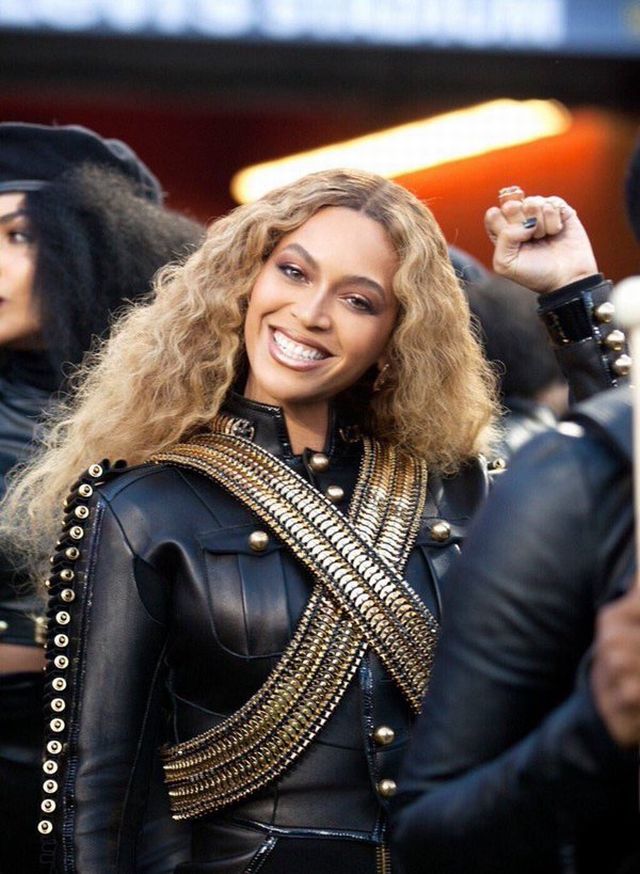
beyonce superbowl black power

Is “Formation” a pro-capitalist and -respectability anthem? [Death & Taxes]

Reading celebrities reading books. [Kill Your Darlings]

Why we shouldn’t be so quick to dismiss Here Come the Habibs. [Guardian]

Return of Kings and pick up artists are domestic terrorists. [Daily Life]

Is Coldplay’s “Hymn for the Weekend” video culturally appropriative or orientalist? [Colorlines]

The pinkwashing of breast cancer hurts men, too. [Jezebel]

I have a few pieces featured in the latest Down Under Feminists Carnival along with goodies from the Australian and New Zealand feminist blogosphere. [Zero at the Bone]

ICYMI: “Are Divas Finally Being Given a Chance?”

Image via Twitter.