TV: Glee—T.G.Inappropriate.F.


Last night marked the return of Glee after a month of baseball-related hiatus.

While the show is continuing it’s new tradition of actually following its storylines (Shelby’s new glee club, Santana and Brittany’s lady love, Quinn and Puck’s quest to get Beth back), it’s also following its long-held ritual of being wildly inappropriate and offensive.

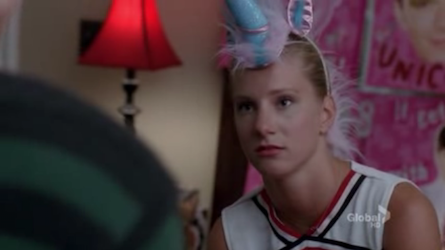
The offensiveness was dialed down to low, with a couple of racist (nationalist?) remarks directed at Brittany’s leprechaun, also known as Roy Flanagan, but the hypersexualisation of the New Directions and the Troubletones* (the name of Shelby’s glee club, consisting of Mercedes, Sugar, and the newly recruited Santana and Brittany) was at an all-time high, singing Katy Perry’s (does she have an agreement with this show or something? “Firework”, “Teenage Dream” and “I Kissed a Girl”, the title of the episode in which Santana comes out to her family in a few weeks’ time, have all been featured.) “Last Friday Night (T.G.I.F.)” and Christina Aguilera’s “Candyman”, respectively.

I’m not so sure lyrics like, “We took too many shots… Got kicked out of the bar… Had a ménage a trios,” and, “Makes my panties drop… Makes my cherry pop… With a real big cock,” are really appropriate for fictional 17-year-olds to be singing, as several of them are twelve kinds of illegal!

But then again, they’re probably not as bad as this

*This post originally named Shelby’s all-girl glee club as the Treble Clefs.

Related: The Underlying Message in Glee’s “Asian F” Episode.

The Underlying Message in Glee’s “I Am Unicorn” Episode.

Glee Back in Full Force.

Disturbing Behaviour: Terry Richardson Does Glee.

Is Lea Michele Too Sexy?

Image via VideoBB.

TV: The Underlying Message in Glee’s “Asian F” Episode.


Despite the racism of the title (is it racist if the two token Asian characters and their tiger parents say it?), last night’s episode of Glee was all about girl power, with some political undertones.

Brittany is continuing her race for class president, performing “Run the World (Girls)” by Beyonce to a standing ovation in the gym. It’s not the first time Brittany’s done a Beyonce song (remember “Single Ladies [Put a Ring On It]” when Kurt was trying to pass her and Tina off as his girlfriends?), and the episode was pretty Bey-heavy, with lots of Dreamgirls songs to boot.

If you haven’t seen this video from NineteenPercent, I wholeheartedly recommend you watch it. “Run the World” “lulls girls into a false sense of achievement and distracts them from doing the work it takes to actually run the world.” Hence Brittany performing in the halls of William McKinley in a leather miniskirt and suspenders, when she should really be working on her campaign promises. But she does look damn fine!

The whole Brittany versus Kurt (versus Rachel) thing evokes feelings of the Barack Obama/Hillary Clinton democratic primary race of 2008, not to mention the Sarah Palin-as-feminist debate.

Santana, Brittany’s right-hand campaign woman, tells Rachel that if she votes for “Jimmy Fallon’s butch daughter”, Kurt, “it would only empower another Frankenbeans,” whatever that means. (A Google search for both “Frankenbeans” and “Frank & Beans” yielded no relevant results.)

Brittany follows this up with all the shit male leaders have gotten America into lately: “double digit inflation, economic freefall, oil spills, the war in Afghanistan.”

But to make women feel like they have to vote for their political counterpart just because they’re a woman isn’t the way it should go. Palin is a perfect example of this: the only reason John McCain chose her as his running mate was because of the close upset of Clinton by Obama in the primaries. Upon further inspection, it was revealed that Palin didn’t know jack about most things. Perhaps Brittany’s run for senior class president is intended to reflect Palin’s vice-presidency bid, or her possible 2012 presidential candidacy, as Brittany isn’t the sharpest tool in the shed.

When Rachel realises Mercedes might beat her for the role of Maria in McKinley’s production of West Side Story, she decides to run for president, too, so she’ll have a stellar extra-curricular on her application for NYADA. Kurt is understandably upset, as he knows that Rachel’s running for personal gain, and perhaps Brittany’s been brainwashed by Beyonce, but he can actually make a difference at the school for fellow outcasts like them.

So it looks like the thinking students of McKinley will be faced with a similar dilemma that Democrats were in 2008: to vote for the marginalised  candidate (coloured Obama/gay Kurt), or the female candidate, who also belongs to a marginalised group…

Related: The Underlying Message in Glee’s “I Am Unicorn” Episode.

Glee Back in Full Force.

Image via VideoBB.

TV: The Underlying Message in Glee’s “I Am Unicorn” Episode.


“When a pony does a good deed be becomes a unicorn, and he poops out cotton candy until he forgets he’s magical, and his horn falls off… then he becomes a zebra,” according to Brittany. Or rather, “A unicorn without a horn is just a horse,” as Burt Hummell puts it.

Take away all the Brittany-craziness and metaphors, and I am starting to relate to Glee like never before.

What Brittany is trying to tell Kurt—whose campaign for class president she wants to run—is that he’s unique, and he should never forget that.

As I wrote in relation to Glee’s season three debut last week, I’m struggling at the moment with not only believing in my uniqueness (or just in myself, period), but also having it recognised by others. But when you keep getting similar responses—“Everyone else has to get by with the daily nine-to-five grind, why shouldn’t you?” is a paraphrase that springs to mind—in the quest to realise your dreams, it’s hard not to become disheartened.

Kurt’s struggling with this, too, as he auditions for the lead male role in McKinley High’s production of West Side Story, which the co-directors, Coach Beiste, Miss Pillsbury and Artie, think he might not be masculine enough for.

Really incorporating a key element in the gender blogosphere this past year, Burt tells Kurt to stop sulking about being too flamboyantly gay to play a straight guy from the streets and to write his own realistic portrayal of gay characters.

Sing it, daddy! (I intended that to be less creepy than it came out!)

Brittany also makes a poignant point when she informs Kurt she’s decided to run for class president, too:

“You know, the last six senior class presidents have all been guys, and look where that’s got us: teetering in a double-dip recession.”

Finally, Glee’s starting to acknowledge some pertinent issues, minus the offensiveness. Maybe Santana’s right in saying that Brittany’s a genius, and a unicorn. We all are.

Related: Glee Back in Full Force.

Images via VideoBB.

Magazines: Is Lea Michele Too Sexy?


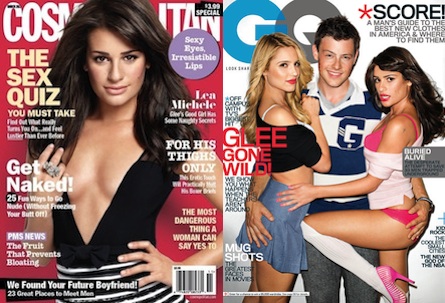
Earlier in the year, Glee star Lea Michele, who plays the uptight perfectionist lead singer in knee-high socks of William McKinley High School’s glee club, posed for a sexy cover shoot for US Cosmopolitan.

On the cover of the March issue, Michele looks sultry in a low cut black top, but it’s nothing compared to her racy, and downright inappropriate, pictorial with fellow Glee clubbers, Diana Agron and Cory Monteith, for GQ last year. Sure, it was shot by the notorious Terry Richardson, so expectations weren’t that high to begin with. But the vacant, open-mouthed stare of Michele as she sits, legs akimbo, on a locker-room bench, or suggestively sucks on a lollypop, are confronting to say the least.

I have briefly blogged about this “disturbing” photo shoot, to which I can understand the public outcry.

However, Michele’s Cosmo shoot is tamely vanilla in comparison, but drew an almost equal uproar from parental groups:

“I think Lea Michele is sending the wrong message. She plays such a ‘good girl’ on Glee, and a lot of kids look up to her persona. Then she poses very provocatively on two magazine covers… I find it frustrating as a parent who is trying to teach right from wrong to their kids and then you have things like this happen which is showing middle schoolers things like sex sells and all that goes along with that.”

To my mind, Michele is 24 years old; an adult who seemingly has her head screwed on right and is in control of her own life. Her idea of the perfect night is a bath, Skype and a glass of wine, which is a far cry from the extracurricular activities of other starlets her age. Lindsay Lohan, anyone?

But, on the other hand, we have to ask the question: why does Michele feel the need to sex-up her image when, by her own admission, that is not the way she sees herself.

Dr. Karen Brooks explains, in relation to the GQ pictorial:

“I think they’re attempting to draw the line between their young characters and the fact they’re sexual adults and they feel that the way to this, rightly or wrongly, is by being hypersexual. It’s a graphic announcement to the public not to confuse or conflate the fiction of their onscreen persona with their real life; [they’re saying] ‘I may play a child’, but, in what’s almost an unintentional parody of the Helen Reddy feminist anthem, ‘I am woman, hear me roar’, they’re saying, ‘I am woman, see my score!’ It’s extreme, it gets attention (for the show, the character and the actor) and therefore, sadly, works.”

Ultimately it is her choice to get a bit sexy but, when I asked Erica Bartle of Girl with a Satchel for her thoughts on this topic, she wondered if maybe Michele’s just “conforming to the status quo?”:

“How much say does a star really have in how she’s portrayed?”

As Jezebel notes, “it isn’t as if Lea’s doing Playboy.” Cosmo is a magazine for women, and the cover isn’t as threatening as, say, the GQ one, or Rihanna’s Rolling Stone cover, in which her butt cheeks hung out of mesh shorts. There are a lot of magazines for women out there, like Yen, The Gentlewoman, and Brigitte, which cater to needs other than “how to please your boyfriend in bed”, and don’t require their cover star to, as Coco Chanel once said, take something off. In most cases, it’s their bra. (One argument for Michele’s down-to-there black top might be that *cue sarcasm* she really bares her heart and soul.)

But at the end of the day, it’s just a magazine cover. For mature adults like ourselves, we can make the decision to buy or not to buy into the sexy image of Michele on the cover of Cosmo, Rihanna in chain mail shorts for Rolling Stone, or the flesh-baring on the blue carpet at the Brownlows on Monday night. As educated, critical thinkers, we also realise that because Michele is dressed provocatively, it doesn’t make her any less of a singer, actor or seemingly normal 24-year-old when the makeup comes off and the spotlight goes down.

Related: Lea Michele Just Can’t Win.

Disturbing Behaviour: Terry Richardson Does Glee.

In Defence of Rachel Berry.

Rachel Berry as Feminist.

VCE Top Designs: frankie Editor Jo Walker Talks to Media Students.

Is There Really a Beauty Myth?

Elsewhere: [Jezebel] Righteous Moms Just Can’t Let Lea Michele Be Sexy.

Images via Reality by Rach, Twenty2.OnSugar.
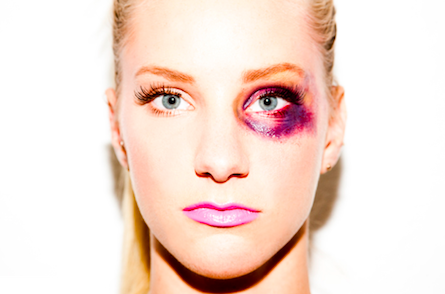
Heather Morris Glee-ful About Domestic Violence?


Now, I love me some Brittany S. Pierce, but perhaps her decision to pose for photographer Tyler Shields wasn’t the wisest.

Since the images went public to much fanfare, Shields has announced all proceeds from the sale of one of the images, starting at $100,000, will go to a domestic violence charity.

Well, I suppose that’s one good thing about the pictures.

What do you think? Glorifying domestic violence or blown out of proportion?

Related: The Underlying Message in Glee‘s “Britney/Brittany” Episode.

Elsewhere: [Jezebel] Controversial Photos of Glee Star With a Black Eye to Benefit Domestic Abuse Charity.

Images via MamaMia.

On the (Rest of the) Net.


“The Case for Dry Humping: Why Being Prude is a Feminist Statement.” [HuffPo]

Alone time is my siren call. Here, Jezebel’s Social Minefield tells you how to get more “me time” without offended those who want to have “we time” with you.

One woman goes mirror-free for a year. [Jezebel]

Lady Gaga’s run out of people to plagiarise, so she’s turned to herself for inspiration in her latest video for “Yoü & I”. [Fashionista]

Nipple slips from Khloe Kardashian, Nicki Minaj and Kelly Rowland in quick succession: shock, horror! [The Washington Post] (SFW)

Camilla Peffer on Beyonce as the anti-feminist. [Girls Are Made From Pepsi]

The gender politics of Justin Bieber. [FBomb]

Is there a need for women to have their periods?:

“… I do want to raise the question that while we do the work of destigmatising menstruation and teach young girls to be proud and excited about their menarche don’t we also have a responsibility to question its necessity? We tell women they don’t have to have sex to have children, that breast cancer can be beaten, that they can have their tubes tied and then re-connected and their faces lifted and de-wrinkled. We live in a modern world with modern solutions, isn’t it time we started seriously thinking and talking about the need to bleed?” [Feminaust]

Porn star and new mum displays picture of her breastfeeding her newborn daughter in an exhibition challenging the Madonna/whore dichotomy of motherhood, controversy ensues:

“The idea that there is something inherently prurient about a porn star breast-feeding plays right into that classic either-or thinking: Her breasts are erotic in one venue, so they can’t be wholesome in another. It’s a wonder anyone lets her breast-feed at all! On the one hand, it’s surprising to see this attitude coming from a pornographer; on… [yet an]other hand, it’s perfectly appropriate given the way motherhood is fetishised in porn.

“…We don’t like to think of moms as sexual beings—except for in the taboo-busting world of porn (paging Dr. Freud). It’s fitting for a porn star mama, the rare industry ‘MILF’ who is actually a mom, to remind folks that, generally speaking, one has to have sex in order to become a mom.” [Salon]

Anne Hathaway’s new effort, One Day, has a “bleak worldview of co-dependence where men need women to improve them, and women need to improve themselves to deserve men’s notice and achieve their purpose,” with The Film Stage dubbing it “the most toxic romance of the year”.

Also at The Film Stage, a breakdown of Katherine Heigl’s stereotype-reinforcing rom-coms, from the career-making Knocked Up, which she subsequently dissed for being sexist, to the just-as-sexist Killers and Life as We Know It.

Here’s an extended version of Erica Bartle’s debut piece for Sunday Life. While I don’t necessarily agree with her sentiments on faith most of the time, this is a great read. Better than the published piece, dare I say? [Girl with a Satchel]

Taylor Swift VS. feminism. [Autostraddle]

Is it “time for an abortion pride movement”?:

“… Women should not merely have the right to end unwanted pregnancies, they should have the right to be proud of having done so. Surely, there is enough suffering in this world already without adding infants with Tay-Sachs disease and Lesch-Nyhan syndrome to the mix. Women who step up to the ethical plate and have the strength to say, ‘This is the wrong time,’ or ‘This is the wrong fetus,’ should hold their heads high in the streets.” [Opposing Views]

Oh, the hilarity of Photoshop on this Glee/Vogue/Fashion’s Night Out advertisement. [Styleite]

It’s not just women who get the short end of the stick when it comes to Disney films: “Sexism, Strength & Dominance—Masculinity in Disney Films.” [FBomb]

The awesomeness that is Adam Lambert. [Autostraddle]

One from the vault: Buffy’s Willow Rosenberg destroys the world when her lesbian love is killed, calling into question the show’s support of the LGBT community. [Salon]

A mother’s perspective on the dysfunctional Twilight-saga relationship between Edward and Bella. [Persephone Magazine]

The politics of the SlutWalk. [New York Times]

Five of The Simpsons’ best recipes, including 64 slices of American cheese and Vaseline toast! [Warming Glow]

Image via Chubby Wubby Girl, Styleite, Salon.

TV: Rachel Berry as Feminist.


Last week I wrote in defence of Rachel Berry.

This week, I wanted to explore the character as a feminist one.

While Glee isn’t exactly known for its positive portrayals of women, people of colour, the disabled, or the gays, Rachel has managed to grow in spite of all this, and become somewhat of a feminist icon.

I wrote that audiences have come to know and love Rachel not because her obnoxious know-it-all persona has changed, but because “We’ve been given time to understand Rachel’s initially painful personality and to identify both her strengths and weaknesses. Her ambitions and drive haven’t shifted, but the context for understanding them has,” as Dr. Karen Brooks reiterates.

Other bloggers have come to similar conclusions.

Leah Berkenwald at Jewesses With Attitude writes:

“I… have trouble with the vilification of Rachel Berry on a feminist level. How often do we dismiss women as ‘bossy,’ ‘know-it-all[s],’ or ‘control-freaks’ when their behavior would be interpreted as leadership, assertiveness, or courage if they were men?

“… In the right context, Rachel Berry’s personality would not seem ‘intolerable’ or ‘annoying’ so much as bad-ass, renegade, and hardcore.”

And Lady T, who used Rachel as her “Female Character of the Week” on The Funny Feminist, said:

“… The show wanted us to root for a girl who was ambitious, daring, and driven.”

It might be because I have been known to be seen as bossy, a know-it-all, a control-freak (just ask my new housemate!) and ambitious that I’m standing up for her, but just think of another feminist heroine in modern pop culture who could also be described using these words: Hermione Granger. The only difference is, she isn’t vilified for these attributes.

I have also been called ugly and a slut, not because I am ugly and a slut, but because these qualities are removed from the “‘good’ [female] character… [who] soars to impossible heights, not on the back of hard-work and self-belief, but usually [because of] a love interest and wishing hard.”

If you look back to the beginning of Glee, especially, Rachel was often deemed ugly. Now, anyone who’s seen Lea Michele knows she’s not exactly unconventionally attractive, but Rachel is charactertised as this because she’s annoying. And she’s annoying because she stands up for herself, knows what she wants and how to get it. (From a racial point of view, she could also be seen as being “ugly” because of her Jewishness.)

Despite these inherently “unattractive” qualities, Rachel manages to snag her man, Finn, in what can be seen as typical Glee sexism and discrimination:

“‘I love her even though she’s shorter than Quinn and has small boobs and won’t put out and is loud and annoying.’ 

“The show wanted to make me believe that Finn was doing Rachel some grand favor by simply being with her at all.”

On the other hand, it can be seen as a poignant take on teenage life that the underdog is always being compared to the most popular girl in school: Quinn Fabray.

If Rachel is Glee’s feminist heroine, Quinn is her polar opposite. She has had next to no character development, which leads to her motivations changing week to week.

In “Original Song” she tore Rachel down, telling her to get over her “schoolgirl fantasy happy ending” with Finn, who would never leave Lima, taking over Burt Hummel’s mechanics business, with Quinn, a real estate agent.

But in “Born This Way”, she was “broken down” by her fat past coming back to haunt her, to come across as more “relatable”.

Sure, Rachel’s had her fair share of being “broken down” (being dumped and subsequently egged by Jesse St. James, being publicly broken up with by Finn, getting slushied… I sense a food theme here.), but in the grand Glee scheme of things, she’s actually doing pretty well for a female character.

Now, if only we can get Mercedes a boyfriend

Related: In Defence of Rachel Berry.

The Problem with Glee.

The Underlying Message in Glee’s “Original Song” Episode.

Brown Eyed Girl.

The Underlying Message in Glee’s “The Rocky Horror Glee Show” Episode.

The Underlying Message in Glee’s “Duets” Episode.

The Underlying Message in Glee’s “Born This Way” Episode.

Sookie as Feminist? Hear Her Roar.

Do “Strong Female Characters” Remind You of You?

SlutWalk.

Slut-Shaming as Defence Mechanism.

Elsewhere: [Bitch] The Transcontinental Disability Choir: Glee-ful Appropriation.

[Jewesses with Attitude] Why Rachel Berry Deserves Our Compassion.

[Huffington Post] Hermione Granger: The Heroine Women Have Been Waiting For.

[Feministing] Pretty Ugly: Can We Please Stop Pretending That Beautiful Women Aren’t Beautiful?

[The Funny Feminist] Female Character of the Week: Rachel Berry.

[Jezebel] Why Won’t Glee Give Mercedes a Boyfriend?

Image via Wet Paint.

TV: In Defence of Rachel Berry.


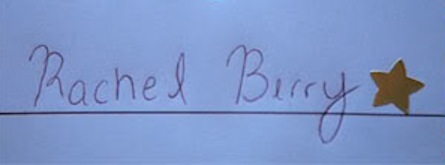
In the first season of Glee, Rachel Berry was introduced as an attention- and approval-seeking know-it-all diva, who sticks a gold star next to her name on the New Directions’ sign-up sheet because that’s what she sees herself as. Season two showed the glee clubber soften her resolve a bit, realising that she’s still only in high school, and has her post-high school years to carve out a Broadway career and have the world see her as the star she knows she is. The season final saw her choose a relationship with Finn Hudson in her senior year at McKinley High, despite having to leave him to head to New York when she graduates.

Not all young girls have to wrangle their feelings for the school jock whilst contemplating a move to the big city to make their dreams come true, but many of Rachel’s problems are shared by the show’s audience.

In the most recent Lady Gaga-themed episode, Rachel struggles to accept her “Jewish nose” and considers rhinoplasty. She also strives for the acceptance of her New Directions band mates, and to be seen as fashionable and popular.

It’s in the character’s nature to be highly-strung, goal-oriented and ambitious, so it’s not likely she’ll change any time soon. And why should she? While there are certainly other young women out there who identify more with the saccharine Quinn Fabray, the sassy soul sisters Santana Lopez and Mercedes Jones, or badass Lauren Zizes, there are plenty who see Rachel as their Glee counterpart, myself included.

A recent New York Times article by Carina Chocano praised the “relatable” and “realistically weak female character”, like Kristen Wigg’s Annie in Bridesmaids—“a jumble of flaws and contradictions”—over the “strong” one. “We don’t relate to [the weak character] despite the fact that she is weak, we relate to her because she is weak,” Chocano writes.

But what exactly does she mean by “weak”?

Pop culture commentator Dr. Karen Brooks notes that talented, beautiful, popular and successful female characters need to be broken down before they can be seen as relatable. “The more talented and beautiful you are, the greater the threat you pose and so ‘things’ are introduced to reduce that threat,” she says. Just look at the “women falling down” video on YouTube.

While Rachel’s had her fair share of setbacks, it seems Glee’s audience is finally beginning to understand her. “We’ve been given time to understand Rachel’s initially painful personality and to identify both her strengths and weaknesses. Her ambitions and drive haven’t shifted, but the context for understanding them has,” Brooks says.

“Rarely are unpleasant characters redeemed, they are simply ‘punished’, while the ‘good’ characters soar to impossible heights, not on the back of hard-work and self-belief, but usually [because of] a love interest and wishing hard. Rachel is a healthy and welcome exception to that,” Brooks continues.

So she’s an unlikely heroine we can all get behind, you might say? “A girl who reminds you of you,” as Chocano opines. An everywoman, if you will?

If Rachel Berry encourages more young women to see themselves as gold stars striving to have their accomplishments recognised, then so be it!

Related: The Underlying Message in Glee’s “Born This Way” Episode.

Do “Strong Female Characters” Remind You of You?

Elsewhere: [The New York Times] A Plague of Strong Female Characters.

Image via Noelle’s Means of Escape.

On the (Rest of the) Net.

If you didn’t get a chance to catch Go Back to Where You Came From on SBS last night, Wednesday or Tuesday night’s, check it out on the website. Do yourself a favour: it really is eye-opening stuff, whichever side of the asylum-seeking fence you sit on (and you’d better be on the right one, dammit!). And here’s MamaMia’s Rick Morton’s take on the show.

Also at MamaMia, “The Weiner Photos”.

Who is Coco?

“The ‘Scary Dad’ Phenomenon.”

It’s a year today since Julia Gillard took over as Prime Minister of Australia.

According to Dilbert creator Scott Adams, men are square pegs in round, vagina-shaped holes. Consent or no.

The Angelina–Louis Vuitton–Cambodia debacle.

Gala Darling on body image and beauty in style blogging:

“… Whoever these girls are that we choose to compare ourselves to, they’re just living their lives—and honestly, if that makes us feel bad about OURselves, it is OUR issue.”

Well said, girlfriend!

Forget Women in Refrigerators. “Dead Men Defrosting.”

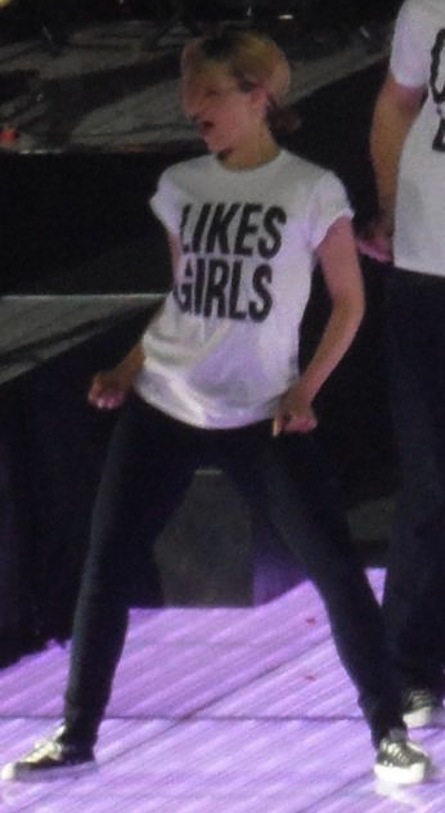
“Likes Girls”? Dianna Agron on equality.

Born this way, or pray the gay away? Jezebel, via Autostraddle.

“Liberals tend… to believe that the more socially liberal actions (deciding to make less money and help others) were when people were being true to themselves, and conservatives tend… to believe that socially conservative actions (renouncing homosexuality) were more authentic. So! That solves the case, no? Everyone thinks they’re right, in philosophy as everywhere else in the world.

“Maybe that’s true; maybe what matters are our opinions more than our choices or our biology.”

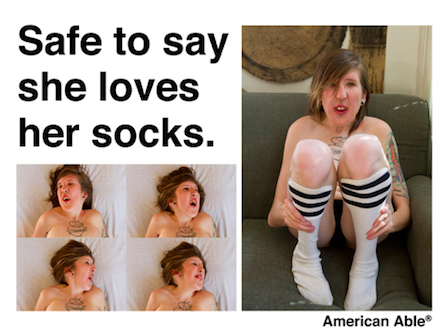
Freeman-Sheldon sufferer Jes Sachse and photographer Holly Norris challenge the hipster-sexy American Apparel ads with their own “American Able” series of images.

–Phobia and –Isms in Glee.

Now this is how you write an anti-SlutWalk article.

“Why I Walked the SlutWalk.”

Still with the SlutWalk, this time from a man’s perspective.

Girl with a Satchel on Bridesmaids, feminism, taste and “public v private appropriateness”.

Images via West Coast Show, Fell Down the Rabbit Hole, MamaMia.

Battle of the Friday Anthems: Rebecca Black VS. Katy Perry.

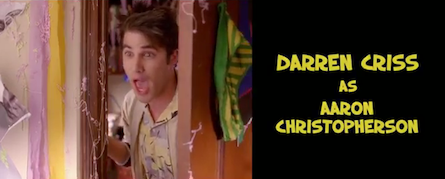
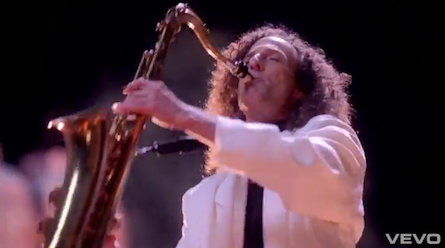
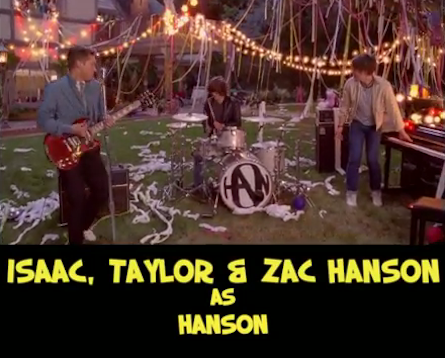
Black’s preternatural “Friday” has been removed from YouTube due to copyright reasons, so it looks like we’ll just have to get our fix of the so-bad-she’s-good teenager in “Last Friday Night (TGIF)”, in which she makes a cameo, along with Glee’s Darren Criss and Kevin McHale, Kenny G as Uncle Kenny, the Hanson brothers, and Corey Feldman and Debbie Gibson as Kathy Beth Terry’s parents!

So it turns out it’s not a battle of the Fridays, but a joining of the day before the weekend that everybody’s looking forward to (or however the ditty goes!) forces!

TGIF!

Related: Who’s the Copycat Now, Katy Perry?

Whipped Cream Feminism: The Underlying Message in Katy Perry’s “California Gurls” Video.

Katy P. VS. Lady G.

Images via YouTube.