On the (Rest of the) Net.

katy perry be proud of who you are

Another week, another famous woman denouncing feminism: step right up, Billboard’s Woman of the Year, Katy Perry! [Jezebel]

And here are the top five reasons famous women don’t call themselves feminists. [Daily Life]

Comedian Jenny Johnson attempts to unpack her Chris Brown-Twitter fiasco. [GQ]

To abort or not to abort when you discover you’re carrying a child with Down’s Syndrome? [Jezebel]

What it’s like to be a female pick-up artist. [xoJane]

I don’t agree with the assertion that the White Ribbon campaign is perpetuating a patriarchal notion of women’s protection from violence, rather I think it’s good that men are standing up to condemn violence against women. However, this post does raise a good point about the sketchiness of the campaign’s ambassadors… Tony Abbott, anyone? [Settle Petal]

“Why don’t men wear black? Why don’t men cover their faces?” [Daily Life]

On The Walking Dead and attempted rape. [Jezebel]

Straight white male victimhood. [Jezebel]

Toy makeup and mirrors for babies. Facepalm. [Sociological Images]

Image via The Examiner.

Movies: Ruby Sparks & the Abusive Relationship*.

I first went into Ruby Sparks thinking it was going to be just another quirky, indie (500) Days of Summer-esque vehicle to cement writer and star Zoe Kazan as the newest Manic Pixie Dream Girl of the same first name to watch.

For the first third of the movie, I wasn’t wrong. It deals with main character Calvin’s decade-long writers block and feelings of “inadequacy” at not being able to live up to his “genius” and “boy wonder” monikers upon the release of his first (and only) novel when he was in his late teens. Naturally, the role of titular character and token MPDG, Ruby, is to come into Calvin’s life in a whirlwind of “messy”-ness, complication and coloured tights and help him out of his creative rut. Ruby Sparks is the exception to the MPDG rule, though, as where (500) Days’ Summer and Sam of Garden State are real women (though “girls” would be a more accurate description) whom the male protagonists envision as their ideal mates, Ruby is literally Calvin’s dream lover: he wrote her on his pretentious typewriter.

In an interview with the Huffington Post, Kazan responds to the idea of Ruby Sparks as a critique of the MPDG and how she didn’t initially have that goal when she wrote the screenplay. She also talks about the twist in the third act in which Calvin’s need to have Ruby conform to his dream girl stereotype turns into an abusive obsession with controlling her:

“I think if you’re going to make a movie in which a man can control a woman, if you don’t push it to the extreme, it’s going to be sexist.”

It’s funny she said that, as I had trouble reconciling the fact that a seemingly switched-on woman wrote Ruby Sparks with the first half of it which, as I mentioned above, had one of the only female characters succumb to the idea of what a certain kind of woman should be. (Then again, men don’t have a monopoly on sexism.) “You haven’t written a person; you’ve written a girl,” Calvin’s brother, Harry, tells him upon reading his first draft.

Ruby is a girl who at first seems like a fun-loving, spirited artist with no threatening aspirations of capitalising on her illustrative talents (she admits she’s “super good”) by parlaying them into a career. When Ruby does express a desire to get out of the house more, meet some people and maybe get a job, Calvin begs her to stay with him because “I don’t need anyone else”, and neither should she.

It emerges that Calvin’s last serious lover was a novelist, too, whom he bumps into at a book party at which Ruby frolics in her underwear in the pool with Calvin’s agent and subsequently gets slut-shamed by her boyfriend for it. Calvin’s ex tells him that “it’s like you had this image of me and anything I did to contradict it you just ignored… The only person you wanted to be in a relationship with was you.”

Ruby in her original form, before Calvin starts making “tweaks” the moment she develops some autonomy, is essentially a female version of her creator. Not only has Kazan taken the notion of the MPDG and the trope’s traditional role in shaping and changing her male counterparts’ life and turned it on its head, but she has indeed taken Ruby and Calvin’s relationship to the extreme in the ultimate spin on intimate partner abuse.

When Ruby’s had enough and suggests she stay at her apartment after the book party, Calvin reveals he has utter control over her because she’s not real. While on the surface the suspension of disbelief required by the audience makes this a true statement in the context of the film, the more insidious subtext is that Calvin has such a skewed view of what women should be that it seems he’s saying that not only does Ruby not exist in real life, but nor do real women in his. In fact, they’re more like domestic animals to be controlled, as with Calvin’s written manipulation of Ruby in this scene where he types her on all fours barking like a dog: the ultimate act of degradation.

Speaking of dogs, Calvin’s inferiority complex which so many abusive partners have is evident in his treatment of his dog, Scotty, named for fellow tortured soul and wife-beater, F. Scott Fitzgerald. He prefers the idea of a dog as opposed to actually being a pet owner, because he’d like fellow park-goers to “stop to pet him and I would meet them but Scotty gets scared when people try to pet him”. He gets defensive when Scotty goes to the toilet like a female canine as, by extension, it threatens Calvin’s masculinity. Of course Calvin appropriates Ruby’s shine to Scotty despite or perhaps because of his oddities into a metaphor for her feelings towards her future abuser.

If it wasn’t for the happily-ever-after cop-out of an ending, what initially seemed like the indie movie du jour has turned into a commentary on Manic Pixie Dream Girls and the danger of emotionally abusive relationships.

Related: Ruby Sparks & the Manic Pixie Dream Girl.

Elsewhere: [HuffPo] Zoe Kazan, Ruby Sparks Writer & Star: “Quirky” Means Nothing.

*Blanket spoiler alert.

Image via Groucho Reviews.

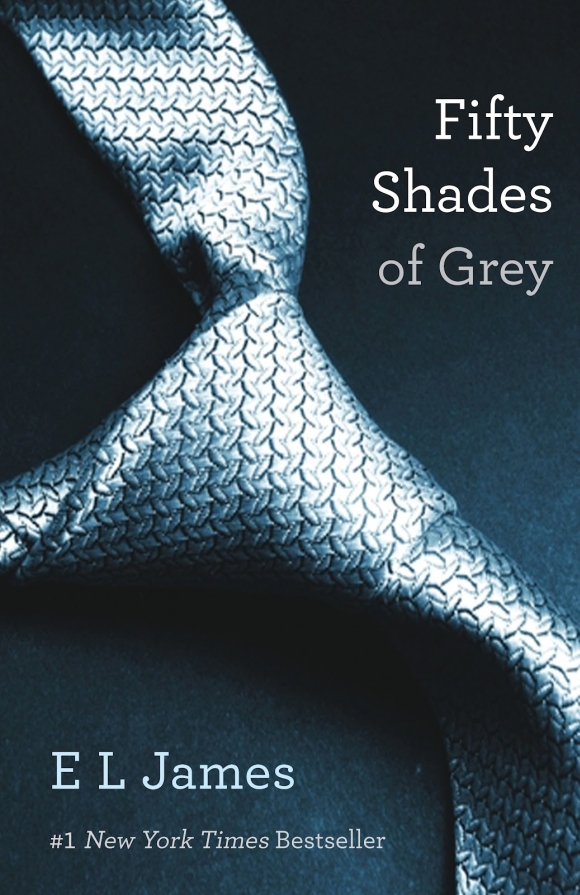
Book Review: 50 Shades of Grey by EL James.

The title of this post is something I never thought I’d write. Ever since the 50 Shades phenomenon hit the mainstream, however many subsequent BDSM and erotica-filled pop cultural months ago that was, I vowed to never let EL James’ literary abomination come between me and an actual good read. However, after hearing the anti-feminist and abusive relationship aspects of the trilogy in blog post after book review after writers festival talk, I finally succumbed to the pull of Christian Grey and swallowed my pride. (It must be noted that I am coming at 50 Shades from a critical and research perspective. It must also be noted that having finished with the first instalment, I will not be returning to the Red Room of Pain.)

Firstly, let me start by saying that I had very low expectations for 50 Shades, and while I won’t go as far to say it’s not as bad as I thought it was going to be, I will say that the writing is not as bad as I thought it would be (using its inspiration, Twilight, as a benchmark). However, I still found the book deeply problematic.

There’s Christian’s obsession with making Anastasia eat, which is included in the contract she must sign upon entering into a sexual, submissive relationship with him. (Conveniently, at the end of the first book she has yet to sign it.) Also included is the wearing of clothes provided by Christian, the requirement of eight (begrudgingly downgraded to seven at Anastasia’s request) hours sleep a night, refraining from physical endangerment with regard for safety (New Moon!) and the way Anastasia must conduct herself in the company of Christian, and others.

It must be noted that I’m not opposed to submissive sexual relationships. They’re not for me personally, but I don’t find a problem with them in general. I’m under the impression that most of these relationships focus on dominance and submission in the bedroom, whilst out of it the participants go about their daily life in relative equality (correct me if I’m wrong). Certainly, there are a myriad of sexual relationships out there, and some of them do take the form of Christian and Anastasia’s. But they are not the subject matter of the highest selling book in the world; one that’s sold in supermarkets next to the celery, no less.

What I find most troubling about the worldwide embrace of James’ “clit lit” is that it’s completely archaic and conservative, for all the sex-positivity it claims (or champions of it claim) to spout. For example, it holds up the notion that bad boys can be tamed. Despite Christian’s repeated pleas early on in the book that “You should steer clear of me… I’m not the man for you… I’m not a hearts and flowers kind of guy… I don’t make love, I fuck,” the catch-cries of commitment phobes everywhere looking for quick, easy sex without attachment, Anastasia still thinks that if she just did more of this or less of that, he would love her:

… He needs to walk before he can run… You are making him mad—think about all that’s [sic] he’s said, all he’s conceded… I need to be able to show him affection—then perhaps he can reciprocate. [Original emphasis]”

Somewhere in the midst of the trilogy (apparently it’s not at the climax, as writer Susan Johnson revealed at the Melbourne Writers Festival a couple of weeks ago), Christian marries Anastasia (note how I—and many others who’ve written and spoken about the book—referred to the union not as “they get married” but as “he married her”, insinuating that marriage is something that happens to Anastasia, like pretty well everything else in the book. For someone who’s the central protagonist and first person narrator of this sordid love affair, she actually has no autonomy over her own story), demonstrating to millions of impressionable young (and no so young) women and any men out there reading it that you can change a bad boy!

But Christian’s not just your average bad boy. He’s a filthy rich, disarmingly handsome (James, living vicariously through Anastasia, never fails to mention this as if it’s his only redeeming quality—who am I kidding? It kinda is—and all red blooded humans of the XX chromosome persuasion fall weak at the knees in his glorious presence), “control freak with stalker tendencies”: yep, sounding more and more like Edward Cullen with every adjective. In essence, he is an abusive partner. As mentioned above, he tries to control Anastasia’s eating, sleeping, sex- and friend-having, and pretty well everything else in her life. After a fight, he barges, uninvited, into her apartment she shares with a friend, who tells him to get out and that he’s not welcome there. He persists and spends the night with Anastasia, something he has previously said he will “never do”. He finds out which flight she’s on to Atlanta, where she’s going to visit her mother and escape him, and changes her seat to first class. Later, he turns up at the hotel Anastasia and her mother are dining at. He expresses jealousy and anger when Anastasia hangs out with her male friend Jose who, incidentally, tried to sexually assault her. He buys her a new phone, laptop, car and clothes. He likes her plied with alcohol because she’s more open with her emotions in an inebriated state. She is not allowed to masturbate (not that she does that anyway. It’s icky in 50 Shades’ world), because he “want[s] all your pleasure”.  Anastasia cannot touch or look Christian in the eyes when they’re having sex. If she does, he will discipline her. That last one isn’t inherently damaging, but the fact that Anastasia herself refers to the physical debasement that occurs in Christian’s playroom/Red Room of Pain as a “beating” and him “hitting” her shows that she’s definitely not into it, and that’s what makes the sex problematic.

Anastasia is scared of Christian. She often tells him, “I’m sorry… Please don’t be angry/Please don’t hit me,” the hallmark of a battered spouse. At the end of book one, when he pushes her physical limits too far and she makes the decision to leave him, she tells him it’s her fault: “I asked for it.” “I’m a complete failure. I had hoped to drag my Fifty Shades into the light, but it’s proved a task beyond my meagre abilities,” she laments. From an abuser’s point of view, he’s got her right where he wants her. Anastasia lacks self-confidence to begin with, and often expresses disbelief that someone like him could want someone like her. She defends him to his detractors (namely the abovementioned roommate), shouting subconsciously, “I KNOW WHAT HE’S REALLY LIKE—YOU DONT!” After a fight, he makes puppy dog eyes at her or some such thing and she melts: “How can I resist him when he’s like this [emphasis mine]?” Her “innocence” and “naivety” which Christian loves so much blind her to the fact that this is a classic abusive relationship: as someone who grew up amongst one, I can vouch for it.

When it comes to Anastasia as the protagonist, her incessant whining about her “inner goddess” versus her “subconscious” is infuriating. While it makes for consistency in terms of character traits, it certainly doesn’t make her any more likeable. Her conservative personality (Anastasia’s literary heroines are all submissives—Tess Durbeyfield and Jane Austen’s female characters—not to mention her reaction to Christian having paid for sex in the past. So being shackled and whipped semi-unwillingly is fine, but prostitution isn’t? Perhaps it hints at Anastasia’s deep-seated  discomfort at having Christian buy her things as part of their contract), however, makes it less likely that she would so willingly enter into a contractual agreement to be Christian’s sex slave, essentially. Oh, but then there’s that “innocence” again…

And the sex. Don’t even get me started on the sex. Author John Flaus mentioned at the Bendigo Writers Festival last month that he thought the sex scenes were really “clinical” and written from an “outsider’s” perspective. Like a lot of sex scenes I’ve read and seen before, though never in real life, the virgin experiences orgasm her first time. She also comes quickly and without fail during each instance of vaginally penetrative sex, a highly unlikely occurrence, and when her clitoris is whipped with a riding crop. I don’t know about you, but that doesn’t connote the most warm and fuzzy feelings down there. (Oh, and “down there” and “sex” instead of vagina, vulva and clitoris, the latter of which is only mentioned once or twice, are repetitive, conservative euphemisms that are littered throughout.) Further to the dominance Christian seeks to exert over Anastasia, he repeatedly demands her to “sit still” when he performs sex acts on her. I, for one, don’t know many men who prefer a woman to be unresponsive to his touch, but then this book isn’t exactly based on reality. Despite James being the (seemingly biological) mother of two children, it’s as though 50 Shades was written by someone who’s never had sex before.

One last thing I want to add before I attempt to erase the experience of 50 Shades of Grey from my memory is that I can kind of understand where James is coming from when she writes about the tumultuous, sometimes physically and emotionally painful relationship between Christian and Anastasia. I have fantasised about being emotionally hurt by a lover and having him come back and make it all better again. I have also felt the need to be overpowered by a man, in the seemingly simple, harmless way of pulling me to him in an embrace when I don’t want to be. In that sense I think she taps into a biological need (and I hate to buy into the notion that men and women are evolutionally different and that’s why one hunts and gathers while the other tends to the “heart and home”. Ugh.) to be physically (not necessarily sexually) loved. Like, as a child, when you fall down or mum yells at you and you just want her to hug you and make it all better again. I think it’s also important to note that just because a fantasy occurs in the mind, doesn’t mean it has, needs or wants to be acted out in reality: rape fantasy, for example. That is the one tiny, take-away titbit that warrants merit in 50 Shades, I think. The rest can be filed under the severely abusive, gender- and hetero-normative guidelines that so much of popular culture is today. 50 Shades of Grey as sexual liberation for women? My ass.      

Related: Bendigo Writers Festival.

Melbourne Writers Festival: Notes on Women in Culture.

Melbourne Writers Festival: Censorship, The Body & Porn.

Elsewhere: [Good Reads] Katrina Lumsden’s Review of 50 Shades of Grey.

Image via November Grey.
TV: The (Belated) Underlying Message in Glee’s “Choke” Episode.


As someone who has witnessed her mother being choked by her father, using that action as a metaphor for intimate partner violence on Glee is sick.

Not only that, but in desperately trying and dismally failing to, for some reason, raise awareness of domestic violence (actually, I’ve decided I hate that phrase, so I’m taking to using the more all-encompassing “intimate partner violence”), Glee has gone back to its old ways by being especially misogynistic and racist.

The intimate partner violence storyline opens with Santana observing Coach Beiste’s black eye and remarking that “it looks like Mr. Beiste went all Chris Brown on Mrs. Beiste… [Did] Cooter put the smackdown on [her] ’cause [she] wouldn’t let him be on top?” Troublingly, women of colour Mercedes and Tina, and LGBTQ woman Brittany, all snicker. I wonder if the writers were aware (oh wait, this is Glee: of course they weren’t!) that African American women are 35% more likely to experience intimate partner violence than white women, 60% of Korean women have been beaten by their partners, and violence in same-sex relationships is gravely underreported and misunderstood.

Enter Cheerios co-coach and “black Sue”, Roz Washington, who overhears Santana’s bad taste musings. She tells the girls that “violence against women” and “men hitting women” is never okay, buying into the perception that women are the only victims in intimate partner violence. Granted, women are the overwhelming victims, but that’s not giving equal opportunity to non-heterosexual relationships (for shame, considering the abundance of LGBTQ characters on the show) and the fact that a woman can hit a man. Instead of insinuating that it’s intimate partner violence only that we should be concerned about, how about violence against women in general? Including rape.

Anyway, I’m sure the writers wanted Roz to mean well, but her racial and sexist slurs directed at Mercedes (“Lil Oprah”), Tina (“Asian Horror Story”), Sugar (“Rojo Caliente”) and Santana (“Salsa Caliente”) undermine this.

In a following scene, Sue coins the aforementioned nickname, “Black Sue”, for Roz, telling her that “ivory poachers could make a fortune selling your enormous white teeth on the black market”, and refers to Coach Beiste as John Goodman, perhaps insinuating that Beiste’s masculinity should have prevented her from being a victim. This way of thinking seems to be adopted by Santana, too, when she says she doesn’t think Coach Beiste actually got hit because she’s “a wall”. What if the roles were reversed and Beiste had hit Cooter, who is considerably smaller than Shannon?

The racial stereotyping continues when Roz admonishes the girls for their joke. As Autostraddle points out, Glee gave the “‘my aunt got beat up by her man’” monologue to the one black woman on the show,” claiming it took her five years to escape the relationship. It took my mum nigh on thirty to get out.

Shannon initially denies her husband hit her, but uses her experience to inspire the girls, who—up until this point— have never really had anything to do with the Coach, to sing a song about empowering women to leave abusive relationships. According to Sue,

“The American songbook is chock full of songs making light about men hitting women.”

Chris Brown, anyone?

Beiste is so moved by the girls’—who, again, she’s had nothing to do with up to now—apathetic show of indifference to intimate partner violence, that she confesses to them—jeopardising her reputation at the school (remember what happened the last time she got too close to McKinley students?)—that she was actually the victim of intimate partner violence, and that they effectively “saved her life”, because she forgot to do the dishes all weekend. Yes, perpetrators of intimate partner violence can be set off by the slightest thing, and we all know that beating the person you love isn’t the means of someone who’s mentally balanced, but dishes?! Glee, really?! If you’re going to make one of your characters, perhaps the most underutilised, exploited and maligned of them all, the victim of a serious issue like intimate partner violence that will never be addressed again, can you at least make it for a reason less trivial than dishes?!

Two realistic things to come out of the storyline, though: that Shannon stays with Cooter and gives him a second chance, and lies about it to Sue and the girls. And finally, that Beiste fears that if she leaves him, “no one else will ever love me”. Painfully sad, true to actual victims of intimate partner violence who are made to feel worthless and unlovable by their abuser, and ties in with a past storyline on the show!

Related: The Underlying Message in Glee’s “Never Been Kissed” Episode.

My Thoughts on Chris Brown.

Elsewhere: [Women of Colour Network] Domestic Violence Facts & Stats Collection.

[Autostraddle] Glee Recap: Choke-a-Joke.

Image via Putlocker.