On the (Rest of the) Net.

How to “cure” a feminist.

Zoe Foster at her absolute best in her ode to “second day spaghetti”. Perhaps she should consider penning a food column in addition to relationship and beauty advice?

Overthinking It on the differences, but more so, similarities, of “California Gurls and California Girls”. One choice titbit: “The popsicle melting part means that California girls are sufficiently attractive that, under the right circumstances, they will cause men to ejaculate. Just in case Katy Perry didn’t make it obvious enough with her coy and artful wordplay, ‘popsicle’ means penis.”

More on Katy Perry and how she’s now claiming to be a gay icon. If you think back to her first song, before the success of “I Kissed a Girl” (“which panders to my least favourite cliché ever, that of the straight girls who make out at frat parties to turn on frat boys”), entitled “Ur So Gay”, it was insinuating that being gay “was the ultimate, be-all, end-all putdown to someone that treated her wrong.”

Matriarchy in Glee.

Also at Overthinking It, the likeability of male characters versus female characters is discussed. Hint: female characters aren’t likeable, even if the male characters they’re being compared to are sociopaths.

Jezebel on owning your sluthood:

“… Sluthood isn’t an action, it’s a state of mind.

“I’m telling you this because my sluthood saved me. Sluthood gave me the time and space to nurse a shattered heart. It gave me a place where I could exist in pieces, some of me craving touch, some of me still too tender to even expose to the light. Sluthood healed the part of me that felt my body and my desires were grotesque after two years in a libido-mismatched partnership. Now I felt hot, wanted, powerful. My desire and enthusiasm was an asset, not an unintended weapon.”

You go, girl!

Lifehacker offers up the “Top 10 Tips for Better Writing”.

Hugo Schwyzer on “The Problem With Being ‘Sexy But Not Sexual’”.

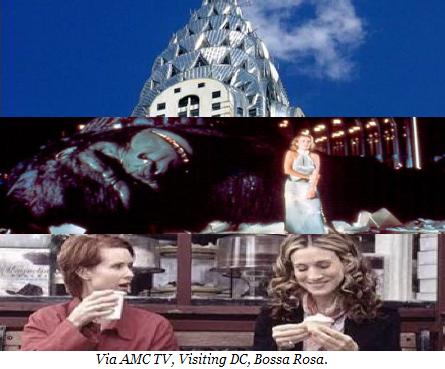
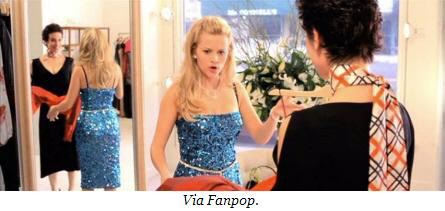
“The Televised Guide to Teen Girl Friendships”, featuring My So-Called Life, Full House and Popular.

Jezebel explains our (but not my) interest in the royal wedding by way of Disney:

“For me, an American pop-culture junkie, Prince William and Kate Middleton’s engagement means one thing: She gets to be a Princess. And seriously, some part of me, formed when I was three or four, believes that this means she will be dressed by birds, wear clothes sewn by tiny mice, and have woodland creatures as friends. Oh, sure, there’s a handsome Prince, but more important are the jewels! And the singing! And the castles! And the woodland creatures.”

Apparently positive people live longer. Good news for me, then!

“Do All of Us Need ‘The One’?” at The Ch!cktionary.

A rant on the annoyance of ignorance:

“… In our infoculture, it takes work not to expose yourself to interesting ideas, facts, news and points of view… the average person online spends seventy seconds a day reading online news. Ouch.”

New York, I Love Hate You:

“New York, I won’t miss your fierce morning halitosis exhaled from your subway grates along Third Avenue.

“I won’t miss you drooling on me from your high-rise air-conditioners in the burning heights of summer.

“I won’t miss how… to me you always smelled like Camel Lights, and warming urine, and the No. 14 busa perfume I never could quite embrace.

“New York, I’ll never forget how dating you made me so poor that when I wanted to read I had to unscrew a bulb from the bedroom and carry it to the living room.”

Let Them Eat Cupcakes.


Not to be confused with “Let Them Eat Cake… And Wear Headbands”, which I wrote earlier this week, this excerpt comes from Jeremiah’s Vanishing New York’s “King Kong & Cupcakes” by Jeremiah Moss:

“Cupcakes are just a symbol for the shiny Bloomberg-ized, Carrie Bradshaw-defined boutique city New York is turning into. I grey up during the 1970s, when the old New York‘King Kong’s New York’ if you likewas still very much in evidence, and would be well into the ’90s. Like you, I’ve watched, often in horror, and particularly over the last decade, as the city has been transformed into something nearly unrecognisable and sadly lacking in character.

“I certainly have nothing against the cupcakes themselves. Shortly after I handed this cartoon in, I tried a Magnolia cupcake for the first time. It was good. I suppose I could have written ‘Twas Marc Jacobs killed the beast’, but cupcakes was funnier, and it won’t get me sued.

“… But to answer your question about how New York being overrun with cupcake shops, and the (designer) baggage that goes along with them, can kill a 25-foot-tall ape, it is in much the same way that ‘beauty’ did him inby breaking his heart.

“Is that too corny? OK, then he slipped on a goddamn cupcake.”

Related: Let Them Eat Cake… And Wear Headbands.

Elsewhere: [Jeremiah’s Vanishing New York] King Kong & Cupcakes.

On the (Rest of the) Net: Short & Sweet Edition.

I’ve been a little too busy this week to do much blog reading but, alas, here are my picks of the week.

Can you like fashion and, like, be smart? That is the debate circulating around the blogosphere of late, and Jezebel sums up its instigation by Paper editor Kim Hastreiter and The New York Times: T editor Sally Singer. You can contribute to the discussion at fashademic (combining the words “fashion” and “academic” is so, like, smart!).

Mia Freedman imparts more of her wisdom, this time on the Stephanie Rice/Twitter incident. She writes: “I have long had a massive problem with the way we elevate sports stars to be heroes… But surely it’s time to stop raising these individuals to the heights of real heroes. Because surely when they disappoint us and show their ordinariness or, in some cases, their prejudices, it’s a very long way to fall.” Indeed.

The Onion has a satirical take on the “cult” (my emphasis) of New York City. In a faux-news story, in which the entire population of NYC stages a mass exodus, “at press time, some 10 million Los Angeles-area residents… had already begun repopulating the city.”

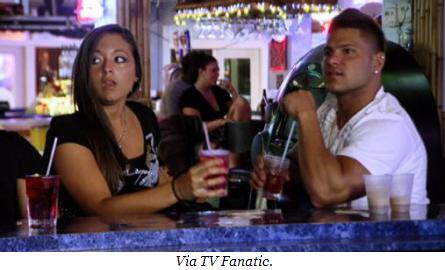
In the latest season of Jersey Shore, Sammi and Ronnie seem to break up and get back together at least once every episode (so what’s the difference between season one and season two, then?). In between that, Ronnie goes to the club, “creeps on girls”, gets wasted, and calls Sammi “a c*nt or a bitch directly to her face”. If they were your friends, what would you do?

“How to Get a Raise At Work? Clean Your Vagina.” The title says it all.

Book Review: American Psycho by Bret Easton Ellis.


When I heard Bret Easton Ellis was coming to Melbourne for the Writers Festival, I was intrigued to hear him speak in person, to say the least.

My first, and only, exposure to Easton Ellis prior to reading American Psycho was his 1998 release, Glamorama. I had high expectations for that book, and I was sorely disappointed. I found it too fast paced and celebrity-obsessed which, granted, was the point of the story. However, the graphic depictions of violence (a plane crash with flying pieces of sheet metal decapitating whole rows of passengers, anyone? Or how about a massive miscarriage followed by internal haemorrhaging and subsequent death of the main character’s, Victor Ward, girlfriend?) and sex were far too much.

So needless to say, I was very apprehensive about entering into a literary relationship with American Psycho, but I wanted to at least have read Easton Ellis’ most famous work before seeing him live. (Alas, this is not meant to be, as tickets to his talk sold out within minutes of going on sale! As he, and Buffy creator Joss Whedon, whose talk also sold out, are the only writers I’m interested in seeing at this years surprisingly uninspiring Melbourne Writers Festival, I guess I’ll be giving it a miss this year.)

This time around, however, I was pleasantly surprised.

Again, American Psycho is hard to get into initially, as it jumps straight into a boys night out with protagonist Patrick Bateman and his equally materialistic and über-boring posse of yuppie acquaintances (Bateman is too narcissistic to have actual “friends”). But after persevering up to the first kill, I liked what I read.

Even squirming along Struggle Street during the gory descriptions of the murderson public transport, no less!was still a fairly enjoyable literary journey. To give you a taste of just how well Easton Ellis does horrific homicide in print, here’s a description of Bateman’s first kill:

“… I reach out and touch his [the bum’s] face gently once more with compassion and whisper, “Do you know what a fucking loser you are?” He starts nodding helplessly and I pull out a long, thin knife with a serrated edge and , being very careful not to kill him, push maybe half an inch of the blade into his right eye, flicking the handle up, instantly popping the retina.

“The bum is too surprised to say anything. He only opens his mouth in shock and moves a grubby, mittened hand slowly up to his face. I yank his pants down and in the passing headlights of a taxi can make out his flabby black thighs, rashed because of his constantly urinating in the pantsuit. The stench of shit rises quickly into my face and breathing through my mouth, down on my haunches, I start stabbing him in the stomach, lightly, above the dense matted patch of pubic hair. This sobers him up somewhat and instinctively he tries to cover himself with his hands and the dog starts yipping, really furiously, but it doesn’t attack, and I keep stabbing at the bum now between his fingers, stabbing the backs of his hands. His eye, burst open, hangs out of its socket and runs down his face and he keeps blinking which causes what’s left of it inside the wound to pour out like red, veiny egg yolk. I grab his head with one hand and push it back and then with my thumb and forefinger hold the other eye open and bring the knife up and push the tip of it into the socket, first breaking its protective film so the socket fills with blood, then slitting the eyeball open sideways, and he finally starts screaming once I slit his nose in two, lightly spraying me and the dog with blood, Gizmo blinking to get the blood out of his eyes. I quickly wipe the blade clean across the bum’s face, breaking open the muscle above his cheek. Still kneeling, I throw a quarter in his face, which is slick and shiny with blood, both sockets hollowed out and filled with gore, what’s left of his eye literally oozing over his screaming lips in thick, webby strands. Calmly, I whisper, “There’s a quarter. Go buy some gum, you crazy fucking nigger.” Then I turn to the barking dog and when I get up, stomp on its front legs while it’s crouched down ready to jump at me, its fangs bared, immediately shattering the bones in both its legs, and it falls on its side squealing in pain, front paws sticking up in the air at an obscene, satisfying angle. I can’t help but start laughing and I linger at the scene, amused by this tableau. When I spot an approaching taxi, I slowly walk away.”

Now if that didn’t make you wince and writhe vicariously, there’s also the attacks of several other dogs, the tortures of countless prostitutes, the dissolving of several friends’ bodies in lime, cannibalism, the murder of a child, the capture of a sewer rat to use in later tortures, and in a comical scene that illustrates just how sad and detached Bateman has become in his life of depravity, he feeds his girlfriend (just one of many he has on the go at any given time) a frozen urinal cake coated in chocolate and served in a decadent Godiva chocolate box.

If the reader needs more proof of Bateman’s derangement and obsessive compulsive consumerism, they need only to look at the chapters interspersed throughout the narrative on business cards, sound systems and musical artists of the time (1991), like Genesis, Whitney Houston and Huey Lewis & the News.

Here is another example:

“Another choir, on Lexington, sings ‘Hark the Herald Angels’ and I tap-dance, moaning, in front of them before I move like a zombie to Bloomingdale’s, where I rush over to the first tie rack I see and murmur to the young faggot working behind the counter, “Too, too fabulous,” while fondling a silk ascot. He flirts and asks if I’m a model. “I’ll see you in hell,” I tell him, and move on.

“… vases and felt fedoras with feather headbands and alligator toiletry cases with gilt-silver bottles and brushes and shoehorns that cost two hundred dollars and candlesticks and pillow covers and gloves and slippers and powder puffs and hand-knitted cotton snowflake sweaters and leather skates and Porsche-design ski goggles and antique apothecary bottles and diamond earrings and silk ties and boots and perfume bottles and diamond earrings and boots and vodka glasses and card cases and cameras and mahogany servers and scarves and aftershaves and photo albums and salt and pepper shakers and ceramic-toaster cookie jars and two-hundred-dollar shoehorns and backpacks and aluminium lunch pails and pillow covers…

“Some kind of existential chasm opens up before me while I’m browsing in Bloomingdale’s and causes me to first locate a phone and check my messages, then, near tears, after taking three Halcion (since my body has mutated and adapted to the drug it no longer causes sleepit just seems to ward off total madness), I head toward the Clinique counter where with my platinum American Express card I buy six tubes of shaving cream…”

This kind of stream-of-consciousness and disjointed conflict between the Patrick Bateman that is presented to the outside worldthe one that manages to convince a cop investigating the murder of one of Bateman’s lime victims that he has nothing to do with the disappearanceand the inner workings of his own mind, and even again with the superhuman he becomes when killing, continues and only becomes more frequent as the tale continues.

While there is no finite conclusion to the storyone might guess that Bateman was caught during the murder of a taxi driver, when the tone switches from first person to third person, however it is later revealed that he escaped, but is recognised by another cab driverthat only makes it all the more disturbing.

Easton Ellis is a very cleverthough slightly disturbed; you would have to be to write as graphically and as convincingly as he doesauthor, and I would have loved to hear him speak about his most prolific work.

However, while I rate this one highly, I probably won’t return to, nor enjoy, his other novels.

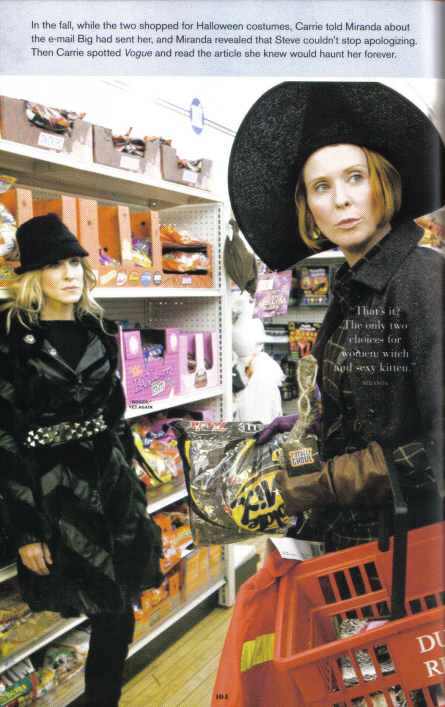
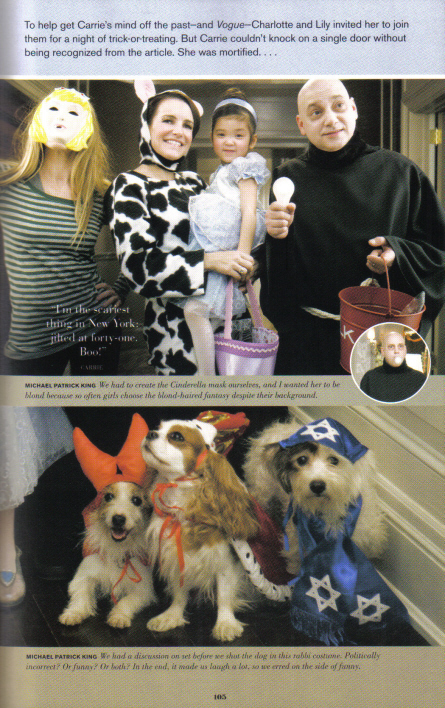
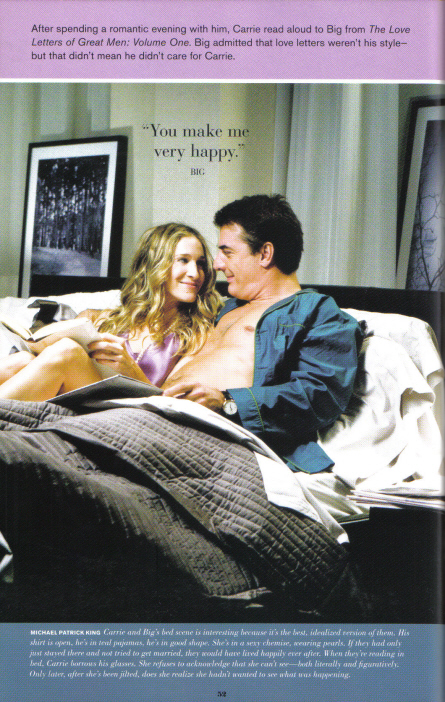
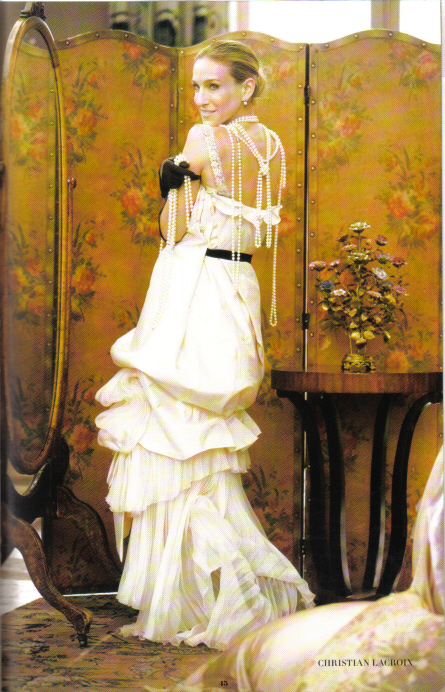
Book Review: Sex & the City: The Movie Coffee Table Book.


A few weeks ago I reviewed the Sex & the City 2 coffee table book in accompaniment to the movie.

There was quite a lot of controversy surrounding the second film, and while I still maintain my stance that it wasn’t that bad, I will state for the record that the first film shits all over the second.

In terms of coffee table books, though, I think I prefer the second book to this one.

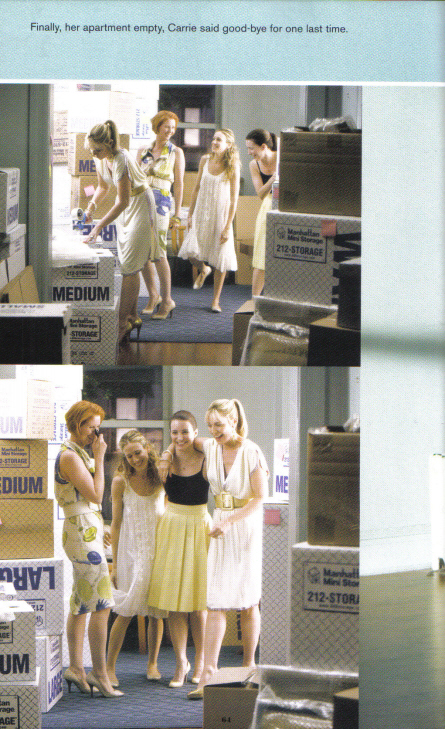
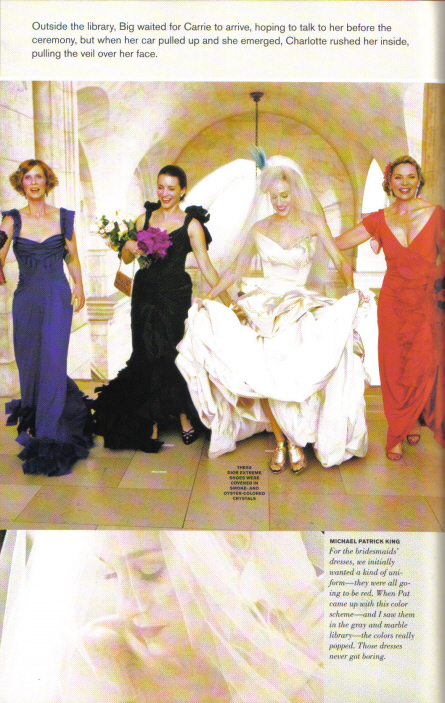
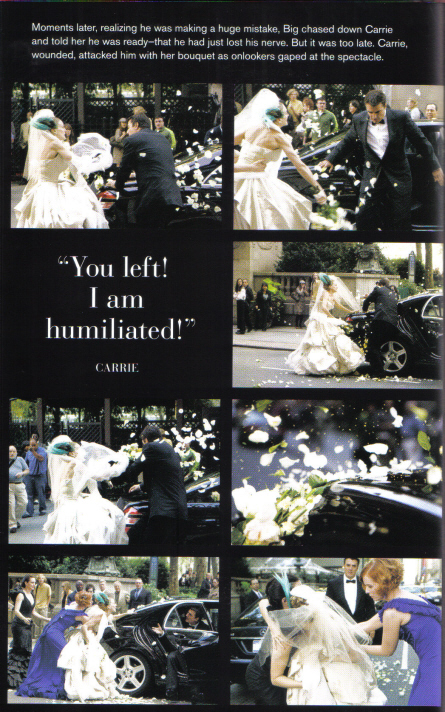
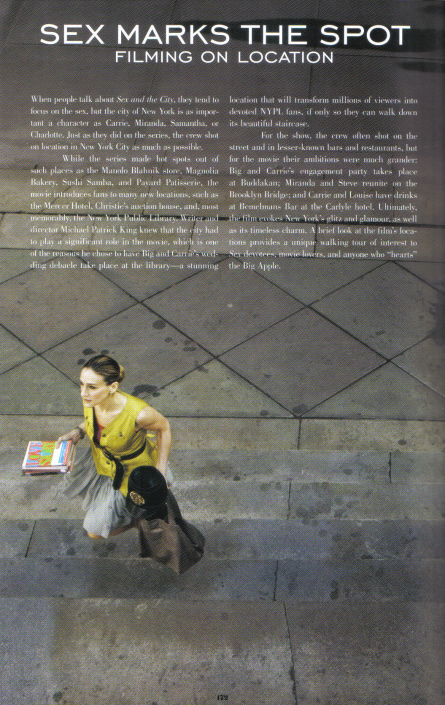
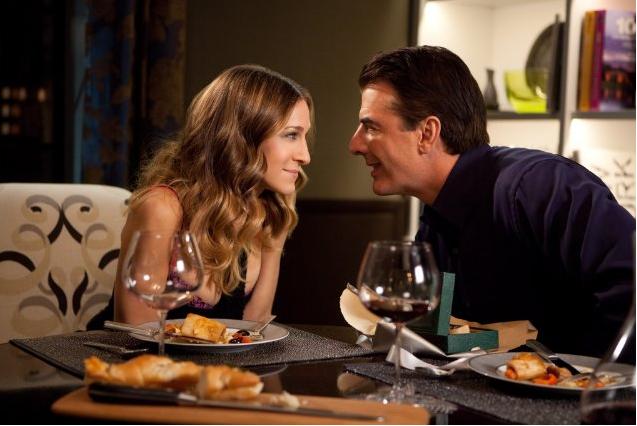
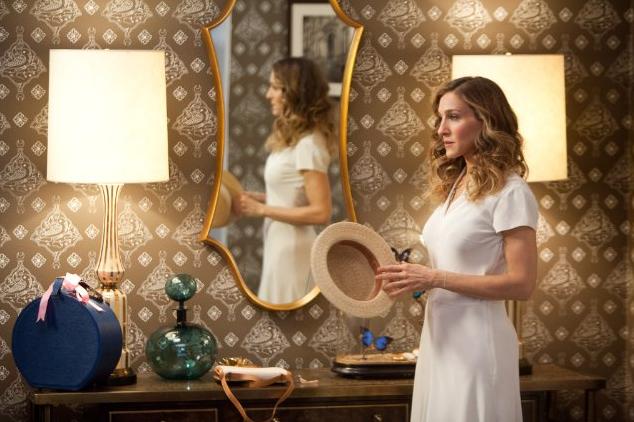
Nonetheless, it is a beautiful exercise in film photography. The fashions, the furnishings, the friends!

I Get By With A Little Help From My Friends.

“How often do you ‘colour’?”

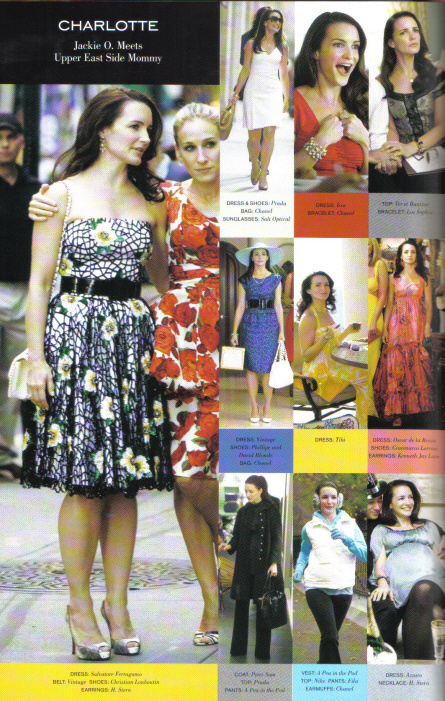
“Charlotte Poughkeepsie’d in her pants!”

Big Man on Campus.

In Vogue.

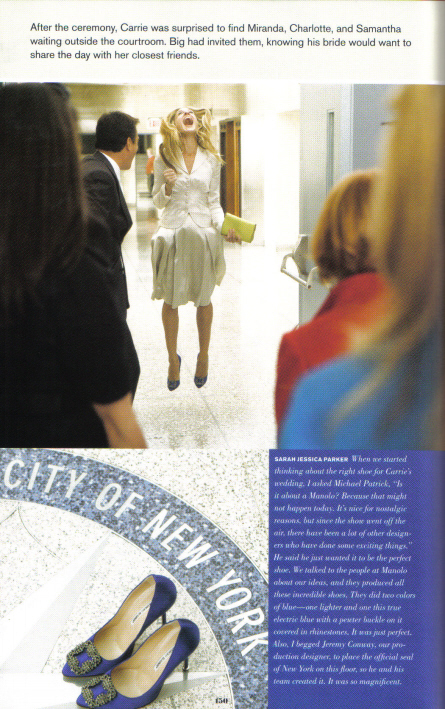
The hero dress.

The hero shoe that saved Manolo Blahnik from going out of business.

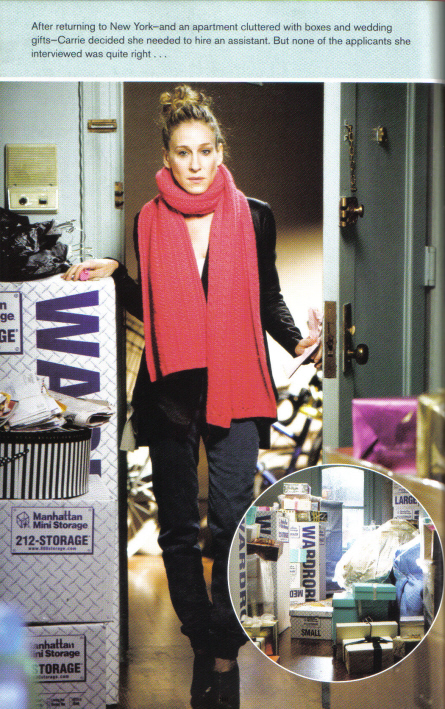
Apartment Therapy.

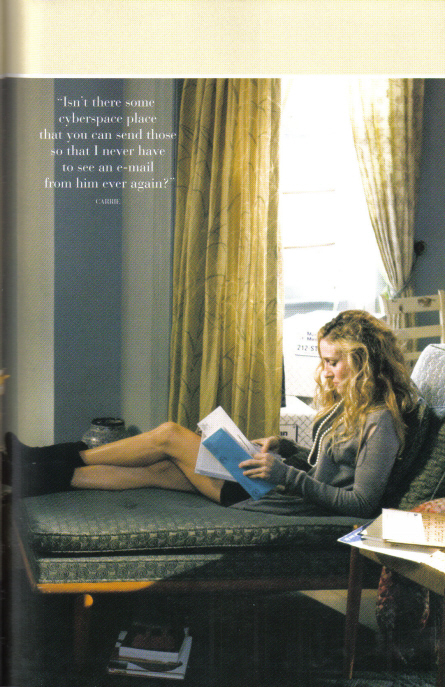
Carrie’s apartment is the quintessential single girl’s digs.

How dreamy… even though Carrie is in the midst of depression!

New York State of Mind.


While I’ve never been to New York City, I don’t agree with Conor Friedersdorf’s perception of it. Others, however, may beg to differ…

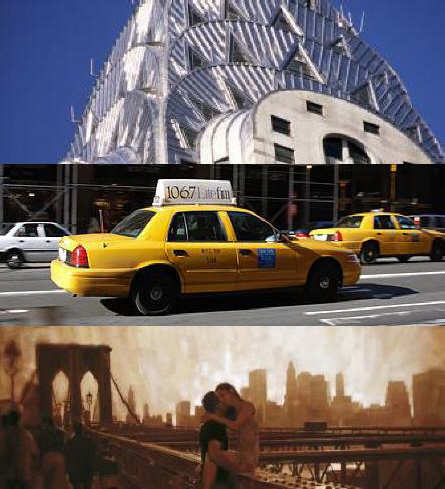
“Even if New York is a peerless American city, an urban triumph that dwarfs every other in scale, density, and possibility; even if our idea of it is the romantic notion that Joan Didion described, ‘the mysterious nexus of all love and money and power, the shining and perishable dream itself’; even if you’ve revelled in the fact of the city, strutting down Fifth Avenue in a sharp suit or kissing a date with the skyline as backdrop while the yellow cab waits; even if you’ve drunk from the well of its creative springs, gazing at the Flatiron Building, or paging through the New York Review of Books on a Sunday morning, or living vicariously through Joseph Mitchel or E.B. White or Tom Wolfe or any of its countless chroniclers; even if you love New York as much as I do, revering it as the highest physical achievement of Western Civilization, surely you can admit that its singularly prominent role on the national scene is a tremendously unhealthy pathology.

“Despite the rent, the cold, the competition, the bedbugs, the absurd requirements for securing even a closet-sized pre-war apartment on an inconvenient street; the distance from friends and family, the starkness of the sexual marketplace, the oppressive stench of sticky subway platforms in the dog days of August; despite the hour long commutes on the Monday morning F Train, when it isn’t quite 8am, the week hardly underway, and already you feel as though, for the relief of sitting down, you’d just as soon give up, go back to Akron or Allentown or Columbus or Marin County or Long Beachdespite these things, and so many more, lawyers and novelists and artists and fashion designers and playwrights and journalists and bankers and aspiring publishers and models flock to New York City.”

Elsewhere: [The Atlantic] The Tyranny of New York.

Movie Review: Sex & the City 2.

In lieu of Monday’s weekly book review, I went to see Sex & the City 2 on Friday night, so I will be reviewing that instead. Well, it is based on a book…

Having read all the 2-star reviews on blogs and in magazines over the past weeks, I went into the whole thing with very low expectations. I knew the flick would be an exercise in product placement even more so than the first one, what with Sarah Jessica Parker sitting on the board of, and now designing for, Halston Heritage. Not to mention the Manolos, Jimmy Choos and Louboutins that we’ve come to know and love because of SATC. Mr. Blahnik was even quoted as saying “that shoe [the blue satin shoe that Carrie goes back for in the first film and gets Big as well] saved our company”. (Ironically, he’s also slammed the show for making him famous.)

The controversy surrounding the heavily Photoshopped promo poster and the “sex in the Middle East” subject matter also overshadowed the film’s premier and the memories of the girls gallivanting around New York City, breaking boundaries for women in television, and in life.

While SATC2 itself wasn’t groundbreaking, it was much better than I thought it was going to be. It was a visual explosion, for one thing; the sets, particularly Carrie and Big’s apartment, were stunning and so inspirational, as Paula Joye reiterates in her e-newsletter, LifeStyled. I am having major apartment-envy, and I wouldn’t be surprised if SATC style becomes the interior du jour.

The main image fans have been bombarded with in the lead up to the film’s release was that of the four stars traipsing across the desert, Samantha in a studded helmet-like headdress and Charlotte channelling Olivia Newton John in “Let’s Get Physical”. Thank God this scene is not representative of the rest of their wardrobes. While costume designer Patricia Field should be sartorially ashamed, most of the other outfits really evoked a Middle Eastern flair.

In other areas, especially the scenes back in New York, Field fell flat. Yes, two years have passed since the first film, which was absolutely decadent in it’s use of fashion, replete with 50-plus costume changes for Carrie, and we are now in a recession. However, with an alleged $10 million costuming budget, you’d think Field could have jazzed it up a bit, especially when it came to Carrie. Boring white Halston with some gold accents, and a belly-caring gingham top with jeans aren’t very Carrie-esque.

But I will applaud the movie for bringing back some fashion favourites. In the ’80s flashback scene, you will notice Carrie’s navy hat box, which reappears on the Abu Dhabi trip some 25 years later. The pink and white suitcases Carrie uses when she moves to Paris with Petrovski are also used again in UAE. And during Carrie and Big’s marriage crisis, Big arrives at Carrie’s old apartment in his town car like the days of old, where she greets him in her Autumn/Winter 2000/2001 Dior newsprint dress. That certainly elicited a response from the movie-goers!

The new characters were endearing, especially Carrie’s butler in Abu Dhabi, Guarau , whose personal life made her reflect on her own. (Spoiler alert: Carrie begins to resent Big for wanting to spend more time at home, ie. on the couch, while she still wants to embrace her inner party girl. She decides to spend some time at her old apartment [see above] to “write”, and when she returns to their communal quarters, they have a wonderful night getting “reacquainted”. When Big suggests they make a habit of having “two days off from their marriage a week”, Carrie freaks out and flees to Abu Dhabi with the girls; Guarau’s wife still lives in India and he commutes whenever he has the time/money to see her.) And how Samantha referred to them was even better! Some gems were “‘Paula’ Abdul”, Samantha’s gay butler, and her UAE expat love interest, “Lawrence of Arabia my labia”.

In other sex-scandal related news, Samantha’s Birkin is broken at the spice market, and out spills a plethora of condoms. Samantha is shamed by the shoppers in the street, and in a display of sexual liberation, she throws her birth control at the Middle Easterners as only she could, which harkens back to other Samantha moments (ie. accusing a Playboy bunny of stealing her fake Fendi; throwing her wig into the audience at a breast cancer benefit). While this may not have been an appropriate way to represent attitudes to sex in this part of the world, it is Samantha, and it is Sex & the City.

What I found even less appropriate was the amount of cleavage on show, especially Carries! My friend and I mused about whether SJP’s had a boob job; I doubt she has, but her bountiful bosom was certainly out there. And don’t even get me started on the braless nanny!

The storylines were a bit disjointed, I will admit to that; Anthony’s revelation, during their Liza Minnelli-infused nuptuals, that he will most likely cheat on Stanford, Charlotte’s nanny neuroses, and Aidan’s disappearance after he kisses Carrie were all left unresolved. While it may be plausible for you to run a mile from the man you cheated on your husband with in the Middle East, it doesn’t make for formidable storytelling on the big screen. I will never forget how the audience rejoiced in gasps, followed by laughter at our mutual reactions, when Aidan deigned to kiss Carrie when they’re both happily married.

While the consensus does seem to be that the movie sucks (it’s worth seeing for Liza’s rendition of “Single Ladies” alone!) , I was pleasantly surprised at how much I liked it. My friends and I are a hard audience to please, and we all enjoyed it immensely. Can’t wait to get it on DVD and gift to all. Christmas, perhaps?

Elsewhere: [Jezebel] Why SATC2 Never Stood a Chance.

[Jezebel] New Sex & the City 2 Poster: A Photoshop Oasis.

[Pop Crunch] Manolo Blahnik Slams Sex & the City.