TV: Body Acceptance on The New Girl.


My dad called my mum fat when they first started dating, which caused her to become embattled in a lifelong struggle with her weight. There are countless other stories where someone makes a comment about someone else’s body that does irreparable damage, consciously or not.

Last night’s episode of the New Girl showed that it’s not just women who experience body insecurity. When Jess walks in on Nick dancing naked in his room before a date, she laughs. Later, on said date, Nick can’t perform and refuses to take off his shirt. It’s like the male television equivalent of having sex with your bra on.

Women have a myriad of outlets to talk about their body image (funnily enough, many of those outlets also perpetuate this phenomenon. Women’s magazines, anyone?). Guys, not so much. So when Nick confesses to Jess how her laughing at him made him feel, I was proud of the show for addressing this. But when Jess couldn’t even say penis (then ends the episode by calling her vagina by a pet name), Nick hit the nail on the head when he told her he can’t have a serious conversation with her about such issues when she can’t call reproductive organs by their names. Pet names for body parts are for three year olds and baby talkers. And, apparently, New Girls.

Related: Who’s That Girl? It’s the New Girl.

Image via Put Locker.

Book Review: Big Porn Inc. Edited By Melinda Tankard Reist and Abigail Bray.


As I’ve written here before, I don’t really see a problem with porn. So long as it’s consumed in a healthy way, viewed in perspective and is made in an ethical way (no child pornography, for example, which Big Porn Inc. focuses heavily on), I don’t see a problem with it.

However, the contributors and editors of Big Porn Inc., a tome that’s made a splash since its release, thinks all porn is bad, okay? They don’t take into account things like upbringing, socio-economic background and other factors, such as peer groups, in the affect porn can have on consumers. When those aspects are relatively good, I don’t think porn is a problem.

But it’s not just consensual, enthusiastic porn the book focuses on. Take the chapters on sex with animals, child porn and degradation. “Slavefarm” (p. xx) and “the ‘crack’ of an infant’s pelvis while you are penetrating them” (p. 199) are some of the most extreme and abhorrent examples in the book (I’ll pause while you throw up over that last one, especially), but are by no means the norm. Bestiality, rape and pedophilia are mental illnesses and are about control; they’re not just something you decide to do after stumbling upon the wrong porn link.

Not only does Big Porn Inc. focus on the extreme, it’s also quite sexist. The majority of articles see women as needing to be protected from porn and the men who view it. Militant anti-porn feminist Catharine MacKinnon writes that “women have long known” the evils of pornography (p. 12), while “Caroline” writes pathetically about how discovering her husband used porn was the ultimate betrayal (p. xxix).

I also found Big Porn Inc. to be anti-choice and anti-feminism. Renate Klein, in “Big Porn + Big Pharma: Where the Pornography Industry Meets the Ideology of Medicalisation” (p. 86–104), asserts that female bodies are being “cut, modified, drugged and penetrated—all in the name of ‘choice’ and ‘it is my right’.” The footnote to this sentence admonishes sexual reassignment procedures as a bi-product of the pornography industry.

This is not to mention its anti-vaccination sentiments.

Pseudoscience reigns supreme, also, when Maggie Hamilton writes, “… boys and girls generally do not have a natural [original emphasis] sexual sense until they are between 10 and 12 years old.” I studied psychology in high school, and even at its base level, we know that young children are very aware of their sexuality. I remember playing the “sex game” (whatever we thought that meant!) in my first year of primary school. Observing children in the playground as part of my Year 10 childhood psychology class they, too, were playing the “sex game”! Sure, we don’t want kids that age accessing porn and getting all these fucked up ideas about what naked bodies and (porn) sex looks like, but their natural curiosity will ensure they will try to at some stage. That’s where healthy discussion from parents, teachers and other adults about what sex, in all its carnations, means.

Not all of the contributors are people I disagree with. Sex and anti-violence writer Nina Funnell is someone I admire, and whose inclusion in Big Porn Inc. was what compelled me to read it. She writes about sexting and the intrusion of the camera in our lives (p. 34–40), topics on which she is writing a book. While teen sexting and “peer-to-peer porn” can be dangerous (child pornography charges and having your image on the internet til the end of time before you’ve even come of age are frightening thoughts), I think they are a little out of place in the Big Porn scope of things. In my opinion, they are worlds away from actual consensual porn; the making and consumption of. Again, as long as parents and teachers are there to advise why sexting is something that should be done after careful thought and your 18th birthday, I don’t see it as the problem porn is made out to be.

When I spoke to Rachel Hills about her profile on Melinda Tankard Reist and her thoughts on Big Porn Inc., she contended that the book could have done away with the multitude of contributors in favour of fewer, more in-depth essays. This would perhaps allow Big Porn Inc. to be taken more seriously by pro-porn (or at least anti-anti-porn) people like ourselves. I have to say I agree, as by about two thirds of the way through I was ready to put it down, especially as the last section reads like an advertorial for Anti-Porn Inc., which is something I’m not buying.

Related: In Defence of Porn.

Is Big Porn Inc. Anti-Vaccination As Well As Anti-Porn?

Picture Perfect.

Elsewhere: [Sydney Morning Herald] Who’s Afraid of Melinda Tankard Reist?

Image via Melinda Tankard Reist.

Books: Is Big Porn Inc. Anti-Vaccination As Well As Anti-Porn?

It’s unfair to throw all the contributors into the one, anti-porn basket, but the authors featured in Big Porn Inc., edited by Melinda Tankard Reist and Abigail Bray all seem to think porn is eroding our society. I haven’t finished the book yet, but stay tuned next week for the entire review.

One aspect of Renate Klein’s essay on the correlation between pornography and the medical industry (“Big Porn + Big Pharma: Where the Pornography Industry Meets the Ideology of Medicalisation”) had me livid: that the cervical cancer vaccine, Gardasil, was an unnecessary luxury vaccine promoted by the porn industry for slutty girls. Sure, Klein doesn’t actually write that, but it is certainly implied.

Klein has done her research, though. She sites the website SaneVax which reports that the HPV (human papillomavirus) vaccine has resulted in 5,010 women who “did not recover” after receiving it, whatever that means. On viewing the website, it looks more like a propaganda machine rather than “an international women’s group that promotes safe vaccination practices.”

This way of thinking—that vaccination is unnecessary, a moneymaking scheme thought up by the government to keep tabs on us, and that girls who receive the Gardasil vaccine are also receiving license to slut around without thinking about the consequences of unprotected sex (or sex in general, some would say)—is rampant on the U.S. conservative scene at the moment. Michele Bachmann, anyone?

In Klein’s chapter, she talks about Gardasil in relation to the safety measures porn stars should take to ensure they stay disease free and are thus able to work. But Gardasil is only recommended for teens, or at least those who’ve never had sex before (including oral), as most people have contracted or will contract HPV during their sexual lifetime.

Just like with any vaccine or medical ailment, there are risks, but is it safer to go unvaccinated and risk spreading disease onto others? What infuriates me is that those who already have small minded, conservative views are the people whom Big Porn Inc. will attract; those who are susceptible to the anti-porn, anti-sex and anti-vaccination messages the book espouses.

Related: Conservative Feminist Melinda Tankard Reist for Sunday Life.

Elsewhere: [SaneVax Inc.] Homepage.

[New Yorker] HPV, Perry & Bachmann.

[Jezebel] Michele Bachmann’s Curious Tale of Vaccination Gone Wrong.

[Jezebel] Oral Sex Linked to Throat Cancer, Is Best Argument Yet for Giving Boys HPV Vaccine.

Image via Melinda Tankard Reist.

TV: Top 11 TV Moments of 2011.

Paper Giants.

One of the best shows this year. Unfortunately, it only ran over two nights.

http://www.youtube.com/watch?v=ftchdNDF_kQ

The Kennedys.

Wow. Just wow. I loved this miniseries that was cancelled by the History Channel in the U.S. because it allegedly portrayed the Kennedy family in too negative a light. Luckily, it was picked up by the ABC here. I am now officially in love with Greg Kinnear.

Go Back to Where You Came From.

Apart from Sarah Ferguson’s Four Corners expose on the meat industry (below), SBS’s Go Back to Where You Came From was the most groundbreaking television this year. Unfortunately, I don’t think it changed anyone’s minds about the plight of refugees in this country, because those who already empathise with asylum seekers were the show’s target audience, and those who think refugees should go back to where they came from snubbed the show.

Sookie & Eric Finally Get Together on True Blood.

While I’m more of a Sookie and Bill fan, and an Alcide-in-general fan, Eric’s turn as sensitive Sookie-lover in True Blood’s fourth season was a must-watch. But thankfully, the Nordic vampire is back to his old, heartless self.

Charlotte King’s Rape in Private Practice.

Private Practice is an oft-shunned show, in favour of its Seattle counterpart, Grey’s Anatomy, but season four dealt with abortion and rape particularly sensitively and realistically.

Four Corners’ Expose on the Meat Market.

This was probably one of the most talked about news stories in Australia, if one of the most poorly rated episodes of Four Corners. Not because people didn’t care, but because it was so hard to watch. It’s perhaps too soon to tell, but I think we are seeing a chance in meat practices in Australia because of this story.

The Slap.

I found one of ABC’s most anticipated shows of the year to be a spectacular letdown. I’d had Christos Tsiolkas’ novel on my reading list since it was released, however I missed out on reading it before the show premiered in October. Perhaps if I had read the book first I would feel differently about the show, but I found it to be stereotypical and tokenistic, and a massive disappointment from the screen version I had hyped up in my mind. Fail.

http://www.youtube.com/watch?v=SaDpBhzckv8

MamaMia Gets Its Own TV Show.

Probably not many TV watchers outside of the insular community of MamaMia and Sky News would have known about Mia Freedman’s lifestyle website making the switch to TV. I don’t have pay TV but, luckily, the shows are available to watch on the MamaMia website, YouTube and Facebook, where the panelists talk about all manner of things, like sex, mental illness, celebrity, porn, religion, parenthood and more.

Angry Boys.

I hadn’t watched any of Chris Lilley’s stuff before Angry Boys and, while a lot who had thought the show was a bit of a letdown, I really enjoyed it.

http://www.youtube.com/watch?v=iE7W8DzlGqQ

Housos.

Another one that was a bit hit-and-miss, I’d anticipated the show all year. While some moments were gold, others were just supremely unfunny.

At Home With Julia.

Finally, the cherry on top of a parody-tastic television year. I really enjoyed Amanda Bishop’s portrayal of Julia Gillard, but I still found the fact that there was a show about a sitting prime minister pretty offensive.

Any TV moments I missed here that you thought defined 2011?

Related: Paper Giants: The Birth of Cleo Review.

My Response: Go Back to Where You Came From.

Private Practice: Pro-Choice?

The Slap & Men Who Cheat.

At Home with Julia: Funny or Disrespectful?

12 Posts of Christmas: Paper Dwarves, Digital Giants.

In the spirit Christmas, I’ve decided to revisit some of my favourite posts of the year in the twelve days leading up to December 25th. 

This one was written after Paper Giants aired on ABC in April, comparing the heyday of magazines with the impact of the digital world. You can read the original post here.

A few weeks ago, in response to ABC’s Paper Giants: The Birth of CleoMia Freedman wrote on MamaMia about her thoughts on the state of the (mag) nation and if magazines are still relevant and the amount of influence they wield in 2011:

“… Not that much excitement goes on in magazines anymore… [It’s a struggle to] get them [those who work on a magazine] to try and think about something that hasn’t been done before, something that will start a conversation and boost sales.”

Freedman compares pay TV’s Park Street, a The Devil Wears Prada-esque reality show about ACP’s head offices, featuring the editors of DollyCleoCosmoMadison and Shop Til You Drop, which received dismal ratings and poor audience response, to the critical success and brilliant take on Cleo in her influential heyday of Paper Giants. She says, “Gemma Crisp [editor of Cleo] explained the editorial process that a story undergoes from conception to publication. It takes a minimum of three months… When was the last time you waited three months for something? Life doesn’t happen in increments of months anymore. It happens in moments, in text messages, in Tweets. It’s fast and it’s relentless and if it takes you three months (or even three weeks) to get from thought to print then that’s just too long to retain the attention of your audience.”

When she puts it like that, Freedman makes me long for a simpler time, when I hung on the every word magazines published, as opposed to reading hundreds of articles a week, mostly on blogs, but also in magazines, in an attempt to stay on top of my blogging game.

Erica Bartle, creator of Girl with a Satchel and a former mag girl herself, says Freedman’s “blog-cum-website” “deals in what everyone’s talking about TODAY. It feeds off the 24-hour news cycle. And Mia’s own profile. And her opinion… It’s like a current affairs program for women online.” And now with MamaMia launching on SkyNews, Freedman’s brand is literally a current affairs program.

Not all blogs can operate this way. MamaMia has a team of bloggers, editors and techs who keep the site running smoothly which thus, as Bartle said, allows it to operate on a 24-hour news cycle.

Personally, I have a part-time paid job I go to four times a week, this means I only get to blog two or three days a week, and with so much info to process and a maximum of 15 posts per week to churn out in a small amount of time, this means I can’t always post as early and as often as I’d like.

But even for those who blog fulltime, like Bartle, it’s not always about what’s happening right NOW as it is about maintaining the blog’s integrity.“I personally operate on a different plane, because my beliefs very much inform my work. For that, I’m willing to sacrifice certain economic constraints,” she says.

Still in the blogging world, you have someone like Gala Darling, who is very much a self-made businesswoman as a result of her über-successful blog of the same name. She’s gone from strength to strength over the past few years; something she could never have done had she been a magazine editor (bar the select few, like Anna Wintour, Anna Dello Russo and yes, Freedman).

But, essentially, MamaMia has the advantage of possessing “a figurehead with credibility whose background is in traditional media. She has the gut instinct of an editor. Online you need news nous as well as technological nous and business nous.”

Another editor who has these qualities in spades is former Cleo and Girlfriend editor, Sarah Oakes, whom Bartle worked under at Girlfriend. Bartle says she invoked an atmosphere of ghosts of magazines past, creating “camaraderie, creativity and positivity, which I think she achieved. She gave you more work if she thought you could be stretched; gave you a talking to if you had crossed a line; gave you a pat on the back for a job well done.” Very Ita-like, wouldn’t you say?

Oakes is now editor of The Age Sydney Morning Herald’s Sunday Life supplement, a title which has improved markedly since she took over. (I have also blogged here about how I think both Girlfriend and Cleo became better titles under her leadership.)

In fact, newspaper inserts are giving the glossies on the newsstand a run for their money, as they “are getting exclusives and have strong writing and design teams, as well as columnists and styling/shoots. These free weekly titles, because of the mastheads they reside within, have enviable readerships and access to celebrities. They are also respectable, well executed and FREE,” Bartle notes.

But at the end of the day, are magazines relevant?

Freedman writes:

“The internet has not only sucked up their readers, it has also gobbled up their purpose: to be a way women form tribes and communicate. Now there’s YouPorn and any other number of sites for titillation, Google for questions about sex, and any number of websites or free newspaper magazines if you’re looking for other types of content or a magazine-style experience. Women don’t want to be spoken TO anymore. They want to be part of the conversation, something which the internet allows, in fact depends on… the internet has taken the sting out of the raunch-factor for mags like Cosmo and Cleo.”

Yes, as Freedman says, there are much raunchier locales to get what would have been included in a sealed section only a few years ago. There’s also Perez Hilton, TMZ and even shows like Entertainment Tonight and E! News that monopolise celebrity content, while the fashion blogs are more of a go-to for what kids are wearing these days.

Sure, Vogue’s always going to be a premiere source for high fashion shoots from photographers the likes of Annie Leibovitz, Patrick Demarchelier and David LaChapelle, but magazines “seem to exist on a strangely distant planet where all the people look like plastic and the sole pursuit is ‘perfection’. Except that perfection doesn’t really exist,” says Freedman.

When sites like JezebelCover Girl Culture and, yes, MamaMia and Girl with a Satchel are debunking photoshop myths and striving for more realistic representations of women in the media, magazines are doing this movement any favours. (Except maybe Brigitte.)

And when you can get most of a magazine’s content online anyway (I passed on a near-$20 copy of US Harper’s Bazaar in favour of accessing interviews with Kim Kardashian and Hillary Clinton on their website), are they really worth it?

Bartle doesn’t think so. “No, but they need to be distinctive from what we can get online or elsewhere if we are going to part with $5-$10 to purchase one. Premium magazines, which I have no qualms spending extra on, include The Gentlewoman and O The Oprah Magazine, because they cater to my tastes, sensibility and need for a good read on a Saturday afternoon with a cup of tea.”

I agree with Bartle’s sentiments.

While online is great for content from individuals not curated and/or watered down by magazines editors to fit the mold of their magazine, holding a truly great glossy in your hands, like the appeal of a physical book, while at the hairdressers, a café or tucked up in bed, means magazines will always hold a place in our hearts.

Right next to the Kindle and Google Reader.

Related: Paper Dwarves, Digital Giants.

Paper Giants: The Birth of Cleo Review.

Everything They Touch Turns To Gold.

Evolution of the Bookshop at The Wheeler Centre.

Elsewhere: [MamaMia] Paper Giants VS. Park Street: Why Magazines Are Not What They Used to Be.

[MamaMia] MamaMia Gets a TV Show.

[Girl with a Satchel] Homepage.

[Girl with a Satchel] Mid-Week Media Musings.

[Gala Darling] Homepage.
On the (Rest of the) Net.


Post of the week: Catherine Deveny on body love. [MamaMia]

On sexual harassment and “nightclub feminist success”. [Musings of an Inappropriate Woman]

Atheists are just as bad as rapists… and feminists. [Jezebel]

Lingerie football. What do you think? Personally, I’m not a huge fan of playing sports in underwear, but I don’t have much of a problem with it. [MamaMia]

“The Problem with My Week with Marilyn.” [Jezebel]

All long-term monogamous relationships are a transaction, says Ms. Elouise, so what’s the big problem with “paying your wife for sex”? [Feminaust]

Facebook, girl-hate and “I’m a better feminist than you” tête-à-têtes. [Howling Clementine]

XOJane on the message Breaking Dawn sends to virgins.

The Manic Pixie Dream Girl trope extends to indie films, too. [The Atlantic]

iPhone 4S’ Siri is pro-life, apparently. [Gizmodo]

When hemlines rise, so does bitchiness. [Jezebel]

Stella Young on the disability pension myth. [MamaMia]

Former Wordsmith Laner Sarah Ayoub-Christie tries to reconcile her modern marriage with her traditional Lebanese upbringing. [MamaMia]

“Teaching Good Sex” in school. What a novel idea! [New York Times]

Men in porn:

“The straight male performer must be attractive enough to serve as a prop, but not so attractive that he becomes the object of desire. As [porn publicist, Adella] Curry puts it, ‘No one wants to alienate the male audience’.” [Good]

Image via MamaMia.

Is Robert Pattinson the Male Version of Megan Fox?


From “The Edward Cullen Underpants Conundrum” by Sady Doyle on Tiger Beatdown:

“Robert Pattinson talks shit about the projects he is in. Robert Pattinson is honest about the fact that he is not the best actor. And Robert Pattinson’s main source of employment is facilitating his own objectification, which he does, but also complains about all the time. Robert Pattinson is… Megan Fox, basically!

“But the issue of Our Cultural Discomfort With Objectifying Robert Pattinson… is perhaps best illuminated by how different it is from our generalised Cultural Discomfort with MF. Because we have no problem with objectifying Megan Fox, really! We just have a problem with everything she says, and specifically the things she says wherein she takes issue with being objectified. We just hate her. Whereas people don’t hate Robert Pattinson, really.

“Because those women [young, female Twi-Hards] are acting in a way that is typically reserved for men. And they’re treating Pattinson like a girl.

“… We are used to seeing straight men’s goofy, unrealistic sexual fantasies. They are everywhere, all the time. Beer commercials, magazines, Michael Bay movies, porn obviously. We’re used to having female characters flattened out, falsified, emptied out and filled up again with a boundless desire to satisfy men’s needs for no apparent reason. We’re used to the fact that straight male sexual fantasy scenarios (or, at least, sexual fantasies marketed to straight men: and, hey, a lot of dudes are buying them) are cartoonish, in poor taste, unsophisticated, weird.

“… It’s part of the accepted context of straight male desire—it’s tacky as all hell, aesthetically, and that’s just how they do—and so criticising it, in an aesthetic way, seems pointless… But when girls do the exact same thing—when they prove themselves capable of the exact same sort of objectification, and the exact same goofiness or tackiness or unrealistic fantasy in the name of getting off—well, it freaks people out. It’s weird. Why are they acting like this? Don’t they know that Robert Pattinson is a person? Why are they treating him like a big chunk of meat? Why doesn’t Edward Cullen act like a real guy would?

“Because Edward Cullen is porn.

“… He is an object designed for the gratification of female desire. He’s the most ridiculous person who’s so amazing at everything, and he’s so beautiful you creamed yourself. And that’s it. And we’re used to dudes writing ladies this way, we’re even used to dudes writing ladies this way and passing it off as ‘literature,’ but the idea of a female author writing a male character in this way, for the pleasure of other ladies, is profoundly disconcerting.

“… We just happen to live in a world where straight men are expected to objectify, and given lots of opportunities to do it… but the fact is that sexual fantasy… looks goofy and weird and dehumanising for a lot of people, women and men both. And probably we all need to grow up, and deal with the fact that everyone we meet in the world is a person with a complex inner life, and also be open to the fact that people are pretty in different ways and our entertainment only portrays one very limited slice of the vast spectrum that is human prettiness.”

Related: Megan Fox Transforms from “Android Ice Queen” to Relatable Person.

Megan Fox Too “Spicy” for Transformers?

“She Just Wants Attention”.

The Beautiful, Bigmouthed Backlash Against Katherine Heigl & Megan Fox.

Elsewhere: [Tiger Beatdown] The Edward Cullen Underpants Conundrum.

Image via OMG Celebrity News.

Movies: Breaking Dawn—Sex is Bad, Okay? And You Will Be Punished for Having It With a Life-Sucking Vampire Foetus. Sorry, Life-Sucking Vampire BABY!*


Much has been made of Stephenie Meye’s Mormon ways in the Twilight saga.

Breaking Dawn was the first installment in the franchise I’d seen since I started this blog and steering it in a more feminist, gender studies-related direction, so I was thoroughly looking forward to all the anti-feminist sentiment the film would be imbued with.

Sure, there was the inspiration for the title of this post—that sex is bad—along with pro-life and abusive partner-sympathising messages, but all in all, the movie bombed. Big time.

The first half was meant to fulfill diehard fans’ fantasies of Bella and Edward’s wedding, which was filled with angsty Bella’s fear as her father walked her down the aisle, which dissipated when she saw Edward because, you know, she’s nothing without him who keeps her grounded and ready to face her life-altering circumstances, and their first bed-breaking love making session, which I will return to momentarily.

The second half consisted of talking CGI werewolves, a life-sapping foetus—sorry, “baby!” as Rosalie so adamantly reminds us—turning Bella into a shell of her former self (who was fairly shell-like to begin with) and her transformation into a vampire.

I have many problems with Bella and Edward’s relationship, but I’ll try to confine them to the bounds of Breaking Dawn’s storyline.

On their honeymoon, Edward and Bella have sex for the first time. Even though Stephenie Meyer did her darndest to save the consummation of the relationship til the confines of marriage, she makes clear, by Bella getting pregnant, that any kind of sex that’s not solely for reproductive purposes is bad. And if a wife tries to seduce her husband, who is so selfless that he forgoes his own pleasure so as not to hurt his new bride, she will be punished with a fast-growing, nutrient-depleting, monster foetus—sorry, baby! On her very first try at lovemaking! Talk about anti-sex sentiments!

(I will say that the role reversal here was interesting; when do you see the female essentially begging for sex from a withholding husband?)

The bruises and the broken bed that occurs from Bella and Edward’s first night together seem a little too close to what might eventuate from a domestic violence incidence. Bella has been brainwashed by her emotionally abusive partner so that she rationalises that his violent behaviour was somehow her fault that he couldn’t control himself. Classic Stockholm syndrome if ever I saw it.

And, of course, there’s the pro-life proselystisation that comes with Renesmee’s accelerated conception and birth. Fitting, considering the hullabaloo in the States, particularly, over abortion and “personhood”. (Does “personhood” apply when the foetus—sorry, BABY!—is only half human?) Under the failed personhood amendment, abortion would be outlawed, even in the case of rape, incest and when the life of the mother is threatened. Stupidity reigns supreme. I would like to think anyone in their right mind would terminate a life-threatening pregnancy, especially when the baby could potentially be a monster. At the very least, I’m sure a rich doctor who has an operating room (albeit one with floor to ceiling windows. Privacy much?) could have delivered the baby prematurely and placed it in an incubator.

Finally, what is up with Jacob imprinting on a newborn? And does Renesmee even have a say in Jacob’s undying love for her? Does Jacob’s imprinting mean that Renesmee essentially imprints on him, too? Or does she have to go about her life with Jacob waiting in the wings, whether she wants him there or not? If you though Edwards stalker tendencies were bad, you ain’t seen nothing yet!

Thank God there’s only one more movie left!

*Blanket spoiler alert.

Related: The Catholic Church is Not a Force for Good in the World.

Elsewhere: [Nightmares & Boners] Feminism, Sex, Abortion & Twilight’s Breaking Dawn.

[The Vine] Twilight Saga: Breaking Dawn, Part 1 Review.

Image via IMDb.

Event: The Catholic Church Is Not a Force For Good in the World.

I’ve always thought religion is bullshit, so when I saw a debate with the topic sentence “the Catholic Church is a force for good in the world” as part of the Intelligence2 debate series, I bought a ticket with my friend Laura immediately.

Going in, we’d both had our minds made up that the Catholic Church certainly wasn’t a force for good in the world, as did 34% of our fellow debate-goers, a door poll reflected.

The affirmative side didn’t do much to sway anyone’s opinion, as lawyer Julian McMahon and Sister Libby Rogerson were pretty poor debaters.

McMahon spoke about how love is the driving force behind the Church and Jesus’ teachings, which has obviously been lost in a lot of hot-button religious topics such as gay rights, and instead we have the “language of The Simpson’s”. I’d say this was true even ten years ago, but the language of today is very much a cyber one, which is perhaps why the Church is losing influence and followers. (Albeit, speaker for the opposition, Anne Summers A.O., pointed out that followers of Catholicism have increased less than one percent in recent years.)

Sister Libby went on to talk about Catholics who volunteer and work in Indigenous communities and in prisons. I don’t know too much about how the Catholic Church has been more of a hindrance than a help in Indigenous Australia, but Laura was obviously upset by the Sister’s assertion, rolling her eyes and groaning. My beef with volunteering being a primarily religious domain is that yes, perhaps a lot of Catholics volunteer, but a lot of non-Catholics volunteer, too. For example, I’m agnostic and I used to volunteer at the RSPCA. As event facilitator Simon Longstaff said, quoting Thomas Aquinas, “Not even the pope has sovereignty over a well-informed conscience.” Amen to that.

In the face of criticism, Sister Libby said the Church is a “flawed, human institution” and makes mistakes just like anyone else. Where have we heard that before?

The affirmative’s only saving grace was Helen Coonan, who actually read from her notes instead of waffling on about dot points. She said there is no excusing the past injustices of the Church, but we need to focus on the present. Coonan spoke at length about the Occupy movement, using their non-hierarchy (un)structure and myriad of messages to undercut all anti-establishment movements. (SlutWalk comes to mind.) That’s the trouble with Occupy: those in opposition to it judge all movements by its measuring stick. But that’s another post for another time.

She spoke at length about wealth in the Catholic Church and using it as a metaphor for how the world should structure its monetary dealings. Hmm… To be honest, as well as Coonan spoke, her focus on economics kind of bored me.

To rebut this, Father Peter of the opposition said the Church favours the idea of “pray, pay, obey” and doesn’t give its followers a voice.

Still with the opposition—debating for the notion that the Catholic Church isn’t a force of good—consisting of Summers, the excommunicated Father Peter Kennedy and writer David Marr, they brought the house down with their poignant points.

Summers spoke about the women’s movement in relation to the Church which, when Summers and fellow Catholic school-educated feminists such as Germaine Greer were at school, consisted of either “being a nun or a mother of six”. She spoke about abortion, birth control and choosing whether and when to become a mother.

During the floor debate, one woman about my age tried to debunk Summers’ theory that women who subscribe to the teachings of the Church don’t make their own choices. The fact that her mother was born in the ’30s, has several (Catholic school?) degrees and NINE CHILDREN leads me to believe that she wasn’t making a choice to do these things so much as she was brainwashed to do them. As Marr said during his time, sex as a non-reproductive act is frowned upon by the Church.

Speaking of Marr, he was by far the best debater and is my new favourite person! He talked about sex as a sin and that followers of the Catholic Church are supposed to engage in “no sex at all, ever!” unless it’s between a married, heterosexual man and woman for the purpose of procreation. How boring!

He pointed out four main problems with the view the Catholic Church has of sex:

1. Celibacy as purity. And we all know how damaging that is to young sexuality, in particular.

2. Condoms being outlawed. When Marr asked the affirmative panel if they support the banning of condoms to stop the spread of disease, like HIV/AIDS in Africa, McMahon awkwardly and roundaboutly agreed with the Church’s position. He said that abstinence and sex only within marriage would stop the spread of disease in Africa, forgetting that in countries like the Democratic Republic of Congo rape is rife and abstinence only sex education doesn’t work. His response was laden with racism and rape-apologist attitudes, in my opinion. For all his accomplishments, this debate illustrated that McMahon is severely out of touch with the realities of our world.

3. Homosexuals are bad, okay? I think we all know the Church’s stance on homosexuality, despite most Catholics, according to Marr, believing in granting the right of marriage to the gays.

4. Shame. That sex, being sexual and looking sexy is shame-worthy. I would argue that this attitude has permeated secular society, but that secular society also laughs in the face of point #1, and also prude-shames those who aren’t having sex, being sexual or looking sexy. You can’t win either way.

By the end of the debate, in which Coonan rebutted that “ordinary Catholics”—those who acknowledge and agree with most points from both sides of the argument, and who aren’t caricatures of fanatical militant Catholics—“need a voice”, which I certainly agree with, 57% of the audience was against the Catholic Church as a force for good in the world. Hope for atheism—or at least agnosticism, which is the philosophy I subscribe to—isn’t dead yet, which is more than I can say for the Catholic Church.

Related: Feminism Respects Women More Than Anything, Including the Catholic Church!

“Who The Bloody Hell Are We?”: The Sentimental Bloke at the Wheeler Centre.

Ain’t Nothin’ Gonna Break My Slutty Stride.

The Underlying Message in Glee‘s “The First Time” Episode.

Elsewhere: [The Telegraph] Tiger Woods Says “I’m Only Human” After Mystery Crash.

On the (Rest of the) Net.


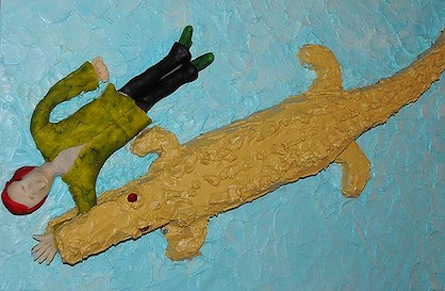
While I don’t agree with most of the Prime Minster’s actions, this cake of Julia Gillard getting attacked by a crocodile is a bit much. Northern Territory Senator Nigel Scullion didn’t seem to think so, and neither did the voters who crowned him the winner of a local cake baking competition! Scullion could be investigated for insinuating violence against Gillard. [Sydney Morning Herald]

Six steps to come across smarter. [MamaMia]

The best is yet to come, despite some peoples’ seemingly dreary destinies? [Girl with a Satchel]

Read the full version of this article on Kate Ellis being too sexy, which I wrote about in my Sunday Life review last week. [MamaMia]

Amy Winehouse’s death was treated like a spectacle by the media. [The Guardian]

Naww, the languages of love. [MamaMia]

Rachel Hills has some nice things to say about my nice things to say about her Sunday Life column last weekend. [Musings of an Inappropriate Woman]

Following on from her post on Musings last week, Hills writes for the Sydney Morning Herald on the assertion that young people are no longer interested in sex.


How your Tweets can betray your gender. [Fast Company]

“Clare’s Law: Should Abuse History be Revealed to New Partners?” Hell to the yeah! [Sydney Morning Herald]

There’s no such thing as “having it all”. [We Mixed Our Drinks]

On the (potential) end of Law & Order: SVU:

“I can’t imagine life after SVU. Mariska Hargitay is taking it much better than me:

“‘For the past 12 years Chris Meloni has been my partner and friend, both on screen and off. He inspired me every day with his integrity, his extraordinary talent and his commitment to the truth. I love him deeply and will miss him terribly—I’m so excited to see what he’ll do next.’

“Speak for yourself, Benson. Unless what he is doing is going back to taking his clothes off on HBO, I’m finding it difficult to muster up enthusiasm for my favourite detective being anything other than that. If anyone needs me, I’ll be crying in bed watching the entire first season on Netflix.” [The Hairpin]

In praise of Joan Holloway. [Pamflet]

Mia Freedman debriefs on the Cadel-Evans-sportspeople-aren’t-heroes hullabaloo from last week. More on this to come next week on The Scarlett Woman. [MamaMia]

Emily Maguire on society’s obsession with female virginity, from April last year. [The Monthly]

The Sweetest Thing, Bridesmaids, Bad Teacher & the Female Raunch Comedy”:

“Comedic movie actresses have to be allowed to not be hot. Not like, high-heel-stuck-in-a sewer-grate, frizzy-flyaway-hair, Anne Hathaway-in-nerd-glasses not-hot. I mean genuinely not-hot. Full-attack mode physical-comedy not-hot. John Belushi not-hot. Not-pretty enough to be actually funny, because vanity contraindicates comedy. And this was the most revolutionary aspect of Bridesmaids; the pratfalls are actually pratfalls, the dick jokes are legitimately obscene.” [Grantland]

Women who don’t wear makeup are “arrogant, lazy or deluded, and frequently all three.” That counts me out, then! [The Daily Mail]

Three years on from Vogue Italia’s “all-black” issue, has the racial landscape of the modeling industry changed? You tell me… [Jezebel]

Tiger wife Wendi Deng-Murdoch’s defensive right hook, which came to the aid of her almost foam pie-faced husband, Rupert, has renewed “belief in love”. [Newsweek]

“In Defence of Imperfection.” [Persephone Magazine]

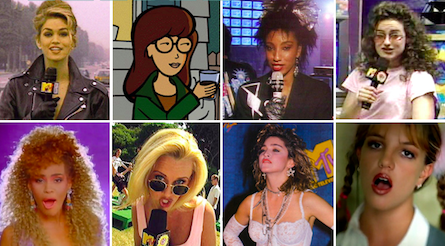
“30 Years of Women on MTV.” [Jezebel]

Images via MamaMia, Fast Company, Jezebel.