The Underlying Message in Madonna’s “Like a Prayer” Video.

About a month ago, I posted a quick revision of a presentation I did at uni on Madonna’s most controversial videos. In it, I wished to go into further detail on “Madonna’s influence on the music video and religion in pop culture”. Here I attempt to do so.

Another pop culture icon who’s had a big influence on modern religion is Oprah, who pushes her brand of “pick and mix religion” to her millions of followers. Funnily enough, Shmoop comes to a similar conclusion about the “Like a Prayer” video:

“The blending of Italian American and African American traditions and cultures should also be considered a postmodern choice. It resists interpretation. Where a critic might try to understand the video as an endorsement of Catholicism, the blending of Catholicism with the African Methodist Episcopal choir Madonna meets in her dream prevents such a simple interpretation. The video is neither here nor there on particular religions, only communicating the power of some force of faith to empower her.”

But when the video was released in 1989, that was the least of its critics’ problems. Perhaps it was the rape scene at the beginning, the depicition of a “black Christ”, who was in actuality the black Saint Martin de Porres, to critique racism, or—my pick—the burning crosses in the field behind Madonna, who prances around in black negligee. It could have been any combination of these factors that made Pepsi back out of its $5 million deal with the star in the aftermath of the video’s release.

Granted, the film clip was made more than twenty years ago, and it was groundbreaking for its time. However, fast-forward to 2011, and what we’ve seen since then makes “Like a Prayer” seem positively tame.

Madonna herself has been responsible for some of these, like her clip the following year for “Justify My Love”, her Sex book or, on the tamer side of things, kissing Britney Spears and Christina Aguilera onstage at the MTV Video Music Awards in 2003, which seems to be an enduring image of ranch culture in this day and age.

But you don’t go about these things without thinking of them seriously, and that’s why Madonna’s legacy has persisted all these years. She knew exactly what she was doing in that clip, and all other clips that followed. The fact that at the end of the song the events of the clip are revealed to be a performance indicates that “we all play a part in this little scenario”. What part, exactly?

While religious groups trying to get the video banned could be interpreted as the Church being unwilling to accept square pegs that don’t fit into round holes, Pepsi backing out of their deal with the star is an example of big conglomerates being scared to buck the system and take a risk less they lose customers.

Someone who isn’t afraid to buck the system and is accepting of all walks of life (except, perhaps, those whose body parts were used in the assembling of her meat dress) is Lady Gaga, who is a huge Madonna fan, if some of her recent videos are anything to go by. Last year I blogged about Gaga’s film clip for “Alejandro” and how it emulated “Like a Prayer” and other Madonna videos almost to a tee.

While we would like to think that we have grown as a society and have become more accepting of different people in the twenty years since “Like a Prayer” was banned, “Alejandro”’s critical reception from religious and parenting groups may indicate otherwise…

Related: More Madonna.

Katy P. VS. Lady G.

Madonna (and Her Brand of “Feminism”) On the Rocks.

Elsewhere: [Shmoop] Like a Prayer Meaning.

Images via YouTube.

On the (Rest of the) Net.

Flavorwire celebrates the Chinese New Year with “40 Culturally Relevant Rabbits”.

Ryan Gosling as feminist icon?

Jennifer Aniston controversially embraces her inner Lolita for Allure.

Speaking of… The allure of Mormon housewife blogs.

Chad Woody on “The Oprahverse”:

“This gets at my perennial problem with Oprah. She’s all about the self-determined destiny. This comes from hanging out constantly with celebrities, the cultural lottery winners of the world, and asking them about their origins and beliefs. Sure, some of them say they were lucky in some way, but what Oprah really digs for is that little gold nugget of ego in everyone that says, “I did it my way, and I always knew I would!” But success woven from big dreams is an easy pattern to discern if you’re only interviewing winners…”

While I don’t agree with Erica Bartle’s comments—I believe that Stefani Joanne Angelina Germanotta was “born this way” as Lady Gaga, and everything she does is an extension of herself—the girl with the satchel raises some interesting points about not needing “an alter ego when you’re happy with who you really are”.

Also at GWAS, Bartle laments the demise of The Saturday Age’s A2 supplement in favour of “the more generic Fairfax Life & Style moniker). I feel your pain :(.

“Why I (Really, Seriously, Truly) Hate Carrie Bradshaw”:

“…If I ever saw a woman dressed like that either here in the city, or anywhere else in the world, I’d throw a Twinkie at them, tell them to take a long look in the mirror and eat a damn carb for a change. Yes, I keep Twinkies on me for such occasions… Carrie once threw a Big Mac at Big, so throwing things have been all the rage ever since, right?”

Not only do strong women get branded “the bitch” for knowing what they want and standing up for themselves (if I can be so cavalier, I consider myself a strong woman who is often called “bitch”), but apparently it’s hardest for us to find equally as strong, if not stronger, men in the dating market. Woe is us.

Some more thoughts from Sarah Wilson:

“… Men aren’t happy because they’re not being real men. They’re denied the opportunity to pursue, to go after the woman they reckon is perfect for them. That’s because they’re being pursued by women. Why? Cos everything is out of whack (women are used to chasing things and get impatient when men don’t approach, but also because the men aren’t pursuing… cos they don’t have to… and it goes around and around). And so men feel emasculated by this. Because men are meant to be the hunters.  The peacocks who do dances and display their prowess to women, to earn female trust and affection. Since the cost of partnering is higher for women, they must be fussier and sit back and weigh up their options. This is a biological imperative.”

In a similar vein, “The Sexual Cost of Female Success”:

“…What’s important is getting women to question every decision they make on the grounds of what insecure men might potentially think about it, men you’d never want to date anyway because their insecurities would make the relationship hell. And, more importantly, because you’re not physically attracted to them—something no amount of data or bullshit studies on the internet will ever change. Yes, women are ruining everything by not planning their lives expressly according to men’s biological clocks and wishes.”

Gender Agenda and Melinda Tankard-Reist get their wordplay on in the fight against Kanye West’s Monster video.

Can everyone get over Michelle Obama’s clothing choices already?:

“Michelle Obama is a Princeton and Harvard-educated lawyer and former executive at the University of Chicago Hospitals system who happens to dress pretty well and be married to the president of the United States of America. But what are the stories about her that have dominated the media? They’re not about her skills, her experience, her mind, or even about her almost disgustingly uncontroversial pet issue, fighting childhood obesity. The Michelle Obama News is about whether her eyebrows are ‘angry.’ Whether her clothes mark her as a ‘new Marie Antoinette’… [or a] ‘new Jackie Kennedy.'”

The straight guy’s guide to Glee.

In response to Natasha Vargas-Cooper’s “Hardcore”, Tana Ganeva debunks “The Anti-Male, Anti-Sex Falsehoods That Rule Discussions About Porn and Sexuality”.

Shut up, Mark Latham!

I disagree with most of Miranda Devine’s views in “Buying a Baby—Not a Pair of Shoes”, but one thing’s for sure: Nicole Kidman’s surrogacy is one contentious issue.

The secret diary of a call girl.

The private lives of Pippa Lee public people.

The dating game according to the ladies of the Jersey Shore.

“The Baby-Sitters Club: Where Are They Now?”

Image via Sassi Sam.

Let’s Talk About the Sexualisation of Girls, Baby.


From “Fight the Sexualisation of Young Girls the Right Way” by Sarah Seltzer on Alternet:

“But does it follow that the teens who are on TV should not be seen as sexual at all? Teens in real life are sexual beings, after all, and they make sexual choices every day.

“This brings us to our second anti-sexualisation movement, a movement whose origins and goals are entirely different. SPARK is a movement to celebrate girls for more than their sexuality and to aggressively combat product placement, advertising, and cultural messages aimed at tweens and preteens that directly sexualise them—like pole dancing for twelve-year olds and push up bras before training bras. This is a movement that also has beef with media portrayals of writhing, gyrating teen and twentysomething pop sensations—like the Glee stars’ racy GQ poses.

“But the beef is not because they’re seen as sexual, because they’re playing into a version of sexuality that is catering to male fantasies. It’s about treating sexuality as something that comes from within, not a plastered-on image in high heels and short skirts.

“…And so they oppose the imposition of a male-oriented sexuality on women.

“Therefore their issue isn’t just that teen girls on TV have sex or engage in sexual behaviour like suggestive dancing or making out. Instead, their concern is that teen girls on TV are often reduced to sex objects or miniature versions of sexual stereotypes: temptresses, vixens, sluts. Girls having sex in long-lasting relationships or because they *gasp* want to? That’s okay, as long as they’re armed with the right information and a spectrum of choices and alternatives about how they can be sexy and still be themselves.

“If you want to know why feminists are obsessed with shows like Friday Night Lights and the late, great My-So-Called Life, it’s because they show the reality of teen girls being obsessed with and learning about and experimenting with sex—as teen girls generally do—but only as part of a broader spectrum of their lives which includes classes, parents, sports, and friendship.

“Sexuality vs. Sexualisation. It’s a distinction we all need to practice making so we can continue the work that SPARK has begun.”

Related: Disturbing Behaviour: Terry Richardson Does Glee.

Elsewhere: [Alternet] Fight the Sexualisation of Young Girls the Right Way.

Like a Virgin, Take 2.


From “Kanye West Thinks Dead is the New Sexy” by Nina Funnell on MamaMia:

“While many commentators argue that video clips over-sexualise women, the real problem is they actually deny the sexuality of women all together. Instead of analysing the clothes and dance moves within these clips, we should look at how desire functions.

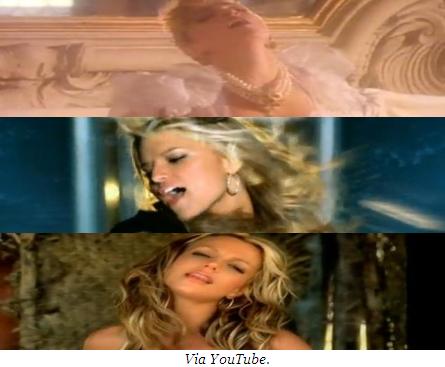
“As so often in popular culture, women are expected to appear desirable, but to be completely lacking in all desire of their own. The best example of this is Britney Spears in her Hit me baby days and Jessica Simpson circa 2002. Both Spears and Simpson stated they were virgins and intended to remain so until marriage. Meanwhile, they would grind back and forth wearing tiny outfits all designed to titillate. In other words their sexuality was to be consumed and enjoyed by everyone except themselves.

“The ‘sexually rapacious virgin’ is just one paradox of our sexualised pop culture. But a while back I began to wonder where our sexualised pop culture is really heading. At some point all the bouncy hair, big boobs and tiny skirts just gets old. These days humping a pole is not so much risqué as passé.

“So once sex (or rather, the limited and stereotypical representations of pop-culture sex) gets tired, what becomes the new frontier in risqué representation?…

“The clip is not only interested in fetishizing female bodies—it revels in fetishizing female pain, female passivity, female suffering and female silence. The ultimate female is the quiet, passive female—a mannequin—who accepts violence, abuse and suffering while remaining hot and sexy.

“As another commenter writes, ‘There’s nothing [overly] shocking or “taboo” about this video. Men’s sexual desire to dominate passive, docile, “lifeless” women has been a common theme in the arts throughout history. Indeed, many men disingenuously hide behind “art” to defend this proclivity. But how often do you see black men hanging from trees or Jews being gassed in ovens “artistically” to make a comment on racism or genocide, for example? It’s not likely to happen because that would be deeply offensive, even in the name of art. Women on the other hand are apparently fair game, even in a world where sexual and other male violence against women and girls is epidemic.’”

Related: Like a Virgin.

More Madonna.

Madonna (and Her Brand of Feminism) on the Rocks.

The Underlying Message in Glee‘s “Britney/Brittany” Episode.

Katy P. VS. Lady G.

Britney Spears: Not That Innocent.

Bad Taste Foxymorons.

Whipped Cream Feminism: The Underlying Message in Katy Perry’s “California Gurls” Video.

Elsewhere: [MamaMia] Kanye West Thinks Dead is the New Sexy.

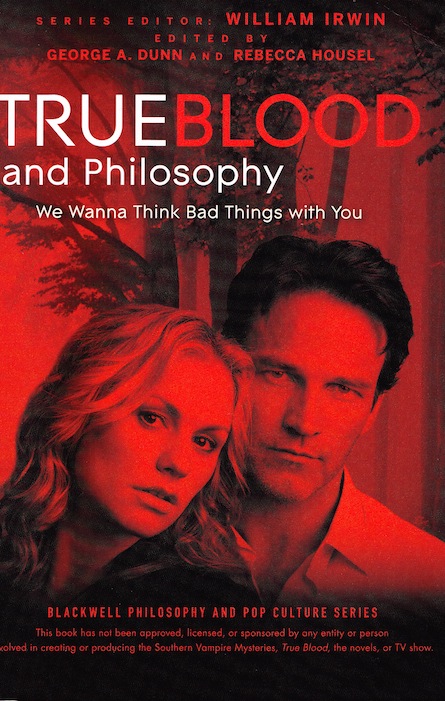
Book Review: True Blood & Philosophy by George A. Dunn & Rebecca Housel.


I bought this book last year around the time season three of True Blood was coming to an end, and the inspiration struck me to write a post on Sookie Stackhouse and feminism. Needless to say, that post has yet to come to fruition (watch this space next week), but I finally got around to reading the book in the past fortnight or so.

The great thing about the Pop Culture and Philosophy series is that you don’t need to be an avid fan of the topic each book deals with; most of the philosophical musings can be applied to everyday life. (I’m making a gross generalisation here, as True Blood & Philosophy is the first Pop Culture volume I’ve read!)

Anyone who’s familiar with the show and Charlaine Harris’ books will know that the way vampires are treated in the somewhat alternate universe of Bon Temps, Louisiana, is a metaphor for how gays and blacks have been treated for centuries.

True Blood and Philosophy delves into this throughout the book, but particularly in the “Eros, Sexuality & Gender” section, where the issue of “orientation” is raised: “Vampires seem to be unlike gays in that we can’t say that vampires are born that way… But there is still a parallel to being born either gay or straight, for once you become a vampire, there’s no returning to a human existence” (p. 98).

One way vampires and gays are different, though, is that “a homosexual predator” cannot “attack or coerce an unwilling person into homosexual acts”, whereas a vampire can take someone against their will (p. 99). You can’t “catch” homosexuality, but you can catch vampirism.

To take it a step further, there was a time when propaganda that the gays will give you AIDS was rife (some might argue that it still is), and were prohibited from participating in sports and other activities where blood could be spilled. This raises the question of the marginalisation of vampires in sports, as well as the use of their blood as medicine. (See “Coming Out of the Coffin & Coming Out of the Closet”, p. 93–108.)

My favourite chapter deals with the attitudes of humans towards vampires and vice versa, and how the way they treat each other amounts to the way non-fiction humans treat animals.

For example, Eddie Gauthier, the vampire whom Jason Stackhouse and Amy Burley take hostage and use as their own personal V vat, is a parallel for “the way millions of animals are treated every day on factory farms… Eddie, like the animals on factory farms, is exploited as a commodity with no regard for his suffering” (p. 36–37).

Furthermore, “… many… vampires actually regard human beings as lower forms of life ripe for exploitation, not much different from the way Aristotle and others regarded non-human species,” in “a classic example of speciesism” (p. 38–39).

Last year, I blogged about an article I read in Time, about how animals that we once thought to not be able to understand language, reasoning, fairness and pain, actually do experience these things. Vampires seem to have a similar attitude towards humans, whom they see only as a food source, and “incapable of feeling pain as we do”, according to the magister when ordering Bill to turn Jessica as punishment for killing one of their own to protect his “human pet”, Sookie (p. 44).

In a similarly intriguing chapter, William C. Curtis asks “can vampires be good citizens”?:

“Should there be a Truth and Reconciliation Commission to require vamps to come clean about their past murders in return for a grant of amnesty? How should vampires be taxed, especially since they don’t need many of the services that government provides, like Social Security, health care, and education? Can they join, or be drafted into, the armed forces?… Will their vulnerability to sunlight be treated as a disability under the Americans with Disabilities Act? Can vampire convicts be sentenced to life in prison, or would eternal incarceration violate the Eighth Amendment prohibition on cruel and unusual punishment?” (p. 65–66).

All these questions have been brought about by the advent of synthetic blood, allowing vampires to “come out of the coffin”, so to speak.

On this, an interesting footnote from the chapter “Un-True Blood: The Politics of Artificiality” by Bruce A. McClelland, refers to a 1927 study by Takeji Furukawa on the correlation between blood types and personality. Being a Japanese study, and the fact that synthetic TruBlood was developed by the Japanese; is there some connection? Or just a coincidence? The clot plot thickens…

A memorable event thus far on True Blood has been the introduction of Maryann the Maenad and her Dionysian debacle. “Let the Bon Temps Roll: Sacrifice, Scapegoats and Good Times” deals with the self-preservation of the Bon Temps residents in “not wanting to know what’s in the sausage”, as Lafayette Reynolds would say (p. 141–142). Or rather, not wanting to know what’s in Maryann’s “hunter’s soufflé”!

This ignorance is further symbolised by the black eyes of Maryann’s followers; they’re literally blind to her wicked ways (p. 142).

Of course this book is more suited to the True Blood fan, however it’s not a prerequisite. (I’m trying to force-feed my friend Laura this book in the hopes that she will cotton on to the sexy-smarts of the show. She’s doing the same to me with Mad Men.) Many of the thoughts discussed go much deeper than just Charlaine Harris’ Southern Vampire Mysteries and vampirism, and it’s quite a thought-provoking—yet still light—book.

Related: Time’s “What Animals Think” Issue: August 16, 2010.

On the (Rest of the) Net.

The latest Teen Vogue with Pretty Little Liars star Lucy Hale on the cover worryingly espouses using dieting to achieve “Your Best Body”.

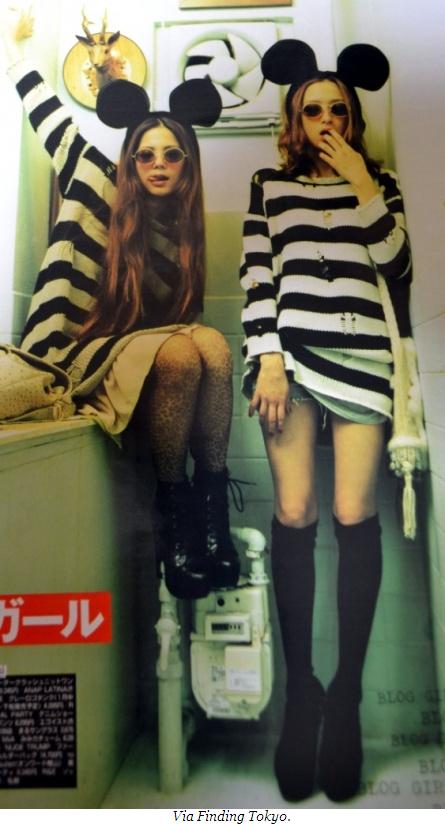
Minnie Mouse meets beatnik meets Gala Darling is the latest “blog girl” trend.

A superb 2004 Andrew Denton interview with media darling/mogul Ita Buttrose.

Charlie Glickman on the perils of alternative male and female sexuality.

Pop music=guilty pleasure no more. (However, stay tuned next week for an alternative view on this subject.)

Girl with a Satchel laments the unattractive “View from the Glossip Stand” in Zoo’s UnAustralians of the Year feature.

“Stereotyping is a fun and useful tool… to categorise interests and make harmful blanket statements” about your favourite magazines. For example, Lula is for those who “never spend money on U.S. fashion magazines because they just don’t ‘get it’; they’re so dull”, while Details has “a strong Patrick Bateman vibe”.

More on Gwyneth Paltrow’s unlikability, this time from New York Magazine:

“Gwyneth is also kind of a jerk. Her perfection is judgment on the rest of us, and she makes this known in interviews and on her lifestyle website, Goop, the tone of which suggests a domestic personality just one degree shy of Joan Crawford in Mommie Dearest.”

The Freudian nature of the vampire.

How women are reclaiming “bitch” as their own.

New research indicates that women’s bodies may protect themselves from rape. And so opens a whole other can of consent worms…

“Are Music Video Girls Exploited?”

This article puts to the rest the “you can’t be both beautiful and smart” way of thinking.

On the (Rest of the) Net.

Rachel Hills discusses Naomi Wolf’s response to WikiGate here, whilst also doing a fine job of unpacking the fun for twenty-somethings = lots of casual sex myth.

On that, “How to Be A 20-Something”:

“Be really attractive. Your acne is gone, your face has matured without having wrinkles and everything on your body is lifted naturally. Eat bagels seven days a week, binge-drink and do drugs: you’ll still look like a babe. When you turn thirty, it’ll become a different story but that’s, like, not for a really long time.

“Reestablish a relationship with your parents. You don’t live with them anymore (hopefully) so start to appreciate them as human beings with thoughts, flaws and feelings rather than soulless life ruiners who won’t let you borrow their car.”

What Would Phoebe Do? on the pretentiousness of Francophilia:

“Gratuitously adding French words to conversation is a time-honoured way of signalling pretentiousness.”

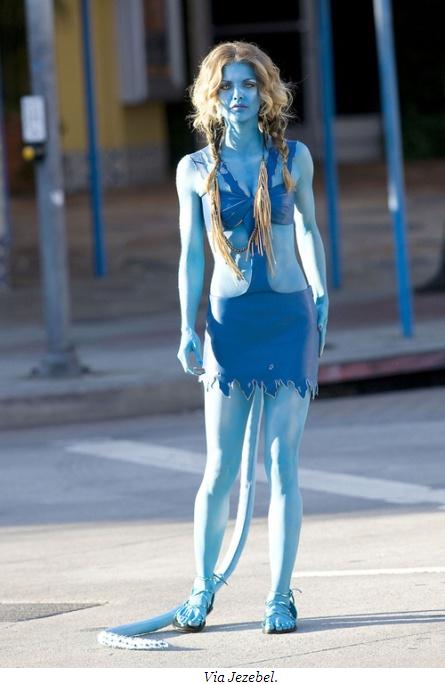
Next year’s Halloween costume sorted!

“How to Be A Complete Douche” has a certain Patrick Bateman feel to it.

Hugh Hefner defends his May-December engagement to Crystal Harris to The Daily Beast.

“How to Live in New York City”:

“Certain moments of living in the city will always stick out to you. Buying plums from a fruit vendor on 34th street and eating three of them on a long walk, the day you spent in bed with your best friend watching Tyra Banks, the amazing rooftop party you attended on a sweltering hot day in July. These memories might seem insignificant but they were all moments when you looked around the city and felt like you were a part of it all.”

Sarah at Feministe recalls “How I Learned to Stop Caring and Admit I Love Pop”.

Jezebel chronicles “The Evolution of Moms” from Soccer Mom (Mater Adidas) to a future robot-mom who encompasses all the admirable features of stage and helicopter mothers alike, with a special focus on the parent Sarah Palin made famous, the Mama Grizzly.

Memo to Lady Gaga: leggings are not pants. Nor, more to the point, are leotards.

Music Videos: More Madonna.

A revised version of a third year media studies group presentation on obscenity and race in Madonna’s music, and more specifically, her music videos:

Our topic is “Pop Music, Obscenity and Race”, and we chose to speak about Madonna, and her controversial career in music and as a pop culture icon. While the reading, “Expert Witnesses and the Case of Rap” by Houston A. Baker, Jr., is more about rap music and the 1990s rap group 2 Live Crew, we have taken some aspects of the article and applied them to Madonna’s works.

Firstly, we chose to analyse some music videos by Madonna, namely “Like a Prayer” (1989), “Justify My Love” (1990) and “What it Feels Like for a Girl” (2001), for their controversial nature.

“Like a Prayer” depicts images such as an attack on a woman in an alley, burning crosses, stigmata, Madonna’s revealing outfit as she sings in a church, and her love affair with the black Saint Martin de Porres, who some have interpreted as being a black Jesus Christ. Here she deals not only with race, but also religion.

One of Madonna’s most controversial and heavily censored videos is “Justify My Love”, in which Madonna and the actors in the clip engage in sadomasochism, bondage, domination, voyeurism, same-sex and group-sex relations, cross-dressing and possibly prostitution. Baker, Jr. speaks of voyeurism in the reading, and relates it to the fact that such taboo subject matter in videos by 2 Live Crew, and also Madonna, doesn’t allow viewers to critically and objectively view them. This leads to our focus question: “If religious groups, conservatives, feminists etc. weren’t condemning and censoring Madonna’s videos, would the public find them shocking and controversial, or at least as shocking and controversial?”

Finally, we briefly discussed Madonna’s video for “What it Feels Like for a Girl”. We personally didn’t find the video offensive or overly violent, however that was the reason given for banning it. In the video, Madonna kidnaps an old woman and goes on a crime spree with her, robbing banks and stealing cars. Madonna openly defended the video, saying that if she were a man, the violence wouldn’t be an issue, because they get away with the same or worse in their videos. Similarly, she defended the “Justify My Love” video’s content, even though the banning of it made her more money than if it was aired freely. This once again relates back to our focus question and what Baker, Jr. contends about 2 Live Crew.

Funnily enough, in an interview with Adam Lambert about his controversial same-sex kiss on-stage at the American Music Awards whilst performing “For Your Entertainment”, he got fired up how his actions were vilified because he was a man, while female pop stars have been behaving sexily since the dawn of time the music video. Hello, “Like a Virgin” at both the inaugural MTV VMAs in 1984 and with Britney and Christina in 2003!

I intended to elaborate more in this post on the points briefly mentioned here, however due to time constraints, I thought maybe I could use this post as a sort of “jumping off point to start negotiations”, as fellow Madonna-lover Cher Horowitz would say. I hope to put up more posts in the future on Madonna’s influence on the music video and religion in pop culture.

Related: Madonna (and Her Brand of “Feminism”) On the Rocks.

Katy P VS. Lady G.

Whipped Cream Feminism: The Underlying Message in Katy Perry’s “California Gurls” Video.

Elsewhere: [MTV] Adam Lambert Says AMA Kiss Was “In the Moment”.

Picture Perfect.


From “No Refuge: How Webcams & Cell Phones Ratchet Up the Pressure to be Perfect” by Hugo Schwyzer:

“… A young woman who had been scrupulous about her appearance all day could return to her bedroom at night, change into what was comfortable, and have at least a little waking time where her looks didn’t matter…

“The real problem is that the webcam has stripped the bedroom and the bathroom from their role as safe refuge from the beauty-obsessed culture…”

I find Schwyzer’s points to be particularly poignant to my own life.

Until a few months ago, I had lived either at home, with family who knew me from the day I was born and had seen me in all my glory (and not-so-glorious moments) for twenty-two years, or on my own. During that time, as soon as I would get home I’d change into my pyjamas, wipe the makeup off, and pop the curlers in, not caring what I looked like.

Then I moved in with my cousin, and I kept up appearances for a few days until I realised she likes to bum around the house in holey pants and nose strips, too.

Honestly, I don’t give a crap what I look like at home, and if I don’t want to draw attention to myself, I will adopt my at-home strategy in the big wide world, too.

For example, most mornings I go for a jog as soon as I wake, and usually stop by the supermarket on the way home. I chuck a bit of lipgloss on an whip my hair (though not in true Willow Smith style) into a ponytail, but other than that, I look pretty crappy. If I wanted to be stared at while I exercised, I would go to a juice-head gym in full make-up and a crop top or jog with my friend Tess at her neighbourhood track, where the beautiful people go to workout. But I don’t.

A similar situation occurred at my work Christmas party. I was getting my slut on when I was approached by Jack Sparrow. He initiated contact (both verbal and physical), asking which department I worked in and why he’d never seen me before. Unbeknownst to him, he had seen me before…

… Earlier that day, I rocked up for a few hours to help set up in jeans, a t-shirt, work boots (okay, they were Tony Bianco) and my glasses, where he was also lending a hand. He took one glance at me and continued with his work.

What’s even funnier? The following day I reverted back to my bespectacled self, and he went about his day, not realising that I was the girl from the night before.

I don’t begrudge him that, though. I deliberately do these things to fly under (or above) the radar.

Relating more closely to Schwyzer’s point, however, I’m lucky; my generation managed to bypass the whole webcam/sexting/profile pictured frenzy that consumes the lives of teens now. Who knows what pressures I would have facedand how differently my psyche would have developedif my privacy was constantly invaded by mobile phones, Facebook and the like?

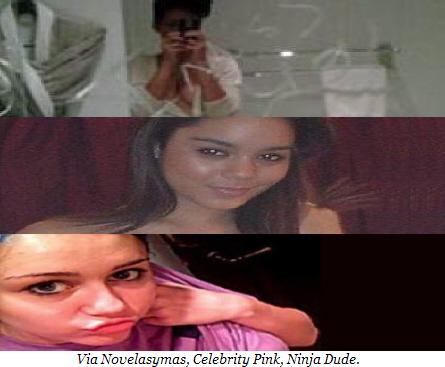
Celebrities who are a little younger than I am, though, like Rihanna, Vanessa Hudgens and (the markedly younger) Miley Cyrus have succumbed to the allure of naked photography, with the latter also dabbling in the filming of lap dances to 40-year-old directors and experimentation with bongs.

Personally, I don’t understand the pull of compromising photos. My advice to teen starlets and football players alike? If you’re going to take compromising photos, make sure you’re the only one with a copy or JUST. DELETE. THEM.

Related: ’Tis the Season…

Elsewhere: [Hugo Schwyzer] No Refuge: How Webcams & Cell Phones Ratchet Up the Pressure to be Perfect.

On the (Rest of the) Net.

Just a short one this week, as I haven’t had a lot of time for reading. L

Rabbit White ponders the things she learnt about her own sexuality from the men at Mr. International Rubber:

“It is being put in a sexual situation when you are non-sexual. It’s being introduced to a new world all at once. But it’s not long before I feel comfortable here, basking in male sexuality that is totally not directed at me. I think I finally getting the draw to being a ‘fag hag’or ‘fairy princess’. I get to gawk and join in the lust without fear of being pulled in or anxiety of protecting myself. In the view from here, human sexuality is a celebration and male sexuality is valid and uniquely cool.

“I don’t know how many times I’ve read advice columns where girls write in, worried about their smell or unable to enjoy sex because they are self conscious. Perhaps it’s because girls are taught to please everyone else, putting themselves last, but there just seems to be something in female sexuality that is uncomfortable with receiving pleasure. Look at all the women’s mags, obsessed with ‘how to please a man’.

“But maybe the ‘pig’ concept could lessen fears around receiving pleasure. What if your partner liked you sweaty, smelly, just the way you are right now? And just wanted more and more and more of that.”

Sady Doyle, of Tiger Beatdown (lots of feminist goodness from them this week) discusses “The Fantasy of Girl World”:

“The fantasy of girl world often feels like the feminist imagination taken to its most self-indulgent, hypocritical extremes. We stand for tolerance and egalitarianism, whereas the people who disagree with us are IGNORANT WIFE-BEATING MONSTERS. Women, if left on their own, would eliminate war, poverty, heartbreak and pets that are not cats. But, here’s a question for you: Why shouldn’t it look like this? What’s wrong with a wish-fulfilment fantasy that tells women they could do well with power and without oppression? What’s wrong with girls geeking out over the idea that they’re special?”

Glee’s Rocky Horror episode failed to touch-a, touch-a, touch-a, touch Garland Grey at Tiger Beatdown:

“Early on in the episode Mike volunteers to play Dr. Frank-N-Furter, but a few scenes later he says his parents won’t allow him to play a ‘tranny’. Mercedes takes the role, delivering a show stopping version of ‘Sweet Transvestite’, but the word ‘transsexual’ is replaced by ‘sensational’. For Glee, transpeople are punch lines, not anyone the show needs to fucking think about. While doing Rocky Horror Picture Show, a musical whose entire message is about accepting people’s sexuality and gender.

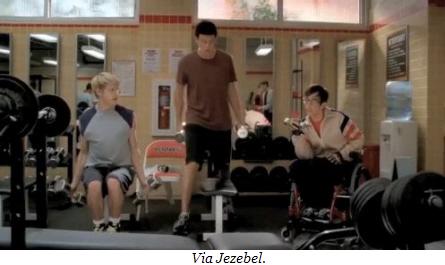
“Can we just cut out losses and rename this show Chord Overstreet in Tiny Gold Shorts? Clearly, he is fanservice and I don’t even care… However, as much as I appreciated seeing his abs, I didn’t care for the oddly-specific diet regimen he blurts out before showing them or the comically small weights Artie was holding. Artie’s a paraplegic, pushing himself everywhere in his wheelchair, lifting himself in and out of it dozens of times a day, and THAT is the biggest weight he’s lifting? That weight is a clear signal to the audience that Artie doesn’t belong in the locker room and is only there to provide comic relief…”

The four types of Facebook friends, according to Susan Orlean.

The Pervocracy on the “Slut, Deconstructed”:

“I’m 25. I lost my virginity at 15. So 26 partners is only two or three a year. It’s hardly going home with a new guy every night. To break it down further, 6 of those partners were serious romantic relationships, and you can’t call a girl slutty for sleeping with her own boyfriend, right? So now it’s 20 casual partners over 10 years—a raging, wild, man-eating two per year. I’m so cock-crazy I need it every six months, baby…

“Oh, and a woman in ‘my god, you can see her everything’ clothing dancing on tables and flirting with every guy in the bar might be a virgin for all you know about her.”

It’s the wrong time of year here, but there’s not many things I love more than trawling through the gossip magazines in summer, style-stalking the celebrities in Aspen and New York, longing for cool weather again to break out the beanies, woollen cardigans and shearling coats (okay, wrong continent for shearling!).