It’s amazing how some things we loved as children fail to live up to the hype as adults.
When I saw the ads for Space Jam on Go! last week, I just had to watch it. I haven’t seen it in a good ten or fifteen years, but it’s one of those childhood classics—like Home Alone or Mrs. Doubtfire—that you just have to watch given the opportunity.
And let me tell you, I haven’t seen such a sexist and racist kids movie in a very long time!
Firstly, there’s only one female in the whole movie that isn’t a wife, mother, child or housekeeper, and even those roles are very minor ones, appearing onscreen for less than five minutes in total. You can rest assured that Lola is objectified as the sexy, albeit sporty, “don’t-call-me-Doll” rabbit who wears short shorts and a midriff top, while everyone else wears actual basketball attire. On a side note, Pepé Le Pew makes a cameo in the film, which prompted my housemate to refer to him as the poster boy for sexual harassment. With his love interest, Penelope Pussycat, being one of only a few female Looney Tunes, Pepé is well within his rights to stalk and harass her til his heart’s content for deigning to be an attractive female in a male dominated world.
In the race department, the Looney Tunes aren’t really known for their fair portrayal of those who aren’t white and/or American. Look at Speedy Gonzales, Pepé, and the episodes featuring Ali Baba, blackface and Native Americans. But I found it shocking that the premise of Space Jam, which escaped me at a younger age, is capturing Michael Jordan to be a slave—replete with chains—at Moron Mountain theme park. A cartoon sequence that shows Moron Mountain’s owner, Mr. Swackhammer, fantasising about having Jordan as a side show attraction was a particularly low point of the movie.
Not only is Space Jam sexist and racist, but the plot has major holes in it. In one way I’m glad that I was able to see Space Jam for what it truly is, but on the other, I kind of wish it had stayed in childhood and remembered for its nostalgia.
“… Our ratings system in this country is so broken that a film that contains a sustained, brutal rape sequence featuring full-frontal female nudity can breeze right through with an R-rating, but if you include a sequence in which two people engage in spirited, consensual sex and we see anything that resembles reality, you are automatically flirting with an NC-17 or going out unrated. We have created a code of film language in which the single most destructive act of sexual violence is perfect acceptable to depict in the most graphic, clinical detail, but actual love-making has been all but banished from mainstream film. There’s no ‘almost’ about it; it is disturbing on a philosophical level to realise how backwards the system is right now, and I think one of the reasons many filmmakers will include a rape scene is so they can get some nudity into their movie, and the context doesn’t matter to them.” [HitFix]
In the spirit Christmas, I’ve decided to revisit some of my favourite posts of the year in the twelve days leading up to December 25th.
I’m taking this final 12-Posts-of-Christmas opportunity to squeeze two Rachel Berry-related posts into the one. Think of it as one last Scarlett Woman gift to you.
The first post was written “In Defence of Rachel Berry”, while the second explores the character as a feminist one. You can access the original posts here and here, respectively.
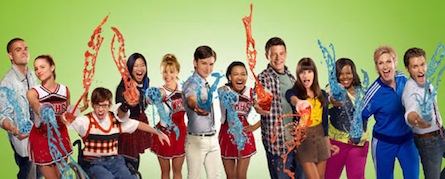
In the first season of Glee, Rachel Berry was introduced as an attention- and approval-seeking know-it-all diva, who sticks a gold star next to her name on the New Directions’ sign-up sheet because that’s what she sees herself as. Season two showed the glee clubber soften her resolve a bit, realising that she’s still only in high school, and has her post-high school years to carve out a Broadway career and have the world see her as the star she knows she is. The season final saw her choose a relationship with Finn Hudson in her senior year at McKinley High, despite having to leave him to head to New York when she graduates.
Not all young girls have to wrangle their feelings for the school jock whilst contemplating a move to the big city to make their dreams come true, but many of Rachel’s problems are shared by the show’s audience.
In the most recent Lady Gaga-themed episode, Rachel struggles to accept her “Jewish nose” and considers rhinoplasty. She also strives for the acceptance of her New Directions band mates, and to be seen as fashionable and popular.
It’s in the character’s nature to be highly-strung, goal-oriented and ambitious, so it’s not likely she’ll change any time soon. And why should she? While there are certainly other young women out there who identify more with the saccharine Quinn Fabray, the sassy soul sisters Santana Lopez and Mercedes Jones, or badass Lauren Zizes, there are plenty who see Rachel as their Glee counterpart, myself included.
A recent New York Times article by Carina Chocano praised the “relatable” and “realistically weak female character”, like Kristen Wigg’s Annie in Bridesmaids—“a jumble of flaws and contradictions”—over the “strong” one. “We don’t relate to [the weak character] despite the fact that she is weak, we relate to her because she is weak,” Chocano writes.
But what exactly does she mean by “weak”?
Pop culture commentator Dr. Karen Brooks notes that talented, beautiful, popular and successful female characters need to be broken down before they can be seen as relatable. “The more talented and beautiful you are, the greater the threat you pose and so ‘things’ are introduced to reduce that threat,” she says. Just look at the “women falling down” video on YouTube.
While Rachel’s had her fair share of setbacks, it seems Glee’s audience is finally beginning to understand her. “We’ve been given time to understand Rachel’s initially painful personality and to identify both her strengths and weaknesses. Her ambitions and drive haven’t shifted, but the context for understanding them has,” Brooks says.
“Rarely are unpleasant characters redeemed, they are simply ‘punished’, while the ‘good’ characters soar to impossible heights, not on the back of hard-work and self-belief, but usually [because of] a love interest and wishing hard. Rachel is a healthy and welcome exception to that,” Brooks continues.
So she’s an unlikely heroine we can all get behind, you might say? “A girl who reminds you of you,” as Chocano opines. An everywoman, if you will?
If Rachel Berry encourages more young women to see themselves as gold stars striving to have their accomplishments recognised, then so be it!
I wrote that audiences have come to know and love Rachel not because her obnoxious know-it-all persona has changed, but because “We’ve been given time to understand Rachel’s initially painful personality and to identify both her strengths and weaknesses. Her ambitions and drive haven’t shifted, but the context for understanding them has,” as Dr. Karen Brooks reiterates.
“I… have trouble with the vilification of Rachel Berry on a feminist level. How often do we dismiss women as ‘bossy,’ ‘know-it-all[s],’ or ‘control-freaks’ when their behavior would be interpreted as leadership, assertiveness, or courage if they were men?
“… In the right context, Rachel Berry’s personality would not seem ‘intolerable’ or ‘annoying’ so much as bad-ass, renegade, and hardcore.”
And Lady T, who used Rachel as her “Female Character of the Week” on The Funny Feminist, said:
“… The show wanted us to root for a girl who was ambitious, daring, and driven.”
It might be because I have been known to be seen as bossy, a know-it-all, a control-freak (just ask my new housemate!) and ambitious that I’m standing up for her, but just think of another feminist heroine in modern pop culture who could also be described using these words: Hermione Granger. The only difference is, she isn’t vilified for these attributes.
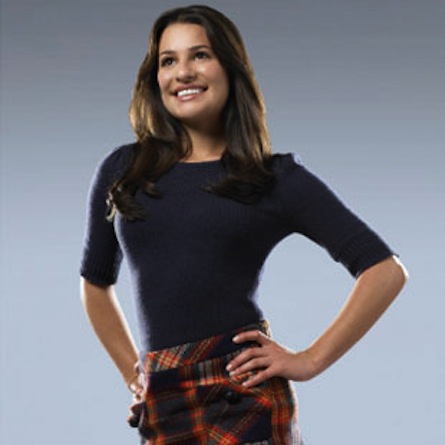
If you look back to the beginning of Glee, especially, Rachel was often deemed ugly. Now, anyone who’s seen Lea Michele knows she’s not exactly unconventionally attractive, but Rachel is characterised as this because she’s annoying. And she’s annoying because she stands up for herself, knows what she wants and how to get it. (From a racial point of view, she could also be seen as being “ugly” because of her Jewishness.)
Despite these inherently “unattractive” qualities, Rachel manages to snag her man, Finn, in what can be seen as typical Glee sexism and discrimination:
On the other hand, it can be seen as a poignant take on teenage life that the underdog is always being compared to the most popular girl in school: Quinn Fabray.
If Rachel is Glee’s feminist heroine, Quinn is her polar opposite. She has had next to no character development, which leads to her motivations changing week to week.
In “Original Song” she tore Rachel down, telling her to get over her “schoolgirl fantasy happy ending” with Finn, who would never leave Lima, taking over Burt Hummel’s mechanics business, with Quinn, a real estate agent.
But in “Born This Way”, she was “broken down” by her fat past coming back to haunt her, to come across as more “relatable”.
Sure, Rachel’s had her fair share of being “broken down” (being dumped and subsequently egged by Jesse St. James, being publicly broken up with by Finn, getting slushied… I sense a food theme here.), but in the grand Glee scheme of things, she’s actually doing pretty well for a female character.
In the spirit Christmas, I’ve decided to revisit some of my favourite posts of the year in the twelve days leading up to December 25th.
This post was one of my favourites for the year. Sure, the actual experience wasn’t all that riotous, but it’s given me loads of blog fodder and, I think, has promoted growth from the people involved, including myself. There are updated versions available here and here. The original is here, and below.
It’s been a beauty-centric week here at The Scarlett Woman.
I’d already planned to post those two articles last week before a beauty-related scandal came to light at my workplace.
Apparently, two of my male co-workers had devised a “ranking system” for the hottest to nottest girls in our department.
This is sickening on four levels.
One: it’s sexual harassment and discrimination based on gender and appearance, and those who were victimised by the “ranking” could take those who were responsible for it to H.R. Just look at the Pricewaterhouse Coopers incident. Or the Duke “Fuck List”, on the other side of the coin.
Two: we interact with these men boys (as that’s what they are: one has just turned 21, and the other is 23. But age really has nothing to do with maturity) as friends, colleagues; PEOPLE. Not as objects for them to rate and pit against each other in terms of how we look and nothing else.
Three: I don’t want to have to stoop to their level, but if we were ranking them, one would be at the top in terms of looks, but both would be at the bottom in terms of personality, morals and decency, which is all that really matters. So what gives them the right to judge us?
Four: this is not the ’50s and women are not reduced to what they look like.
The men boys who devised this ranking are sexist misogynists, one of whom I am deeply ashamed to have dated for a short period. Thank god I never got naked with him, ’cause who knows what he would have to say about me then!
What gives them the right to rank us? The same right men’s magazine editors have to rank female celebrities in terms of hotness, I suppose. But the difference there is that, while it’s still pretty sexist but somewhat understandable and accepted, most of the women on the list don’t work with and consider(ed) them friends.
How can you separate the things you know about someone—their personalities, interests, history, temperament etc.—with how they look? I know I can’t.
I was taken aback recently when a coworker praised me for being close friends with a man who’s not super attractive. Unlike the two who ranked me, I don’t make friends in terms of looks. If anything, I find it easier to be myself around and make friends with men I don’t find attractive.
But my so-called “ugly” friend has an awesome personality; anyone would agree. And that makes him attractive. And at the end of the day, it’s what’s on the inside that counts.
As I mentioned above, one of the boys who devised this ranking is probably about an eight in terms of looks, but knowing this about him, in addition to other undesirable traits that lead to our dating demise, makes him a one in the personality department.
Now, I don’t know where I ranked on this list and, frankly, I don’t care. My self-esteem is high enough to not give a shit about what other people think of the way I look. But that’s not the point. How would someone who doesn’t have such high self-esteem feel? As much as we say looks don’t—or shouldn’t—matter, to them, it does.
So is this just a case of “boys will be boys”, as one co-worker who knows about the list put it?
I don’t think it is. You will notice that two out of about thirty were involved in this. The overwhelming majority chose not to act as boys do, whatever that means these days. Again, this is 2011: not 1951.
Another co-worker said “judging” is just what people do. Sure, I judge young mothers who leave their kids with a babysitter so they can go out clubbing, the guidos/ettes from Jersey Shore and, certainly, these two men in light of this list. But I’m judging them on their behaviours and attitudes, not what they look like. And who am I, really, to judge them based on any factor? No one. The same as the makers of this list are to judge us. Nobodies.
At the end of the day, beauty is in the eye of the beholder. Ellen DeGeneres brought this up when she interviewed FHM AND Maxim’s Most Beautiful Woman, Rosie Huntington-Whiteley, on her show last week. DeGeneres compared Rosie’s “ranking” to her own as “Most Beautiful Woman” on This Old House magazine’s cover. We know Ellen, we like her, and that’s what makes her beautiful, in addition to her physical beauty. Bitch looks good at 53!
And true beauty comes from within. Don’t ever let someone else’s “ranking” of how you look make you forget that.
In the spirit Christmas, I’ve decided to revisit some of my favourite posts of the year in the twelve days leading up to December 25th.
Despite how far I feel I’ve come as a feminist in the last year or two, I find most people have “a long long way to go” in terms of realising what feminism actually means. I wrote this post in response to Beyonce’s musings on the topic, as well as the release of Caitlin Moran’s How to Be a Woman, “Sarah Palin feminism” and Tina Fey, amongst other things. The original version is here, and you can read an update here.
Recently, when asked in an interview with UK Harper’s Bazaar if she’s a feminist, Beyonce said she wanted to invent a new word for feminism, because she doesn’t feel it “necessary” to define whether she is one or not.
Why, in this day and age, do we still distance ourselves from the word “feminism”?
And it’s not just Beyonce. Keri Hilson, Lady Gaga, and even (kind of)Tina Fey, have been called a feminist in one instance, and tried tobacktrack on it in the next.
In response to all this, Jezebel ran a contest to come up with “a catchy new word for feminism”, like Beyonce suggested. Some suggestions were “FUCK PATRIARCHY”, “Flesh-Hungry Young Slutism” (seemingly appropriate given it has been the year of the SlutWalk, if you will), “Vaginist”, “Diva-is-a-female-version-of-a-hustla-ism” (how you like that, Beyonce?), but the one that came out on top was “Equalism” which, in my experience, is what young feminists today strive for.
Speaking of young feminists, I would probably only define a handful of my friends as this, and even they are hesitant to describe themselves this way.
One says she’s not a feminist because she wants to “cook for her boyfriend”. Since when did not cooking and feminism become mutually exclusive?
Another says he’s (yes, he’s) could never truly be a feminist because he doesn’t have a vagina, so therefore will never know what those who do have to go through on a daily basis in a patriarchal society, and have gone through for centuries in patriarchal societies.
I have another who, just by looking at her, screams feminism before she even opens her mouth. Yet sometimes, when she says things I morally disagree with, I think, “she’s not feminist enough”. (Abhorrent, I know, and something I strive not to think and say as a feminist. And, by my own admission, some might say I’m “not feminist enough” because of the way I talk and how I dress.)
It’s a far cry from Beyonce, Gaga et al., who try to distance themselves from feminism, while young feminists (and old!) bicker amongst themselves about who’s more feminist! And it perfectly illustrates the discrepancies between what self-described feminists project onto the movement, and what lay, non-feminist Generation Yers believes it to be about.
Camilla Peffer over at Girls Are Made From Pepsiwrites:
“I think most women associate feminism with radicalism and the whole bra burning hulla-balloo. Which is RI-DUNK-U-LOUS. And a lot of people see the term feminist [as] biased towards females in the sense that the whole movement promotes this idea of women being better than men.”
Indeed, there is a far cry between the first wave suffragist movement, second wave “bra-burning” and the sexual revolution, and current third-wave feminism. Some would even say that we have passed third-wave feminism and are now living in a post-feminist society.
When I first started getting into feminism about two years ago, I subscribed to this notion. Now, having been exposed to all manner of blogs, academic articles, events etc. to put the sexism, discrimination and harassment I’ve experienced as a woman into perspective, I can see that we sure as hell aren’t living in a post-feminist world and that we still need feminism, perhaps more than ever with the rise of the Tea Party and Michele Bachmann and the closure of Planned Parenthoods in the U.S., the blatant harassment most women experience on the street and in their workplaces every day, the attacks on SlutWalk, and the atrocities facing Third World women, to name but a few.
Taking on these battles shouldn’t be seen as something “dirty”; it should be seen as something we can all get behind, if it leads to our daughters experiencing a world free from harassment and discrimination based on what genitals she possesses and what she looks like, no matter what part of the world she hails from.
Sadly, as Rachel Hills muses, “it can be a bit uncool to care. Feminism means caring and wanting to change things, ergo it makes people uncomfortable—especially people who are comfortable with the status quo.”
Are you comfortable with the status quo? Do you think feminism is still a dirty word?
In lieu of a new episode of Glee last week, I attended a debate about the pros and cons of McKinley High and its glee club.
I was super excited, because I assumed the debate would entail a for Glee side, and an against. And it did. But while I thought the against side, consisting of Clem Bastow and Jess McGuire, would discuss the blatant sexism, racism, homo/transphobia, ableism, fatism and the many other phobias and -isms the show incorporates (feel free to add them in the comments), both panelists ultimately praised Glee for it’s inclusiveness and handling of the tough issues.
I’ve heard this rationalisation about Glee before. When my tuba-playing gay friend finally got into the show this season and fell hard for it, he thought I would sing its praises with him because he knew I watched it. (Evidently, he does not read this blog as he would know the main reason I like Glee is because I know I’ll always get a blog post out of it!) When I invited him to the debate, he had something else on but wondered what they would be debating, exactly. I referred to the list of problems I have with it (above and elaborated on below) and he replied, “But I thought Glee was about acceptance.” That’s what it wants you to think, and it blinds you to all the other issues with Katy Perry songs. As panelist for the “pro-Glee” side, Mel Campbell, said, “It’s best not to ask questions.”
While McGuire did touch on Glee’s pro-gay stance, and perhaps its best, and most underutilised, storyline of Brittany and Santana’s forbidden love, I was expecting SlutWalk Melbourne organiser and noted feminist Bastow to knock Glee out of the park for its anti-women portrayals. I was also sorely disappointed, as Bastow, a keen musical aficionado, chose to focus on the shows’ butchering of classic musical numbers.
So, I thought I’d take this opportunity to write about the issues I wished the panel had discussed last Thursday night.
Sexism.
I’ve written about feminism in Glee before, specifically as it’s embodied in the character of Rachel Berry. It annoys me to no end that Rachel is deemed “ugly” (though Lea Michele is anything but) because she’s annoying. And she’s annoying because she eschews traditional gender roles that are perhaps embodied by Quinn by being ambitious, voicing her opinions and unapologetically going after what she wants.
Finally, I wouldn’t say sexism is the main problem in Mercedes’ perpetual (okay, she seems to have a boyfriend this season, but more on that later) bachelorettehood, rather some other issues I will address later in the piece.
Racism.
Now is as good a time as any to discuss Mercedes’ aforementioned singleness. Was she literally the only character in season two who didn’t have a significant other because she’s black? (Or because she’s fat?) Sure, she dated Sam for all of a few minutes in the season two final, but before that the only action she got was Kurt condescendingly suggesting she should date one of the guys on the football team because he was black and, like, they’d probably have heaps in common.
If that’s not enough proof of Glee’s insensitivity to race, all you need to do it look at any one episode for a myriad of references to Tina and Mike’s “Asianness”, Roy Flanagan’s “Irishness” (or leprechaunnes, as Brittany might refer to it) and Puck and Rachel’s “Jewishness” (though that also falls under religious prejudice as well).
Homophobia & Transphobia.
Sure, Glee’s pretty much a vehicle for Kurt and, increasingly, Blaine, to showcase their voices, fashion sense and flamboyance. McGuire chose to speak at length about how sensitively the show handled Kurt coming out to his dad and Kurt and Blaine’s first time, and I have to agree with her. And yes, seeing two men make gay love (okay, the implication of them making gay love) on primetime network television without a stink being kicked up is pretty groundbreaking, as panelist for Glee and MC, Tim Hunter, noted. But they still single out Kurt for his gayness (“Single Ladies [Put a Ring on It]” and “Le Jazz Hot!”, anyone?), not to mention how Finn went about outing Santana in “Mash Off”.
They’ve handled the Brittany/Santana thing the best out of every relationship in the show, so that’s one point for lesbianism, but at the expense of other sexual orientations and gender identities, perhaps?
Just look at “The Rocky Horror Glee Show”, for example. Not only to Mike’s parents make him pull out because they don’t want him associated with a “tranny” musical, but the show even substitutes the lyrics “I’m just a sweet transvestite from transsexual Transylvania” for “sensational Transylvania”. Pardon me, but I don’t see what all the fuss is about in using the word “transsexual”.
Finally, we can’t forget Coach Beiste. When she debuted on the show, her sexuality and gender was thrown up in the air, when she’s really just an unconventionally attractive, masculine straight woman who happens to coach a men’s football team. But of course attention is drawn to her 40-year-old virgin status every time there’s a virginity-themed episode. Because, you know, she’s old and funny-looking and has never been on a date! Riotous!
Ableism.
Where do I start? There’s Emma’s OCD, which is made fun of by everyone from Gwyneth Paltrow’s Holly Holiday to her own parents (not to mention Will trying to come to her rescue by attempting to “cure” her). Artie’s wheelchair-bound way of life, which was even pointed out during the debate, only for the panelists to laugh at Artie wanting to give Blaine a standing ovation, “because he can’t”, and a whole episode, “Wheels”, insensitively dedicated to his disability.
Puck’s rendition of “Fat Bottomed Girls” was a clip played at the talk, and was received by audible groans. To see Lauren so uncomfortable as Puck serenaded her was awkward for the audience, and the patronisation was palpable. Like, oh Glee has a plus-sized girl who doesn’t hate herself and is being chased by the hottest guy in school; we’ve come so far.
But when Mercedes is relegated to backing vocals in favour of the slim lined Rachel, can’t get a date and suffers from an alleged eating disorder which is swept under the rug with some sage advice and a granola bar from Quinn, it’s all just tokenism.
So there you have it: the debating of the issues I wished had’ve been brought up by the panel. As my friend, housemate and fellow debate-goer put it: “It was just like Glee: it slightly touched on the issues, but ultimately didn’t add anything new to the discourse.” So feel free to add anything I, or the panel, didn’t cover in the comments.
“Where are the sitcoms written by and starring women of color, lesbian and bisexual women, women whose bodies don’t fit into sample-size clothing? Where are the scripts about women who hate movies like Dirty Dancing, who attack every problem with unflagging rationality, who don’t really enjoy baking cupcakes or sewing clothes? These women are no worse or better than the kind of woman Deschanel epitomizes—but they exist, and Hollywood would be a far more interesting place if it began representing them, too.” [HuffPo]
“I heard a woman shout, ‘Be a man!’ and I briefly wondered why it wasn’t acceptable to slap that bitch, thinking: What the fuck does she know about it? How can any woman ever tell me how to be man, when her father wasn’t there even when he was in the room, or his spine was removed vertebrae by vertebrae with the soft touch of her mother’s pointy claws? Her shout makes me realize that someone didn’t do his job, which makes us all suffer, so she calls us something she doesn’t understand and we don’t know how to be.” [The Good Men Project]
You’d have to be pretty dumb as an Australian, no matter your age, to risk a “Bali high” after the Shapelle Corby/Bali nine media circuses. [Adelaide Now]
“Sex occupied an odd purpose in her life: She seemed often to give it for reasons that had little to do with her personal pleasure, and when she had it she typically demanded it take place in the dark. She wrote in her diary, ‘I hate for men to want sex all the time. I hate sex anyway.’” [New York Magazine]
From Rachel Hills’ profile on Caitlin Moran in Sunday Life, 7th August 2011:
“Part of the problem… is that we just don’t agree on what it [feminism] means anymore. ‘I understand what I mean by feminism, and all my girlfriends—my girl Vikings—understand it. But if you say it to someone like a man or a younger person, they wouldn’t really understand what you meant.’”
“‘I want to reclaim the phrase “strident feminist” in the same way the black community has reclaimed the word “nigger”,’ she writes. ‘“Go, my strident feminist! You work that male/female dialectic dichotomy,” I will shout at my friends in bars, while everyone nods at how edgy and real we are.’
“Why do labels matter? Isn’t it enough to just take on the ideas? ‘Saying, “I’m a feminist” is just the quickest, shortest way of saying, “Get out of my face. I am not going to take your bullshit,”’ Moran retorts.”
*
Recently, when asked in an interview with UK Harper’s Bazaar, Beyonce said she wanted to invent a new word for feminism, because she doesn’t feel it “necessary” to define whether she is one or not.
Why, in this day and age, do we still distance ourselves from the word “feminism”?
And it’s not just Beyonce.
Keri Hilson, Lady Gaga, and even (kind of) Tina Fey, have been called a feminist in one instance, and tried to backtrack on it in the next.
In response to all this, Jezebel ran a contest to come up with “a catchy new word for feminism”, like Beyonce suggested she should do. Some suggestions were “FUCK PATRIARCHY”, “Flesh-Hungry Young Slutism” (seemingly appropriate given it has been the year of the SlutWalk, if you will), “Vaginist”, “Diva-is-a-female-version-of-a-hustla-ism” (how you like that, Beyonce?), but the one that came out on top was “Equalism” which, in my experience, is what young feminists today strive for.
Speaking of young feminists, I would probably only define a handful of my friends as this, and even they are hesitant to describe themselves this way.
One says she’s not a feminist because she wants to “cook for her boyfriend”. Since when did not cooking and feminism become mutually exclusive?
Another says he’s (yes, he’s) could never truly be a feminist because he doesn’t have a vagina, so therefore will never know what those who do have to go through on a daily basis in a patriarchal society, and have gone through for centuries in patriarchal societies.
I have another who, just by looking at her, screams feminism before she even opens her mouth. Yet sometimes, when she says things I morally disagree with, I think, “she’s not feminist enough”. (Abhorrent, I know, and something I strive not to think and say as a feminist. And, by my own admission, some might say I’m “not feminist enough” because of the way I talk and how I dress.)
It’s a far cry from Beyonce, Keri et al., who try to distance themselves from feminism, while young feminists (and old!) bicker amongst themselves about who’s more feminist! And it perfectly illustrates the discrepancies between what self-described feminists project onto the movement, and what lay, non-feminist Generation Y believes it to be about.
Camilla Peffer over at Girls Are Made From Pepsiwrites:
“I think most women associate feminism with radicalism and the whole bra burning hulla-balloo. Which is RI-DUNK-U-LOUS. And a lot of people see the term feminist [as] biased towards females in the sense that the whole movement promotes this idea of women being better than men.”
Indeed, there is a far cry between the first wave suffragist movement, second wave “bra-burning” and the sexual revolution, and current third-wave feminism. Some would even say that we have passed third-wave feminism and are now living in a post-feminist society.
When I first started getting into feminism about two years ago, I subscribed to this notion. Now, having been exposed to all manner of blogs, academic articles, events etc. to put the sexism, discrimination and harassment I’ve experienced as a woman into perspective, I can see that we sure as hell aren’t living in a post-feminist world and that we still need feminism, perhaps more than ever with the rise of the Tea Party and Michele Bachmann and the closure of Planned Parenthoods in the U.S., the blatant harassment most women experience on the street and in their workplaces every day, the attacks on SlutWalk, and the atrocities facing Third World women, to name but a few.
Taking on these battles shouldn’t be seen as something “dirty”; it should be seen as something we can all get behind, if it leads to our daughters experiencing a world free from harassment and discrimination based on what genitals she possesses and what she looks like, no matter what part of the world she hails from.
Sadly, as Rachel Hills muses, “it can be a bit uncool to care. Feminism means caring and wanting to change things, ergo it makes people uncomfortable—especially people who are comfortable with the status quo.”
Are you comfortable with the status quo? Do you think feminism is still a dirty word?
I saw The Smurfs over the weekend, and let me tell you, don’t waste your money!
The Smurf era kind of bypassed me as a kid, so I had to get my housemate Eddie to explain to me that the Smurf’s village is the ultimate patriarchy in every sense of the word, with Smurfette (voiced by Katy Perry in the movie who, once again, is doing no favours for feminism) being created by the evil wizard Gargamel in an attempt to lure the Smurfs to him so he can capture their essence. Until then, the Smurfs went about their day to day activities female-free. Living the dream, right boys?
While there are of course racial stereotypes (the Scottish Smurf, Gutsy, who wears a kilt and has orange sideburns; the Italian Smurf who makes pizzas; Grouchy, played by George Lopez, who tokenises the angry American immigrant), with only one female Smurf and two other female non-Smurf characters (Jayma Mays’ Grace and Sofia Vergara’s Odile), I expected the film to be appropriately sexist. I wasn’t disappointed.
The fact that each Smurf is named for its personality was really the nail in the coffin, though. While Grace attempts to soothe Clumsy Smurf by saying that “no one is just one thing,” Smurfette would be the exception, with “likes dresses” being her only other personality trait aside from “girl”. The writers even make this a whole subplot point for her! But all girls like fashion, right, so we’re back to square one.
Remember when Katherine Heigl bit the hand that fed her and criticised Knocked-Up for being sexist and perpetuating women/wives-as-shrews stereotypes? Where was Leslie Mann, who played Heigl’s sister in the movie, and is director Judd Apatow’s wife, during all this?
Certainly she didn’t take Heigl’s valid-but-ill-received criticisms of the 2007 runaway hit to heart, as she is basically playing the exact same character in The Change-Up: shrewish, run-off-her-feet with three children and a seemingly successful job (she discusses something in the vein of building planning, so perhaps she’s an architect? What does it matter, right?), and stuck in an unhappy marriage in which her husband doesn’t find her attractive.
And what about Jason Bateman and Ryan Reynolds’ characters? Reynolds, playing man-child Mitch Planko, is a loser stoner who only peels himself off the couch to score 9-months-pregnant women, a job in a soft-core porno, and weed.
Bateman’s Dave Lockwood, on the other hand, is a successful lawyer who’s been with the same woman for 18 years and no matter how much he accumulates, he’s never happy.
The only other woman in the film with more than a few lines and a tit-shot is Sabrina, played by Olivia Wilde. If Mann’s Jamie is the overworked and undersexed Madonna, Sabrina is the work-hard, play-hard whore. She espouses clichés like “I prefer to be sexually harassed in my private life,” or something to that effect. Way to stand up for women’s rights there!
There was one redeeming quality to the film, if you look really hard. Jamie makes an astute observation about women and marriage, and is somewhat representative of a lot of women in long-term relationships or marriages who no longer feel loved or desired by their husbands, who are taken for granted and who are run off their feet with 2.5 kids and a job (although Dave helps to break the stereotype of absentee father who doesn’t engage with his kids). But this also does a disservice to other kinds of wives and mothers and families, who don’t have rich husbands and live in a mansion, by all accounts.
Oh, and the unrealistically pert breasts of a breastfeeding mother of three and the ass of a 17-year-old on a lady pushing 40 don’t do much to help real women, either.




 The Scarlett Woman