On the (Rest of the) Net.

(No images this week as I’ve maxed out my broadband limit watching Grey’s Anatomy online!)

Style blog as “unapologetic narcissism”?

“Here is a beautiful slender girl who is constantly posting photos of herself wearing somewhat predicable outfits… Does she really have amazing style or is it just simply the case of a pretty girl wearing denim shorts and a knitted jumper?… How long can this low-on-substance form of blogging survive?’

“I am not your sex-crazy nympho dreamgirl!” at The Good Men Project, via Jezebel:

“… Surely he’d prefer the sexy, fake, plastic dreamgirl shell?

“[This]… image includes a lot of behavioural stuff: the way you squirm, the way you moan, being Super Excited about everything the guy wants to do, and Always Being Up for It—whatever ‘It’ is. When people think about ‘good in bed’, for a woman, that’s often what they think.

“This image also includes being young and thin and cisgendered of course, and that can be problematic.”

“Rihanna Shoots Her Rapist in Her New Video”, “Man Down”.

And here’s Fox News’ take on the video:

“ ‘Man Down’ is an inexcusable, shock-only, shoot-and-kill theme song. In my thirty years of viewing BET [Black Entertainment Television], I have never witnessed such a cold, calculated execution of murder in primetime.

“… She sings that she killed a man when she ‘lost her cool’ because ‘he was playing her for a fool’. This garbage from the same woman who publicly bragged to Rolling Stone recently that she likes to be spanked and tied up… Rihanna gets to have it both ways—accuse Chris Brown of domestic violence and be violent herself—because she’s a woman.”

What does Lady Gaga really have left to say?

The racism and “ugly women” involved in the Arnold Schwarzenegger scandal.

Beyonce: running the world or copying the cat?

The “endangered” and “reclusive” “North American Obeast”.

The World According to Paris [Hilton]: Same Shit, Different Show.”

Special needs kids as prom king and queen. Yay!

How many handbags do you need?

Rebecca Sparrow on Carbon Cate’s fallout:

“So who are these celebs to be loaning their support to such causes? Who are they not to be? Fame’s sidekick is a bloody big, unrelenting spotlight. With the trappings of fame comes a responsibility, I believe, to shine that light on causes you believe in. And while anonymous donations and clandestine charity work are noble—public giving, supporting and encouraging can—literally—save lives. Make a difference. Raise awareness.

“And frankly, I’d rather see [George] Clooney pimping his fame for Darfur than, say, Nespresso.”
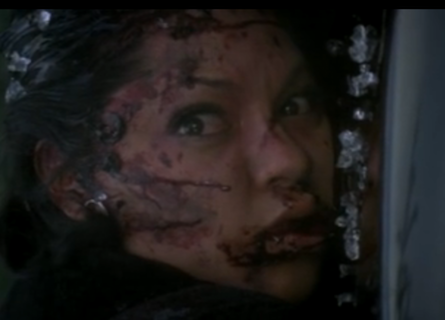
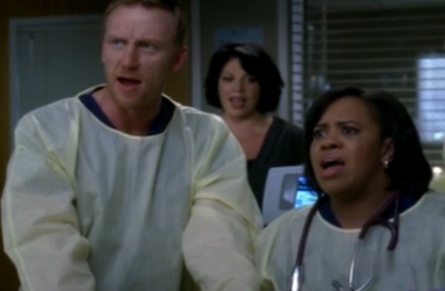
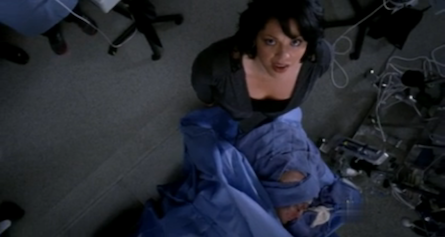
TV: “Seattle Grace Mercy Death”—Grey’s Anatomy “Song Beneath the Song” Review.


It’s kind of hard to take the potential death of Callie and her unborn baby seriously when everyone’s singing, and in most cases, not well.

I wasn’t sure if I was delighted or perturbed by the announcement of a musical episode of Grey’s, and wondered how it would all go down.

(Un)luckily I didn’t have to wonder too long, as my friend Sallie spoiled it for me when we were discussing the show a couple of weeks ago. I was still catching up from re-watching all the seasons, and she asked me where I was up to in the latest season: “Callie’s accident?” No, but thanks! And when I accidentally looked up from my book in the final moments of last week’s episode before Desperate Housewives came on to find Callie and Arizona driving and talking, I put three and three together and figured there would be a car accident which would result in Callie’s supernatural musical experience, and voilà, you’ve got “Song Beneath the Song”. It’s like Glee meets Supernatural meets E.R. And not in a good way.

Some of the renditions, especially at the beginning of the episode, are cringeworthy, but Callie—played by Tony Award-winning actress, Sara Ramirez—and Owen (Kevin McKidd) put in performances that push the episode into watchable territory.

Grey’s Anatomy is known for its heartrending storylines and strong acting, and apart from the horrendous soundtrack, this episode is a good one: it’s touch and go with Callie’s survival and the life of her unborn baby, which Addison flies in to tend to when Lucy tanks it. (That doesn’t lessen her appeal to Alex, though!) Mark’s a mess, and tells Arizona she’s “nothing” in the parentage equation, and later apologises. Lexie comforts Mark, but still chooses Jackson. And Meredith breaks down over her desire to have a baby, when it happened so easily for Callie. And Owen’s singing ability just makes him hotter!

The one effective aspect I think the singing brought to the table was it acting as a metaphor for the mile-a-minute emotions everyone tending to Callie’s case was feeling. Sometimes the singing became very overwhelming, what with everything else going on in the scenes. But in the end, I think it worked to the shows advantage.

Now, let’s just sweep it under the rug and pretend it never happened.

Related: Top 10 Grey’s Anatomy Moments.

The Underlying Message in Grey’s Anatomy’s “Superfreak” Episode.

Gun Shot Wound to the Head: Grey’s Anatomy Season Final.

Images via MegaVideo.

Magazines: You Say It Enough, It Loses Its Meaning.


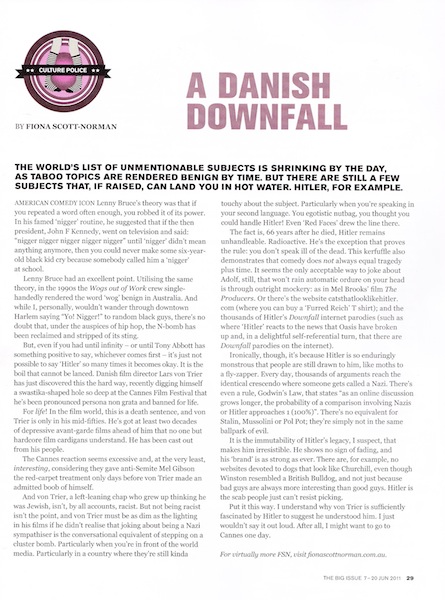
“N*gger.” “Wog.” “Hitler?”

According to Fiona Scott-Norman in this fortnight’s Big Issue, Hitler is still a word thats “boil… cannot be lanced”.

N*gger has been reappropriated by African American’s in hip hop and rap music. Wog is a common utterance in Australian society that I don’t personally feel comfortable using, but just flick over to any Aussie comedy and you’ll hear it.

But the same doesn’t go for Hitler, whose reference at the Cannes Film Festival recently by avant-garde Danish film director, Lars von Trier, has seen him banned from the festival for life. “For life!” Scott-Norman reiterates.

von Trier was joking when he said he could relate to the “enduringly monstrous” Hitler. There’s no question it was in bad taste, but banning for life? Really? I’m sure they could focus on banning people like Roman Polanski, who’s a U.S. fugitive wanted for sexual assault, or Arnold Schwarzenegger, whose marital indiscretions have come to the forefront in recent weeks. But racism is viewed more harshly than sexism. On one hand, I think both should be treated equally. On the other, at least there is a no-tolerance policy on racism in France. John Galliano is testament to that. Mel Gibson’s—who’s been caught on tape espousing racist and sexist vitriol—inclusion on the red carpet at this year’s Cannes not so much.

Related: FuckWalk: The Floodgates Have Opened.

Ain’t Nothin’ Gonna Break My Slutty Stride.

Minus Two & a Half Men.

The Big Issue, 1–14 March 2011 Review.

Event: FuckWalk—The Floodgates Have Opened.

SlutWalk seems to have opened the gates for a whole host of Walks, the latest being FuckWalk, a protest at Melbourne’s Flinders Street Station “in response to the government’s proposal of permanent legislation for on-the-spot fines for indecent, offensive or disorderly language,” on Saturday 25th June between 2pm and 3pm.

This is all well and good, as I think the legislation is bogus and the cops have a plethora of other illegal behaviours to worry about, but I worry that a Walk for any little movement that people happen to take issue with could undermine the larger issues Walks have been beneficial for, ie. SlutWalk. (So I might be a little biased… So what?!)

At the end of the day, as I have written before, words are just words. Fuck, shit, dick and in some cases, even cunt (though I know for most, it’s still a loaded one) have lost most of their meaning, and are mostly just said for added effect or emphasis.

It’s the “backwards and extremely offensive views that go along with” the words that we should be walking against.

Related: Event: Ain’t Nothin’ Gonna Break My Slutty Stride.

Event: SlutWalk.

Image via Frederik Hermann.

Gay Chicken: Latent Homophobia in “Who Would You Go Gay For?”.

What is it with guys refusing to reveal who’d they’d go gay for?

In my experience, girls have no problem admitting who they’d turn for. Personally, I have several: Megan Fox, Christina Aguilera and Lindsay Lohan. Though the last one is probably the Mother Theresa-complex kicking in, I do love a buxom bombshell.

But when I surveyed several of my guy friends, they absolutely, point blank refused to give me a name. With the exception of my friend and soon-to-be housemate Eddie, who couldn’t choose between Hugh Jackman and Ryan Reynolds (fair call!), they all said they’d rather die than go gay.

This is a typically masculine trait, but the underlying homophobia—the fact that a straight man would rather have his life ended than simply choose someone of the same sex they would go for in a hypothetical situation—is worrisome.

Now, Eddie is one of the straightest guys I know, and he’s obviously secure enough in his manhood and accepting of homosexuals to engage in this harmless truth or dare-esque scenario. (Suck up? Me? Never!) Funnily enough, some of my less-secure male friends are the ones who refuse to partake.

What is it they say? There are no winners in gay chicken?

Image via Fanpop.

Event: Crepuscular at Melbourne’s City Gallery.

“Crepuscular adj.

1. Of or resembling twilight. 2. Of certain insects, birds, and other animals active at dusk.”

Crepuscular has been running since the start of May and will finish up next month in the Town Hall’s City Gallery, a small, free exhibition space in the heart of Melbourne. Which is fitting, really, as the exhibition shows off the artwork, historical photos and taxidermied specimens of the animals (some might say pests) that roam the city streets and gardens in the nighttime hours: crepuscular.

Crepuscular deals with “the origins of the wild animals that have found a niche in the city” , whether they are “a menace to our health” or if they “bring benefits”, and how we should “respond to their presence”. It features stuffed specimens of night owls, possums, rats, bats and insects (though technically you can’t stuff insects!), their introduction to Melbourne (if they’re not a native species) and their history in the city.

As a free exhibition that city-dwellers probably pass on their way home from work, there’s no excuse for missing it. On Tuesday to Friday, it’s opened til 6pm, and from 11am til 4pm on Saturdays. Mondays are 10am to 2pm. It’ll take you 20 minutes to have a browse through, and it’s quirky nature is well worth it.

Body Image: Brown Eyed Girl.

A few weeks ago, just after I’d watched the “Born This Way” episode of Glee, I served two Asian girls at work.

It was hard to see their eyes properly, as they had a lot of eye makeup on and their fringes were tickling their lashes, but I was pretty sure they had blue—or Elizabeth Taylor violet—contacts in.

It reminded me of Tina Cohen-Chang’s “Brown Eyes” t-shirt from the New Directions’ performance of Lady Gaga’s “Born This Way”, as part of the 90-minute after-school special on acceptance. In the episode, Tina hates her brown eyes, so takes to wearing blue contact lenses to appear less “Asian”. (Can you really blame her, when her only real characteristic on the show is her Asianess? And her boyfriend, Mike Chang’s, Asianess. For that matter, there are other Asian surnames than just Chang, Ryan Murphy!)

I wasn’t sure if this was an actual phenomenon outside of the pop culture world, but given the propensity of Western, Barbie-esque images to infiltrate other cultures, especially Asian ones, it doesn’t surprise me that blue eyes are all the rage.

As a brown-haired, brown-eyed girl myself, I love my features. But as a child, having both a mother and sister with blonde hair and blue eyes, I did feel like a bit of a black brown sheep until the age of about 10 or 11.

Apparently, even Paris Hilton wears blue contacts to mask her naturally brown peepers.

What do you think? Would you wear coloured contacts to change the shade of your eyes? And have you ever seen any Asian girls wearing obvious contact lenses?

Related: The Underlying Message in Glee’s “Born This Way” Episode.

Image via The Daily Mail.

What We Talk About When We Talk About Islam.

From the transcript of SBS Insight’s “Fear of Islam” episode, which aired back in November of last year:

“… Every single thing that has been said about Muslims, that they are un-American, that they are foreign, that they are exotic has been said in this country about Jews in the 20th century, was said about Catholics in this country, in the latter part of the 19th century, so it’s a common occurrence in the United States…

“If we want to make sense of this mess and stop pushing Muslims into the arms of the extremist, we need to make meaningful distinctions between the religion of Islam that a billion Muslims follow and see as a guidance of peaceful righteous moral life and the puritanical Islam of a minority which so captures the media’s attention…

“… It’s kind of convenient to simply pick an choose whatever violent bits and pieces one finds in the Koran and ignore the equally important verses that talk about compassion and peace…

“… You have Today Tonight and A Current Affair which essentially on a fortnightly basis is Muslim bash [sic]. When you get that perception of Muslims, for a lot of mainstream people their understanding of Islam is established through a ridiculous documentary focused on extremism or A Current Affair Muslim bashing, so we need to understand where we are getting our knowledge of Muslims…”

Elsewhere: [SBS] Insight: Fear of Islam Transcript.

Image via Quran Reading.

Event: Cherchez la Femme Fatale, Take 2.

Geelong may seem like a world away for city slickers. At first, I was going to let its distance prevent me from attending the city’s latest exhibition, Femme Fatale: The Female Criminal, at the National Wool Museum. But if you take some friends and a good book (though not both at the same time. Take it from me; you’ll be stuck on the same page for the duration of the trip!), the hour’s train commute is worth it.

The exhibition juxtaposes “glamorous depictions of female felons in literature” with “the grim reality experienced by real women criminals”, such as Janet Wright, who was prosecuted for performing an abortion on a teenager who, after becoming ill, reported her, in 1928. Or “Sydney’s most beautiful prostitute”, Dulcie Markham, who probably got her fake name from Alfred Hitchcock’s Murder!, and whose real identity was never revealed. Or Louisa Collins, who poisoned—“poison was considered a particularly feminine murder weapon”—her husband in order to marry a boarder in their home just two months later, in 1887. She was sentenced to hang on 8th January, 1889, but the execution was botched by the hangman, “who was unable to open the trapdoor”. The execution was eventually carried out.

These were just some of the individuals profiled in the exhibition, which dealt with the supposed “empowered, cunning, unemotional woman who commits crime and uses her sexual allure to persuade men to sin on her behalf”—the quintessential “femme fatale”—and today’s understanding “that a wide range of factors may influence criminality including difficult childhood environments, mental illness and drug addiction.”

But back in the day, it was believed that “women lack moral fortitude and are easily tempted”, which allegedly stemmed from Sigmund Freud’s “penis envy” theory.

In 1893, Italian criminologist Cesare Lombroso wrote La Donna Delinquente (The Criminal Woman), in which he contended that masculine features, such as a “mannish jawline”, noticed in his photographical portraits of female criminals, were the “stigmata of degeneration”. Factors such as the menstrual cycle and the fables of Eve in the Garden of Eden, Medusa, and the Biblical Delilah, of Samson fame, were also taken into account when women “sinned”.

As was written in relation to the Salem witch trials in the early 1690s, “the fear of wicked women, whether real or imagined, can have horrific consequences.”

In Australia, though, in recent years “the number of female offenders incarcerated… has risen dramatically”. In the early days of female incarceration in Australia, psychological punishments such as head shaving were preferred to physical punishment. But at the State Reformatory for Women in Long Bay, Sydney, which opened in 1909, “the women were encouraged to reconnect with their ‘femininity’ and to adopt more refined, ‘ladylike’ behaviour.”

The abortion section, which I briefly mentioned above in relation to Janet Wright, was quite affecting but, as my friend Eddie pointed out, perhaps seemed out of place in the exhibition. Sure, abortion was (and still is in some parts of the country) illegal for a long time, but it kind of felt like a certain agenda was being pushed via its inclusion. Still, it is “one of the few crimes that always involves a woman”.

My favourite part of the exhibition, by far, was the genre of “femme fatale” paperbacks and films, which lured me to it in the first place. There was a highlight reel of some of the silver screen’s greatest female villains, such as Glenn Close in Fatal Attraction, next to this Italian proverb: “woman is rarely wicked, but when she is, she is worse than a man.” Another quote, from Raymond Chandler in Farewell My Lovely, which really resonated with me and my love for femme fatales, and which I posted last week: “I like smooth shiny girls, hardboiled and loaded with sin.”

But as much as the femme fatale is lauded, in her heyday the American Production Code stated that “ ‘the sympathy of the audience should never be thrown to the side of crime’. Censorship led to many implausible endings and a high level of mortality among femmes fatales.”

The exhibition finished up with crime memorabilia, which has reached fever pitch in recent years, with action figures, calendars, trading cards and true crime publications. (I, myself, have a penchant for true crime. Dominick Dunne, anyone?) This is a far cry from the assertion that “most people find it repellant that an individual can become a celebrity simply for being very good at being bad.” Reminds me of a certain Rihanna song

Overall, while each individual aspect of the exhibition was fascinating in its own right, Femme Fatale: The Female Criminal as a whole was a bit clunky and disjointed. I would still recommend seeing it, if “evil” women are your thing. But get in quick! It finishes next Monday.

Related: Cherchez la Femme (Fatale).

Raymond Chandler on the Femme Fatale.

The “Evil” Woman.

Another City, Not My Own by Dominick Dunne Review.

Minus Two & a Half Men.

Rihanna’s “S&M”: Is It Really So Much Worse Than Her Other Stuff?

Image via Art Geelong.

On the (Rest of the) Net.


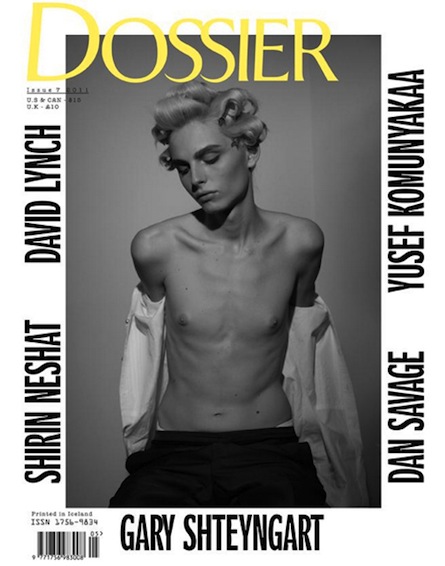
On the censorship of Andrej Pejic’s Dossier cover:

“… why is Pejic’s cover getting the same treatment as a porno mag? What message are the big bookstore chains sending—that the male torso is only appropriate [for] all-ages viewing when the man in question is ripped?”

Mia Freedman on when life begins.

SlutWalker Leslie Cannold on “the right to be equally mediocre”.

Speaking of SlutWalk, the Melbourne event’s coordinator, Clem Bastow, writes on the event for the Sydney Morning Herald.

The ostentatious disgustingness of “Push Presents”.

Glee: give fat girls a chance.

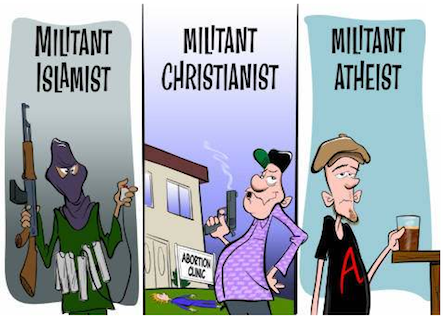
 The militant atheist doesn’t exist.

Arnold Schwarzenegger’s infidelity and Dominique Strauss-Kahn’s sexual assault allegations are one in the same, according to “The Media’s Groping Problem”.

In the same vein: why powerful men sexually assault women.

From Texas’ hottest sex offenders to Strauss-Kahn’s “hot-or-not” accuser.

What would “a word where Aspergers was the norm” look like? “Girls who spend hours a day straightening their hair are recommended for counselling,” amongst other things.

Rebecca Sparrow on “Hollywood’s Fake Teenagers”.

As if we didn’t need another reason to love Mick Foley: the Huffington Post names him their “Greatest Person of the Day”.

Meghan McCain rips the sexist and sizist Glenn Beck a new one.

Much to my mother’s—and her fellow kindy mums’—dismay, my big-for-her-age, four-year-old sister refused to walk to preschool, so Mum was forced to push her in a stroller. Check out Too Big For Stroller for more on this hideous phenomenon.

Are child murderers born evil or created?

In the case of toddler James Bulger’s murderers (one of whom re-offended after being released and is now back in jail), and Dontez Tillman and Thomas McCloud, who beat and tortured “two homeless men over the course of two days”, I tend to lean towards them being “born that way”. If Law & Order and Criminal Minds have taught us anything, it’s that children who demonstrate these kinds of behaviours usually turn out to be sociopathic serial killers.

Image via Queer Me Up, Psychology Today, Even Without Popcorn.