Rihanna & Domestic Violence*.

I’ve written about the Rihanna-domestic violence dichotomy before, and how no matter what the public persona presented in her music videos and interviews is, it’s consensual and it’s her prerogative. What Chris Brown did to her wasn’t.

But what role do her songs play in the unfortunately common perception that she “deserved” to get beaten by Brown; that she must’ve liked it if she sings about “S&M”; that she might have been egging Brown on in the form of “Breakin’ Dishes”.

We’ve heard a lot about the former two assertions. What I’d like to focus on in this post is her lesser-known single from the Good Girl Gone Bad album, “Breakin’ Dishes”.

Personally, I love the song and it’s one of my favourites from her. But, ashamedly, until recently I’d never put two and two together: the lyric “I’ma fight a man tonight”, the disbelief that female-on-male domestic violence exists, and Brown and Rihanna’s altercation three years ago.

Now, just to reiterate, I don’t think that what Rihanna sings about has any bearing on what goes on in her personal life (hell, she doesn’t even write her own songs). “Whips and chains” in the bedroom does not mean biting and punching in a car. But what does the lyric “I’m not gonna stop until I see police lights” mean coming from the mouth of Rihanna? That hitting a man and destroying his property is okay if you suspect he’s cheating? That it’s okay because he hit her first (yes, I am aware that “Breakin’ Dishes” was recorded well before the 2009 assault)? That it’s not really domestic violence because a woman hitting a man doesn’t do as much damage as opposed to the opposite occurring?

I’m not going to pretend that there are right and wrong answers to these questions, but I do know that intimate partner violence is never okay, no matter what the gender of the people involved. This is a message that we need to be getting across to everyone, so that those who are victims of it are better informed and equipped to leave the situation, and that they won’t be blamed or questioned for their role in it.

By the same token, and again, I’m not condoning or excusing it, sometimes the partner who takes the brunt of the violence is somewhat guilty of baiting their lover. I’ve witnessed it firsthand. Someone might start saying things that they know are sensitive subjects for the violent party; maybe they’ll slap or shove them to see how far they can push them. Sometimes they thrive on the aftermath; having their partner comfort them and tell them how much they love them and that it’ll never happen again. But this is part of the cycle of violent relationships and the “grooming” that is done by the perpetrator. I don’t know what’s going on in the heads of those involved, but I can certainly sympathise.

*

I remember reading a comment on someone’s Facebook post about Chris Brown at the Grammys last week or the week before. The comment was saying that yes, what happened to Rihanna was bad, but her music and sexy image is also bad and is sending the wrong message to our children. (Will someone please think of the children?!) I’m sure the commenter wasn’t aware that what they were writing was essentially a domestic violence apologist statement, but that’s certainly how it came across to me. Like they were sorry Rihanna got hit, but what does she expect when she acts so sexy and independent all the time?

In 2012, we should be able to understand that “art” (however loosely that term is applied) is not always an imitation of life, and that humans are capable of critical thought to separate the two. Singing about consensual sadomasochism and a hypothetical violent fight between lovers, however tasteless and closely related they are, is never an excuse for actual intimate partner violence.

*Trigger Warning: This post deals with domestic violence and may be upsetting to some.

Related: My Thoughts on Chris Brown.

Rihanna’s “S&M”: Is it Really So Much Worse Than Her Other Stuff?

Rihanna Upholds Traditional Gender Roles.

Rihanna’s “Man Down”: Revenge is a Dish Best Served in Cold Blood.

“Chains & Whips Excite Me” Take 2.

Image via MamaMia.

TV: Glee “Michael” Review—Oh My God Can’t Believe What I Saw As I Turned On the TV This Evening.


We’ve come to learn that when Glee devotes a whole episode to a star (Madonna, Britney Spears)—bar the second Lady Gaga episode—they pretty much go the Rock of Ages route: pack as many songs into the episode as they can without giving much thought to the dismal story lines developed in previous episodes.

I thought, in their “Michael” episode, they went the other way: using whichever Michael Jackson songs they had access to that resembled the character’s plotlines to insert into the show. Unfortunately, this meant such dull MJ songs as “I Just Can’t Stop Loving You” and “Ben.”


Rachel Berry is included in both of these renditions, and she admits at the beginning of the episode that she’s never really “gotten” what Michael Jackson is all about like the other New Directions’ have.

It seems the Glee writers don’t really “get” him, either (although, do they really “get” anything?), because they would have used songs like “I Want You Back”, when Sam serenades Mercedes, instead of “Human Nature” (which is a stunning song and perhaps the only example of where the writers chose melody over meaning); and when Artie gets all riled up over Blaine’s rock-salt-infused slushie attack at the hands of the Warblers, “They Don’t Really Care About Us” might have been more appropriate than Michael’s duet with sister Janet, “Scream”:

“What do you expect from us; we’re people. I know the rest of the world may not see us like that but when they tease us and throw stuff at us and toss us in dumpsters and tell us that we’re nothing but losers with stupid dreams it freaking hurts. And we’re supposed to turn the other cheek and be the bigger man by telling ourselves that those dreams and how hard we work make us better than them? But it gets pretty damn hard to feel that way when they always get to win.”


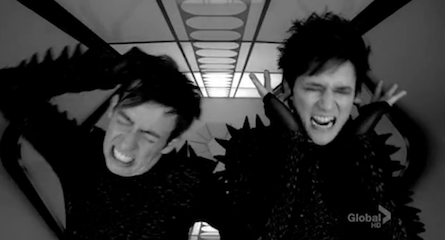
By far the best performance was the Warblers’ Sebastian and Santana’s Michael-off of “Smooth Criminal”, featuring 2 Cellos, who played at Elton John’s gig and did the same version of the song!

And, for old time’s Michael’s sake, here are the other songs from the episode:


Related: The Underlying Message in Glee’s “Britney/Brittany” Episode.

The Underlying Message in Glee’s “Born This Way” Episode.

Rock of Ages Review.

Images via Put Locker.

On the (Rest of the) Net.


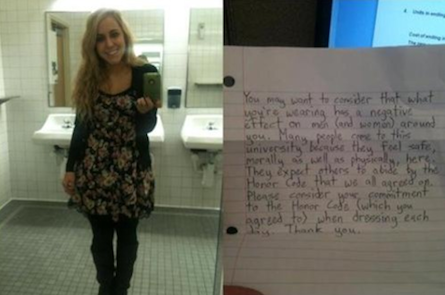
How a uni student wearing a modest floral dress, tights and a cardi inspired a fellow (male) student to give her a note detailing all the reasons her outfit was slutty and distracting. [Footage Not Found]

Why Bridesmaids should win an Oscar. [Daily Life]

Some snarky ways your Personhood-holding feotus can have their constitutional rights granted. [Jezebel]

A timeline of Chris Brown’s heinousness. [BuzzFeed]

Rachel Hills is a Friday feminaust. [Feminaust]

Why is it okay for gay men to bag women when we would never accept the same behaviour from a straight man? Is it because we don’t see gay men as “real men”? [Daily Life]

Nicki Minaj has got the same sized hands as Marilyn Monroe? [The Grio]

My year as a rom-com watcher. [Jezebel]

Hugo Schwyzer responds to Bettina Arndt’s assertion that women who dress provocatively and then complain about attention from the “wrong” type of men are teases:

“The calculus of entitlement works like this: if women don’t want to turn men on, they need to cover up. If they don’t cover up, they’ll turn men on. If they turn men on, women are obligated to do something to assuage that lust. Having turned them on, if women don’t give men what they want, then women are cruel teases who have no right to complain if men lash out in justified rage at being denied what they’ve been taught is rightfully theirs.” [Jezebel]

Image via Footage Not Found.

Hugo Schwyzer’s Ousting from the Feminist Community.

I must have been living under a feminist rock for the past couple of months, because when I saw some sentences that jumped out at me in this blog post about Hugo Schwyzer’s abusive past and resignation from The Good Men Project (I wondered why I was never seeing new posts from him on there), I was shocked.

I’ve recently been embroiled in a staunch disagreement with one of my friends over the Chris Brown, Michael Fassbender et al. debacle, in which I’ve attempted to personally boycott all things related to wifebeaters and horrible people in general, and she’s attempted to justify her support of projects they’re involved in because of all the other people it affects (a film crew of hundreds of people, for example).

But what happens when someone I openly admire (Scwhyzer) is revealed to have attempted a murder-suicide on his girlfriend in the past?

I’d have to call myself somewhat of a hypocrite, then. I still think Schwyzer produces some of the most apt feminist and gender-based musings out there. I also think that that incident was 13 years ago and, as far as we know, Schywzer got help and hasn’t relapsed. He’s taken his mistake, learned from it, and used it to add to the feminist and gender discourse. Which is more than I can say for Brown at this point. To play devil’s advocate (because I’m still adamant that Brown is a wifebeater through and through and will definitely strike a woman again), he’s still young and perhaps hasn’t woken up to the full scope of his actions and how they have hurt both Rihanna and himself.

This whole kafuffle has brought forth these questions, as asked by Raphael Magarik in The Atlantic:

Can men be feminist leaders?

Yes, they can. I’m not someone who thinks men can’t be feminists because they don’t have a vagina. Where does that leave trans women, then? How about the many gay men who have faced prejudice and champion the feminist movement? I’ve always thought Schwyzer has valid points to make (admittedly he’s really the only male feminist I read), and I think male voices can aid in the reconciliation of equality between men and women.

What role—if any—should men’s personal experiences play in feminist discussions?

I have a couple of male friends who, when presented with talk of feminism, will undermine and devalue what I’m trying to say with the straight white male reverse-racism bullshit. But, I think, as long as men are willing to listen to what feminists have to say without diminishing it with their white male privilege, personal experiences can aid in the discourse. For example, men who’ve grown up with strong women in their lives, men who’ve been abused, men who’ve abused and are aware of why they did it and are immensely sorry.

And how should feminists treat repentant former abusers?

I know a repentant former abuser who I’ve all but removed from my life, so I’m probably too biased about the situation to be completely inclusive of them. However, I think those who’ve experienced abuse are the ones who have to be having the conversation with former abusers and be okay with them jumping on the feminist bandwagon. If they are truly sorry, have a demonstrated history of non-abuse since they last abused, and can use that history to add value to female-male relations, then I think it might be okay. But the trust is still eroded…

How [do] men feel, what [do] they think about gender, [and] what [do] they need to change?

This is what Schwyzer is concerned with in his writings: how feminism relates to men. I hate the idea of feminism as this exclusive club (an idea which has been doing the rounds since noted second-wave feminists like Gloria Steinem, Betty Friedan and Naomi Wolf stepped on the scene, and was recently reignited with the whole Melinda Tankard Reist business) that you can only gain entry to if you’re the “right” kind of woman. To me, feminism is about equality and inclusion of voices other than the “right” kind of woman.

How do you feel about men in feminism and Schwyzer’s abusive past potentially delegitimising his feminist voice?

Related: My Thoughts on Chris Brown.

Conservative Feminist Melinda Tankard Reist for Sunday Life.

Elsewhere: [The Atlantic] Exile in Gal-Ville: How a Male Feminist Alienated His Supporters.

[Hugo Schwyzer] Why I Resigned from The Good Men Project.

[Feministe] Sex, Drugs, Theology, Men & Feminism: Interview with Hugo Schwyzer.

[GenderBitch] You Don’t Get to Tell Us Who Our Enemies Are.

Movie Review: My Week With Marilyn*.


“Thanks for telling me the truth, Colin.”

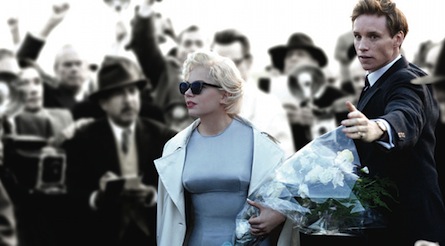
My Week With Marilyn is concerned with truth. Laurence Olivier tries to get Marilyn to perform a truthful portrayal of showgirl Elsie in The Prince & the Showgirl, while Marilyn expresses trepidation that Olivier’s imagining of Elsie isn’t realistic. Elsie could be seen as a metaphor for Marilyn Monroe’s misunderstood likeness since she changed her name from Norma Jean and became the buxom bombshell we all know and some of us love today.

But I didn’t find that the movie delved any further into the Marilyn mystique than any of the characters she played or any of the men who loved her did when she was alive. It was really only after she died, and in a slew of “lost” letters and photos that have made up such publications as Fragments and The Genius & the Goddess: Arthur Miller & Marilyn Monroe, that we came to discover that she was much more than just a dumb, sexy, childlike blonde who posed with Ulysses to make her look smarter.

It tried to go there, though, when Michelle Williams spoke such lines as “Shall I be her?” when Marilyn and Colin Clark  visit Windsor Castle, and after a fight with her husband, Arthur Miller, she says, “When they realise I’m not Marilyn Monroe they run.” But the film didn’t really show us anything different than the common perception of her.

Don’t get me wrong, though, I really enjoyed the movie and thought Williams did a great job with the script she was given. I just don’t think it was an apt representation of all that Marilyn was. As Dodai Stewart writes,

“… the biggest problem with My Week With Marilyn is that the film treats the woman who loathed being a sex object as a sex object. The story is told by a man who looked at her as a mesmerising other-worldly creature. Though he did have some intimate moments with her, a lot of the film involves Marilyn being gawked at by this slack-jawed fan-turned-friend who calls her a goddess. As a character, she is frustrated because she wishes people would see her as a human being, but she’s shot in the softest, most radiant light, frolicking through the English countryside and ever so gently batting her lashes: Male gaze ad nauseam.”

And while the film is wrapped up in a nice little package with Marilyn coming to say goodbye and thank you to Clark after having kicked him out of her bed and her life, I had the feeling he was still embittered about his unrequited love.

I haven’t read The Prince, the Showgirl & Me, so I couldn’t tell you for sure if this is the case, but even if it wasn’t, Clark was a 23-year-old boy who fell in love with the image of Marilyn Monroe, not the actual Norma Jean.

Related: Fragments of Marilyn Monroe’s Literary Life.

All Eyes on Marilyn.

Elsewhere: [Jezebel] The Problem with My Week With Marilyn.

*Blanket spoiler alert.

Image via Screen Rant.

TV: Gossip Girl—Blair Channels the Tragic Life of Princess Di & Gossip Culture is to Blame.


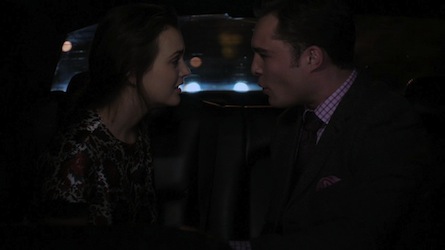
Tortured lovers Blair and Chuck decided to run away together despite Blair’s betrothal to Louis and her pregnancy. Chuck tells Blair he’ll love her and her and Louis’ baby, just as the paparazzi chasing the car they’re traveling in forces it off the road. If this isn’t a statement about Princess Diana’s fatal car accident, allegedly at the hands of the paparazzi, I don’t know what is. Hint: expect this to be the catalyst for Serena et al. to try to finally take down Gossip Girl

Also, it’s incredibly convenient that Blair’s involved in a car accident whilst pregnant. I can just see it now: Blair will come out of the accident unscathed, however her inconvenient bun in the oven won’t, allowing her to cut all ties with Louis and run back into the arms of Chuck. Providing he survives, that is…

Related: Life Begins at Love on Gossip Girl.

Image via FanPop.

My Thoughts on Chris Brown*.


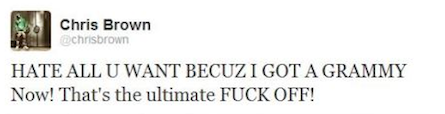
So the interwebs were all aflutter last week with talk of Chris Brown’s Grammy performance, nomination and subsequent win, starting with a Tweet (or several, as the screenshots will attest) from a young girl who didn’t know what Rihanna was complaining about: she’d love it if Brown punched her.

Wow, just wow.

Following on from this, I read this fabulous post from Sasha Pasulka on HelloGiggles on why she wasn’t okay with Brown performing at the Grammys and why you shouldn’t be either, and another great blog post in which Michael Fassbender was vilified for allegedly beating his girlfriend whilst simultaneously being lauded for his acting skills in the media.

Now, I’ve never seen anything Fassbender’s been in, but my housemate is (or was, until I linked him to this story about the assault) a fan, so I’m familiar with his work.

I linked the above news story (is TMZ considered news?!) on Facebook admonishing Fassbender, and a friend asked me if I was going to boycott everything anyone with a dubious personal life has been in, like David Boreanaz, for example. I replied that cheating may be immoral, but it’s not illegal, whereas Brown and Fassbender (along with my favourite, Charlie Sheen) are accused of intimate partner violence, which is never okay.

Now, I’m not really a fan of forgiveness and second chances, personally, but I do agree that Brown and Fassbender should be given second chances so that we can say they have when they inevitably fuck up again and then expunge them from society. Some could argue that Brown had his when he trashed a dressing room on Good Morning America and threw a chair out of a window. From experience, I know that violent men hardly ever only hit once and will always revert to their old ways.

The abovementioned friend who asked me if I will boycott all Brown, Fassbender, Sheen et al. projects (and so far I have successfully done so) said, after reading the TMZ piece, that Fassbender’s girlfriend should have left after he dragged her from a moving vehicle causing injuries to her knee, ankle and a blown ovarian cyst.

Sure, to anyone safely removed from that situation and reading about it from the comfort of their own home, the seemingly logical thing to do would be to leave after the first push, slap or abusive comment. But that reeks of victim blaming; abusers are highly skilled in manipulation and will make you feel like you have no other option but to stay. That it’s your fault. That they only hurt you because they love you so much. That they promise they’ll never do it again.

And, in the case of Brown, to allege that Rihanna deserved it because she sings about “S&M” and “Breaking Dishes” (more on this to come next week) is abhorrent! Those songs are what Rihanna does for a job. Furthermore, S&M is a consensual sexual act with “safe words and boundaries”, as one commenter on this MamaMia thread put it. Intimate partner violence is not consensual and there are no safe words. “Stop!” “You’re hurting me!” and “I can’t breathe!” are not enough to stop those who are mentally predisposed to hurting their lover with violence.

I thoroughly urge you to read the HelloGiggles piece if you haven’t already. In it, Pasulka uses quotes from the likes of Lindsay Lohan and Carrie Underwood, who said what a tragedy it was for both parties involved in the assault at the time. Oh yeah, it’s really tragic for Brown to have his name dragged through the dirt for a crime he actually committed. I guess it’s kinda tragic for Rihanna, too, as she was beaten to a bloody pulp by the man she loved and trusted and was then disparaged for it by the public.

Pasulka also cites the statement from the producers of the Grammys in which they insinuate that Brown’s attack on Rihanna the night before the awards three years ago was an inconvenience to them. Yeah, I’d say it was pretty inconvenient for Rihanna, too.

Also troublingly, going through the screenshots of all the Chris-Brown-can-beat-me-all-night-long-if-he-wants Tweets, they are primarily from young, white girls. To me, that signifies the trope of black-man-as-predator. Yes, this probably didn’t even cross the girls’ minds, but that they’re seemingly willing to be with someone who is a known wifebeater because he is attractive (personally, I find him ugly, but then I’m biased) not because of his race is a problem within itself.

In the comments thread on HelloGiggles some commenters raised the question of why is Brown being so vigorously vilified while other known/alleged wifebeaters such as Charlie Sheen and Mel Gibson go by unscathed. Is it because he’s black?

And they raise a good point. Personally, I don’t think it is, but it baffles me as to why people jumped at the chance to follow Sheen on Twitter, get tickets to his My Violent Torpedo of Truth tour and lament the fact that Two and a Half Men is apparently now less funny with fellow douchebag Ashton Kutcher at the helm. (Gibson suffered considerably more public scrutiny for his racist and anti-Semitic vitriol, but was still cast alongside one of his defenders, Jodie Foster, in The Beaver. That he was replaced in The Hangover with Mike Tyson is just as bad: substituting one violent racist, sexist alcoholic for a convicted rapist. Nice.)

Brown responded to his haters after winning a Grammy with the above Tweet. Take from that what you will but, to me, that doesn’t sound like a man who’s remorseful for physically assaulting his girlfriend and deserving of a second chance.

*Trigger Warning: This post deals with domestic violence and may be upsetting to some.

Related: Why Are Famous Men Forgiven for Their Wrongdoings, While Women Are Vilified for Much Less?

Minus Two & a Half Men. 

Rihanna’s “S&M”: Is It Really So Much Worse Than Her Other Stuff?

Elsewhere: [HelloGiggles] I’m Not Okay With Chris Brown Performing at the Grammys & I’m Not Sure Why You Are.

[Feisty Feminist] There Are People on my Dash Posting About How They Think Michael Fassbender is Wonderful Etc.

[TMZ] Girlfriend Fears Inglorious Basterds Star.

[MamaMia] Chris Brown Performing at the Grammys is Not Okay.

Images via The Vine, MamaMia.

TV: New Girl Should Attend a SlutWalk Sometime…


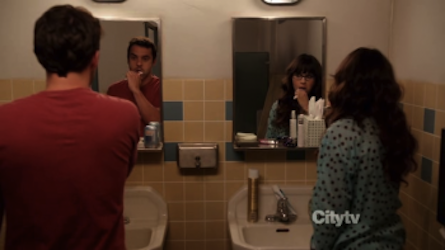
On last night’s New Girl the inevitable pairing of Jess and Nick began, with Jess’s model friend CeCe crashing the loft and watching the sparks fly between them.

Jess is oblivious to Nick’s interest, and tells CeCe that not everyone wants to have sex with everyone else, like CeCe thinks they do. CeCe begs to differ, and Jess asks, in horror, if her clothes are too revealing or if she should wear thicker pyjamas. Really?!

If SlutWalk has taught us anything it’s that the amount or type of clothing a woman is wearing has nothing to do with the interest she ignites in a man, whether that man is a potential rapist or harasser, or just a regular Joe with a crush on his housemate. We’re at episode four now, so Nick has gotten to know Jess and all her (at times insanely annoying) quirks. God knows if he’s expressing interest it’s in spite of the abovementioned quirks and not because of how she looks or what she’s wearing. (Although last week’s nudie run could throw a spanner in this theory!)

Related: Ain’t Nothin’ Gonna Break My Slutty Stride.

Body Acceptance on New Girl.

Image via HelloGiggles.

TV: The Underlying Message in Glee’s “Yes/No” Episode.


Wow, where do I start? Last night’s episode of Glee focusing on Becky’s newfound interest in Artie and Mr. Shue asking Emma to marry him was one of the most offensive yet.

Let’s begin with Becky: I found it weird that Becky’s internal monologue was spoken in a British accent (Helen Mirren’s to be exact). She claims that it’s her head and she can sound however she wants, but how many “abled” characters have a different voice in their heads and make that justification for it? I though it was singling Becky out because of her disability.

She and Artie go on a date and, at first, Artie feels uncomfortable with it, but begins to get to know and like Becky. It came across as platonic on Artie’s end, but his fellow glee clubbers gave him the third degree about what kind of message he was giving Becky.

They urged him not to lead Becky on or give her the wrong idea, and Artie called them out on their hypocritical ways: “You guys talk a good game” about acceptance, but at the end of the day, they’re just as narrow minded as the rest of McKinley High, which pretty much sums up Glee. They think just because they’ve got black and Asian characters and characters in wheelchairs and with Down’s syndrome and characters who are gay they’re being “inclusive”, but really, they show is just using them as token gestures.

Take Kurt, for example: he hasn’t been the focus of many storylines of late, and the writers seem to just slot him in to the background. In the opening scene, Mercedes and Sam channel Sandy and Danny of Grease, while the rest of the glee club stand around imploring them to “tell me more, tell me more”. Kurt belongs to the girls’ group in this instance while his equally gay boyfriend, Blaine, is hanging with the boys on the bleachers. Furthermore, when Puck, Finn and Blaine act as backup singers to Artie, Will and Mike in their rendition of “Moves Like Jagger”, mashed up with “Jumpin’ Jack Flash”, Kurt is nowhere to be seen. Is it because he’s not sexy or masculine enough? Let’s remember that this isn’t the first time Glee has ostracised Kurt from the gender group he belongs to because of his sexuality. Didn’t Glee get the memo: gender and sexuality are not the same thing.

But back to Becky: when Artie takes into consideration what the rest of New Directions are trying to tell him, he asks Coach Sue, of all people, for advice.

It is revealed that Becky sent Artie a sexy photo and he feels weird about it. Sue asks if he felt the same when Brittany, no doubt, sent him similar pictures of herself. Artie replies no, but those were different circumstances. So even Artie, a man with disabilities himself, thinks someone with Down’s can’t be sexy. Hypocritical, much?

The other storyline driving this episode is Will and Emma’s relationship being taken to the next level in the form of marriage. Emma is so desperate for Will to propose that she fantasises about doing it herself. Funnily enough, Coach Beiste and Sue become her bridesmaids in the dream sequence, wearing Princess Eugenie and Beatrice’s royal wedding hats, respectively. They called Kate Middleton “Waity Katie” and I think that’s what the writers were playing into with Emma’s patient wait for Will to propose.

Will finally decides to propose and asks Finn to be his best man as apparently he has no grown up friends and because he thinks Finn has showed him what it means to be a good man. Pah!

Finn is the whiniest, most cowardly and simpering character on the show! He feels sorry for himself, has an unrealistic idea of what Rachel and women in general should be, is (or has been) embarrassed by Kurt’s sexuality and only stands up for those he loves after the fact. He also thinks that joining the army will fill the void that college football has left and make him more of a man.

To further illustrate Finn’s insecurity, he decides to ask Rachel to marry him because he’s got nothing else going for him!

I was also a bit disturbed by Sam’s inclusion in the synchronised swimming team, called the “Guppies” and lead by bronze Olympic medalist, Roz Washington, who is of African American descent. She also comments that Sam’s “trouty mouth” is one she’s never seen on a white kid. This, in addition to Becky’s dig at the possibility of dating Mike Chang (“I’m no rice queen”), makes “Yes/No” one of the worst episodes of Glee yet.

Related: Glee’s “Sexy” Review.

The Underlying Message in Glee’s “Duets” Episode.

The Underlying Message in Glee’s “The Rocky Horror Glee Show” Episode.

The Underlying Message in Glee’s “Furt” Episode.

Image via The Dam Nation.

On the (Rest of the) Net.

Glamour models as feminists? On Jodie Marsh, bullying, beauty and being “worthy” and “good” enough:

“This isn’t just a random channel 5 program anymore. Suddenly, this is feminism and misogyny in microcosm.” [Libertarian Lou’s Blog]

The leggings-as-pants debate continues, this time at feminaust. While MsElouise does make some good points about admonishing others for wearing leggings as pants being akin to fat-shaming and sexual harassment, I still maintain that if you’re going to go there, you should go there sans underwear. I’m all for a legging-as-workout pant or legging-as-costume (I regularly wear both options), but please, opt out of the VPL. Or at least wear a really long t-shirt.

And some more from feminaust: female genital mutilation.

The “barely legal” porn phenomenon. [Jezebel]

When Brynne Edelsten makes it onto a “50 Women You Should Admire” list and the prime minister doesn’t. [MamaMia]

Thank you, Sasha Pasulka, for writing this hard-hitting and just plain brilliant admonition of Chris Brown’s Grammys “comeback”. More to come on the abomination that is Brown next week. [HelloGiggles]

Still on the topic, heinous Facebook and Twitter updates from young women defending Brown’s assault on Rihanna and actually expressing a desire for him to hit them, too! What is this world coming to? [The Good Men Project]

“He just has a crush on you” in response to playground harassment of little girls at the hands of little boys is just reinforcing that adult harassment of women at the hands of men means “he just really loves you”. Bullshit! [Views from the Couch]

Is this the end of men’s magazines in Australia? [MamaMia]

Why is Australian TV so white? [MamaMia]

On being a gay black man. [In America]

The horrible reality of being a fashion mag intern. In the U.S., anyway. [Jezebel]

Following on from the anti-abortion controversy of iPhone’s Siri, Android’s ChaCha search engine is “anti-abortion, anti-evolution, racist and even thinks that rape may be justifiable”. [Gizmodo]

Image via Acid Cow.