On the (Rest of the) Net.


“If Male Superheroes Posed Like Wonder Woman.” [The Bleeding Cool, via Jezebel]

“An Open Letter to Fred Nile”, member of the Christian Democratic Party, who said the baby being expected by Federal Finance Minister Penny Wong and her partner, Sophie Allouache, has “human rights” and should not be brought up in a home with two mummies. [MamaMia]

The anti-child-model argument. And it’s a good one. [The Guardian]

The navel-gazing of the Gen Y writer. [Harvest Magazine]

Latoya Peterson “On Being Feminism’s ‘Ms. Nigga’”. [Racialicious]

The old Hollywood deception that was Rock Hudson. [The Hairpin]

The case for spoilers. I’ve been guilty of giving away the ending of movies and TV shows, saying things like “Oh yeah, and then it grows back” about Jessica’s broken hymen in her first sexual encounter—as a human or vampire—with Hoyt on True Blood, when I asked a friend which episode they were up to. Oh, you haven’t seen it? Whoops! [Jezebel]

The (Real Life) Help. [Jezebel]

And if The Help, the DSK case and Arnold Schwarzenegger’s love child have taught us anything, it’s that domestic workers are treated like shit. But hope may be on the horizon… [The Houston Chronicle]

As per Beyonce’s suggestion, a new word for feminism: equalism. Though one suggestion seems to have been submitted by Voltron… [Jezebel]

Where have all the good men gone? Not posting on Twitter thread #reasonstobeatyourgirlfriend and not being all “Post Gender Normative”, that’s for sure! [Tiger Beatdown, McSweeney’s]

Reproductive rights, consent and organ/egg donation. [Feministe]

Feminism and superheroes conference in Melbourne? So wish I was there! [The Age]

Six myths about terrorists. [MamaMia]

It’s (not) all about popular(ity) at Girl with a Satchel.

Rachel Hills on motivation and the fear of failure. And success! [Musings of an Inappropriate Woman]

Classism on True Blood. [Tiger Beatdown]

Caroline Da Costa on why we need RU486 (the “abortion drug”). [MamaMia]

A step in the right direction to welcoming asylum seekers to Australia. [MamaMia]

Still with asylum seekers, along similar lines as my post this week. [The Punch]

Larry David as “feminist hero”? [Jezebel]

“Revolution” is what we call riots we like:

“… Guilt ridden white first-world bloggers… love protests in Syria and Iran and elsewhere because they can cast those people, members of an alien culture, race, and religion, as the perfect representations of resistance while totally stripping them of the actual thorny reality of political rage. Theocratic preferences are stripped away; violent behaviour… is ignored; the re-instantiation of sexist Islamic doctrine within the structures of protest movements are conveniently elided. This is the way of all patronising attitudes from the overclass towards resistance: in order to preserve its romanticized view, it has to occlude the particular grievances and goals that make the protest meaningful in the first place….” [L’Hôte]

In the wake of the death of a toddler attacked by a pitbull, The Punch’s Anthony Sharwood decrees “pitbulls should all be killed. Every last one. It really is as simple as that.” Hmm, not sure I agree…

Do zoos have a place in 2011? [The Punch]

This profile on 2012 Republican presidential frontrunner Michele Bachmann makes me want to pray to the God she so staunchly believes in that there’s still a little bit of sense and belief in President Obama left in the U.S. [The New Yorker]

Image via Jezebel.

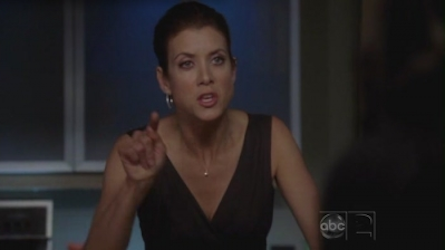
TV: Private Practice—Pro-Choice?


I’ve recently finished watching the latest series of Private Practice, the final of which aired here just over a month ago. The season dealt with the brutal rape of Dr. Charlotte King, about which you can read here and here, as well as the abortion debate that is raging across the world, but particularly in the U.S., with the rise of the über-conservative Tea Party, and 2012 presidential hopeful Michele Bachmann.

The second last episode of the season was said “abortion episode”. A woman named Patty came to see Dr. Addison Montgomery with pain, cramping and nausea after getting an abortion a month or two prior. When Addison does an ultrasound, she regrettably informs her patient that she’s still pregnant: the abortion didn’t take.

Patty’s foetus is now at 19 weeks, which would make the pregnancy in its second trimester, at which time an abortion is dubbed a “partial-birth abortion” by pro-lifers, as Dr. Naomi Bennett points out. Addison chides her for using political terminology, and that an abortion at 19 weeks is still perfectly legal, reiterating Patty’s right to choose, especially since she already made her decision the first time around several weeks ago.

Television and the media have a responsibility to present both sides of the story on such a contentious issue, even if they don’t live up to this most of the time. That’s why, when a show like Private Practice represents the abortion debate in such a refreshingly honest manner, it can be seen as revolutionary. (And it’s not the first time, either.) Not as revolutionary as Maude’s title character choosing to abort her unwanted pregnancy back in 1972, before the groundbreaking Roe VS. Wade decision, as this article points out, but still.

Naomi is a character I’ve never been a big fan of. She overreacts to everything (granted, overreaction may be warranted when your 16-year-old daughter gets pregnant and your best friend starts dating your ex-husband) and has a self-righteous, holier-than-thou attitude to most things, and her interference with Patty is no exception.

She uses her granddaughter Olivia to potentially guilt Patty into going ahead with her pregnancy, completely ignoring that Patty is single, after her deadbeat boyfriend took off when she told him she was pregnant, works two jobs, is poor, and is on her feet eight hours a day.

I had a real problem with this. Doctors should not push their personal beliefs on patients. If I were to fall pregnant tomorrow, I would be hitting up my nearest abortion clinic in a second, expecting to be given the care I’ve chosen, not to be lectured or threatened. As Addison says:

“… Even after you make the most difficult and personal decision that there is, it’s still not safe. Because you have some fanatic who claims to value life who can walk into an abortion clinic and blow it up.”

She continues:

“Why can’t Patty get what she needs, a safe and legal abortion without judgement?  Why does she have to go through this?  Why do I have to go through this?  I hate what I am about to do but I support Patty’s right to choose.  It is not enough to just have an opinion because in a nation of over 300 million people there are only 1700 abortion providers.  And I am one of them.”

The statistics are grim.

But, while trying to express the “pro-life” argument as well, Private Practice manages to remain pro-choice, which is no mean feat in the wake of reproductive rights being ripped from women across the world, and another PP, Planned Parenthood, being defunded en masse.

Related: Grey’s Anatomy Final Asks “When Does Life Begin?”

Cristina Yang as Feminist.

Elsewhere: [New York Magazine] Emily Nussbaum on the Rape Episode of Private Practice.

[E! Online] The Morning After: Let’s Talk About Private Practice.

[Feminist in the City] Private Practice Tackles Abortion.

[Televisual] The Changing Economics of the TV Abortion.

[Fuck Yeah Choice] Just Keep Swimming: Abortion on Private Practice’s “God Bless the Child”.

[Dakota Women] And the Abortion Portrayal Award Goes to… Private Practice?

Images via Kate Walsh Fan.

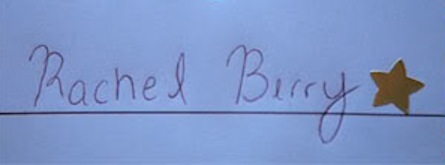
TV: In Defence of Rachel Berry.


In the first season of Glee, Rachel Berry was introduced as an attention- and approval-seeking know-it-all diva, who sticks a gold star next to her name on the New Directions’ sign-up sheet because that’s what she sees herself as. Season two showed the glee clubber soften her resolve a bit, realising that she’s still only in high school, and has her post-high school years to carve out a Broadway career and have the world see her as the star she knows she is. The season final saw her choose a relationship with Finn Hudson in her senior year at McKinley High, despite having to leave him to head to New York when she graduates.

Not all young girls have to wrangle their feelings for the school jock whilst contemplating a move to the big city to make their dreams come true, but many of Rachel’s problems are shared by the show’s audience.

In the most recent Lady Gaga-themed episode, Rachel struggles to accept her “Jewish nose” and considers rhinoplasty. She also strives for the acceptance of her New Directions band mates, and to be seen as fashionable and popular.

It’s in the character’s nature to be highly-strung, goal-oriented and ambitious, so it’s not likely she’ll change any time soon. And why should she? While there are certainly other young women out there who identify more with the saccharine Quinn Fabray, the sassy soul sisters Santana Lopez and Mercedes Jones, or badass Lauren Zizes, there are plenty who see Rachel as their Glee counterpart, myself included.

A recent New York Times article by Carina Chocano praised the “relatable” and “realistically weak female character”, like Kristen Wigg’s Annie in Bridesmaids—“a jumble of flaws and contradictions”—over the “strong” one. “We don’t relate to [the weak character] despite the fact that she is weak, we relate to her because she is weak,” Chocano writes.

But what exactly does she mean by “weak”?

Pop culture commentator Dr. Karen Brooks notes that talented, beautiful, popular and successful female characters need to be broken down before they can be seen as relatable. “The more talented and beautiful you are, the greater the threat you pose and so ‘things’ are introduced to reduce that threat,” she says. Just look at the “women falling down” video on YouTube.

While Rachel’s had her fair share of setbacks, it seems Glee’s audience is finally beginning to understand her. “We’ve been given time to understand Rachel’s initially painful personality and to identify both her strengths and weaknesses. Her ambitions and drive haven’t shifted, but the context for understanding them has,” Brooks says.

“Rarely are unpleasant characters redeemed, they are simply ‘punished’, while the ‘good’ characters soar to impossible heights, not on the back of hard-work and self-belief, but usually [because of] a love interest and wishing hard. Rachel is a healthy and welcome exception to that,” Brooks continues.

So she’s an unlikely heroine we can all get behind, you might say? “A girl who reminds you of you,” as Chocano opines. An everywoman, if you will?

If Rachel Berry encourages more young women to see themselves as gold stars striving to have their accomplishments recognised, then so be it!

Related: The Underlying Message in Glee’s “Born This Way” Episode.

Do “Strong Female Characters” Remind You of You?

Elsewhere: [The New York Times] A Plague of Strong Female Characters.

Image via Noelle’s Means of Escape.

Asylum Seekers: Have a Little Compassion.

Late last month an inquiry was launched into the high rates of self-harm and suicide attempts at detention centres across Australia.

Add to this the rioting and hunger strikes at detention centres in Queensland and Darwin, amongst others, and it’s a sorry state of affairs for asylum seekers in Australia.

Those who see asylum seekers as “illegals” when, in actual fact, anyone has the legal right to flee to another country to seek asylum, are probably reasoning that they brought this on themselves, that they shouldn’t expect to come into our country and be given a free ride, exempt from the laws “legal” citizens abide by.

If anyone saw Go Back to Where You Came From, the softening of Cronulla lifeguard Adam Hartup was immediate after he visited men on their final appeal to gain asylum at Villawood detention centre. He relayed the story of one man who said if he wasn’t granted asylum he would have to kill himself because he couldn’t return to his home country, where he would be killed anyway. What other option do these people have?

When you’re caged like an animal (and I don’t even believe in caging animals. Wait, does the zoo count?) and treated like you’re guilty for exerting your legal right to flee a dangerous country, there’s probably not a light at the end of the tunnel in sight.

While I don’t agree with rioting, we can’t let a few “bad eggs”, so to speak, influence the way we view the majority of detainees in detention centres, who are waiting quietly to have their legal right to seek asylum recognised.

Related: My Response: Go Back to Where You Came From.

Elsewhere: [ABC Lateline] Detention Centre Self-Harming Prompts Inquiry.

[The Age] Police Use Tear Gas to Quell Riot on Christmas Island.

Movies: Cowboys VS. Aliens & Indians… Does it Really Matter? They’re All the Same Anyway, According to the New Movie.


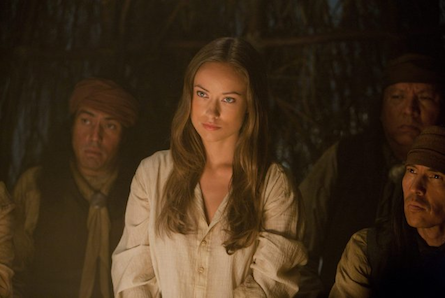
Yesterday I wrote that I was sick of seemingly every new release movie these days incorporating aliens into their plotlines, none more so than the latest Jon Favreau effort, Cowboys & Aliens, starring Daniel Craig, Harrison Ford and Olivia Wilde.

I have no interest in seeing the film. Super 8, Thor and Green Lantern have taken up my alien quota for the year. So I can’t comment fully on the nature of the representation of Native Americans in Cowboys & Aliens, but I think the title and the trailer tell me pretty much all I need to know. I also did some sneaky spoiler reading, so I’ll put up *spoiler alert* where applicable.

Being of Native American heritage myself, my initial viewing of the trailer grated on me. Taking the place of “Indians” in the Western genre were “aliens”—other—, which Indigenous peoples have been seen as for centuries. At ComicCon, the creators and stars of the film defended it, saying that both are genres that have been “done to death”.

I wondered if I was the only one who read it this way, and came across this brilliant article from Ms. Magazine, which asserts that the aliens and the Indians are seen as “them”, versus “us”: the white male main characters of the film, Craig’s Jake Lonergan and Ford’s Colonel Woodrow Dollarhyde. Cowboys & Aliens goes on to further stereotype the members of the Apache tribe featured in the film into categories: “the good Native”, the “savage warrior” and the “exotic” “Indian princess”, played by Wilde.

Wilde’s Ella Swenson is revealed to not be of Native American heritage, but *SPOILER ALERT* descendent from the other “others” in the film. Further to the assertion that people who aren’t white are interchangeable, Swenson is still characterised as “exotic” and not from the world of Lonergan and Dollarhyde. They’re all the same right?

After all, the central premise of the movie is that the whites have already raped and pillaged the Native people of the land, so they need a new enemy. Why not do the same to the invaders?

I’d be interested to know what others’ think of the depictions of race (the Ms. article points out that given the film is set in Arizona, there is an absence of Latino characters), come Cowboys & Aliens’ release date in Australia on Thursday.

Related: Green Lantern Review.

Super 8 Review.

Thor Review.

Elsewhere: [Ms Magazine] White Cowboys & Alien Indians.

Images via IMDb.

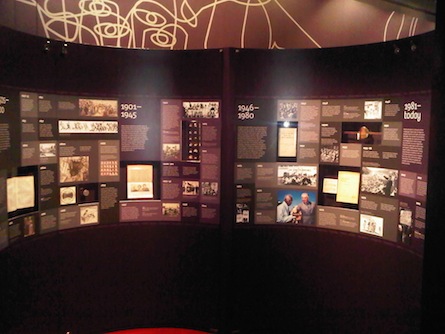
Event: Identity—Yours, Mine, Ours at Immigration Museum.


It’s not often an exhibition is created based on racism in Australia.

Either we ignore it, or we sport t-shirts and bumper stickers saying “Fuck off, we’re full”.

Well, a groundbreaking new exhibition at the Immigration Museum on Flinders Street has changed that, entitled Identity: Yours, Mine, Ours, part of general admission ($10 for adults, free for concession and children).

The first part of the exhibition deals with preconceived notions about people based on what they look like, what they wear, which cultural groups they (seemingly belong to), amongst other factors. While the exhibition has been designed with the utmost involvement with those who are featured in it (Kat Clarke, the Indigenous, hoodie-wearing teen poet and songwriter, for example), it’s the second half that really piqued my interest.

It begins with a simulated tram ride in which a white businessman hops on and expresses disdain and what can only be described as covert racism to an African man speaking in his native dialect on the phone.

There are then depictions of the abovementioned “Fuck off, we’re full” t-shirts, which leads into a timeline of racism and discrimination in Australia and around the world. There’s a lot of reading in this section, so my advice is to allow at least an hour and a half for the exhibition, and don’t take a heavy bag!

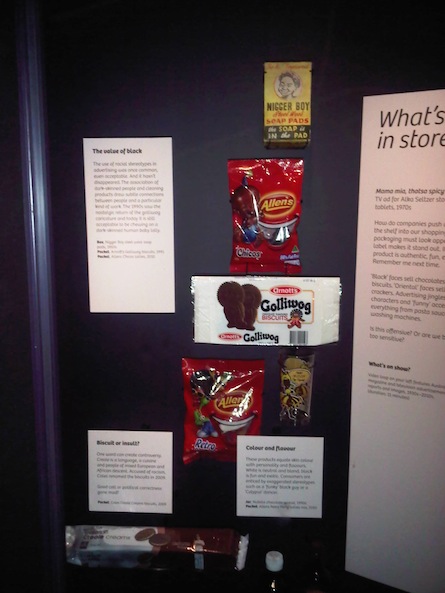
Towards the end there are displays of discriminatory and downright racist toys and food, such as golliwogs and Creole cream biscuits. Even Gwen Stefani’s range of L.A.M.B. perfumes are called into question! There are also videos of Pauline Hanson’s 1996 maiden speech and Kevin Rudd saying “sorry” to the Stolen Generations in February 2008.

A lot of complementary content can be found on the Identity website and blog.

I’m not sure how long it’s on for, but if you’ve got a spare $10 and a couple of hours, a visit is well worth it for the novel experience of an exhibition based on racism in Australia. In this day and age, it’s sad it is so novel…

Elsewhere: [Immigration Museum] Identity: Yours, Mine, Ours.

[Immigration Museum] Identity Blog.

Movie Review: Green Lantern*.


When I met my brand new roommate Eddie about a year ago, we bonded over Green Lantern, amongst other things.

I’m not a huge fan of the comic book series, other than the fact that Ryan Reynolds and Blake Lively are in the big screen adaptation, released last Thursday in Australia to the similar lacklustre reviews it received in the States. My only exposure to the superhero before I met Eddie was that he was professional wrestler Gregory “The Hurricane” Helms’ favourite superhero, revealed by his Green Lantern symbol tattoo and the t-shirt he gave Stone Cold Steve Austin during his “appreciation night” storyline back in 2001.

Even though I wasn’t super keen on the latest version, especially after seeing the previews (why must every movie be about aliens?! Super 8, Thor, Green Lantern, Cowboys and Aliens… Perhaps some fodder for a potential blog post…?), we’d bonded over it.

Going into films with low expectations usually winds up with me enjoying it much more than I thought I would, and this was true with Green Lantern.

As the comic book nerd to rule all comic book nerds, Eddie pointed out some holes in the plotline and amalgamations made especially for the movie that don’t exist in the comics, like Reynolds’ Hal Jordan’s nemesis Hector Hammond being able to read minds by physical contact after contracting the powers of Paralax.

As a non-comic book nerd, I thought some parts of the movie weren’t resolved, like Jordan getting beat up in a parking lot behind a bar he was having drinks with Lively’s Carol Ferris at, but nothing coming of it (Carol coming to his rescue, the cops arriving, any arrests being made) apart from being the catalyst for Hal to use his willpower, the energy that the Green Lantern Corps use to fight space crime and whatnot.

I was initially excited about Lively’s role in the film, but she’s as boringly saccharine in this as she is in Gossip Girl. The only part of the movie where I see a glimmer of potential in her acting abilities is when she is approached by Hal, in his Green Lantern costume, and exclaims, “You think I wouldn’t recognise you because I can’t see your cheekbones?!” It was both funny (perhaps the funniest part of the movie, which isn’t saying much) and the closest Lively’s ever going to get to an Oscar nomination any time soon.

Considering Green Lantern was one of the most anticipated premieres of the year, it failed to live up to the hype. Not only was its release date almost two months behind the U.S., which is unheard of these days, Reynolds was supposed to attend the Melbourne and Sydney premieres, but pulled out at the last minute. (We were going to stalk him at Jam Factory!)

A sequel has been greenlit (get it?), which is promising, as the Green Lantern saga has a lot more to offer. Three more human Lanterns, a black Superhero, a heel turn (sorry, wrestling speak; good guy turns into a bad guy) from one of the main characters, the scene that sparked the Women in Refrigerators feminist movement. Let’s hope the second instalment brings some of this to the table.

*It has come to my attention that I give away too much in my movie reviews, so the asterisk will now serve as a blanket *spoiler alert* from now on.

Related: Super 8 Review.

Thor Review.

The Problem with Serena van der Woodsen.

Elsewhere: [Women in Refrigerators] Homepage.

Image via IMDb.

On the (Rest of the) Net.


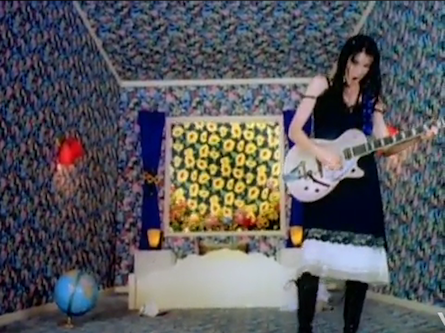
In praise of Meredith Brooks’ “Bitch” music video fashion. Takes me right back to grade six… [XOJane]

Rachel Hills laments the lustre of the It Girl. [Musings of an Inappropriate Woman]

Should recreational drugs be decriminalised? [MamaMia]

Consent, ignorance and “The Unintentional Rapist”. [Persephone Magazine]

Charlie Fine: boy wonder. I hope my future 11-year-old is a switched on as this kid. [MamaMia]

“Your pussy isn’t pretty enough” and other vulva-shaming myths. [Rachel Rabbit White]

The perils of being a black woman dating. [Jezebel]

Feminism is NOT a dirty word, Beyonce. [Jezebel]

The feminine girl geek mystique. [Persephone Magazine]

New show The Playboy Club as feminist text? [Jezebel, via NPR]

“When The Rapist is a She.” [Salon]

“Lest we forget” about asylum seekers? [MamaMia]

Muslim Americans: they’re just like other Americans! [Salon]

Mitt Romney’s abortion history. [Salon]

On Generation X nostalgia. [The New York Times]

Breastfeeding: a feminist issue. [Persephone Magazine]

In defence of Rihanna’s “Man Down” video. [Persephone Magazine]

“What Happened to Obama’s Passion?” [The New York Times]

Does “sport get way too much attention in Australia to the detriment of other national heroes?” [BBC News]

Clark Gable’s old Hollywood “Scandal that Wasn’t”:

“But the studio didn’t quite have a handle on his [Gable’s] image, casting him as an unrepentant villain and a laundryman. This was akin to casting Channing Tatum as a bad guy or smart person, when everyone knows he should only be taking off his shirt and/or doing dance moves, preferably while in the rain. Even cast in the wrong roles, Gable was remarkable. MGM’s head of publicity thus decided to further refine Gable’s image, capitalizing on his rural past and six-foot frame to create Clark Gable, The Lumberjack in Evening Clothes.” [The Hairpin]

How to be a dead body on TV. [The Wall Street Journal]

Fashion’s next big thing: a 10-year-old French girl. [Jezebel]

Image via XOJane.

Strong Female Characters—A Lesson in Cartoon.


Related: Do “Strong Female Characters” Remind You of You?

“With a Gun Between Her Legs,” Take 3.

“With a Gun Between Her Legs,” Take 2.

“With a Gun Between Her Legs”: Why “Strong (AKA “Sexy” Whilst Being “Strong”) Female Characters Are Bad For Women.

Strong Female Characters in the Land of Oz.

Women in Fiction: Are Our Favourite Fictional Females Actually Strong, Or Stereotypes?

Elsewhere: [Film Schooled] Getting a Sense of Humour.

Movie Review: Bad Teacher*.


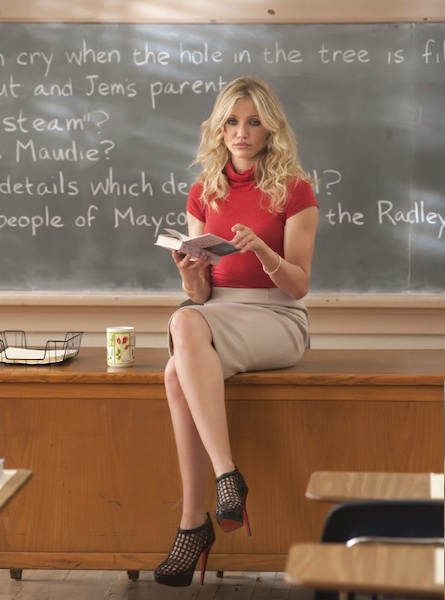
Bad Teacher was released at an inopportune time, having to follow in the footsteps of Bridesmaids, a movie that has been deemed revolutionary for the simple “fact that two women hav[e] a realistic conversation about sex in a café,” as Caitlin Moran told Rachel Hills in her Sunday Life profile last weekend.

In comparison to Kristen Wiig’s “realistically weak female character” in the Judd Apatow hit, who acts exactly how a real down-on-her-luck woman would act, Cameron Diaz’s Elizabeth Halsey has been called “a lazy, lying, scheming, slutty, and obstinately materialistic [character], whose sole redeeming virtue is her hard body… who is so delusional that she thinks her ostentatious assholery is rock-star sexy, and whose delusions are essentially validated by narrative resolution,” by Karina Longworth in Los Angeles Weekly.

And while this was true (she gets away with stealing the results to the state test in order to win money to get a boob job, and gets the sweet and goofy guy she’d been treating like shit the whole movie), it was no way near as bad as I envisioned it to be in terms of it being anti-women, or at least anti-Bridesmaids-esque-feminism.

It was horrifically racist and downright disturbing in some parts, though. Unhinged goody two-shoes Amy Squirrel is forced to transfer to one of the most dangerous and underprivileged schools in the state, Malcolm X High School. Her boyfriend, Justin Timberlake’s pathetic character, Scott Delacorte, praises Elizabeth for teaching her kids that they should never stop working on themselves by getting a boob job. He also has a thing for “oriental” food. And don’t even get me started on the dry hump scene. It was as pointless as Timberlake’s appearance in The Love Guru. Or his whole acting career in general.

It was hilariously funny in some parts, but if you’re looking for a strong narrative with diverse and realistic female characters, maybe seek out Bridesmaids again. If you’re looking for some mind-numbing 90-minute escapism (as opposed to all these two-and-a-half-hour wastes of time), Bad Teacher’s your movie.

*It has come to my attention that I give away too much in my movie reviews, so the asterisk will now serve as a blanket *spoiler alert* from now on.

Related: Bridesmaids Review.

Elsewhere: [Musings of an Inappropriate Woman] Caitlin Moran Cover Story Sunday Life.

[LA Weekly] You Want a Raunchy Comedy Starring Women? Be Careful What You Wish For.