It Don’t Matter if You’re Black or White… Or Green.


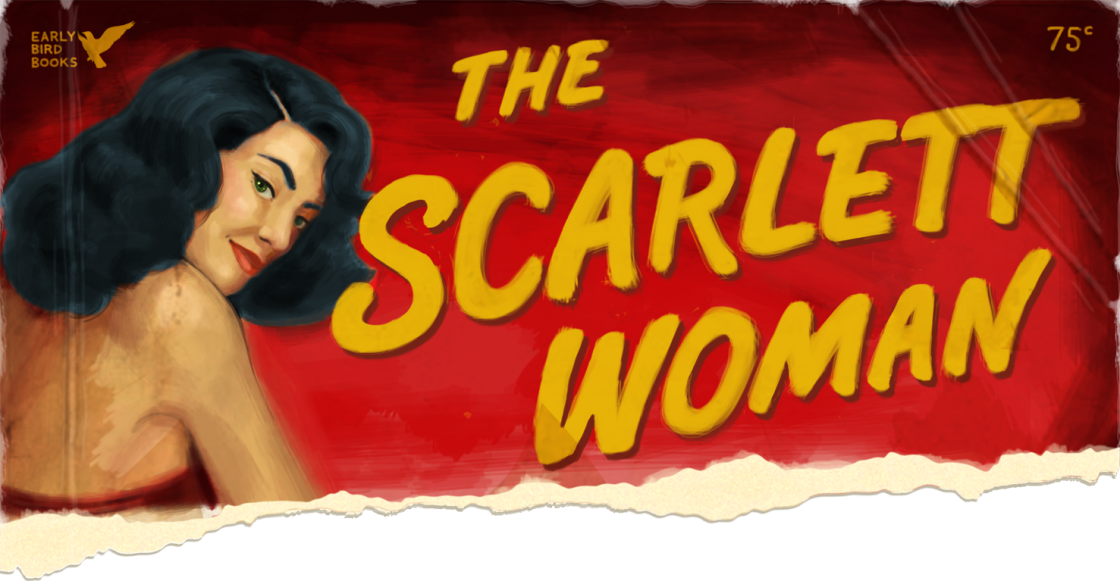
From “The Theme of Good VS. Evil” in Wicked: The Life & Times of the Wicked Witch of the West on Shmoop:

“Good vs. evil really is the ultimate (and original) theme of Wicked. But the twist is that the theme doesn’t focus on a showdown between a hero and a super-villain. Rather, the focus is on good and evil residing within the same person (which Nietzsche would probably approve of). No one is simply good or evil here. Not surprisingly, evil often trumps good in the book. Or at least a philosophical concern with evil gets the spotlight more often than any musings on goodness. The book is about a Witch after all.

“Ultimately, neither good nor evil is clearly defined or clearly separated here, which may be precisely the point. If the people and places of Wicked are not black and white, why should huge concepts like good and evil be anything other than hard to grasp and gray [Scarlett Woman note: or rather, green]? Goodness is seen as something elusive or hard to find, while evil is depicted as much more complex than a cackling green witch in a pointy black hat. In the end, evil may be nothing more than the absence of something else: awareness, constraint, goodness. Goodness requires intent and consciousness, but evil can be done subconsciously and even unwillingly; it’s a sort of default setting in people, witches or not.”

Related: Idle Hands.

Strong Female Characters in the Land of Oz.

The Wizard of Oz VS. Wicked.

It’s All About Popar… Lar, Lar, Lar, Lar!

Women in Fiction: Are Our Favourite Fictional Females Actually Strong, or Stereotypes?

Women in Fiction: My Favourite Fictional Females.

“With a Gun Between Her Legs” Take 2.

“With a Gun Between Her Legs”: Why “Strong” (AKA “Sexy” Whilst Being “Strong”) Female Characters Are Bad For Women.

Elsewhere: [Shmoop] The Theme of Good VS. Evil in Wicked: The Life & Times of the Wicked Witch of the West.

Image via Picky Nikki.

“Chains & Whips Excite Me…”—The Underlying Message in Music Videos.


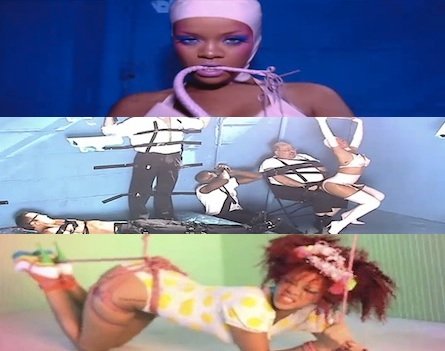
From L’s comment on “Deconstructing 2011’s Girl Anthems” by Emma Plant on Girl with a Satchel:

“…It’s scary to think that very few people are thinking critically about what song lyrics really say, or how the video can change a meaning of a song. Look at Rihanna tied to the bed in that Eminem video with him singing out lighting the house on fire to watch her burn… this from a young woman who was previously in an abusive relationship.
What is the music we listen to really saying about us and how is it shaping our opinions and values?”

Related: Rihanna’s “S&M”: Is It Really So Much Worse Than Her Other Stuff?

Elsewhere: [Girl with a Satchel] Deconstructing 2011’s Girl Anthems.

Images via YouTube.

Beauty & the Beast Remains Relevant.


From Beastly’s False Fairytale” by Alex Leo on Jezebel:

“Unlike Ariel giving up her voice for love or Sleeping Beauty being woken by Prince Charming, this story has immediate and practical implications for our culture—especially for young girls trying to figure out who they are and what they ‘have to do’ to be accepted. The problem is that while the story sets the goal that the Beast stop judging people based on their looks and learn to see the beauty within, the male lead always ends up with a hot woman. It’s right there in the title! She’s a beauty and he’s a monster and I am confused. If the point is that he truly change and accept that looks are merely skin-deep, then shouldn’t he end up with a less-than-stunning partner?”

Elsewhere: [Jezebel] Beastly’s False Fairytale.

The Allure of the Co-Star.


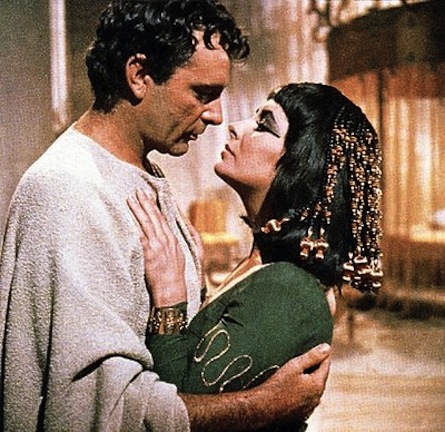
From “Rashida Jones on the Lure of the Co-Star” by Irin Carmon on Jezebel:

“You kind of fall in love with yourself in the eyes of this other person… You’re in a cold place and you want to connect with somebody, you’re not near your husband or wife, and you’ll want to connect with somebody else.

“It’s hard for actors to distinguish between those feelings, and it’s hard to tell your body to communicate these things physiologically and yet it’s just acting and nothing else. With emotional stuff like that, it’s like a weird, short, unaccounted-for affair.”

Just ask Elizabeth Taylor!

Elsewhere: [Jezebel] Rashida Jones on the Lure of the Co-Star.

Image via Station Hollywood.

TV: The Underlying Message in Glee’s “Original Song” Episode.


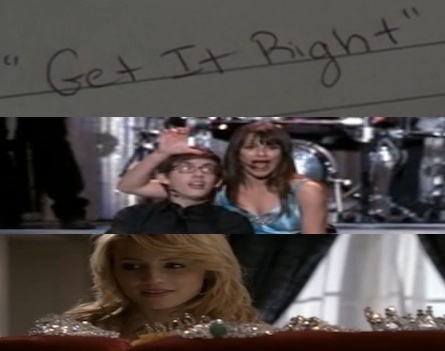
Firstly, just let me say, what’s up with the pathetic episode title? Perhaps the writers could have taken a leaf out of the glee club’s fictional book and called the episode “Get it Right” or “Loser Like Me”, the names of the episodes two, um, original songs.

*

Quinn has brought up the whole prom thing with Finn a couple of times in recent episodes, but last night her plan to take out the title of prom queen and king with Finn was put into full force.

I found it very odd that Quinn, the girl who last season was ostracised from the Cheerios, the “cool group” and her own family when she became pregnant, reverted to the vapid character we were introduced to in the early days.

I’m not a big fan of Quinn’s in general, but I felt that she grew tremendously as a character over the course of a year, while characters like Mr. Shue and Rachel Berry (who—coincidentally?—happen to be Glee’s two most annoying characters) remain stagnant. But, as I said in last week’s review, this is Glee, and when have we ever expected storyline consistency from it?

When Quinn befriends Rachel in an effort to keep her away from Finn, we see her true aspirations: Quinn claims she wants Rachel to realise her full potential and become a star, while she manages a real estate company and Finn takes over Burt Hummel’s mechanics business. Quinn believes there’s nothing outside of Lima for her and Finn (I wonder how Finn feels about this; knowing his girlfriend thinks he has no potential?), which I don’t buy. I thought Quinn’s pregnancy changed her for the better; part of the reason she gave up her baby was because she couldn’t give it the life it deserved. Doesn’t Quinn deserve a good life, too?

Quinn’s pregnancy also proved she’s just a loser like the rest of New Directions, which was the theme for their regionals set. Blowing Sue’s Oral Intensity (what ever happened to Vocal Adrenaline?) and the Warblers out of the water with their original songs, the first of which was written and performed by Rachel, who finally grasped the craft of songwriting (but not without an initial slip-up this episode with the song “Only Child”. On the plus side, Brittany said “My Headband” was her favourite song!), using Quinn’s taunts about starving for a “schoolgirl fantasy happy ending” with Finn as fodder.

What started out with an irritating voiceover from wannabe queen bee Quinn and some fantastic digs at Blaine’s monopoly over the Warblers’ solos, ended nicely with some “original songs” for Glee to make a mint from, instead of giving all the royalties to the initial artists; the underlying message that we’re all just losers; and Blaine’s epiphany that Kurt’s “the one”—with a gay kiss to boot!

Related: The Underlying Message in Glee’s “Blame it on the Alcohol” Episode.

How to Make a Woman Fall in Love With You, Glee Style.

Glee “Silly Love Songs” Review.

The Underlying Message in Glee’s “Furt” Episode.

The (Belated) Underlying Message in Glee’s “Never Been Kissed” Episode.

The Underlying Message in Glee’s “The Rocky Horror Glee Show” Episode.

The Underlying Message in Glee’s “Duets” Episode.

The Underlying Message in Glee’s “Grilled Cheesus” Episode.

The Underlying Message in Glee’s “Britney/Brittany” Episode.

Images via MegaVideo.

Mirror Mirror.


From Black Swan & Bathrooms” by Kartina Richardson on Mirror Motion Picture Commentary:

“For those of us not living or working in solitude, the bathroom offers the sole moments in our day when we may escape the gaze of others.

“Think of all the odd things you’ve done in a bathroom in your lifetime. What child hasn’t secretly explored the substance of their waste. What pre-teen hasn’t masturbated nervously. What person hasn’t escaped to the bathroom during a business meeting and made a weird face in the mirror to say to the world: ‘You don’t know I’m doing this right now. Oh there’s so much you don’t know.’

“No other moment can so clearly reveal that our public life is all, in fact, an act. An act with a purpose, but an act all the same.”

While I am still yet to see Black Swan (pathetic, I know, but I’ve never been an Oscar-winning movie kind of gal. More of a Razzie-winning one!), Richardson’s commentary reminded me of Hugo Schwyzer’s take on webcams in the bathrooms and bedrooms of young, impressionable girls. See here for my musings on the subject.

Related: Picture Perfect.

Elsewhere: [Mirror Motion Picture Commentary] Black Swan & Bathrooms.

[Hugo Schwyzer] No Refuge: How Webcams & Cell Phones Ratchet Up the Pressure To Be Perfect.

Images via Mirror Motion Picture Commentary.

On the (Rest of the) Net.


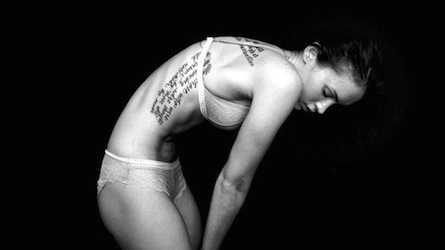
Megan Fox’s body politics:

“… You have a picture of said body—made even thinner through creative posing—that’s used to sell underwear. In other words, she is paid to be thin. Period. All the talk about her abs and her weight-training regimen don’t have anything to do with the reality: Her body is her business. Literally. It’s her business, not ours, whether she’s healthy—that’s between Ms. Fox and her doctor. And it’s her business—an integral part of her financial strategy—to be thin.”

This is a superb, graphic and thought-provoking piece of writing on waxing, vaginoplasty and the ubiquity of female lady-parts. Semi-NSFW, but I recommend reading it at any cost:

“… while we can look over with horror at a tribe of women who claim that if their five-year-old happened to bleed excessively after having her clitoris cut off, that she must have been a witch, here in our own backyard, we give it some fancy name like vaginoplasty and somehow it’s less archaic? Goodness, we’re so civilized.”

Bern Morley on song lyrics and what we let our children listen to. Good stuff.

The double standards of cheating. FYI, I don’t agree with them.

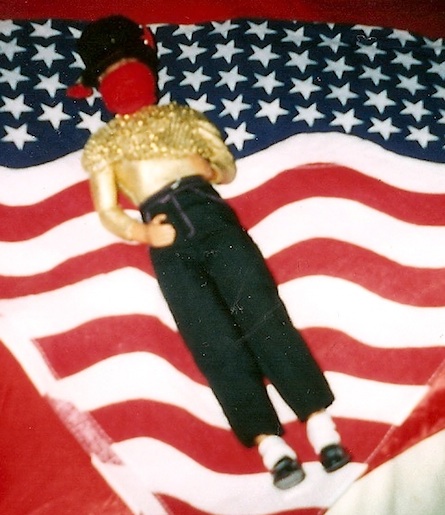
Sachar Mathias divulges her favourite black dolls. Does this make-shift Michael Jackson Ken count? It is circa late ’90s/early ’00s—his face mask, baby-dangling period—so maybe not…

Anti-Semitism in the fashion house of Christian Dior goes further back than just John Galliano’s comments.

James Franco was a jerk to Kristina Wong. I think he’s a jerk in general.

CNN recently published an article asking if “whites are racially oppressed?” That’s like saying there needs to be an international men’s day if there’s a women’s one. Seriously, someone tried to argue that to me last week!

Charlie Sheen and “The Disposable Woman”.

Thanks for the shoutout, Beauty Redefined.

Celebrities behaving badly: who’s responsible?:

“But is it the responsibility of the media to be the moral gatekeepers of what we should and shouldn’t know about? Is it their responsibility to diagnose supposed ‘mental illness’ and on that basis, stop reporting on certain stories?

“… If drug addled celebrities on the front pages didn’t sell, they wouldn’t be there. So is the problem us? Just who is egging on who[m] here?”

Alissa Warren is a bit unsure if Waity Kaity is the royal for her.

Rick Morton on Pauline Hanson’s political return.

Images via Jezebel, Carlen Altman.

Idle Hands.


From “Good VS. Evil Quotes in Wicked” on Shmoop:

“‘But maybe there’s something to what you say,’ said Elphaba. ‘I mean, evil and boredom. Evil and ennui. Evil and the lack of stimulation. Evil and sluggish blood.’

“The idea of evil as some sort of emptiness, or lack, recurs a couple of times in this book. Elphaba here seems to have taken on some of her father’s religious ideas. The connection between boredom and evil is reminiscent of the maxim that ‘idle hands are the devil’s tools,’ which dates back to Chaucer. The moral here is to be careful the next time you’re bored, or you could become evil. Or a Wicked Witch.”

Related: Strong Female Characters in the Land of Oz.

The Wizard of Oz VS. Wicked.

It’s All About Pop-U-Lar.

Women in Fiction: Are Our Favourite Fictional Females Actually Strong, or Stereotypes?

Women in Fiction: My Favourite Fictional Females.

Elsewhere: [Shmoop] Good VS. Evil Quotes in Wicked.

Image source unknown.

First World Problems.


With all that’s going on in the world at the moment, what better time to reflect on some lighthearted first world problems, à la Mia Freedman’s MamaMia column.

My friend Laura and I love to poke fun at other people ourselves, so we’ve come up with a few of our own first world inconveniences:

  • Starting/finishing a book on public transport when you’re distracted by other peoples’ too-loud iPods, broadsheets in your face and the stench of unwashed humanity and can’t relish the story.
  • When your boyfriend wants sour cream with his tacos but you’re doing the vegan challenge.
  • When the sun streams through the blinds right onto the TV.
  • Stressing the importance of arriving together at an event when you’re part of a group costume.
  • Hating it when you have to say/text/email the word “like” instead of just pressing the like button on Facebook when you’re not on Facebook.

What are your first world problems?

Related: Apocalypse Now: 2012 Come Early?

Elsewhere: [MamaMia] What’s Your First World Problem?

Image via Good Comics.

The Mystery of Migraines.


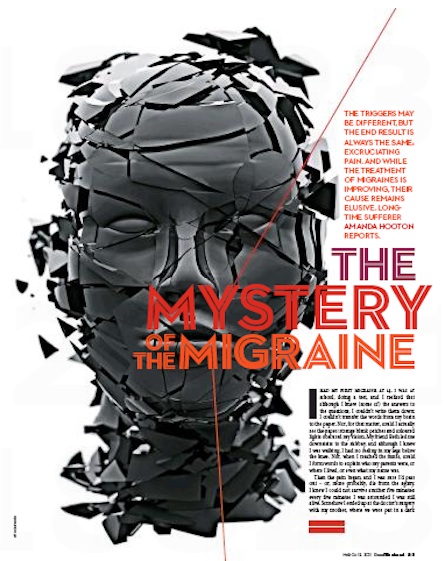
Last weekend’s Good Weekend had a fascinating article on migraines. Here are some highlights:

“… the World Health Organisation (WHO) rates it [the migraine] as a leading cause of disability worldwide, involving ‘substantial personal suffering, impaired quality of life and financial cost’… A host of ferociously intelligent and creative people have suffered similarly—Tchaikovsky, George Bernard Shaw, Nietzsche, van Gogh.” Scarlett Harris.

Seriously, though, “there are… many migraines… There are migraines with pain in the temples; around the eyes; between the brows; at the back of the head; on one side or the other.” I’ve had them all.

“Some migraines make you sensitive to light, some to noise; some have nausea and vomiting at cheerful additions to the unbelievable pain.” Yep, those were happy times indeed.

From the age of about 8 til the end of high school, I suffered from migraines, on average, once a week. Sometimes more; if I was lucky, sometimes less. The pain lessened as I got older, but I often missed school and, later, work as a result. I barely ever get migraines now; my last one conveniently took place on a four-day trip to Philip Island, and didn’t let up til my return home.

So this article resonated with me as no other Good Weekend feature has.

But how did I know they were migraines and not just headaches?

“… if your headache lasts between four and 72 hours (untreated), and if it includes two of the following—one-sided pain, throbbing pain, pain that’s increased by physical activity, or pain that’s strong enough to stop you living your normal life—you are probably suffering from a migraine.”

My headaches usually took the form of throbbing in the temple, nausea, the inability to sit up, read, watch television or use the computer, and left me incapacitated for two to three days on average. Definitely migraines.

Amanda Hooton profiles the history of migraines, from the Neolithic people who “were willing to have their skulls opened with stone axes in order to release the evil spirits inside”, to Lewis Carroll, to LSD as migraine cure, which was “just what someone already seeing small pink creatures on the carpet really needs”!

No one I knew suffered migraines the way I did, so I was all alone in my quest to dull the pain. I now have a system for diagnosing the cause of my migraines, and the remedy. If I haven’t eaten all day and start to get pain in both temples, it’s a hunger headache and I just need food. If I’ve been sitting in bed all day, or on an unsupportive couch, or on a La-Z-Boy/car seat with a headrest that pushes my head forward, it’s a posture headache, and water and drugs will help. Sometimes I wake up in the middle of the night with mind-numbing pain on the top of my skull. The prescription? Drugs, drugs, and more drugs.

But,

“Neuroscientists currently believe that migraines might be caused by what doctors call a ‘spreading depression’—a wave that slowly spreads across the cortex, or outer layers, of the brain. This wave is caused by brain neurons, which carry an electrical charge. In order to send signals to each other during normal brain activity, they ‘transiently depolarise’, or discharge some of their electrical charge via negative ions…

“Researchers have also postulated that the ‘pebble’ [effect caused by the discharging neurons] is really a bubble or tiny blood clot that lodges in a cortical blood vessel… and others have suggested that migraineurs express genes that make their neurons ‘trigger happy’ and more likely than normal to depolarise.”

That’s all well and good, but what does this mean for migraine sufferers?:

“A little-known fact of migraines is that about 90 per cent of migraineurs have a close relative who also suffers from them.”

My mum had a couple here and there over her lifetime, but nothing like the severity or frequency I suffered. As far as I know my dad never had them, and neither did my sister. So, like Hooton, any medical breakthroughs that can somehow impede the TRESK gene that genetic migraine sufferers possess won’t really help us.

The good news is that “for most migraineurs, migraines become rarer, shorter and less painful with age.”

For me, they certainly have.

Image via The Age.