Like a Virgin, Take 2.


From “Kanye West Thinks Dead is the New Sexy” by Nina Funnell on MamaMia:

“While many commentators argue that video clips over-sexualise women, the real problem is they actually deny the sexuality of women all together. Instead of analysing the clothes and dance moves within these clips, we should look at how desire functions.

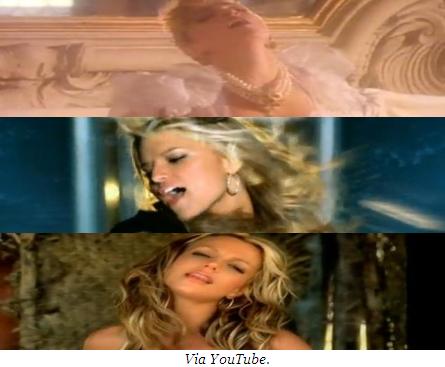
“As so often in popular culture, women are expected to appear desirable, but to be completely lacking in all desire of their own. The best example of this is Britney Spears in her Hit me baby days and Jessica Simpson circa 2002. Both Spears and Simpson stated they were virgins and intended to remain so until marriage. Meanwhile, they would grind back and forth wearing tiny outfits all designed to titillate. In other words their sexuality was to be consumed and enjoyed by everyone except themselves.

“The ‘sexually rapacious virgin’ is just one paradox of our sexualised pop culture. But a while back I began to wonder where our sexualised pop culture is really heading. At some point all the bouncy hair, big boobs and tiny skirts just gets old. These days humping a pole is not so much risqué as passé.

“So once sex (or rather, the limited and stereotypical representations of pop-culture sex) gets tired, what becomes the new frontier in risqué representation?…

“The clip is not only interested in fetishizing female bodies—it revels in fetishizing female pain, female passivity, female suffering and female silence. The ultimate female is the quiet, passive female—a mannequin—who accepts violence, abuse and suffering while remaining hot and sexy.

“As another commenter writes, ‘There’s nothing [overly] shocking or “taboo” about this video. Men’s sexual desire to dominate passive, docile, “lifeless” women has been a common theme in the arts throughout history. Indeed, many men disingenuously hide behind “art” to defend this proclivity. But how often do you see black men hanging from trees or Jews being gassed in ovens “artistically” to make a comment on racism or genocide, for example? It’s not likely to happen because that would be deeply offensive, even in the name of art. Women on the other hand are apparently fair game, even in a world where sexual and other male violence against women and girls is epidemic.’”

Related: Like a Virgin.

More Madonna.

Madonna (and Her Brand of Feminism) on the Rocks.

The Underlying Message in Glee‘s “Britney/Brittany” Episode.

Katy P. VS. Lady G.

Britney Spears: Not That Innocent.

Bad Taste Foxymorons.

Whipped Cream Feminism: The Underlying Message in Katy Perry’s “California Gurls” Video.

Elsewhere: [MamaMia] Kanye West Thinks Dead is the New Sexy.

Events: The Bitch of Living—Spring Awakening Review.

Ever since Annie Wilson belted out “Mama Who Bore Me” on the first episode of the new 90210 (lame, I know), I had to know what Spring Awakening, the musical the song is from, was all about.

Well last week, some two and half years later, I went to see the “new musical” performed by The Young Australian Broadway Chorus and loved it.

The story is based around a bunch of 17-year-olds in 19th century Germany who are coming to terms with their sexuality and “the bitch of living”, which manifests itself in parental abuse, pregnancy, same-sex tendencies and suicide.

Now, two of the people I went to see it with are actors themselves, one of whom has seen the original on Broadway, with Glee’s Lea Michele naked and in the lead role (needless to say, this is a male friend and never fails to drop this anecdote into many a conversation!), so they weren’t so impressed with the mediocre acting. But, just like Fame or Hairspray, acting isn’t the cast’s primary vocation, and what they lacked in that respect, they more than made up for in the musical numbers.

All in all, well worth the somewhat-steep (for an amateur show) $50 and if you can get there before closing night (Saturday 5th February), I highly recommend it!

Related: This is a Story About a Girl Named Britney… I Mean Lucky! Britney Spears Cabaret Review.

Disturbing Behaviour: Terry Richardson Does Glee.

Movie Review: Burlesque.


“Did you notice the mistake in that movie?” my friend Sallie asked me as we left the cinema.

“The only mistake in that movie was Christina Aguilera’s acting,” I replied.

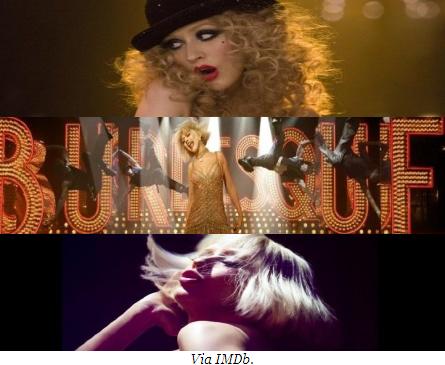
I went into Burlesque expecting three things: acting so bad it hurt, quality musical numbers and Aguilera’s ’90s strawberry blonde ’do to be cut off once her character made the big time. Well, two out of three ain’t bad. (For those of you who haven’t yet seen the film, the latter point is the one that remains.)

The movie starts out with country Christina (Ali) quitting her job in a bar on a whim, and moving to the big smoke. She notices a burlesque bar one night on a walk through the city; “the best view on the Sunset Strip without any windows”. After seeing the girls perform a number, with Cher at the helm as club owner Tess, Ali begs Tess for a job onstage, but settles for working under bartender Jack (literally; but as if we couldn’t see that coming!) as a waitress.

When the alcoholic star of the show, Nikki, played by Kristen Bell, fails to turn up, Ali takes her place. Nikki is so incensed that she interferes with the music for the set, forcing Ali to use her spectacular voice—which previously no one had heard—to save the performance. Tess then begins to build her burlesque show around Ali.

This is where the film starts to get bearable, as we see more of Christina Aguilera in all her ’40s pin-up/voice-that-brings-down-the-house glory, and less of mousy, weak, annoying Ali.

There are some pretty good musical numbers in the film (a 2011 Golden Globe for Best Original Song doesn’t lie), my favourites being a dance-off between Nikki and Juliannne Hough to “Diamonds Are a Girl’s Best Friend” and one of the only legitimate “burlesque” performances in the film, “Guy What Takes His Time”, where pearls and feather fans are used as props.

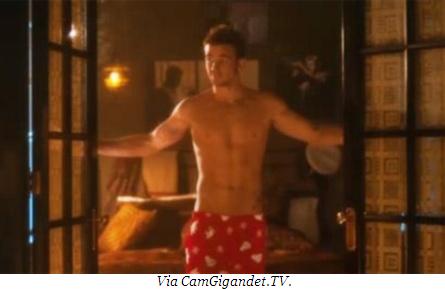
Really, though, the only things that saved this movie were Christina’s performances, Eric Dane’s face, Stanley Tucci in general, and Cam Gigandet’s cookie box scene. Google it.

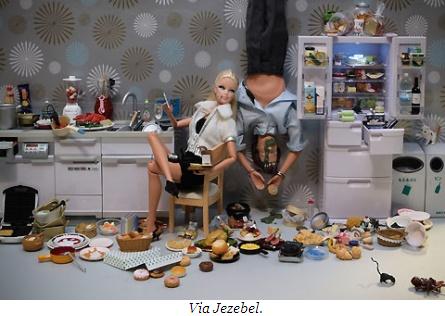
Forget Computer Engineer Barbie—Barbie as Sociopath.


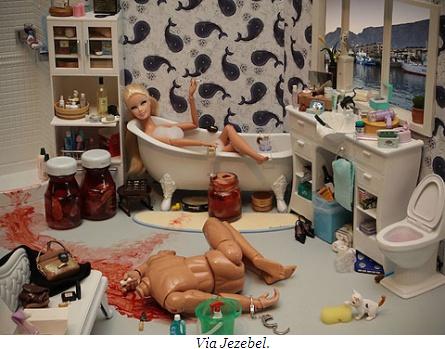
“Behind the vacuous perpetual lipsticked-smile lurks the black heart of the true sociopath, just like in real life,” says artist Mariel Clayton of her “Bad Barbie” series, which sees the blonde beauty as sociopath. Very American Psycho

Related: American Psycho by Bret Easton Ellis Review.

Elsewhere: [Jezebel] “Bad Barbie” Stars in Bloody Photoshoot.

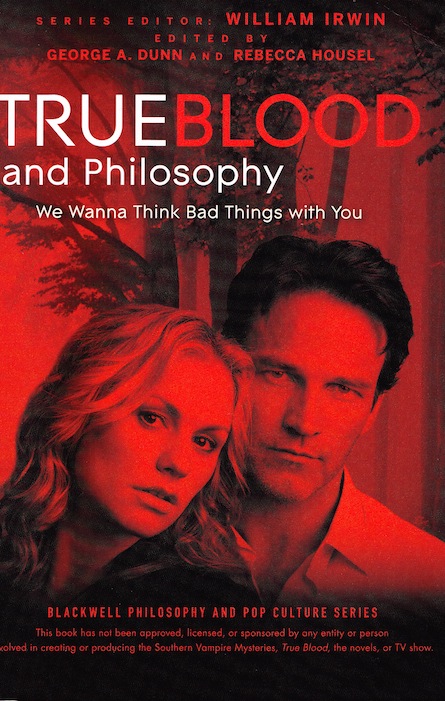
Book Review: True Blood & Philosophy by George A. Dunn & Rebecca Housel.


I bought this book last year around the time season three of True Blood was coming to an end, and the inspiration struck me to write a post on Sookie Stackhouse and feminism. Needless to say, that post has yet to come to fruition (watch this space next week), but I finally got around to reading the book in the past fortnight or so.

The great thing about the Pop Culture and Philosophy series is that you don’t need to be an avid fan of the topic each book deals with; most of the philosophical musings can be applied to everyday life. (I’m making a gross generalisation here, as True Blood & Philosophy is the first Pop Culture volume I’ve read!)

Anyone who’s familiar with the show and Charlaine Harris’ books will know that the way vampires are treated in the somewhat alternate universe of Bon Temps, Louisiana, is a metaphor for how gays and blacks have been treated for centuries.

True Blood and Philosophy delves into this throughout the book, but particularly in the “Eros, Sexuality & Gender” section, where the issue of “orientation” is raised: “Vampires seem to be unlike gays in that we can’t say that vampires are born that way… But there is still a parallel to being born either gay or straight, for once you become a vampire, there’s no returning to a human existence” (p. 98).

One way vampires and gays are different, though, is that “a homosexual predator” cannot “attack or coerce an unwilling person into homosexual acts”, whereas a vampire can take someone against their will (p. 99). You can’t “catch” homosexuality, but you can catch vampirism.

To take it a step further, there was a time when propaganda that the gays will give you AIDS was rife (some might argue that it still is), and were prohibited from participating in sports and other activities where blood could be spilled. This raises the question of the marginalisation of vampires in sports, as well as the use of their blood as medicine. (See “Coming Out of the Coffin & Coming Out of the Closet”, p. 93–108.)

My favourite chapter deals with the attitudes of humans towards vampires and vice versa, and how the way they treat each other amounts to the way non-fiction humans treat animals.

For example, Eddie Gauthier, the vampire whom Jason Stackhouse and Amy Burley take hostage and use as their own personal V vat, is a parallel for “the way millions of animals are treated every day on factory farms… Eddie, like the animals on factory farms, is exploited as a commodity with no regard for his suffering” (p. 36–37).

Furthermore, “… many… vampires actually regard human beings as lower forms of life ripe for exploitation, not much different from the way Aristotle and others regarded non-human species,” in “a classic example of speciesism” (p. 38–39).

Last year, I blogged about an article I read in Time, about how animals that we once thought to not be able to understand language, reasoning, fairness and pain, actually do experience these things. Vampires seem to have a similar attitude towards humans, whom they see only as a food source, and “incapable of feeling pain as we do”, according to the magister when ordering Bill to turn Jessica as punishment for killing one of their own to protect his “human pet”, Sookie (p. 44).

In a similarly intriguing chapter, William C. Curtis asks “can vampires be good citizens”?:

“Should there be a Truth and Reconciliation Commission to require vamps to come clean about their past murders in return for a grant of amnesty? How should vampires be taxed, especially since they don’t need many of the services that government provides, like Social Security, health care, and education? Can they join, or be drafted into, the armed forces?… Will their vulnerability to sunlight be treated as a disability under the Americans with Disabilities Act? Can vampire convicts be sentenced to life in prison, or would eternal incarceration violate the Eighth Amendment prohibition on cruel and unusual punishment?” (p. 65–66).

All these questions have been brought about by the advent of synthetic blood, allowing vampires to “come out of the coffin”, so to speak.

On this, an interesting footnote from the chapter “Un-True Blood: The Politics of Artificiality” by Bruce A. McClelland, refers to a 1927 study by Takeji Furukawa on the correlation between blood types and personality. Being a Japanese study, and the fact that synthetic TruBlood was developed by the Japanese; is there some connection? Or just a coincidence? The clot plot thickens…

A memorable event thus far on True Blood has been the introduction of Maryann the Maenad and her Dionysian debacle. “Let the Bon Temps Roll: Sacrifice, Scapegoats and Good Times” deals with the self-preservation of the Bon Temps residents in “not wanting to know what’s in the sausage”, as Lafayette Reynolds would say (p. 141–142). Or rather, not wanting to know what’s in Maryann’s “hunter’s soufflé”!

This ignorance is further symbolised by the black eyes of Maryann’s followers; they’re literally blind to her wicked ways (p. 142).

Of course this book is more suited to the True Blood fan, however it’s not a prerequisite. (I’m trying to force-feed my friend Laura this book in the hopes that she will cotton on to the sexy-smarts of the show. She’s doing the same to me with Mad Men.) Many of the thoughts discussed go much deeper than just Charlaine Harris’ Southern Vampire Mysteries and vampirism, and it’s quite a thought-provoking—yet still light—book.

Related: Time’s “What Animals Think” Issue: August 16, 2010.
The Problem with Pop Music.


From The Quietus“Givin’ It to the Homegirl: The Trouble with Kelis” by Neil Kulkarni:

“I hear no shattered women on the radio right now, no one swallowing men like air or devouring worlds or commanding the cosmos or even telling the truth. Only empty-headed little girls skweeming and squeaking about what rockstars they are. Well we get the pop we deserve, the pop Fearne Cotton likes, but even if I were white skinny and pretty I’d feel lagged behind, let down, and I’d be wondering why the fuck these drippy bitches like Flo and Ke$h think they deserve to be famous. Good taste? Where’s the fucking bravery? Where’s girls like I know, rather than the girls and guys I’d cross streets, change clubs, emigrate, to avoid. If pop is a club right now, I find myself walking past all the tables packed full of braying twats and simpering saps and desperate to recognise a friendly face, a real face, smart people who are a laugh, rather than all these desperately needy, charmless loudmouth ignoramuses and fucking students.

“Look at what pop’s women are wearing. Even in Gaga’s orbit of influence, it’s so fucking dull out there. It’s as if Girl pop looks at ’30s Vogue, ’70s Cosmo, ’80s Face/ID, looks at the dress-up-games the high-street makes easy and search-free, throws shit on and waits for those old spirits to reinhabit the body beneath and the mind behind such carelessness… Those old moments of beauty, those looks so steely, timed and timeless were animated and arranged by folk who worshipped new gods, the camera and the motorcar and the mirrorball and the MDMA and that spirit cannot be conjured off-the-peg, cribbed from an idiot’s guide or splattered on with a sequin gun. [Scarlett Woman note: Or a love glue gun, as Gaga would say?]

“Which does beg the question—what real female figureheads are there for girls to idolise, aspire to, learn from in music right now? In a pop world in which female ‘presence’ is in glut/spreadthin, it’s startling how little of femme-import is being given, how so many of the supposed ‘divas’ in modern pop have now to offer young minds bar money-hunger, man-dependence and just-dumped aggravation… make the colossal strategic error of listening to the charts, and you’ll see girls talk about themselves, sure, but always ONLY in relation to their relationships, only in relation to how near/far they are from love, only in relation to how much they can lose/claw back of themselves in the permanent night-out that is pop’s sole focus and context in 2010. Crucially, whilst you’ll see lots of girls, you won’t hear a single word that dares to antagonise you, that really addresses how scarily fast and furious with innovative invective girls can be. Obvious why girls are so ill-served at the moment, why none of pop’s chat and cattiness (exceptions: Gaga, Britney and Beyonce on their good days; Shakira—all of whom crucially don’t try and talk to/for their young fans, just luxuriate in their own supra-identities) actually matches up to the way girls talk/live/think—somewhere along the line middle-aged fanboys started whispering to pop that if it wants to cut deep it must only thieve from the past the fanboys curate, that it can’t do politics, that being a poetess is less important than simply being a witty conduit for the babble of what’s contemporary, a simpering squeaker of lad-mag-friendly spunkiness. ‘I really like your beard.’ Jesus. They’re being catered for.”

Elsewhere: [The Quietus] Givin’ It to the Homegirl: The Trouble with Kelis.

On the (Rest of the) Net.

The latest Teen Vogue with Pretty Little Liars star Lucy Hale on the cover worryingly espouses using dieting to achieve “Your Best Body”.

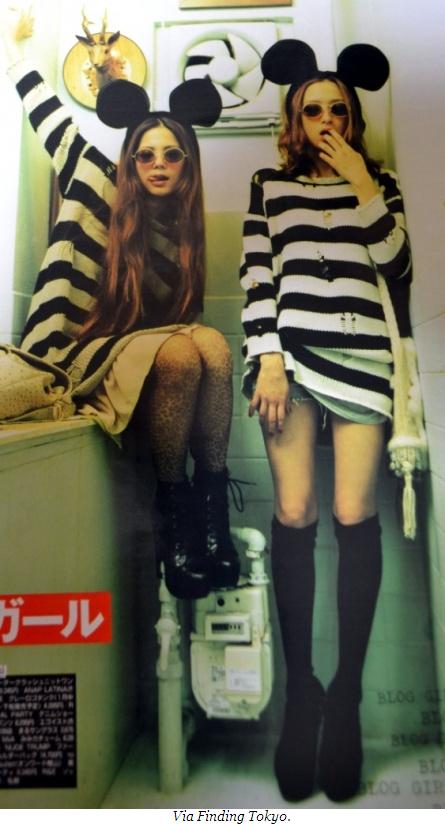
Minnie Mouse meets beatnik meets Gala Darling is the latest “blog girl” trend.

A superb 2004 Andrew Denton interview with media darling/mogul Ita Buttrose.

Charlie Glickman on the perils of alternative male and female sexuality.

Pop music=guilty pleasure no more. (However, stay tuned next week for an alternative view on this subject.)

Girl with a Satchel laments the unattractive “View from the Glossip Stand” in Zoo’s UnAustralians of the Year feature.

“Stereotyping is a fun and useful tool… to categorise interests and make harmful blanket statements” about your favourite magazines. For example, Lula is for those who “never spend money on U.S. fashion magazines because they just don’t ‘get it’; they’re so dull”, while Details has “a strong Patrick Bateman vibe”.

More on Gwyneth Paltrow’s unlikability, this time from New York Magazine:

“Gwyneth is also kind of a jerk. Her perfection is judgment on the rest of us, and she makes this known in interviews and on her lifestyle website, Goop, the tone of which suggests a domestic personality just one degree shy of Joan Crawford in Mommie Dearest.”

The Freudian nature of the vampire.

How women are reclaiming “bitch” as their own.

New research indicates that women’s bodies may protect themselves from rape. And so opens a whole other can of consent worms…

“Are Music Video Girls Exploited?”

This article puts to the rest the “you can’t be both beautiful and smart” way of thinking.

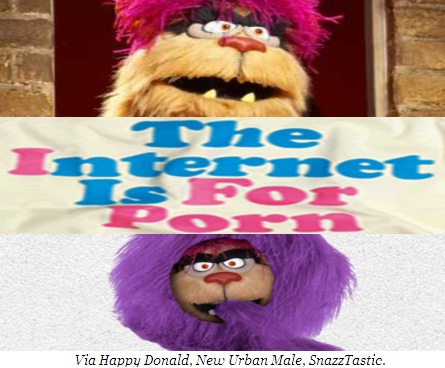
The Internet is for Porn.


From “Hard Core” by Natasha Vargas-Cooper on The Atlantic:

“… Debby Herbenick, believes that Internet porn now ‘plays a role in how many Americans perceive and become educated about sex.’ How this influence actually works is speculative—no one can ever really know what other people do in their bedrooms or why. Some experts postulate a sort of monkey-see, monkey-do explanation, whereby both men and women are conforming to behaviors they witness on their browser media players. But in many ways this explanation doesn’t account for the subtle relationship between now-ubiquitous pornography and sexuality. To take anal sex again, porn doesn’t plant that idea in men’s minds; instead, porn puts the power of a mass medium behind ancient male desires. Anal sex as a run-of-the-mill practice, de rigueur pubic waxing for girls—and their mothers—and first-date doggy-style encounters (this is but a small sampling of rapidly shifting sexual mores) have been popularized and legitimized by porn. Which means that men now have a far easier time broaching subjects once considered off- putting—for instance, suburban dads can offhandedly suggest anal sex to their bethonged, waxed wives.

“It seems like almost every teenager in America—and hardly just the teenagers—has heard of or taken a dip into sites like RedTube and YouPorn, which alone account for roughly 2 percent of all daily Internet traffic. These are free, open, enormous sites, in which anybody can upload, distribute, and view whatever porn they please; even porn in which they star. It’s amateur hour—and like all amateur hours, it’s an honest, if often not-pretty, catalog of the desires and insecurities of regular folk.

“And it’s largely a grim parade of what women will do to satisfy men: young wives fingering themselves on the family couch, older wives offering themselves to their hubby’s Army buddies, aging moms in shabby corsets shoving their sagging rear ends into the camera. When it comes to contemporary porn, you don’t have to look like a porn star to be sexually desired. Indeed, porn stars no longer look like porn stars. The image of Jenna Jameson, America’s most famous professional porn star (and a best-selling author)—with her comically huge breasts, overextended blond extensions, and artificially tanned skin—has been supplanted by the new face of pornography: a pale, naughty, 19-year-old with A-cups and a bad haircut, her face illuminated only by the bluish glow of her Mac.”

Elsewhere: [The Atlantic] Hard Core.

On the (Rest of the) Net.

Rachel Hills discusses Naomi Wolf’s response to WikiGate here, whilst also doing a fine job of unpacking the fun for twenty-somethings = lots of casual sex myth.

On that, “How to Be A 20-Something”:

“Be really attractive. Your acne is gone, your face has matured without having wrinkles and everything on your body is lifted naturally. Eat bagels seven days a week, binge-drink and do drugs: you’ll still look like a babe. When you turn thirty, it’ll become a different story but that’s, like, not for a really long time.

“Reestablish a relationship with your parents. You don’t live with them anymore (hopefully) so start to appreciate them as human beings with thoughts, flaws and feelings rather than soulless life ruiners who won’t let you borrow their car.”

What Would Phoebe Do? on the pretentiousness of Francophilia:

“Gratuitously adding French words to conversation is a time-honoured way of signalling pretentiousness.”

Next year’s Halloween costume sorted!

“How to Be A Complete Douche” has a certain Patrick Bateman feel to it.

Hugh Hefner defends his May-December engagement to Crystal Harris to The Daily Beast.

“How to Live in New York City”:

“Certain moments of living in the city will always stick out to you. Buying plums from a fruit vendor on 34th street and eating three of them on a long walk, the day you spent in bed with your best friend watching Tyra Banks, the amazing rooftop party you attended on a sweltering hot day in July. These memories might seem insignificant but they were all moments when you looked around the city and felt like you were a part of it all.”

Sarah at Feministe recalls “How I Learned to Stop Caring and Admit I Love Pop”.

Jezebel chronicles “The Evolution of Moms” from Soccer Mom (Mater Adidas) to a future robot-mom who encompasses all the admirable features of stage and helicopter mothers alike, with a special focus on the parent Sarah Palin made famous, the Mama Grizzly.

Memo to Lady Gaga: leggings are not pants. Nor, more to the point, are leotards.

Magazines: Independent Zine Zinm Preview.


Last week I was lucky enough to be featured in a friend of a friend’s Melbourne-based zine, Zinm by Marc Bonnici.

Our mutual friend Anthony had been urging me to check out his self-titled blog for the better part of a year, until I happened upon last month’s copy of Zinm that he’d brought to a get-together.

I was instantly drawn in as I briefly flicked through the pages, a picture from Mean Girls staying most clearly in my mind. (“Burn Book” is a regular feature of Zinm.)

Try as I might, I was never able to get my mitts on a copy of last month’s edition, but better still, I was able to be featured in this month.

As Australia Day rolls around again, guest contributors Anita Calavetta, Marc Bergmann, Dodie Smith, and Muriel Barbery, as well as Marc himself, muse about what Australia means to us. Yours truly continues on her plight to get the safety net for footballers behaving badly removed, as I feel that is a strong part of Aussie culture.

Unfortunately there are not any copies of the latest edition available, as there is a limited print run. But the title has doubled in demand since its inception three issues ago. If you are interested in bagging a copy, I suggest you check out Marc’s blog and drop him a line.

Us independent writers have got to stick together.

Related: Beauty & the Bestiality.

Why Are Famous Men Forgiven for Their Wrongdoings, While Women Are Vilified for Much Less?

Bad Boys, Whatcha Gonna Do? Host a Seven Family Show.

Elsewhere: [Marc Bonnici] Homepage.