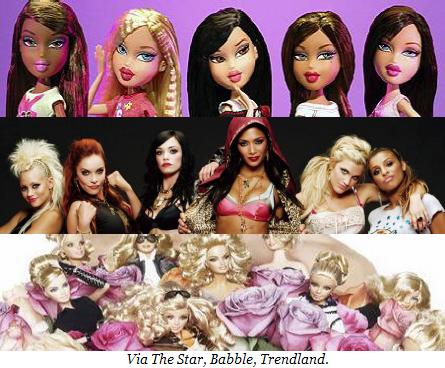
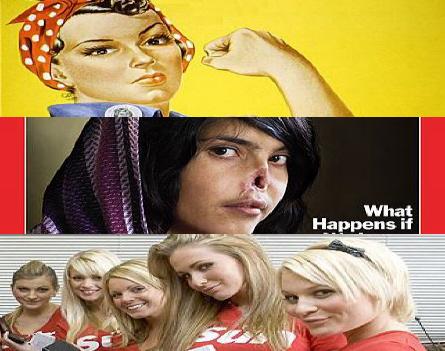
The Internet is for Porn.


From “Hard Core” by Natasha Vargas-Cooper on The Atlantic:

“… Debby Herbenick, believes that Internet porn now ‘plays a role in how many Americans perceive and become educated about sex.’ How this influence actually works is speculative—no one can ever really know what other people do in their bedrooms or why. Some experts postulate a sort of monkey-see, monkey-do explanation, whereby both men and women are conforming to behaviors they witness on their browser media players. But in many ways this explanation doesn’t account for the subtle relationship between now-ubiquitous pornography and sexuality. To take anal sex again, porn doesn’t plant that idea in men’s minds; instead, porn puts the power of a mass medium behind ancient male desires. Anal sex as a run-of-the-mill practice, de rigueur pubic waxing for girls—and their mothers—and first-date doggy-style encounters (this is but a small sampling of rapidly shifting sexual mores) have been popularized and legitimized by porn. Which means that men now have a far easier time broaching subjects once considered off- putting—for instance, suburban dads can offhandedly suggest anal sex to their bethonged, waxed wives.

“It seems like almost every teenager in America—and hardly just the teenagers—has heard of or taken a dip into sites like RedTube and YouPorn, which alone account for roughly 2 percent of all daily Internet traffic. These are free, open, enormous sites, in which anybody can upload, distribute, and view whatever porn they please; even porn in which they star. It’s amateur hour—and like all amateur hours, it’s an honest, if often not-pretty, catalog of the desires and insecurities of regular folk.

“And it’s largely a grim parade of what women will do to satisfy men: young wives fingering themselves on the family couch, older wives offering themselves to their hubby’s Army buddies, aging moms in shabby corsets shoving their sagging rear ends into the camera. When it comes to contemporary porn, you don’t have to look like a porn star to be sexually desired. Indeed, porn stars no longer look like porn stars. The image of Jenna Jameson, America’s most famous professional porn star (and a best-selling author)—with her comically huge breasts, overextended blond extensions, and artificially tanned skin—has been supplanted by the new face of pornography: a pale, naughty, 19-year-old with A-cups and a bad haircut, her face illuminated only by the bluish glow of her Mac.”

Elsewhere: [The Atlantic] Hard Core.

Picture Perfect.


From “No Refuge: How Webcams & Cell Phones Ratchet Up the Pressure to be Perfect” by Hugo Schwyzer:

“… A young woman who had been scrupulous about her appearance all day could return to her bedroom at night, change into what was comfortable, and have at least a little waking time where her looks didn’t matter…

“The real problem is that the webcam has stripped the bedroom and the bathroom from their role as safe refuge from the beauty-obsessed culture…”

I find Schwyzer’s points to be particularly poignant to my own life.

Until a few months ago, I had lived either at home, with family who knew me from the day I was born and had seen me in all my glory (and not-so-glorious moments) for twenty-two years, or on my own. During that time, as soon as I would get home I’d change into my pyjamas, wipe the makeup off, and pop the curlers in, not caring what I looked like.

Then I moved in with my cousin, and I kept up appearances for a few days until I realised she likes to bum around the house in holey pants and nose strips, too.

Honestly, I don’t give a crap what I look like at home, and if I don’t want to draw attention to myself, I will adopt my at-home strategy in the big wide world, too.

For example, most mornings I go for a jog as soon as I wake, and usually stop by the supermarket on the way home. I chuck a bit of lipgloss on an whip my hair (though not in true Willow Smith style) into a ponytail, but other than that, I look pretty crappy. If I wanted to be stared at while I exercised, I would go to a juice-head gym in full make-up and a crop top or jog with my friend Tess at her neighbourhood track, where the beautiful people go to workout. But I don’t.

A similar situation occurred at my work Christmas party. I was getting my slut on when I was approached by Jack Sparrow. He initiated contact (both verbal and physical), asking which department I worked in and why he’d never seen me before. Unbeknownst to him, he had seen me before…

… Earlier that day, I rocked up for a few hours to help set up in jeans, a t-shirt, work boots (okay, they were Tony Bianco) and my glasses, where he was also lending a hand. He took one glance at me and continued with his work.

What’s even funnier? The following day I reverted back to my bespectacled self, and he went about his day, not realising that I was the girl from the night before.

I don’t begrudge him that, though. I deliberately do these things to fly under (or above) the radar.

Relating more closely to Schwyzer’s point, however, I’m lucky; my generation managed to bypass the whole webcam/sexting/profile pictured frenzy that consumes the lives of teens now. Who knows what pressures I would have facedand how differently my psyche would have developedif my privacy was constantly invaded by mobile phones, Facebook and the like?

Celebrities who are a little younger than I am, though, like Rihanna, Vanessa Hudgens and (the markedly younger) Miley Cyrus have succumbed to the allure of naked photography, with the latter also dabbling in the filming of lap dances to 40-year-old directors and experimentation with bongs.

Personally, I don’t understand the pull of compromising photos. My advice to teen starlets and football players alike? If you’re going to take compromising photos, make sure you’re the only one with a copy or JUST. DELETE. THEM.

Related: ’Tis the Season…

Elsewhere: [Hugo Schwyzer] No Refuge: How Webcams & Cell Phones Ratchet Up the Pressure to be Perfect.

Jennifer Hawkins VS. Miranda Kerr.

Following on from last week’s post reflecting on Jennifer Hawkins’ nude cover for Marie Claire, I started thinking about the flak Hawkins received for it.

Why was Hawkins vilified for daring to bare her unairbrushed body, knowing full well the potential criticisms that could come with it? Just because she’s a hot model doesn’t make her any less qualified to comment on the body image debate.

Another prominent Australian model who gets her kit off, but at a far more frequent rate than Hawkins, is David Jones ambassador Miranda Kerr.

While Hawkins’ employer Myer may have come out on top in the wake of the David Jones sexual harassment case, Kerr seems to be the model who came out on top, continuing to bare her baby belly in all the publications.

Demi Moore, Christina Aguilera et al. have proved that the pregnant female is a creature of beauty; one that should be celebrated on all the glossies. The same is true for Kerr, whose bump has spent a great deal of time in the limelight: she announced her pregnancy in Spanish Vogue in September, paraded down the Balenciaga runway at five months along, and was the first pregnant cover model for Vogue Australia. In addition, she shunned Demi and Christina’s cover-ups and went completely starkers for W’s December issue.

Frankly, I’m a bit sick of Kerr, her baby bump and her bits. It seems you can’t open a magazine or blog post without seeing her naked body plastered all over it, even before she got knocked up. Sure, she’s nice to look at, but if you’ve seen her once, you’ve seen her a million times.

So why is it that Kerr can get her kit off every second week and be celebrated for it, while Jennifer Hawkins, who posed for Marie Claire for charity, and whose private bits we are yet to see, was chastised and her star somewhat faded since the incident?

Can someone answer that for me?

Related: One Year On: The Jennifer Hawkins/Marie Claire Scandal.

Valley of the Dolls.


From “The Tyranny of Self-Perfection” by Anne Summers on The Australian website:

“… voicing her concerns that, overall, women were slipping backwards from the promise of equality that she, the daughter of a feminist, had grown up with. Another guest demurred: ‘Young women now have good role models, they are forging ahead,’ Anne McElvoy, deputy editor of the London Evening Standard told her ‘Why do you think things are bad for them?’

“It is entirely possible that McElvoy had never seen a Bratz doll or watched a Lady Gaga video. Unless she has young daughters or other close relatives she might not be aware of the ubiquity of pink or the Playboy logos that are now de rigueur adornments on the pencil cases of the pre-teen set.

“This reviewer has to confess a comparable ignorance. Sure, I’ve seen little girls dressed inappropriately for travel in pink tutus at airports. I’ve checked myself from disapproving of the skimpy outfits sported by 10-year-old daughters of friends. Gee, I still thought Barbie was bad.

“It’s partly that she now has daughters and has discovered that the ‘slutty and sultry’ Bratz with its wardrobe for clubbing and shopping has displaced innocent blonde Barbie as the top-selling doll for girls. It’s partly the growing use of the language of liberationmost often the word ‘empowering’to describe the new sexual thraldom. And it’s also the realisation that ‘the rhetoric of choice may have burgeoned in this generation, but in many ways the range of female characters and role models available for young girls has narrowed’.

“Girls want to be WAGS, ‘glamour models’ (pose naked without displaying genitals) or even prostitutes because they have been led to believe that these vocations will deliver them the celebrity lifestyle so relentlessly documented in magazines and on television…”

… and in the aisles of toy stores, too, if the Bratz pack has anything to do with it.

Elsewhere: [The Australian] The Tyranny of Self-Perfection.

One Year On: The Jennifer Hawkins/Marie Claire Scandal.


Here are my thoughts on the topic in the form of a (edited) comment on  a since-deleted post on Girl with a Satchel:

“This really is a double-edged sword, huh? All magazines are a medium that can make you feel bad about yourself only if you let them, which I agree with 100%.

“I don’t believe the media is the ‘hypodermic’ needle we all heard about in media studies at school; turn off the TV or don’t buy the magazine if you believe they facilitate negative body image.

“However, my first thought when seeing the Jennifer Hawkins cover, was ‘oh, her thighs are obviously her problem area. There are a few shadows there and some discolouration’. HORRIBLE, I know, but it just goes to show that I, along with almost everyone out there, am a product of our perfectionist culture and our unrealistic expectations of women.

“Now, in reality, Hawkins looks AMAZINGher face is stunning, her chest and torso look toned and terrific, and if I had her thighs, all my problems would be solved (according to the hypodermic theory, at least). I don’t agree with all the negative comments out there regarding Hawkins as unrealistic and damaging to women’s self-esteem. Nor do I agree with those who say porn stars, strippers, prostitutes, bikini and lingerie models, supermodels, catalogue models, plus sized models, regular girls on the beach or in the club or on the street who are scantily dressed or ANY WOMAN who enjoys flaunting her best assets are victims of objectification by the media and the male species’ desire to view women as sexy playthings and nothing more.

“I regard myself as a feminist, however, and feel that if any woman is proud to show off their bodies, faces, brains, WHATEVER, then that’s empowering and I say to them, ‘you go girl!’.”

My feelings have stayed much the same as I look back on the controversy from a more enlightened perspective, having been reading a lot more and writing blog posts on such topics in the past nine months (I could have had a baby in that time!) that The Scarlett Woman has been out there in the blogosphere.

Satchel Girl Erica Bartle responded to my comments above, saying that “I don’t think any woman should be excluded from the body image debate on the grounds of her appearance,” even a “hot model” like Hawkins.

This sounds a lot like the arguments that were put forth at the “Feminism Has Failed” debate which I attended a few months ago, and have blogged quite often about here:

“Controversially, [Gaye] Alcorn referenced the Body Image Advisory Board and its chairwomen, the ‘gorgeous’ Mia Freedman, Sarah Murdoch and Kate Ellis, saying that of course they had beautiful women to front the campaign, because it wouldn’t have gotten any publicity with Plain Janes. Out of everything the affirmative team said, this was the only thing I took issue with. ‘Like, sorry those women happen to be genetically blessed, but they have as much right to talk about body image and beauty as a less fortunate-looking woman does. You can’t help the way you’re born,’ I said to my friend, who satirically replied, ‘Well, it’s about beauty, hello?!’ Gold.”

Another argument from the affirmative team harkens back to Bartle’s point: Hawkins “can’t be all things to all women”, just as “feminists can’t be accountable for all feminist issues at all times”.

Again, just because Hawkins looks the way she does doesn’t give the general public the right to criticise her for her decision to pose un-airbrushed for Marie Claire, nor does it give them the right to speak about her body as if she is somehow disconnected from it; as if a celebrity’s body becomes public property.

I’m not sure what the “publicity stunt” has done for body image in Australia one year on, much like the publication of Lizzie Miller’s plus-sized tummy in UK Glamour last year. Personally, though, Hawkins’ show of body love has ignited in me the courage to stand up for others who are objectified for their smaller size (just as I would for a larger person), and Miller’s pot belly instilled acceptance of my own.

Related: Has Feminism Failed?

Body Image: Skinny-Shaming VS. Fat-Shaming.

Elsewhere: [Girl with a Satchel] Girl Talk: Glamour Gives Good Belly.

[Let’s Drink Tea & Get Laid] The Lies That Link Us Together.

Body Image: Skinny-Shaming VS. Fat-Shaming.

My mum is very thin.

She wasn’t always, though. In her late teenage years and early twenties, she was quite overweight. Dare I say, borderline obese?

Now, though, she’s tiny. At 52 years of age (and about 47kgs on the scale), she struggles to put and keep weight on.

She is constantly told how skinny she is by friends, family and even people she’s just met. If she were heavier, do you think people would be drawing as much attention to her weight; at least to her face? I doubt it (with the exception of the media if she were a public figure).

Why do people feel the need to objectify and vilify thin womenusing their weight as a weapon against them? Is it because it’s un-PC to do so with a fat person? Because they’re jealous? I would tend to lean more towards the former.

I have received this treatment myself, and while my body is nowhere near the slight size of my mother’s, I do try to take care of it by exercising. And to offset the fattening effects of my sweet-tooth indulgences. (The other day I ate a whole block of Cadbury Top Deck. And another whole block the following day!)

I wasn’t always the size I am now, either. (Truth be told, however, I have always hovered around a size 12; now I’m just more toned and lean towards a size 10.) In high school, my weekends usually consisted of sitting on the couch watching Friends and Will & Grace and eating. I led a very sedentary lifestyle back then; the difference between me then and me now is the fact that I exercise to counteract hours spent at the desk (okay, I won’t lie; it’s usually the couch!) blogging, or evenings spent chilling out with some books, magazines, blogs and TV.

So what gives people the right to blatantly draw attention to a small frame to the inhabitant of that frame? Don’t get me wrong; inhabitants of a larger frame have attention drawn to them all the time. But we usually have the decency to not do it to their faces. I don’t know which is worse; personally, that kind of thing is water off a duck’s back to me. Because I come across as cold, aloof and feeling-less, people think I have emotions of steel and they can say and do anything they want to me. I can take a lot of shit, but people like my mother can’t. People pointing out her pin-thinness is a sore subject for her.

I think it comes down to a similar school of thought that slut-shaming belongs to. And that seems to be that women who sell their bodies out to succumbing to the ideal shape or to receiving sexual pleasure are at the mercy of ridicule from others.

In this day and age, we’re learning to accept the curves of a larger woman (but only as large as the advertising and magazine industry displays as acceptable). But when can we learn to accept that women do take care of their bodies, and shouldn’t be singled out for doing so. More importantly, though, when will we learn to accept that some people really just can’t put weight on, and they shouldn’t be targeted as succumbing to the narrow beauty ideal presented by society. Much the same way as overweight people shouldn’t be targeted for not succumbing to it.

Thoughts?

Men on Chapel Street.

Even though I live quite close to Chapel Street in Melbourne, I try to avoid going there as it is not my scene at all.

The other night I ventured as far down as I’ve been in years, to Lucky Coq, on High Street, for drinks with a friend.

The outing reminded me of the last time I’d been that far down, which was back in 2008 for a uni project. Odd, I know, but stay with me.

One of my final units was a media subject entitled Men & Masculinities. I was hesitant to take on the course, but it was my final year and I’d already done all the good ones. Aside from my inept teacher, the unit was really fun, and some of the topics I studied have influenced me to this day.

The reason my study group and I trekked to Chapel Street was to examine the different types of masculinities we observed there. With the National Institute of Circus Arts and the multitude of gyms and boutiques located there, I was expecting to see a lot of buff, fashionable men concerned with their appearance. In short, I expected to see the “metrosexual” in his natural habitat.

After a bit of rummaging through my hard drive, and a quick Google search, I managed to find the articlean interview with Professor of English, Sociology & Women’s Studies at the University of California, Toby Miller, by Jenny Burton and Jinna Tayby which I used to establish some theories about men on Chapel Street.

Keep in mind that these observations were collected two years ago, and I have tried to keep my notes as close to the originals as possible (present day annotations in italics). A lot of the subject matter discussed then has entered our current vernacular; or at least, the vernacular of this here blog, and the ones I frequently read.

Metrosexuality.

“… The phenomenon of the new man, which tends to annex beauty to the wider theoretical works of fashion, with grooming making fleeting, untheorised appearances.”

That’s not so true anymore, as fashion and grooming are becoming as equally important to men who want to look good and take pride in their appearance. Even something as simple as shaving is classed as grooming, and most men we observed on Chapel Street were clean shaven, or at least were doing something different with their facial hair (such as “designer stubble” and goatees instead of a full beard). [Had it been November when the study was done, perhaps I would have seen some mo’s out there?]

“Is the metrosexual a middle- rather than working-class phenomenon?”

I think typically the metrosexual is viewed as upper- to middle-class, and we certainly did see men of these demographics whom you could call metrosexual. However, the working class (tradies, construction workers) could also be seen as metrosexual, because even though they were engaged in manual labour and had “hard” bodies [muscly; evidence of working out], they were still well-groomed and took pride in their appearance.

“Taking pleasure in one’s body, nurturing it, caring for it, protecting it from the elements and so on kind of loosens those old bonds of conventional masculinity, which forbade these behaviours for men and made them taboo.”

The theory here is that men taking pleasure in their bodies and wanting to look physically attractive, for example by going to the gym, is taboo. Do the men we see going to the gym look ashamed of, thereby succumbing to the taboo, or proud of, their hard or soft bodies? (Hard bodies at the gym; soft bodies in certain subcultures like emo, punk, grunge etc.) I wasn’t expecting to see men ashamed of their bodies, especially in a trendy, affluent place like Chapel Street. However, older, out of shape men were a bit more self-conscious than their younger, better-looking counterparts because they tended to look at the ground when they were walking and didn’t make eye contact as much as the more confident men.

“Given all the effort women make to look okay, it seems only fair that men should have to go through something approximating to that level.”

As we expected, there weren’t really any significantly out of shape, badly-groomed or badly-dressed people on Chapel Street. The women took great pride in their appearance, both in their body shapes as well as how they dressed and groomed themselves. This was echoed in the male population, who all were well-dressed, mostly in shape, and well-groomed. In that respect, it could be seen that men are taking a leaf out of the females species’ book.

“… I think it’s [metro sexuality] pretty peculiar to Australia.”

The typical Australian man is seen as a “blokey bloke” in footy shorts and a bluey, doing manual labour and playing sport recreationally. The younger generation of Australian men are challenging this stereotype by being well-dressed, well-groomed and having more unconventional jobs (according to the stereotype) like consulting, fashion, etc. There wasn’t a typical “blokey bloke” that I saw on Chapel Street; even the construction workers, who have the most “Australian” occupation, weren’t physically reflective of the stereotype. In terms of metrosexuality being unique to Australia, it’s true in that a lot of younger men are taking care of themselves, but false in the way that Australia isn’t the only country that has metrosexuals: the US does with Queer Eye for the Straight Guy and the abundance of men in the media who take pride in their appearance and endorse beauty and fashion products, like George Clooney endorsing watches, and Matthew Fox from Lost is the face of a new L’Oreal beauty range for men. I’m not so sure about the UK, because on one hand you’ve got really metrosexual men like Hugh Grant and Jude Law, but on the other there are quite scruffy men like Rhys Ifans, who was engaged to Sienna Miller, and the downright disgusting, like Pete Doherty.

Queer Eye for the Straight Guy.

“… One way to analyse Queer Eye [for the Straight Guy] is as a professionalisation of queerness; a form of management consultancy for conventional masculinity.”

This can be seen in some of the shops on Chapel Street (and Church Street). We saw gyms and health food stores selling protein shakes, etc. in clusters, as well as a beauty salon specifically for men on Church Street.

“… Queer Eye for the Straight Guy is actually about re-asserting, re-solidifying very conventional masculinity.”

Because it separates the “queer” guys, who are fashionable, neat, well groomed, from the “straight” guys, who are messy, unkempt, in need of “styling” by the “queer” guys. Men on Chapel Street challenged this idea. You could speculate about which men were straight and which men were gay, but the stereotypically “straight” ones weren’t messy or “blokey”. There were a lot of business men who needed to look tidy and well-groomed for their jobs, but there were also construction workers whom you would think were typically very masculine and therefore untidy, but even they were taking pride in their appearance, both in terms of their physically hard bodies as well as their grooming.

Sport.

“… While it’s still about toughness, sport is equally about beauty, with the NFL now marketing its players as sex symbols.”

While there weren’t really any “sports” men on Chapel Street (apart from the circus/dance performers), the masculinities we observed were as much about being physically attractive to attract a mate as they were about looking tough and hard-bodied.

Eating Disorders.

“… Clearly there are big problems with eating disorders and performance enhancing drugs amongst men… These are partly narcissistic, psychological worries to do with an image to the outside world in general… Male beauty consciousness is primarily a marketing creation… Do men use toiletries and cosmetics because advertising tells them to?”

There were a lot of advertisements on Chapel Street that would support this notion, specifically the ad in the window of a gym/health food store that promotes an unachievable body type for most men. There weren’t as many hard bodies as we expected to see, however the ones that we did see in no way reflected the extreme ideal that that specific advertisement promoted. The men who worked in fashion stores on Chapel Street succumbed to the ideal that that specific store promoted.

“… Eating disorders, insecurity about looks and image, men now being oppressed by the ‘beauty trap’ and so on, but for me this doesn’t allow for the possibility that this may also be a good thing for individual men and conventional masculinity, allowing men to indulge in some self nurture.”

The men on Chapel Street who were well-groomed obviously took pride in their appearance, and weren’t ashamed of the fact that they looked after themselves. The majority of men looked healthy, which therefore supports the claim that male grooming and “metrosexuality” (men taking care of themselves) is a good thing.

Related: The Underlying Message in Glee’s “The Rocky Horror Glee Show” Episode.

Elsewhere: [Media Culture] Metrosexuality: What’s Happening to Masculinity?

[MamaMia] Male Models: Inside Their Straaaange World.
Has Feminism Failed?

Last Wednesday evening, I went to a debate about the state of feminism and whether it’s failed at the Melbourne Town Hall on Swanston Street.

Entitled “Feminism Has Failed”, I went into the debate with my own preconceived notions about feminism’s success and came out of it with similar feelings, as I think most of the attendees did, if the vote before and after the debate was anything to go by.

I felt that for someone like me, a young, white, middle-ish class Australian female, feminism hasn’t failed, but for most other women around the world who don’t have access to such things I’m afforded (education, employment, food, water, shelter, the ability to do/be almost anything I want), feminism has certainly failed.

And that was the basis of the first speaker for the affirmative team, Virginia Haussegger’s speech.

Instead of feminism working for women all over the globe, the rest of the world has waged a “global war against women”, or a “gendercide”, if you will. An example of this is the recent Time magazine cover in which an Afghani woman, or girl rather, was depicted with her nose and ears cut off by her husband, after trying to flee his abusive household.

To rebut this argument was Jennifer Byrne, who said she was taking a “working girl’s view” of feminism, and mentioning a phrase we’ve heard a lot of in third-wave feminism“wonder woman”. (Funnily enough, Haussegger has published a book of the same name.) She noted that we have so much choice now that we “scarcely notice feminism” now.

Stephen Mayne, the only male on either debate team, took a business point of view, and harped on about the dismal number of women on ASX publicly traded company boards. He mentioned that his fellow team member, Gaye Alcorn, who spoke last, editor of The Sunday Age, is only given one day a week, as opposed to the six other days of the week in which a man edits the newspaper. Mayne said that feminism surely HAS failed if a phenomenon such as Britain’s Page 3 girls exist, and if “this country came this close to electing Tony Abbott.” All in all, Mayne was the best speaker of the night and really brought it home for his team, in my opinion.

Next up was Monica Dux, whom Haussegger verbally attacked during her speech as “the snooty head girl [of feminism] with the key”, who wouldn’t let her become part of the club because she has views that aren’t necessarily Dux’s own.

Dux addressed the negative connotations feminism sometimes has, asserting that feminism doesn’t have a Bible, as it’s “constantly evolving and changing”, and is “not a cult” with Germaine Greer at the helm.

Gaye Alcorn confuted Byrne’s former assertion that “we hardly notice feminism anymore” with “sexism has become so embedded in our culture that we no longer notice it”, making reference to the David Jones sexual harassment suit that Mayne also spoke about.

Alcorn also mentioned Naomi Wolf’s The Beauty Myth and the great porn debate (more on that to come this week), and that in some ways it’s harder for womenbody image-wisebecause the culture that young people grow up in has changed.

Controversially, Alcorn referenced the Body Image Advisory Board and it’s chairwomen, the “gorgeous” Mia Freedman, Sarah Murdoch and Kate Ellis, saying that of course they had beautiful women to front the campaign, because it wouldn’t have gotten any publicity with Plain Janes. Out of everything the affirmative team said, this was the only thing I took issue with. “Like, sorry those women happen to be genetically blessed, but they have as much right to talk about body image and beauty as a less fortunate-looking woman does. You can’t help the way you’re born,” I said to my friend, who satirically replied, “Well, it’s about beauty, hello?!” Gold.

Finally, Wendy McCarthy spoke, saying that “feminism is the most significant social movement” of the last fifty years. She mentioned that feminism has “created space for men to be better fathers” which, to me, signals that perhaps feminism has failed if that’s the main point she can come up with; that it benefits men.

The debate ended with the final vote, in which the results stayed pretty much the same. While the affirmative team definitely won the debate, in the minds of the audience members, at least, feminism has not failed, and is still alive and well in our culture.

But as the affirmative team mentioned, Western feminists need to stand up for women in less fortunate countries, and by the same token, “feminists can’t be accountable for all feminist issues at all times.”

In Defence of Barbie.

Last week I posted a story about my favourite fictional females, and Barbie was one of them.

Granted, she’s not exactly fictional, but she’s by no means “real”, and doesn’t represent real women in any way. So much so that if Barbie were alive, she would be so underweight she wouldn’t be able to menstruate, and so out of proportion that she would fall over.

These factors aside, I loved Barbie as a kid. Still do. Being as innocent and ignorant as children are, I was oblivious to the fact that Barbie is allegedly a bad role model for kids. Sure, I often wished I was blonde haired and blue eyed like Barbie (which probably stemmed from both my mother and younger sister possessing these traits, and me feeling like the odd one out), but mostly Barbie instilled in me the ideal that I could be anyone I wanted to be.

Hello?! Barbie has had such occupations as a teacher (in nine different subjects, no less!), doctor, police and army officer, astronaut, ballerina, gymnast and even a McDonald’s employee, amongst many, many others (see the full list here).

Of course, some of these occupations required Barbie to rely on her looks (Baywatch lifeguard, model), but most of her occupations require legitimate skills in real life. And also in real life, some jobs do depend on workers’ appearances.

Barbie also acts as a blank canvas for young girls (and boys) to project their ideals onto her. Most times I played Barbies with my sister, we often put our dolls in high school situations. When the aforementioned Baywatch Barbie came out, with an accompanying dolphin toy, we transformed the bathroom into the beach. Even as I got older, my teenage friends and I used our Barbies as art projects and pop culture experiments. I remember a certain Michael Jackson version of Ken that totally kicked butt!

I changed my mind several times as I grew up about what I wanted to be when I actually did grow up, and Barbie came on that journey with me. From violinist, to vet, to actress to journalist (I wonder if there will be a blogger Barbie in the future…?), Barbie was there, helping me craft out my ambitions and, like, what I would wear.

Yes, Barbie is unrealistically beautiful and thin and leads a charmed life, but this doesn’t govern how she is perceived by little girls (and, again, boys) and how they play with her. She may serve as a guinea pig for Toy Story’s Sid-like torture, a model for the latest buzz-cut á la an aspiring hair-dresser, “a happy hetero, a lipstick lez, or a bitchin’ CEO” (my preference was for the power-suited latter), a way to express juvenile sexual interest while her owner remains a “good girl” (which perhaps contributes to the negative perception surrounding the doll), or remain exactly as Mattel intended her to be: an immaculate representation of femininity. And that’s okay.

Primarily, I think, again, that Barbie allows girls to be whoever they want to be. I don’t necessarily think young girls have a clear-cut perception of the perfection Barbie represents in the grown-up world; for them, she’s just a cool doll with a fab convertible, ever-changing wardrobe and a resume that will get her where she wants to go. Importantly, too, Ken is not a deciding factor in her life, and Barbie will do whatever she wants with or without the approval of the man in her life. And now that she’s divorced, perhaps she doesn’t need or want a man in her life at all.Maybe I’m just lucky; the presence of Barbie and exposure to pop-cultural representations of “traditional” femininity in my life at a young and susceptible age, I feel, has enriched my life rather than hindered the development of a healthy body image. Who can say what factors contribute to food, weight and body image issues in young (and old) women alike? I know I definitely can’t put my finger on the defining aspects in my life that have allowed me to think critically and actively about such things. But I do think a little too much emphasis is conveniently placed on Barbie as the culprit.

Related: Women in Fiction—My Favourite Fictional Females.

Is There Really a Beauty Myth?

Elsewhere: [Yahoo! Answers] What Would Barbie’s Measurements Be If She Were a Real Person?

[Wikipedia] Barbie’s Careers.

[Greteman] In Defence of Barbie.

Newspaper Clipping(s) of the Week.

This week’s choice newspaper clippings come from The Age‘s Sunday Life supplement (Eye of the Beholder, August 8, 2010) and Good Weekend (Calendar Girl, August 7, 2010), respectively.

Calendar Girl, written by Virginia Heffernan, deals with hard-copy diaries like Filofax and the like versus the iPhone and Blackberry’s digitised versions. This is something I struggle to consolidate in my life, as I am an über-fan of stationary, but I just don’t have room in my life for physical lists, schedules etc., when the digital option is right there.

Sometimes I get a bit sick of talking about body image (what with the multitude of blogs, magazines and articles I read each week, as well as the issue being a common theme in my blog posts), but William Leith’s article, Eye of the Beholder, looks at it from a different angle. Why do women look “at a model and fall apart”, while men “shrug off [their] own belly”? Thought provoking stuff.

(Sorry about the crappy formatting—my scanner prefers A4 sized documents.)