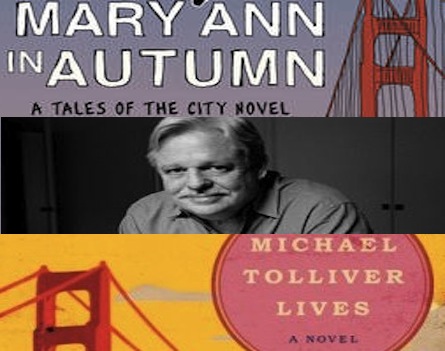
Event: Armistead Maupin in Conversation with Noni Hazlehurst.

“It Gets Better”. “We R Who We R”. Proposition 8. Don’t Ask, Don’t Tell*.

It’s hard to believe it’s 2011 and we are still having these arguments about sexual orientation and whether it’s a choice.

Armistead Maupin, writer of the Tales of the City series, spoke about these things last night at the Athenaeum Theatre on Collins Street to promote his latest installment, Mary Ann in Autumn, which brought a man in the same row as me to tears.

For those of you not familiar with Maupin (and so many people seem to be unfamiliar with the works of my favourite authors. Dominick Dunne, anyone?), here’s a quick refresher, much of which Maupin went into detail on the night:

Tales of the City was spawned from a newspaper column he wrote for the San Francisco Chronicle in the late 1970s, when homosexuality was still illegal and regarded as a mental illness; but not to worry, Maupin was in the closet at that point.

The Tales deal with a bunch of much-loved characters who are dealing with life, love and sex interspersed with murder mysteries, AIDS and adoptions in 1970s San Fran. Some are gay, some are straight, one is transgendered, which was quite a feat for that time, especially for something that was to be published in a newspaper.

Maupin laughed about his far-right, homophobic editor at the Chronicle, who insisted his characters be categorized into columns: heterosexual and homosexual. Aren’t we glad we don’t do that anymore (insert sarcasm here)?

Hazlehurst marvelled at the fact that we still have so many “dumb people” in this day and age, and mentioned Sarah Palin by name, which drew a cheer from the audience. Maupin revealed that he was a Republican back in the day, and that Republican ideals often go hand in hand with being closeted: “If I was right winged and gay, my father might love me,” was his rationale at that time.

On that, Maupin spoke of his coming out to his best girlfriend, Jan, who told him, “big fucking deal,” a quote which Tales of the City fans will recognise throughout the books. Maupin said that was a turning point in his life and love of San Francisco, as he realised that people in that city “really didn’t care”. (Jan also called Maupin “Babycakes”, which is a term of endearment between the two main characters, Mary Ann Singleton and Michael Tolliver, and the title of the fourth book in the series.)

Hazlehurst took issue with Maupin being called a “gay writer”, because really, he “writes about human beings” with both good and bad qualities. “Whole people”, if you will. Maupin said he inserts parts of his own personality into his characters: Michael Tolliver is who he wants to be, and Mary Ann encompasses his “less acceptable” qualities.

He signed off with an anecdote from his sister’s mother-in-law which, much to his sister’s chagrin, made it into Maybe the Moon: One of the characters visits the gynaecologist with a bag over her head, to—ahem—lessen her embarrassment. When Maupin did a reading of the book in his hometown, his sister came along to the event… with her mother-in-law, who remarked, “See? Other people do it too!” Oh, the ignorance! Or as Maupin likes to call it, radio station K-FUCKED. You know, the voice in your head constantly tearing you down, only to build you back up again.

Related: Another City, Not My Own by Dominick Dunne Review.

Images via Big Fib, Tesco, Gabrielle Luthy.

*Updated 04/03/11.

Books: Epic Book Fail.

MamaMia recently ran a story on books that their staff just couldn’t finish.

Well I finish every book I begin, whether I enjoy it or not. I always have a terrible feeling that if I put down a book I’m not enjoying, I’ll miss something crucial; the opportunity for the book to turn into a great story.

Most times, when a book starts of crappy and hasn’t picked up a few chapters in, it’s going to end a crappy book.

This is true of Dr. Zhivago, by Boris Pasternak. I struggled through several train rides to and from uni with this one. The feeling I had upon finishing it was 1) I have no idea what that was about, and 2) those are four precious train rides I will never get back.

Elsewhere: [MamaMia] What’s Your Great Book Fail?

Image via Fantastic Fiction.

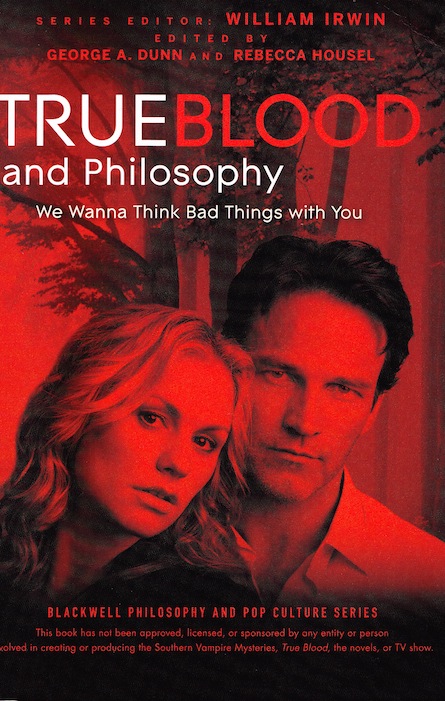
Book Review: True Blood & Philosophy by George A. Dunn & Rebecca Housel.


I bought this book last year around the time season three of True Blood was coming to an end, and the inspiration struck me to write a post on Sookie Stackhouse and feminism. Needless to say, that post has yet to come to fruition (watch this space next week), but I finally got around to reading the book in the past fortnight or so.

The great thing about the Pop Culture and Philosophy series is that you don’t need to be an avid fan of the topic each book deals with; most of the philosophical musings can be applied to everyday life. (I’m making a gross generalisation here, as True Blood & Philosophy is the first Pop Culture volume I’ve read!)

Anyone who’s familiar with the show and Charlaine Harris’ books will know that the way vampires are treated in the somewhat alternate universe of Bon Temps, Louisiana, is a metaphor for how gays and blacks have been treated for centuries.

True Blood and Philosophy delves into this throughout the book, but particularly in the “Eros, Sexuality & Gender” section, where the issue of “orientation” is raised: “Vampires seem to be unlike gays in that we can’t say that vampires are born that way… But there is still a parallel to being born either gay or straight, for once you become a vampire, there’s no returning to a human existence” (p. 98).

One way vampires and gays are different, though, is that “a homosexual predator” cannot “attack or coerce an unwilling person into homosexual acts”, whereas a vampire can take someone against their will (p. 99). You can’t “catch” homosexuality, but you can catch vampirism.

To take it a step further, there was a time when propaganda that the gays will give you AIDS was rife (some might argue that it still is), and were prohibited from participating in sports and other activities where blood could be spilled. This raises the question of the marginalisation of vampires in sports, as well as the use of their blood as medicine. (See “Coming Out of the Coffin & Coming Out of the Closet”, p. 93–108.)

My favourite chapter deals with the attitudes of humans towards vampires and vice versa, and how the way they treat each other amounts to the way non-fiction humans treat animals.

For example, Eddie Gauthier, the vampire whom Jason Stackhouse and Amy Burley take hostage and use as their own personal V vat, is a parallel for “the way millions of animals are treated every day on factory farms… Eddie, like the animals on factory farms, is exploited as a commodity with no regard for his suffering” (p. 36–37).

Furthermore, “… many… vampires actually regard human beings as lower forms of life ripe for exploitation, not much different from the way Aristotle and others regarded non-human species,” in “a classic example of speciesism” (p. 38–39).

Last year, I blogged about an article I read in Time, about how animals that we once thought to not be able to understand language, reasoning, fairness and pain, actually do experience these things. Vampires seem to have a similar attitude towards humans, whom they see only as a food source, and “incapable of feeling pain as we do”, according to the magister when ordering Bill to turn Jessica as punishment for killing one of their own to protect his “human pet”, Sookie (p. 44).

In a similarly intriguing chapter, William C. Curtis asks “can vampires be good citizens”?:

“Should there be a Truth and Reconciliation Commission to require vamps to come clean about their past murders in return for a grant of amnesty? How should vampires be taxed, especially since they don’t need many of the services that government provides, like Social Security, health care, and education? Can they join, or be drafted into, the armed forces?… Will their vulnerability to sunlight be treated as a disability under the Americans with Disabilities Act? Can vampire convicts be sentenced to life in prison, or would eternal incarceration violate the Eighth Amendment prohibition on cruel and unusual punishment?” (p. 65–66).

All these questions have been brought about by the advent of synthetic blood, allowing vampires to “come out of the coffin”, so to speak.

On this, an interesting footnote from the chapter “Un-True Blood: The Politics of Artificiality” by Bruce A. McClelland, refers to a 1927 study by Takeji Furukawa on the correlation between blood types and personality. Being a Japanese study, and the fact that synthetic TruBlood was developed by the Japanese; is there some connection? Or just a coincidence? The clot plot thickens…

A memorable event thus far on True Blood has been the introduction of Maryann the Maenad and her Dionysian debacle. “Let the Bon Temps Roll: Sacrifice, Scapegoats and Good Times” deals with the self-preservation of the Bon Temps residents in “not wanting to know what’s in the sausage”, as Lafayette Reynolds would say (p. 141–142). Or rather, not wanting to know what’s in Maryann’s “hunter’s soufflé”!

This ignorance is further symbolised by the black eyes of Maryann’s followers; they’re literally blind to her wicked ways (p. 142).

Of course this book is more suited to the True Blood fan, however it’s not a prerequisite. (I’m trying to force-feed my friend Laura this book in the hopes that she will cotton on to the sexy-smarts of the show. She’s doing the same to me with Mad Men.) Many of the thoughts discussed go much deeper than just Charlaine Harris’ Southern Vampire Mysteries and vampirism, and it’s quite a thought-provoking—yet still light—book.

Related: Time’s “What Animals Think” Issue: August 16, 2010.

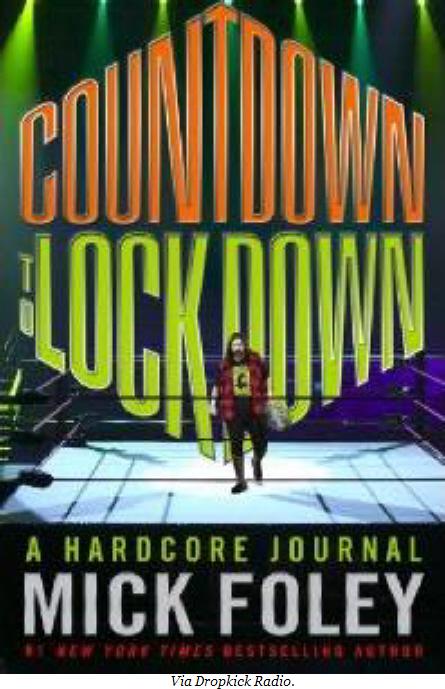
Book Review: Countdown to Lockdown—A Hardcore Journal by Mick Foley.


Midway through Countdown to Lockdown, wrestler Mick Foley’s fourth memoir and ninth published work, the author says that “June 24, 2007, had been a disaster, probably one of the worst days of my year, possibly even my life” (p. 215). And that was before he’d heard the news that colleague Chris Benoit and his family had been murdered.

Of course, it was later revealed that Benoit had committed a double murder-suicide, murdering his wife and son in their home. Foley uses the tragedy as a cautionary tale to others in the business, warning of the affects of not only drugs, but the lonely business professional wrestling can be if you aren’t one of the lucky few to be on top of it.

Aside from the small portion of the book that deals with Benoit, death, drugs and Foley’s unhappiness with his final stint as an announcer in World Wrestling Entertainment in 2008 (which you can find some funny anecdotes about on pages 143–144), the rest is a riot.

Countdown to Lockdown is very much all about family, as are all of Foley’s books in some way or another. Another strong emblem of the memoir is Tori Amos. Odd, I know, but hear him out.

Foley was touched by “Winter” by Tori Amos, and it helped him get through one of his most brutal matches in Japan, in which he lost an ear via barbed wire hanging:

“And then there’s Mick Foley, who took the most beautiful song ever written and turned it into his own twisted ode to suffering and woe…” (p. 72).

Readers of Slate, Jezebel or this here blog from time to time will know that Mick Foley has been named man of the year by the Good Men Project, is a volunteer for Amos’ charity, RAINN and labels himself a feminist, amongst many other good deeds he’s used his wrestling career for.

I can’t recommend this—nor any of Foley’s books—enough. It’s got the perfect combination of violence and morbidity, family and fun, humour and intelligence, and empathy and charity.

Related: The Ten Books I Wanted to Read This Year But Didn’t.

In Appreciation of Mick Foley.

Another City, Not My Own by Dominick Dunne Review.

Elsewhere: [Slate] The Wrestler & the Cornflake Girl.

[Jezebel] Wrestling Star Mick Foley Blows Our Collective Mind.

[The Good Men Project] Top 10 Good Men of 2010: Mick Foley.


Hot Girls Reading Books.

We’ve done the guys, now it’s time for the girls.

You wouldn’t believe what a struggle it was to find pictures of hot chicks reading. You would think there was a stereotype of beautiful women being dumb, wouldn’t you?

There’s non-threatening beauties like Audrey Hepburn, whom most would buy as a smart lady, and drop-dead stunners like Angelina Jolie, who’s proved herself via years of pushing the boundaries in terms of her art and her humanitarian work.

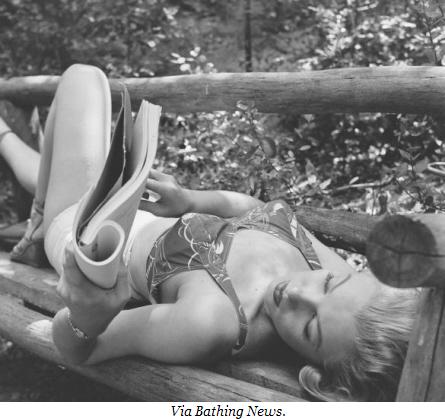
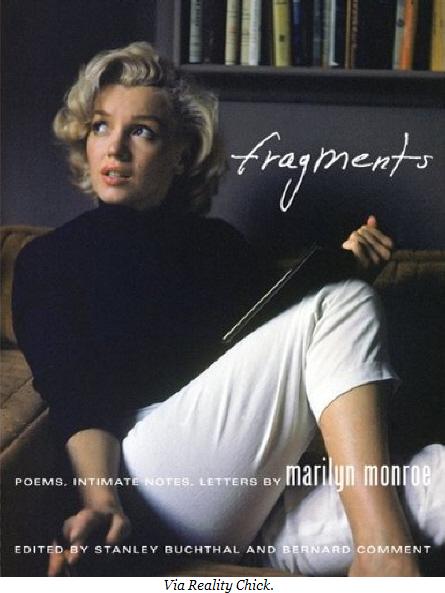
Everyone knows I love Marilyn Monroe, especially images of her laughing in the face of the stereotype surrounding her andGod forbid!reading.

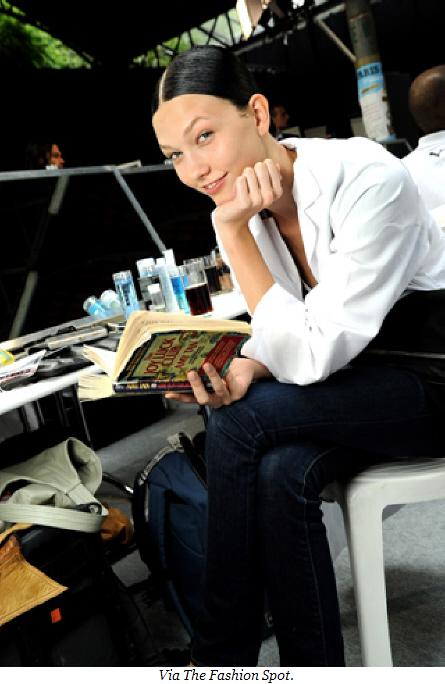
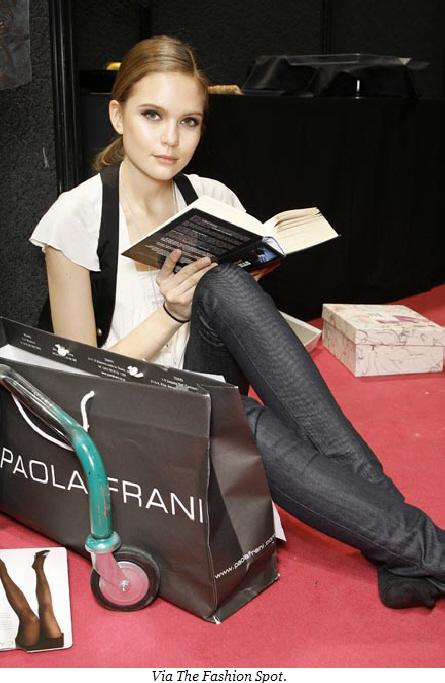
You can’t get much hotter than a supermodel, right? Especially one who has a book on hand for all those idle hours backstage.

Related: Beauty & the Book.

Beauty & the Book, Take 2.

“With a Gun Between Her Legs”: Why Strong (AKA “Sexy” Whilst Being “Strong”) Female Characters Are Bad For Women.

All Eyes on Marilyn.

Fragments of Marilyn Monroe’s Literary Life.

Fragments of Marilyn Monroe’s Literary Life.


From “Marilyn & Her Monsters” by Sam Kashner, in the November 2010 issue of Vanity Fair:

“Several photographs taken of Marilyn earlier in her lifethe ones she especially likedshow her reading. Eve Arnold photographed her for Esquire magazine in a playground in Amagansett reading James Joyce’s Ulysses [above]. Alfred Eisenstaedt photographed her, for Life, at home, dressed in white slacks and a black top, curled up on her sofa, reading in front of a shelf of books [which forms the cover for Fragments]her personal library, which would grow to 400 volumes. In another photograph, she’s on a pulled-out sofa bed reading the poetry of Heinrich Heine.

“If some photographers thought it was funny to pose the world’s most famously voluptuous ‘dumb blonde’ with a bookJames Joyce! Heinrich Heine!it wasn’t a joke to her. In these newly discovered diary entries and poems [which make up the bulk of Fragments], Marilyn reveals a young woman for whom writing and poetry were lifelines, the ways and means to discover who she was and to sort through her often tumultuous emotional life. And books were a refuge and a companion for Marilyn during her bouts of insomnia.”

Related: All Eyes on Marilyn.

Marilyn Misfit.

Lindsay Lohan: Marilyn, Eat Your Heart Out.

The Ten Books I Wanted to Read This Year But Didn’t.

Books: The Ten Books I Wanted to Read This Year But Didn’t.

Again, I don’t do New Years resolutions, but hopefully in listing the books I didn’t get around to reading in 2010 in a public forum where reviews are commonplace (um, this blog, for those of you not keeping track), I’ll be forced to devour in 2011.

1. Countdown to Lockdown by Mick Foley. I’ve been very vocal about my love for Mick Foley in recent months, and I was lucky enough to receive his latest memoir (number four, but who’s counting?) for my birthday, two months ago. I’ve been eagerly anticipating having enough time to dive into it headfirst, and I’m hoping it’ll be the first I check off my list this coming year.

2. Fragments by Marilyn Monroe, Bernard Comment & Stanley Buchthal. I love Marilyn Monroe, both as an icon (though I wouldn’t go as far as to have her image tattooed on me, à la Megan Fox), and as a fascinating person who had many layers, some of which are peeled away with the release of this book. This is a high priority read.

3. Remarkable Creatures by Tracy Chevalier. I loved Girl with a Pearl Earring and The Lady & the Unicorn, so something tells me I’m going to love Remarkable Creatures, about two female fossil hunters in 19th century England. The subject matter is a bit left-of-centre for historical fiction, but it appeals to me nonetheless. I know I couple of friends who own copies of this book, so maybe I can bum a lend…?

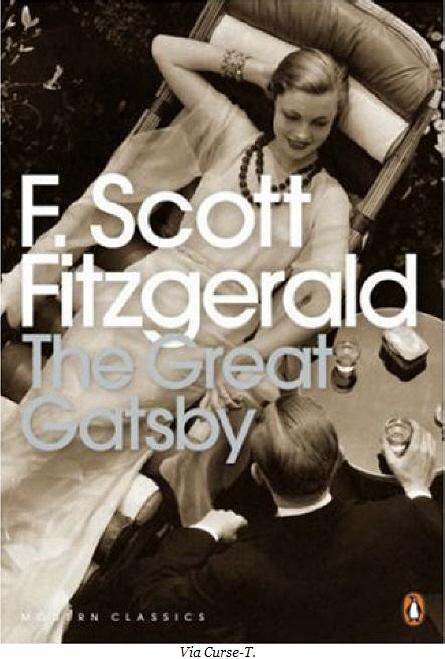
4. The Great Gatsby by F. Scott Fitzgerald. I have a tendency to build classics up in my mind before I’ve read them, and I’m then sorely disappointed. I have a feeling a similar effect will occur with The Great Gatsby, which I became interested in reading when I heard that it will be subjected to a movie remake at the hands of Baz Lurhmann. So bogan-esque, I know!

5. I Was Told There’d Be Cake by Sloane Crosley. Crosley’s books have done the review rounds in some of my favourite and trusted mags, like Yen and Cleo, with nothing but good vibrations about her collection of essays.

6. How Did You Get This Number? by Sloane Crosley. Yes, this is Crosley’s second appearance on the list, but all the buzz surrounding her books and her clever, witty and sometimes snarky tone means I can’t wait to gobble them up!

7. The Genius & the Goddess: Arthur Miller & Marilyn Monroe by Jeffrey Meyer. I read a review of this tome earlier in the year, and it has stayed with me since. Most intriguingly, the book “houses an appendix detailing the illnesses and operations” Monroe had throughout her life.

8. The Way We Lived Then: Recollections of a Well-Known Name Dropper by Dominick Dunne. I can’t get me enough of Dominick Dunne, so it’s a surpriseeven to methat I haven’t read all of his books yet. This one is somewhat of an official memoir, as a lot of his fictional works blur the line between reality and fiction, Another City, Not My Own especially.

9. The Life & Opinions of Maf the Dog, and of His Friend Marilyn Monroe by Andrew O’Hagan. In case you were wondering, I plan to do a lot of Monroe-related reading in 2011. This is one of the more imaginative books about her life.

10. The Prince, The Showgirl & Me and My Week with Marilyn by Colin Clarke. Both are the basis for the new Michelle Williams effort, My Week with Marilyn. Just while we’re on that, I’d like to sneak in another Monroe-inspired fiction: Blonde by Joyce Carol Oates, which another biopic starring Naomi Watts as Monroe is based on. Perhaps if I had picked up the copy I always see at my favourite second-hand bookstore, Bendigo Book Mark, it would have given me more incentive to read it. No, wait, that doesn’t work for the numerous other books I’ve got sitting there, just begging to be read…

Related: In Appreciation of Mick Foley.

The Witching Hour: Halloween/My Birthday at Witches in Britches Cabaret.

All Eyes on Marilyn.

Things Bogans Like.

Another City, Not My Own by Dominick Dunne Review.

Elsewhere: [Bookslut] Genius, Goddess: Reading Theatre.

[Bendigo Book Mark] Homepage.

It’s All About Popular… Lar, Lar, Lar, Lar!

From this weekend’s Good Weekend in The Age, in an article by Tom Ballard entitled “Too Cool for School”:

“If Footyheads are the oafish kings of high school, Popular Girls are assuredly the vapid queens. Deemed ‘The Plastics’ in the 2004 film Mean Girls, this clique is made up of attractive females who are attractive and wear make-up and are attractive and giggle and are attractive and fully hot.

“The members of this group are often the first among their peers to produce any inkling of breast and to discover foundation. Their classroom catch cry“So, like… what are we doing?”is well known and feared.

“Popular Girls enjoy chewing gum, looking vacant and protesting about the confiscation of jewellery. They feed on expensive formal dresses. They’re really, really popular.”

Examples of the Popular Girl in Popular Culture include, as Ballard mentioned, the Plastics in Mean Girls; Cher Horowitz of Clueless, who sees the light in the end; Louise from ’80s cheese fest Teen Witch, who gains popularity from a supernatural amulet; and “good” witch Galinda from Wicked, who tries to make over the self-conscious and “green” Elphaba during the musical’s “Popular” tune, from which the title of this post was derived.

Related: Women in Fiction: My Favourite Fictional Females.

Women in Fiction: Are Our Favourite Fictional Females Actually Strong, or Stereotypes?

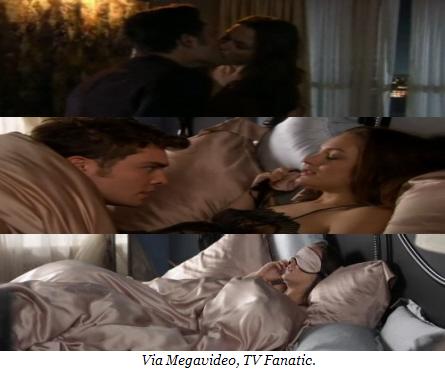
TV/Books: Sexual Healing—Gossip Girl Takes a Page Out of John Irving’s Book.


What’s the best way to get over a lover? Go cold turkey, or develop an aversion by bonking each others’ brains out?

Last week on Gossip Girl, Blair favoured the former, while Chuck liked the latter when it came time to put an end to their on-again/off-again affair.

Their predicament shares shades of John and Franny Berry’s dilemma in John Irving’s The Hotel New Hampshire, minus the incest.

Related: The Hotel New Hampshire by John Irving Review.

The Representation of Trees in the World of Walt Disney.

This is an edited version of a research article I wrote in 2008; one of the most inspiring and fun essays to write for uni, which was reflected in my mark. It’s a left of centre topic, and maybe a bit left of centre for this blog, but it’s just something I’m trying out. Go with it.

When we think of the wonderful world of Disney, trees aren’t usually the first thing that comes to mindunless you’re a horticulturalist!

You might think of the magic of such classics that bring back childhood memories, like Peter Pan or Dumbo; the crown jewel of Disney that is Snow White and the Seven Dwarfs: or the somewhat negative public perception of Disneyland, Disney World and the subsequent “Disneyfication” of the Western world. The one thing we definitely don’t immediately associate with Disney is trees.

But the tree is a very important aspect of not only Disney films, but the whole universe that Walt Disney created. Did you know that there are over 5,000 different types of trees at Anaheim, California’s Disneyland theme park, including Australia’s own eucalyptus tree?

And in almost every movie the action, at some point, takes place in a forest or woodland area, abundant with lush growth. In Snow White, the title character is stalked by the huntsman and seeks solace in the Seven Dwarves’ cottage in the woods. Sleeping Beauty’s Aurora ponders her future love in the forest amongst her animal friends. Beauty and the Beast’s heroine Belle and her noble steed are attacked by wolves in the snow-covered wilderness surrounding the Beast’s castle.

So where did the mastermind Walt Disney gain his inspiration for the use of trees? Some of his first fairytales he adapted into feature films came from the Brothers Grimm, who wrote Snow White and Cinderella, undoubtedly two of the most popular and well loved fairytales and, thereby, characters.

The Brothers Grimm, writing about the lush green countryside of the European settings for these stories, inspired Disney through their gift of writing. Walt Disney also had a fascination with animals (from crickets in Pinocchio to lobsters in The Little Mermaid ), so much so that he produced a series of documentaries on the animal kingdom and nature, called True Life Adventures. Titles in this series included “Seals Island”, “In Beaver Valley”, and “The Living Desert”. An article on Walt Disney in a 1963 edition of Modern Mechanix magazine said that, “Walt’s early edict for… all the True Life Adventure pictures was to get the complete natural history of the animals with no sign of humans: no fences, car tracks, buildings, or telephone poles.”

Disney wasn’t only interested in portraying animals on film, but also conserving species and their environments for future generations. This is evident in the construction of the Tree of Life at Orlando, Florida’s Disney World Animal Kingdom sub-park. While the tree is fake (it consists of about 100,000 silk leaves sewn onto over 8,000 branches), it has carvings of numerous animals on it, allowing children to experience an African Safari with illustrated depictions of animals that may not be around for much longer.

The “Tree of Life” was drawn directly from the incredibly successful 1994 movie, The Lion King. In the movie, the tree is shown only a few times, where the mandrill Rafiki draws symbols of Simba when his life seems to be in danger.

Gail Krause says that, “… Rafiki is the wise ‘shaman’ of the animal community; he writes the image of the lost and then found king, Simba, on a central tree, making real for himself the ‘death’ and ‘resurrection’ of the true leaderan interesting parallel to the Jesus myth. The Disney company then created the park Animal Kingdom with a majestic Tree of Life…”.

The Tree of Life in The Lion King also serves as a marker for where Simba left his old life as heir to the King of the Jungle and his new life in exile with the feisty meerkat, Timon, and Pumbaa the rotund warthog. The fact that the Tree is in the middle of the desert where scarcely any animal roams signifies the neutrality of the Tree: the halfway point between the corrupt leadership of Scar and the carefree new life that Simba leads.

But the Tree of Life isn’t the only perennial woody plant in The Lion King. The other tree that acts as a signpost for where the action picks up is the almost half-dead, lone branch in the gorge. This tree is the framing point for the stampede that Simba gets caught up in; the stampede in which his father, Mufasa, is killed. It’s not a full, live tree, but its skeleton-like appearance is parallel to the dark, cold soul of Scar and his hyena followers, and the subsequent reign of darkness the animal kingdom is ruled by.

The Tree of Life shows that trees are not only markers for where certain actions will take place or where the central protagonist should turn, but they are somewhat characters in their own right. Trees are key characters/motifs in the Disney films Pocahontas, Peter Pan and Alice in Wonderland, as they provide turning points or revelations in the story.

Mark I. Pinsky, author of The Gospel According to Disney: Faith, Trust and Pixie Dust, says, “Providence will show up in the form of a fairy, wizard [or] talking willow tree,” if ever you should lose your way. Or rather, in Alice’s case, stumbling down the rabbit hole underneath the tree she falls asleep in is how she begins her wayward journey.

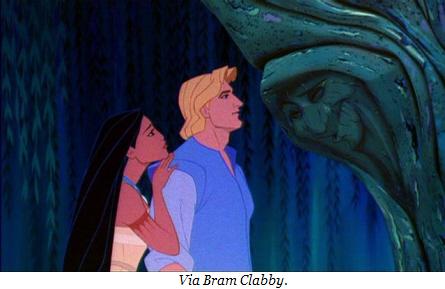
Pocahontas, the story of a Native American girl who promotes acceptance between white settlers and her own people, is the obvious example of a Disney film with a tree as an actual, personified character in Grandmother Willow. According to the Living Arts Originals website, “Willow tree symbolism includes magic, healing, inner vision and dreams… Forests are the abode for the nature spirits”. A lot of research probably went into the character of Grandmother Willow, as these classic Native American qualities of the tree are evident in her. She acts as Pocahontas’s “fairy godmother”. Although Grandmother Willow could be personified as any nationality, she is fittingly a Native American like Pocahontas and her people, because that’s who Pocahontas identifies with (as evident in the conflict between Pocahontas’s tribe and John Smith’s men). When Pocahontas brings John Smith to Grandmother Willow, she shows him her magic and opens up the Native American culture to him, and thereby the settlers, as Pocahontas did in reality many centuries ago. Grandmother Willow, using her virtues of inner vision and dreaming, encourages Pocahontas to follow her path, shown to her by the spinning arrow of John Smith’s compass, thus orchestrating great change in conflict between the “savages” and the whites.
Alice in Wonderland, the most eccentric of all Disney’s films, uses trees in a number of ways. Firstly, the tree in which Alice is studying in at the beginning of the story is the tree under which the white rabbit escapes, and she follows. A magic mushroom (perhaps a reflection of the author Lewis Carroll’s drug use?), makes Alice grow to the height of a tree, where a nosey pigeon refuses to believe she’s “just a little girl!”.

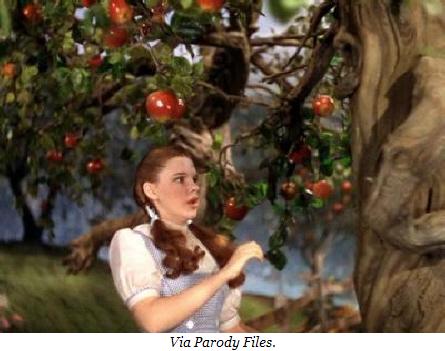
One image of the tree, or woods/forest, that rampant not only in Disney films, but many other contemporary movies, is the personification of the treetaking on human characteristics, such as eyes and arms, to give off a menacing vibe. In Alice in Wonderland, the Tulgey Woods’ trees observe Alice as eyes appear , which then turn out to be a gathering of characters with eyesducks with horns, flamingos with umbrella bodies, and glasses that seem to resemble the fake-nose-and-moustache disguise that children are fond of. Treebeard, in J. R. R. Tolkien’s Lord of the Rings trilogy, both text and film is another, non-Disney example. The forest in The Wizard of Oz comes to life and the trees throw their apples at Dorothy, Scarecrow and little Toto. If I listed the numerous other movies that show trees in this way, we’d be here all day.

But, they’re all derived from one Disney flick in particular: Snow White and the Seven Dwarfs. The first ever feature length animated film was also one of the first to depict a forest coming to life in such a way, where the trees grow arms and eyes, and bark floating in the river turns into crocodiles! No doubt other Hollywood productions have used Snow White and Disney as inspiration, especially The Wizard of Oz, with it’s out-of-this-world plot and unmistakably Disney-esque characters.

Even before Snow White, though, was the Disney short animated film Flowers and Trees, shown in 1932, which won the first ever Academy Award for an animated short. This undoubtedly would have been the starting point for trees as more than just “trees”, not only in Disney, but in film in general.

If ever there was a documentary explaining all about the depiction of trees in Disney films, it’s Four Artists Paint One Tree, a special feature that can be accessed via the 2003 special edition DVD release of Sleeping Beauty. In the doco, Walt Disney narrates as four animators go out into the field to demonstrate how they would paint an old oak tree. The first artist, Walt Peregoy, views the tree as an architectural monument, and his finished painting is evidence of the animation of the backdrop of Sleeping Beauty. Josh Meador, an effects artist for Sleeping Beauty, references the Druids, who believed trees had personalities. Maybe he was a key artist in personifying trees and bringing them to life? The next painter, Eyvind Earle, is primarily interested in the trunk, and uses watercolours to fill in the fine detail. Finally, Marc Davis represents the tree as an explosion out of the earth, with branches spraying out from the body of the trunk. After watching this documentary, you can see which aspects of each artists tree, or their style of painting scenery, that has gone into creating Sleeping Beauty. Walt ends the documentary by paraphrasing the artist Robert Henri: “The great painter has something to say. He does not paint men, landscapes or furniture, but an idea.” This seems to be the consensus amongst not just Disney’s approach to filmmaking, but the studio’s approach to letting audiences believe what they want to believe (some would beg to differ on this point).

M. Lynne Bird backs this theory up in her article titled “Ecological Ambivalence in Neverland from The Little White Bird to Hook in the tome Wild Things: Children’s Culture and Ecocriticism. She discusses the idea that trees are just treesnature is just naturein Disney films, but it’s the children’s imaginations, and in turn, Walt Disney’s child-at-heart imagination that makes a tree something more, such as in the films mentioned above. She writes, “‘The Neverland is always more or less an island, with astonishing splashes of colour here and there’… This mix drops nature and privileges both imagination and society. The island can only become real as children look for it.”
Though not a “tree” specifically, the Smoke Tree Ranch, Walt Disney’s holiday home in Palm Springs, California, was used as collateral in the funding of Disneyland. While it was hard for him to part with the ranch, it turns out Disney made the right choice: sacrificing a symbolic and sentimental place in his personal life to create a symbolic and sentimental place for millions of others.

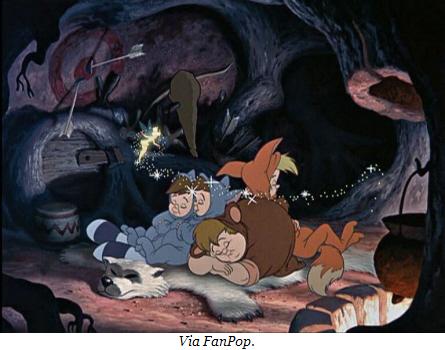
Walt Disney was obviously a kid at heart, as can be seen in the tales he chose to adapt and bring to a worldwide audience. Tarzan’s Treehouse, from the movie Tarzan (and was also adapted from the tree house in Disney’s Swiss Family Robinson) and located in the Disneyland theme park as an attraction, and the creation of the Hangman’s Tree, the home of Peter Pan and the Lost Boys, are more blatant examples of trees in the world of Walt Disney. Hangman’s Tree exemplifies everything a child could want in a tree house.

While, once again, trees are definitely not the first thing Disney-enthusiasts think of when sitting down to watch their favourite film, but the next time you do, keep an eye out for the trees: after all, that’s what a horticulturalist would do!

Elsewhere: [Modern Mechanix] The Magic Worlds of Walt Disney Part 1.

[MSMC] The Cipher: The Mythological Tree in Various Cultures.

[Living Arts Originals] Find Your Tree: The Deep-Rooted Symbolism of Trees.

[Google Books] Ecological Ambivalence in Neverland from The Little White Bird to Hook.