In Jesus’ time, nothing much was recorded about the women. So, for all we know, Jesus could have had many sisters, in addition to his brothers.
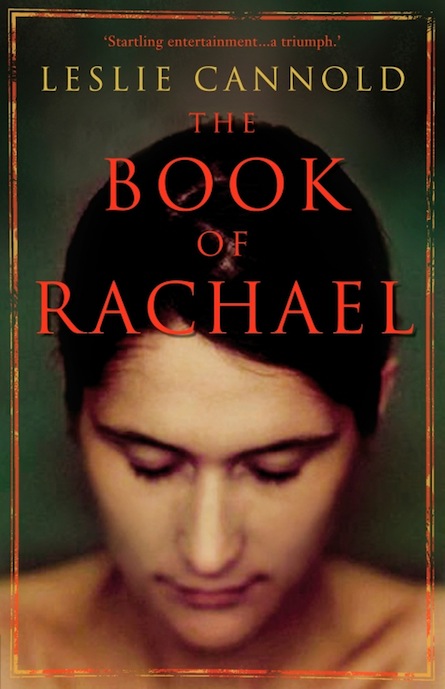
Leslie Cannold has imagined the lives of his sisters in The Book of Rachael. Shona is in love with one man but is raped by another and forced to become his wife and move far away from her family and sister Rachael, who is the rebellious one in the family. She’s inquisitive and passionate, and teaches herself to read when women weren’t allowed to. When she meets her brother’s (called Joshua in the book) friend, Judah, she falls head over heels in love with him, but the feelings aren’t reciprocated until some time after. They become married, but Rachael isn’t ready to become just a mother to Judah’s offspring, and consistently aborts his children using herbal remedies, which causes a rift in their marriage.
As a noted Aussie feminist, you’d have to expect some feminist sentiments thrown into the mix from Cannold. For example, the notorious mansplaining is invoked:
“‘Why is it,’ I asked, cutting across Judah’s lovesick cant, ‘that a female infant renders the mother more unclean than a male?… Forty days confinement if the child is a boy, twice this time for a girl,” I said, rattling off the well-known rule.
“‘The cause for difference,” Judah ventured hesitantly, ‘could be the labours. The distinct way that women labour when bearing a boy as against a girl. And the difference in the burden of guilt they acquire.’
“‘What?’ Distinct labours? Different guilt? Since my own flowering I had attended dozens of births. My preparation for initiation had required I listen to Bindy describe hundreds more. Not once had I even heard it suggested that an infant’s sex determined the severity of the trial faced by the mother. ‘Whatever are you talking about, Judah?’
“But Judah mistook my confusion for a confession of ignorance and a request for enlightenment. Relieved to have been restored to his accustomed role of authority, he set forth confidently to explain. ‘Everyone knows, Rachael, that in her hour of suffering, the mother is desperate and swears she will not live in intimacy with her husband again. If a boy is born, she repents this vow sooner because he occasions such rejoicing. But with a girl, all is gloom. Many women feel their failure keenly, so the mother’s return to her husband’s arms is delayed.’
“It was the silliest thing I had ever heard. And from a man! A man who knew nothing of monthly cycles and giving birth, yet had no hesitation in describing—explaining!—the features of that experience as if they were his own. A man, like the Great God Almighty, who had no right to say!” (p. 123–125).
Furthermore, when Rachael seeks to liberate the women tasked with midwifery duties from doing so until they “are free to serve and worship the Queen”, Bindy, her crone employer, warns, “What of the women who will be trampled in the stampede for freedom?” (p. 201). Do I detect a hint of second-wave vs. third/fourth-wave feminism?
Obviously, the unknown story of women in that time drew a feminist to them, and the characters’ plights to be seen as more than just baby- and bread-making machines are inherently feminist. Hell, to be forced to marry your rapist to restore pride to your family, and to claim that your out-of-wedlock pregnancy is the result of the consort of God, harkens back to a grim time for women, indeed. Cannold does a lovely job of trying to bring those women and their struggles to life.
It’s unfair to throw all the contributors into the one, anti-porn basket, but the authors featured in Big Porn Inc., edited by Melinda Tankard Reist and Abigail Bray all seem to think porn is eroding our society. I haven’t finished the book yet, but stay tuned next week for the entire review.
One aspect of Renate Klein’s essay on the correlation between pornography and the medical industry (“Big Porn + Big Pharma: Where the Pornography Industry Meets the Ideology of Medicalisation”) had me livid: that the cervical cancer vaccine, Gardasil, was an unnecessary luxury vaccine promoted by the porn industry for slutty girls. Sure, Klein doesn’t actually write that, but it is certainly implied.
Klein has done her research, though. She sites the website SaneVax which reports that the HPV (human papillomavirus) vaccine has resulted in 5,010 women who “did not recover” after receiving it, whatever that means. On viewing the website, it looks more like a propaganda machine rather than “an international women’s group that promotes safe vaccination practices.”
This way of thinking—that vaccination is unnecessary, a moneymaking scheme thought up by the government to keep tabs on us, and that girls who receive the Gardasil vaccine are also receiving license to slut around without thinking about the consequences of unprotected sex (or sex in general, some would say)—is rampant on the U.S. conservative scene at the moment. Michele Bachmann, anyone?
In Klein’s chapter, she talks about Gardasil in relation to the safety measures porn stars should take to ensure they stay disease free and are thus able to work. But Gardasil is only recommended for teens, or at least those who’ve never had sex before (including oral), as most people have contracted or will contract HPV during their sexual lifetime.
Just like with any vaccine or medical ailment, there are risks, but is it safer to go unvaccinated and risk spreading disease onto others? What infuriates me is that those who already have small minded, conservative views are the people whom Big Porn Inc. will attract; those who are susceptible to the anti-porn, anti-sex and anti-vaccination messages the book espouses.
“Camille Paglia once wrote, ‘A woman simply is, but a man must become. Masculinity is risky and elusive. It is achieved by a revolt from woman, and it is confirmed only by other men’… Whereas a woman’s femininity is implicit by simply being and birthing, a man’s must be proven through action.”
While I don’t agree totally with this contention (a lot of women struggle to, and are chastised for, deviating from traditional femininity), Manson and Paglia do raise an interesting point about modern masculinity.
A Good Men Project commenter, Budmin, wrote in response to my “Manning Up” post last week:
“Women have more flexibility to self identify with what ever level of aggression or passivity they see fit. Their femininity thus their humanity is not on constant trial. It can’t be taken away from them. It’s theirs and theirs alone.
“Masculinity is the act of suppressing all insecurities so that one may project the illusion of dominance for the satisfaction and protection of others.”
Anyone who knows me (or anyone who reads this blog) knows that I’m a feminist through and through, and that the idea of a “post-feminist” society is spurious. But, provided the right infrastructure and support is in place in an individual female’s life, she does have the opportunities to be anything she wants to be. Sure, she’ll probably be judged for it by misogynists and traditionalists, but does she have as hard a time as a man does stepping outside of the rigid stereotype we’ve put in place for him?
I can’t stand poor-straight-white-wealthy-male problems, but should we diminish the individual struggles to “be a man” men face today because they’re not deemed as “worthy” as the struggles women or people of colour or gay men and women or the poor or the disabled or transgender people face? Who are we to say that someone’s inner demons aren’t as bad as the next person’s?
Now is as good a time as any to be a man but, I think, once everyone realises that gender is just a performance, we’ll all be able to get on with our lives in a way that’s right for us, regardless of the body parts we were born with and what society expects from us because of said body parts.
Sunday Life is back with a bang for 2012, featuring Rachel Hills’ fantastic article on “anti-raunch, anti-porn, pro-life” activist, Melinda Tankard Reist.
I’ve been reading Tankard Reist’s work for about a year or two now, and I have to say, like Hills and many other feminists, I don’t always agree with her views. Hell, I barely ever agree with her views. I’ve got her latest book, Big Porn Inc., which you can read a bit about in the article, on my bedside table ready to go. I have some trepidation about the book, as I don’t see a huge problem with porn, but MTR does. She also views our culture as an increasingly raunch-filled and pornified one, which I also disagree with.
The article details MTR’s “brand of feminism” and also quotes some of her supporters and detractors, which I think rounds out the article very nicely. There’s also a side box about some other notable conservative “feminists”, Sarah Palin and Michele Bachmann. If ever there were two women who used feminism to further their (clearly non-feminist) political agenda, it’s them. Writes Hills:
“LA Times columnist Meghan Daum [writes], ‘If [Palin] has the guts to call herself a feminist, then she’s entitled to be accepted as one.’
“‘I was at a debate recently where a lot people were saying we needed to reinvent feminism because it has become loaded with too much negativity,’ says Eva Cox. ‘But if it’s negative, it is interesting that the right is picking it up.’
“Still, Cox warns: ‘Those who don’t want feminism to be co-opted by the Palins and the Tankard Reists need to do some thinking about what direction they want to take it in instead.’”
I can be a bit of a snobby feminist when I want to be, and don’t think that everyone can call themselves a feminist. But, in a Facebook exchange on the topic, the idea that anyone can call themselves a feminist and has the right to that label was prevalent. I’ve been known to opine that my personal feminism isn’t as radical as second-wave feminism is perceived to be. Just as MTR’s feminism is just as radical, if not more.
Hills rounds out the article by asserting that, “whether you agree with her or not… Tankard Reist is now one of Australia’s best-known feminist voices… It is her language—and that of her supporters—that increasingly frames our debates on sex, gender and popular culture.”
Maybe I’m not hanging out in the right places, but I disagree. Those who shape the debates on sex, gender and pop culture that I read and listen to are the ladies at Feminaust, Jezebel and Feministe, and Hills herself. It just goes to show that everyone does subscribe to their own personal feminism. Mine just isn’t akin to MTR’s.
Snow White, Catwoman, (slutty) Rosie the Riveter, (slutty) Tiger Lily, Katy Perry in her “California Gurls” video, Eve… These are some of the costumes I’ve dressed up in for a variety of costume parties over the years. You will notice that each is either hyper-feminine and/or hyper-sexualised (when I went looking for a Belle from Beauty & the Beast costume for my 21st, the only one I could find for hire was a short, tight one that resembled the original character’s garb in no way).
At the other end of the dress-up spectrum, I have a couple of friends who relish costume parties as opportunities to stretch the gender performance barriers. Michelle has a penchant for covering her face in all manner of makeup and face paint for her takes on Puss in Boots, The Joker and Elphaba from Wicked (also known as the Wicked Witch of the West). Lana dresses skankily as often as she does dowdy, mixing it up as a bandit for our most recent Christmas party, Little Red Riding Hood, a male pirate when all her fellow females were attended as slutty wenches or slutty pirates (or slutty Tiger Lilys!), and Cher.
And on the other side of the coin, there’s Jackson, who was the scantily clad Adam to my Eve. When I suggested deviating from Captain Planet (for which he tried to convince me to let him wear just body paint. To a work do? I don’t think so!) to Adam, he said he’d go as whatever I wanted him to provided a) I organised the costume and, b) he got to show off some skin. He spends most nights in the gym, so what not flaunt what he’s worked hard for?
Around Halloween time, I read an article on sexy costumes for men, and how there are none. At least none that focus on the man as a sex object; rather, they suggest he’s the recipient of sexual favours from women:
“When men go sexy, it means joking about how men should be sexually serviced, have access to one night stands, or being in charge of and profiting from women’s bodies. A different type of ‘sexy’ entirely.”
For a man who’s confident—not cocky—in showing off his body (he’s even tossing up [pardon the pun] becoming a male stripper as a way to pay for a helicopter flying course), Jackson as Adam is certainly one to add to the seemingly non-existent “sexy male costume” column.
I find these attitudes to gender and costuming refreshing. Personally, as much as I talk the anti-gender stereotyping talk, I prefer to dress hyper-femininely, especially when it comes to costumes. Honestly, I guess I’m scared of coming across as anything less than “female” and whatever that means these days. I enjoy showing off my face, hair (which is why I chose to leave it out instead of wrapping it up in Rosie’s polka dot bandana) and body. I wish I were confident enough to buck this all-too-common trend amongst women and get my drag king on every now and then. In fact, my back-up costume if Adam and Eve fell through was Michael Jackson, so maybe I’m not as frightened about tapping into my masculine side as I thought.
While I’ve already got my Halloween costume in mind for this year’s festivities (Gloria Steinem undercover as a Playboy bunny: you can’t get much more hyper-sexualised than that!), perhaps this year I will resolve to step out of the one-slut-fits-all box and try something a little less feminine…?
In the spirit Christmas, I’ve decided to revisit some of my favourite posts of the year in the twelve days leading up to December 25th.
I’m taking this final 12-Posts-of-Christmas opportunity to squeeze two Rachel Berry-related posts into the one. Think of it as one last Scarlett Woman gift to you.
The first post was written “In Defence of Rachel Berry”, while the second explores the character as a feminist one. You can access the original posts here and here, respectively.
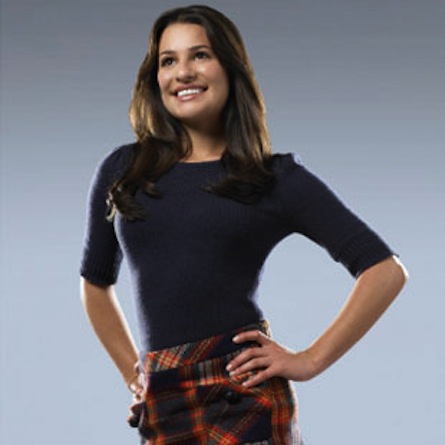
In the first season of Glee, Rachel Berry was introduced as an attention- and approval-seeking know-it-all diva, who sticks a gold star next to her name on the New Directions’ sign-up sheet because that’s what she sees herself as. Season two showed the glee clubber soften her resolve a bit, realising that she’s still only in high school, and has her post-high school years to carve out a Broadway career and have the world see her as the star she knows she is. The season final saw her choose a relationship with Finn Hudson in her senior year at McKinley High, despite having to leave him to head to New York when she graduates.
Not all young girls have to wrangle their feelings for the school jock whilst contemplating a move to the big city to make their dreams come true, but many of Rachel’s problems are shared by the show’s audience.
In the most recent Lady Gaga-themed episode, Rachel struggles to accept her “Jewish nose” and considers rhinoplasty. She also strives for the acceptance of her New Directions band mates, and to be seen as fashionable and popular.
It’s in the character’s nature to be highly-strung, goal-oriented and ambitious, so it’s not likely she’ll change any time soon. And why should she? While there are certainly other young women out there who identify more with the saccharine Quinn Fabray, the sassy soul sisters Santana Lopez and Mercedes Jones, or badass Lauren Zizes, there are plenty who see Rachel as their Glee counterpart, myself included.
A recent New York Times article by Carina Chocano praised the “relatable” and “realistically weak female character”, like Kristen Wigg’s Annie in Bridesmaids—“a jumble of flaws and contradictions”—over the “strong” one. “We don’t relate to [the weak character] despite the fact that she is weak, we relate to her because she is weak,” Chocano writes.
But what exactly does she mean by “weak”?
Pop culture commentator Dr. Karen Brooks notes that talented, beautiful, popular and successful female characters need to be broken down before they can be seen as relatable. “The more talented and beautiful you are, the greater the threat you pose and so ‘things’ are introduced to reduce that threat,” she says. Just look at the “women falling down” video on YouTube.
While Rachel’s had her fair share of setbacks, it seems Glee’s audience is finally beginning to understand her. “We’ve been given time to understand Rachel’s initially painful personality and to identify both her strengths and weaknesses. Her ambitions and drive haven’t shifted, but the context for understanding them has,” Brooks says.
“Rarely are unpleasant characters redeemed, they are simply ‘punished’, while the ‘good’ characters soar to impossible heights, not on the back of hard-work and self-belief, but usually [because of] a love interest and wishing hard. Rachel is a healthy and welcome exception to that,” Brooks continues.
So she’s an unlikely heroine we can all get behind, you might say? “A girl who reminds you of you,” as Chocano opines. An everywoman, if you will?
If Rachel Berry encourages more young women to see themselves as gold stars striving to have their accomplishments recognised, then so be it!
I wrote that audiences have come to know and love Rachel not because her obnoxious know-it-all persona has changed, but because “We’ve been given time to understand Rachel’s initially painful personality and to identify both her strengths and weaknesses. Her ambitions and drive haven’t shifted, but the context for understanding them has,” as Dr. Karen Brooks reiterates.
“I… have trouble with the vilification of Rachel Berry on a feminist level. How often do we dismiss women as ‘bossy,’ ‘know-it-all[s],’ or ‘control-freaks’ when their behavior would be interpreted as leadership, assertiveness, or courage if they were men?
“… In the right context, Rachel Berry’s personality would not seem ‘intolerable’ or ‘annoying’ so much as bad-ass, renegade, and hardcore.”
And Lady T, who used Rachel as her “Female Character of the Week” on The Funny Feminist, said:
“… The show wanted us to root for a girl who was ambitious, daring, and driven.”
It might be because I have been known to be seen as bossy, a know-it-all, a control-freak (just ask my new housemate!) and ambitious that I’m standing up for her, but just think of another feminist heroine in modern pop culture who could also be described using these words: Hermione Granger. The only difference is, she isn’t vilified for these attributes.
If you look back to the beginning of Glee, especially, Rachel was often deemed ugly. Now, anyone who’s seen Lea Michele knows she’s not exactly unconventionally attractive, but Rachel is characterised as this because she’s annoying. And she’s annoying because she stands up for herself, knows what she wants and how to get it. (From a racial point of view, she could also be seen as being “ugly” because of her Jewishness.)
Despite these inherently “unattractive” qualities, Rachel manages to snag her man, Finn, in what can be seen as typical Glee sexism and discrimination:
On the other hand, it can be seen as a poignant take on teenage life that the underdog is always being compared to the most popular girl in school: Quinn Fabray.
If Rachel is Glee’s feminist heroine, Quinn is her polar opposite. She has had next to no character development, which leads to her motivations changing week to week.
In “Original Song” she tore Rachel down, telling her to get over her “schoolgirl fantasy happy ending” with Finn, who would never leave Lima, taking over Burt Hummel’s mechanics business, with Quinn, a real estate agent.
But in “Born This Way”, she was “broken down” by her fat past coming back to haunt her, to come across as more “relatable”.
Sure, Rachel’s had her fair share of being “broken down” (being dumped and subsequently egged by Jesse St. James, being publicly broken up with by Finn, getting slushied… I sense a food theme here.), but in the grand Glee scheme of things, she’s actually doing pretty well for a female character.
In the spirit Christmas, I’ve decided to revisit some of my favourite posts of the year in the twelve days leading up to December 25th.
This post was one of my favourites for the year. Sure, the actual experience wasn’t all that riotous, but it’s given me loads of blog fodder and, I think, has promoted growth from the people involved, including myself. There are updated versions available here and here. The original is here, and below.
It’s been a beauty-centric week here at The Scarlett Woman.
I’d already planned to post those two articles last week before a beauty-related scandal came to light at my workplace.
Apparently, two of my male co-workers had devised a “ranking system” for the hottest to nottest girls in our department.
This is sickening on four levels.
One: it’s sexual harassment and discrimination based on gender and appearance, and those who were victimised by the “ranking” could take those who were responsible for it to H.R. Just look at the Pricewaterhouse Coopers incident. Or the Duke “Fuck List”, on the other side of the coin.
Two: we interact with these men boys (as that’s what they are: one has just turned 21, and the other is 23. But age really has nothing to do with maturity) as friends, colleagues; PEOPLE. Not as objects for them to rate and pit against each other in terms of how we look and nothing else.
Three: I don’t want to have to stoop to their level, but if we were ranking them, one would be at the top in terms of looks, but both would be at the bottom in terms of personality, morals and decency, which is all that really matters. So what gives them the right to judge us?
Four: this is not the ’50s and women are not reduced to what they look like.
The men boys who devised this ranking are sexist misogynists, one of whom I am deeply ashamed to have dated for a short period. Thank god I never got naked with him, ’cause who knows what he would have to say about me then!
What gives them the right to rank us? The same right men’s magazine editors have to rank female celebrities in terms of hotness, I suppose. But the difference there is that, while it’s still pretty sexist but somewhat understandable and accepted, most of the women on the list don’t work with and consider(ed) them friends.
How can you separate the things you know about someone—their personalities, interests, history, temperament etc.—with how they look? I know I can’t.
I was taken aback recently when a coworker praised me for being close friends with a man who’s not super attractive. Unlike the two who ranked me, I don’t make friends in terms of looks. If anything, I find it easier to be myself around and make friends with men I don’t find attractive.
But my so-called “ugly” friend has an awesome personality; anyone would agree. And that makes him attractive. And at the end of the day, it’s what’s on the inside that counts.
As I mentioned above, one of the boys who devised this ranking is probably about an eight in terms of looks, but knowing this about him, in addition to other undesirable traits that lead to our dating demise, makes him a one in the personality department.
Now, I don’t know where I ranked on this list and, frankly, I don’t care. My self-esteem is high enough to not give a shit about what other people think of the way I look. But that’s not the point. How would someone who doesn’t have such high self-esteem feel? As much as we say looks don’t—or shouldn’t—matter, to them, it does.
So is this just a case of “boys will be boys”, as one co-worker who knows about the list put it?
I don’t think it is. You will notice that two out of about thirty were involved in this. The overwhelming majority chose not to act as boys do, whatever that means these days. Again, this is 2011: not 1951.
Another co-worker said “judging” is just what people do. Sure, I judge young mothers who leave their kids with a babysitter so they can go out clubbing, the guidos/ettes from Jersey Shore and, certainly, these two men in light of this list. But I’m judging them on their behaviours and attitudes, not what they look like. And who am I, really, to judge them based on any factor? No one. The same as the makers of this list are to judge us. Nobodies.
At the end of the day, beauty is in the eye of the beholder. Ellen DeGeneres brought this up when she interviewed FHM AND Maxim’s Most Beautiful Woman, Rosie Huntington-Whiteley, on her show last week. DeGeneres compared Rosie’s “ranking” to her own as “Most Beautiful Woman” on This Old House magazine’s cover. We know Ellen, we like her, and that’s what makes her beautiful, in addition to her physical beauty. Bitch looks good at 53!
And true beauty comes from within. Don’t ever let someone else’s “ranking” of how you look make you forget that.
In the spirit Christmas, I’ve decided to revisit some of my favourite posts of the year in the twelve days leading up to December 25th.
I love watching Jersey Shore because, like Glee, I know I’m always going to get a blog post out of it. The gender issues that run rampant on the show were inspiration for the following post, the original version of which you can find here.
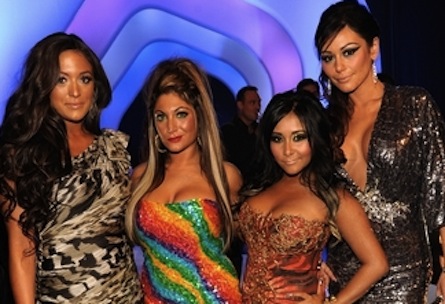
This notion has been on my mind since the start of the year, and watching season three of Jersey Shore got me thinking about it again. So, are the fake-tanned, fake-boobed and fake-nailed women of Seaside feminists?
“… so much of what these people do actually challenges old school notions about gender-appropriate behavior: Men who wax their eyebrows? Men who place that much of an importance on hair products? Women who fistfight? Women who drink so heavily?”
But on the other, JWoww, for example, subscribes to the stereotypical sexualised female body: fake boobs, fake hair, and done up to the nines when she hits the clubs. If she’s got it, should she flaunt it?
In strapping their boobs up and wedging their short-shorts further into their buttcracks, the mating dance the guidettes perform each night (which has nothing on the aforementioned regimen of the boys!) seems to subvert the very look they’re trying to achieve: sexiness. I don’t believe this is done purposefully, so in that sense it’s not very feminist-like, however the brazen bedroom talk the girls engage in—or rather, lamenting the lack of bedroom action, especially when it comes to Snooki—makes them highly relatable. As Sady Doyle writes, “we are all Snooki”.
I’m sure all women can relate to slut-shaming, regardless of how many sexual partners they’ve had, and that’s something the Jersey Shore females have to deal with on a seemingly episodic basis. Egan Morrissey puts it best, after Pauly D voices his views on sexual double standards (“She’s [Angelina] brought all these random people home. She’s a girl. You don’t do that. That’s a guy thing. Guys do that, not girls.”):
“Shouldn’t Pauly and The Situation be grateful for sluts? If there were no sluts then they would never be able to have sex. Do they think for one minute that they would even want to live in a world in which all girls acted the way that they’re ‘supposed’ to?”
Still with sex, feminists are either viewed as sex-negative man-haters, or insatiable sex machines who throw away men once they’ve got theirs. JWoww certainly falls into the latter category, who says in the opening credits, “I’m like a Praying Mantis: after I’ve had sex with a guy, I will rip their head off.” If Jersey Shore were a scripted show, JWoww’s bad breakup with Tom, who steals her hard drive, which contained naked pictures of the reality star, amongst other things, would be payback for her independent woman status. How dare a woman step outside of the stringent guidelines The Patriarchy has set for her?!
Speaking of bad breakups, if there’s one guidette who falls furthest from the feminism tree, it’s Sammi. While she finally plucked up the courage to leave Ronnie after their tumultuous on-off relationship ended in a very realistic fight in season three, in which Ronnie trashed Sammi’s bedroom and her belongings, including breaking her spectacles, reports about the fourth season seem to indicate that Sammi took Ronnie back.
While we can never understand the dynamics of each individual abusive relationship, and feminism can’t realistically be applied to them when a woman (sometimes a man, but mostly women) has had all of her resources—family, friends, employment, finances, access to a car etc.—taken away from her and therefore has limited means to escape, Ronnie and Sammi’s relationship may have some benefits to viewers of the show. Because Jersey Shore is marketed as “reality TV” (although, after The Hillsand the revelation this week that one of the “geeks” on Australia’s version of Beauty & the Geek is an actor, its dubious how “real” the show is), female viewers who may be involved in an abusive relationship at some stage in their life can see that the relationship is being portrayed in a negative light, that Sammi’s housemates, friends and family are telling her it’s not healthy, and that she should get out. We can only hope that the one in four women who will have an abusive partner will take heed.
A little too deep? How can we derive all that from something as asinine as Jersey Shore, a show that, grammatically, should have a “The” at the beginning of its title?
Take what conclusions you want from the overtly sexual show, but one thing’s for sure: the guidettes are “empowered sexually, that’s what I’m seeing on Jersey Shore… The women seem to be making their own decisions about who they sleep with [Scarlett Woman note: or don’t sleep with] and when.
“Almost by definition ‘guidette’ is a derivative term. It is a male-based subculture… The women were always defined as sex objects. And I think that’s something that they’re reversing.”
So, guidettes as sex subjects? If talking about “hairdos, shoes and body image snafus” and “preen[ing] and put[ting] on lipgloss” is a stereotypically female—and therefore weak—trait, then the guidos are certainly the background characters of Jersey Shore.
In the spirit Christmas, I’ve decided to revisit some of my favourite posts of the year in the twelve days leading up to December 25th.
Sexual harassment seems to be the theme of my (and a lot of those around me) life lately, and the blog has had a heavy focus on it in recent months. The original article can be found here.
The other day at work I was sexually harassed by a customer.
I was just standing there, and a short (probably around my height), bald, fat man in a dirty navy blue polo shirt, who was about 50–55, came up to me and asked me where the toilets were. I told him, then he asked “how’ve you been”, with a tone that implied he knew me. I said fine, and he looked me up and down and said in a sleazy voice, “Ooo, I’d like to take you home.” I immediately walked away and told three of my colleagues who were stationed nearby. As I left, he said something to the effect of, “I probably shouldn’t have said that.”
I’ve been harassed at work before, not as blatantly as Sunday’s episode, but I’ve never felt comfortable enough to eject myself from the situation. As someone who works in customer service, I think I placed not being rude above keeping myself safe. But, post-SlutWalk, I now have the confidence not to put up with that shit.
But I didn’t report it.
I told a few colleagues, until I eventually mentioned it several hours later to a security guard, who also happens to be a close friend of mine. He sternly asked me if I’d reported it to my manager. I told him no, and he asked me what I would do if he came back? If he stalked me? If he attacked me? If he attacked someone else? His older-brother protectiveness made me decide to report it.
It’s funny that I didn’t think to report it the moment it happened. I guess that’s the stigma of sexual harassment (and don’t even get me started on the stigma of sexual assault!). I think I thought that because I can handle myself and I won’t put up with that shit, that it wasn’t a big deal.
It was.
I filed a report with my manager, security know about it and have footage of the man, and it’s been forwarded to the appropriate department.
The responses I got from fellow colleagues were at each end of the spectrum. Some expressed outrage and encouraged me to report it, others asked me if he touched me, as if that would be the only thing to warrant filing a report. No, he didn’t, because that would be sexualassault. (Why do we not bat an eyelid when verbal harassment occurs, but are quick to leap into action when the physical barrier is breached? Both are violations of a person based on the fact that their harasser thinks they’re public property, or available for them to make comments on/touch.)
But these responses really illustrate the abovementioned taboo of sexual harassment. That boys will be boys. That as a young, pretty woman, you just have to suck these things up. That it doesn’t really count because you were only verbally violated.
I am somewhat ashamed that I was so quick to brush it off. (Let’s be clear: I’m not ashamed that I was harassed. I’m ashamed that I didn’t take it seriously to begin with. Rape is my biggest fear, but if I was ever raped, you can be damn sure I wouldn’t keep quiet about it because I was ashamed.) This is 2011. This kind of thing shouldn’t be happening. But it does. So as modern women, we should be able to say that making comments about our physical appearance without our consent is a no-go. Just like making physical contact with our bodies without our consent is.
In the spirit Christmas, I’ve decided to revisit some of my favourite posts of the year in the twelve days leading up to December 25th.
Despite how far I feel I’ve come as a feminist in the last year or two, I find most people have “a long long way to go” in terms of realising what feminism actually means. I wrote this post in response to Beyonce’s musings on the topic, as well as the release of Caitlin Moran’s How to Be a Woman, “Sarah Palin feminism” and Tina Fey, amongst other things. The original version is here, and you can read an update here.
Recently, when asked in an interview with UK Harper’s Bazaar if she’s a feminist, Beyonce said she wanted to invent a new word for feminism, because she doesn’t feel it “necessary” to define whether she is one or not.
Why, in this day and age, do we still distance ourselves from the word “feminism”?
And it’s not just Beyonce. Keri Hilson, Lady Gaga, and even (kind of)Tina Fey, have been called a feminist in one instance, and tried tobacktrack on it in the next.
In response to all this, Jezebel ran a contest to come up with “a catchy new word for feminism”, like Beyonce suggested. Some suggestions were “FUCK PATRIARCHY”, “Flesh-Hungry Young Slutism” (seemingly appropriate given it has been the year of the SlutWalk, if you will), “Vaginist”, “Diva-is-a-female-version-of-a-hustla-ism” (how you like that, Beyonce?), but the one that came out on top was “Equalism” which, in my experience, is what young feminists today strive for.
Speaking of young feminists, I would probably only define a handful of my friends as this, and even they are hesitant to describe themselves this way.
One says she’s not a feminist because she wants to “cook for her boyfriend”. Since when did not cooking and feminism become mutually exclusive?
Another says he’s (yes, he’s) could never truly be a feminist because he doesn’t have a vagina, so therefore will never know what those who do have to go through on a daily basis in a patriarchal society, and have gone through for centuries in patriarchal societies.
I have another who, just by looking at her, screams feminism before she even opens her mouth. Yet sometimes, when she says things I morally disagree with, I think, “she’s not feminist enough”. (Abhorrent, I know, and something I strive not to think and say as a feminist. And, by my own admission, some might say I’m “not feminist enough” because of the way I talk and how I dress.)
It’s a far cry from Beyonce, Gaga et al., who try to distance themselves from feminism, while young feminists (and old!) bicker amongst themselves about who’s more feminist! And it perfectly illustrates the discrepancies between what self-described feminists project onto the movement, and what lay, non-feminist Generation Yers believes it to be about.
Camilla Peffer over at Girls Are Made From Pepsiwrites:
“I think most women associate feminism with radicalism and the whole bra burning hulla-balloo. Which is RI-DUNK-U-LOUS. And a lot of people see the term feminist [as] biased towards females in the sense that the whole movement promotes this idea of women being better than men.”
Indeed, there is a far cry between the first wave suffragist movement, second wave “bra-burning” and the sexual revolution, and current third-wave feminism. Some would even say that we have passed third-wave feminism and are now living in a post-feminist society.
When I first started getting into feminism about two years ago, I subscribed to this notion. Now, having been exposed to all manner of blogs, academic articles, events etc. to put the sexism, discrimination and harassment I’ve experienced as a woman into perspective, I can see that we sure as hell aren’t living in a post-feminist world and that we still need feminism, perhaps more than ever with the rise of the Tea Party and Michele Bachmann and the closure of Planned Parenthoods in the U.S., the blatant harassment most women experience on the street and in their workplaces every day, the attacks on SlutWalk, and the atrocities facing Third World women, to name but a few.
Taking on these battles shouldn’t be seen as something “dirty”; it should be seen as something we can all get behind, if it leads to our daughters experiencing a world free from harassment and discrimination based on what genitals she possesses and what she looks like, no matter what part of the world she hails from.
Sadly, as Rachel Hills muses, “it can be a bit uncool to care. Feminism means caring and wanting to change things, ergo it makes people uncomfortable—especially people who are comfortable with the status quo.”
Are you comfortable with the status quo? Do you think feminism is still a dirty word?


 The Scarlett Woman