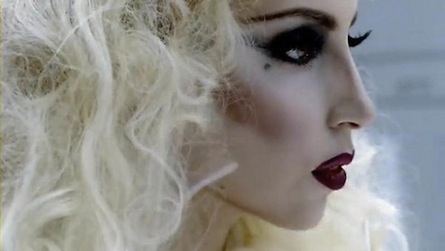
Slut-Shaming in Romantic Relationships: It’s Not On Unless It’s Not On.

Last week I upheld my tradition of throwing a Halloween party for my birthday.

Ahh, Halloween: the penchant for flesh-baring costumes has emerged as one of the most enduring aspects of the American holiday in recent years, heralding it, perhaps more appropriately, Slut-O-Ween.

Now, everyone (should) know that just because a woman wears a “slutty” or sexy costume, doesn’t mean she’s easy or is “asking for it”. It just means she likes her body and wants to show it off or is—consciously or not—buying into the whole sexy-feminine debacle modern women are so often faced with, or sometimes both.

You’d think this way of thinking would be abolished in long-term relationships, in which one of my friends who attended the party is embroiled in. I think she’s been with her boyfriend for about three or four years now, certainly before I met her two-and-a-half years ago.

All her friends and family knows she’s pretty shy, a bit quirky, and has been known to attend costume parties in full drag king regalia! If anyone has trepidations about dressing sexily, it’s her.

So her costume this year was a bit out of the ordinary: she was showing more skin than I was, and that’s saying something!

But this obviously upset and threatened her boyfriend, who I’ve made no secrets about not liking, and the feeling’s mutual. He accused her of dressing like a “slut”, and being one, essentially: he thought she cheated on him at my party, and that I was egging her on!

Now, I’ve had people dislike me before, but this takes the cake!

My friend had recently added a new male colleague—who, in the interest of full disclosure, is gay—to her Facebook friends. This, coupled with her “skanky” outfit and attending a party he wasn’t invited to and didn’t want her to attend, is enough ammo to jump to cheating conclusions in his mind. Anyone else think this is a bit out of whack?!

Firstly, there are obviously major problems in their relationship, which I’ve voiced to my friend. The problems are mainly his, but she’s enabling them by accepting his apologies when he realises he’s stuffed up. The amount of times I’ve witnessed her crying over him are too numerous to count…

And, as I mentioned above, if anyone should know her inside and out like the back of their hand, it’s her significant other. Clearly he knows nothing about her to think that just because she wore a revealing outfit and dared to have some fun, it automatically means she cheated on him. There’s a sexual assault defence if ever I saw one.

Furthermore, he has no idea about women, relationships and intimacy if he jumps to jealous conclusions like these.

Perhaps he’s threatened because she’s going out and having fun to celebrate someone’s birthday he doesn’t like without him. This is one of the first times my friend has dressed so risquély, and costume parties were a thing of far off, mythical lands before she met me. So, friend he doesn’t like + Slut-O-Ween + coming out of her shell + doing it without him = CHEATING! Hmm, I can see a few holes in that analogy.

But there is one outcome of the equation that I didn’t see coming: he gave her an ultimatum. Choose him and fix their relationship (although how he expects her to do this is beyond me. SHE DIDN’T DO ANYTHING WRONG!), or choose me. Now, I know which one I would choose (;)), but this is eleven kinds of wrong.

Clearly, he has mental problems (and, in all seriousness, he actually does. Fast forward from this calamity and he’s agreed he acted like a douchebag and will get professional help.) that aren’t representative of men today, I don’t think.

His attitudes reflect a bygone era, where men shackled their women to them (when they weren’t shackled to the kitchen, of course), and having sex with the lights on was the most suggestive a woman was allowed to get.

Now, not all modern men have eschewed these archaic attitudes, but almost none of the men I have in my life and of a similar age to me think like this. Costumes and short skirts are just a way to have a little fun and act (be?) a little sexy.

Whether the options are open to making a little love and getting down tonight is entirely up to the consenting adults involved, regardless of what they’re wearing.

Related: Slut-Shaming as Defence Mechanism.

Ain’t Nothin’ Gonna Break My Slutty Stride.


TV: Is Jersey Shore Anti-Abortion?


For all their gender-stereotype-busting, Jersey Shore equally upholds the sexual status quo.

They slut-shame, “cock block” and are anti-abortion, apparently.

On last night’s episode, Deena thought she might be pregnant as she’d missed her last period. Instead of weighing up her options and realising she’s too young and irresponsible for a child, she got upset about how angry her family would be and lamented that she didn’t know how to take care of a baby.

I’ve said it before, and I’ll say it again: if the stigma of abortion were removed, Deena would have realised that she had an option other than going through with the pregnancy, and wouldn’t have hesitated to schedule herself an abortion if she had in fact been pregnant. Because, yes; having a baby is a huge responsibility, and with no job, no partner, no family support (from the way she describes how upset her parents would be), and a party-hard lifestyle—not to mention the binge drinking her and Snooki had partaken in during their time in Italy whilst Deena might have been growing a bun in the oven, thus endangering the health of the foetus—she certainly isn’t ready for it.

The fact that these Jersey Shore guidos/ettes relish their single, carefree, eternal alcohol-fuelled childhoods (“Don’t fall in love at the Jersey Shore” is their motto) makes it all the more likely that they should view abortion as a guilt-free, necessary and legal procedure to make a woman not pregnant.

Thoughts?

Related: Snooki & the Jersey Shore Girls as Feminists?

Images via Megavideo.

TV: Charmed—”It’s the 21st Century, It’s the Woman’s Job to Save the Day.”


In season two of Charmed, Billy Appleby, a character from Phoebe’s favourite old school horror movie, Kill It Before It Dies, makes it off the screen and into the sisters’ technicolour world, along with the Demon of Illusion, Bloody Mary and the slasher from Axe Husband.

When cornered by the Axe Husband, Billy chimes in, saying, “It’s okay: the man is here to save the day.” In true feminist-y Charmed style, Prue retorts with, “Billy, it’s the 21st century. It’s the woman’s job to save the day.”

Related: “What? A Woman Can’t Rescue a Man?”

Witch Trial: Burning at the Stake on Charmed.

Image via YouTube.

Movies: What’s Your Number Breaks Some Boundaries, Upholds Others*.


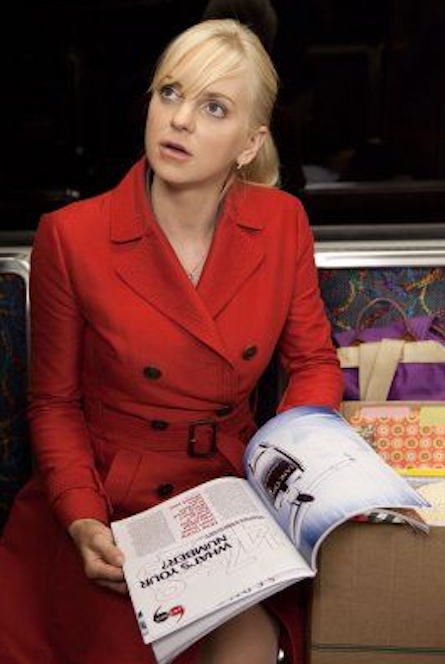
I’d been looking forward to What’s Your Number for a while; Anna Faris is not someone you always see in a leading role in a mainstream, big box office rom com with Chris Evans; there’s a whole host of up-and-coming actors and established comedians (Joel McHale, Andy Samberg); and it deals with the issue of slut-shaming, the first in my memory to do so since Easy A, to name but a few reasons.

But if 20 lovers is the be all and end all in a woman’s quest to get married, then Faris’ character, Ally Darling, is up shit creek without a paddle.

When she discovers after reading a women’s magazine article that she’s slept with 19 men, thus significantly lowering her chances of getting married, she vows not to sleep with one more man until she’s sure he’s the one. One drunken bachelorette party later, and she’s slept with her ex-boss (played by McHale).

During her quest to seek out all her exes so she doesn’t have to go above 20, she meets her across-the-hall neighbour, Colin (Evans). And you can guess what happens next…

While I did enjoy the storyline, and I do love me some Faris and Evans, I was sorely disappointed in two aspects of the climax: that Ally clichély falls down when she runs out of her sister’s wedding to find Colin (see the Women Falling Down video for just how cliché this really is), and that after she’s slept with Colin she gets a phone call from one of her past lovers claiming they never slept together, just that she got really drunk, gave him a mediocre lapdance and handjob, and then passed out in the shower. So yay, right?! Ally’s back to 20 and a) will get married, and b) isn’t a whore!

I particularly liked it, though, when the guy Ally dumps Colin for—her high school sweetheart-turned-big time philanthropist, Jake—discovers she didn’t lose her virginity to him in high school, straying when he was out of town. He says, “Big deal. So you’ve only slept with two guys in your life.” I laughed out loud at this point. I’m not sure how old Ally is meant to be (considering she says she didn’t go to her high school reunion at the beginning of the movie, my guess is she’s around 30), but Jake—or any guy, for that matter—is deluded if they think a 30-year-old woman is going to remain celibate from her first sexual encounter in high school til she meets her husband later in life. Sure, there are some women who this is true for, but it’s the exception, not the norm.

Jake then proceeds to judge Ally on how many people she’s slept with, evening saying “Eww!”

On the other hand, Colin in the embodiment of a modern man. He couldn’t care less how many people Ally’s slept with, just as long as she sleeps with him, I suppose! But really, who does care? Why is your “number” so important?

*Blanket spoiler alert.

Related: Easy A Review.

In Defence of Rachel Berry.

Elsewhere: [YouTube] Women Falling Down in Romantic Comedies.

Image via FanPix.

UPDATED: Why is Feminism Still a Dirty Word?

From  Rachel Hills’ profile on Caitlin Moran in Sunday Life, 7th August 2011:

“Part of the problem… is that we just don’t agree on what it [feminism] means anymore. ‘I understand what I mean by feminism, and all my girlfriends—my girl Vikings—understand it. But if you say it to someone like a man or a younger person, they wouldn’t really understand what you meant.’”

“‘I want to reclaim the phrase “strident feminist” in the same way the black community has reclaimed the word “nigger”,’ she writes. ‘“Go, my strident feminist! You work that male/female dialectic dichotomy,” I will shout at my friends in bars, while everyone nods at how edgy and real we are.’

“Why do labels matter? Isn’t it enough to just take on the ideas? ‘Saying, “I’m a feminist” is just the quickest, shortest way of saying, “Get out of my face. I am not going to take your bullshit,”’ Moran retorts.”

*

Recently, when asked in an interview with UK Harper’s Bazaar, Beyonce said she wanted to invent a new word for feminism, because she doesn’t feel it “necessary” to define whether she is one or not.

Why, in this day and age, do we still distance ourselves from the word “feminism”?

And it’s not just Beyonce.

Keri Hilson, Lady Gaga, and even (kind of) Tina Fey, have been called a feminist in one instance, and tried to backtrack on it in the next.

In response to all this, Jezebel ran a contest to come up with “a catchy new word for feminism”, like Beyonce suggested she should do. Some suggestions were “FUCK PATRIARCHY”, “Flesh-Hungry Young Slutism” (seemingly appropriate given it has been the year of the SlutWalk, if you will), “Vaginist”, “Diva-is-a-female-version-of-a-hustla-ism” (how you like that, Beyonce?), but the one that came out on top was “Equalism” which, in my experience, is what young feminists today strive for.

Speaking of young feminists, I would probably only define a handful of my friends as this, and even they are hesitant to describe themselves this way.

One says she’s not a feminist because she wants to “cook for her boyfriend”. Since when did not cooking and feminism become mutually exclusive?

Another says he’s (yes, he’s) could never truly be a feminist because he doesn’t have a vagina, so therefore will never know what those who do have to go through on a daily basis in a patriarchal society, and have gone through for centuries in patriarchal societies.

I have another who, just by looking at her, screams feminism before she even opens her mouth. Yet sometimes, when she says things I morally disagree with, I think, “she’s not feminist enough”. (Abhorrent, I know, and something I strive not to think and say as a feminist. And, by my own admission, some might say I’m “not feminist enough” because of the way I talk and how I dress.)

It’s a far cry from Beyonce, Keri et al., who try to distance themselves from feminism, while young feminists (and old!) bicker amongst themselves about who’s more feminist! And it perfectly illustrates the discrepancies between what self-described feminists project onto the movement, and what lay, non-feminist Generation Y believes it to be about.

Camilla Peffer over at Girls Are Made From Pepsi writes:

“I think most women associate feminism with radicalism and the whole bra burning hulla-balloo. Which is RI-DUNK-U-LOUS. And a lot of people see the term feminist [as] biased towards females in the sense that the whole movement promotes this idea of women being better than men.”

Indeed, there is a far cry between the first wave suffragist movement, second wave “bra-burning” and the sexual revolution, and current third-wave feminism. Some would even say that we have passed third-wave feminism and are now living in a post-feminist society.

When I first started getting into feminism about two years ago, I subscribed to this notion. Now, having been exposed to all manner of blogs, academic articles, events etc. to put the sexism, discrimination and harassment I’ve experienced as a woman into perspective, I can see that we sure as hell aren’t living in a post-feminist world and that we still need feminism, perhaps more than ever with the rise of the Tea Party and Michele Bachmann and the closure of Planned Parenthoods in the U.S., the blatant harassment most women experience on the street and in their workplaces every day, the attacks on SlutWalk, and the atrocities facing Third World women, to name but a few.

Taking on these battles shouldn’t be seen as something “dirty”; it should be seen as something we can all get behind, if it leads to our daughters experiencing a world free from harassment and discrimination based on what genitals she possesses and what she looks like, no matter what part of the world she hails from.

Sadly, as Rachel Hills muses, “it can be a bit uncool to care. Feminism means caring and wanting to change things, ergo it makes people uncomfortable—especially people who are comfortable with the status quo.”

Are you comfortable with the status quo? Do you think feminism is still a dirty word?

Related: Why Young Feminists Still Have “A Long, Long Way to Go” in the Eyes of Second-Wave Feminists.

Slut-Shaming as Defence Mechanism.

So Misunderstood.

Melbourne Writers’ Festival: A Long, Long Way to Go—Why We Still Need Feminism.

Has Feminism Failed?

I Ain’t No Hollaback Girl: Street Harassment in CLEO.

The Taboos of Sexual Harassment.

SlutWalk: A Smokescreen of Lies, Misinformation & Those Old Myths About Males.

Ain’t Nothin’ Gonna Break My Slutty Stride.

Elsewhere: [Jezebel] Let’s Invent a Catchy New Word for Feminism.

[Jezebel] Keri Hilson is a Feminist, Not That She Wants to Say So, Exactly.

[Jezebel] Tina Fey on the Message of 30 Rock’s “Joan of Snark” Episode.

[Feministe] Time to Check In With Tina Fey’s Feminism.

[The Frisky] Tina Fey: Not Feminist Enough?

[Girls Are Made From Pepsi] The Post in Which I Talk About Beyonce, Feminism & Equality for All.

[Musings of an Inappropriate Woman] Caitlin Moran Cover Story Sunday Life.

Movies: The Smurfette Principle.


I saw The Smurfs over the weekend, and let me tell you, don’t waste your money!

The Smurf era kind of bypassed me as a kid, so I had to get my housemate Eddie to explain to me that the Smurf’s village is the ultimate patriarchy in every sense of the word, with Smurfette (voiced by Katy Perry in the movie who, once again, is doing no favours for feminism) being created by the evil wizard Gargamel in an attempt to lure the Smurfs to him so he can capture their essence. Until then, the Smurfs went about their day to day activities female-free. Living the dream, right boys?

While there are of course racial stereotypes (the Scottish Smurf, Gutsy, who wears a kilt and has orange sideburns; the Italian Smurf who makes pizzas; Grouchy, played by George Lopez, who tokenises the angry American immigrant), with only one female Smurf and two other female non-Smurf characters (Jayma Mays’ Grace and Sofia Vergara’s Odile), I expected the film to be appropriately sexist. I wasn’t disappointed.

The fact that each Smurf is named for its personality was really the nail in the coffin, though. While Grace attempts to soothe Clumsy Smurf by saying that “no one is just one thing,” Smurfette would be the exception, with “likes dresses” being her only other personality trait aside from “girl”. The writers even make this a whole subplot point for her! But all girls like fashion, right, so we’re back to square one.

Related: Whipped Cream Feminism: The Underlying Message in Katy Perry’s “California Gurls” Video.

Image via Starcasm.

Book Review: How to Be a Woman by Caitlin Moran.

When I first heard of this memoir some months back (probably on Musings of an Inappropriate Woman or some similarly feminist blog), I wasn’t really into it. I hadn’t been familiar with Caitlin Moran until I read a couple of reviews, particularly Rachel Hills’ in Sunday Life, and I knew I had to read it.

How to Be a Woman doesn’t disappoint. While it is a memoir of sorts, it’s also a poignant commentary of just what’s required of women in today’s society. Think Mia Freedman’s Mia Culpa and Mama Mia, but far less politically correct.

When I reviewed those books, I didn’t feel my words could do them justice, so I simply relayed my favourite parts and most funny moments, which is what I’m going to do here. But really, even these snippets don’t do How to be a Woman justice, and you need to get your grubby little mitts on it ASAP!

On Porn.

“Freely available, hardcore 21st-century pornography blasts through men and women’s sexual imaginations like antibiotics, and kills all mystery, uncertainty and doubt—good and bad.

“But in the meantime, I have found this thing. I have discovered this one good thing, so far, about being a woman, and it is coming” [p. 31].

“That single, unimaginative, billion-duplicated fuck is generally what we mean by ‘porn culture’—arguably the biggest cultural infiltration since the counter-cultural revolution of the 1960s; certainly more pervasive that peer rivals, such as gay culture, multi-culturalism or feminism” [p. 33].

“… We needed more pornography, not less… free-range porn… Something in which—to put it simply—everyone comes.

“… Why can’t I see some actual sex? Some actual fucking from people who want to fuck each other? Some chick in an outfit I halfway respect, having the time of her life? I have MONEY. I am willing to PAY for this. I AM NOW A 35-YEAR-OLD WOMAN, AND I JUST WANT A MULTI-BILLION-DOLLAR INTERNATIONAL PORN INDUSTRY WHERE I CAN SEE A WOMAN COME.

“I just want to see a good time” [p. 37, 39].

On Waxing.

“And all of this isn’t done to look scorchingly hot, or deathlessly beautiful, or ready for a nudey-shoot at the beach. It’s not to look like a model. It’s not to be Pamela Anderson. It’s just to be normal” [p. 46].

“Whilst some use the euphemism ‘Brazilian’ to describe this state of affairs, I prefer to call it what it is—‘a ruinously high-maintenance, itchy, cold-looking child’s fanny’” [p. 47].

On Puberty.

“Puberty us like a lion that has raked me with its claws as I try to outrun it” [p. 58].

On the C-Word.

“In a culture where nearly everything female is still seen as squeam-inducing, and/or weak—menstruation, menopause, just the sheer, simply act of calling someone ‘a girl’—I love that ‘cunt’ stands, on its own, as the supreme, unvanquishable word” [p. 62].

On Mansplaining.

“I am shouted down by a male editor, who dismissed everything I say out of hand, and concludes his argument with the statement, ‘You wouldn’t know what it’s like to be a fat teenage girl, being shouted at in the street by arseholes.’

“At the time, I am a fat teenage girl, being shouted at in the street by arseholes. I am rendered silent with astonishment that I a being lectured on a radical feminist youth movement by a middle-aged straight white man…

“‘Oh, I get it all the time,’ Charlie [Moran’s homosexual friend] says, cheerfully. ‘It’s mainly conversations about how difficult it is to be a gay man—explained to me by a straight man’” [p. 140–141].

On Getting Ahead of Yourself in Potential Future Relationships.

“I imagine possible relationships all the time” [p. 149].

On Pole-Dancing Classes.

“Just as pornography isn’t inherently wrong—it’s just some fucking—so pole-dancing, or lap-dancing, or stripping, aren’t inherently wrong—it’s just some dancing. So long as women are doing it for fun—because they want to, and they are in a place where they won’t be misunderstood, and because it seems ridiculous and amusing, and something that might very well end with you leaning against a wall, crying with laughter as your friends try to mend the crotch-split in your leggings with a safety pin—then it’s a simple open-and-shut case of carry, girls. Feminism is behind you.

“It’s the same deal with any ‘sexy dancing’ in a nightclub—any grinding, any teasing, any of those Jamaican dancehall moves, where the women are—not to put too fine a point on it—fucking the floor as if they need to be pregnant by some parquet tiles by midnight. Any action a woman engages in from a spirit of joy, and within a similarly safe and joyous environment, falls within the city-walls of feminism. A girl has a right to dance how she wants, when her favourite record comes on” [p. 174].

“I Am in Heels! I Am a Woman!”

“I have a whole box full of such shoes under my bed. Each pair was bought as a down payment on a new life I had seen in a magazine, and subsequently thought I would attain, now I had the ‘right’ shoes” [p. 199].

“WE CANNOT WALK IN THE DAMN THINGS… So why do we believe that wearing heels is an intrinsic part of being a woman, despite knowing it doesn’t work? Why do we fetishise these things that almost universally make us walk like mad ducks? Was Germaine Greer right? Is the heel just to catch the eyes of men, and get laid?” [p. 202–203].

On Ladymags.

“… Those women’s magazines… are making me feel genuinely bad about my life achievement. Because I don’t yet have an ‘investment handbag’” [p. 205].

Fashion: Turn to the Left.

“… Fashion is… a compulsory game… And you can’t get out of it by faking a period. I know. I’ve tried” [p. 210].

On Childbirth.

“Finally, I have met someone who realises what I have known all along. This bitch [midwife] sees me for what I truly am: incapable [of giving birth]” [p. 221].

“I haven’t told you the half of it. I haven’t told you about Pete [Moran’s husband] crying, or the shit, or vomiting three feet up a wall, or gasping ‘mouth!’ for the gas and air, as I’d forgotten all other words. Or the nerve that Lizzie [her firstborn daughter] damaged with her face and how, ten years later, my right leg is still numb and cold. Or the four failed epidurals, which left each vertebra smashed and bruised, and the fluid between them feeling like hot, rotting vinegar. And the most important thing—the shock, the shock that Lizzie’s birth would hurt me so much…” [p. 221–222].

“She [Lizzie, a couple of days after birth] still looks like an internal organ” [p. 223].

“You basically come out of that operating theatre like Tina Turner in Mad Max: Beyond the Thunderdome, but lactating” [p. 226].

On Feminism in General.

“… Again and again over the last few years, I turned to modern feminism to answer questions that I had but found that what had once been the most exciting, incendiary and effective revolution of all time had somehow shrunk down into a couple of increasingly small arguments, carried out among a couple of dozen feminist academics… Here’s my beef with this:

“1) Feminism is too important to only be discussed by academics. And, more pertinently:

“2) I’m not a feminist academic, but, by God, feminism is so serious, momentous and urgent, that now is really the time for it to be championed by a lighthearted broadsheet columnist and part-time TV critic, who has appalling spelling. If something’s thrilling and fun, I want to join in—not watch from the sidelines. I have stuff to say! Camille Paglia has Lady Gaga ALL WRONG! The feminist organization Object are nuts when it comes to pornography! Germaine Greer, my heroine, is crackers on the subject of transgender issues! And no one is tackling OK! Magazine, £600 handbags, tiny pants, Brazilians, stupid hen nights or Katie Price” [p. 12].

“I don’t know if we can talk about ‘waves’ of feminism anymore—by my reckoning, the next wave would be the fifth, and I suspect it’s around the fifth wave that you stop referring to individual waves, and start to refer, simply, to an incoming tide.

“But if there is to be a fifth wave of feminism, I would hope that the main thing that distinguishes it from all that came before is that women counter the awkwardness, disconnect and bullshit of being a modern woman, not by shouting at it, internalising it or squabbling about it—but by simply pointing at it, and going ‘HA!’, instead” [p. 14].

“‘I AM A FEMINIST’… It’s probably one of the most important things a woman will ever say… Say it. SAY IT! SAY IT NOW! Because if you can’t, you’re basically bending over, saying, ‘Kick my arse and take my voice now, please, the patriarchy.’

“And do not think that you shouldn’t be standing on that chair shouting ‘I AM A FEMINIST!’ if you are a boy. A male feminist is one of the most glorious end-products of evolution” [p. 72].

“What do you think feminism IS, ladies? What part of ‘liberation for women’ is not for you? Is it freedom to vote? The right not to be owned by the man you marry? The campaign for equal pay?… It’s technically impossible for a woman to argue against feminism. Without feminism, you wouldn’t be allowed to have a debate on a woman’s place in society. You’d be too busy giving birth on the kitchen floor—biting down on a wooden spoon, so as not to disturb the men’s card game—before going back to quick-liming the dunny” [p. 80].

“I don’t see it as men vs woman as all. What I see, instead, is winner vs loser… For even the most ardent feminist historian, male or female… can’t conceal that women have basically done fuck all for the last 100,000 years. Come on—let’s admit it. Let’s stop exhaustingly pretending that there is a parallel history of women being victorious and creative, on an equal with men, that’s just been comprehensively covered up by The Man. There isn’t” [p. 134–135].

On “Having It All”.

“Batman doesn’t want a baby in order to feel he’s ‘done everything’. He’s just saved Gotham again! If this means that Batman must be a feminist role model above, say, Nicola Horlick [British investment fund manager], then so be it…

“In the 21st century, it can’t be about who we might make, and what they might do, anymore. It has to be about who we are, and what we’re going to do” [p. 245–246].

On Pop Music.

“Pop [music] is the cultural bellwether of social change” [p. 254].

On Abortion.

“I cannot stand anti-abortion arguments that centre on the sanctity of life. As a species, we’ve fairly comprehensively demonstrated that we don’t believe in the sanctity of life. The shrugging acceptance of war, famine, epidemic, pain and lifelong, grinding poverty show us that, whatever we tell ourselves, we’ve made only the most feeble of efforts to really treat human life as sacred.

“I don’t understand then, why, in the midst of all this, pregnant women… should be subject to more pressure about preserving human life than, say, Vladimir Putin, the World Bank, or the Catholic Church” [p. 275].

“For if a pregnant woman has dominion over life, who should she not also have dominion over not-life?… On a very elemental level, if women are, by biology, commanded to host, shelter, nurture and protect life, why should they not be empowered to end life, too?” [p. 273].

On Being a Muse to Men. 

“Men go out and do things—wage wars, discover new countries, conquer space, tour Use Your Illusion 1 and 11—whilst the women inspire them to greater things, then discuss afterwards, a length, what’s happened…” [p. 300].

Related: Mama Mia: A Memoir of Mistakes, Magazines & Motherhood by Mia Freedman Review.

Mia Culpa: Confessions from the Watercooler of Life by Mia Freedman Review.

Feminism Respects Women More Than Anything, Including the Catholic Church!

Elsewhere: [Tiger Beatdown] Chronicles of Mansplaining: Professor Feminism & the Deleted Comments of Doom.  

Image via Metro.co.uk.
TV: The Farmer Wants to Uphold the Patriarchy.


Twice in the last fortnight I’ve had two different people—who I would say are good friends, but not close friends, if there’s a difference—tell me I should go on Farmer Wants a Wife. Now, I have no idea why they would say that as a) I love living in the city and would never move to the country—nor anywhere I didn’t want to— for a man; b) this isn’t to say all farmers are dumb bogans, as you have to be fairly agriculturally savvy to run a farm, but that is not my type of guy—nor person in general—at all; and c) considering these people know how “stridently feminist” (as Caitlin Moran writes in How to Be a Woman) I am, they should know I would never go on a show that describes the sole purpose of the female as “the wife”, while the man gets to be the big, burly, masculine breadwinning “farmer”.

Furthermore, reality TV has become so commodified since its inception, that it would ruin any chance I have at making a name for myself in the writing world, as well as as a human being. Sure, it might popularise my blog and therefore lead to more some freelance work, but at what cost?

But, perhaps most offensively, although I’m still pretty ticked off at the anti-feminist connotations this suggestion brought: do these people think my long-term single status is so pathetic that my only hope is a reality TV show? While I’m not happily single, and haven’t been for a while, I’d rather be that than go on a reality show that would portray me in a certain way (although, in these friends’ minds, I’m already “that way”), pit me against other women in inane, stereotypical challenges and rate me against them, all in a nice little 40-minute package. No, thank you!

So, while I quietly stew over this misperception of me (although, when I surveyed another friend as to whether I should go on Farmer Wants a Wife, they replied: “Wow, I really had you pegged wrong,” if I was actually to consider it. That’s what good friends are for!), would you ever go on a reality dating show? If so, which one(s)? If not, why not?

Related: Lady Gaga is “For Us”.

Will Boys Be Boys When it Comes to Objectifying Women?

So Misunderstood.

Image via Media Spy.


TV: Snooki & the Jersey Shore Girls as Feminists?


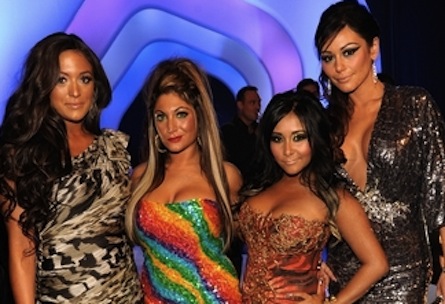
This notion has been on my mind since the start of the year, and watching season three of Jersey Shore got me thinking about it again. So, are the fake-tanned, fake-boobed and fake-nailed women of Seaside feminists?

On the one hand, while Vinny, Pauly D, Mike “The Situation” and Ronnie spend 20 minutes blowdrying their hair and plucking their eyebrows each morning (okay, if they’ve been out clubbing the night before, it’s the afternoon), followed by GTL (gym, tan, laundry), and frequently cook “family” dinners, the girls lie around the house, get in fights and try to score with guys at the club. If this isn’t throwing gender norms on their head, I don’t know what is.

As Tracie Egan Morrissey writes:

“… so much of what these people do actually challenges old school notions about gender-appropriate behavior: Men who wax their eyebrows? Men who place that much of an importance on hair products? Women who fistfight? Women who drink so heavily?”

But on the other, JWoww, for example, subscribes to the stereotypical sexualised female body: fake boobs, fake hair, and done up to the nines when she hits the clubs. If she’s got it, should she flaunt it?

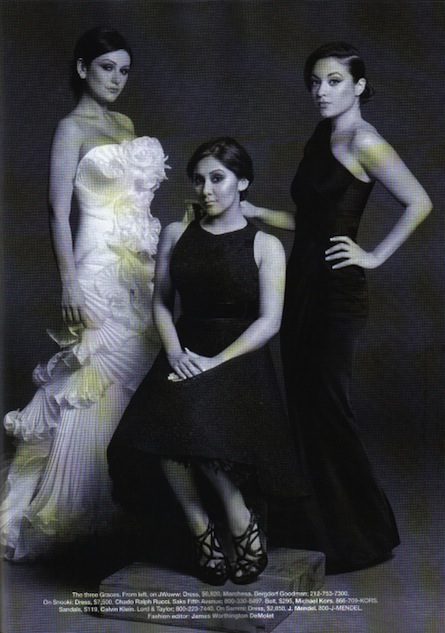
I’ve always been a big believer in this, so more power to her. In fact, despite their meteoric rise to fame in the last two years or so, the guidettes haven’t changed a thing about themselves. They’re still the trash-talking, ugg-boot-in-public-wearing, pussy-flashing white Italian trash they always were, even after Harper’s Bazaar attempted to make them over under. The problem with that was that millionairess socialite Tinsley Mortimer acted as the guidette’s teacher, insinuating that “richer… mean[s] ‘classier’ or better or nicer”. Especially considering “… the socialites of the last ten years have done everything they can to prove that ‘trashiness’ appears at every income level.”

Paging Paris Hilton, who’s never been accused of being classy or well dressed.

If being a feminist means not changing to reflect the views of mainstream society and The Patriarchy, then so be it. After all, Snooki “seems real precisely because we can’t believe that anyone would actually try to look that awful.”

In strapping their boobs up and wedging their short-shorts further into their buttcracks, the mating dance the guidettes perform each night (which has nothing on the aforementioned regimen of the boys!) seems to subvert the very look their trying to achieve: sexiness. I don’t believe this is done purposefully, so in that sense it’s not very feminist-like, however the brazen bedroom talk the girls engage in—or rather, lamenting the lack of bedroom action, especially when it comes to Snooki—makes them highly relatable. As Sady Doyle writes, “we are all Snooki”.

I’m sure all women can relate to slut-shaming, regardless of how many sexual partners they’ve had, and that’s something the Jersey Shore females have to deal with on a seemingly episodic basis. Egan Morrissey puts it best, after Pauly D voices his views on sexual double standards (“She’s [Angelina] brought all these random people home. She’s a girl. You don’t do that. That’s a guy thing. Guys do that, not girls.”):

“Shouldn’t Pauly and The Situation be grateful for sluts? If there were no sluts then they would never be able to have sex. Do they think for one minute that they would even want to live in a world in which all girls acted the way that they’re ‘supposed’ to?”

Still with sex, feminists are either viewed as sex-negative man-haters, or insatiable sex machines who throw away men once they’ve got theirs. JWoww certainly falls into the latter category, who says in the opening credits, “I’m like a Praying Mantis: after I’ve had sex with a guy, I will rip their head off.” If Jersey Shore were a scripted show, JWoww’s bad breakup with Tom, who steals her hard drive, which contained naked pictures of the reality star, amongst other things, would be payback for her independent woman status. How dare a woman step outside of the stringent guidelines The Patriarchy has set for her?!

Speaking of bad breakups, if there’s one guidette who falls furthest from the feminism tree, it’s Sammi. While she finally plucked up the courage to leave Ronnie after their tumultuous on-off relationship ended in a very realistic fight in season three, in which Ronnie trashed Sammi’s bedroom and her belongings, including breaking her spectacles, reports about the fourth season seem to indicate that Sammi took Ronnie back.

While we can never understand the dynamics of each individual abusive relationship, and feminism can’t realistically be applied to them when a woman (sometimes a man, but mostly women) has had all of her resources—family, friends, employment, finances, access to a car etc.—taken away from her and therefore has limited means to escape, Ronnie and Sammi’s relationship may have some benefits to viewers of the show. Because Jersey Shore is marketed as “reality TV” (although, after The Hills and the revelation this week that one of the “geeks” on Australia’s version of Beauty & the Geek is an actor, its dubious how “real” the show is), female viewers who may be involved in an abusive relationship at some stage in their life can see that the relationship is being portrayed in a negative light, that Sammi’s housemates, friends and family are telling her it’s not healthy, and that she should get out. We can only hope that the one in four women who will have an abusive partner will take heed.

A little too deep? How can we derive all that from something as asinine as Jersey Shore, a show that, grammatically, should have a “The” at the beginning of its title?

Take what conclusions you want from the overtly sexual show, but one thing’s for sure: the guidettes are “empowered sexually, that’s what I’m seeing on Jersey Shore… The women seem to be making their own decisions about who they sleep with [Scarlett Woman note: or don’t sleep with] and when.

“Almost by definition ‘guidette’ is a derivative term. It is a male-based subculture… The women were always defined as sex objects. And I think that’s something that they’re reversing.”

So, guidettes as sex subjects? If talking about “hairdos, shoes and body image snafus” and “preen[ing] and put[ting] on lipgloss” is a stereotypically female—and therefore weak—trait, then the guidos are certainly the background characters of Jersey Shore.

Related: Extreme Makeover: Jersey Girls.

The Mystery of Snooki Revealed.

In Defence of Rachel Berry.

The Hills: All Good Things Must Come to an End.

Elsewhere: [Salon] Jersey Shore’s F’ed Up Brand of Feminism.

[Jezebel] If Men Can Wax Their Eyebrows, Why Can’t Women Sleep Around?

[Jezebel] Snooki & Her Boyfriend Break Up Over Her Pussy.

[Jezebel] Bazaar Gives Jersey Shore Guidettes Elegant Makeovers.

[Jezebel] JWoww’s Terrible, Horrible, No Good, Very Bad Ex.

[The Atlantic] We Are All Snooki.

Images via The Gossip Wrapup, Harper’s Bazaar.

Books: Lady Gaga is “For Us”.

From How to be a Woman by Caitlin Moran (review to come next week):

“‘Even though you wear very little clothing,’ I said slightly primly, gesturing to [Lady] Gaga’s bra and thong, ‘you’re not doing all this as a… prick-tease, are you?’

“‘No!’ Gaga replied, with a big, drunken beam. ‘It’s not what straight men masturbate over when they’re at home watching pornography. It’s not for them. It’s for… us.’

“And she gestured around the nightclub, filled to the brim with biker-boy lesbians and drag queens.

“Because Gaga is not there to be fucked. You don’t penetrate Gaga. In common with much of pop’s history, an particularly its women—she’s not singing these songs in order to get laid, or give the impression she wants to. She wishes to disrupt, and disturb: sunglasses made burning cigarettes, beds bursting into flame[s], dresses made of raw meat, calipers made of platinum, Gaga being water-boarded in a bathtub—eyes dilated with CGI so that she looks like her own manga cartoon. Her iconography is disconcerting, and disarranged what we are used to seeing.” [p. 260]

Image via Roccerka.