Navigating Kayfabe in the Reality Era.

dolph ziggler

This article originally appeared in Calling Spots Issue 21. Republished with permission.

The dwindling amount of old-timers still alive that experienced the territories of the ’50s, ’60s, ’70s and even ’80s tend to look back on making towns with fondness, when wrestling was still considered by the masses to be “real”, so much so that even many rookies making their debuts at that time weren’t “smartened up” until after they climbed through the ropes.

The Attitude era that dominated the latter part of the 1990s will be remembered as the heyday of “sports entertainment” when anything could happen and often did. When the WWE “got the F out” in 2002 it took with it outrageous shenanigans such as DX invading WCW, Alundra Blayze dumping the WWE Women’s Championship in a trash can and Sable parading around the ring in hand print pasties, making way for the PG era in which John Cena and his candy-coloured merchandise reigned supreme.

Now, with social media and the WWE Network, it seems kayfabe is almost non-existent and Superstars have to strike a balance between making themselves available to fans on Twitter, Instagram and at meet and greets while attempting not to engage in any bad behaviour that might piss off sponsors. (Though there are still untouchables: Seth Rollins’ cheating dick pics were leaked early in 2015 before he became WWE Champion and when the new girlfriend he sent said pics to was revealed to be a Nazi-sympathiser later that year, she was promptly fired from her developmental deal while Rollins remained a dual champion. And although Hulk Hogan and Jimmy Snuka’s histories have been effectively erased from WWE, Legends who’ve behaved badly in the past but not since the company brought in the domestic violence, sexual assault and child abuse clause in their Wellness Policy, such as Scott Hall, are still decorated.)

Perhaps the most obvious example that we are living in the reality era of sports entertainment is Total Divas. What was first marketed as a glimpse into the unique careers of female professional wrestlers quickly devolved into your typical E! fare: 40 minutes of personal drama such as Brie Bella and Trinity’s husbands, Daniel Bryan and Jimmy Uso, respectively, taking issue with their sexy clothes, and Brie’s desire to start a family. The latest seasons seem like an attempt to rectify that and, in the midst of the #DivasRevolution, explore what it’s like to be a woman in a male-dominated industry.

What’s also interesting about Total Divas is that it builds a fifth wall between kayfabe and the “scripted reality” of shows such as Keeping Up with the Kardashians and The Hills. In a profile on The Hills villains Spencer and Heidi Pratt in Complex magazine last year, “a talent manager who requested to remain anonymous” claimed that the show was “80 percent scripted”.

From that article:

The talent manager isn’t breaking news here—almost everyone who was on the show has admitted how fake it was. [Lauren] Conrad, [Brody] Jenner, Kristin Cavallari, Spencer, Heidi—they were actors on a show marketed as real life so that an audience could buy into a fantasy… On the final episode of The Hills, the fourth wall was broken, the camera panned out, and a street in the Hollywood Hills was revealed to be a movie set… [T]hat audience seem[ed] willing to accept the unreality of The Hills…”

As a culture we’re still getting our heads around the cognitive dissonance of reality TV being rooted in anything but reality while wrestling has long been determined to be, erm, pre­determined. So, when it comes to the intersection of the two, does that mean the storyline on the third season of Total Divas about Nattie and her husband T.J.’s marital woes is more or less real than Nattie’s accompaniment of Kidd to the ring when he wrestled (before his sidelining neck injury, which is a focus of Total Divas this season)? Are they both just tools to further the fantasy or is it a case of real life spilling into the workplace? And what about when we add social media platforms to the mix? We know they can be used to portray the best, not necessarily truthful versions of ourselves to the world, so was Nattie posting photos of TJ and their cats on Instagram at the time of their alleged estrangement part of the ruse or were the couple working on their relationship?

A more obvious distinction between kayfabe and IRL can be seen on Total Divas this season when Rosa wants to remain involved in WWE in the wake of her pregnancy. She can’t wrestle so she suggests backstage interviewing as a consolation, which is deemed to be too risky because “anything can happen” and she might be placed in “harm’s way” in this role. Had Total Divas been more like NXT’s more sophisticated reality show Breaking Ground and/or aired on the Network, perhaps this storyline would be left on the cutting room floor. But because it caters to E!’s audience—one that WWE doesn’t necessarily want to break kayfabe in front of—the reality of simply writing altercations to take place away from a pregnant employee isn’t portrayed.

The most glaring example of Total Divas and social media colliding is in Dolph Ziggler’s inclusion in the show. As one of the more active WWE Superstars on Twitter and in his extracurricular endeavours, such as stand up comedy, Ziggler appears in season four and five of Total Divas as Nikki’s ex-boyfriend and a potential foil in her current relationship with John Cena. The photos of Dolph and Nikki together prove their past relationship was real, but can we assume Ziggler’s apparent rekindled feelings are also?

Ziggler moonlights as a stand-up comedian and there’s a sense that he’ll have a successful, Dwayne Johnson-esque career after WWE in Hollywood. His WWE Universe (apparently separate from both the worlds of Total Divas/E! and the one you and I inhabit) relationship with Lana dragged on for months while Lana’s former client/love interest/real life fiance Rusev was injured, Ziggler went on hiatus to film a WWE Studios production, and when Lana broke her wrist, with the three Superstars relying heavily on social media to prolong the love triangle (and then a love square with the involvement of Summer Rae). Instead of putting the kibosh on the ill-fated storyline, Lana and Ziggler were tasked with promoting their “relationship” on social media. As lacking in chemistry as their pairing was, Lana and Ziggler seemed to genuinely enjoy playing it up on Instagram and Twitter, proponents of an alternate reality where images alone convey something very different to what’s really going on.

Returning to Total Divas, if WWE wants our suspension of disbelief to remain in tact (which they apparently do, as one can’t imagine that Ziggler would choose to carry on an Instagram relationship if it wasn’t part of his job), why do they cross-promote the conflicting reality show and their own programming so heavily? Given Ziggler’s growing reputation as a love rat (he gifted Summer Rae jewellery while she was allegedly involved with Rusev), was his wooing of Nikki on the show for real or an attempt at rectifying his WWE character?

During an interview on The Sam Roberts Wrestling Podcast, the host further pitted Ziggler and Cena against each other in that Cena plays a musclebound meathead who’s hooking up with Amy Schumer in her runaway box office hit movie, Trainwreck, a role allegedly based on Ziggler, who dated Schumer in real life.

Relatedly, Tyler Breeze burst onto the scene as Summer Rae’s rebound, taking the spot of Ziggler both literally and figuratively. He appears on Breaking Ground and at once parodies and makes use of our obsession with social media, asking if he’s who we follow, toting selfie sticks to the ring and streaming his entrances on Periscope.

Total Divas also uses social media to their advantage with things posted by its stars on Instagram have been used to punctuate storylines, most notably Eva Marie’s falling out with the rest of the cast.

In the first few episodes of season four, Alicia Fox and the Bellas were irked because of Eva’s continued posting of ads for her hair extension line and various self-promotional content at the detriment of anything about wrestling. Then, when the rest of the cast blew up that Eva was getting specialised one-on-one wrestling training while they all had to tough it out in developmental, Eva retorted with an Instagram post about a lion not worrying “herself with the opinion of sheep”. (Just FYI: A female lion is a lioness, Eva.)

Since then, Eva has made amends with the rest of the show’s cast, even joining babyface Team Total Divas at WrestleMania, despite cultivating a successful heel gimmick in NXT and further reinforcing not only the fifth wall between Total Divas/E! and WWE, but one between WWE and NXT, as well.

Ryan Boyd unpacked the relationship between kayfabe and social media further in a piece for The Spectacle of Excess. He writes:

[U]nder the new rules of kayfabe, the audience is encouraged to be just as interested in Kofi Nahaje Sarkodie-Mensah as they are in Kofi Kingston, and what’s more than that, the Nashville crowd got worked like hell when Kofi-the-real-guy said that country music sucks purely because he went one further in his heel antics. Kofi-the-real-guy is as much a part of the show as Kofi-the-heel—they’re both props for generating heat and selling T-shirts.

“Kayfabe is a matryoshka doll of carny deception, and if you think you’re not getting worked, that just means you’re getting double-worked. The kayfabe is coming from inside the house.”

*

A few years ago I was involved in the making of a wrestling mockumentary with a smorgasbord of former WWE Superstars which then led to me working in an indie Australian promotion that often brought out big names to compliment its own talent. While most of the wrestlers I grew up watching on TV were lovely in person, I did observe a certain disconnect between their characters and reality. But it must be hard to get a good grip on reality when the bulk of your life is spent perfecting your craft and the development of the character that goes along with it. There is an expectation in the professional wrestling world that you stay in character at all times to protect storylines and maintain “kayfabe”—despite the widely held belief that wrestling is “fake”—at all costs, but what toll does that take on everyday life?

One indie wrestler who knows the importance of social media and utilising it to portray your character to your fans is Melbourne wrestler JXT, who recently received a tryout for WWE when they were in town with NXT.

With a YouTube show entitled JXTv and a photo op gimmick appropriated from Instagram’s polaroid-esque layout, JXT’s social media presence compliments his status as a party-loving, millennial everyman and will show industry heavyweights that he has an in-built following if and when the time comes to make the move to the U.S.

JXT believes that to be a wrestler and have a strong social media presence is “super important.”

“I see wrestlers now without Instagram or Twitter and straight away in my head I say ‘they’re not serious’,” he continues. “WWE talks about Twitter constantly and references [its] Superstars’ Instagrams. The fans want to invest in you so having platforms where they can talk to you and see what you’re up to constantly is key in giving the fans a chance to make that deep emotional connection. It’s 2016: people have 7-second attention spans; they want to see a lot of their favourite wrestlers in short, sharp bursts. So things like Instagram and YouTube help because there isn’t a show on Tuesday morning but they can just check your Instagram to get a dose of what you’ve been up to.”

JXT’s main goal with JXTv and his other online endeavours is to make a name for himself. “You look at any big independent wrestler, [if] they have a heavy social media presence [then] that’s how they get their name,” JXT says. “You hear of all these cool wrestlers who aren’t signed to a big company yet through social media. CM Punk was renowned [in] internet wrestling circles and that’s why he broke the mold and WWE signed the independent guy. He had so much buzz they gave him a chance.

“Everyone knows who Colt Cabana is yet he doesn’t wrestle for any big wrestling company [save for] ROH in its smaller days… Kevin Owens, Samoa Joe, Sami Zayn… Everywhere I go I want people to know who I am before I even get there. That is the goal.”

But JXT insists his character, like so many of the most successful wrestling gimmicks, is just a heightened version of himself. “I love to party and I love wrestling so I take that and over-dramatise it. [But] when I’m just being me, I’m calmer and less over the top. You need to know who you are as a person, and not get lost in the hype and perceived ego of your wrestling character.”

While maintaining some semblance of suspended disbelief is integral to professional wrestling, it’s also a delight when wrestlers break kayfabe for real. Take the Four Horsewomen’s curtain call at NXT Takeover: Brooklyn when Bayley won the NXT Women’s Championship from Sasha Banks in a hellacious match, culminating in Charlotte and Becky Lynch coming out to join them in a tear-jerking show of friendship. In my opinion there’s no greater reward than seeing competitors who gave it their all express respect and, oftentimes, love for one another. Give me that over neatly packaged “reality” any day.

If we can take one thing from the shitshow that was the Rusev/Lana/Dolph Ziggle/Summer Rae storyline it’s the ability to ask the question, what even is the point of kayfabe, anyway? If Vince McMahon claims that WWE is entertainment and not sport, then why not treat its Superstars as actors and let them do what they want, within reason (*cough* Hulk Hogan *cough*), on their own time? With social media and the 24-hour news cycle the kayfabe model is a risky one that’s no longer feasible.

Related: World Wrestling Entertainment Will Never #GiveDivasAChance As Long As It Prioritises Bad Men.

In Defence of Eva Marie.

My Weekend with Wrestlers.

Elsewhere: [Harlot] Whorephobia & Misogyny in Wrestling: Still Real to Me, Dammit.

[Intergender World Champs] Smack Talker! Daniel Bryan’s Tiresome Vocal Misogyny.

[Complex] Over The Hills: The Afterlife of Heidi & Spencer Pratt.

[The Spectacle of Excess] Kayfabe is Dead. Long Live Kayfabe.

Image via Courtney Rose/Calling Spots.

On the (Rest of the) Net.

I wrote about the lengths women have to do to trade in the beauty economy. [Feminartsy]

I also wrote about my choice to be single. [SBS Life]

Stop holding out hope that Ivanka Trump will tame Donald: she’s on board with his campaign. [Intelligencer]

A common catch cry heard in the wake of Kim Kardashian exposing Taylor Swift’s lies about not knowing that Kanye West would rap about her in his song “Famous” is to “focus on more important things”. But the demonisation of a black man for victimising a white woman is very important and echoes the spate of black men being killed in America. [Cosmopolitan]

Both Taylor’s victimhood and Kim’s famewhoring are important parts of the celebrity ecosystem. [Jezebel]

How Keeping Up with the Kardashians helps Kim control the narrative. [Vulture]

Taylor Swift is not that innocent. [Vulture]

A history of the media souring on Swift. [Vulture]

Once upon a time I wrote about Swift being the perfect victim and the use of the word “bitch” in rap music.

In defence of the term “honour killing”. [Daily Life]

Little Women‘s Meg and the labour of performing womanhood. [LA Review of Books]

How Mike & Dave Need Wedding Dates subverts the use of female nudity in comedy. [Vulture]

The Spice Girls, twenty years on:

“They planted the seeds in my mind, and the minds of countless other young girls, that feminism is important and valid and should be thought about and yelled about wherever you go.” [Kill Your Darlings]

“Why Men Want to Marry Melanias But Raise Ivankas.” [NYTimes]

Actually, spiritualism was the realm of women before Ghostbusters turned it into a male bonding “pursuit focused on hunting a exterminating.” [The New Republic]

Being called a racist is worse than actually being one. [SBS Life]

Wonder Woman primer. [Movie Mezzanine]

Related: a Captain Marvel primer. [Time]

On the (Rest of the) Net.

eva marie art

I wrote in defence of Eva Marie.

From Sir Mix-A-Lot to Taylor Swift to LEMONADE: on the origin of Becky. [Fusion]

bell hooks’ criticisms of LEMONADE and black femininity. [bell hooks institute]

Janet Mock responded smartly. [Facebook]

Feministing hosts a roundtable on the topic. 

And with LEMONADE, Beyonce says “boy, bye” to black respectability. [Fusion]

Women-only train carriages: creating a safe space for women or not doing enough to curb the predatory behaviour of men? [Sheilas]

How Jane the Virgin deals with money. [Think Progress]

George Michael’s “black” musical history. [Slate]

How social media can increase organ donations. [NYTimes]

Why do women love Chris Evans so much? [Buzzfeed]

Ronan Farrow on why the media needs to hold Woody Allen accountable to allegations of child sex abuse against his daughter and Farrow’s sister. [THR]

Chelsea Handler writes in defence of being single. [Motto]

Justin Bieber and the surveillance of celebrities. [MTV]

In Defence of Eva Marie.

eva marie art

This article originally appeared in Calling Spots Issue 20. Republished with permission.

For my latest contribution to Calling Spots, check out Issue 21 featuring my story, “Navigating Kayfabe in the Reality Era”.

I instinctively ducked for cover from the IWC (Internet Wrestling Community) when the idea for this article popped into my head after Eva Marie, perhaps the most hated woman (nay, person) in wrestling today, faced Bayley in a NXT Women’s Championship on Thanksgiving Eve last year.

I’d been ruminating on Eva Marie for quite some time, at least since her debut in NXT in mid-2015, but probably closer to the time we were introduced to her as the “rookie” Diva on E!’s reality show about World Wrestling Entertainment’s women’s wrestlers, Total Divas, in 2013.

Let me first say that I think Eva Marie gets a lot of unwarranted flack for seizing an opportunity that was arguably handed to her. Who among us would honestly turn down a prized position with guaranteed exposure in our industry of choice presented on a silver platter? Just because she didn’t bust her butt on the indies for ten years à la wrestling darlings such as Kevin Owens and Calling Spots cover stars Finn Balor and Daniel Bryan it doesn’t mean there’s not a place for her in WWE.

Let me also say that this is not so much a defence of Eva Marie herself, per se, but what she represents. She may have a background in modelling with designs on becoming “the female Rock” (she shares a manager with Dwayne The Rock Johnson—who also happens to be his ex wife—and Johnson has been a vocal proponent of hers on social media) who only joined WWE months before she gained a starring role on Total Divas, but women like Michelle McCool and the Bella Twins were models before becoming Divas. Oftentimes their success is boiled down to their associations with men in power, but McCool became known as the first ever Divas Champion (a title which she held twice) and a two-time Women’s Champion and Nikki Bella’s in-ring prowess has improved in strides in recent years, landing her the top spot on PWI’s top 50 women wrestlers in 2015 and the Slammy Award for 2015 Diva of the Year. And while much has been made about the IWC’s pride and joy Bayley and Sasha Banks’ desire to be wrestlers since childhood, current Divas Champion (at the time of writing) Charlotte only expressed an interest in wrestling in the last few years, so if the logic surrounding Eva Marie’s heat is to be applied to her, she doesn’t deserve her success either.

If anything, we should be encouraging of Eva Marie’s return to NXT to hone her skills in the foremost wrestling training program in the world. While her in-ring dexterity isn’t at the level it needs to be to warrant a NXT Women’s Championship shot, if we’ve learned anything from the chanting along of Ryback’s catchphrase, “Feed Me More”, implying to the top brass that he’s “over”, the vitriol spewed at Eva Marie from the Full Sail crowd (who are obnoxious at the best of times) signifies that she’s the biggest heel NXT has. If we want her to fail, stop responding to her.

The drama surrounding her championship shot at Bayley on Thanksgiving Eve was pitch perfect and elicited a riotous response from the crowd not seen since John Cena faced Rob Van Dam for the WWE Championship at ECW One Night Stand in 2006. Eva’s pre-match promo where she hijacked William Regal’s office with gifts from her Total Divas supporters, while not good, served to position her as a corporate placeholder along with the insertion of WWE senior official Charles Robinson as referee. (Michael Cole also appeared as the adjudicator for Finn Balor and Samoa Joe’s NXT Championship contract signing earlier in the night, giving the whole show a sort of coopted-by-management feel, perhaps not accidentally.) The deployment of Eva Marie was apt and echoes a criticism often levelled at the corporately-appropriated #DivasRevolution: she was put there by management despite, until a few years ago and a few months ago, respectively, expressing little desire or talent to be a wrestler.

Eva Marie is like the female version of John Cena: she appeals to a certain demographic (Total Divas fans who are often young women), as Cena does to young fans, but is reviled by wrestling purists, smarks and the IWC as exemplified by the Full Sail crowd. Putting her in the go-home match before Thanksgiving was “actually genius”, according to [former] Diva Dirt reporter Jake, and a perfect example of her marketability.

Her season four Total Divas storyline was interesting, and the bust up with the rest of the cast, particularly the Bella twins, was unwarranted (if scripted and dramatised for the reality TV cameras) in my eyes. It wasn’t so long ago that women like Nikki were lambasted for their apparent lack of drive and wrestling talent which has since developed to see her become the locker room leader and voice her desire to “stay and continue to help women conquer this industry”.

https://twitter.com/nadavis47/status/669696141626208256

https://twitter.com/JulieAnnBird/status/669903974502408192

But the utter hatred levelled at Eva feels like it has passed disdain for her lack of passion and skill and entered misogynistic territory. A tweet from user @nadavid47 asserted that “The hate for Eva Marie has gotten to such an uncomfortable ‘this is deeper than her lack of skill’ level” while @JulieAnnBird was concerned that “it will become even more obvious if/when the Takeover London crowd throws slut chants at her.” (I’m loath to qualify the “slut” accusations because it implies that certain women are sluts while others aren’t, but for as long as we’ve known Eva Marie, she’s been with the same man who is now her husband. Hardly slutty behaviour, but I digress…) In an interview with Bayley in The Independent ahead of NXT Takeover: London, writer Martin Hines even asked the then-Women’s Champion if she thinks Full Sail’s taunting of Eva Marie is less to do with her character and is more personal. Bayley disagreed as NXT stars are wont to do (Kevin Owens and Charlotte are the only wrestlers that come to mind who’ve spoken out against Full Sail), perhaps in an attempt not to upset an audience that seems increasingly on the precipice of spilling over into hostility. Eva’s treatment is antithetical to the #DivasRevolution and harkens back to the not-too-distant past when women wrestlers were valued for their T&A (as evidenced by the tag team of the same name managed by Trish Stratus in her eye-candy beginnings) and their “popcorn” matches were an opportunity for a bathroom break. As much as the Revolution found its beginnings in NXT, its fans are anything but respectful to women wrestlers, and wrestlers at large, giving priority to their excessive chants rather than what’s going on the ring. If there was a question left as to whether Eva as a person and her polarising wrestling character can be separated, porn site Brazzers tweeted the following to Eva Marie:

But NXT seems to have let Eva fall by the wayside since her Women’s Championship match against Bayley, pushing Eva’s henchwoman Nia Jax (or is Eva Nia Jax’s henchwoman?) into the picture with a title match against Bayley at NXT Takeover: London. Eva has seldom been seen on NXT TV and was in Dubai while NXT Takeover: London was underway. While some may welcome her absence (and I’m glad @JulieAnneBird’s “slut” prophecy didn’t come true), it’s a wonder they haven’t utilised her undeniable heat more. Call it slow burn booking, or maybe she’s upping her training again to feasibly be able to go toe to toe with Bayley and NXT’s burgeoning women’s roster, but WWE has dropped the ball on Eva Marie, much like the #DivasRevolution at large.

Related: The Beginning & the End of an Era—Sasha Banks’ Evolution from NXT to the Main Roster.

Are Divas Finally Being Given a Chance?

Elsewhere: [Junkee] How Caitlyn Jenner, the Kardashians & Total Divas Are Making Reality TV Relevant Again.

[The Independent] Bayley: NXT Women’s Champion Talks NXT in the UK, Eva Marie, Coffee & The Future.

[SBS Zela] A Diva is No Longer the Women’s Version of a Wrestler.

Artwork by Elow Mojo.

The Beginning & the End of an Era: Sasha Banks’ Evolution from NXT to the Main Roster.

calling-spots-magazine-19

This article originally appeared in Calling Spots Issue 19. Republished with permission.

For my latest contribution to Calling Spots, check out Issue 20 featuring my story, “In Defence of Eva Marie”.

Anyone who’s been following Sasha Banks’ career trajectory in NXT is probably familiar with how the 99-pound biracial woman billed from Boston but originally from California, born Mercedes Kaestner-Varnado, came to be The Boss and arguably the best wrestler working today.

When she debuted in NXT in 2012, she was a tiny blonde “just happy to be there” without any discernable “It factor”. She aligned herself with Summer Rae, and later Charlotte, as the “BFFs” (the more sophisticated main roster version of which is Team B.A.D.) followed by a pre-orange haired Becky Lynch in her quest to make something stick character-wise.

In the backstage vignettes that dance around kayfabe that NXT has become known for, Banks has repeatedly said she took inspiration for her “Boss” character from her real-life cousin, Snoop Dogg. “I remember always being around him and people calling him [the] Boss,” she said on WWE 24 NXT Takeover: Brooklyn. We’ve also heard her talk about this on Talk is Jericho with Chris Jericho and Sam Roberts’ Wrestling Podcast.

Wrestling-wise, Banks takes inspiration from Eddie Guerrero. She has been adamant that the bra and panties matches that perpetuated her childhood wrestling fandom made her not want to be a “Diva” and thus women like Trish Stratus and Lita weren’t integral to her passion and skill for wrestling.

Banks reiterated this on Talk is Jericho:

“There wasn’t [sic] really girls that I looked up to… It was always Eddie for me… Growing up, I always wanted to wrestle like the guys but I never had that woman figure … in the WWE because the time I was watching it was all bra and panties matches and you had to be on the cover of Playboy to get a storyline and it was so frustrating for me to watch that and know that this is what I wanna do when I grow up… I didn’t love what was going on [in the women’s division] but I was going to settle for it and I knew that to be in the WWE I was going to have to do something like that… But when I got to NXT I didn’t want that. I couldn’t settle for that.”

Banks and her NXT Takeover: Respect Iron Man (why it wasn’t called an Iron Woman match is beyond me. Sure, Banks and Bayley proved they can do anything men can do and oftentimes they’re better at it but World Wrestling Entertainment and NXT didn’t take the steps to get to a point where the phrase is gender neutral. Maybe when wrestlers of all genders contracted by WWE are called Superstars…) opponent, Bayley, were everywhere in the lead up to this match. NXT aired special video packages detailing their intensified diets, workout routines and mindsets leading into the match and the women’s prophetic high school essays about why they would change the face of WWE even went viral.

On WWE 24 NXT Takeover: Brooklyn, a good portion of the documentary was centred on Banks VS. Bayley round one, a match in which the long-suffering Bayley finally won the NXT Women’s Championship in a “co-main event”. (Come on, there are no co-main events, and calling a Women’s Championship match one in an effort to legitimise the main roster #DivasRevolution that found its roots in NXT is transparently disrespectful.)

Kevin Owens, wrestling Finn Balor for the NXT Championship in the main event ladder match at NXT Takeover: Brooklyn, said in a voiceover as Bayley hugged him after her match, “It was a tough act to follow, honestly.”

“I don’t think we could have done better,” Owens continued at the conclusion of his own match.

NXT announcer Corey Graves stated on the NXT Takeover: Brooklyn preshow, quoting Triple H, that “We don’t just put our Divas in the main event. They are the main event.” And while that may not have been the case when it came to top billing, Banks and Bayley stole the show from Owens and Balor, leaving those who watched emotionally exhausted in a puddle of mutual tears, which I’m still personally reeling from. Its place as the best Divas match of all time and the best NXT match of 2015 on WWE.com is deserved and cements Banks as the best wrestler working today.

She has the skillset, the character and the passion to rival any big name—and, synonymously—male wrestler in the business.

Much has been made of the fact that when female talent arrived in NXT in its early days, they were told to “wrestle like Divas”, meaning “no punches, no forearms, no kicks, no striking, just pull hair… Be girly, do hair pulling, do catfights,” as Banks revealed on Talk is Jericho. Her brutal isolation of her opponent’s body parts, such as Bayley’s formerly broken hand at NXT Takeover: Brooklyn and Alexa Bliss’ broken nose, her patented corner step-up foot choke, and her arsenal of moves seldom seen by women wrestlers makes her exciting and surprising to watch. She could certainly hang in an intergender match with any of WWE’s top Superstars today, such as Owens, Seth Rollins or Cesaro, not to mention give former masters of the ring such as Shawn Michaels, her idol Eddie Guerrero and Owen Hart (as offered by fellow Calling Spots writer Neil Rogers when I asked on social media which legends Banks’ reminded people of) a run for their money.

10151782_10207345967040357_7311611884614620780_n

Because Banks is so slight she sells the shit out of any offensive moves put on her, from Bayley’s Bayley to Belly to Becky Lynch’s pumphandle side slam. Her small stature also gives her that unpredictability: can she really pull off moves like diving over the referee and the top rope in a single bound to Bayley on the outside at NXT Takeover: Brooklyn? She proves time and time again that she can.

tumblr_nvw2k9aWLN1sj4xr4o3_500

Banks is truly one of if not the best heels in the business today. Kevin Owens held that spot for a while, particularly when he refused a bouquet of flowers during a traditional Japanese presentation before his NXT Championship match at Beast in the East, but Banks stealing consummate NXT fan Izzy’s Bayley-branded headband right off her head and then mocking her tears in the ring before throwing it back at her protective dad was next level heelness.

She’s also a new kind of heel in that her well-documented real personality seems to be worlds away from The Boss. It’s hard not to empathise with a woman who openly cries when talking about her career trajectory and the friendship she’s found with her NXT compatriots and fiercest rivals. It’s also hard not to be wowed by the nastiness she displays in the ring, such as the abovementioned taking of Izzy’s headband. Where she differs from Owens, who seems to have a genuine chip on his shoulder at working the indies for so long while going unrecognised by WWE, as evidenced in his debut Raw promo on John Cena, is in the disbelief that a character so disgraceful could coexist inside a young woman simultaneously so appreciative to be doing the thing she loves and succeeding in it at such a young age.

It’s widely argued that the best characters are their portrayers’ real personalities dialed up to 11, as Steve Austin likes to say. Personally, I think it’s often the nicest people who are the most adept at playing reprehensible characters, as they can appreciate the difference. Take Bryan Cranston’s Breaking Bad character, Walter White: as one of the baddest men on TV during the show’s AMC run, the actor that played him couldn’t be further from that, hamming it up on award show red carpets and in Funny or Die sketches. That’s what makes some of the best actors, and let’s not forget acting is a huge part of wrestling, despite what some less-successful crossover stars (*cough* Triple H *cough*) would have you believe.

Much has been made, both in WWE and society at large, of millennials’ apathy towards striving for the “brass ring” but Banks is proof positive that young people have the passion and tools to strive for greatness, as LeBron James, another millennial, would put it. How many times have we heard current Superstars such as Daniel Bryan in his book Yes!: My Improbable Journey to the Main Event of WrestleMania, Tyler Breeze on Breaking Ground, and Bo Dallas and Neville on an episode of Table for 3 say that they knew they wanted to be wrestlers since childhood, Banks being one of the most vocal among them. I challenge any baby boomer, Vince McMahon in particular, to accuse WWE Superstars who’ve achieved such goals of being directionless. That goes double for a 23-year-old biracial woman in a sport dominated by middle-aged white men who refuse to pass the torch. The mind boggles at how much more Banks can achieve if this is what she has done only a few short years into her wrestling career.

Banks brings a new kind of cognitive dissonance to wrestling, which has arguably been spearheaded by NXT’s efforts to humanise their performers in vignettes and documentaries such as Breaking Ground that track their journeys to stardom. It can be hard to fathom Banks’ ruthlessness towards her fiercest rivals who are also her closest friends. That she’s able to dish out such vitriol—like telling Bayley she’s worthless and undeserving of her championship chance against Banks at NXT Takeover: Brooklyn—without breaking character (Rollins cracking up at New Day’s antics, I’m looking at you) is a testament to her acting skills and dedication. One of my favourite things about the spectacle of wrestling, though, is when kayfabe is broken and fans get a glimpse into how the business really works, the fun that can exist between the ropes, and the respect competitors have for one another. That’s probably why the Four Horsewomen curtain call at NXT Takeover: Brooklyn and the subsequent deeply personal vignettes surrounding the Iron Man match were so successful: despite the monotonous insistence from main roster commentators, fans want to see wrestlers, particularly women wrestlers, show respect, admiration and love for each other if that’s what they feel. There’s no doubt Banks will continue her heelish antics when given the chance to really show the fabled “casual Raw fan” what she’s made of. The camaraderie between Banks and her fellow wrestlers, however, will get little chance to peek through the main roster iron curtains of kayfabe, other than on social media where she “snatches weaves” with Team B.A.D. and rides segways with New Day.

Yet another thing NXT does right: focussing on a select few Divas like Banks, Charlotte and Lynch, and now Bayley, Bliss, Asuka, Dana Brooke and Nia Jaxx, instead of interchangeable and undefinable “teams” of wrestlers, categorised by race in the case of Team B.A.D. NXT builds their characters up in no-nonsense storylines and short cohesive promos that culminate in 20– to 30–minute showcases, catapulting them to debatably greener pastures only to have them flail, through no fault of their own, with five minutes of meaningless screen time (in the case of the Divas division) on broadcast television.

One can be forgiven for expressing sadness at moving up to the main roster. Banks, defending her tears that made it to the (web) pages of Forbes magazine in a sexist missive about women crying in wrestling, said on Xavier Woods’ YouTube gaming show UpUpDownDown that she has only cried post-match three times, all of which occurred when she was of the belief that she was having her last match in NXT: for her women’s championship against Charlotte after her main roster debut in July, at NXT Takeover: Brooklyn and again at NXT Takeover: Respect.

Banks puts into words what perhaps made fans so emotional about those final matches: NXT Takeover: Brooklyn and Takeover: Respect felt like the end of an era. Banks, again in tears, on WWE 24 NXT Takeover: Brooklyn, said “To come out with all those girls and to put up the four fingers that just kind of wrapped up my whole experience here in NXT and how far I’ve grown [sic], and I’ve grown with them.”

I’m in two minds about Banks’ graduation to the main roster. On one hand, millions more WWE fans than those who were privy to her NXT greatness will get the chance to witness it. On the other, when the Divas Revolution is nothing more than lip service at this point, can the main roster be trusted to give Banks the exposure she deserves? One of her most recent matches against Lynch during the WWE’s European tour made it on to Main Event as the… erm… main event, with Michael Cole calling it “a wrestling clinic every time Becky and Sasha clash.” If that’s the case, then why wasn’t it featured on Raw or a pay-per-view?

Banks’ followed her Four Horsewomen curtain call comments on WWE 24 NXT Takeover: Brooklyn thusly: “When we hugged each other at the end, [Bayley] told me, ‘I don’t want you to go.’ And I told her, ‘I don’t wanna go.’”

I don’t want you to go, either.

Related: Are Divas Finally Being Given a Chance?

Queer New Day.

Elsewhere: [Calling Spots] Issue 19 Pre-Order.

[Calling Spots] Wrestling Merchandise.

[Podcast One] Talk is Jericho: Episode 168—Sasha Banks.

[Stitcher] Sam Roberts’ Wrestling Podcast: Episode 33—Sasha Banks.

[World Wrestling Entertainment] The 10 Greatest Divas Matches of All Time.

[World Wrestling Entertainment] The 10 Best WWE NXT Matches.

[YouTube] Kevin Owens Confronts John Cena: Raw, May 18, 2015.

[Funny Or Die] Bryan Cranston.

[Forbes] WWE’s Future is Gender-Neutral & Filled With Tears.

[YouTube] UpUpDownDown: Sailor Moon With Sasha Banks AKA Boss—Superstar Savepoint.

Images via Paul Cooper, David Gammon, Sasha Banks.

Queer New Day.

new day elow mojo

This article originally appeared in Calling Spots Issue 18. Republished with permission.

For my latest contribution to Calling Spots, check out Issue 19 featuring my cover story on Sasha Banks, “BOSS: The Beginning & the End of an Era”.

Like many of us, I’ve been a wrestling fan since the age of thirteen. So when a family friend revealed he was starting a wrestling company that would begin with a mockumentary about wrestlers I grew up watching on tour in Australia, I jumped at the opportunity to be involved. While I’ve met wrestlers before, this was the first time I got to interact with them for more than 30 seconds in an autograph line and as fellow human beings instead of as demigods.

As a feminist who unpacks gender roles and expectations for a (freelance, part-time, side-job) living, my presence was somewhat of a novelty to the cohort, but hanging out with sports stars working in one of the most masculinity-obsessed forms of entertainment not only appealed to my inner mark but it also served as an anthropological study breaking down just how covertly feminine wrestling actually is. You know, in case the blatant homoeroticism of near-naked muscular, oiled up men grappling with each other’s flesh wasn’t clear.

For example, something you wouldn’t necessarily notice when watching the high definition WWE Network is that wrestlers are covered in stretchmarks. Upon consideration, it isn’t an unlikely phenomenon considering many wrestlers push their bodies past their natural limits, and people who’ve both lost a lot of weight and put weight on receive purple, and then faded white, squiggly lines of war paint for their efforts. With stretchmarks on my lady lumps and humps myself, I previously only associated them with being a woman: we are socialised through magazines, the media and the mirror to believe that stretchmarks are a solely female marker.

Another attribute traditionally seen as feminine but a must amongst men in wrestling is grooming. Over the years, I’ve been witness to an amount of leg shaving, hair straightening, baby lotioning, spray-tanning and eyebrow-threading to rival my own as a fairly high maintenance woman. I’m just a normal person whose looks don’t (or, in a perfect world, shouldn’t) determine my livelihood but pro wrestlers rely on their appearance probably more so than their physical abilities.

After all, the way wrestlers look indicate their success to a certain extent. In a way, professional wrestling is like the gendered polar opposite but looks-based counterpart of the women’s modelling industry. While success in one profession is dependent upon how thin you can get and how prominent your cheekbones are, emerging victorious in the other relies heavily on becoming Bigger, Stronger, Faster (the title of a 2008 documentary about steroid use in sport and American culture as a whole). Different from legitimate sports, though, where athletic ability is the determining factor to success, in wrestling if the powers that be (*cough* Vince McMahon *cough*) don’t feel you can be marketed as a character, it’s the end of the road. As long as you’re marketable, can work the mic and look good (read: big, and that’s where steroids, though technically illegal in WWE as per their Wellness Policy, and prescription drug dependency play a part), you’re in with a chance. As one wrestler told me once upon a time, “we don’t actually have to be strong; we just have to look it.”

Despite this, there are some wrestlers who don’t fit that mould who’ve managed to get themselves over; Daniel Bryan being the biggest underdog success story in recent memory. Dolph Ziggler, Damien Sandow and New Day also come to mind as fan favourites who deviate to varying degrees from the widely accepted archetype of a hypermasculine wrestler.

The team of Kofi Kingston, Big E (formerly Big E Langston) and Xavier Woods, collectively known as New Day, are the ones particularly challenging what it is to be a black tag team today.

Listening to the trio speak on Chris Jericho’s podcast, Talk is Jericho, New Day was its members’ own brainchild, however McMahon was the one who pitched the gimmick of gospel preachers who jovially extol “the power of positivity” because apart from savages, rappers and criminals, what other roles are there for black wrestlers, right?

Originally debuting as babyfaces, which can often be the death knell of many a career trajectory, the decision was made after some months to turn the group heel, and since then E, Kingston and Woods have been responsible for some of the most entertaining and subversive promos, backstage segments and after-match celebrations in WWE in a long time. This is not to mention their in-ring work which has successfully amalgamated the power of Langston, the agility of Kingston and the intellect of Woods to become two-time tag team champions in the less than twelve months since their debut.

Examples include Woods employing the use of a trombone during their entrances and at ringside, the booty shaking that occurs after a win and their appropriation of campy Sinatra classic “New York State of Mind” during SummerSlam weekend. Their acceptance of the #JustKeepDancing social media challenge to raise funds for pediatric cancer saw New Day singing and dancing to “Kiss from a Rose” by Seal, replete with a cameo from Sasha Banks.

Woods is perhaps the most insurgent of the trio, cosplaying at Dragon Con as a gender- (and race-)swapped Jem from Jem and the Holograms, debuting unique and feminine hairstyles such as relaxed locks and a Rufio from Hook-inspired ’do, and calling former WWE Superstar Virgil out for allegedly telling Woods he’d never make it as a wrestler because of his race. (Having played the Million Dollar Man Ted DiBiase’s manservant and, in essence, his slave, is it any wonder Virgil’s internalised this racism?) He’s also a Brony (a male fan of My Little Pony) and will be the first professional wrestler to get his PhD, a role model for the increasing rates of black men obtaining university degrees.

That New Day can still be over with performances so overtly challenging yet simultaneously so covertly queering the the dominant paradigm in wrestling is a testament not so much to the higher ups willing to push them but to an increasingly diverse legion of fans (the same fans that brought about the #GiveDivasaChance and #DivasRevolution campaigns, no matter what Paige or Stephanie McMahon tell us) willing to cheer them. And not only are they subverting the traditionally masculine archetype of a wrestler, they’re toppling the savage, out of control machismo of the archetype of black men and black wrestlers.

https://twitter.com/jetta_rae/status/640300280341393409

When I asked feminist wrestling critic Jetta Rae to elaborate on recent tweet of hers asserting that New Day “is the answer to wrestling’s toxic masculinity”, she had this to say:

It’s important to note that racism is integral to toxic masculinity. Toxic masculinity is the assignment of roles based on race: white is purity, black is raw, Asian is effeminate, Hispanic is overly romantic, etc. By challenging the confines of race, you challenge masculinity.”

This is not to discount the fact that New Day still very much subscribes to a fit, strong, straight and cisgender (as far as we know) image of manhood. Kingston has a running gag with Dad of the Year Titus O’Neill as to who’s a better father (which in itself disputes the stereotype of black men as deadbeat baby daddies) while Langston was featured on an episode of Total Divas as a potential paramour for Nattie’s sister Jenny.   

At its core, professional wrestling is a spectacle. Match outcomes are predetermined (going back to the importance of character and appearance as opposed to physical power), and foreign objects such as chairs, tables and barbed wire in the more brutal instances are often employed to further the storyline and, thus, the accentuation of masculinity: those who are able to withstand the most violence win.

https://twitter.com/jetta_rae/status/644598650707046400

That’s why New Day’s #SaveTheTables promos leading into their Night of Champions clash with the Dudley Boyz were so revolutionary. Not only were they expressing disdain for a less PG era in which the Dudleyz revelled in putting their opponents and the odd woman through a table, but they’ve equated WWE’s props with the first Thanksgiving table and the table the Declaration of Independence was written on, making a larger argument about traditional white American masculinity taking precedence over those of other cultures at a time when #BlackLivesMatter has emerged in response to police brutality and racial profiling. (Yes, one half of the Dudleyz is a black man, but D-Von’s position as the getter of tables could be seen as a modern day equivalent of Virgil.) Woods utilised that all important social media to further New Day’s agenda between Raw and SmackDown!, retweeting fans who (presumably) jokingly opined that because of the Dudleyz penchant for breaking tables, they no longer have a dinner table to eat at, further drawing attention to high rates of poverty among black families. As Rae observed, “… New Day’s #SaveTheTables could also be seen as a rejection of a prior model of ultraviole[n]t masculinity.”

While I don’t necessarily believe that violence in the media has a detrimental effect on young minds, there definitely needs to be some education and debunking of masculinity myths to go along with the watching of wrestling, the playing of video games, the consumption of porn, etc. Male viewers need to be made aware that violence and the acquisition of the biggest, most ripped bodies aren’t the be all and end all of modern masculinity, just as young women are becoming accustomed to body image clinics put on by schools, community groups and, increasingly, fashion magazines, the very commodities that are seen to negatively affect self-esteem.

New Day are part of a new wave of wrestlers working within the sport(s entertainment) to challenge these notions. Guys like Joey Ryan, who wrestles in intergender matches on the indies as one half of The World’s Cutest Tag Team with Candice LeRae, parodies the hypermasculine sleaze archetype so successfully that it almost results in a high-camp, feminised version of it, while Max Landis’ Wrestling Isn’t Wrestling YouTube short turned the hypermasculinity of wrestling on its head by genderswapping iconic masculine roles such as John Cena, Stone Cold Steve Austin and Triple H.

New Day is special not only because they dispute toxic masculinity and racism in wrestling but because they’re redefining what it means to be wrestlers.

Related: My Weekend with Wrestlers.

Elsewhere: [Calling Spots] Issue 18 Preview.

[Calling Spots] Issue 19 Pre-Order.

[YouTube] Wrestling Isn’t Wrestling.

Artwork by Elow Mojo.

The Dark Side of Hollywood.

hollywood sign in ruins

Ever since reading Dominick Dunne’s Another City, Not My Own—a fictionalised account of his time spent chronicling the O.J. Simpson murder trial for Vanity Fair—a few years ago, I’ve been fascinated by the dark side of Hollywood. You know, the Tate–LaBianca murders, the Black Dahlia mystery, the strangulation murder of Dunne’s own daughter, Poltergeist actress Dominique, at the hands of her former partner… The list goes on.

Recent pop cultural products that tap into said fascination include The Black Dahlia novel and subsequent film, the Ryan Gosling and Emma Stone­-helmed Gangster Squad, and the first season of American Horror Story, which renewed my interest in the macabre underbelly of Los Angeles and prompted me to book a Dearly Departed Tragical History tour of the city as well as visit the Museum of Death on Sunset Boulevard on a trip there a couple of years ago. (Warning: extremely graphic contents abound in the Museum of Death. I was so overwhelmed by the objects on display that I had to exit the gallery space, so only those with a strong stomach and dull imagination should give their patronage, as there are no refunds.)

Despite not being a fan of horror movies due to my overactive imagination, I somehow thought the Museum of Death was a good idea. After all, they had crime scene and autopsy photos of Nicole Brown Simpson and JFK, respectively, among other morbid memorabilia such as serial killer artwork and letters, which I do have an interest in. But the Museum of Death also houses the decapitated head of the Bluebeard of Paris, graphic images of bodies in various stages of death, and an effectively frightening layout that saw me having to leave after ten minutes. The overwhelming watermelon­-scented cleaning products that seem to be favoured by much of America’s hospitality and tourism industry and that wafted through the museum elicited in me an aversion to the aroma. It just so happens that watermelon-­flavoured gum is also my sister’s breath ­freshener of choice and now whenever she’s chewing my heart races, I start to perspire and I feel a headache coming on. Sisters: they really know how to push your buttons.

When my companion was done touring the museum while I sweated my anxiety out and chatted to the proprietors in the gift shop, she escorted me back through to the Hollywood section, much of which I’d already seen online and was prepared for, with my eyes closed lest I happen upon something grisly and be (further) scarred for life. Having recently read prolific filmmaker, actor and author Kenneth Anger’s Hollywood Babylon, which delves further into famous Tinseltown deaths, prior to my visit I recognised many of the objects on display at the museum as being donated by him.

When it comes to Anger, though, some might argue that certain details in his books are fabricated. The following day, on the Dearly Departed Tragical History tour, it was alleged that when destitute actress Marie Prevost was found dead in her apartment of acute alcoholism in 1937, her body was not partly eaten by her dachshund, as Anger wrote, but that the pet was merely trying to rouse its master by nipping at her. It is true, however, that an IOU for $110 to Joan Crawford, who ended up paying for Prevost’s funeral, was among some of her belongings. In the wake of Prevost’s death, the Motion Picture and Television Country House and Hospital was set up to prevent similar fates for others in the industry. Speaking of stars forking out for their peers funerals, it emerged on the tour that Frank Sinatra was quite generous when it came to interments. He ensured that Bela Lugosi, who played the original Count Dracula, Judy Garland and Sammy Davis Jr. were all given fitting farewells in the wake of their troubled demises.

It is also alleged by Hollywood historians, most recently Jackie Ganiy in Tragic Hollywood: Beautiful, Glamorous, Dead, that Anger’s account of Lupe Velez passing out and drowning in her toilet bowl is trademark Anger sensationalism. It is more likely that Velez died making her way from her bed, where she ingested hundreds of Seconal pills in a suicide attempt, to the bathroom upon her body rejecting the overdose. This theory was cemented in with the first publication of Velez’ crime scene photos in the 2012 book Beverly Hills Confidential: A Century of Stars, Scandals and Murders by Barbara Schroeder and Clark Fogg.

Another Hollywood legend that’s seemed to gain traction despite its unknown origins is death ­by­ jumping ­off ­the Hollywood sign. In actual fact, as pointed out by Dearly Departed tour guide Brian (but is also easily found in many a Hollywood history exposé), Peg Entwistle was the only person to ever have committed suicide­-by­-Hollywood­-H in 1932.

Entwistle was a Broadway star who migrated West to make it in the movie business. She married fellow actor Robert Keith who neglected to mention he’d previously been married, a union which produced a son, Brian Keith. Entwistle’s unwitting stepson would go on to star in the original Parent Trap and TV series Family Affair. Another tragic young suicide would haunt Brian in his later years, though; his daughter committed suicide in 1997 at the age of twenty­eight using a gun he gave her. Brian, suffering from lung cancer, emphysema and grief, would use this same gun to end his life two months later.

Tour guide Brian made mention of this family curse as we drove through Hollywood, but the only other reference I could find comes from James Zeruk, Jr.’s book, Peg Entwistle & the Hollywood Sign Suicide: A Biography.

In addition to the marital abode of Marilyn Monroe and Joe DiMaggio; the “Nightmare on Elm Drive” property, as Dunne so accurately wrote in an account for Vanity Fair, where the wealthy Jose and Kitty Menendez were slain by their own sons, Lyle and Erik; “the cheapest house in Beverly Hills”, as Brian put it, previously owned by American Idol’s Simon Cowell; and Johnny Depp’s secluded abode overlooking Sunset Boulevard, another house featured on the tour was that in which Lana Turner’s teenaged daughter (allegedly) stabbed to death Turner’s lover, mobster Johnny Stompanato, during a domestic dispute in 1958. It is widely believed that Turner was the one who committed the crime but the star reasoned that no jury would convict a young girl endeavouring to protect her own mother. Dunne, in his pictorial memoir, The Way We Lived Then: Recollections of a Well­-Known Name Dropper, writes that he lived around the corner from Turner when the murder took place. As we drove past this Beverly Hills property whose history helped form the bedrock of Hollywood’s golden age, I eerily noticed children’s toys and bikes strewn across its front yard. I wonder if the current owners are aware of the debauchery and tragedy that occurred in their family home years earlier?

Speaking of, a suite of homes even the shrewdest real estate agent would have trouble moving happens to be situated across the street from Lea Michele’s modest pad and only blocks away from where I stayed during my vaycay.

In 2004 screenwriter Robert Lees, best known for his work on Lassie, Alfred Hitchcock Presents and with Abbott and Costello, was decapitated by a drug­-addled, breaking-­and-­entering homeless man Kevin Lee Graff in his home on Courtney Avenue at the age of ninety-­one. The horror story doesn’t end there, though: Graff then took Lee’s severed head and entered the neighbouring residence of Morley Engleson and murdered him before stealing his car to make a getaway. The following day Graff was noticed by guards at the entry to the Paramount Pictures lot due to his erratic behaviour and was picked up by police. He is currently serving two life sentences without the possibility of parole.

Brian also cruised by famed Mexican eatery, El Coyote, which isn’t so much known for its food as its clientele. Its biggest claim to fame is that Sharon Tate’s last meal was eaten there before her murder by the Manson Family. But after eighty years of service, there must be something else about the place that keeps ’em coming back. (It was at this point on the tour that I found out I don’t just dislike coriander [or cilantro, its Mexican derivative]; I’m allergic to it, as is tour guide Brian. The allergic reaction manifests itself as a soapy or metallic taste when consuming the herb. You learn something new every day!)

The apartment building where budding ingénue Rebecca Schaeffer was shot dead by a stalker in 1989 is located in the Fairfax district of L.A., also the home of the famed outdoor shopping mall and celebrity hangout The Grove. After hearing the story of how overzealous fan, Robert Bardo, obtained Schaeffer’s address from the Department of Motor Vehicles by paying just $1 to access their records, we stopped at The Grove to revive our blood sugar and relieve our bladders. Laws have since been put in place to prevent such access to DMV records.

It wasn’t all doom and gloom behind the scenes of the golden age of Hollywood, though: when Mae West’s landlord at the exclusive Ravenswood apartment complex barred her boxer boyfriend, Gorilla Jones, from the premises because he was black, she bought the whole building and abolished his ruling! Fun fact: the current phone number for residential enquiries is the same number that was listed as West’s in the phone book way back when, before her death in 1980.

Unless you include TMZ presenter David House, who gave an intimate tour of Hollywood’s hotspots to myself, my friend April and two other patrons on my first rainy day in L.A., and a former World Wrestling Entertainment Superstar I’d met through friends earlier that year, I didn’t encounter any celebrities in Tinseltown. Dearly Departed tour guide, Brian, wagered that the most opportune time to get up close and personal with your favourite celebs is Halloween: hire a car, bring your kids or borrow someone else’s, get gussied up and go trick or treating in Beverly Hills. As door knocking in the neighbourhoods featured in Star Maps is illegal every day except October 31st, All Hallows Eve not only blurs the line between the living and the dead, it blurs the line between the famous and the non­-famous.

Related: Another City, Not My Own by Dominick Dunne Review.

Image via Epic Times.

Interview with The Sex Myth Author Rachel Hills.

9781742536026

A condensed version of this article was published at Junkee.

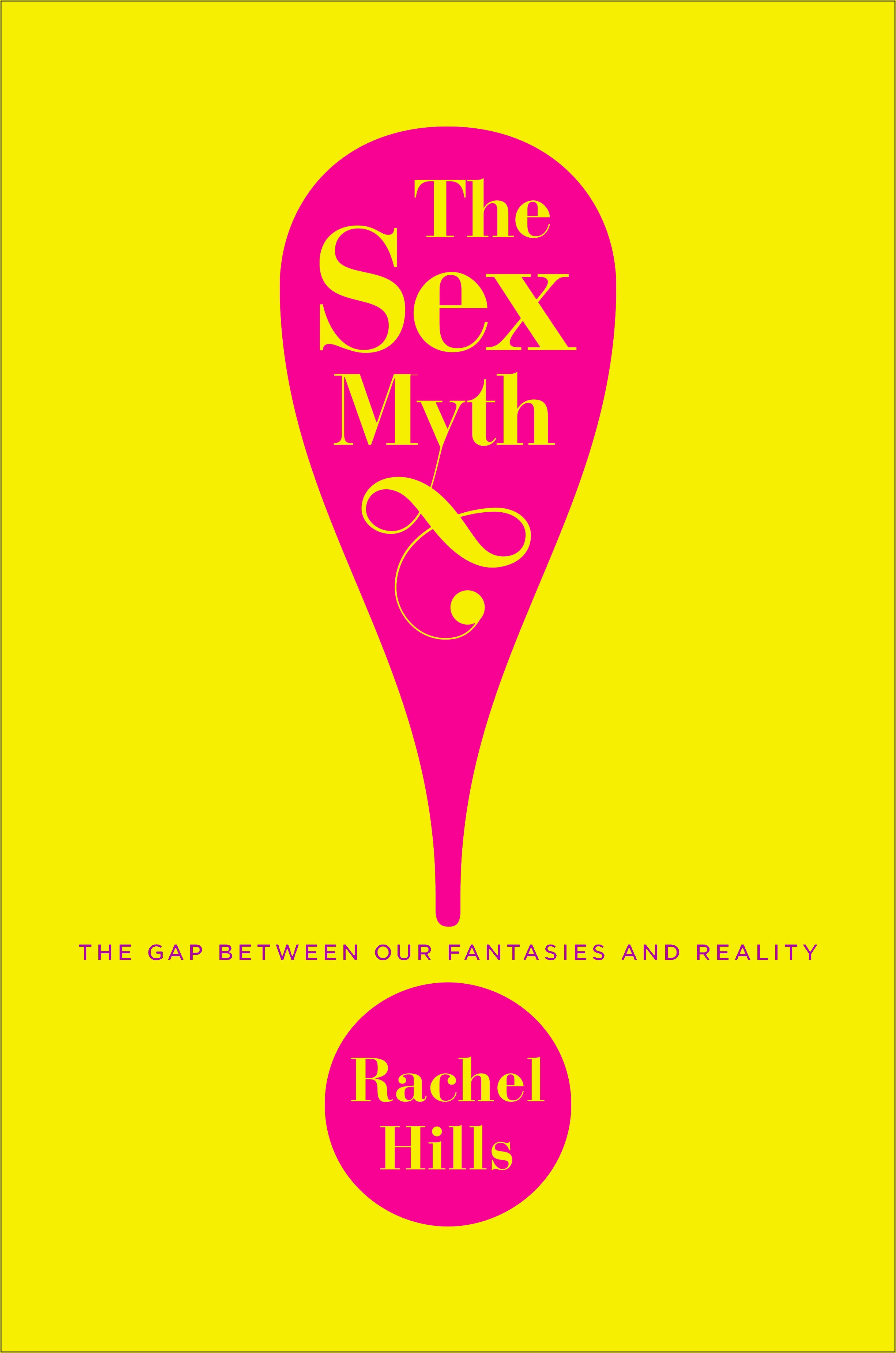
Writer Rachel Hills first began thinking about the ideas discussed in The Sex Myth: The Gap Between Our Fantasies & Reality, her first book released this Wednesday, in around 2007 or 2008. “There was a lot of stuff in the media about hookup and raunch culture and it painted a very exaggerated and hedonistic picture of young people and sex,” she says.

Hills’ sex life at the time didn’t look at all like what pop culture, like Gossip Girl and the Sex & the City movie, was telling her it should. To assuage her insecurities, she started writing on her blog, Musings of an Inappropriate Woman, and places like Vogue magazine about sex and found “lots of other people were feeling the same way, [and] that’s what inspired me to start looking seriously into those ideas.” After seven years of research and interviews spanning Australia, the U.K., Canada and college campuses in the U.S., The Sex Myth was born.

Currently living in New York, Hills is a veritable Carrie Bradshaw for a new generation, having parlayed her interest in The Sex Myth into a regular column for U.S. Cosmopolitan. She also tweets at @rachellhills.

I know you’ve spent at least seven years working on The Sex Myth. Can you give me a brief rundown of how the book went from concept to fruition?

I started thinking seriously about the ideas that are in The Sex Myth in about 2007/2008. There was a lot of stuff in the media about hookup and raunch culture and it painted a very exaggerated and hedonistic picture of young people and sex. I think most people have the media literacy to be able to look at articles that talk about 17-year-olds falling out of trees while they’re having sex or “g-stringed baboons in oestrus”, which is one of my favourite phrases, and understand that this is not what’s happening on most people’s’ Thursday or Friday or Saturday nights.

What was interesting to me was that those stories were the pointy end of the bigger narrative  happening around sexuality in our culture. Even if we weren’t hearing these very exaggerated stories, the same narratives were being told in a more subtle, insidious way in magazines, on the web and in TV shows. So there was this overall picture of sex as something that was constantly available and of course you were doing it and if you weren’t doing it there was something wrong with you.

My personal interest in the subject came from the fact that my sex life didn’t look at all like that at the time and it was something that I felt a little uncomfortable about; like maybe there was something wrong with me. When I realised that lots of other people were feeling the same way, that’s what inspired me to start looking seriously into those ideas.

The case studies and the way you weave certain people’s stories throughout the book, like Portia, Courtney and Yusuf, lend a certain familiarity and an informality. Was that intentional?

It was really important to me that the book was accessible to its readers. I wanted to write a smart book, and in some ways it’s a very theoretical book in that it references Michel Foucault and Anthony Giddens, but I think that those theories are most useful when you can see how they apply to people’s everyday lived experiences. The case studies both give the reader a break in something that could otherwise be exhausting to read but it enables you to find yourself in other people.

What was the interview process like?

I just wanted to talk to anybody who wanted to talk to me! I wasn’t particularly fussy.

My main criteria when I started working on the book was age. The vast majority of the people interviewed in the book are in their twenties, ranging from 16 to 32 or 33 for the most part. The reason I decided to interview younger people primarily was mostly because I was quite young myself. When I started working on the book I was 25, and part of my question was around the portrayal of my generation’s sexualities which then became the scope of my research. I now feel like the book could have benefited from interviewing older people as well but that would have taken longer. It took eight years to start with so it’s probably best to limit the sample to some extent!

The people I interviewed in the book are from Australia, the U.S., the U.K. and Canada. The reason I spoke to people in those countries is because we share a common language and that enables a similarity of culture. When the language changes, often social ideals and standards change as well.

In chapter three you talk about asexuality. Last year Time magazine declared a “transgender tipping point”. Though one is about gender identity and the other sexual orientation or preference, do you think we’re close to an asexuality tipping point where people might start to understand what asexuality is?

Five years ago would we have known that trans issues would be such a big part of the conversation around gender and sexuality? Not necessarily because those issues were much more marginal then.

I wonder, what would an asexuality tipping point look like? If it means a discussion of asexuality in the media, then I feel like we’ve already been there. What’s most important in understanding asexuality as a sexual orientation is to come to an acceptance that sex isn’t this constant thing that everybody is always doing and thinking about and at the centre of everybody’s lives. Like gender, sexuality is a spectrum, so it’s not just that you’re sexual, so you’re constantly humping people, or asexual, and you have no interest at all. We all sit along different points of it and I would like to see an acceptance of the fact that we all have a different interest in sex and access to sex and we don’t all want to lead the same kind of sex life.

And a difference interest in sex throughout different points in our lives.

Exactly. When I was doing some of my more academic research, I came across a couple of sociologists from the U.S. who were doing most of their publishing in the 1970s called John Gagnon—great name!—and William Simon. They were the first people to look at sex as a social activity. One of the points they look at is the fact that sexual desire does change throughout the life cycle. Sex can feel incredibly urgent in youth, the early years of a relationship or when having an extramarital affair. But there are other times in your life when sex falls into the background and other things might be a priority.

There’s a portion on beauty and how being beautiful not only makes you desirable to others and in turn makes them desirable but that a certain level of beauty makes people think you’re sexual, even if you’re not. Does beauty take the power structure of sex to another level?

The relationship between desire and desirability is the core of The Sex Myth. If you want to succeed in any one aspect of the contemporary sexual ideal probably the most important are being desirable and desiring. First you have to want sex, then you have to be attractive enough to get it.

There was a lot of talk from your subjects about who chooses whom when it comes to sex. Ashley says “you want to appear like you are choosing to sleep with the other person, not like they are choosing to sleep with you” while later in the book Brit says “if a guy wasn’t having sex, people figured it was because he chose not to. Whereas if a girl wasn’t having sex, the only explanations were that she was religious or because she was undesirable.” It reminds me of Jersey Shore, for example, when the guys were lauded for picking up as many chicks as possible but the women were called sluts when their sluttiness actually enabled the men to get some! Can you unpack these double standards a little further?

I don’t know if Brit’s point necessarily reflects my own experiences and observations, but if we take it as being true, she is inverting the expectations. So instead of being slut-shamed, like the girls in Jersey Shore, she is shamed for not being attractive enough to get a man in that heterosexual situation.

One of the things I talk about in the book is that the feminine ideal that women are aspiring to is not this pure, submissive virgin/wife character that women might have been taught to aspire to in times past. It’s someone who is self­-actualised and in control, as Ashley spoke about, and who has sexual agency, who wants and likes sex. This new feminine ideal where we’re expected to desire sex still happens primarily in relation to other people. As a society we’re largely for it for women, but it still seems to be more responsive; so her desiring sex means that she says yes to somebody when they want to have sex with her. There’s still a taboo around female masturabation or owning a vibrator because they’re associated with female desire and getting off because you want to not because you want to please your partner.

In chapter five you talk about masculinity and sexual assault. How important was it for The Sex Myth to explore “the rape myth” that certain kinds of women/people can’t be raped?

Rape culture is obviously a huge issue within feminist debate at the moment. There are some really great thinkers—Clementine Ford in Australia comes immediately to mind and in the U.S. Kate Harding has a book on rape culture coming out a couple of weeks after mine—working on that issue. Rape culture is only one part of the politics of sex and what I wanted to do with the book is take a very broad view of how we’re expected to be sexual beyond the gendered politics of sexuality in which men behave one way and women behave another so I wanted to go beyond that but I was conscious that there were other people who were doing it really well.

Men bragging about how many women they’ve slept with solidifies heterosexuality. Do you think “bromance” movies like Magic Mike XXL play into and/or subvert “masculine straightjackets”, as you call them, and if so, how?

The “masculine straightjacket” is this idea that in order to be a “real man” you have to behave in a certain way. You have to be sporty, good with women, tough, you can’t show emotion, you can’t be a girl and you can’t be gay, because those things are treated as the opposite of what a real man is.

In terms of Magic Mike XXL, I think it does challenge some conventional aspects of masculinity. I like that the men in Magic Mike are in some ways incredibly masculine and stereotypically heterosexual but they’re also allowed to have this softness to them. They’re allowed to do things, maybe because they’re so conventionally masculine in other ways, like be into yoga or dance to the Backstreet Boys, that aren’t considered a threat to their masculinity. But on the other hand, they’re still fist bumping about the women they’re picking up and their masculinity is still very much derived from their success with women so I’m not sure that it completely challenges it; it’s still very conventional in a lot of ways.

I don’t talk about this in the book, but I met an academic from Connecticut recently, Christin Munsch, who’s looked at how men are able to play with and challenge masculinity. The interesting thing she found in her research is that guys whose masculinity isn’t going to be called into question—who are socially powerful or considered to be attractive by most people—actually have the most latitude to challenge other forms of masculinity. So men at the top of the social strata are most able to challenge things and men in the middle, who might be more insecure about themselves, might be more likely to cling to the “masculine straightjacket”. So Magic Mike is very much in line with Munsch’s research.

Have you seen Trainwreck?

Not yet, but I love Amy Schumer so I’m planning on seeing it at some point. I’ve heard about the narrative the film takes [damaged, promiscuous woman is saved by good man] which is weird because it’s not what you would expect from Amy Schumer. She proudly and deliberately talks about the fact that she is sexually active and that she has slept with a lot of people in situations that some people would consider to be unsavoury or promiscuous and reclaiming that is a big part of her work. So it’s kind of strange that this film would follow that conventional narrative. I wonder if that’s just about the rom-com format; it’d be pretty hard to create one that doesn’t end like that. It’d be pretty cool, though.

It might also be that it wouldn’t have gotten greenlit if it didn’t have that fairytale ending…

That’s a great point. Because films do need a large number of people to see them, compared to books! They really do have to appeal to a broad audience.

I watched a couple of interviews with Amy that have gone viral and I know that she really rejects the idea that that character is damaged. I think she said in that interview with KIIS FM that she thought of the character as someone who was having fun and [the character] didn’t think of herself as damaged. And then things change and she falls in love hence that conventional happy ending.

Something that I was aware of with The Sex Myth is that I wanted to veer away as much as possible from this narrative that people’s sex lives weren’t up to scratch but then something happened and oh, they’re having great sex. It’s a trap I fall into a little bit in the book but it’s really hard not to because those are the stories people tell about their own lives. We all like to tell our stories about our happy endings. I once was lost but now I’m found. Things used to be bad, now they’re better. That narrative of we’ll be happy in the end when we find a nice man or woman to be with is as much entrenched in our culture as the narratives that I talk about in The Sex Myth.

*This interview has been edited for length and clarity.

The Sex Myth by Rachel Hills is out now.

Image via Musings of an Inappropriate Woman.

Writing About Taylor Swift Ruined My Friendship!

BlankSpaceLogo_FINAL_DomBoldBT_BLUR_neg_small

This is a version of a post that originally appeared on Writer’s Bloc as part of their May series on balance. Republished with permission.

A few years ago I wrote a blog post about Taylor Swift’s anti-feminist lyrics. Perhaps ill advisedly, I used an example from my friend’s love life to illustrate my point about Swift’s detrimental view of gender roles in her music without my friend’s consent.

This friend has a soft spot for Taylor Swift, along with Twilight, Glee and young adult fiction, and I believed these biases informed her actions when she started hooking up with my roommate. When their courtship fizzled out a short time later, she revealed to me that because they were friends first, she didn’t feel that as lovers their relationship was any different: where were all the grand gestures on his part, she wondered?

Now, at the time I thought this observation would perfectly prove my assertion that Swift’s lyrics and anti-feminist rhetoric in interviews enforced an ideal that heterosexual relationships must take the shape of fairytale romances that are performed primarily by the guy, while the woman is just a passive receiver of surprise weekend getaways, jewellery and flowers.

In hindsight, perhaps my opinion about my friend’s love life wasn’t something I should have published on my blog, or even passed judgment on in the first place. Needless to say, she didn’t think so either as we’re no longer in contact.

Funnily enough, after that shit went down, I suffered a bout of writer’s block that lasted the better part of a year. Karmic retribution, perhaps?

This is not the first time I’ve gotten into trouble with a friend for airing their dirty laundry in my prose. About a year and a half before the post that ended a friendship, I wrote about how I thought one of my friends wasn’t very socially adept due to a sport-focused sheltered upbringing and how this informed my broader point that sportspeople shouldn’t be held up as heroes (a topic that was doing the rounds in the news that week). Understandably, he was very hurt that I used personal details he’d told me in confidence to further my agenda and that I had those opinions about him. He’s a bigger person than both myself and my former friend, though, as he was able to see both points of view and hash it out with me like an adult and our friendship has since recovered. (Yes, I ran his inclusion by him prior to publication!)

The irony is that the singer herself is all too familiar with mining her and others’ personal lives for her work. I’m not trying to equate my writing with Swift’s or that using other people’s stories is the same as using your own, but I’d like to think she could relate. Either way, we both wrote and write about people who are no longer in our lives, a feat some writers are more adept at that others.

But how much of the personal anecdotes of the people in our lives do writers have the permission to share? Obviously, I had permission to share neither experience, but in the absence of anything happening in my own love life and the desire to act as therapist to another friend, respectively, I crossed a line.

And it’s a fine one to write on when you’re crafting memoir. Increasingly, I’ve been delving into the personal essay and wondering whose stories and lives I share I have the permission to make public.

How specific can you get when using identifying details in your writing? At the time of publishing the pieces in question, only a few of my friends were reading my blog and would have realised who I was writing about. The majority of people who read my work are unknown to me. But just because only a handful would recognise the subject in question doesn’t necessarily mean writers have free reign over how they’re represented.

Writers such as Lena Dunham and Janet Mock share that problem on a global scale. Dunham’s memoir, Not That Kind of Girl, drew controversy last year when she wrote of her curiosity about her sister’s body parts and an alleged date rape in college. Though names and other details were altered, a fellow student of Dunham’s alma mater was falsely identified as her attacker. Mock shared concerns about the portrayal of her family in Redefining Realness, her memoir about growing up trans in Hawaii. When the stakes are that much higher—being perhaps the most influential millennial in a decade and coming out as a gender identity much of the world is yet to accept as legitimate, respectively—there’s an increased likelihood that your audience and subjects take issue with your words.

Call it the life of a writer or chalk it up to my own narcissism or lack of imagination but it would seem that I haven’t learned my lesson as I’m still writing about the people and situations that caused friction in my personal life in the first place.

Related: Taylor Swift—The Perfect Victim.

In Defence of Mia Freedman.

Elsewhere: [Writer’s Bloc] Writing About Taylor Swift Ruined My Friendship!

Image via Blank Space.

Blood Bonds: The Sisterhood of Menstruation.

instagram period

Periods are a hot topic at the moment. There was the recent Instagram furor that saw a photo of a fully-clothed woman in bed with a blood stain on her trackies and sheets banned for violating the social media platform’s guidelines and Rebecca Shaw—also known as the holy saviour of the interwebs, Brocklesnitch—wrote at Kill Your Darlings about the menstruation taboo. Like a period, these both came around the time that I had also been thinking and talking about the bonds of blood that signify womanhood.

A female friend and colleague and I were discussing the ins and outs of periods. Topics on the agenda included trepidation about going back on/discontinuing the pill, men’s fear of anything to do with menstruation, and the miracle of being able to go about our daily lives whilst shedding parts of our internal organs on a monthly basis.

My friend assumed she was the only woman she knew not on the pill, while I increasingly feel I’m alone in my medicated state. I’ve been on the pill continuously for ten years (cue blood clot panic), originally to regulate the intensity of my periods, and now mostly for the convenience of being able to choose when to bleed and the fear of breaking out. (I don’t have unprotected sex regularly enough to use the pill for this purpose.)

On the topic of men, I reminisced about a male former housemate, who couldn’t even speak the name of a pantyliner when I accidentally left one unwrapped in the bathroom. Additionally, such frank period talk in the vicinity of men is usually met with groans and the covering of ears. Sorry (not sorry), but if you’re an adult man and you exist in the world with women, periods are a fact of life. The fact of life, if you will. Deal with it.

Something that becomes so routine as to not even phase you is actually pretty amazing when you think about it. Comedian Cameron Esposito’s routine about periods, above, reiterates my point as she hilariously and disgustingly muses about chunks “the size of strawberr[ies]… coming out of my body” but still endeavours to “have that report for you by tomorrow.” Add it to the checklist of things that many women have to do above and beyond the roles of men.

All of this chatter would indicate that periods also serve as a female bonding ritual. “I wonder if men bond over foreskins the way women bond over periods,” my friend asked. Firstly, eww. Secondly, while there is the brit milah in Jewish culture, nothing comes close to the social and cultural rituals surrounding menstruation.

Guru Nanak, the founder of Sikhism, asserts that menstruation is a god given process essential to the creation of any human being. In Indian Hinduism menarche is a cause for celebration with the young woman in question receiving gifts, not unlike Judaism’s bat mitzvah celebration which focuses more on physical age than puberty. Similarly, in Native American tradition puberty and first blood are cause for celebration with menstruating women’s power revered. Shaktism has perhaps the most positive attitude towards periods, with the annual fertility festival Ambubachi Mela taking place in June in which the menstruation of goddess Kamakhya is celebrated.

The act of purchasing sanitary products may not be highly anticipated (and don’t even get me started on the added burden this puts on homeless women and women on Nauru, for example), but the sharing of them, whether that be between mothers and daughters or other family members/adults of influence in a young woman’s life at puberty, friends or other women who happen to be using a bathroom in tandem, is a ritual in itself. While Carrie may be a horror story about the denial of womanhood, many other films and TV have a more realistic portrayal of blood bonds: think the power dyanmics at play when Carrie lends “Face Girl” Nina Katz a tampon on Sex & the City; White Chicks’ white friends offering them an assortment of sanitary products; and the “super jumbo tampon” scene in Mean Girls. Lauren Rosewarne even wrote a whole book about the pop cultural representations of periods.

For those who may not have authority figures or friends to teach them about the bloody birds and the bees, teen and women’s magazines such as Dolly and Girlfriend and websites like Birdee come with an abundance of information. This is not to mention the sanitary products bursting from their pages and attached to their covers as free samples.

The ostracision of periods in polite company and the freak outs that men have when confronted with them mean women only have each other to talk about periods with, creating a bond whether we like it or not. That the specifics of who is and isn’t on birth control; who has painful periods that land them in the emergency room; the age of menarche; and, for older women, when their periods stopped are discussed freely amongst friends and even acquaintances is a testament to both the bonding rituals and banality of periods. The very phenomenon of synced cycles for women existing in close quarters is proof enough of the sisterhood of menstruation for better or for worse.

Elsewhere: [Daily Life] Should We Be Treating Periods as a Feminist Issue?

[Kill Your Darlings] An Inconvenient Truth: Social Stigma & Menstruation.

[Vice] For Homeless Women, Having a Period Isn’t a Hassle—It’s a Nightmare.

[New Matilda] Sanitary Pads “A Fire Hazard”: The Realities of Life for Mothers and Children on Nauru.

[Amazon] Periods in Pop Culture: Menstruation in Film & Television by Lauren Rosewarne.

Image via Daily Life.