So a Tattoo Makes Me Public Property, Huh?

Most of my friends have seen my tattoo by now; if not, there’s a pic above.

I love it, I’d been wanting it for about seven years, and it’s in a place I can’t see, so I’m not likely to get sick of it. If I do, there’s always laser removal, right…? ;)

The other night I was out dancing, celebrating a friend’s birthday. I was wearing one of my favourite dresses, from By Johnny, which is a LBD with cut outs around the chest/breast area. I usually wear my hair “in a prim and proper bun” with this dress, so as to avoid looking slutty (as per a Facebook status the night I debuted the dress at another friend’s birthday. I’m 90% sure I’ll be wearing it to SlutWalk, too [stay tuned for more on this tomorrow]). As daring as the outfit is, I always get compliments when I wear it, of the “you look really classy” variety, so go figure.

But this dress and the accompanying hairstyle allows my tattoo to be fully visible, and apparently, it really attracts the opposite sex.

Men love to touch it. I don’t have a problem with my guy friends touching it or asking to see it, but when random strangers on the dance floor just reach out and poke it, you could imagine I’m not such a fan.

Since when does having a tattoo make you public property? If it was on my ass, would people be touching it then? No, because that would be sexual harassment.

But this is something pregnant women, or people with injuries, young children (and not-so-young children, depending on if your mother is very overbearing, or you’ve got long lost relatives who haven’t seen you in a while) and probably people with all manner of curious novelties adorning their bodies endure, whether they wish to or not.

It would be another, somewhat welcome, thing if someone just tapped me on the shoulder and told me they liked my tattoo. But I don’t take well to being poked and prodded when I’m trying to have fun with my friends.

It’s only happened twice (granted, in the space of a couple of hours), and it’s sure as hell not enough to make me wish I hadn’t gotten it, but having a tattoo, or a shaved head, or a baby growing inside of you, is not an invitation for the unwashed masses to touch you!

Thoughts?

My Inspiration Has Run Dry…

Lately I’ve been feeling a bit disillusioned by writing.

Not by this blog, as I’m coming up with new ideas each day and don’t know what I would do without it.

But I set a goal for myself in 2011 (yes, just one); to break into the freelance market.

I thought I had an idea in very early January for an article for Jezebel, however that didn’t come to fruition, and my inspiration has been dried up ever since.

In order to make my “career” as a writer viable, I need to start getting freelance work. I know it’ll be a few years yet til I can completely subsist on freelancing alone, and even then I hope to be working on my own business (I thought I knew what I wanted to sell but, low and behold, I’m having a bit of an existential crisis in that department, too!).

But there’s a line between what I write about on this blog and what people want to read in magazines.

And then there’s the matter of being motivated enough to do the investigation required to pitch and properly publish a magazine-quality article, as opposed to the maximum of one hour’s research that goes into one of my blog posts.

AND THEN there’s the fact that I have no freelancing experience whatsoever, and it’s hard to break into that market without it. Online presence will only take you so far…

I’m not always this down on myself, but it comes and goes, you know? I’m going to work on two pitches this week to two mainstream publications and see how I go. I’m not expecting anything, but at the very least I’ll get some feedback, and at the most, I can retrieve that elusive and much needed inspiration…

Any other suggestions as to how to get it back?

Elsewhere: [Musings of an Inappropriate Woman] Hola 2009: Meditations on a New Year.

Image via Empire Online.

The Anatomy of a Douchebag.

The other day, I was talking to my friend about a mutual acquaintance of ours, and how he is somewhat of a “douchebag”. He’s not malicious in any way (which might make him an “asshole”, “prick” or, depending on the severity of said maliciousness, something more severe, beginning with an “f” orGod forbid!a “c”), but some of the things he says and does can only be described as “douchey”.

Urban Dictionary ensures that douchebag (“Someone who has surpassed the levels of jerk and asshole, however has not yet reached fucker or motherfucker”) is “not to be confused with a ‘douche’”, “… an individual who has shown themself [sic] to be very brainless in one way or another.” So perhaps just plain old “douche” is the word I’m searching for here, but I still maintain that a douchebag is just a misguided knob who does things seemingly to look “cool” and gain others’ approval.

But you’ve seen the douchebag in popular culture; you know what I’m talking about.

He’s not the equivalent of Jesse James, who cheated on Sandra Bullock with tattooed fetish model Michelle “Bombshell” McGee, is an alleged Nazi sympathiser and ran dog fights out of his West Coast Choppers studio. He’s not in the same ball park as Charlie Sheen, who is a raging drug addict and wife beater. And he’s certainly nothing like Joel Monaghan, the disturbed and idiotic Canberra Raiders player who was in the news last week for engaging in a sex act with await for itdog! Tiger Woods, who is a massive dickhead for cheating on his gorgeous wife with the multitude of women, would probably be the closest thing to a douchebag out of the men I’ve listed above, for the simple fact that his acts hurt no one but himself. Sure, there was some very public pain and suffering from his wife, Elin Nordegren, and some of his floozies who thought they meant more to him than they actually did, but there was no drug use, animal cruelty, bigotry and/or violence against women.

But from my research (FYI, who would’ve thought there were so many websites dedicated to the phenomenon?!), I’ve found that the douchebag is most comfortable in their natural habitat; reality television.

I’ve always maintained that Spencer Pratt and Jon Gosselin are the douchebags du jour, pulling publicity stunts with on-again/off-again wife Heidi Montag and ordering Starbucks in Ed Hardy garb, respectively. More recently, the cast of Jersey Shore have been known to exemplify the douchebag attitude, with the women of the show inspiring me to coin my own personal term for the female equivalent of a douchbag: a douchebaggette.

Speaking of Ed Hardy; the fashion label favoured by Gosselin and the Shore cast (Pratt seems to have moved away from the brand and towards a more derelict, hippie look, in keeping with he and Heidi’s crystal-healing-meets-bankruptcy lifestyle. But Pratt surpasses the physical attributes of the douchebag; he is inherently and eternally a douchebag. Heidi, however, still gets her douchbaggette on in the label.) is a key ingredient in the anatomy of a douchebag. Other external ingredients might include, but are not limited to; men who think their ridiculous hair, which they’ve spent more time on than I spend on my own locks, looks good (Pauly D, I’m looking at you), with a special mention to rats tails; men who wear copious amounts of jewellery or blinged-out clothing; men who wear headbands; and men who insist on getting the perfect pose for their Facebook profile pic. Feel free to submit your own physical douchebag attributes in the comments!

In essence, though, I think the douchebag is an insecure bloke (bogans are not exempt from douchebaggy-ness; in fact, in Australia, I’d say bogans make up a significant portion of the douchebag population), who strives for the acceptance of others in the way he projects himself and the things he says and does. Again, the douchebag poses minimal threat to non-douchebaggy majorities (or is that minorities? The douchebag seems to be sweeping the nation in record numbers)… except when they blind you by flicking their rats tail in your eye and/or from the glare of their rhinestone covered Ed Hardy tee whilst photobombing you!

Related: Why Are Famous Men Forgiven For Their Wrongdoings While Women Are Vilified for Much Less?

Beauty & the Bestiality.

Poor Little Rich Girl: Who Cover Girl Heidi Montag.

(Sex) Ed Hardy.

Extreme Makeover: Jersey Girls.

Things Bogans Like.

Lindsay Lohan: Marilyn, Eat Your Heart Out.

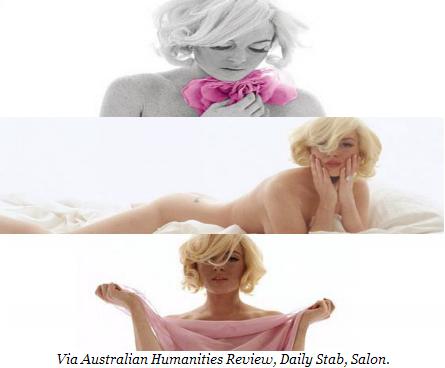
In an academic article by Melissa Hardie, published in The Australian Humanities Review and entitled “The Closet Remediated: Inside Lindsay Lohan”, Lohan’s obsession with the tragic Marilyn Monroe is dissected, noting a certain depth that both actresses shared, but is not necessarily visible to the naked eye. And speaking of naked, the article focuses heavily on Lohan’s rendition of Monroe’s final photo shoot, in which they both get naked with scarves and faux flowers. Hardie writes:

“Bert Stern, the photographer of the Monroe session, took the photos of Lindsay impersonating Monroe, and in the article that accompanies the photo shoot Amanda Fortini writes:

“‘Stern, who shot the photos on film rather than digitally, told me he was interested in Lohan because he suspected “she had a lot more depth to her” than one might assume from “those teenage movies”…’

“Fortini writes of the original pictures of Monroe that ‘Stern excavated and preserved the poignant humanity of the real womanbeautiful, but also fragile, needy, flawedfrom the monumental sex symbol’, and Stern’s comments about Lohan employ similar metaphors, where the nude celebrity portrait becomes ironically… the opportunity to decipher depth. Reinforcing Stern’s interest in Monroe’s visible depththat she might be ‘more’ than her imageis Fortini’s discussion of Lohan’s fascination with Monroe. For Fortini, Lohan’s interest in Monroe

“took root a decade ago with multiple viewings of Niagara during the London filming of The Parent Trap. She has even purchased an apartment where Marilyn once lived. ‘If you saw my house… I have a lot of Marilyn stuff,’ she told me, including a huge painting of Monroe.

“‘It’s eerie,’ Lohan said of the painting, a Christmas gift, ‘because it’s this picture of her, and it’s kind of cartoony, and there’s a big bottle of pills next to her, and they’ve fallen over.’

“Lohan’s fetishistic collection of Monroe’s ‘stuff’ suggests her desire to see beyond, or at least compensate for, deathly (‘cartoony’) images of her celebrated subjectivity. Fortini describes Lohan’s work on the shoot as a form of ‘strict mimesis: scarves, nudity, and all’.”

Related: Poor Little Rich GirlLindsay Lohan in Who.

All Eyes on Marilyn.

Marilyn Misfit.

Elsewhere: [Australian Humanities Review] The Closet Remediated: Inside Lindsay Lohan.

Chase You Down Until You Love Me, Paparazzi…

The following is based on a 2006 uni essay I wrote about the camera as an intruder, so sorry for any overly academic phrasing. I have attempted to bring it into the modern day with less formal language after reading an article on Jezebel, “The Day I Trailed a Paparazzi” in which—what else?—one of the blog’s writers trailed a paparazzo for a day.

Is the camera an intruder? Some would say that, in this day and age, with advanced photographic technology and increased access by photojournalists to worldwide events, it is. However, others assert that because of this advanced photographic technology and increased access, paired with the public’s growing need, and right, to know and see, that the camera it is not.

In terms of the cult of celebrity and the growing phenomenon of the paparazzi, privacy is a major issue. Peter Howe, in his book Paparazzi, provides this definition of the occupation:

“It refers to those photographers who seek out and follow celebrities… in order to photograph them in their most unguarded moments. In short, it’s taking photographs you shouldn’t take in places you shouldn’t be”.

However, some might argue that in becoming a movie star or rock star, and thereby a celebrity, you give up your right to privacy. Privacy laws in the US, specifically in Los Angeles where most paparazzi dwell, state that “if the subject of the photograph can reasonably expect privacy in a specific situation, such as inside his home, photographs of such situations cannot be published without permission”. And, as is evident in any glossy tabloid, most paparazzi shots are taken in public places, such as shopping strips and restaurants. “The consensus of opinion among the paparazzi is that the celebrities get the privacy they deserve, and that if you really don’t want to be photographed, then you don’t go to eat at Mr. Chows or the Ivy, where there are always photographers,” says Howe.

French theorist Roland Barthes states that “people change when they’re aware they’re being photographed.” So “when long lenses can ‘trespass’”, “the traditional definitions of privacy may not apply”.

The paparazzi are viewed as the most morally and ethically irresponsible photographer in the business but, “if everyone hates their work, why are they the best-paid and busiest photojournalists in the world?” asks Howe.

Our obsession with celebrity has only grown since I originally wrote this article back in 2006, a time which was already seeing the tabloid market explode, causing “the number of paparazzi to quadruple”, explains co-owner of L.A. paparazzi firm Bauer and Griffin, Randy Bauer, in an article from Cosmopolitan that same year.

Increasingly, blogs have become the stratosphere through which paparazzi pics circulate, however magazines still pay the big bucks. The first pictures of Brad Pitt, Angelina Jolie and their adopted son Maddox on a beach in Africa sold for $100,000; a far cry from the $6.68 million People magazine paid for the exclusive photographs of Pitt, Jolie and their first biological child, Shiloh.

In the five years since Pitt & Jolie got together and were hunted by the paparazzi (Wagner, a paparazzo who participated in a story on Jezebel, asserts that family pics of the couple are still the highest fetching shots), reality TV has reached its pinnacle, with celebs like Kim Kardashian milking their celebrity for all its worth; sad sacks like Lindsay Lohan and Heidi Montag tipping off the paparazzi in order to sell shots of themselves and keep their names in the media; and those in a league of their own, like Lady Gaga, whose song “Paparazzi” and albums “The Fame” and “The Fame Monster” take the piss out of the very machine that made them and creating a new definition of the über-celebrity/icon.

As above, though, the paparazzi are predominantly viewed in a negative light, not only by serious art photographers and the general public but, obviously, the stars they photograph. Kristen Stewart, for example, is one star who has been vocal in her dislike for the paparazzi; those in opposition to her stance might use the argument above, that to have success in the acting world is to accept the constant presence of photographers. Especially when you’re one half of the most talked about couple since the Jolie-Pitts. Elsewhere, the Jezebel article, written by Dodai Stewart, has a focus on Michael Douglas, who is receiving treatment for throat cancer, and the unremitting swarm of photographers outside his house every day. Is hounding a sick man taking our obsession with celebrity too far? American author and journalist Nathaniel Parker Willis says that, “the idea [is] that to really know someone, we must know their private life”.

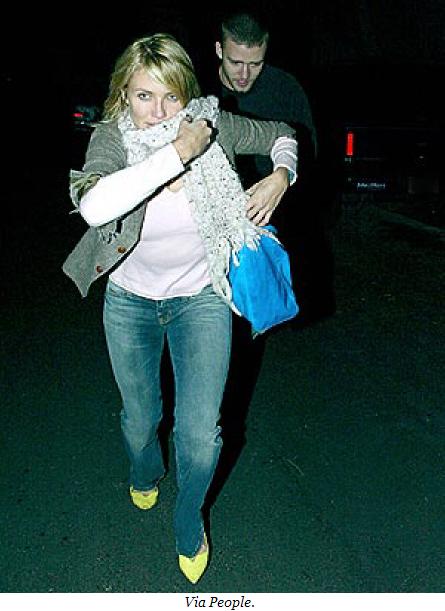
From the Cosmo article: “[the paparazzi] can make celebrities feel anxious, depressed, and even mildly agoraphobic” That explains the notorious picture of Cameron Diaz, with then-boyfriend Justin Timberlake, attacking a paparazzo, then!
But, increasingly celebs are embracing the paparazzi, realising that if they work in cooperation with them, their public lives will be less tumultuous.

Stewart relays her story about Wagner trailing Liev Schreiber and his son with Naomi Watts, into the subway. After talking to the subject for several minutes, Wagner tells Schreiber that he’s “gotta get a picture of you”, and “Liev said sure, put the kid on his shoulders and let Wagner snap away… No other photographers were around, so it’s an exclusive shot.” Wagner gets paid, Schreiber comes across as a cool family man; it’s a win-win situation.

Celebs with kids can get a bit weird about them being photographed, understandably, and in the same article, when Wagner encounters Watts with the kids, she kindly asks him not to take pictures, and he obliged. See, Hollywood dwellers? There’s no need to get violent with the paps. (Granted, the pics of Schreiber and Watts were taken in New York City, where the paparazzi scene is less brutal than in Los Angeles, and there seems to be a certain air of respect between subject and object.)

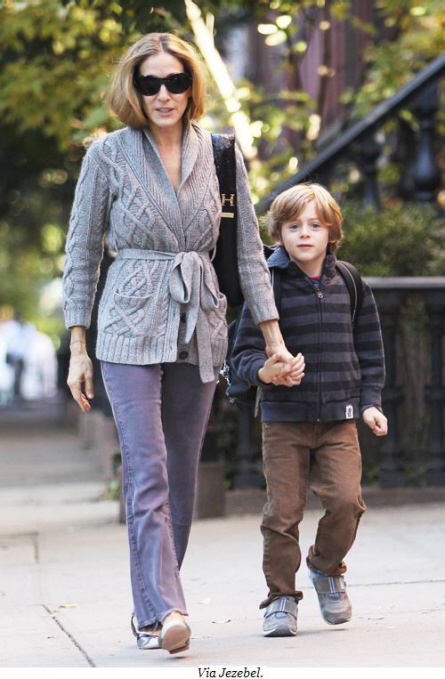
Other NYC dwellers such the cunning Sarah Jessica Parker, have some up with ways of making themselves less desirable targets:

“‘[SJP] wears the same thing everyday,’” he [Wagner] says. ‘On purpose. Because you talk about this today, then she wears it tomorrow, then what do you have to say? Nothing.’”
There is almost an element of protection there, too: provided both parties behave themselves and there exists a certain professional relationship, when your every move is recorded on camera, it’s got to be mighty hard to be mugged or attacked. Although, the victims of Alexis Neiers and her young-Hollywood burglary bling ring probably don’t subscribe to this school of thought.

Still, the opinion among the stars, the paps and the consumers who view their snaps on blogs and in magazines and newspapers, is that celebrities need the paparazzi to generate publicity around them, and the paps need to earn a buck. “An interdependency develops between them,” says Howe.

Stewart sums the cycle up nicely:

“We’re interested in celebrity minutiae. Despite ourselves. It is possible to be fascinated and repulsed at the same time. You can find celebrities appealing while finding the gossip culture appalling. We buy the magazines, hate them for lying to us, critique them, laugh at them, talk about them with our friends and buy the magazines again the next week. If you’ve ever read a gossip site or flipped through a celebrity weekly, you’re part of the system: the paparazzi take pictures for the mags and blogs, the mags and blogs exist because there is an audience.”

Related: Poor Little Rich Girl: Lindsay Lohan in Who.

Poor Little Rich Girl: Who Cover Girl Heidi Montag.

Elsewhere: [Jezebel] The Day I Trailed a Paparazzo.

[Vanity Fair]: The Suspects Wore Louboutins.

In Appreciation of Mick Foley.


For long-time readers of this blog (does six months qualify as a long-term blog-reading relationship?), you will be familiar with my fondness for professional wrestler turned author, Mick Foley.

When I first started watching World Wrestling Entertainment (then still WWF) in 2001, Foley had a sporadic recurring role, after resigning as fictional “commissioner” of the company. Little did I know just how affecting he had been to the hardcore wrestling scene.

In a nutshell, Foley started out in the independent wrestling scene, then gradually made his way through the ranks, beginning in squash matches (where a bigger star beats a newcomer or unknown in very little time and with very little effort) in WWE, then World Championship Wrestling (WCW) and finally Extreme Championship Wrestling (ECW), where he made a namewell, technically, three namesfor himself.

As an unorthodox professional wrestler, with an out of shape body and not a lot technical mat moves, Foley needed that extra something, which he came up with in the form of his three alter egos: Mankind, Dude Love and Cactus Jack.

Mankind is the one many wrestling fans would be most familiar with, with Foley wearing a Hannibal Lector-esque mask and brandishing a personified sock on his hand, affectionately known as Mr. Socko, which would be used in his Mandible Claw move. Mankind teamed up with The Rock in The Rock n’ Sock Connection in the late ’90s.

Dude Love favours tie-die and espouses the 1960’s hippie frame of mind, and is probably the least well-known of the three.

Finally, Cactus Jack is quintessential “Hardcore Legend”, using thumbtacks and Barbie (a baseball bat encased in barbed wire, oftentimes set on fire), wearing leopard print leggings and a flanny, and is often invoked in matches such as Hell in a Cell and especially his Last Man Standing matches in his feud with Triple H, again in the late ’90s.

After some time in Japan, where a lot of professional wrestlers believe you need to spend time if you wish to be taken seriously as an athlete, Foley debuted in the WWE, where he had some of his most memorable matches, mentioned above.

While my forbidden love for wrestling introduced me to many sub-categories (like my favourite band, Our Lady Peace, American geography, and my obsession an subsequent research articles and blog posts on the Chris Benoit double murder-suicide), none is more dear to my heart than discovering Mick Foley as a memoirist, children’s storybook writer, and novelist.

I own all three of his memoirs, Have a Nice Day: A Tale of Blood & Sweatsocks, Foley is Good: And the Real World is Faker Than Wrestling, and The Hardcore Diaries, as well as his first novel, Tietam Brown (watch this space to see if I can muscle a review out of a friend who’s had my copy on loan for months), which I serendipitously found in a second-hand book store and could barely contain my excitement. Yes, I love rare and obscure authors, okay?!

Foley has recently published his fourth memoir, Countdown to Lockdown: A Hardcore Journal, which I can’t wait to get my grubby little mitts on. In addition, Foley’s much publicised computer illiteracy has been conquered, with the advent of his blog, Countdown to Lockdown, and Jezebel has cottoned on to the awesomeness that is Mick Foley”, with two feature articles on the Hardcore Legend in the past week.

Foley paved the way for wrestlers with brains to parlay into other areas they could be useful in, with Chris Jericho (memoirist, musician, actor/host, commentator) and Edge (memoirist) springing to mind. And now he is speaking out for sexual assault victims in a category that has traditionally been termed “women’s issues”.

Foley is a truly smart, talented, funny, inspiring and admirable man, and if you like what you’ve read here, I urge you to pick up one of his books (or if reading’s not your thing, YouTube a match of his; but reading probably is your thing if you’re looking at this here blog) and prepare to have your lifeor at the very least, your perception of professional wrestlingchanged.

Elsewhere: [Countdown to Lockdown] Homepage.

[Jezebel] Wrestling Star Mick Foley Blows Our Collective Mind.

[Jezebel] The Day I Beat Down Mick Foley.

[Slate] The Wrestler & the Cornflake Girl.

The Awesomeness That is James Van Der Beek.


As Dawson Leery on late ’90s teen angst television staple, Dawson’s Creek, James Van Der Beek was a whiny pushover who always lost the girl to the sexy and witty and aptly-named Pacey Witter. With the exception of getting drunk and singing the blues with Andy on his birthday, Dawson’s Creek perhaps would’ve been better without its titular character.

Van Der Beek hasn’t done a whole lot since Dawson’s Creek ended in 2003, but what he has done has been a far more apt use of his acting talents.

I recently watched the movie adaptation of Bret Easton Ellis’s Rules of Attraction, in which Van Der Beek plays Sean Bateman, American Psycho’s Patrick Bateman’s little brother. While the film, like the book, is quite left of centre and something not everyone is likely to have seen, Van Der Beek is chilling as a narcissistic, drug-taking/dealing, death-faking rich college boy, alongside Ian Somerhalder in a similarly affecting performance.

And anyone who watches Criminal Minds would be hard pressed to forget the formerly innocent Dawson as Tobias Hankel, the serial killer who was so damaged by his abusive father, that he took on said father’s demeanour in order to carry out his killings. In addition, he injected everyone’s favourite agent, Spencer Reid, with heroin, causing Reid to struggle with his newfound addiction in later episodes.

Angus, Van Der Beek’s debut film role in 1995, is a much lauded cult teen movie in which he plays the popular jock to Angus’s overweight outcast. I haven’t seen the film personally (I plan to watch it during my convalescence from wisdom teeth surgery at the end of the week), Jezebel seems to like it, and that’s good enough for me!

Van Der Beek is not unfamiliar to parodying himself, either, with cameos in Scary Movie and Jay & Silent Bob Strike Back (worst movie ever, but the running Ben Affleck joke is a cracker!), and comedic turns in Ugly Betty and How I Met Your Mother.

If you’re indifferent to James Van Der Beek, like I was until I really paid attention to his acting life after Dawson’s Creek, I suggest you take a look at his post-Dawson’s résumé to truly understand the awesomeness that is Van Der Beek.

Related: American Psycho by Bret Easton Ellis Review.

Elsewhere: [Jezebel] Important Life Lessons From B-List Teen Movies of the ’90s.

Extreme Makeover: Barbie Edition.

Every year (unbeknownst to me until a week ago), San Francisco hosts the annual Altered Barbie Exhibition, which is pretty self-explanatory.

What we did as kids takes place on a grander stage, with Barbies made over as a Mexican Day of the Dead bride with Ken as groom, vacuum-sealed-for-freshness alongside some description of a fish and breast barbeque skewers.

All artworks are available for purchase via the Altered Barbie website.


Claudia & Karl Sitting in a Tree…

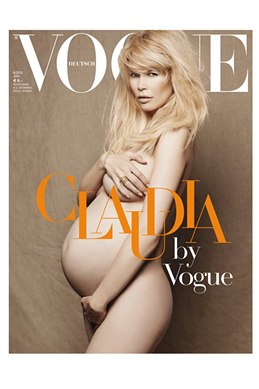
Claudia Schiffer did a Demiposing nude and pregnanton the cover of this month’s German Vogue, shot by fellow countryman Karl Lagerfeld.

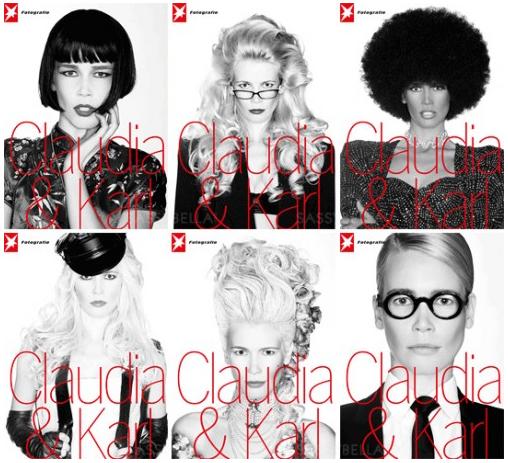
This is not the first time they’ve worked together, of course, but Lagerfeld is teaming up with quarterly photography publication, Stern Fotografie, for their 60th issue, which is full of his favourite images he’s shot of the supermodel over the past 20 years.

The cover features Claudia as a sexy librarian, a ’70s disco diva in (controversial, much?) blackface, and Marie Antoinette, amongst others.

With a cover this good, I can’t wait to see what’s on the inside!

Show Me Your Desk

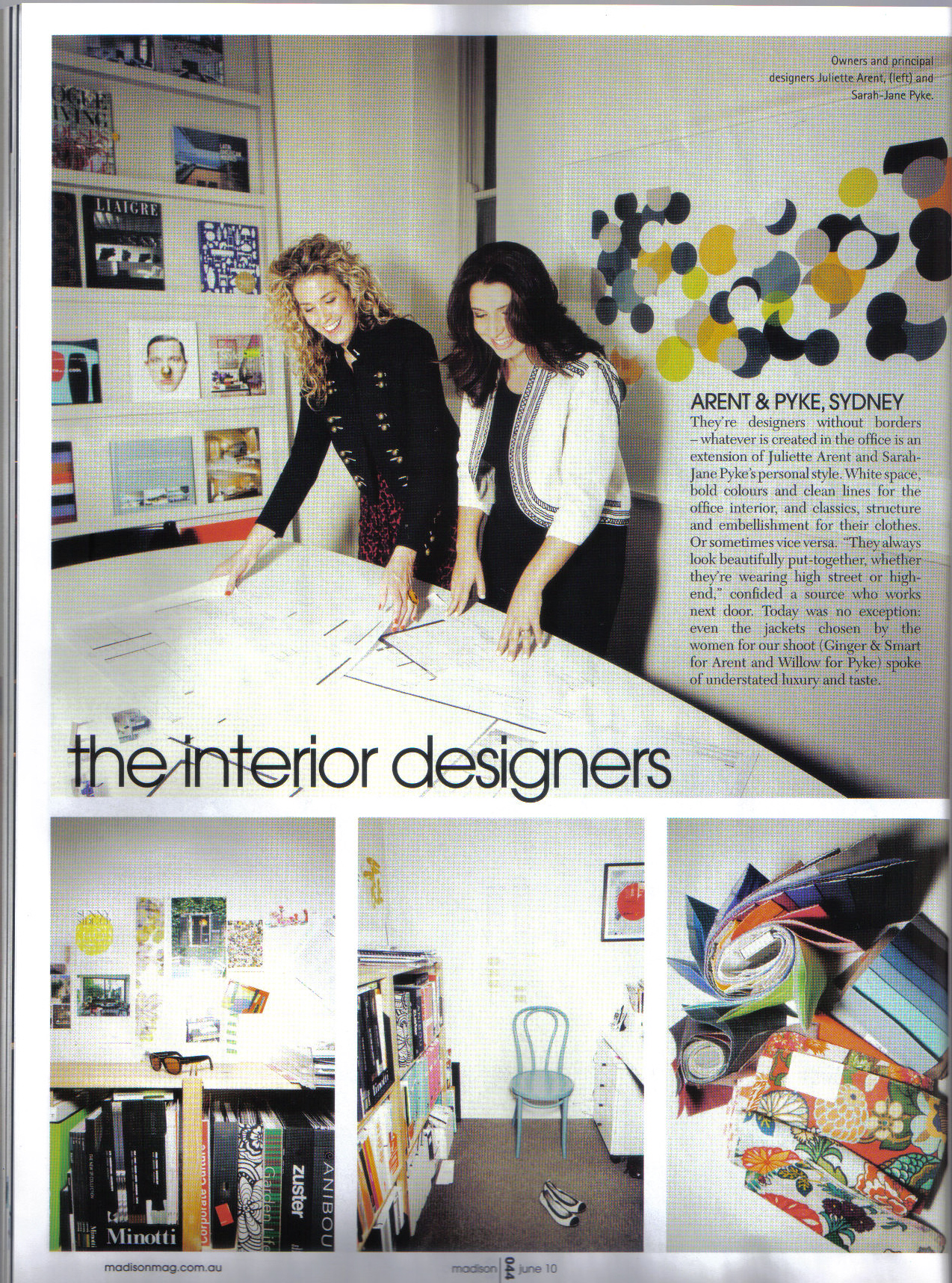
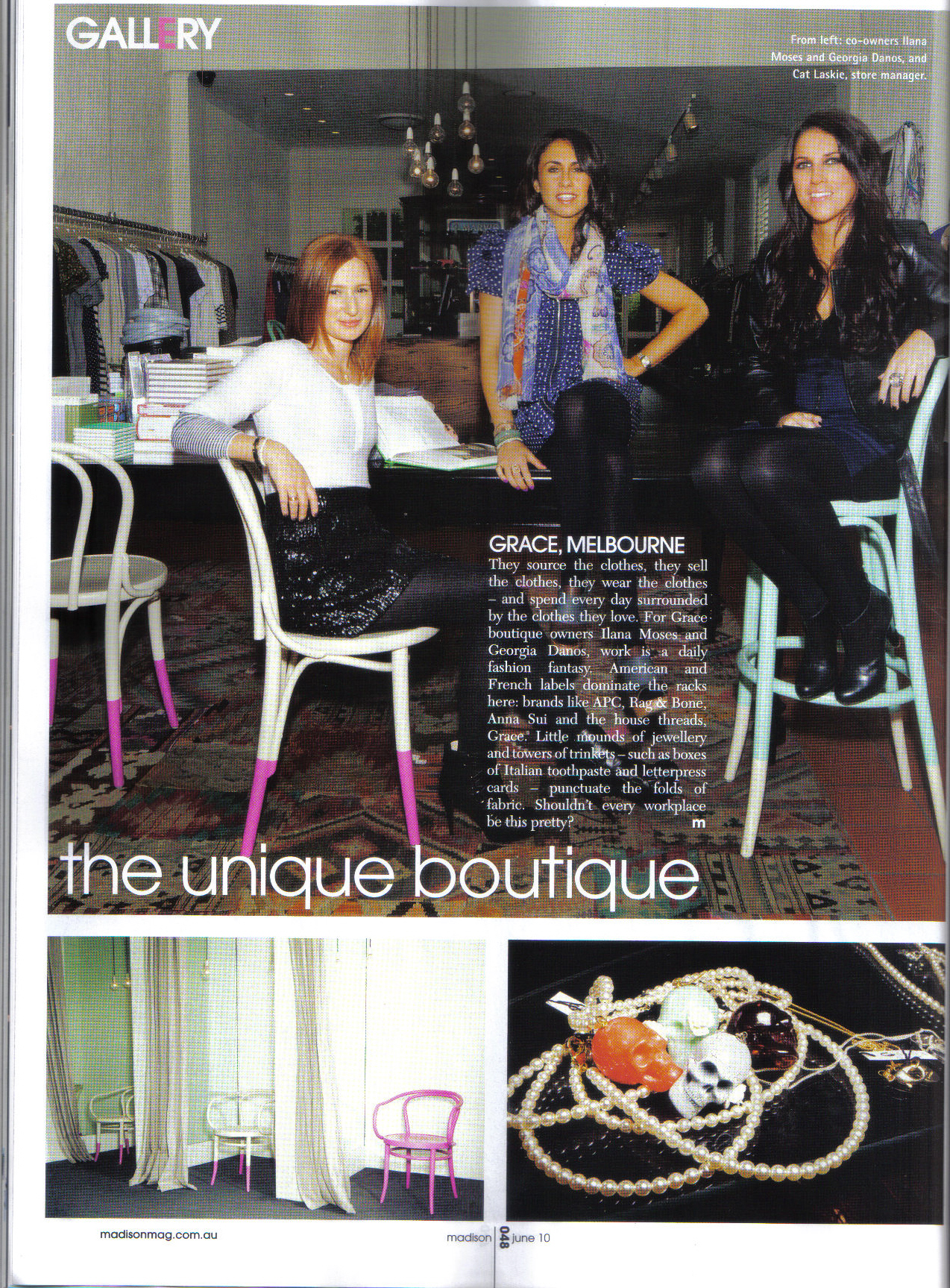
This month’s Madison features “the most stylish workplaces” of florists, interior decorators, brand managers, Red Bull’s “product marketeers”, and clothing boutique owners.

The article, “Step Into My Office” inspired me to share with you The Scarlett Woman workspace: my desk. As you can see, I have a Tiffany blue and pink colour scheme, an antique chair of my mothers’ and war-time desk, photoframes without pictures in them, which is quintessentially me, ornaments, perfume bottles, sentimental cards, and a Wicked mug that doubles as a pen holder.

Today, however, I’ve relocated to the couch…