Event: Melbourne Writers Festival — In Conversation with Zoe Foster.

Former Cosmo and Harper’s Bazaar beauty writer turned “chick lit” novelist Zoe Foster has always been someone I’ve looked up to: since reading Comso from age 15, her and Mia Freedman are two writers I’ve tried to emulate, not so much career-wise but more style-wise.

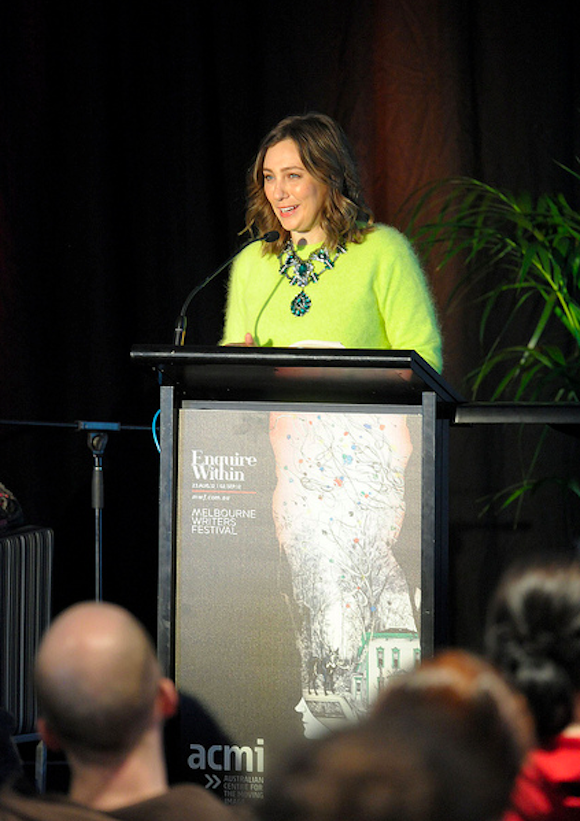
Foster appeared at one of the first events of the Melbourne Writers Festival on Friday morning, in conversation with freelancer and Crikey literary columnist, Bethanie Blanchard.

Dressed in pink sparkly pants and looking flawless as usual, Foster, who now writes from home and whom I remember writing about spending a “working” holiday in New York City a few months (or maybe it was a year? Time flies!) ago, managed to make me believe that there is hope for me as a successful, stay-at-home writer yet.

Granted, Zoe writes the kind of prose I try to avoid: beauty and chick lit. Foster explained how she got the job as beauty editor of Cosmo because Freedman liked that Foster had no beauty knowledge whatsoever and that she’d be writing from a readers’ perspective. Zoe said she never reads the beauty pages, and I have to concur with her there: unless it’s written by Zoe, beauty is the most mundane thing in the world to me.

But where chick lit is concerned, Foster gave an anecdote from Puberty Blues author Kathy Lette who, when Foster told her that she writes in that genre, spat her drink out and said, “No, don’t ever call it that. It’s commercial first-person narrative.”

I have to admit, when I see that phrase or a book cover with a suspiciously chick litty-esque cover, I steer clear. However, when I heard Foster read from her latest effort, The Younger Man, the following morning at The Morning Read (from which the above photo was taken), along with the hilarious Sloane Crosley, I had a hankering to pick it up and give it a whirl. From the excerpt Zoe read, her fiction writing sounds exactly like her beauty columns for MamaMia and her dating advice for Cosmo.

But that’s something I have a whole different issue with: in this month’s Cosmo, Zoe advises not to make an effort in the early stages of courtship: it’s his job to chase you. Firstly, this advice doesn’t work for me because I much prefer the chase (maybe I should take some of Zoe’s advice and perhaps I wouldn’t be single!). And secondly, it’s a bit backwards, which Foster concedes to in the article. She also mentioned that she sometimes “cops a bit of shit” for her… traditional would be a nice way of putting it… views on dating.

Finally, another valuable thing I got out of the session was a glimpse into Zoe’s writing schedule and how she plans her day. While she doesn’t read in the genre she writes in whilst she’s in the drafting process lest she start writing another version of 50 Shades of Grey, she does get up at 6am to get a few hours of non-interrupted fiction time in before email, Twitter and other distractions hit. Ahh, I remember those days. You know, when I was bright eyed and bushy tailed and responsible. Interestingly, Zoe also favours a solitary drafting process in which she doesn’t let anyone read her work before the first draft is submitted to her editor. One conscientious audience member asked how, or more pertinently why, she only relies on herself and doesn’t seek outside insight. Zoe replied that she’s on her fourth novel at the moment, so she’d kind of an old hand and should know what she’s doing by this point. But also, I think, some people are just better at assessing their own work than others. I know I don’t like to have any input from anyone, or even tell people what I’m working on. Once it’s out there, I know it’s mine and mine only; good or bad. The writers’ life is a solitary one, after all.

Images via The Vine, MWF Flickr.

Event: The Reading Hour.

In celebration of the National Year of Reading, today marks the National Reading Hour. While the exact time frame for the event is sketchy, and anyone who knows me knows I’ll be spending much more than one hour reading today (or on any day, for that matter), the aim of the event is to instill the importance of reading in children. From my point of view, reading is important at all ages and it’s never too late to start. The only downside is there’s less time to read all the fantastic books out there.

So, I’ve decided to get in on the action by going over all the books I’ve read this year and whether I found them good, bad or otherwise and if you should read them, too.

I haven’t read this many books since my uni days, I don’t think, when I was traveling up to six hours a day from country Victoria to Deakin in Burwood. Needless to say, there were a lot of public transport hours that needed filling, and reading was the perfect way to do that. Aside from primary school, of course, when nightly “readers” were a must and I got through several, if not up to a dozen, books a week, uni really got me back in touch with my love for reading; a love without which I wouldn’t be who I am today.

So, without further ado…

My Booky Wook 2 by Russell Brand.

If I if I didn’t have to give this book back to a friend before she moved interstate at the start of the year, I think it would still be sitting in my stack of to-be-read books (like some other borrowed tomes). While it didn’t change my world, and I much preferred Brand’s first memoir, I’m glad to have read it and moved on. Much like Katy Perry. Burn!

The Barbie Chronicles: A Living Doll Turns 40 edited by Yona Zeldis McDonough.

While Barbie is now 53 and there is now thirteen more years of fodder for a compilation of feminist musings on the doll, I really enjoyed this book and ponder it often. Aforementioned interstate friend, Laura, currently has it in her possession. I believe it is out of print now, so I was quite lucky to have happened upon it at my local secondhand bookstore. Pick it up if you get the chance.

Big Porn Inc. edited by Melinda Tankard Reist & Abigail Bray.

I was so looking forward to reading this conservative collection on why porn is bad, and it didn’t disappoint. I didn’t agree with anything in the book, but it was an eye opening look at just how anti-sex (not to mention anti-choice, anti-feminism, anti-vaccination) some people can be. What scares me is that Tankard Reist and Bray’s ideologies could be rubbing off on the susceptible with the release of this book.

The Book of Rachael by Leslie Cannold.

Feminist crusader Cannold looks at what could have been the life of Jesus’ sister, Rachael. What’s more, the book focuses on her relationship with the ultimate betrayer, Judas. It wasn’t mind blowing, but if you’re looking for something to read and want to support local, female writers, this is one for you.

The Black Dahlia by James Ellroy.

To be honest, I had lots of things on my mind when I read this so it’s almost like I never read it at all. I found it really hard to get into and to focus on the words on the page. Maybe I’ll watch the movie in an effort to more fully understand the storyline. Shameful, I know.

We Need to Talk About Kevin by Lionel Shriver.

If you haven’t read this book yet, you need to get on it, like, yesterday! So well written, so emotional, so involving and with a massive twist at the end. And please, if you’re thinking about watching the movie (which I haven’t seen yet, so don’t take my word for it: it might even be better than the book), read the book first. Looking back, this is probably the best book I’ve read this year and, dare I say it, ever.

The Hunger Games by Suzanne Collins.

Not the worst teen trilogy out there (I’m looking at you, Twilight Saga), but not the greatest, either. I found the book easy to read and also well written which, again, is more than I can say for Stephenie Meyer.

Fragments by Marilyn Monroe, Bernard Comment & Stanley Buchthal.

This part-coffee table book, part-Marilyn musings tome had been sitting in my pile of to-be-reads for almost a year and a half before I decided to actually read about one of my favourite icons. I enjoyed a rare insight into the mind of the sex symbol herself, but honestly, I think there are probably better books about her out there.

Hitman: My Real Life in the Cartoon World of Wrestling by Bret Hart.

This is the book I spent the most amount of time reading; or rather, it took me the most amount of time to read. It is a hefty memoir, but it’s not exactly written in a challenging tone, either. I quite enjoyed it, all in all, and while you probably need a background knowledge of professional wrestling to get into the book, it was kind of sad reading about all the tragedies in Hart’s life.

Remarkable Creatures by Tracy Chevalier.

I love me some historical fiction and Remarkable Creatures didn’t disappoint. Easy to get into with a bit of fluff, but it has nothing on Girl with the Pearl Earring.

11.22.63 by Stephen King.

This was my first encounter with King, and I quite liked it. He obviously has the suspense/mystery/horror (though you won’t catch me dead with one of his books—nor the movie adaptations—in this genre. I hate horror!) formula down pat. While the title and cover lines were a bit misleading (JFK doesn’t come into it until right near the end, and even then it’s anticlimactic), I really liked it and found out some historical tidbits I didn’t know previously.

The Informers by Bret Easton Ellis.

Easton Ellis is one of those writers who is good in theory, not so good in practice. I still plan on reading all of his efforts, no matter how gory and gratuitously sexy and druggy they are (this one had a central theme of sex, drugs and rock ’n’ roll in ’80s L.A.… with a side-serving of vampirism!), but sometimes I think he’s a bit over hyped. As was The Informers.

Fables: The Deluxe Editions Volumes 1 & 2 by Bill Willingham.

These are the comics Once Upon a Time is allegedly inspired by, and let me tell you, these are much better than the show. I’m not usually a fan of the comic book format, but I really enjoyed these two. Bring on the next two installments!

Drowned by Therese Bowman.

When I read Drowned, I actually had no idea what the storyline was. I remembered reading an enticing review in The Age a month or two before I convinced a friend to buy it in order for me to borrow it, but other than that, I was clueless. After reading it, it seemed there was no storyline; it was more high-concept literary fiction to my mind. But it was very evocative. Short and sweet.

Never Let Me Go by Kazuo Ishiguro.

I just finished this one on a trip away and I loved it. Similarly to The Black Dahlia, it took me awhile to get into it, concentration-wise, but once I did I found it very enjoyable. The storyline is unique and interesting, and the character development and style were some of the best I’ve had the pleasure of reading.

Music for Chameleons by Truman Capote.

So does reading one short story in the collection count as actually reading the whole of Music for Chameleons?! I bought this book from a secondhand store with the sole intention of reading the Marilyn Monroe chapter and that’s all. Kind of a waste, I suppose, but I like to support small, local businesses!

50 Shades of Grey by EL James.

I have oh-so-ashamedly left this one til last as it is by far the worst, but it’s also the one I’m currently reading. I always said I would never be caught dead reading this mediocre tripe, but after hearing John Flaus and Jess Anastasi (a coincidence her surname is practically the same as the first name of 50 Shades’ protagonist?) discuss the book at the Bendigo Writers Festival, I finally succumbed. The way I look at it, I’m approaching it with a critical eye for the purposes of research. It’s better to have an informed opinion, right? More to come.

What are you going to be reading for the National Reading Hour?

Related: Big Porn Inc. Edited by Melinda Tankard Reist and Abigail Bray Review. 

The Book of Rachael by Leslie Cannold Review.

Bendigo Writers Festival.
On the (Rest of the) Net.

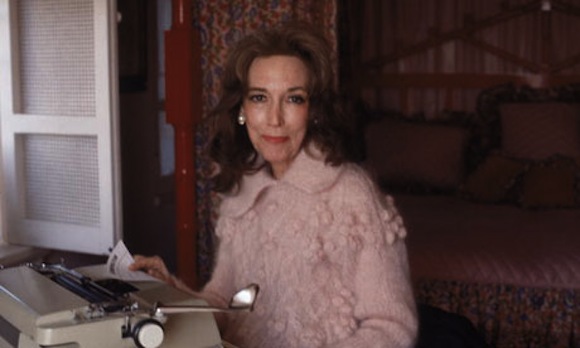
In the wake of her death, Tracie Egan Morrissey discusses Cosmopolitan founder Helen Gurley Brown’s feminism. [Jezebel]

Jodie Foster weighs in on the Kristen Stewart cheating scandal. [The Daily Beast]

Rachel Hills gets in touch with her vagina. [Daily Life]

When “Embarrassing Nightclub Photos” means “Embarrassing Slutty Nightclub Photos of Slutty Sluts”. [Jezebel]

In which a woman who was born from coercive sex and into the cycle of abuse and poverty contemplates being aborted objectively. Harrowing yet eye opening stuff. I wish we could all talk about abortion as openly as this. [MamaMia, via Role/Reboot]

Weird story of the week: the Vatican’s newspaper appeals to Mattel to sell the Bald Barbie in stores. You know the world is coming to an end when the Vatican is more progressive than Barbie! [The Guardian]

“The white male liberal gaze.” [Overland]

Yet another successful woman who conducts herself in a feminist manner we have to add to the list of successful women who don’t want to be thought of as conducting themselves in a feminist manner: Melissa Leo. [Jezebel]

Image via The Guardian.

Magazines: Men Have Issues.

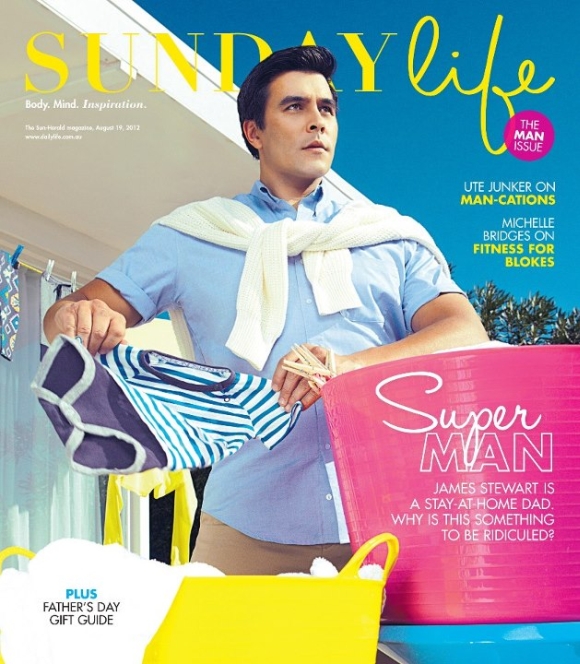
Last weekend’s edition of Sunday Life was dubbed “The Man Issue”, and it gives a forum to men to talk about the things that bother them: namely, stay-at-home fatherhood being seen as feminine and “what women should know about men”, with one clearly more profound and less satirical than the other.

Packed to the Rafters’ James Stewart covers the magazine and talks about his new role as stay-at-home dad to baby Scout, with partner and former Rafters star, Jessica Marais. He admirably says:

“I don’t want to be an absent father…  And now my partner—who has a much larger profile than me, can make five times as much money as me—is hot right now… So it was kind of easy for me to go, ‘Just stop what you’re doing, hang your boots up for a little bit, support her 100 per cent and learn to be a father.’ It was a no-brainer, you know?”

Swoon.

The article touts Stewart as “poster boy for modern-day ‘manism’” [quotations mine], a movement which “liberates” men “from their traditional masculine roles”. Um, I think we already have a movement that works to break the shackles of gender normativity and promote equality between the sexes and it’s called feminism.

In a rare moment of sense from Ita Buttrose, she tells the magazine that “We used to say to women, ‘Make your choice, don’t apologise.’ Well, I think those messages need to be given to men.”

Here, here.

But where The Age insert undoes all its equality talk is in an article that precedes the cover story, about the facts women need to know about men, by former Zoo Weekly editor Paul Merrill. He tells Sunday Life’s primarily female readership that “as hunter-gatherers, housework is not a priority” (how about you hunter-gather some washing?!), and that men prefer famous people who actually do stuff. You know, ’cause women aren’t capable of admiring anyone except the Kardashians. And speaking of that über-preened family, women must remember that “looks aren’t everything”:

“To a woman, the most important thing in any situation is how something looks—her hair, make-up, shoes and house… Who cares!… It’s not being slobby, it’s being less shallow.”

What do I think Merrill needs to know about women? We’d prefer to share the burden of housekeeping, we don’t only read if it’s a gossip mag or 50 Shades of Grey (which he infers in not so many words in the piece), and we don’t like to be called shallow for being well-presented. And where would Merrill be without the latter? Certainly not the editor of a lad’s mag.

Elsewhere: [MamaMia] Hot Pants & Slut-Shaming. Would You Like a Cardi With That?

Image via Sunday Life Facebook page.

On the (Rest of the) Net.

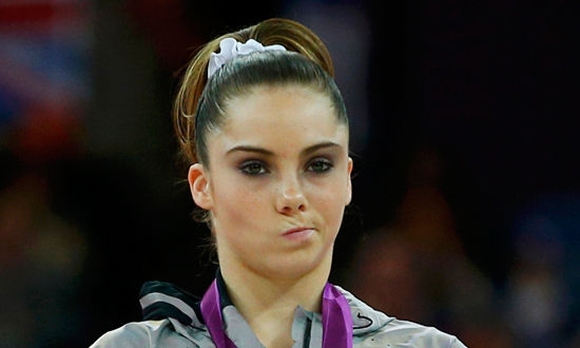
A diva is a female version of a gymnast, apparently. [Jezebel]

Is a man opening a door for a woman a sexist act? [MamaMia]

Gah! A young, attractive woman and her fanatical pro-life agenda. [Jezebel]

How to be an Olympic White Female. [Jezebel, via Feministing]

Do the Olympics offer an alternative to the female body we see regularly in the media, or is it just another opportunity to body-snark? [Time]

Rejoice! Jennifer Aniston isn’t a pathetic single woman anymore! [The Guardian]

Ricki-Lee is the latest “B-grade artist” to fetishise mental illness. [The Punch]

Stella Young writes about Peter Singers’ views on the killing—not aborting—of disabled babies—not foetuses. While he does raise some interesting points, I’ve written before that this kind of thinking trivialises abortion and the access to it we should have in this day and age. If a woman finds out she’s pregnant with a disabled foetus, she should have the support and means necessary to terminate if she feels that’s what she wants to do. I don’t think Singer would have these views if more women had access to safe, legal and unstigmatised abortion. Furthermore, I don’t think he’d have them if the lives of the disabled were valued more by society and they had more support. To say that parents have the right to kill their own disabled children after a set amount of time of attempting to care for them is to trivialise life itself: I’m all for a humane death over a painful life, but Young raises the point that babies don’t have the autonomy to make that choice. [ABC Ramp Up]

What the Spice Girls’ Olympic reunion means for girl power. [The Vine]

Image via The Daily.

Event: Bendigo Writers Festival.

The month of August is chock full of writers festivals (okay, two, but I’m going to a lot of sessions!), so much so that I’ve taken time off paid work to further my currently unpaid writing career.

Over the weekend I ventured to Bendigo for their writers festival, which boasted big names like Ita Buttrose. I decided to give her talk a miss as it coincided with another talk I wanted to go to about blogging and writing online which is more relevant to me, and frankly, some of the things Ita’s said recently have really rubbed me the wrong way. I think I like her better as portrayed by Asher Keddie than in real life!

While Megan Burke (my new idol) and ABC Open’s Jane Curtis were great speakers (and great bloggers), I felt the audience were all middle aged aspiring mummy bloggers and the content was relevant to them, who are interested in starting a blog, not me. Maybe three years ago, but not now.

The second talk I went to on Saturday was “Are We There Yet?”, featuring Indigenous writer Alexis Wright, astrophysicist turned lawyer turned writer Sulari Gentill, Muslim writer Hanifa Deen, and author Arnold Zable, and facilitated by Shannon Kerrigan, was promising in theory but failed to live up to the hype in practice. I thought all the writers were great and had valuable things to say about how writing contributes to social change but the format of the session was all wrong: I’m not a fan of each speaker telling a story about their take on the subject for a third or a quarter of the time and then it’s over. I much prefer pre-determined questions being posed to the panel and then opening them up for discussion. Suggestion for further panels: use social media to tally up the questions and thought threads attendees want to hear about and incorporate those into the talk, instead of stuffing them into a ten minute question and answer session at the end.

Speaking of, the last talk I went to on Sunday afternoon was about “His & Hers” writing, which had the potential to really delve into the notion that women write about shopping and sex and men write about serious things. When the facilitator, Sofia Ahlberg, asked if women can write a “great Australian novel” and insinuated that they can’t (not because that’s her personal view, I don’t think, but because our society just doesn’t allow for that with, perhaps, the exception of Kate Grenville), a man from the audience and his wife audibly retorted and rudely told Ahlberg to open the discussion up to questions from the audience.

What I got out of the session was an interest in 50 Shades of Grey that I didn’t have before, thanks to John Flaus’ comments that he didn’t think it was written by a woman due to its “clinical”, “outsider” perspective on sex. Either that, or an incredibly narcissistic woman. Interesting.

Also on Sunday was the “What Makes a Hero” session, with Janine Bourke, sports writer Gideon Haigh (sportspeople as heroes is one of my pet topics), Ned Kelly biographer Ian Jones and Hanifa Deen, who asked where minorities get their heroes from if they’re a primarily “conservative construct”, as Haigh asserted. Deen also talked about “cultural amnesia” which I found interesting as we so often put people on a pedestal after—and sometimes despite—committing indiscretions (Ned Kelly, Chopper Reid, and countless football players, to name some Australian “heroes”): “we remember and admire the things we want to”.

Finally, there was a horror panel featuring horror writers Brett McBean and Cameron Oliver, reviewer Lucy Sussex and president of the Australian Horror Writers Association, Geoff Brown. This was probably the best panel in terms of actually addressing the topic and opening the discussion up to questions and comments about “what scares us”. Interestingly, Bendigo is one of the most haunted cities in the world, with more ghosts per person than anywhere else! They talked about the canonical horror films of the late ’70s and ’80s like Carrie, The Shining and The Exorcist and how filmmakers are “scared to scare people” now and that the current zombie, vampire and werewolf trend reflects our xenophobia and fear of the “other”; more so, that they will “turn us into them”. If that doesn’t some up what we’re scared of, I don’t know what does.

Related: Paper Giants: The Birth of Cleo Review.

In Defence of Mia Freedman.

Elsewhere: [MamaMia] Was “Girls on Show” Slut-Shaming?

Movies: Gazing at Magic Mike.

A version of this article originally appeared at TheVine.

“You know the apocalypse is nigh when men want to see a movie about a talking teddy bear and women want to see a movie about male strippers,” read a friends’ recent Facebook status.

While the world may be ending in December, and the integrity of Ted is questionable at best, I think it’s high time hetero women (and gay men to a lesser extent) turn subjugation on its head and become the voyeurs, and they’re using Magic Mike as a tool to do so.

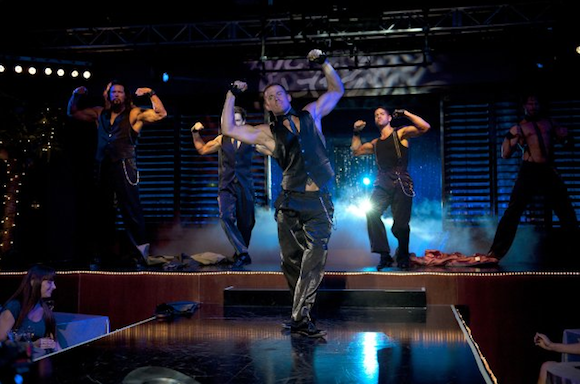
Never before in mainstream Hollywood film can I recall a movie that so blatantly puts the male body on show for the unashamed consumption by straight women, primarily. Tom Cruise may have been shirtless for the majority of Rock of Ages, and True Blood has as much male eye candy as it does female, but Magic Mike is the first of its kind to feature conventionally attractive and perennially half-naked male actors as strippers: Hollywood’s last taboo, perhaps.

The male form has been sexualised for the last few decades, notably in underwear commercials. Remember Mark Wahlberg’s Calvin Klein’s and David Beckham’s distracting Armani ads? Or how about a shirtless Ryan Gosling in Crazy, Stupid Love, which arguably spawned the current obsession with him that has reached fever pitch? Porn star James Deen is experiencing a cavalcade of female appreciation not normally seen with adult actors. Even pay TV channel LifeStyle You is cashing in on the male body objectification trend, using in their advertisements shirtless men carrying out everyday household duties like ironing to reel the women in. (Because women are who we talk about when we talk about “lifestyle”.)

In the male stripper movie vein, there was that late ’90s UK effort, The Full Monty, which featured a bunch of average Joes getting their kit off at the encouragement of women, demonstrating that men don’t have to look like Channing Tatum, Joe Manganiello or Matthew McConaughey for women to find them sexy and to want to see them naked. But there is a certain allure to rippling abs, strong thighs and loaded guns that the comedic stripteases of unemployed steel workers just doesn’t have…

Dodai Stewart writes for Jezebel of the hollering and hooting in the cinema when she went to get her Channing fix, while I noticed more of a silent sexual tension in the air. There was nary a squeal of approval throughout, which lent a certain palpability that watching a sex scene with your parents or a potential love interest might elicit. Tatum’s dance moves succeeded in getting me and—if all the mute leg-crossing, uncrossing and squirming in seats was any indication—all the other red-blooded, presumably straight women in the audience hot under the collar. As Stewart continues, “Could it be that women are so used to seeing the female body sexualised on screen—from the point of view of the male gaze—that we don’t even know how to react to the sexualised male body?”

It seems that the characters who are virgins to the Tampa male stripping scene don’t know how to react either, with Alex Pettyfer’s portrayal of Adam consisting of equal parts disgust at Mike’s occupation and awe at the perks of his lifestyle. Adam’s sister, Brooke (played by Cody Horn), is closed in on by the camera when she first sees Mike dance and a range of emotions cross her face: judgement, arousal, amazement, discomfort at the role reversal male strippers provide. Discomfort and concern are also expressed by the bank clerk when Mike attempts to get a loan, showing up with a down payment in wads of ones and fives. Presumably the teller recognises Mike from the male revue, and offers to sign him up to a program for “distressed” clients, inferring that because he gets his kit off for money, he must be either strapped for cash or lacking self-esteem. Hmm, where have we heard this before? Usually directed at women who trade on their looks and are deemed “at risk”, “battered” and, yes, “distressed” as a result. Mike even has to resort to the ol’ spectacles trope to be taken seriously as he enters the bank, an action most often utilised by hot chicks who want to appear smarter. Speaking of hot chicks, in another play on man as sexual object, Mike’s lover, Joanna (Olivia Munn), tells him she doesn’t want to talk about his feelings: “just look pretty”.

With all the double standards that come with being a male stripper in Magic Mike—female adoration, money, drugs—Caroline Heldman at Sociological Images wonders why this kind of “stripping as fantasy life” attitude would never be seen in media about female stripping: because Magic Mike still panders greatly to male sexuality.

“Make no bones about it, this movie is all about reinforcing the notion that men are in control and men’s sexuality matters more…” Heldman writes. “… [M]any (but not all) of the simulated sex acts the dancers perform in their interactions with female audience members service the male stripper’s pleasure, not hers. Dancers shove women’s faces into their crotch to simulate fellatio, hump women’s faces, perform faux sex from behind without a nod to clitoral stimulation, etc. As a culture, we have deprioritised female sexual pleasure…”

Indeed, there is no full frontal male nudity in the film (does a stunt penis in an enlarging device count?!), however Munn and the actress who plays stripper Ken’s (Matt Bomer) wife have their breasts on show, as well as several other female nude scenes. When it comes to the penis, it would seem that it is the last taboo, not male stripping.

That Tatum’s penis ever so briefly flashed onscreen during a bedroom scene means there’s hope for a full-frontal peen shot yet, with Magic Mike 2 on the horizon. You’ll notice that most of the male stars of the films’ careers have thrived on the comidification of their bodies. McConaughey is more recognisable with his shirt off than on and Manganiello has been quoted as saying he “could care less” about being typecast as a beefcake. I find it kind of refreshing that men are wanting to show off their bodies in a way that has been traditionally reserved for women.

For those who cry “hypocrite” at the women who’re now wolf whistling at the screen, as if all women find the sexualisation of their bodies oppressive, I direct you to one of the core tenents of feminism: choice. If women are deemed autonomous enough to make their own decisions about their bodies and whether they want to use them as a commodity, it stands to reason that men are, too. It might be a hard concept to grasp, but after centuries of the ingrained objectification of women, perhaps men want to try their hand at being desired as opposed to desiring.

While the mainstream media still has a ways to go towards female sexual liberation and the refocusing of the gaze onto men and away from women in a way that benefits all parties and exploits none, Magic Mike is a step in the right direction.

Elsewhere: [TheVine] The Rise of the Hunk.

[Musings of an Inappropriate Woman] On #DailyWife & Writing for the “Women’s Pages”.

[Jezebel] Magic Mike, Junk in the Face & the Female Gaze.

[Sociological Images] Magic Mike: Old Sexism in a New Package.

[The Frisky] 12 Famous Women Who’ve Used Their Sexuality (to Get Ahead).

[Salon] Male Strippers: Please, Just Leave it On.

Image via IMDb.

On the (Rest of the) Net.


Check out my second article for TheVine, about the male body objectification trend. More to come here next week.

Still with the sexualisation of male bodies, who knew there was so much to unpack when it comes to Magic Mike? Can I get a redo on the above article? [The Atlantic Wire]

And lastly, nudity in rom-coms. [Daily Life]

Why is a reality TV star worth a reported $3.5 million seeking funding on Indiegogo to put on a fashion show at New York Fashion Week? On the one hand, use your own fucking money. On the other, it is “the first-ever fan-supported fashion show”. Social experiment or effortless money-grab? [Jezebel]

Mitt Romney is a mansplainer! A Mittsplainer, if you will. [GQ]

Why Fifty Shades of Grey is a badly-written, misogynistic piece of shit that encourages women to stay in an emotionally abusive relationship. [Good Reads]

Cosmo’s international editions: feminist or not? [NYTimes]

Channel 9 aired an expose on girls dressing skimpily for nights out on the town. Ita Buttrose said dressing this way makes people assume you’re a “tart”, and men don’t take tarts home to mummy. Charlotte Dawson said girls need to be careful about “the consequences of dressing up like this could be”. Shitstorm ensues. [MamaMia]

Why girls don’t need to develop their self-esteem, they need to recognise that beauty is a tool of the patriarchy to beat women into submission. [The Nation]

Image via IMDb.

TV: Private Practice—The Organ Donation of a “Brainless” Baby is Murder?


Technically, yes.

A baby who doesn’t have a frontal lobe—like Amelia’s baby—will have no semblance of a life, but because it has a working brainstem, it can’t officially be declared brain-dead in order to harvest its organs. While technically the organ donation of a baby without a frontal lobe is murder, for Sam and Charlotte to be so outraged about “killing a baby” to save the lives of several other babies is lacking in compassion.

This is juxtaposed with Pete’s display of utter empathy for a patient of his whom he assisted in suicide and received a murder charge for his trouble. The shades between right and wrong might be slightly grey in these two scenarios, but when death is a better option than a life not worth living, organ donation (a procedure which I registered for this year) and euthanasia, respectively, couldn’t be more right.

I really like the way Private Practice continues to show the abovementioned light and shade in the medical issues they tackle: reproductive rights, sexuality and assault, death. But I still stand by the notion that you can’t be a doctor and not understand when life begins and that after it has, that it’s not always worth it.

Related: Private Practice: Pro-Choice?

Private Practice: “Rape is Rape”.

Top 11 TV Moments of 2011.

Grey’s Anatomy Final Asks “When Does Life Begin?”

Image source unknown.

In Defence of Lara Bingle.

Not since Nicole Kidman and Delta Goodrem have we seen an Aussie woman polarise the population like Lara Bingle.

Traditionally, we don’t respond well to reality television and its stars who get too big for their britches: remember the Heidi Montag–10 plastic surgeries in one day hullabaloo? Or the whole Kardashian family, especially after Kim’s 72-day marriage and subsequent divorce proceedings. While there are some reality stars who’ve come out on top of the collective consciousness (Nicole Richie, the MasterChef contestants, and mostly those who participate in shows based on talent and skill and from which a winner is chosen based on these things), most are destined for a life of C-list celebrity and/or the descent of their career. Being Lara Bingle so far would indicate the latter.

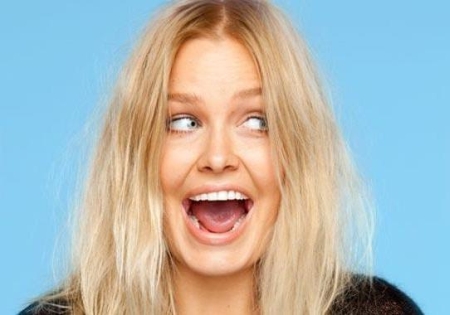
Almost one million tuned in to the premiere episode, in which the nude-pics-on-the-balcony violation was dealt with, but since then, the show has failed to return to these numbers, with last night’s final coming in last place amongst the three big networks. My party line when it came to watching the show was that “it’s for research”, but despite the inanity that was Being Lara Bingle, I actually like—and have some sympathy for—the show’s namesake for this reason: what has Bingle done to incite such hatred?

On a train ride home on a Tuesday night which meant I’d miss the show (that’s what the Ten video player is for), I raised this issue with friends. One shriveled his face in disgust while the other proclaimed that she didn’t like the way Bingle dragged Michael Clarke’s name through the mud. Upon further inspection, I couldn’t find any evidence to support this assertion; in fact, everything I’ve read and seen on the show indicates that Bingle and Clarke split amicably, and Bingle still speaks of him fondly.

So what did my friend mean by saying that Bingle tarnished Clarke’s image? I dare say what everyone else means when they talk smack about Bingle: that she’s “not good enough” for Clarke. That she’s an untalented famewhore who trades on her looks for money. How this is any different from the career of someone like Gisele Bündchen or Heidi Klum, who also has several of her own reality shows, I don’t know.

What I do know, however, is that the bullying of Bingle is about misogyny. We don’t like her because she’s a young, attractive woman who uses her looks and body to get ahead and is unapologetic about it. What troubles me is that we dedicate countless column inches, a trend which I’m no doubt contributing to with this article, to berating or defending Bingle, whilst male celebs like Ashton Kutcher, his Two & a Half Men predecessor Charlie Sheen, and Bingle’s former lover Brendan Fevola, get away with murder… or what could be seen as attempted murder, in the multiple intimate partner assault allegations against Sheen. (Just look at the Kristen Stewart-cheating scandal. Sure, she’s just as much to blame as her married-with-children car-sex buddy, but we seem to be heaping the shame onto only her.)

Maybe it’s because before all the sex, drugs and debauchery surrounding Sheen, he was once a good actor. Maybe it’s despite—or perhaps because of—Kutcher’s cheating, he’s a very successful businessman as well as actor. Maybe, according to Roger Franklin writing in Good Weekend, Fevola is just a “lovable larrikin” gone down the wrong path. But how are histories riddle with drugs, violence, infidelity, gambling problems, abuses of power and lewd behavior, amongst other things, spread across these three men better—or at least more acceptable—than Bingle’s relatively mundane existence?

Like Kim Kardashian, who rose to notoriety via a sex scandal and not much else, Bingle is apparently trading on her status as a “celebrity” or “personality” as opposed to hard work and talent. The quintessential tall poppy, you might say.

Funnily enough, for those who tuned out after the first few episodes and those who never tuned in at all, they missed out on seeing the “real” Lara Bingle—as the reality effort was so often touted as attempting to show—as the series drew to a close. As friend and fashion designer Peter Morrissey told Bingle last night, “you need to show people the real you,” not the perception of Lara the media presents that they initially expect to meet.

Obviously, no reality show is ever going to project a true image of someone. I dare say we can never truly project a true image of ourselves to even our nearest and dearest, as no one really knows us better and can understand our idiosyncrasies and contradictions better than ourselves. But Lara Bingle isn’t exactly the worst—or most un-real—person to grace our television screens. She may be pretty boring in that girl-next-door way, but at least hasn’t hurt anyone, which is more than I can say for some others.

Related: Shaming Lara Bingle. 

Why Are Famous Men Forgiven for Their Wrongdoings, While Women Are Vilified for Much Less? 

Guilty Until Proven Innocent: Charlie Sheen’s Witness. 

Was Kristen Stewart’s Public Apology Really Necessary? 

Lara Bingle in Who: A Prized Tall Poppy Who Polarises.

Elsewhere: [MamaMia] Why Does Nicole Kidman Inspire Such Vitriol? Seriously, Why? 

[MamaMia] Enough With the Delta Hate. Be Better Than That. 

[TheVine] No One Watched the Finale of Being Lara Bingle.

[TheVine] All Dogs go to Seven. 

Image via PedestrianTV.