On the (Rest of the) Net.


Spice World as metatext madness! [Thought Catalog]

Are we living in the post-ideas age? [New York Times]

“The Opposite of ‘Man’ is ‘Boy’, Not ‘Woman’” by Hugo Schwyzer:

“… Men who long for a vanished world of all-male preserves are making a fundamental mistake about masculinity. They think that the opposite of ‘man’ is ‘woman’ and that in order to prove oneself the former they must do (perform) things that no woman can. But it makes good sense to suggest that the better antonym of ‘man’ is ‘boy.’ To ‘perform masculinity’ isn’t about doing what women don’t. It’s about doing what boys lack the will or the maturity to do.

“If we really are in a ‘man crisis’ in America, I suspect it’s rooted as much as anything else in this fundamentally mistaken belief that manhood needs to be about rejecting anything that smacks of the feminine.” [The Good Men Project, via Jezebel]

How they got Osama bin Laden. [The New Yorker]

“Talking to an Abortion Clinic Protester.” [Jezebel]

The “proper etiquette” for drunk Jersey Shore sluts. [Jezebel]

Cutting off your animal cruelty to spite your feminism. Feminaust’s Ms Elouise on PETA’s latest anti-animal cruelty porn site:

“Is using Pamela Anderson’s body as a sex object and comparing it with a piece of meat an acceptable way of drawing attention to the plight of animals in the meat industry?

“PETA’s use of women’s bodies as a means to furthering their animal rights activism undermines their claims to ‘we all have the same parts’ because they’re saying the exact opposite, they’re saying:

“‘LOOK BOOBIES! Now that we have your attention, meat is bad.’”

While this is a great article, I don’t agree with its sentiments 100%. Yes, some of PETA’s campaigns have been unnecessarily focused on the female form, illustrating no real point, but I do think the “I’d rather go naked than wear fur” and the Pamela Anderson campaigns use it in a positive way. Both for women and animals. What do you think?

“Do You Prefer ‘Fashion Victim’ or ‘Ensembly Challenged’?” Squee! All of Cher Horowitz’s outfits in less than 60 seconds! [Worn Fashion Journal]

Questions for “perfect-looking women”, if there is such a thing. [Thought Catalog]

A letter to Gloria Steinem. [Ms. Magazine]

Rachel Rabbit White on “femme-guilt, beauty-privilege and the phenomenon of girls slut-shaming other girls.”

Everything Sarah Hepola learned about New York City. [The Morning News]

The victim-blaming of Lara Logan for deigning to be hot, bare cleavage and get raped. [Broad Street Review]

“Feminism, Colonialism and Islamophobia” at Qantara.

Image via Fan Pop.

Event: Melbourne Writers’ Festival—Never, Ever, Again: Why Australian Abortion Law Needs Reform by Caroline de Costa Book Launch.

Last year’s Melbourne Writers’ Festival was pretty lackluster, and I didn’t attend any events.

This year, however, is jammed packed with hard-hitting seminars, news-related talks and all-day workshops. There are more events I’m interested in than there is money in my pocket.

But to kick things off was a free, no-bookings-necessary book launch at ACMI’s The Cube on Friday afternoon for Caroline de Costa’s second edition of Never, Ever, Again: Why Australian Abortion Law Needs Reform (review to come in the next few weeks).

Honestly, I didn’t think I’d heard of de Costa before, and just saw the word “abortion” and knew I had to attend!

However, when the author began speaking about the abortion drug RU486, I remembered reading her work a few weeks ago on MamaMia, and featuring said article in “On the (Rest of the) Net”. It is an article I recommend checking out wholeheartedly.

In this article, De Costa asserts that we need to increase sex education and access to contraceptives in order to bring Australia’s high abortion rate down.

In de Costa’s address at the event, she said no woman enjoys having an abortion and that there’s “no such thing” as “pro-abortion”, an assertion that I don’t 100% agree with, but I do think it is a damaging label pro-lifers sometimes paint pro-choicers with.

Ultimately, de Costa says we “should be concerned about the health and safety of every pregnant woman” as opposed to the biologically dependent mass of “unwanted tissue” in her body.

The other speakers at the event—the MC whose name I didn’t catch, long-time pro-choicer Dr. Jo Wainer, former Minister for Women’s Affairs from 2007 to 2010, Maxine Morand, and Dr. Chris Bayly from the Royal Women’s Hospital—reiterated de Costa’s sentiments in her book, that the “hidden business that is women’s business” of abortion needs to be destigmatised and legalised in order to increase access to safe pregnancy terminations.

Finally, the revised edition of the book includes an extra chapter on the Queensland trial of Tegan Leach and Sergie Brennan, who were charged with procuring an illegal abortion in 2009 when they purchased the drug RU486.

Dr. Wainer noted that when Leach was on the stand being questioned as to why she felt the need to abort her baby, it was the “21st century equivalent of putting women in the stocks”. Or burning at the stake for her “crimes”, if you will.

It’s something that, as the book’s title suggests, should happen never, ever, again.

That’s why abortion law in Australia needs to be reformed.

Related: Grey’s Anatomy Final Asks “When Does Life Begin?”

Private Practice: Pro-Choice?

Elsewhere: [MamaMia] RU486, Sex Education & Contraception. That’s All We Need.

[MamaMia] The Couple Facing Jail Because They Tried to “Procure an Abortion”. Hello, Queensland? It’s 2010.

[Televisual] The Changing Economics of the TV Abortion.

Image via Melbourne Writers’ Festival.

On the (Rest of the) Net.


“The Case for Dry Humping: Why Being Prude is a Feminist Statement.” [HuffPo]

Alone time is my siren call. Here, Jezebel’s Social Minefield tells you how to get more “me time” without offended those who want to have “we time” with you.

One woman goes mirror-free for a year. [Jezebel]

Lady Gaga’s run out of people to plagiarise, so she’s turned to herself for inspiration in her latest video for “Yoü & I”. [Fashionista]

Nipple slips from Khloe Kardashian, Nicki Minaj and Kelly Rowland in quick succession: shock, horror! [The Washington Post] (SFW)

Camilla Peffer on Beyonce as the anti-feminist. [Girls Are Made From Pepsi]

The gender politics of Justin Bieber. [FBomb]

Is there a need for women to have their periods?:

“… I do want to raise the question that while we do the work of destigmatising menstruation and teach young girls to be proud and excited about their menarche don’t we also have a responsibility to question its necessity? We tell women they don’t have to have sex to have children, that breast cancer can be beaten, that they can have their tubes tied and then re-connected and their faces lifted and de-wrinkled. We live in a modern world with modern solutions, isn’t it time we started seriously thinking and talking about the need to bleed?” [Feminaust]

Porn star and new mum displays picture of her breastfeeding her newborn daughter in an exhibition challenging the Madonna/whore dichotomy of motherhood, controversy ensues:

“The idea that there is something inherently prurient about a porn star breast-feeding plays right into that classic either-or thinking: Her breasts are erotic in one venue, so they can’t be wholesome in another. It’s a wonder anyone lets her breast-feed at all! On the one hand, it’s surprising to see this attitude coming from a pornographer; on… [yet an]other hand, it’s perfectly appropriate given the way motherhood is fetishised in porn.

“…We don’t like to think of moms as sexual beings—except for in the taboo-busting world of porn (paging Dr. Freud). It’s fitting for a porn star mama, the rare industry ‘MILF’ who is actually a mom, to remind folks that, generally speaking, one has to have sex in order to become a mom.” [Salon]

Anne Hathaway’s new effort, One Day, has a “bleak worldview of co-dependence where men need women to improve them, and women need to improve themselves to deserve men’s notice and achieve their purpose,” with The Film Stage dubbing it “the most toxic romance of the year”.

Also at The Film Stage, a breakdown of Katherine Heigl’s stereotype-reinforcing rom-coms, from the career-making Knocked Up, which she subsequently dissed for being sexist, to the just-as-sexist Killers and Life as We Know It.

Here’s an extended version of Erica Bartle’s debut piece for Sunday Life. While I don’t necessarily agree with her sentiments on faith most of the time, this is a great read. Better than the published piece, dare I say? [Girl with a Satchel]

Taylor Swift VS. feminism. [Autostraddle]

Is it “time for an abortion pride movement”?:

“… Women should not merely have the right to end unwanted pregnancies, they should have the right to be proud of having done so. Surely, there is enough suffering in this world already without adding infants with Tay-Sachs disease and Lesch-Nyhan syndrome to the mix. Women who step up to the ethical plate and have the strength to say, ‘This is the wrong time,’ or ‘This is the wrong fetus,’ should hold their heads high in the streets.” [Opposing Views]

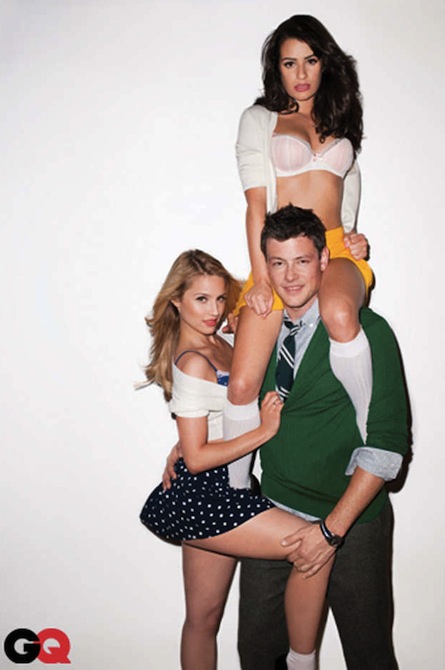
Oh, the hilarity of Photoshop on this Glee/Vogue/Fashion’s Night Out advertisement. [Styleite]

It’s not just women who get the short end of the stick when it comes to Disney films: “Sexism, Strength & Dominance—Masculinity in Disney Films.” [FBomb]

The awesomeness that is Adam Lambert. [Autostraddle]

One from the vault: Buffy’s Willow Rosenberg destroys the world when her lesbian love is killed, calling into question the show’s support of the LGBT community. [Salon]

A mother’s perspective on the dysfunctional Twilight-saga relationship between Edward and Bella. [Persephone Magazine]

The politics of the SlutWalk. [New York Times]

Five of The Simpsons’ best recipes, including 64 slices of American cheese and Vaseline toast! [Warming Glow]

Image via Chubby Wubby Girl, Styleite, Salon.

TV: Private Practice—Pro-Choice?


I’ve recently finished watching the latest series of Private Practice, the final of which aired here just over a month ago. The season dealt with the brutal rape of Dr. Charlotte King, about which you can read here and here, as well as the abortion debate that is raging across the world, but particularly in the U.S., with the rise of the über-conservative Tea Party, and 2012 presidential hopeful Michele Bachmann.

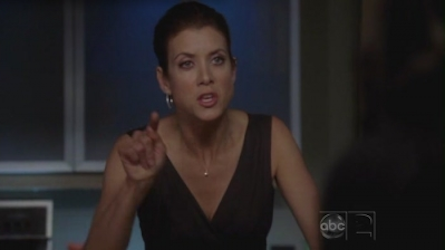
The second last episode of the season was said “abortion episode”. A woman named Patty came to see Dr. Addison Montgomery with pain, cramping and nausea after getting an abortion a month or two prior. When Addison does an ultrasound, she regrettably informs her patient that she’s still pregnant: the abortion didn’t take.

Patty’s foetus is now at 19 weeks, which would make the pregnancy in its second trimester, at which time an abortion is dubbed a “partial-birth abortion” by pro-lifers, as Dr. Naomi Bennett points out. Addison chides her for using political terminology, and that an abortion at 19 weeks is still perfectly legal, reiterating Patty’s right to choose, especially since she already made her decision the first time around several weeks ago.

Television and the media have a responsibility to present both sides of the story on such a contentious issue, even if they don’t live up to this most of the time. That’s why, when a show like Private Practice represents the abortion debate in such a refreshingly honest manner, it can be seen as revolutionary. (And it’s not the first time, either.) Not as revolutionary as Maude’s title character choosing to abort her unwanted pregnancy back in 1972, before the groundbreaking Roe VS. Wade decision, as this article points out, but still.

Naomi is a character I’ve never been a big fan of. She overreacts to everything (granted, overreaction may be warranted when your 16-year-old daughter gets pregnant and your best friend starts dating your ex-husband) and has a self-righteous, holier-than-thou attitude to most things, and her interference with Patty is no exception.

She uses her granddaughter Olivia to potentially guilt Patty into going ahead with her pregnancy, completely ignoring that Patty is single, after her deadbeat boyfriend took off when she told him she was pregnant, works two jobs, is poor, and is on her feet eight hours a day.

I had a real problem with this. Doctors should not push their personal beliefs on patients. If I were to fall pregnant tomorrow, I would be hitting up my nearest abortion clinic in a second, expecting to be given the care I’ve chosen, not to be lectured or threatened. As Addison says:

“… Even after you make the most difficult and personal decision that there is, it’s still not safe. Because you have some fanatic who claims to value life who can walk into an abortion clinic and blow it up.”

She continues:

“Why can’t Patty get what she needs, a safe and legal abortion without judgement?  Why does she have to go through this?  Why do I have to go through this?  I hate what I am about to do but I support Patty’s right to choose.  It is not enough to just have an opinion because in a nation of over 300 million people there are only 1700 abortion providers.  And I am one of them.”

The statistics are grim.

But, while trying to express the “pro-life” argument as well, Private Practice manages to remain pro-choice, which is no mean feat in the wake of reproductive rights being ripped from women across the world, and another PP, Planned Parenthood, being defunded en masse.

Related: Grey’s Anatomy Final Asks “When Does Life Begin?”

Cristina Yang as Feminist.

Elsewhere: [New York Magazine] Emily Nussbaum on the Rape Episode of Private Practice.

[E! Online] The Morning After: Let’s Talk About Private Practice.

[Feminist in the City] Private Practice Tackles Abortion.

[Televisual] The Changing Economics of the TV Abortion.

[Fuck Yeah Choice] Just Keep Swimming: Abortion on Private Practice’s “God Bless the Child”.

[Dakota Women] And the Abortion Portrayal Award Goes to… Private Practice?

Images via Kate Walsh Fan.

On the (Rest of the) Net.


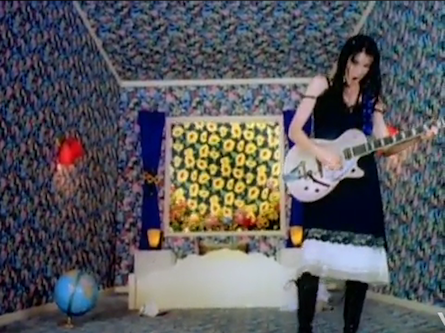
In praise of Meredith Brooks’ “Bitch” music video fashion. Takes me right back to grade six… [XOJane]

Rachel Hills laments the lustre of the It Girl. [Musings of an Inappropriate Woman]

Should recreational drugs be decriminalised? [MamaMia]

Consent, ignorance and “The Unintentional Rapist”. [Persephone Magazine]

Charlie Fine: boy wonder. I hope my future 11-year-old is a switched on as this kid. [MamaMia]

“Your pussy isn’t pretty enough” and other vulva-shaming myths. [Rachel Rabbit White]

The perils of being a black woman dating. [Jezebel]

Feminism is NOT a dirty word, Beyonce. [Jezebel]

The feminine girl geek mystique. [Persephone Magazine]

New show The Playboy Club as feminist text? [Jezebel, via NPR]

“When The Rapist is a She.” [Salon]

“Lest we forget” about asylum seekers? [MamaMia]

Muslim Americans: they’re just like other Americans! [Salon]

Mitt Romney’s abortion history. [Salon]

On Generation X nostalgia. [The New York Times]

Breastfeeding: a feminist issue. [Persephone Magazine]

In defence of Rihanna’s “Man Down” video. [Persephone Magazine]

“What Happened to Obama’s Passion?” [The New York Times]

Does “sport get way too much attention in Australia to the detriment of other national heroes?” [BBC News]

Clark Gable’s old Hollywood “Scandal that Wasn’t”:

“But the studio didn’t quite have a handle on his [Gable’s] image, casting him as an unrepentant villain and a laundryman. This was akin to casting Channing Tatum as a bad guy or smart person, when everyone knows he should only be taking off his shirt and/or doing dance moves, preferably while in the rain. Even cast in the wrong roles, Gable was remarkable. MGM’s head of publicity thus decided to further refine Gable’s image, capitalizing on his rural past and six-foot frame to create Clark Gable, The Lumberjack in Evening Clothes.” [The Hairpin]

How to be a dead body on TV. [The Wall Street Journal]

Fashion’s next big thing: a 10-year-old French girl. [Jezebel]

Image via XOJane.

Event: The Blogging Economy.

Last Tuesday night I attended the Meanland event, The Blogging Economy, at the Wheeler Centre.

The panel was hosted by Zora Sanders, deputy editor of literary journal Meanjin, and consisted of ThreeThousand editor Penny Modra, journalist for New Matilda and Crikey, among others, Ben Eltham, and Jacinda Woodhead, associate editor of Overland, who is working on a PhD in the politics of abortion. Count me in for that one when/if it gets published!

I was expecting a bit more content on how to make money from your own blog, in terms of advertising, but I was pleasantly surprised with the advice and opinions Modra and Woodhead, especially, had to give on writing for other blogs for money.

Modra said she insists on paying for contributions to her Melbourne city guide website, even if it’s just a small amount (around $25 for a 100 word review/preview), as that’s all she has to work with as editor of ThreeThousand.

But such a small amount of money for such a small amount of words doesn’t mean you can slack off: Modra’s had freelancers submit previews for gigs, in which they didn’t even Google the address of the venue to make sure it was correct! She muses that “words should cost more” to counteract this but, by the same token, “everything you do has to be good… I just want the writing to be good!” How else do you expect to make it in the freelance/blogging economy?

Woodhead brought up The Huffington Post, soon to launch in Australia, which sold to AOL for $315 million, and who doesn’t pay their contributors. She urged Australian freelancers and bloggers not to write for them, because if they can afford to be sold for mega millions, they can afford to pay their contributors. Fair’s fair.

Some of her other points, though, I didn’t agree with. I’ve always been someone to follow my dreams and find a way to “make it work”, as Project Runway’s Tim Gunn would say. Woodhead believes, however, that “just because you want to do something, doesn’t mean there’s an economic system to support it.” This didn’t go down too well with the audience, and one woman asked Woodhead to clarify her statement in the Q&A portion of the event.

She also asserted that the blogosphere is “evolving” into a “discussion”; it’s not like traditional print in that you pay the writer to actively inject their views and opinions into the passive audiences’ brains (if you were going with the high school media studies model of the hypodermic needle theory of consumption). At the Overland blog, they don’t—because they can’t afford to—pay their bloggers, but Woodhead wonders, if you pay bloggers, should you pay commenters for their contribution?

My money’s on no. Most of the comments I get here on The Scarlett Woman do further the discussion, but this isn’t true of a lot of other blogs. Also, I think the more successful the blog/blogger, the more it/they attract the psychos! Especially when it comes to the more controversial topics.

Eltham spoke about a recent study that showed that artists in Australia—including writers—earned less than $10,000 for their work. It’s a bleak outlook, indeed, but I refuse to be disheartened! It just means you might have to supplement your artistic income with a less-artistic day job. Or marry a rich sugar daddy!

But, seriously, the unpaid blogosphere is about “citizens engaging in democratic discussion” that doesn’t always happen in paid writing. For every Gala Darling, there are 10,000 (probably more!) languishing bloggers going nowhere. And that’s fine; maybe that’s the way they want it. Hobby blogging!

We didn’t get into writing for the money. If that were true, we’d be in the business of hedge fund managing or some other über-rich-sounding Americanised profession. We got into it for the love of the craft; for getting our voice out there and, for some, making a difference.

I refuse to hop on Woodhead’s bleak bandwagon, and subscribe more to Modra’s sunny outlook: if your work is good, recognition for said work will come.

Related: The Evolution of the Bookshop at the Wheeler Centre.

“Who the Bloody Hell Are We? The Sentimental Bloke at the Wheeler Centre.

Is There Really a Beauty Myth?

Elsewhere: [Meanjin] Homepage.

[The Thousands] Melbourne.

[Overland] Homepage.

[Girl with a Satchel] An Unpopular Culture Niche (+ HuffPo of Oz).

TV: Grey’s Anatomy Final Asks “When Does Life Begin?”


Last night’s Grey’s final saw the seeming collapse of Derek and Meredith’s marriage over Meredith tampering with the Alzheimer’s clinical trial just as baby Zola came into their lives, pending the finalisation of the adoption papers.

Derek chided Meredith for swapping the active drug with the placebo for Richard’s wife, Adele, asking her how she couldn’t differentiate between right and wrong. Meredith replied that to her, things aren’t just right and wrong; there are shades of grey (hello, her last name’s Grey!), and that she’d do it all over again if it meant that Adele got better.

Derek should know this. Back in season five, when Derek introduces Meredith to his mother, she exclaimed that Meredith was good for him: he’s black and white and she’s grey.

But it didn’t stop him walking out on his wife for failing to see her reasoning, much like Owen failed to see Cristina’s reasoning, and kicked her out after she scheduled an abortion without his input.

Yes, that’s right: Cristina’s pregnant, much to her dismay.

She doesn’t want a baby. Never has, and never will. But Owen can’t understand this, and pushes her to see his side.

Now, this is where it starts to get messy. I’m not ashamed to say I’m staunchly pro-choice, so much so that I take the line of reasoning that if in doubt, abort. Especially if the woman in question is young, a victim of rape or incest, or can’t afford to have a baby. To me, life begins when the foetus is out of the womb and has taken its first breath. But I agree with Owen in that Cristina should have allowed him to have a say in the matter of abortion. But I also think that if Owen married Cristina knowing she didn’t want children but thinking he could persuade her anyway, he’s an idiot.

Cristina echoes this notion somewhat when she informs her husband she’s pregnant. Owen is overjoyed; Cristina has a migraine.

She tells him flat out that she doesn’t want a baby, and he responds with, “Well, you have one.”

“Are you getting all lifey on me?!” she remarks in disbelief, while he proceeds to ask her how far along she is, and if the foetus has feet and hands. How dare he tell her when life begins, she reasons.

While the storyline is clearly personal, not medical, it seems that Owen leans towards pro-life, though that could just be because the foetus in question contains his DNA. I don’t think doctors should push their personal opinions onto a pregnant woman who is coming to terms with the “unwanted tissue” inside her. I would go as far to say that I don’t think doctors with pro-life beliefs should be practicing medicine.

Still, Cristina is absolutely right when she says she’s not “compromising” on a baby: “You don’t have half a baby!… You don’t ‘give a little’ on a baby.”

While it’s perhaps easier for the father to bow out on raising their biological child, mothers usually don’t have that (ad)option. Cristina just plain and simply doesn’t. Want. A. Baby. But if she has it, she knows she’ll love it. (That’s the risk women run when they give their children up for adoption.) Owen shouldn’t have put her in the position to do something she doesn’t want to do (“It’s not like pizza or Thai.”), thinking she will “come around” later.

While Derek and Meredith deal with the fall out of Meredith’s “wrong” decision, how will Owen deal with Cristina’s decision? Was it “right” or “wrong”? And how will Grey’s Anatomy continue to discuss the “when does life begin?” question?

Related: The Underlying Message in Grey’s Anatomy‘s “Superfreak” Episode.

Elsewhere: [The Feel of Free] Cristina Yang + You Can’t Compromise on a Baby.

[Marinagraphy] Resisting Motherhood in Grey’s Anatomy.

Images via VideoBB.

Event: Cherchez la Femme Fatale, Take 2.

Geelong may seem like a world away for city slickers. At first, I was going to let its distance prevent me from attending the city’s latest exhibition, Femme Fatale: The Female Criminal, at the National Wool Museum. But if you take some friends and a good book (though not both at the same time. Take it from me; you’ll be stuck on the same page for the duration of the trip!), the hour’s train commute is worth it.

The exhibition juxtaposes “glamorous depictions of female felons in literature” with “the grim reality experienced by real women criminals”, such as Janet Wright, who was prosecuted for performing an abortion on a teenager who, after becoming ill, reported her, in 1928. Or “Sydney’s most beautiful prostitute”, Dulcie Markham, who probably got her fake name from Alfred Hitchcock’s Murder!, and whose real identity was never revealed. Or Louisa Collins, who poisoned—“poison was considered a particularly feminine murder weapon”—her husband in order to marry a boarder in their home just two months later, in 1887. She was sentenced to hang on 8th January, 1889, but the execution was botched by the hangman, “who was unable to open the trapdoor”. The execution was eventually carried out.

These were just some of the individuals profiled in the exhibition, which dealt with the supposed “empowered, cunning, unemotional woman who commits crime and uses her sexual allure to persuade men to sin on her behalf”—the quintessential “femme fatale”—and today’s understanding “that a wide range of factors may influence criminality including difficult childhood environments, mental illness and drug addiction.”

But back in the day, it was believed that “women lack moral fortitude and are easily tempted”, which allegedly stemmed from Sigmund Freud’s “penis envy” theory.

In 1893, Italian criminologist Cesare Lombroso wrote La Donna Delinquente (The Criminal Woman), in which he contended that masculine features, such as a “mannish jawline”, noticed in his photographical portraits of female criminals, were the “stigmata of degeneration”. Factors such as the menstrual cycle and the fables of Eve in the Garden of Eden, Medusa, and the Biblical Delilah, of Samson fame, were also taken into account when women “sinned”.

As was written in relation to the Salem witch trials in the early 1690s, “the fear of wicked women, whether real or imagined, can have horrific consequences.”

In Australia, though, in recent years “the number of female offenders incarcerated… has risen dramatically”. In the early days of female incarceration in Australia, psychological punishments such as head shaving were preferred to physical punishment. But at the State Reformatory for Women in Long Bay, Sydney, which opened in 1909, “the women were encouraged to reconnect with their ‘femininity’ and to adopt more refined, ‘ladylike’ behaviour.”

The abortion section, which I briefly mentioned above in relation to Janet Wright, was quite affecting but, as my friend Eddie pointed out, perhaps seemed out of place in the exhibition. Sure, abortion was (and still is in some parts of the country) illegal for a long time, but it kind of felt like a certain agenda was being pushed via its inclusion. Still, it is “one of the few crimes that always involves a woman”.

My favourite part of the exhibition, by far, was the genre of “femme fatale” paperbacks and films, which lured me to it in the first place. There was a highlight reel of some of the silver screen’s greatest female villains, such as Glenn Close in Fatal Attraction, next to this Italian proverb: “woman is rarely wicked, but when she is, she is worse than a man.” Another quote, from Raymond Chandler in Farewell My Lovely, which really resonated with me and my love for femme fatales, and which I posted last week: “I like smooth shiny girls, hardboiled and loaded with sin.”

But as much as the femme fatale is lauded, in her heyday the American Production Code stated that “ ‘the sympathy of the audience should never be thrown to the side of crime’. Censorship led to many implausible endings and a high level of mortality among femmes fatales.”

The exhibition finished up with crime memorabilia, which has reached fever pitch in recent years, with action figures, calendars, trading cards and true crime publications. (I, myself, have a penchant for true crime. Dominick Dunne, anyone?) This is a far cry from the assertion that “most people find it repellant that an individual can become a celebrity simply for being very good at being bad.” Reminds me of a certain Rihanna song

Overall, while each individual aspect of the exhibition was fascinating in its own right, Femme Fatale: The Female Criminal as a whole was a bit clunky and disjointed. I would still recommend seeing it, if “evil” women are your thing. But get in quick! It finishes next Monday.

Related: Cherchez la Femme (Fatale).

Raymond Chandler on the Femme Fatale.

The “Evil” Woman.

Another City, Not My Own by Dominick Dunne Review.

Minus Two & a Half Men.

Rihanna’s “S&M”: Is It Really So Much Worse Than Her Other Stuff?

Image via Art Geelong.

On the (Rest of the) Net.


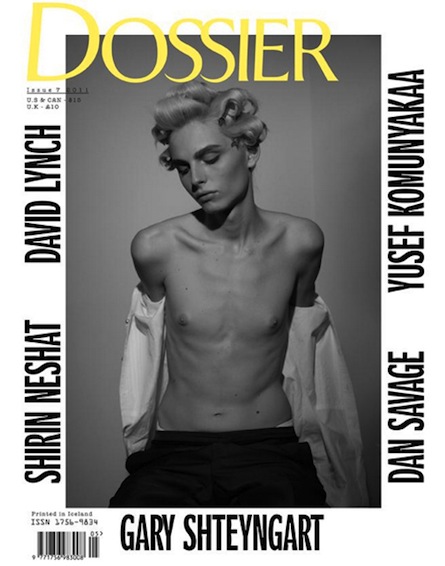
On the censorship of Andrej Pejic’s Dossier cover:

“… why is Pejic’s cover getting the same treatment as a porno mag? What message are the big bookstore chains sending—that the male torso is only appropriate [for] all-ages viewing when the man in question is ripped?”

Mia Freedman on when life begins.

SlutWalker Leslie Cannold on “the right to be equally mediocre”.

Speaking of SlutWalk, the Melbourne event’s coordinator, Clem Bastow, writes on the event for the Sydney Morning Herald.

The ostentatious disgustingness of “Push Presents”.

Glee: give fat girls a chance.

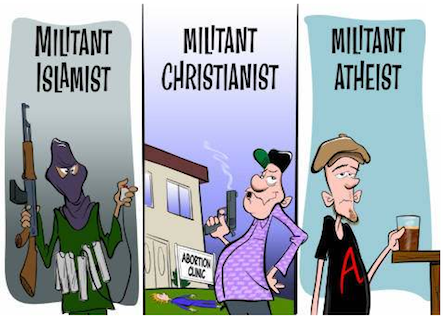
 The militant atheist doesn’t exist.

Arnold Schwarzenegger’s infidelity and Dominique Strauss-Kahn’s sexual assault allegations are one in the same, according to “The Media’s Groping Problem”.

In the same vein: why powerful men sexually assault women.

From Texas’ hottest sex offenders to Strauss-Kahn’s “hot-or-not” accuser.

What would “a word where Aspergers was the norm” look like? “Girls who spend hours a day straightening their hair are recommended for counselling,” amongst other things.

Rebecca Sparrow on “Hollywood’s Fake Teenagers”.

As if we didn’t need another reason to love Mick Foley: the Huffington Post names him their “Greatest Person of the Day”.

Meghan McCain rips the sexist and sizist Glenn Beck a new one.

Much to my mother’s—and her fellow kindy mums’—dismay, my big-for-her-age, four-year-old sister refused to walk to preschool, so Mum was forced to push her in a stroller. Check out Too Big For Stroller for more on this hideous phenomenon.

Are child murderers born evil or created?

In the case of toddler James Bulger’s murderers (one of whom re-offended after being released and is now back in jail), and Dontez Tillman and Thomas McCloud, who beat and tortured “two homeless men over the course of two days”, I tend to lean towards them being “born that way”. If Law & Order and Criminal Minds have taught us anything, it’s that children who demonstrate these kinds of behaviours usually turn out to be sociopathic serial killers.

Image via Queer Me Up, Psychology Today, Even Without Popcorn.

On the (Rest of the) Net.


These iconic images, taken by photographer Lennart Nilsson for Life magazine in 1965, and later used for pro-life propaganda materials, have actually been taken of aborted embryos, not living fetuses in the womb:

“Although claiming to show the living fetus, Nilsson actually photographed abortus material obtained from women who terminated their pregnancies under the liberal Swedish law. Working with dead embryos allowed Nilsson to experiment with lighting, background and positions, such as placing the thumb into the fetus’ mouth.”

“Does Carrying Condoms Make You Easy?” Will.I.Am seems to think so.

Erica Bartle on maintaining the balance between “frothy and bubbly and frivolous” and her passion for writing about her faith and God on Girl with a Satchel, which she understands can sometimes be “like receiving a knock on the door from a Jehovah’s Witness  (or a pamphlet in the postbox)” for some. (Okay, I’ll admit it: I’m one of them.) Food for “critical thought”.

Should the government be pouring money into funding to fight domestic violence against women and children, when there are also men who are victims of domestic violence out there?

Girl crush porn in Mia Freedman’s new weekly post, “A Week in the Life” on MamaMia.

The importance of “good, old-fashioned” sub-editing.

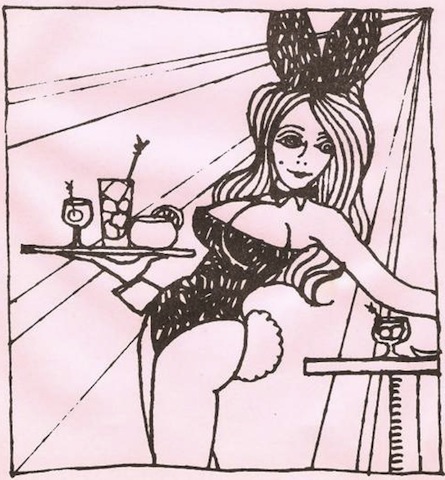
How to be a Playboy Club Bunny, circa 1968.

Love, domestic violence and Gossip Girl.

On Hillary Clinton being photoshopped out of the situation room photo in Hasidic newspaper Der Tzitung:

“The religious paper never publishes pictures of women, as they could be considered ‘sexually suggestive.’ Apparently the presence of a woman, any woman, being all womanly and sexy all over the United States’ counterterrorism efforts was too much for the editors of Der Tzitung to handle…

Der Tzitung edited Hillary Clinton out of the photo, thereby changing history. To my mind, this act of censorship is actually a violation of the Jewish legal principle of g’neivat da’at (deceit).”

Would you rather be blind or obese? According to an Arizona State University study, 1 in 6 women would choose the former…

Images via The Hairpin, Sociological Images.