Robin Thicke’s “Blurred Lines”: “ironic objectification” or just plain degradation? Apparently, because Thicke and collaborator Pharrell Williams are “happily married”, it makes it okay for them to derive pleasure from degrading women (Thicke’s words). While there are certainly much worse images and acts of misogyny out there, “Blurred Lines” is lyrically and visually blatantly upholding rape culture: “I know you want it, but you’re a good girl…” Does the fact that it was directed by a woman who instructed the basically—and uncomfortably—naked models and the fully clothed male artists in the clip supposedly love women make it a tongue in cheek exercise in pushing boundaries or raise some more problematic issues considering it’s this country’s number one song? What’s the point in even making such a NSFW video if it can’t even be shown on MTV and YouTube (semi-SFW video above)? [Jezebel]
So misogyny may be running wild in the real world, but on TV, girls are calling the shots. We’ve had a bevvy of shows with “girl/s” both in the title and the storylines this year, with 2 Broke Girls and New Girl carrying their success over from 2011. While a lot of the subject matter is problematic, both shows have women carrying the comedy. Which brings us to just plain Girls, which is the brainchild of actor, writer and director Lena Dunham. Girls is not without its problems, either, but its portrayal of young urban women is almost faultless. Rounding out the representation of leading ladies in 2012 we have Don’t Trust the Bitch in Apartment 23, Homeland, Revenge, The Mindy Project, Are You There, Chelsea?, Smash, GCB (farewell!), Scandal, Nurse Jackie, Veep, Emily Owens, M.D., Whitney, The Good Wife and Hart of Dixie.
“Call Me Maybe”.
Until “Gangnam Style” came along, the YouTube Zeitgeist was dominated by one runaway success: Carly Rae Jepsen’s “Call Me Maybe”. Justin Bieber’s protégé came out of nowhere with the catchiest song of the year, which was subsequently covered by the guys from Harvard’s baseball team, Barack Obama and the Cookie Monster! Talk about diversity!
2012: Apocalypse Now.
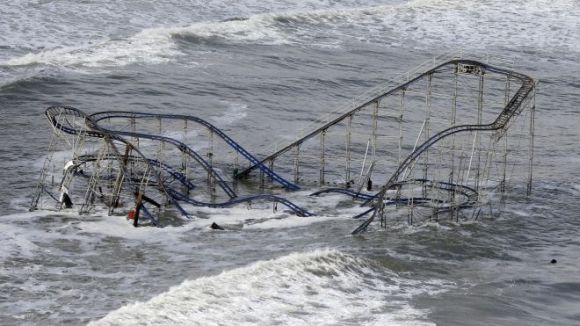
2012 was the year of the apocalypse, with the 21st of December long determined by the Mayans (or Mayan conspiracy theorists) as the day the world ends. You know, until the 7th of December tried to steal its thunder as the apparent recalculated date. Apart from the natural disasters, warfare and massacres, the 21st passed without a nuclear bombing, ice age or attitudinal shift, putting rest to the apocalypse panic. Until the next rapture, anyway…
Shit ___ Say.
It started with a sexist albeit funny YouTube video of a guy in a wig quoting “Shit Girls [Apparently] Say”, which snowballed into “Shit White Girls Say to Black Girls”, “Shit New Yorkers Say”, “Shit Christians Say to Jews” and “Shit Nobody Says”. Cue offence.
Snow White.
Snow White was everywhere this year: Mirror Mirror, Snow White & the Hunstman, Once Upon a Time… Note: overexposure isn’t necessarily a good thing. In fact, I hated Mirror Mirror and Once Upon a Time, and Snow White & the Huntsman was such a snooze-fest I can barely remember what happened (not including Kristen Stewart’s affair with director Rupert Sanders).
50 Shades of Grey.
On the one hand, E.L. James’ 50 Shades of Grey has singlehandedly revived the flailing publishing industry, so that’s a good thing. But on the other, it has falsely lulled its legions of (mostly female) fans into a state of apparent sexual empowerment: it’s a book about sex targeted towards women, so that means we’re empowered and we don’t need feminism anymore, right?
The Macarena of the 21st century, Psy’s horse dance took the world by storm, being performed in conjunction with Mel B on The X Factor, with Hugh Jackman in his Wolverine gloves, on Glee and at many a wedding, 21st birthday and Christmas party.
Misogyny.
Misogyny has long been the focus of feminists, but the word and its meaning really reached fever pitch this year.
After Julia Gillard’s scathing Question Time takedown of Tony Abbott and his sexist ways, people everywhere were quick to voice their opinion on her courage and/or hypocrisy. At one end of the spectrum, it could be said that Gillard finally had enough of the insidious sexist bullshit so many women in the workforce face on a daily basis and decided to say something about it, while at the other, many argued that the Labor party were crying sexism in a bid to smooth over the Peter Slipper slip up.
“Her electric speech on misogyny in parliament went beyond the sordid political context to firmly press a button on the chest of any woman who has been patronised, sidelined, dismissed or abused. It crackled across oceans, and, astonishingly, her standing went up in the polls, defying political wisdom that no woman would benefit from publicly slamming sexism.”
The viral doco that had millions of people rushing to plaster their neighbourhood in “Kony 2012” posters on 20th of April to little effect (the campaign’s goal was to catch Joseph Kony by years end) illustrated our obsession with social media, armchair activism and supporting the “cool” charities, not the thousands of worthy charities out there who could actually use donations to help their cause, not to produce YouTube videos and work the press circuit.
I’m Not a Feminist, But…
While Tony Abbott is clamouring to call himself a feminist to gain electoral favour despite the abovementioned misogyny saga, it seems famous women can’t declare their anti-feminism fast enough.
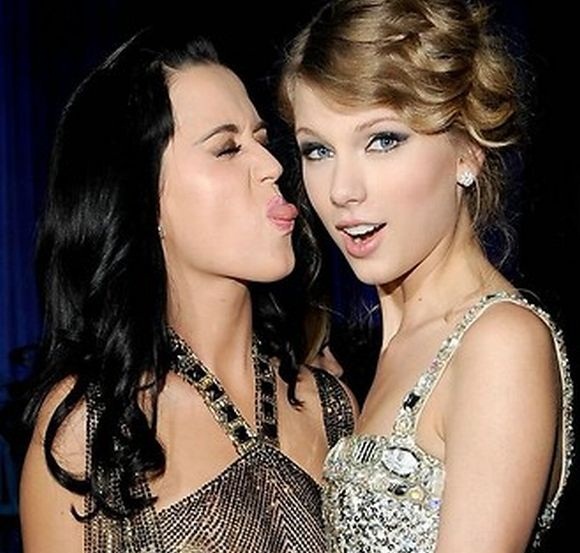
First we had new mother and Yahoo! CEO Marissa Mayer jumping at the chance to shun feminism despite the fact that without it she wouldn’t be where she is today. My favourite anti-feminist campaigner Taylor Swift said she doesn’t think of herself as a feminist because she “was raised by parents who brought me up to think if you work as hard as guys, you can go far in life.” Um, Tay? That’s what feminism is, love.
The cronies from Sutherland Shire were all over our boxes, primarily on Channel Ten, this year. There was the widely panned Being Lara Bingle, the even worse Shire, and the quintessential Aussie drama set in the ’70s, Puberty Blues.
While these shows assisted in shedding a different light on the suburb now synonymous with race riots, it’s not necessarily a positive one, with The Shire being cancelled and Being Lara Bingle hanging in the balance.
Maya Newell, the girl who asked what effect changing the marriage act would have on the children of same-sex partners on this year’s final episode of Q&A, talks about what it’s like growing up with two mums. [Daily Life]
“‘The relationship you have with your child is certainly impactful. It’s one of the most important relationships you’ll have in your life,’ Valenti says. ‘But a good relationship doesn’t necessitate you losing your identity. In fact, most people would call that a bad relationship. A good relationship is supposed to make you the best version of yourself, happier and more active. So that’s what I’m aiming for.’”
“I’m uncomfortable saying ‘you can do this if you are ethnically Indian’ (even if you are culturally something else, like American), because then it gets into the very kind of essentialism that racism is made of. Like, is it OK for me to wear native Iraqi Arab garb, even though I have never set foot in Iraq, because my parents are from there? I don’t think so, but a lot of the arguments about this subject reduce it to a matter of ‘you can wear things from your personal heritage but no one else’s,’ which, again, is essentialist… [a]nd bordering on dangerous? Because then you get into people deciding if someone LOOKS ‘ethnic’ enough to wear ‘ethnic’ signifiers and you start trying to read skin colour…
“… As long as there’s black-people stuff and white-people stuff and Indian-people stuff, can we really talk about being seen as just PEOPLE?”





 The Scarlett Woman