TV: Gossip Girl Thinks Bloggers Aren’t Good Enough.


When Serena feels backed into a corner by Gossip Girl and has to defend herself by penning her own blog at the typically British-named Diana’s (played by Warney’s squeeze Liz Hurley) New York Spectator, Blair harangues her, saying, “I’ve always thought you were too good to blog.” Thanks Blair; great to know where we stand.

But Blair’s is not a unique viewpoint: traditional forms of information gathering and sharing view blogging as the black sheep of the family. Because seemingly anyone can run a blog (though not everyone can run a good blog), those who excel in their field are sometimes deemed not as worthy of acceptance and recognition as those in conventional or “old” media, who rose up the ranks the old fashioned way. We all know one bad blogger can give the rest of us a bad name.

It wasn’t just Serena and her overt blogging dilemma that was relevant to budding online wordsmiths. When Dan freaks out that his book, Inside, has dropped from number nine on the New York Times Bestseller list last week, to completely off the chart this week, and forgoes his book touring commitments, trust old Rufus gives him a pep talk:

“It just takes one person to connect with your art, who feels like you directly communicated with them, to start a groundswell. But you can’t connect with that person unless you show up.”

So, disheartened bloggers, if your blog’s not bringing in the hits yet, just you wait: provided the content’s good (and even if it’s not!), it’s only a matter of time before you start a groundswell of your own. Now I’ve just got to remember that myself…

Related: The Problem with Serena van der Woodsen.

Image via Home of the Nutty.

Movies: The Underlying Message in The Muppets Movie*.


Talk about a metatext!

It seems like every two minutes in The Muppets there was a thoroughly enjoyable self-aware reference and celebrity guest appearance. Gary presents Mary with some lacklustre flowers, which were squashed “probably from the dance number I was doing” in one of the opening scenes of the movie. When Mary laments in song Gary’s brother, Walter, joining them on an anniversary trip to Los Angeles, a gardener conveniently sprays water on the window she’s wistfully looking out of. When Statler and Waldorf introduce the “important plot point” involving oil tycoon Tex Richman drilling for oil under the old Muppet Theatre, Walter tries to get the Muppets back together to save it. When this fails to come to fruition midway through, Mary remarks, “This is going to be a really short movie.” And let’s not forget Camilla and the other chickens’ performance of “Forget You”. You can’t get much more meta than that!

As for the cameos, take Jack Black and his School of Rock cast mate Sarah Silverman, for example. Or Dave Grohl on drums for The Muppets cover band, the Moopets, and the later performance by The Muppets Barbershop Quartet of “Smells Like Teen Spirit”. Or Amy Adams as Mary, and her Sunshine Cleaning co-star Emily Blunt in her very Devil Wears Prada-role as Miss Piggy’s secretary. Even Blunt’s real life husband, John Kransinki, makes an appearance. Phew!

But, we’re reminded, celebrities are fair game because they are “not a people”. Makes a poignant comment on our celebrity-saturated society.

That’s the not the only point The Muppets makes. Richman is the personification of the 1% and, like the Moopets, is “a hard, cynical act for a hard, cynical world.”

The film also seeks to promote diversity and acceptance, I thought. Take, for example, the Ebony magazine cover that Kermit fronts, which is traditionally a magazine for African Americans, and how this might represent the Muppets as being beyond racial definition. I also got the feeling that Walter was marketed to be a differently-abled person, which would certainly explain Gary’s reluctance to let Walter go when he is accepted into the Muppet clan and his sheltered existence in Smalltown up til then.

On the first watching of the film, I noticed in particular that Kermit wont tell Miss Piggy he loves her, which is all she asks of him. It reminded me of the Blair and Chuck storyline in Gossip Girl from a few years ago: their back-and-forth love story that depends on Blair needing to hear those words and Chuck never being able to say them. On second watching, I confirmed that, in fact, Kermit never does say “I love you”.

The second time around was more enjoyable. While I originally got to see the film a month before it came out in Australia—and for free!—being in an audience of primarily under 10s wasn’t as good as being in an almost-empty theatre consisting only of Generation X’s who grew up with the Muppets. There was, however, a group of about six teenage fanboys sitting behind me. I was originally annoyed by their chatting in the first ten minutes of the film, but I actually laughed more at them than at the movie when they slid off their seats during the appearances of Neil Patrick Harris and Jim Parsons. But, after watching “Muppet or a Man”, can you really blame them?

*Blanket spoiler alert.

Images via YouTube, Cover Me Songs.

12 Posts of Christmas: The Problem with Serena van der Woodsen.

In the spirit Christmas, I’ve decided to revisit some of my favourite posts of the year in the twelve days leading up to December 25th.

I thought I’d take this Serena van der Woodsen-opportunity to talk about what a spoiled brat she was on last night’s episode (you can read about what a spoiled brat she is in general below, and in the original post here.)

When a friend releases their first book to such fanfare as Dan did last night, you should be happy for them, right? Even if one of the characters is semi-based on you, and perhaps doesn’t portray you in the best light, Dan was adamant that Inside is only loosely autobiographical and amplifies Serena, Blair et al’s worst qualities to make it a scandalous and best-selling novel.

But, of course, Serena thinks it’s all about her, all the time, and has a big cry because Dan wrote her character as a selfish, vapid, flighty and irresponsible Upper East Side princess, which she kind of is. She’s so blinded by her anger that she can’t be happy for Dan’s success, worried for Blair’s portrayal and her relationship with Dan and what it might mean for her engagement to Louis, or saddened by Chuck’s character’s death by asphyxiation in the book. Talk about a bonfire of the vanity!

She’s got the clothes, the hair, and she’s mighty fine to look at. But that’s about all Gossip Girl’s Serena van der Woodsen boils down to.

I really liked Serena in season one of the show. I could relate to her because everyone thought she was this spoiled, vapid princess, but she showed her true self to her first love Dan Humphrey.

By the end of season two, she’d stopped evolving, though, and it turns out she was just a spoiled, vapid princess, intent on upstaging Blair Waldorf at every opportunity, stringing a multitude of guys along, and having her antics and dirty laundry on the cover of all the tabloids.

Like in the Cecily von Ziegesar (she made an appearance in last night’s final, telling Serena she’d “read a lot about her”) novels of the same name, Serena is the central protagonist of Gossip Girl. But unlike the books, the show has run with Blair and Chuck Bass in the driver’s seat; characters who have grown, changed and become more likeable as a result. Serena, along with her male counterpart Nate Archibald, followed closely by Dan, has remained a stagnant shell of a human being, like the kinds you overhear on the tram and thank God you don’t know them or, worse, aren’t like them.

There have been many a fan disappointed in and perturbed by Serena’s lack of development. Why has she languished in and regressed to the mindset of a highschooler, albeit with better clothes, more freedom and a more active sex life? Is she just “coasting on cuteness”? Most of her storylines seem to revolve around her busting her bust out in an evening gown or standing around looking bored and Amazonian-like. Just because she looks the way she does, doesn’t mean she shouldn’t be as well written as Gossip Girl’s other characters. In real life, how many of this type of woman do you know? Personally, I don’t associate myself with people with no personalities, who’ll turn on their besties for a taste of the spotlight, and who have no opinions save for what outfit they’re going to wear that day, so I don’t know anyone with the personality of a napkin Serena van der Woodsen.

But, let’s face it, Gossip Girl isn’t exactly a realistic interpretation of life. 20-year-olds don’t flit around the city unemployed, never wearing the same outfit twice, depending on Mummy and Daddy’s trust funds. And if they do, then that’s a reality I’m glad I’m not a part of.

This unreality and lack of character development makes the audience not care about Serena’s storylines. Personally, I loved the Juliet/Ben/Serena storyline, but it was because of the mystery surrounding who Juliet and Ben actually were and what their connection to Serena was, not because of Serena. And the latest development in the character’s tumultuous yet über-boring life leads me to make comparisons to the actress who portrays her, Blake Lively’s, life.

I remember when Gossip Girl first came out, Lively said in an interview that she was very low-key, didn’t like to go out to events and preferred to stay home and work on her Martha Stewart skills.

Flashforward four years and Lively’s oft-papped lifestyle is far from the one she naively spoke about. She’s Karl Lagerfeld and Anna Wintour’s muse, flitting from one European country to the next to attend fashion shows and sun herself on yachts. Not to mention her latest nude photo scandal.

While her acting’s not anything to write home about, Lively still has much more to offer than naked pics and Chanel ads. I just hope that it isn’t a case of life imitating art when it comes to Blake Lively and Serena van der Woodsen.

Related: The Problem with Serena van der Woodsen.

The Beautiful & Damned: Serena Settles for Second Best.

Gossip Girl Season 4 Final.

Who Speculates About Domestic Violence in the Affleck/Garner Household.

Picture Perfect.

So Misunderstood.

Breaking the Mould.

Elsewhere: [Jezebel] Is Kate Hudson Coasting on Cuteness?

Image via VideoBB.

TV: Gossip Girl—Life Begins at Love?


So Blair’s pregnant and she doesn’t know who the father is. Oi vey, as her Jewish stepfather Cyrus would say.

Naturally, even though she’s only 20, is still in college as her mother points out, and doesn’t know if her fiancé Louis or past love Chuck impregnated her, she’s keeping the baby. Of course!

Dan tells her  “has options” and Blair replies that she’s considered them all but, ultimately, the foetus was conceived out of love. I’m sure a lot of foetuses were conceived out of love, but that doesn’t mean it’s in the best interest of both the embryo and the parents to keep it.

Interestingly, while searching for some online articles on Gossip Girl being pro-life (there aren’t any that I could find), I came across a web entry for the actress who plays Eleanor Waldorf-Rose, Margaret Colin, who is a noted pro-life activist and has even been involved in (I won’t say propaganda) a pro-life made-for-TV movie. I wonder if her stance, which is well-publicised, had anything to do with the character of Blair deciding to carry the pregnancy to term…?

Related: Gossip Girl Season 4 Final.

Breaking Dawn: Sex is Bad, Okay? And You Will Be Punished for Having It With a Life-Sucking Vampire Feotus. Sorry, Life-Sucking Vampire BABY!

Is Jersey Shore Anti-Abortion?

Private Practice: Pro-Choice?

Grey’s Anatomy Final Asks “When Does Life Begin?”

Image via MegaVideo.

Why Young Feminists Still Have “A Long, Long Way To Go” in the Eyes of Second-Wave Feminists.

Last week I wrote about the Melbourne Writers’ Festival event, entitled A Long, Long Way to Go: Why We Still Need Feminism, presented by Sophie Cunningham and Monica Dux.

On the whole, Cunningham’s presentation was thought-provoking, if a little small-minded, but my main point of contention is as follows.

Cunningham brought up third/fourth wave feminism (the feminism we’re experiencing now, by most accounts), saying that while she applauds the grassroots feminist movements such as SlutWalk, she wasn’t sure 25-year-old women could fully understand the concept of feminism because they still have men fawning all over them at that age.

Now that’s just a whole lot of wrong.

First of all, I am soon-to-be-24 and I don’t have men falling at my feet (well, except when it’s unwanted), and nor do my similarly-aged friends.

Secondly, who’s to say that even if we did, we wouldn’t recognise that, unless they had had some kind of interaction with us other than staring at our boobs, they were interested in us purely for our looks, and that’s anti-feminist. (Then again, I know girls who do have men fawning all over them purely for their looks and couldn’t care less.)

And thirdly, this kind of feminism in fighting is exactly what has been undoing the feminist movement in recent years. As I wrote:

“… Cunningham saw a sort of ‘bottleneck’ in modern feminism, where white, privileged feminists like myself don’t understand the problems facing feminists of colour, feminists with sexual orientation other than straight, feminists with gender other than cis, and feminists with disabilities…”

This is not to mention conflict between the ages, or waves, of feminism.

In Susan Faludi’s attempted takedown of young feminists in her article, “American Electra: Feminism’s Ritual Matricide”, last year, she writes:

“… Despite its [feminism’s] many victories, it seems to falter along a ‘mother–daughter’ divide. A generational breakdown underlies so many of the pathologies that have long disturbed American [or, rather, Western] feminism—… its bitter divisions over sex… [and] alongside the battle of the sexes rages the battle of the ages.”

I can’t think of a better example than, oddly enough, an episode of Gossip Girl from its most recent season, in which it addresses the clash between young and old feminists after Serena van der Woodsen is accused of having an STD. Her dean at Columbia University tells her:

“Women of my generation had to fight for every opportunity. And to be taken seriously, and your attitude, Miss van der Woodsen, makes a mockery of that.”

I wrote in response at the time, in reference to Faludi’s article:

“Now if that isn’t the second wave looking down upon the third wave for our apparent flippancy about ‘activism’, our ‘obsession with technology’ (Gossip Girl’s blasts are a prime example of this), our ‘unwilling[ness] to challenge sexual exploitation for fear of pissing off men’ (hello, Serena), and our infatuation with Lady Gaga (well, Gossip Girl did feature the Lady herself in an episode…), I don’t know what is.

“… It would be interesting to see Serena fight back and declare herself ‘sick to death of hearing about the glory days of Seventies feminism’, whilst older women, like Dean Reuther, ‘declaring themselves sick to death of being swept into the dustbin of history.’

“Faludi spends a lot of time criticising (via her second wave subjects) the technology third wavers use, specifically blogging: ‘All they want to do is sit at their computers and blog.’ Ouch.

“I’m sure Gossip Girl would have something to say about that.”

Exhibit A: SlutWalk as an anti-testament to Faludi’s assertion.

Could it be jealousy these second-wavers are suffering from? I’d like to think feminism is above that, but it is one of the seven deadly sins and can get the better of us. Contrary to what Cunningham said, I don’t think it’s because of the way we look. Everyone knows age is not a precursor to looking hot. I think second-wavers might long for their glory days of making things happen, being invigorated and excited by feminism, instead of seeing their options shrivel up and die the older they get. Again, please see exhibit A. While I don’t know the ages of those who were critical of the SlutWalk, but if they were older it might be easy to see why they were a bit miffed by the anti-slut-shaming and -victim-blaming movement that they felt left them behind.

There needs to be something done to rectify this. Not only the gap between the ages, but the gap between the races, the abilities, the genders and the sexual orientations.

I don’t pretend to know how we’re going to do this, but it will have to start with listening and understanding, empathy, perhaps some mentoring and—what feminism is all about, not just between the sexes, but between all those I mention above—equality.

Related: Melbourne Writers’ Festival: A Long, Long Way to Go—Why We Still Need Feminism.

Ain’t Nothin’ Gonna Break My Slutty Stride.

The Taboos of Sexual Harassment.

Will Boys Be Boys When it Comes to Objectifying Women?

Surfing the Third Wave: Second-Wave VS. Third-Wave Feminism on Gossip Girl.

Elsewhere: [Harper’s Magazine] American Electra: Feminism’s Ritual Matricide.
Movie Review: Green Lantern*.


When I met my brand new roommate Eddie about a year ago, we bonded over Green Lantern, amongst other things.

I’m not a huge fan of the comic book series, other than the fact that Ryan Reynolds and Blake Lively are in the big screen adaptation, released last Thursday in Australia to the similar lacklustre reviews it received in the States. My only exposure to the superhero before I met Eddie was that he was professional wrestler Gregory “The Hurricane” Helms’ favourite superhero, revealed by his Green Lantern symbol tattoo and the t-shirt he gave Stone Cold Steve Austin during his “appreciation night” storyline back in 2001.

Even though I wasn’t super keen on the latest version, especially after seeing the previews (why must every movie be about aliens?! Super 8, Thor, Green Lantern, Cowboys and Aliens… Perhaps some fodder for a potential blog post…?), we’d bonded over it.

Going into films with low expectations usually winds up with me enjoying it much more than I thought I would, and this was true with Green Lantern.

As the comic book nerd to rule all comic book nerds, Eddie pointed out some holes in the plotline and amalgamations made especially for the movie that don’t exist in the comics, like Reynolds’ Hal Jordan’s nemesis Hector Hammond being able to read minds by physical contact after contracting the powers of Paralax.

As a non-comic book nerd, I thought some parts of the movie weren’t resolved, like Jordan getting beat up in a parking lot behind a bar he was having drinks with Lively’s Carol Ferris at, but nothing coming of it (Carol coming to his rescue, the cops arriving, any arrests being made) apart from being the catalyst for Hal to use his willpower, the energy that the Green Lantern Corps use to fight space crime and whatnot.

I was initially excited about Lively’s role in the film, but she’s as boringly saccharine in this as she is in Gossip Girl. The only part of the movie where I see a glimmer of potential in her acting abilities is when she is approached by Hal, in his Green Lantern costume, and exclaims, “You think I wouldn’t recognise you because I can’t see your cheekbones?!” It was both funny (perhaps the funniest part of the movie, which isn’t saying much) and the closest Lively’s ever going to get to an Oscar nomination any time soon.

Considering Green Lantern was one of the most anticipated premieres of the year, it failed to live up to the hype. Not only was its release date almost two months behind the U.S., which is unheard of these days, Reynolds was supposed to attend the Melbourne and Sydney premieres, but pulled out at the last minute. (We were going to stalk him at Jam Factory!)

A sequel has been greenlit (get it?), which is promising, as the Green Lantern saga has a lot more to offer. Three more human Lanterns, a black Superhero, a heel turn (sorry, wrestling speak; good guy turns into a bad guy) from one of the main characters, the scene that sparked the Women in Refrigerators feminist movement. Let’s hope the second instalment brings some of this to the table.

*It has come to my attention that I give away too much in my movie reviews, so the asterisk will now serve as a blanket *spoiler alert* from now on.

Related: Super 8 Review.

Thor Review.

The Problem with Serena van der Woodsen.

Elsewhere: [Women in Refrigerators] Homepage.

Image via IMDb.

Fictional Friends.

Last week, Alissa Warren on MamaMia listed her top five fictional friends. You know, people you’d be friends with… “if they were real.”

Let me know in the comments who you’d be fictional friends with but, until then, here are my top picks:

Elphaba Thropp, Wicked.

It’s no secret Elphaba is my favourite fictional female: someone you can look up to, who rises above hatred and discrimination, and who will stand up for her beliefs no matter what. Plus, she’s a witch! Galinda wouldn’t be too bad either…

Elle Woods from Legally Blonde.

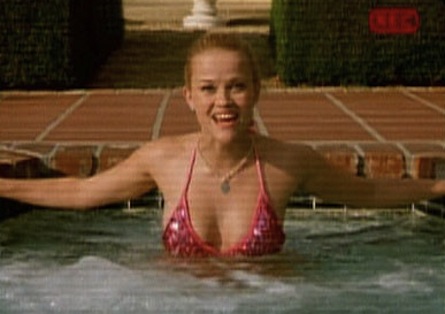
She’s fun, she’s quirky, she’s got a cute little dog and an awesome wardrobe. And underneath it all, she’s not as ditzy as she seems. Awesome friend material.

Cher Horowitz, Clueless.

Again, someone who seems carefree and Clueless on the outside, but whose heart is in the right place. Maybe she’ll let you come over and program your wardrobe into her computer. Just think of the outfit-planning time you’ll save.

Gus Bailey.

The fictional version of the late Vanity Fair columnist and man about town Dominick Dunne, Gus Bailey, would always give you the inside scoop, and probably feature you in his gossip columns! Anonymously, of course. You’ve got to keep up appearances.

Blair Waldorf/Dan Humphrey, Gossip Girl.

I’m not sure which one I’d like better as, personality-wise, they’re pretty much the same person. They exchange emails and phone calls whilst ploughing through their identical Netflix queues. They enjoy art, foreign films, being “in” with the “in crowd” and bygone eras. You could borrow Blair’s clothes, but Dan’s nice to look at… I can’t choose!

Kat Stratford, 10 Things I Hate About You.

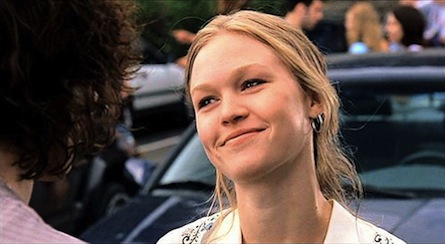
She’s everything I’m not. She’ll shun the prom (but actually ends up going!) due to its patriarchal confines. She’s musical. She loves the riot grrl scene. She ploughs through feminist literature whilst listening to Spiderbait. And she don’t give a rats what anyone thinks of her. Total. Feminist. Icon.

Heather Mooney, Romy & Michele’s High School Reunion.

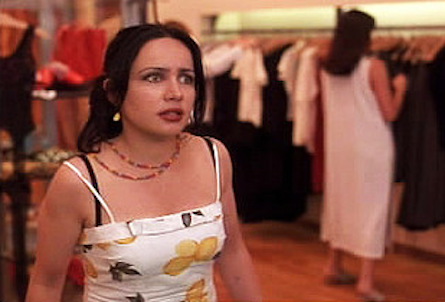
Anyone who openly tells people they don’t like to “fuck off” is someone I want to get to know! Plus she’s hilarious despite her best efforts to come across as cold and callous.

Scout Finch, To Kill a Mockingbird.

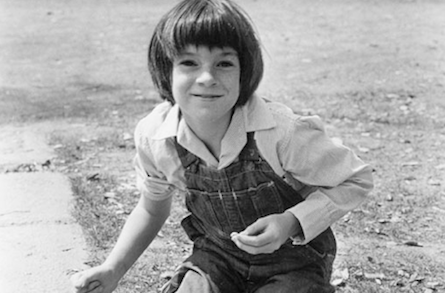
Sure, she’s a little young to be best buds with, but maybe I could be her babysitter?!

Related: Women in Fiction: My Favourite Fictional Females.

Women in Fiction: Are Our Favourite Fictional Females Actually Strong, or Stereotypes?

It’s All About Popular… Lar, Lar, Lar, Lar.

Strong Female Characters in the Land of Oz.

Pop Culture Power Women.

So Misunderstood.

Pop Culture Role Models.

In Defence of To Kill a Mockingbird.

Another City, Not My Own by Dominick Dunne Review.

Images via Freewebs, IG Style, Abhishek Tiwari, USA Today, TV.com, Inspired Ground, Flickr, The Hero Construction Company.

TV: Glee Season 2 Final in Pictures.


In last night’s Glee final, New Directions make it to New York! (New York! I love New York!)

They eat designer sandwiches on the steps of some landmark that escapes me at the present moment, reminiscent of Blair, Jenny et al. having lunch on the steps in Gossip Girl.

From here, they sing a mash-up of “I Love New York” and “New York, New York” in Central Park while Santana gets her flirt on with a cop.

Finn is inspired by the group’s songwriting efforts (that they’ve come to the Big Apple with nary a song to sing at Nationals only days before the competition speaks volumes about the laissez-faire attitude of both the New Directions and their leader, Mr. Shuester), and asks Rachel out on a date now that he and Quinn are toast. He takes her to Sardi’s, where they run into Patti LuPone, who Rachel accosts, telling Patty she’s one of her idols. Patty tells Rachel to never give up (or something), and that Finn is cute. Sage advice there!

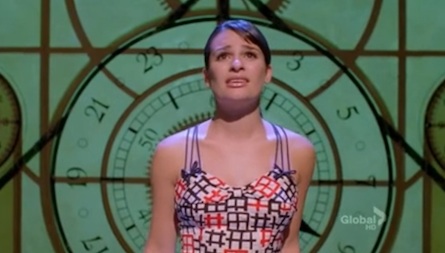
Meanwhile, the other man in Rachel’s life (no, not Jesse St. James Douche), Kurt, wakes Rachel up to go have Breakfast at Tiffany’s, followed by a Wicked duet at the musical’s home theatre, the Gershwin, of “For Good”, harkening back to their season one sing-off of “Defying Gravity”. It was a teary rendition for me!

Mr. Shue also has his Broadway moment, singing a song from April Rhodes’ musical, CrossRhodes, which can conveniently be found on Matthew Morrison’s debut album! He later chooses to shun his New York dreams in favour of staying on at McKinley.

Cut to Nationals, where the New Directions perform their two hastily composed original songs, “Pretending” and “Light Up the World”. During the former, Rachel and Finn share an impromptu kiss in the heat of the moment, which the whole club berates and blames them for losing the competition.

Oh, Sunshine also makes an appearance. No doubt to segue into a cameo or recurring role in season three.

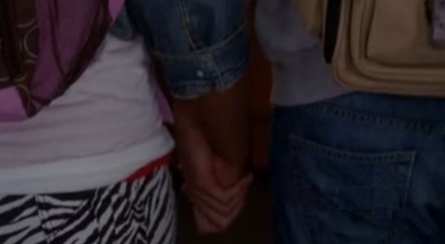
Back in Lima, Kurt and Blaine are having coffee when they encounter Mercedes and Sam, who claim they “ran into each other in the parking lot”. When they think Kurt and Blaine are out of ear- and eyeshot, they hold hands whilst waiting to be served. New couple alert!

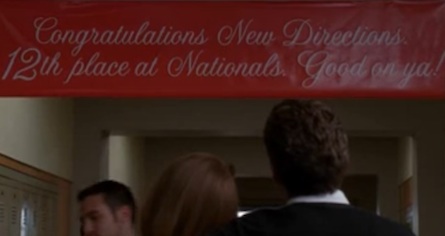
In the hallway of McKinley High, Will and Emma marvel at the banner erected to congratulate them on their twelfth placing in the competition, and Mr. Shue presents the class with a trophy for their (dismal) efforts. Until next year’s Nationals…

Related: Glee Gets Down on Friday at the Prom.

The Underlying Message in Glee’s “Born This Way” Episode.

The Underlying Message in Glee’s “Original Song” Episode.

Gwyneth Paltrow Addresses Tabloid Culture & Her Haters.

Glee “Sexy” Review.

The Underlying Message in Glee’s “Blame it on the Alcohol” Episode.

How to Make a Woman Fall in Love With You, Glee Style.

Glee “Silly Love Songs” Review.

The Underlying Message in Glee’s “Furt” Episode.

The (Belated) Underlying Message in Glee’s “Never Been Kissed” Episode.

The Underlying Message in Glee’s “The Rocky Horror Glee Show” Episode.

The Underlying Message in Glee’s “Duets” Episode.

The Underlying Message in Glee’s “Grilled Cheesus” Episode.

The Underlying Message in Glee’s “Britney/Brittany” Episode.

Elsewhere: [Jezebel] Glee: Can’t Make it There, Can’t Make it Anywhere.

Images via MegaVideo.

TV: The Problem with Serena van der Woodsen.


She’s got the clothes, the hair, and she’s mighty fine to look at. But that’s about all Gossip Girl’s Serena van der Woodsen boils down to.

I really liked Serena in season one of the show. I could relate to her because everyone thought she was this spoiled, vapid princess, but she showed her true self to her first love Dan Humphrey.

By the end of season two, she’d stopped evolving, though, and it turns out she was just a spoiled, vapid princess, intent on upstaging Blair Waldorf at every opportunity, stringing a multitude of guys along, and having her antics and dirty laundry on the cover of all the tabloids.

Like in the Cecily von Ziegesar (she made an appearance in last night’s final, telling Serena she’d “read a lot about her”) novels of the same name, Serena is the central protagonist of Gossip Girl. But unlike the books, the show has run with Blair and Chuck Bass in the driver’s seat; characters who have grown, changed and become more likeable as a result. Serena, along with her male counterpart Nate Archibald, followed closely by Dan, has remained a stagnant shell of a human being, like the kinds you overhear on the tram and thank God you don’t know them or, worse, aren’t like them.

There have been many a fan disappointed in and perturbed by Serena’s lack of development. Why has she languished in and regressed to the mindset of a highschooler, albeit with better clothes, more freedom and a more active sex life? Is she just “coasting on cuteness”? Most of her storylines seem to revolve around her busting her bust out in an evening gown or standing around looking bored and Amazonian-like. Just because she looks the way she does, doesn’t mean she shouldn’t be as well written as Gossip Girl’s other characters. In real life, how many of this type of woman do you know? Personally, I don’t associate myself with people with no personalities, who’ll turn on their besties for a taste of the spotlight, and who have no opinions save for what outfit they’re going to wear that day, so I don’t know anyone with the personality of a napkin Serena van der Woodsen.

But, let’s face it, Gossip Girl isn’t exactly a realistic interpretation of life. 20-year-olds don’t flit around the city unemployed, never wearing the same outfit twice, depending on Mummy and Daddy’s trust funds. And if they do, then that’s a reality I’m glad I’m not a part of.

This unreality and lack of character development makes the audience not care about Serena’s storylines. Personally, I loved the Juliet/Ben/Serena storyline, but it was because of the mystery surrounding who Juliet and Ben actually were and what their connection to Serena was, not because of Serena. And the latest development in the character’s tumultuous yet über-boring life leads me to make comparisons to the actress who portrays her, Blake Lively’s, life.

I remember when Gossip Girl first came out, Lively said in an interview that she was very low-key, didn’t like to go out to events and preferred to stay home and work on her Martha Stewart skills.

Flashforward four years and Lively’s oft-papped lifestyle is far from the one she naively spoke about. She’s Karl Lagerfeld and Anna Wintour’s muse, flitting from one European country to the next to attend fashion shows and sun herself on yachts. Not to mention her latest nude photo scandal.

While her acting’s not anything to write home about, Lively still has much more to offer than naked pics and Chanel ads. I just hope that it isn’t a case of life imitating art when it comes to Blake Lively and Serena van der Woodsen.

Related: The Beautiful & Damned: Serena Settles for Second Best.

Who Speculates About Domestic Violence in the Affleck/Garner Household.

Picture Perfect.

So Misunderstood.

Breaking the Mould.

Elsewhere: [Jezebel] Is Kate Hudson Coasting on Cuteness?

Images via Gossip Girl Fashion, Link Random, Fashion Under 100.

TV: The Beautiful & Damned—Serena Settles for Second Best.


Blake Lively’s had no problem keeping herself in the news since Gossip Girl finished for the year.

She’s allegedly dating Leonardo DiCaprio, her apparent naked body is all over the tabloids, and her biggest movie to date, The Green Lantern with Ryan Reynolds, is pending release.

She met DiCaprio through Baz Luhrmann, who’s directing the Titanic star in his adaptation of F. Scott Fitzgerald’s The Great Gatsby, a movie for which Lively was in the running to play Daisy Buchanan, a role that went to English rose Carey Mulligan.

In the season final of Gossip Girl Lively’s character, Serena van der Woodsen, is told by her former high school headmistress that she’s disappointed Serena didn’t leave New York City to go to college, and find her identity away from the pull of the city. This prompts her to finally make a choice between Dan and Nate, which was one of the cliffhangers of last season’s final.

Serena ends up choosing herself, which is commendable for a character who can never be alone and always needs the spotlight on her. But it seems like choosing herself is her second third best option, as both Dan and Nate have moved on from Serena.

Much like Serena’s apparent screenwriting job for the latest movie adaptation of The Beautiful & Damned in the final is second choice to Lively’s Great Gatsby aspirations.

As Fitzgerald writes in his most famous work:

“… All the time something within her was crying for a decision. She wanted her life shaped now, immediately…”

Maybe Lively isn’t such a bad choice to play Daisy after all…

Related: Gossip Girl Season 4 Final.

Who Speculates About Domestic Violence in the Affleck/Garner Household.

Pretty But Dumb: Serena’s Tertiary Education Predicament.

Surfing the Third Wave: Second Wave VS. Third Wave Feminism on Gossip Girl.

Images via MegaVideo.