TV: The Underlying Message in Glee’s “Furt” Episode.


Last night’s episode of Glee marked the final in a three-episode arc about bullying.

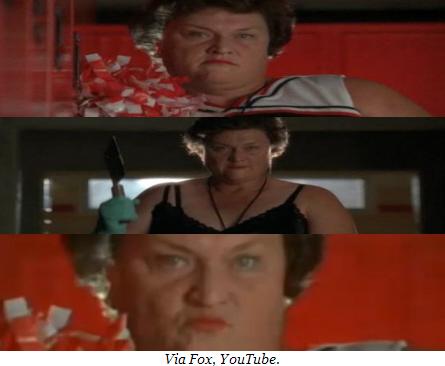
In Sue’s final act as principal before she resigns at the end of the episode, she expels Dave Karofsky for bullying Kurt. Jezebel notes that “rather than yelling, ‘William, my hands are tied!’ she promises to stop Karofsky once they have proof that he’s harassing Kurt”but not before Sue takes to calling Kurt Porcelain, which could be seen as an act of bullying in itself.

Carol Burnett makes an appearance as Sue and Jean’s absentee mother, Doris, who in addition to being Sue’s own “bully”, left the girls to be a Nazi hunter. While Doris doesn’t appear all that bad, it does give some insight into Sue’s present-day behaviour as McKinley High’s student body tormenter. Why was Sue’s mother in the episode, you ask? Because Sue was getting married… to herself! But that’s a whole other can of worms.

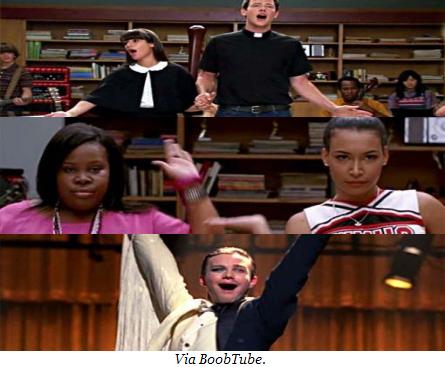
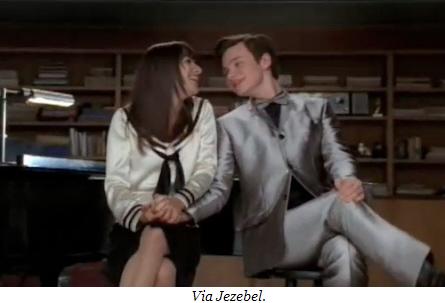
In other bullying news, the glee guys start a fight with Karofsky in the football team’s locker-room in defence of Kurt, but stepbrother to be, Finn, doesn’t partake. Even when it is revealed that the attack was Rachel’s idea, “setting the feminist movement back fifty years”, according to Quinn. (It’s no secret that I can’t stand Rachel, but a strong woman like her needs an equally strong man.) In what seems to be another instalment in Finn’s tour of whimping out, he doesn’t want to be perceived as being a homo-sympathiser. But not to worry, he makes up for it at his mum and Kurt’s dad’s wedding, by making a speech about standing up for “Team Furt” (in the tradition of celebrity couplings like Brangelina). And then they “dance their troubles away”.

The wedding also serves as a catalyst for Kurt to break out this memorable one-liner: “I’ve been planning weddings since I was two!”

Oh Kurt, we’ll miss you when you transfer to Dalton Academy…

Related: The (Belated) Underlying Message in Glee’s “Never Been Kissed” Episode.

The Underlying Message in Glee’s “The Rocky Horror Glee Show” Episode.

The Underlying Message in Glee’s “Duets” Episode.

The Underlying Message in Glee’s “Grilled Cheesus” Episode.

The Underlying Message in Glee’s “Britney/Brittany” Episode.

Women in Fiction: Are Our Favourite Fictional Females Actually Strong, or Stereotypes?

Elsewhere: [Jezebel] Glee: Three Weddings & a Furt.

On the (Rest of the) Net.

How to “cure” a feminist.

Zoe Foster at her absolute best in her ode to “second day spaghetti”. Perhaps she should consider penning a food column in addition to relationship and beauty advice?

Overthinking It on the differences, but more so, similarities, of “California Gurls and California Girls”. One choice titbit: “The popsicle melting part means that California girls are sufficiently attractive that, under the right circumstances, they will cause men to ejaculate. Just in case Katy Perry didn’t make it obvious enough with her coy and artful wordplay, ‘popsicle’ means penis.”

More on Katy Perry and how she’s now claiming to be a gay icon. If you think back to her first song, before the success of “I Kissed a Girl” (“which panders to my least favourite cliché ever, that of the straight girls who make out at frat parties to turn on frat boys”), entitled “Ur So Gay”, it was insinuating that being gay “was the ultimate, be-all, end-all putdown to someone that treated her wrong.”

Matriarchy in Glee.

Also at Overthinking It, the likeability of male characters versus female characters is discussed. Hint: female characters aren’t likeable, even if the male characters they’re being compared to are sociopaths.

Jezebel on owning your sluthood:

“… Sluthood isn’t an action, it’s a state of mind.

“I’m telling you this because my sluthood saved me. Sluthood gave me the time and space to nurse a shattered heart. It gave me a place where I could exist in pieces, some of me craving touch, some of me still too tender to even expose to the light. Sluthood healed the part of me that felt my body and my desires were grotesque after two years in a libido-mismatched partnership. Now I felt hot, wanted, powerful. My desire and enthusiasm was an asset, not an unintended weapon.”

You go, girl!

Lifehacker offers up the “Top 10 Tips for Better Writing”.

Hugo Schwyzer on “The Problem With Being ‘Sexy But Not Sexual’”.

“The Televised Guide to Teen Girl Friendships”, featuring My So-Called Life, Full House and Popular.

Jezebel explains our (but not my) interest in the royal wedding by way of Disney:

“For me, an American pop-culture junkie, Prince William and Kate Middleton’s engagement means one thing: She gets to be a Princess. And seriously, some part of me, formed when I was three or four, believes that this means she will be dressed by birds, wear clothes sewn by tiny mice, and have woodland creatures as friends. Oh, sure, there’s a handsome Prince, but more important are the jewels! And the singing! And the castles! And the woodland creatures.”

Apparently positive people live longer. Good news for me, then!

“Do All of Us Need ‘The One’?” at The Ch!cktionary.

A rant on the annoyance of ignorance:

“… In our infoculture, it takes work not to expose yourself to interesting ideas, facts, news and points of view… the average person online spends seventy seconds a day reading online news. Ouch.”

New York, I Love Hate You:

“New York, I won’t miss your fierce morning halitosis exhaled from your subway grates along Third Avenue.

“I won’t miss you drooling on me from your high-rise air-conditioners in the burning heights of summer.

“I won’t miss how… to me you always smelled like Camel Lights, and warming urine, and the No. 14 busa perfume I never could quite embrace.

“New York, I’ll never forget how dating you made me so poor that when I wanted to read I had to unscrew a bulb from the bedroom and carry it to the living room.”

On the (Rest of the) Net.

“Benevolent” teen sexism versus “hostile” teen sexism at Psychology Today via Jezebel.

Also from Jezebel, “Facebook Tells You When You Will Break Up” via a handy little graph. I wonder how the graph would change to reflect Australian dating norms andmost interestinglyseasons.

The always hilarious Mia Freedman muses on “First World Problems”.

Gawker’s take on Gossip Girl’s “Juliet Doesn’t Live Here Anymore”, or more importantly, Chuck and Blair’s sex life:

“So, Blair and Chuck are totally mashing genitals against each other for pleasure, and everyone is throwing up all over the place because of it. Because it’s so gross. ‘Hey Blair, let me put my penis inside you behind those bushes.’ THROWUP. ‘Hey Chuck, why don’t you stimulate my vagina with your mouth some more.’ RETCH. ‘Oh my gosh, let’s pant and wheeze and sweat here in this limo because we just rubbed our genitalia together to the point of climax.’… IT’S GROSS, is what I’m saying… But they’re doing it anyway and that was a plot point. Absolutely nothing changed or developed in their fucking…”

Since when did Gossip Girl need a plot point, anyway? It’s a guilty pleasure and that’s the beauty of it.

This 2009 New Yorker article is suspiciously similar to a Law & Order: SVU episode from season 11. But it is a brilliantly haunting read about fire investigation, wrongful incarceration, execution and justice.

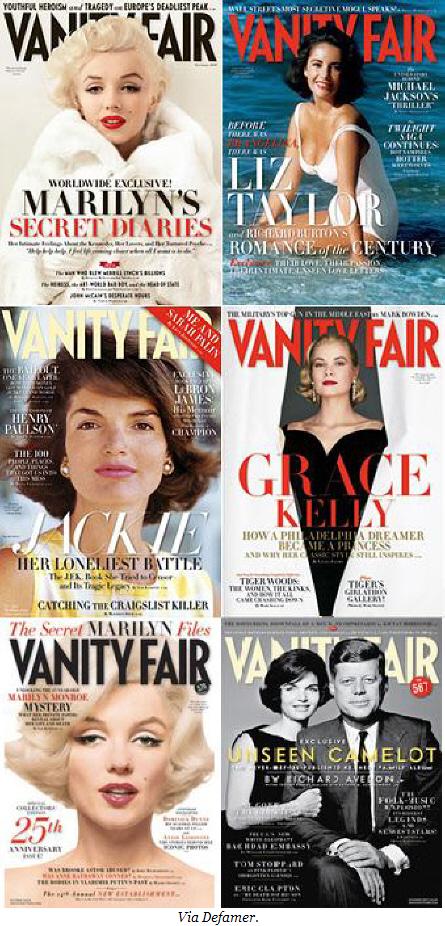
Defamer addresses Vanity Fair’s penchant for posthumous covers.

Ideologically Impure responds to Stephen Fry’s assertion that women don’t like/want/have sex as much as gay men:

“Because, Mr. Fry, do you know what happens to women who openly state they enjoy sex, who act in an overtly sexual manner, who admit to casual sex?

If they get raped, their rapist walks free.

“Because a woman saying she enjoys sex is obviously always up for it. And a woman who’s had casual sex in the past must not be fussy about who she fucks. And a woman who flirts is just ‘sending the wrong signals’ and completely gives up her right to say ‘no’.”

The allure of the Kindle, by Maggie Alderson.

The original “In Defence of Slut-O-Ween” and, in the same vein, The Stranger wishes us a (belated) “Happy Heteroween”.

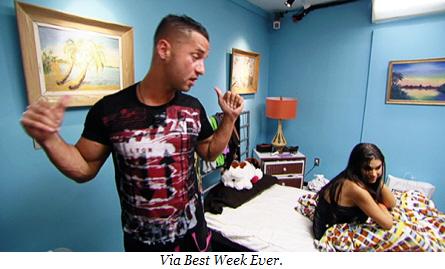
Annabelle DeSisto, the girl who shut down the Situation on Jersey Shore, tells her side of the story on Best Week Ever:

“… He kept asking me if I wanted to change clothes, like to get into something more comfortable like pyjamas. And I was like ‘No’, and he was like ‘But you seem really uncomfortable in that dress, let’s just get you into pyjamas.’ I’m like, ‘Does everything you own have a rhinestone bulldog or dragon or Ed Hardy logo on it?’ And he’s like, ’Yeah, of course!’ And I was like, ‘Then I’m not changing clothes.’”

Sounds like a quintessential douchebag to me!

In defence of Kanye West:

“Part of Kanye’s curse is that after everyone chills out a little, we all realise he was just saying what everyone was thinking, and we were unfair to leap all over him…”

“What is Vampire Sex?” Effing hot, that’s what!

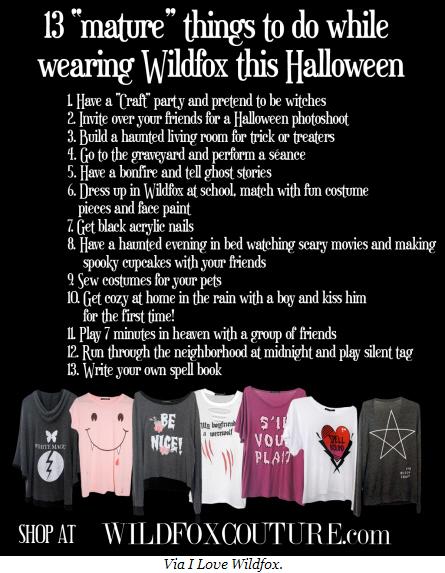
Shameless Wildfox plug: “13 ‘Mature’ Things to Do While Wearing Wildfox This Halloween”. I did just one of these things this Halloween. Can you guess which?

If you missed Zoe Foster’s “All Women Really Want is a Cup Of Fu*king Tea” relationship advice in Cosmo a few months ago, here it is again on her blog, via MamaMia.

Mick Foley pens his thoughts on Linda McMahon:

“… The concerns expressed in regard to WWE are valid onessubstance abuse problems, content issues, the troubling trend of pro-wrestlers dying way too young. But if Linda McMahon is going to be held personally accountable for every negative aspect of her family business, shouldn’t she be given personal credit for every positive aspect as well? Like the 5,000 wishes to children facing life threatening conditions WWE has granted over the last twenty five years, through ‘Make-a-Wish’ and other wish granting organisations? Or the ‘Tribute to the Troops’ tour that WWE has embarked on every year since 2003; spreading holiday cheer to service-members far from home, in remote bases in Afghanistan, Iraq and Kuwait.”

When things are looking glum, take a look at this mantra from Gala Darling. Things aren’t that bad.

TV: The (Belated) Underlying Message in Glee’s “Never Been Kissed” Episode.


I was unable to catch up on Glee when it aired last week, so I decided not to write about the latest episode’s “underlying meaning”. However, after watching it over the weekend, I think there is an important message that needs to be talked about; just like every other episode this season!

While Glee can sometimes turn into an after-school special, “Never Been Kissed” was more of an “hour long ‘It Gets Better’ video”, as Jezebel puts it, focussed around Kurt’s struggles with being the target of homophobia and Coach Beiste’s sexual inexperience and objectification as an anti-sex symbol.

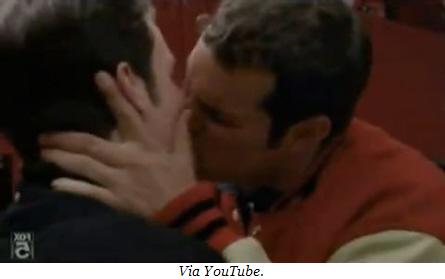
It will be interesting to see if the usually lacklustre writers will continue the storyline in which Kurt’s bully and member of the football team, Dave Karofsky, is tormenting Kurt because in actual fact, Dave is confused about his own sexual orientation. But what I found most interesting about the episode was Beiste’s storyline.

When Sam asks Finn how to “cool down” when making out with “chaste” Quinn, Finn relays his story of running down a postman with his car. Sam decides to use a mental image of Beiste in lingerie, and passes this on to the other guys. Somehow, Tina gets hold of this information and also uses a mental image of Beiste when making out with Mike. When Sam and Tina accidentally let slip Beiste’s name during make-out sessions with their significant others, it somehow gets back to Mr. Schuester, who “says [that] Beiste can never find out, though he winds up telling her himself in the very next scene”!

I can’t imagine how hurtful that must have been for Coach Beiste (yes, I am aware Glee is fictional and the characters DON’T ACTUALLY HAVE FEELINGS), especially when it is revealed that she’s “never been kissed”, hence the title of the episode, and never made to feel beautiful.

But the glee clubbers make good by dedicating their mash-up of “Stop! In the Name of Love” and “Free Your Mind” to Beiste, which ends in an inappropriate group hug, not to mention Will attempting to kiss Beiste’s insecurities away. It’s not that easy, Mr. Inappropriate Glee Teacher!

Related: The Underlying Message in Glee’s “The Rocky Horror Glee Show” Episode.

The Underlying Message in Glee’s “Duets” Episode.

The Underlying Message in Glee’s “Grilled Cheesus” Episode.

The Underlying Message in Glee’s “Britney/Brittany” Episode.

Elsewhere: Kurt Gets Kissed in Hour-Long “It Gets Better” Video.

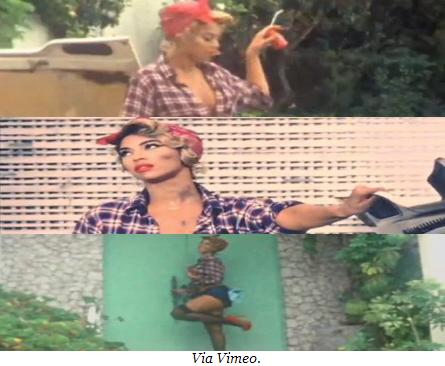
Did Rosie the Riveter Wear Hotpants?


From Tiger Beatdown:

“… It is true: Beyonce does in fact dress as the iconic proto-feminist industrial worker when she has a particularly tough mechanical project to attend to. And she is, in fact, wearing hot pants! However… for those who take issue with the accuracy of her costume, remember: We only ever saw Rosie the Riveter from the waist up. We don’t know what kind of pants she was wearing. Rosie the Riveter may not have worn pants at all.

If this is true, I’m totes going as her for Halloween next year. And no, it’s not too early to start planning my outfit! We can do it!

Related: The Witching Hour: Halloween/My Birthday at Witches in Britches Cabaret.

Elsewhere: [Tiger Beatdown] Why Don’t You Love Beyonce? An Inquiry.

[Jezebel] The Many Incarnations of Rosie the Riveter.

On the (Rest of the) Net.

Indeed, “What Is the Difference Between Charlie Sheen and Lindsay Lohan?”

Again, in the wake of Sheen’s “drug-alcohol-and-woman abusing” bender, Girl with a Satchel asks if men’s mags focussing on UFC and, alternatively, retro Mad Men style sensibilities is a result of the “soggy” men’s mag market trying to inject some much needed zest:

“In the current socio-cultural context, where women assert more power and influence, the ‘reality’ may be why more men are turning into Don Draper lookalikes and turning to UFC. It doesn’t take Two & a Half Men to work [sic] out that in magazines, men need escapism, inspiration and style tips, too. The appeal of men’s magazines is to service wants, needs and desires; I just wonder what men really aspire to.”

Tiger Beatdown’s response to Beyonce’s “Why Don’t You Love Me?” video is, in a word, hilarious (more on it to come next week):

“A blog post, we hear, should be short, and timely, and probably pegged to some manner of news item. This ensures that it can be part of the blog conversation on the Interwebs. Where immediate response is king! And that, of course, is why we write 3,000 to 5,000 word posts about long-running TV shows, and movies we rented from iTunes, and also, albums that came out when we were twelve.

“However, sometimes it only takes us weeks to respond to something! For example, a music video, of the sort that the kids enjoy today. A music video like this one!”

Joan Holloway’s Mad cartoon curves are poured into a Little Miss book.

In other Mad Men-related news, The Washington Post writes in defence of the show’s alleged sexism:

Mad Men’s writers are not sexist. The time period was.”

Feminist Themes on Lady Gaga and Beauty.

Slate asks “How Long Has the ‘Dumb Blonde’ Meme Been Around?”:

“The poet Propertius, for example, wrote: ‘All beauty is best as nature made it… In hell below may many an ill befall that girl who stupidly dyes her hair with a false colour!’ So while he didn’t connect blondeness with idiocy exactly, he implied that wish to be blondes, and contrive to be blondes using artificial means, don’t have much going on.

“As for why the dumb-blonde idea resonatesone idea is that it’s basically Propertius’ logic at work. It’s a fairly well-known fact that few adults are naturally blond[e], and that many apparent blondes actually die their hair. If you die your hair, you must be superficial or vapid, Q.E.D. There’s also a theory, outlined in The Encyclopedia of Hair, that blondeness connotes youth, since children are far more likely than adults to have naturally blond[e] hair. Blondeness, then, seems innocent but also naïve.”

Steve Pavlina discusses which aspects of your life are worthy of your attention, and which aren’t.

Organisational Post-It porn at MamaMia.

From The Awl, “How to Lose [Facebook] ‘Friends’” and alienate people:

“Christopher Sibona… explains the top reasons fro defrienestration: updating too frequently about boring things, posting about controversial subjects like politics or religion, and writing racist or sexist stuff. It’s a lot like life, although in life these people are actually friends and not some random body count you’ve assembled through networking or total availability.”

Godammit, I’m Mad profiles “Bloggers With Influence”, and has some particularly scathing words to say about Gala Darling. Ouch.

Along the same lines, The Feminist Breeder says not to “assume that more ‘fans’ or ‘followers’ means they’ll all be adoring. The truth is, the more people who read you, the more bullshit you’re going to have to put up with…”

In the wake of those controversial GQ photos and last week’s Rocky Horror episode, Glee is questioned as to whether it has a “Body Image Problem” or not.

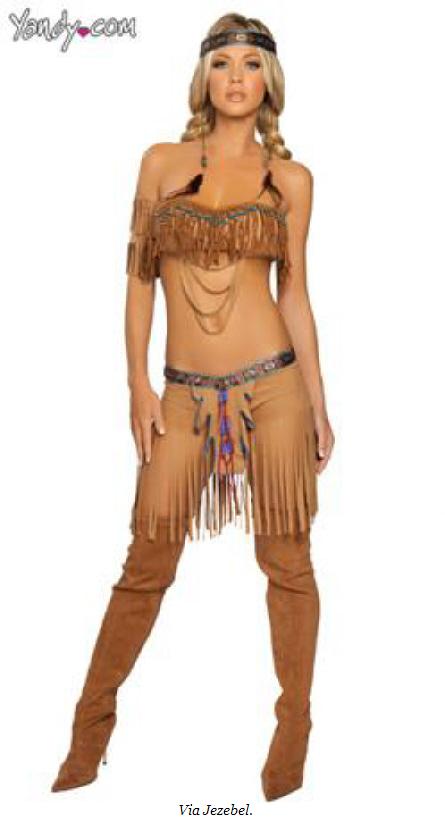
As Halloween is swallowed back into the underworld for another year, Gawker has some All Hallows Eve etiquette tips on how to tell if your costume is racist:

“… When the entirety of your costume is ‘I am a person of a different race, LOL,’ that qualifies as a racist costume.”

But is it racist if, like, you’re of Native American descent? (FYI, I actually am.) Paris Hilton, take note.

TV: The Underlying Message in Glee’s “The Rocky Horror Glee Show” Episode.


Who would’ve thought that an episode of Glee centring around The Rocky Horror Picture Show could be a catalyst for discussing male body image?

Not me, but that seems to be the underlying message in this week’s episode.

When Mr. Schuester announces to the glee club that they will be performing Rocky Horror after Emma tells him she went to see it with her new beau Carl, Rachel is quick to announce that she and Finn will be playing Janet and Brad. Finn is all for this until he realised he’ll have to perform much of the show in his “tighty-whiteys”. Santana and Brittany comment on this, saying they can’t wait to see Finn’s “hot mess” of a body as a result of eating sloppy joes for lunch everyday, in comparison to Sam’s rippling abs accompanied by gold hot pants in his role as Rocky. (If Cory Monteith had put on weight to give Finn an actual “hot mess” of a body, it might’ve lent his storyline more credibility.)

Finn voices his concerns to Rachel who, in her usual selfish ways, tells him that she doesn’t look like Brittany or Santana, but she’s still stripping down to her underwear, and she loves his body just the way it is.

In the locker-room, Finn broaches the subject again with Sam and Artie. As Sam is donning hot pants, he obviously doesn’t have many body image issues (until later in the episode, when Schuester suggests he play another character as the role is too risqué for a high schooler, which Sam misinterprets as him being too fat to pull off his costume), however Artie blames porn for warping females’ perceptions of male bodies:

“I personally blame the internet. Once internet porn was invented, girls could watch without having to make that embarrassing trip to the video store. Internet porn altered the female brain chemistry, making them more like men, and thus, more concerned with our bodies.”

Sounds an awful lot like Naomi Wolf’s argument about porn and its affect on the male brain chemistry, making them more concern with the female body and what it can do for them.

Elsewhere, at the beginning of the episode when the kids are choosing their roles, everyone thinks it would be fitting to have Kurt play Frank N. Furter, to which Kurt replies:

“There’s no way I’m playing a transvestite in high heels and fishnet wearing lipstick,”

as apparently being the only gay man in the club means automatically defaulting to play the tranny. This is particularly poignant, as there is still a lot of misunderstanding in the mainstream about gay, bi, trans etc. people and what exactly their gender roles entail.

Related: Is There Really a Beauty Myth?

The Underlying Message in Glee’s “Duets” Episode.

The Underlying Message in Glee’s “Grilled Cheesus” Episode.

The Underlying Message in Glee’s “Britney/Brittany” Episode.

Elsewhere: [MamaMia] Male Models: Inside Their Straaaange World.

[Jezebel] Glee: Sexy & Scary In All The Wrong Ways.

[Boob Tube] Glee in Pictures: Rocky Horror Glee Show.

Profile: Rachel Hills of Musings of an Inappropriate Woman.

I’ve only become familiar with Rachel Hills, sex and gender blogger at Musings of an Inappropriate Woman, in the past few months, but she’s made her way to the top of my must-read blogs. Here, she answers questions about her inspiration, future writing goals and what she does in her spare time in a new city (she recently moved from Australia to begin a new chapter of her life in London).

Can you give us a quick run-down of your professional writing portfolio thus far?

I’ve been freelancing for six years now, and have written for (in alphabetical order) the ABC, The Age, The Australian, The Big Issue, The Bulletin, The Canberra Times, Cleo, Cosmopolitan, The Courier-Mail, Girlfriend, Girls’ Life (US), Glamour (UK), The Huffington Post, Jezebel, The Monthly, New Matilda, Russh, Sunday Life, Sunday Magazine, Sydney Morning Herald, Vogue, The Walkley Magazine and YEN, as well as a bunch of smaller, indie magazines and blogs.

I got my start writing opinion pieces for the Sydney Morning Herald. These days, I usually write “think piece” features on personal-is-political type issues, or women’s mag fare with smarts.

How long have you been blogging at Musings of an Inappropriate Woman and what made you decide to start a blog?

I just did a quick scan of my archives and discovered I just reached my three year anniversary on October 30.

I’ve written for the internet pretty much ever since it was possible to (I started my first website in 1998), but I was always kind of hesitant of writing publicly under my own name. As a teenager because of my secret pop music loving shame, as a university student because I was involved in student politics and that makes you extremely paranoid (not of people digging up info on you when you become a politician, but of people digging up info on you and putting it in the student newspaper), and then as an adult because I didn’t want to cannibalise my own story ideas.

I cracked through basically because I loved reading other people’s blogs, and because I was inspired by the way that other journalistsparticularly in the USwere using blogs to connect with their audiences. My blog was quite different when I first started writing it, thoughit was more a mix of political commentary, scrapbook and lifecast, as opposed to the more reflective, personal-is-political blog it is today.

What are some of your favourite blogs?

I have a soft spot for blogs which make you feel like you’re getting to know the person writing itblogs like Gala Darling, Girl With A Satchel, Wordsmith Lane, The Ch!cktionary, Emily Magazine, Garance Dore, Style Rookie and The Scarlett Woman [that’s me!] are often at the top of my Google Reader.

I also love blogs that make me think about thingsFeministe, Pandagon, The Awl, Tiara The Merch Girl, Rabbit White, Kapooka Baby, Jezebel, Hugo Schwyzer, Racialicious. And people like Chris Brogan, Seth Godin and Chris Guillebeau are like mentors I’ve never met when it comes to things like blogging and community building.

I’ve lost count of the number of blogs I subscribe to on Google Reader, though, so that’s really just scraping the surface of what I read.

What has been your proudest writing-related achievement to date?

I don’t think I actually have one! There are lots of stories I’m fond of, and I still get excited whenever I get a story up, but there isn’t one that stands out as being more significant than the others. I suppose the one I was most proud of at the time was that first opinion piece in the SMH. And I hope my book will be my proudest writing accomplishment in a couple of years.

And your proudest non-writing achievement?

In 2006, I travelled around the US meeting some of my favourite journalists and editors: people from The Economist, The New York Times, The Huffington Post, US Cosmopolitan and so on. Very nerdy, but also very gutsy lots of people at home thought I was a bit of a weirdo for attempting it (with a couple of notable exceptions). I’m quite proud of that.

Back to your book, to be titled The Sex Myth; how is it coming along?

Haha, it’s coming along okay. I’m dedicating a lot of time to it at the moment, and there are bits of it that I really like, which is nice. I’ve shown the overview to a few high profile people, and the response has been universally very positive. I’m just trying to get everything in place at the moment to translate that positivity into a kickass book deal.

You’ve written about workaholism and the work/life balance in the past. How do you balance all your commitments?

It was much, much harder when I was living in Australia and holding down a near full-time job. Now that I’m working for myself again, it’s much easier to fit in all the things I want to work on, and living with my partner means I still make plenty of time for myself. (When he’s away, I start working later, procrastinating more and sleeping less.)

That said, even working for myself, I’m still managing four main areas of workfreelancing, book, PhD and blogonly one of which pays. So finding time for all of them can be a bit tricky.

What is your favourite way to unwind?

Having spent the past two and a half years of my life reading books on the philosophy of sex, I’ve developed a bit of a fiction obsession recently. It’s so much easier and more relaxing to read than the academic stuff I’m usually buried in.

I’m also really enjoying getting to know London, and digging out all the interesting things there are to do here. My boyfriend often asks me how I manage to find all the things we check outphotographic treasure hunts, interactive theatre, art galleries, bars with secret passage ways.

And yoga. It’s clichéd, but it relaxes me, keeps me fit and keeps my bad neck (from too much time sitting in front of a computer) in proper alignment.

Because most bloggers write about things they’re passionate about, as I know both you and I do, do you find sometimes it’s a chore to churn out posts on, for example, mag-world musings or the happenings on your favourite TV show (you and I both share a penchant for Gossip Girl) and the like, as previously you would have done those things for pleasure? Because that’s definitely something I struggle with from time to time.

Because I write for a living, one thing I’m very careful to do is keep blogging a pleasure. The main way I do this is by writing when I’m feeling inspired: if the writing doesn’t flow easily, blogging starts to feel like an obligation… and while I have no concrete evidence of this, I suspect it makes the posts less interesting to read, too. If I’m not feeling inspired and haven’t updated much that week, I’ll try to find something else around the net that I think will be of interest to my audience and share that with them instead.

What advice do you have for other bloggers?

Don’t feel like you have to get it right immediately. Sure, the internet sticks around forever, so you want to think before you post, but blogging is something you learn by doing just like anything else, and chances are it will take you a while to find your best blogging voice. (It took me a while, and I’d been writing on the net for nearly 10 years and writing professionally for three when I started. And I’m still learning.) Experiment until you find that perfect intersection of what you love, what feels authentic for you, and what people respond to.

And finally, where do you see yourself, writing-wise, in the future?

I’d like to just keep on doing what I do now, only on a bigger and better level, with all the aspects of my work (journalism, blogging, books) feeding into one another.

[Musings of an Inappropriate Woman].

TV: The Underlying Message in Glee’s “Duets” Episode.


Following on from last week’s controversial episode, this week’s Glee deals with the students pairing off into couples for “Duets”. All except Kurt, of course, who is unable to find a partner, not only to sing with, but also to be with in the romantic sense.

This theme is timely after the suicide of gay teen Tyler Clementi, who was filmed having sex with another man by his roommate, who was then going to broadcast the footage online, and the subsequent campaigning by Ellen DeGeneres and her fellow celebrities to stop gay bullying, and that life does get better.

Kurt expresses interest in duetting with the new kid, Sam, but Finn warns him against it, as the “ensuing beatings” will force Sam out of glee. Of course, Kurt thinks Finn still has issues with his homosexuality, but Finn retorts that they live in a (homophobic) man’s, man’s, man’s world, and breaks out the “no means no” shtick.

Later on, Burt Hummel, who is out of the hospital after last week’s stint in ICU, reiterates Finn’s sentiments, and Kurt asks, “So a gay guy can’t be friendly to a straight guy without it being predatory… You’re saying I shouldn’t sing with this Sam guy because it might upset a couple [of] homophobes?”

The episode also deals with the other kinds of pairings the glee club members engage in. There’s Brittany and Santana, whose lesbian relationship is taken to new levels this week when they’re shown kissing on screen; the proverbial straights, Rachel and Finn and Sam and Quinn; the (perhaps stereotypical) strong black women, Mercedes and Santana, singing “River Deep, Mountain High”; the “Asians”, Tina and Mike, who are having relationship issues and will attend “Asian couples therapy”; and the sensitive issue of Artie’s disability, how it relates to his sex life, and his deflowering by Brittany in this episode.

Thus, this leaves us with loner Kurt, who has more than enough personality and pizzazz to pull off “‘Le Jazz Hot!’ from Victor/Victoria” and steals the show.

Kurt is a strong enough character that he doesn’t let his peers’ (albeit not is glee club peers) discrimination get to him, and thus he comes across as a teenager who has the courage of his convictions to stay true to himself, a stance which can only serve to encourage and enable other young people struggling with their sexuality to stand up and own it.

Oh, and in a rare show of compassion, Rachel offers to do a duet with Kurt in the final scene, asserting that they’re more alike than they think. Perhaps a straight wife-gay husband relationship to rival Carrie Bradshaw and Stanford Blatch is blooming?

Related: The Underlying Message in Glee’s “Grilled Cheesus” Episode.

Elsewhere: [Jezebel] Everyone’s Duetting It (Except Kurt).

[Jezebel] Why Glee’s Brittany & Santana Are My Queer Icons.

Chase You Down Until You Love Me, Paparazzi…

The following is based on a 2006 uni essay I wrote about the camera as an intruder, so sorry for any overly academic phrasing. I have attempted to bring it into the modern day with less formal language after reading an article on Jezebel, “The Day I Trailed a Paparazzi” in which—what else?—one of the blog’s writers trailed a paparazzo for a day.

Is the camera an intruder? Some would say that, in this day and age, with advanced photographic technology and increased access by photojournalists to worldwide events, it is. However, others assert that because of this advanced photographic technology and increased access, paired with the public’s growing need, and right, to know and see, that the camera it is not.

In terms of the cult of celebrity and the growing phenomenon of the paparazzi, privacy is a major issue. Peter Howe, in his book Paparazzi, provides this definition of the occupation:

“It refers to those photographers who seek out and follow celebrities… in order to photograph them in their most unguarded moments. In short, it’s taking photographs you shouldn’t take in places you shouldn’t be”.

However, some might argue that in becoming a movie star or rock star, and thereby a celebrity, you give up your right to privacy. Privacy laws in the US, specifically in Los Angeles where most paparazzi dwell, state that “if the subject of the photograph can reasonably expect privacy in a specific situation, such as inside his home, photographs of such situations cannot be published without permission”. And, as is evident in any glossy tabloid, most paparazzi shots are taken in public places, such as shopping strips and restaurants. “The consensus of opinion among the paparazzi is that the celebrities get the privacy they deserve, and that if you really don’t want to be photographed, then you don’t go to eat at Mr. Chows or the Ivy, where there are always photographers,” says Howe.

French theorist Roland Barthes states that “people change when they’re aware they’re being photographed.” So “when long lenses can ‘trespass’”, “the traditional definitions of privacy may not apply”.

The paparazzi are viewed as the most morally and ethically irresponsible photographer in the business but, “if everyone hates their work, why are they the best-paid and busiest photojournalists in the world?” asks Howe.

Our obsession with celebrity has only grown since I originally wrote this article back in 2006, a time which was already seeing the tabloid market explode, causing “the number of paparazzi to quadruple”, explains co-owner of L.A. paparazzi firm Bauer and Griffin, Randy Bauer, in an article from Cosmopolitan that same year.

Increasingly, blogs have become the stratosphere through which paparazzi pics circulate, however magazines still pay the big bucks. The first pictures of Brad Pitt, Angelina Jolie and their adopted son Maddox on a beach in Africa sold for $100,000; a far cry from the $6.68 million People magazine paid for the exclusive photographs of Pitt, Jolie and their first biological child, Shiloh.

In the five years since Pitt & Jolie got together and were hunted by the paparazzi (Wagner, a paparazzo who participated in a story on Jezebel, asserts that family pics of the couple are still the highest fetching shots), reality TV has reached its pinnacle, with celebs like Kim Kardashian milking their celebrity for all its worth; sad sacks like Lindsay Lohan and Heidi Montag tipping off the paparazzi in order to sell shots of themselves and keep their names in the media; and those in a league of their own, like Lady Gaga, whose song “Paparazzi” and albums “The Fame” and “The Fame Monster” take the piss out of the very machine that made them and creating a new definition of the über-celebrity/icon.

As above, though, the paparazzi are predominantly viewed in a negative light, not only by serious art photographers and the general public but, obviously, the stars they photograph. Kristen Stewart, for example, is one star who has been vocal in her dislike for the paparazzi; those in opposition to her stance might use the argument above, that to have success in the acting world is to accept the constant presence of photographers. Especially when you’re one half of the most talked about couple since the Jolie-Pitts. Elsewhere, the Jezebel article, written by Dodai Stewart, has a focus on Michael Douglas, who is receiving treatment for throat cancer, and the unremitting swarm of photographers outside his house every day. Is hounding a sick man taking our obsession with celebrity too far? American author and journalist Nathaniel Parker Willis says that, “the idea [is] that to really know someone, we must know their private life”.

From the Cosmo article: “[the paparazzi] can make celebrities feel anxious, depressed, and even mildly agoraphobic” That explains the notorious picture of Cameron Diaz, with then-boyfriend Justin Timberlake, attacking a paparazzo, then!

But, increasingly celebs are embracing the paparazzi, realising that if they work in cooperation with them, their public lives will be less tumultuous.

Stewart relays her story about Wagner trailing Liev Schreiber and his son with Naomi Watts, into the subway. After talking to the subject for several minutes, Wagner tells Schreiber that he’s “gotta get a picture of you”, and “Liev said sure, put the kid on his shoulders and let Wagner snap away… No other photographers were around, so it’s an exclusive shot.” Wagner gets paid, Schreiber comes across as a cool family man; it’s a win-win situation.

Celebs with kids can get a bit weird about them being photographed, understandably, and in the same article, when Wagner encounters Watts with the kids, she kindly asks him not to take pictures, and he obliged. See, Hollywood dwellers? There’s no need to get violent with the paps. (Granted, the pics of Schreiber and Watts were taken in New York City, where the paparazzi scene is less brutal than in Los Angeles, and there seems to be a certain air of respect between subject and object.)

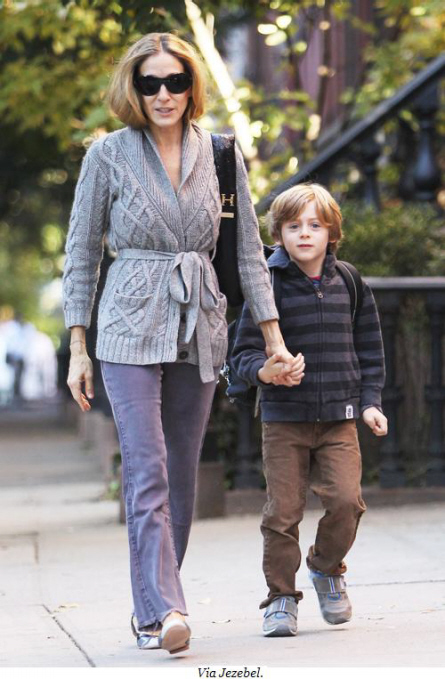
Other NYC dwellers such the cunning Sarah Jessica Parker, have some up with ways of making themselves less desirable targets:

“‘[SJP] wears the same thing everyday,’” he [Wagner] says. ‘On purpose. Because you talk about this today, then she wears it tomorrow, then what do you have to say? Nothing.’”

There is almost an element of protection there, too: provided both parties behave themselves and there exists a certain professional relationship, when your every move is recorded on camera, it’s got to be mighty hard to be mugged or attacked. Although, the victims of Alexis Neiers and her young-Hollywood burglary bling ring probably don’t subscribe to this school of thought.

Still, the opinion among the stars, the paps and the consumers who view their snaps on blogs and in magazines and newspapers, is that celebrities need the paparazzi to generate publicity around them, and the paps need to earn a buck. “An interdependency develops between them,” says Howe.

Stewart sums the cycle up nicely:

“We’re interested in celebrity minutiae. Despite ourselves. It is possible to be fascinated and repulsed at the same time. You can find celebrities appealing while finding the gossip culture appalling. We buy the magazines, hate them for lying to us, critique them, laugh at them, talk about them with our friends and buy the magazines again the next week. If you’ve ever read a gossip site or flipped through a celebrity weekly, you’re part of the system: the paparazzi take pictures for the mags and blogs, the mags and blogs exist because there is an audience.”

Related: Poor Little Rich Girl: Lindsay Lohan in Who.

Poor Little Rich Girl: Who Cover Girl Heidi Montag.

Elsewhere: [Jezebel] The Day I Trailed a Paparazzo.

[Vanity Fair]: The Suspects Wore Louboutins.