On the (Rest of the) Net.


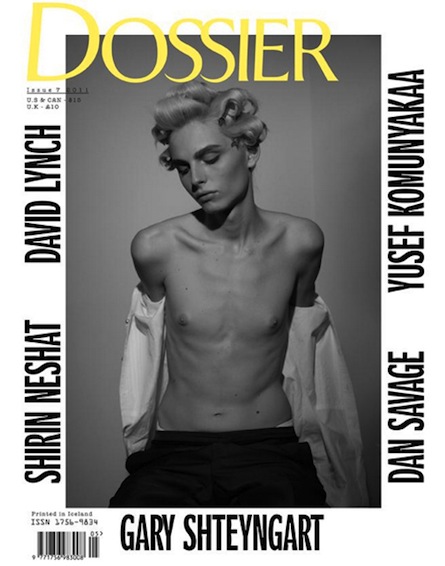
On the censorship of Andrej Pejic’s Dossier cover:

“… why is Pejic’s cover getting the same treatment as a porno mag? What message are the big bookstore chains sending—that the male torso is only appropriate [for] all-ages viewing when the man in question is ripped?”

Mia Freedman on when life begins.

SlutWalker Leslie Cannold on “the right to be equally mediocre”.

Speaking of SlutWalk, the Melbourne event’s coordinator, Clem Bastow, writes on the event for the Sydney Morning Herald.

The ostentatious disgustingness of “Push Presents”.

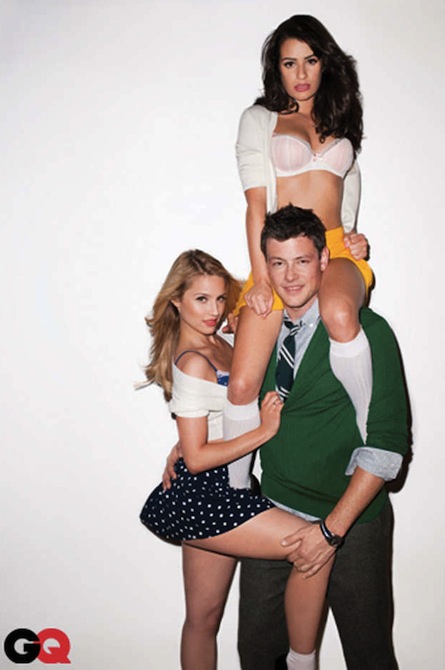
Glee: give fat girls a chance.

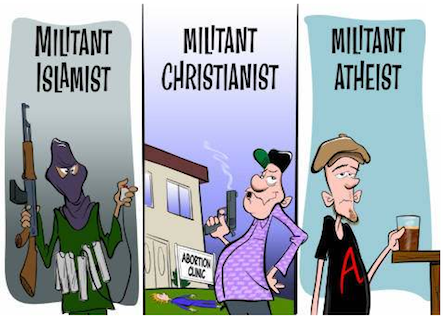
 The militant atheist doesn’t exist.

Arnold Schwarzenegger’s infidelity and Dominique Strauss-Kahn’s sexual assault allegations are one in the same, according to “The Media’s Groping Problem”.

In the same vein: why powerful men sexually assault women.

From Texas’ hottest sex offenders to Strauss-Kahn’s “hot-or-not” accuser.

What would “a word where Aspergers was the norm” look like? “Girls who spend hours a day straightening their hair are recommended for counselling,” amongst other things.

Rebecca Sparrow on “Hollywood’s Fake Teenagers”.

As if we didn’t need another reason to love Mick Foley: the Huffington Post names him their “Greatest Person of the Day”.

Meghan McCain rips the sexist and sizist Glenn Beck a new one.

Much to my mother’s—and her fellow kindy mums’—dismay, my big-for-her-age, four-year-old sister refused to walk to preschool, so Mum was forced to push her in a stroller. Check out Too Big For Stroller for more on this hideous phenomenon.

Are child murderers born evil or created?

In the case of toddler James Bulger’s murderers (one of whom re-offended after being released and is now back in jail), and Dontez Tillman and Thomas McCloud, who beat and tortured “two homeless men over the course of two days”, I tend to lean towards them being “born that way”. If Law & Order and Criminal Minds have taught us anything, it’s that children who demonstrate these kinds of behaviours usually turn out to be sociopathic serial killers.

Image via Queer Me Up, Psychology Today, Even Without Popcorn.

Breaking the Mould.

A recent post on MamaMia by Rick Morton revealed that although he is a gay man, he has no sense of rhythm and cannot dance. He also liked sports. Anyone who’s seen the stereotypical gay man on Sex & the City, Desperate Housewives or Modern Family knows that gay men always have rhythm and hate sports. Therefore, Morton breaks the stereotype.

The post, entitled “What Stereotype Do You Break?” got me thinking about… erm… what stereotypes I break!

One misconception about me that I struggle with constantly is people thinking I’m dumb because of the way I look, dress, speak and the things I’m interested in. If people looked a little deeper, they would see that yes, I sleep in curlers, dress up to go to and from my workplace, at which I wear a uniform, am in tune with the “OMG” zeitgeist and am partial to a copy of Famous and a gossip session.

But yes, I also have a degree, a blog and a keen interest in secondhand book shopping. I also like to read books I pick up at secondhand bookstores. In fact, reading is my favourite pastime and is like oxygen to me. I love nothing more than bumming around the house in pyjamas and no makeup for days on end preferably. I also like guys who like these things. I am a feminist.

And yes, I have volunteered at the RSPCA scooping up poop for hours on end because I like animals and try to lend a helping hand to charities where I can. I enjoy cleaning, can’t stand listening to private school kids on public transport, and hate people who are entitled and who haven’t had to work for everything they have. I don’t really like shopping and if I’ve committed to more than two social outings per week, I start to get anxious.

I could go on forever about the many ways people prejudge me, and the many ways in which I let them because I don’t like letting people too close.

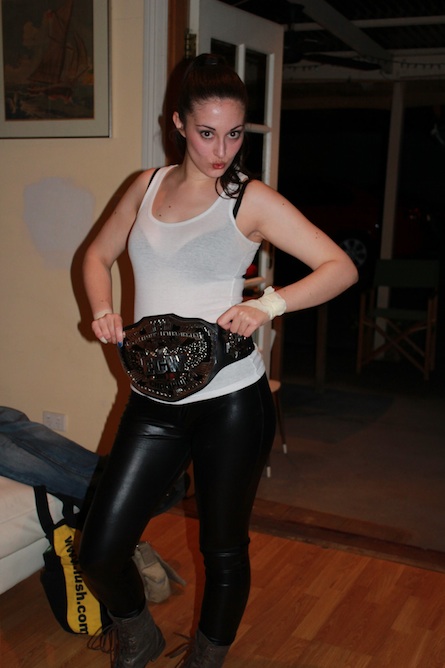
But the largest stereotype I break is that I’m an educated, girly girl (on the surface) who just happens to be a fan of wrestling. Those who’ve read The Scarlett Woman for an extended amount of time will know that I am partial to my wrestling; preferably World Wrestling Entertainment, but I will settle for TNA or some independent action. I have been to nine live events in Australia, met ten wrestlers, been within a metre of three others, and have scores of old school VHS tapes under my bed.


What stereotypes do you break?

Related: So Misunderstood.

Clunes Back to Booktown.

Book Now, Bendigo.

Girls Night In.

Nine Lives.

On the (Rest of the) Net.


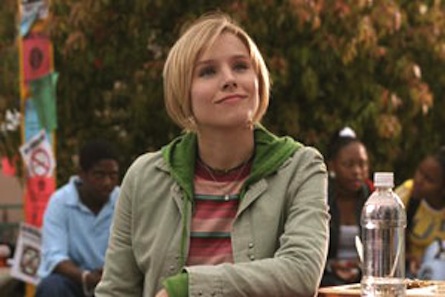
“The Class Boundaries of Veronica Mars.”

Why the Body Image Advisory Group’s voluntary code of conduct didn’t work.

Rachel Hills on the internet, artifice and being fake.

“The New Middleton Class”.

Speaking of the Middleton’s, Melinda Tankard Reist takes issue with the admiration of Pippa’s ass online:

“The FB site provides an opportunity for men everywhere to share their sexual fantasies for the young maid of honour. Knock her up, bash her in, cause her injury such that she would not be able to walk. Wrecking and shredding a woman’s anus is a popular porn script.

“And all this is supposed to be accepted as a compliment. Of course there are no ‘Pippa the Wonderfully Supportive Sister Appreciation Societies’ or other pages lauding her gifts and character and other non-body related attributes.”

Bret Easton Ellis on the spectacle that is Charlie Sheen.

“Filling the Gaps” in the online feminist community’s “call-out culture”.

In what was Elizabeth Taylor’s last interview, with Kim Kardashian for US Harper’s Bazaar, she divulges her thoughts on living like a queen, the Krupp diamond and Twitter. I was never a fan of Taylor, but this interview made me one.

What does it mean to be a feminist today?

Is the male body “Repulsive or Beautiful?”

Ever been hollered at in the street as you walk past a construction site? “Why Men Cat Call” sounds interesting, but is disappointingly dismal.

Amélie sex (noun): intercourse undertaken in the classic missionary position which, by itself, is not objectionable—during which the male is impervious to the female’s lack of enjoyment.”

The bromance VS. Bridesmaids“Homance”.

Don’t give up your day job: “Freelancing on the Side.”

Images via I Just Have So Many Feelings, Sydney Morning Herald.

On the (Rest of the) Net.

Embrace your inner slut:

“If someone calls you a slut, there’s nothing you can say to refute the claim because it never had any cognitive content anyway.

“If you try to argue that you’re not a slut, you’re implicitly buying into the idea that there are sluts out there. If there’s some criterion that will set you free, that standard will indict someone else—someone with a higher ‘number,’ or shorter skirt, or a later curfew. So we get bogged down in slut/non-slut border skirmishes over a line nobody should have tried to draw in the first place, and we all lose.

“Even virginity is not a defense against alleged sluttiness. Virgins can be sluts if they dress the wrong way, walk the wrong way, or even instill the wrong thoughts in other people. Some people will convict you of sluttitude because your body is the wrong shape, or the right shape.”

Sluts just can’t win. That’s why you should (as above) embrace your inner slut and join the SlutWalk next weekend in Melbourne, at the State Library from 1pm. I’ll be blogging more about this throughout next week.

Glee’s Mercedes just can’t get a date!

Video vixen VS. female bodybuilders:

“It is not ‘respectable’ to be black, female, voluptuous, and sexy on a stage for profit, but it is perfectly acceptable to be black, female, muscular, and ‘unsexy’. Is this double standard acceptable? Is one profession truly more sexualized than the other?”

I don’t entirely agree with this hypothesis. I think it’s far more acceptable to be conventionally and femininely sexy, as opposed to muscular and unconventionally masculine. Sure, the video vixen job title isn’t exactly perceived as a classy, “respectable” occupation, but neither is female bodybuilding. Society as a whole would much rather see women shaking what they were born with (or, you know, what the plastic surgeon gave them) than manipulating their bodies via hormones and free weights.

The surrogacy debate rages on at MamaMia

“$150,000 Doesn’t Make You Rich. Discuss.” Okay, I will: I come from a family where my mother stayed home with my sister and I, and my dad worked three jobs at some stages. I was very young then, so I have no idea how much money he brought in. But I can tell you, it sure as hell wasn’t $150,000, and we struggled to keep our heads above water week-to-week. We never had savings, we could never go on family holidays that required much travel because we couldn’t afford flights or accommodation. I missed out on all but one of my seven cousins’ weddings because we couldn’t make it interstate. My parents have only bought two houses in their lifetime: the other nine we resided in throughout my lifetime were rentals. I also don’t know how much my dad makes now, but it is a lot less than $100,000, and my mum’s on a pension. In my opinion, $150,000 a year is rich.

“Opposition leader Tony Abbott says the Government is punishing ‘aspiration and hard work’,” with the new middle class welfare breaks. Is working three jobs and hardly being able to see your family not hard work, Mr. Abbott?

How to deal with your boyfriend’s porn-watching habit.

The argument for Pixar movie heroines who aren’t princesses, “from all the girls with band-aids on their knees”.

The perils of being smiled at by a cute guy in a café when you’re not wearing makeup.

Texas’ “10 Hottest Female Sex Offenders”. “No doubt that 4-year-old boy, that 2-year-old boy and that 13-year-old girl are taking solace even as we speak that at least they were abused, molested and assaulted by a hot person.”

Hillary Clinton, brownies and Vanity Fair’s cover line.

The aftermath of the royal wedding and the state of Britain’s monarchy for the next 30 years.

Gay/straight chicken: when straight men insult homosexuality and “gay men insult women”.

“Is Kate Hudson Coasting on Cuteness?” My money is on “yes”. When was the last time she starred in a box-office smash, or was nominated for an award other than a Razzie?

Images via Jezebel, Fashion Fame.

Magazine Review: Time: The End of bin Laden, May 20, 2011.

I love a good Time cover, as the picture I used to have up in my loungeroom of Time’s 2008 Person of the Year, Barack Obama, would attest.

Needless to say, Time’s latest cover—of Osama bin Laden with a big red cross over his face—is a contender for cover of the year. (Stay tuned later on this week for another bin Laden-inspired contender.)

But this isn’t the only time in Time’s history that a dictator or human face of terror has been crossed out by the magazine. In managing editor Richard Stengel’s “Editor’s Desk” letter, he notes that the same was done for Adolf Hitler after his death in May, 1945, Saddam Hussein in April 2003, and Abu Mousab al-Zarqawi, “the scourge of Iraq,” in June 2006.

The issue is a September 11-heavy one, with interviews with Rudy Giuliani, mayor of New York City when that fateful day in 2001 occurred (p. 11) and CIA director Leon Panetta (p. 48–53).

In addition, there’s “Death Comes for the Terrorist” by David von Drehle, a detailed account of what went down the night of bin Laden’s death, and how his actions on 9/11 have affected the U.S.—and the world—between then and now (p. 12–25).

“Obama 1, Osama 0” (p. 26–31) is more about how Obama’s classy presidency brought down bin Laden instead of George W. Bush’s, which focused more on him making an ass(y?) out of himself. In the article, reporter Joe Klein calls Obama “discreet, precise, patient and willing to be lethal”, and wonders “whether Bush would have had the patience or subtlety to conduct this operation with the same thoroughness…”. He also addresses the President’s ability to laugh at himself (and his apparent 2012 presidential competition, Donald Trump), at the White House’s correspondents’ dinner 24 hours before the bin Laden announcement came, when he said deciding who to fire on The Apprentice is something that would keep him up at night. “… Two nights earlier Obama had been kept up trying to decide whether to launch the Seal team against bin Laden or take the stealth-bomber route,” Klein writes. That whole birther thing seems pretty trivial now, doesn’t it, Trump?

In Peter Bergen’s article, “A Long Time Going” (p. 38–41), he asserts that 9/11 was the beginning of the end for bin Laden’s “poisonous ideology”, and Aryn Baker asks “How Can We Trust Them?” (p. 54–57) of Pakistan, “the most dangerous country in the world”.

On a more lighthearted note, James Poniewozik compares “bin Laden’s bloody end” to “life imitating 24:

“The Twitter trending-topics list… filled up with references to OBL’s demise: ‘Navy Seals’, ‘Abbottabad’, ‘God Bless America’. And one more: ‘Jack Bauer’.”

I read an article on MamaMia the week the news of bin Laden’s death broke, where Mia Freedman recounted her life at the time of September 11, and recalls trying to protect her young son from the horrific images of the Twin Towers coming down. Fast forward almost ten years, and he’s studying it in history:

“I was jolted when he told me that. Partly, because I had tried so hard to shield him from the horror of 9/11 when it happened. But also by the fact he was studying it in ‘history’. In some ways, it seems so recent.”

But just how do you protect your kids from something like that?

Nancy Gibbs tells of this conversation between her 4- and 7-year-olds:

“‘They should have been more careful… They should have watched where they were going, the men flying the planes—they shouldn’t have knocked those buildings down.’

“‘… That wasn’t an accident. They meant to knock the buildings down.’

“Silence. Stubborn. ‘No, they didn’t.’

“‘Yes. They did. They wanted to kill those people. They were bad men.’”

But, Gibbs argues, children who grew up in the age of terror, “reached for their flags—the kids whose childhoods bin Laden had twisted, kids whose parents woke them up in the middle of the night to hear the President’s speech, kids who painted stars and striped on their cheeks as they danced off to school in the morning, kids who are more global, more diverse, more tolerant, more curious and more hopeful than ever before… Our kids learned early about evil. But they grew up learning how it is fought.”

Related: Osama bin Laden & Racism.

The Royal Wedding: The OtherEvent of the Decade?

Elsewhere: [Time] The Story of X.

[Time] 10 Questions for Rudy Giuliani.

[Time] A Revival in Langley.

[Time] Death Comes for the Terrorist: How the U.S. Finally Got Its Man.

[Time] Obama 1, Osama 0.

[Time] A Long Time Going.

[Time] How Can We Trust Them?

[Time] The 25th Hour.

[Time] Where Victory Lies.

[MamaMia] Osama bin Laden is Dead.
Book Review: Mia Culpa—Confessions from the Watercooler of Life by Mia Freedman.


Mia Freedman really is a brand unto herself. We all know she revolutionised the magazine world at age 25 as editor of Cosmopolitan. Her blog, MamaMia, really came into its own during last year’s federal election, offering a different take on politics for modern women. And she’s now a three-time published author with her own television show on SkyNews!

Of course she credits her husband, Jason, her kids, friends, family and MamaMia team with supporting her and helping run her media juggernaut, all of whom she writes about—sometimes anonymously, but oftentimes not—in her latest memoir-cum-“long, wonderful dinner-party conversation”, Mia Culpa: Confessions from the Watercooler of Life.

A lot of the material that makes up Mia Culpa I’ve read before, I will admit, in Freedman’s Sunday Life column, her blog, and various other publications she makes appearances in. But I’ve been known to revisit favourite blog posts and articles before, so it was very enjoyable to read Freedman’s musings on everything from sex to SNAGS (p. 64–67) to showering (p. 290) to breastfeeding (p. 175–179) to interior design (p. 129) to social stamina (read: non-existent when you have a young family, p. 131–136) to Christmas (p. 148–152) to how many children you want/have (p. 71–75) to the hypocrisy of being a certain-meat eater (“I’ve never eaten things like duck or rabbit or deer because I relate to those animals in a way I don’t relate to chickens—perhaps because many of them were storybook characters. Bambi, anyone?” [p. 145]. Guilty as charged) to Disney princesses (p. 180) to The Secret (p. 301).

Some of my favourite parts existed in the first chapter and were a nice way to begin the book. In it, Freedman writes about grooming standards in long-term relationships (p. 4–12), choosing between your ass or your face as you grow older (p. 13–16), skinny-shaming VS. fat-shaming (p. 16–23) and the pre-requisite rant on unrealistic portrayal of women VS. men in the media (p. 23–32). But when she puts it like this, it’s hard not to see Freedman’s point:

“Pretend the world was full of pictures of naked men. On billboards and the sides of buses, in magazines and ads for beer, cars and deodorant. Imagine there were penises everywhere you turned and you couldn’t escape seeing them every day.

“And all the images of nude men were fake. Every male model and celebrity had had penile enlargement surgery, and afterwards, his penis had been extensively photoshopped to make it look even bigger. So now, all the penises you saw in the media every day were knee-length and as thick as an arm.

“One day, next to a magazine article about a celebrity with a foot-long penis, you read the headline: ‘This is what a 43-year-old penis looks like’. The caption underneath read: ‘Asked for the secret to his long schlong, former male model Markus Schenkenberg insists he was just born that way. “I wear cotton boxer shorts and I exfoliate in the shower,” he shrugs. “That’s all I do.”’

“After reading a hundred stories like that and being bombarded by 10,000 images of men with surgically altered and digitally enhanced penises, do you think you might look down at your natural, un-photoshopped trouser snake and feel a little… deflated? Inadequate? Insecure? Angry?”

There’s also some of Freedman’s fascinating thoughts on being a “try-sexual” as per Katy Perry’s “I Kissed a Girl” (p. 241–244), which has been written about extensively on sites like MamaMia and Rachel Hills, and tattoos (more on that to come later today).

You don’t have to be a Freedman fan-girl to enjoy this book; I would recommend it to anyone who happens to be of the female gender, and even those who don’t happen to be but are just looking for some enlightenment on the species.

Related: MamaMia: A Memoir of Mistakes, Magazines & Motherhood by Mia Freedman Review.

UPDATED: Skinny-Shaming VS. Fat-Shaming.

“Who the Bloody Hell Are We?”: The Sentimental Bloke at the Wheeler Centre.

Elsewhere: [MamaMia] MamaMia Gets a TV Show.

[MamaMia] Cindy Crawford is Naked in Allure Magazine. And 43.

[MamaMia] I Kissed a Girl. Because I Had Something to Sell.

[MamaMia] Kissing a Woman Does Not a Lesbian Make.

[Rachel Hills] The Rise of the Guy-On-Guy Kiss.

Image via Australian Women Online.

On the (Rest of the) Net.


These iconic images, taken by photographer Lennart Nilsson for Life magazine in 1965, and later used for pro-life propaganda materials, have actually been taken of aborted embryos, not living fetuses in the womb:

“Although claiming to show the living fetus, Nilsson actually photographed abortus material obtained from women who terminated their pregnancies under the liberal Swedish law. Working with dead embryos allowed Nilsson to experiment with lighting, background and positions, such as placing the thumb into the fetus’ mouth.”

“Does Carrying Condoms Make You Easy?” Will.I.Am seems to think so.

Erica Bartle on maintaining the balance between “frothy and bubbly and frivolous” and her passion for writing about her faith and God on Girl with a Satchel, which she understands can sometimes be “like receiving a knock on the door from a Jehovah’s Witness  (or a pamphlet in the postbox)” for some. (Okay, I’ll admit it: I’m one of them.) Food for “critical thought”.

Should the government be pouring money into funding to fight domestic violence against women and children, when there are also men who are victims of domestic violence out there?

Girl crush porn in Mia Freedman’s new weekly post, “A Week in the Life” on MamaMia.

The importance of “good, old-fashioned” sub-editing.

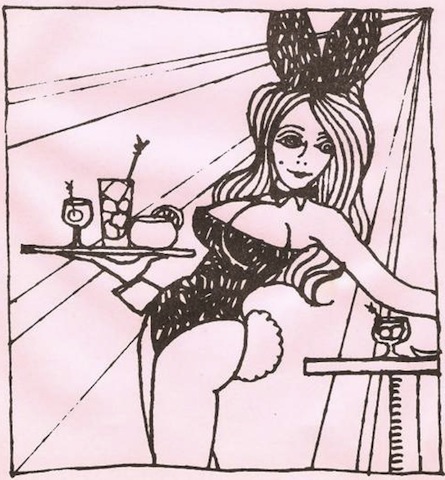
How to be a Playboy Club Bunny, circa 1968.

Love, domestic violence and Gossip Girl.

On Hillary Clinton being photoshopped out of the situation room photo in Hasidic newspaper Der Tzitung:

“The religious paper never publishes pictures of women, as they could be considered ‘sexually suggestive.’ Apparently the presence of a woman, any woman, being all womanly and sexy all over the United States’ counterterrorism efforts was too much for the editors of Der Tzitung to handle…

Der Tzitung edited Hillary Clinton out of the photo, thereby changing history. To my mind, this act of censorship is actually a violation of the Jewish legal principle of g’neivat da’at (deceit).”

Would you rather be blind or obese? According to an Arizona State University study, 1 in 6 women would choose the former…

Images via The Hairpin, Sociological Images.

The Difference Between Lindsay Lohan, Ricky Nixon & Charlie Sheen.


In the past week, Lindsay Lohan began her community service in a see-through singlet with no bra, Ricky Nixon lost it on Today Tonight, and Charlie Sheen announced he’s bringing his Violent Torpedo of Truth tour down under. God save us all.

Lohan seems to get the shortest end of the stick out of these three, yet they’re all scars on the face of humanity by most peoples’ reasoning. Why is that?

Is it because she’s the youngest? If that’s the case we should be cutting her more slack as her brain hasn’t finished developing yet. Is it because she’s a member of young Hollywood, and has had everything handed to her? Sheen was also a member of the young Hollywood brat pack in his early days, too. And Nixon was a footballer himself before going on to be an agent, and we all know how footballers are held up to a different microscope than the rest of humanity.

The only common denominator that separates Nixon and Sheen from Lohan is that Lohan happens to be female.

I’ve written a bit about this before, and there’s also some more material on this topic over at MamaMia that’s well worth a look (see below), but there’s no denying that gender is the most likely reason for society’s vilification of Lindsay for being a party girl who’s been to rehab and jail five times each, while Nixon had an alleged sexual relationship with an underage girl who tried to ruin several of his clients’ careers, and Sheen is a well-known misogynist who beats and shoots women.

The reason I object to this blatant favouritism is that Lohan is only hurting herself. At the end of the day, if she can’t drag herself out of the depths of the addiction, rehab and prison cycle, then she’s only got herself to blame. It only affects her.

Nixon has screwed over his clients, who are a bunch of bad eggs themselves. Not to mention (arguably) preyed on an underage girl, who is as much to blame for this whole thing as Nixon. But, might I mention, Nixon is a GROWN MAN, not a 17-year-old child who was, in her eyes, used and abused by the AFL and wanted revenge.

But Sheen is the crown jewel in this group of hot messes: he’s a drug addict and seemingly mentally ill, which are understandable and treatable conditions in and of themselves. But it’s not just them. He also beats women, whether they be his significant other or no. He’s a fan of prostitutes, and child porn, it is alleged. He trashes hotel rooms. He has four young children to think about. His behaviour is most definitely affecting multiple others, yet he’s rewarded for it with a world fucking tour!

Those are the differences between Lindsay Lohan, Ricky Nixon and Charlie Sheen.

Related: Lindsay Lohan & Double Standards.

Good-Time Girls.

Poor Little Rich Girl: Lindsay Lohan in Who.

Why Are Famous Men Forgiven for Their Wrongdoings, While Women Are Vilified for Much Less?

Minus Two & a Half Men.

Guilty Until Proven Innocent: Charlie Sheen’s Witness.

Elsewhere: [MamaMia] St. Kilda Schoolgirl: One Journalist’s Dilemma.

[MamaMia] AFL Sex Scandal on 60 Minutes.

[MamaMia] AFL Train Wreck: Is the 17-year-old Girl A Product of Modern Media?

[MamaMia] Is St. Kilda Player Nick Riewoldt the New Lara Bingle?

Images via WWTDD, TNT Magazine, Herald Sun.

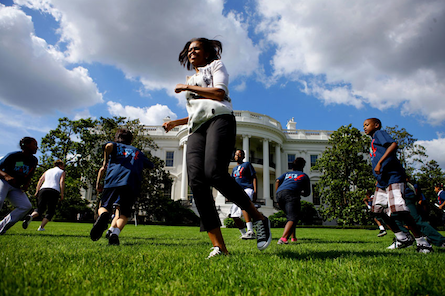
Magazines: Michelle Obama Combating Childhood Obesity Makes Her One of Time’s Most Influential People.


But that didn’t stop US conservative political commentator Rush Limbaugh from weighing in on Obama’s contribution to the cause:

“I’m trying to say that our First Lady does not project the image of women that you might see on the cover of the Sports Illustrated Swimsuit Issue, or of a woman Alex Rodriguez might date every six months or what have you. I mean, women are under constant pressure to look lithe, and Michelle My Belle is out there saying if you eat the roots and tree bark and the berries and all this cardboard stuff you will live longer, be healthier and you won’t be obese. Okay, fine, show us.”

It looks like she just did.

Elsewhere: [Time] The 2011 Time 100: Michelle Obama.

[MamaMia] Michelle Obama is Too Fat to Fight Childhood Obesity.

The Bystander Effect.


From “The Bystander Problem” by the MamaMia Team on, you guessed it!, MamaMia:

“Malcolm Gladwell in his book The Tipping Point talks about the ‘bystander problem’. He writes:

“‘One of the most infamous incidents in New York City history … was the 1964 stabbing death of a young Queens woman by the name of Kitty Genovese. Genovese was chased by her assailant and attacked three times on the street, over the course of half an hour, as thirty-eight of her neighbours watched from their windows. During that time, however, none of the thirty-eight witnesses called the police.’

“At first this horrific case was explained away as being the result of the dehumanising effect of urban life, the fact that the anonymity and alienation of city life makes people hard and unfeeling.  But two New York City psychologists subsequently conducted a series of studies to undrestand what they called the ‘bystander problem’. Gladwell writes:

“‘When people are in a group… responsibility for acting is diffused. They assume that someone else will make the call, or they assume because no one else is acting, the apparent problem… isn’t really a problem.

“‘In the case of Kitty Genovese, then… the lesson is not that no one called despite the fact that thirty-eight people heard her scream; it’s that no one called because thirty-eight people heard her scream.  Ironically had she been attacked on a lonely street with just one witness, she might have lived.’”

I think this relates to “pack mentality”, as in the scene below from Scream 2, as well as “the bystander effect”. What do you think?

Elsewhere: [MamaMia] The Bystander Problem.

Images via the Film Chronicles, 411 Mania, EW.